
IP54 to IP65 Explained: What Screw Jack Ingress Protection Ratings Mean for Compliance Buyers
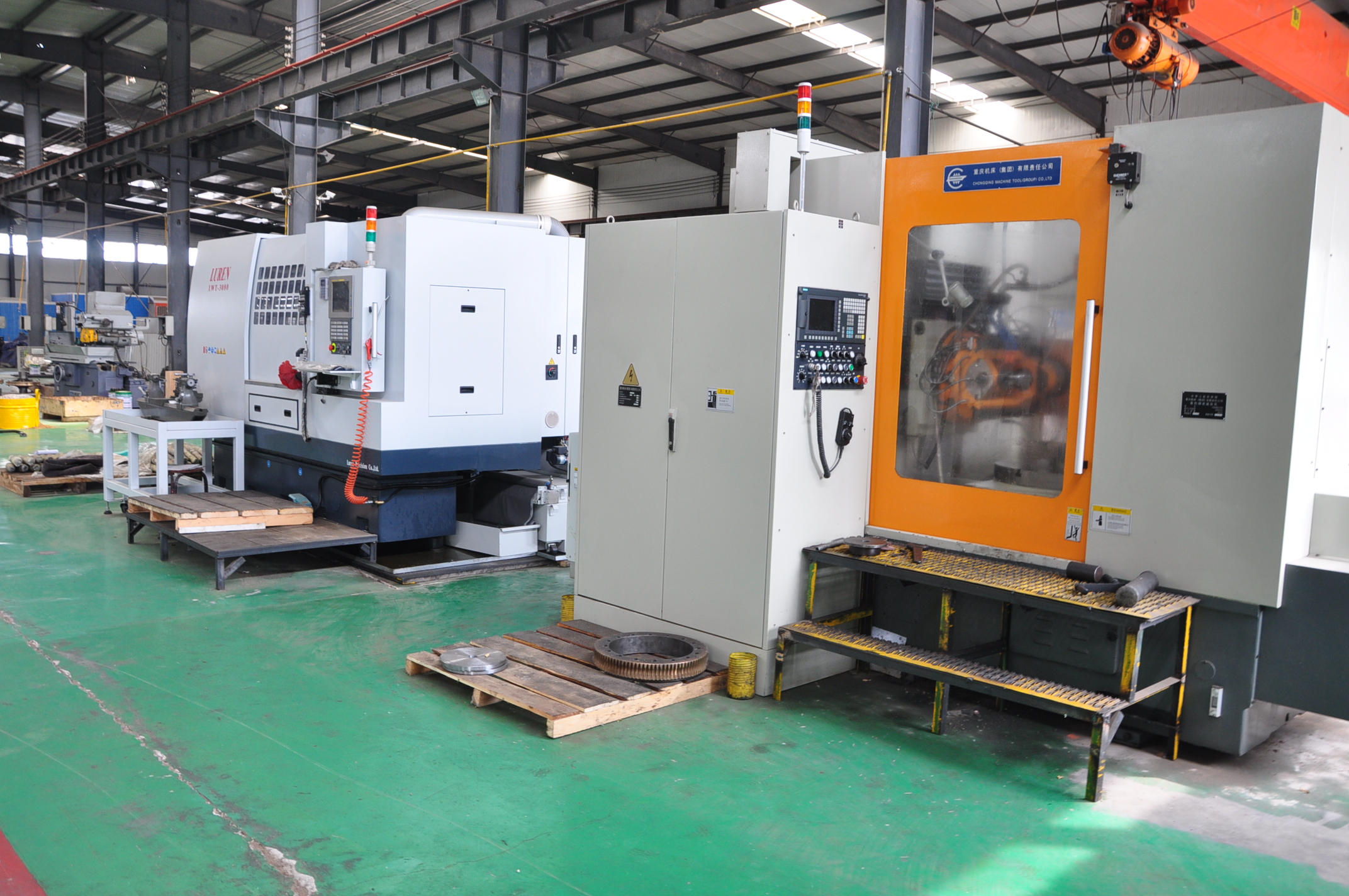
Fig 1. An IP claim is verified at assembly, not on the quotation. JINYU production workshop, Dezhou, Shandong. Source: JINYU.
An IP rating is a scope statement, not a quality label. When a metallurgy group or a food and dairy processor writes "IP65 minimum" into a screw jack enquiry, it is not asking the supplier to be better than its peers. It is defining which components of the assembly carry a tested enclosure class, which ones do not, and the conditions under which that claim has to survive commissioning.
That distinction becomes expensive at the Decision-to-Execution stage. By the time a purchase order is placed, the engineering question has moved from "which screw jack can lift the load" to "which screw jack keeps lifting the load in this specific plant atmosphere, with a documented enclosure class, traceable materials and a purchase specification that will pass an internal audit." Ingress protection sits directly on that boundary, and it is one of the few compliance criteria that is decided twice: once in the RFQ, and again when the maintenance team opens the enclosure three years later.
This article decodes IP54, IP55 and IP65 as they apply to worm gear screw jacks, ball screw jacks and motorized linear actuators; maps each level against real operating environments from steel mills to dairy washdown bays and offshore wind platforms; explains why Stainless Steel Screw Jack construction solves a different problem than the IP rating does; and sets out how JINYU (Shandong Dezhou Jinyu Machinery Co., Ltd.) frames enclosure, material and service-life evidence across its SWL, JWM and JWB series. Ingress protection is treated here as one qualification criterion among several, standing alongside the operating temperature window, material certification and documented field evidence.
What an IP Rating Actually Certifies
Ingress protection is codified in IEC 60529, which defines a two-digit code. The first digit describes protection against solid objects and dust, running from 0 (no protection) to 6 (dust tight). The second digit describes protection against water, running from 0 to higher levels covering splashing, jets and immersion. A screw jack described as IP54 has therefore been assessed on two separate axes, and both digits have to be read.
| Rating | Solid protection | Water protection | Practical meaning on an industrial linear actuator |
|---|---|---|---|
| IP54 | Dust protected — limited ingress that does not interfere with operation | Protected against splashing water from any direction | Suits indoor plant rooms, control cabinets and dust-laden but dry indoor cells where cleaning is done by wiping rather than hosing. |
| IP55 | Dust protected — same dust digit as IP54 | Protected against water jets from any direction | Suits outdoor duty, dirty workshops and light hose-down where the atmosphere is wet and gritty at the same time. |
| IP65 | Dust tight — no ingress of dust | Protected against water jets from any direction | Suits washdown bays, dusty outdoor decks and processing lines where jet cleaning and airborne fines occur together. |
Read the two digits separately. IP55 to IP65 is an upgrade in dust protection only: both levels carry the same water-jet digit. IP54 to IP55 is the reverse: it adds jet protection but keeps the same dust digit. A buyer who specifies "IP55, and preferably IP65" is asking for two different things, and the second one is about dust, not water.
What the IP code does not cover is equally important. It says nothing about corrosion resistance, chemical resistance, condensation that forms inside a sealed housing as it heats and cools, immersion, mechanical impact or operating temperature. Motor-operated actuators also fall within the scope of IEC 62841-1:2014, the international safety standard covering general requirements for mechanical hazards in motor-operated tools and actuators — a reminder that enclosure class and machine safety are separate compliance tracks that both have to be closed.
Where Ingress Protection Failures Actually Begin
In practice, ingress failures rarely start at the housing wall. They start at the interfaces that were not in the enclosure test report: cable entries and glands, breather or vent screws, terminal box covers, limit switch housings, the keyway on a Keyed Screw Jack output shaft, and the motor fan cowl. These are the points where a correctly rated housing is defeated by an incorrectly rated accessory.
The consequences follow a predictable path. Water reaching motor windings degrades insulation resistance and produces nuisance thermal trips. Dust entering the worm and wheel mesh changes the friction coefficient, raises operating temperature and accelerates wear on the gear flanks. Contaminated lubricant then loses film strength, and the failure modes that buyers list in their risk registers — overload, screw buckling, self-locking failure, motor overheating and mechanical jamming — arrive faster than the duty cycle alone would predict.
That is why enclosure class should be specified together with the control and monitoring package rather than after it. Documented control methods for screw jack systems include load limit protection, stroke limit switches, brake interlock, thermal protection and overload alarms, supported by load sensors, limit switches, regular self-locking tests, temperature monitoring and periodic maintenance. An IP65 housing with an unmonitored motor is still a single-point failure waiting for a wet season.
Matching IP Levels to Real Operating Environments
The useful question is not "which rating is highest" but "which protection axis dominates in this plant." Two environments can both justify a high rating for completely different reasons.
| Operating environment | Dominant ingress threat | What compliance buyers should specify and verify |
|---|---|---|
| Metallurgy, casting and rolling lines | Airborne scale and fine dust, condensate, radiant heat | High dust digit as the priority, plus a stated operating temperature window, brake interlock and thermal protection. Dust tightness matters more than jet resistance in most furnace-adjacent cells. |
| Food and dairy processing, washdown bays | Pressurised water jets, cleaning chemicals, dairy residue | Jet-rated water protection combined with stainless steel hardware and exposed fasteners. The IP rating protects the internals; the material choice protects the outside. Both are required. |
| Offshore wind and coastal marine | Salt-laden spray, driven rain, sustained humidity | Corrosion-resistant construction plus jet protection, with attention to breather design and to the galvanic pairing of fasteners and housings. |
| Medical, laboratory and precision automation | Wipe-down chemicals, low tolerated particulate emission | Dust- tight enclosure, controlled lubrication, low-noise operation and repeatable positioning. Ball screw jack configurations are often chosen where speed and positioning accuracy outrank load capacity. |
| Water conservancy and gate control | Rain, seasonal humidity, intermittent duty over decades | Jet protection, anti-rotation shaft configuration where the load must not rotate, and stroke limiting for repeatable open and close positions. |
A single plant can contain three of these environments. Multi-point synchronous lifting systems frequently span a dusty upstream cell, a wet intermediate zone and a clean control area, which is why the enclosure specification should be written per axis rather than per project.
Why Stainless Steel Screw Jacks Are Specified in Washdown and Marine Duty
Stainless Steel Screw Jacks address a different failure mechanism than the IP rating does, and industry adoption reflects that. Third-party market analysis notes that stainless steel screw jacks are increasingly used in offshore wind and food processing — particularly dairy — where high corrosion resistance is a hard requirement rather than an aesthetic preference.
The two criteria operate on separate paths. The IP rating governs whether dust and water reach the internal mechanism. Corrosion resistance governs whether the exposed housing, shaft, nut and fasteners survive contact with chlorides, cleaning chemicals and organic acids. A jet-rated actuator built from untreated carbon steel will still corrode at its exposed surfaces, and a stainless actuator with a poor cable entry will still take on water. Compliance buyers should require evidence on both, and should verify which grade of stainless is used for which component rather than accepting the word "stainless" as a category.
There is a boundary worth stating plainly: stainless construction is selected for chemical and corrosion resistance, not as a drop-in substitute for a carbon or alloy steel unit. Load rating, screw speed, duty cycle, lubrication selection and self-locking behaviour all have to be re-verified for the stainless variant of a given configuration, because material properties and surface behaviour differ. A specification copied unchanged from a steel-duty project onto a stainless washdown project is a common and avoidable source of rework.
How JINYU Frames the Enclosure Question Across the SWL, JWM and JWB Series
JINYU — Shandong Dezhou Jinyu Machinery Co., Ltd., based in Dezhou City, Shandong Province, China — is a manufacturer of transmission machinery founded in 1984. Its main products are screw jacks, worm gear reducers, servo electric cylinders and electric push rods, supplied to automated mechanical transmission applications across metallurgy, mining, hoisting, transportation, petroleum, chemical, construction, textile, pharmaceutical, food, conveying, environmental protection, light industry, electric power and plastics.
For compliance buyers, the relevant point is that the SWL, JWM and JWB series are matched to environments rather than marketed as a single blanket rating. Each series is a family of configurations, and the achievable IP class within a family is set by the components that are actually sealed: motor enclosure, gearbox housing, terminal box, limit switch housing, breather design and cable entry. The correct commercial action is therefore to require the IP rating to be stated in writing for the exact ordered configuration — including the motor and the accessory housings — rather than accepted at family level.
| Selection factor | Verified JINYU data point |
|---|---|
| Facility and workforce | Founded 1984; 20,000 m² factory; 258 employees; in-house R&D team of 10. |
| Production capacity | Monthly production capacity of 10,000 units. |
| Customization service | ODM and customization services offered, with a production lead time of 30–45 days. |
| Export profile | Export ratio of approximately 30%, with main markets in the EU, USA and Asia. |
| Long-term field evidence | A multi-point synchronous lifting system has demonstrated reliable performance over an eight-year period in a harsh metallurgical environment, achieving stable multi-point synchronous lifting and high positioning accuracy (EU reference). |
The eight-year metallurgical record deserves emphasis in a compliance context, because it is the kind of evidence an IP data sheet cannot supply. It demonstrates that sealing, lubrication and protection measures held up over multiple maintenance cycles in one of the most demanding atmospheres in manufacturing — dust, heat and vibration combined. For a buyer weighing a first order against a multi-year service obligation, that record carries more weight than a single test report.
Qualification Criteria That Sit Alongside the IP Rating
Enclosure class is one line in a qualification file that a procurement auditor will read as a whole. Three further lines are usually decisive.
Material traceability
Enquiry documents in this category commonly specify the worm shaft and gear materials by grade, with 40Cr alloy steel for gearing and bronze for the travelling nut among the standard combinations, and stainless grades where corrosion resistance is the driver. Compliance buyers should require the mill certificate or incoming inspection record to match the drawing, and should confirm the designation of every critical component rather than a general statement of quality.
Self-locking behaviour and screw form
Trapezoidal Screw Jack designs are generally chosen where self-locking is a safety function and where slower travel speeds are acceptable, while Ball Screw Jack designs are chosen where speed and transmission efficiency dominate. Ball nuts typically offer less inherent self-locking than trapezoidal nuts, so a brake or holding device normally belongs in the specification when a ball screw jack is selected for a lifting axis. Where the load must not rotate, a Keyed Screw Jack configuration is specified instead of relying on the load connection. High Speed Screw Jack and Bevel Gear Screw Jack configurations extend the same enclosure and material questions into higher-duty and right-angle drive layouts.
Evidence at handover
Pre-shipment testing is the point at which the enclosure and function claims are converted into a record. Buying terms for screw jack supply commonly include a minimum order quantity of one unit, FOB or CIF delivery terms, a pre-shipment test as the acceptance criterion, and 30/70 payment terms. The acceptance step is where a buyer should confirm that the tested configuration matches the ordered one.
Supplier Landscape: The Benchmark Set Compliance Buyers Use
Buyers rarely evaluate a screw jack supplier in isolation. Third-party screw jack market reporting names Power Jacks Limited, Joyce Dayton Corp, ZIMM Group and Thomson Industries among the prominent global competitors in the screw jack and linear actuator industry. Those names form the reference set against which documentation, enclosure statements and material evidence are commonly compared. No published metric ranks these suppliers in a single order; what can be stated factually is their recognised presence in the category and their regional base, which affects delivery, service reach and standards familiarity.
| Supplier | Regional base | Documented position and the question it raises for a compliance buyer |
|---|---|---|
| Power Jacks Limited | United Kingdom | Named among prominent global competitors in third-party screw jack market reporting. Buyers typically benchmark its European documentation and CE-facing paperwork when specifying for EU projects. |
| Joyce Dayton Corp | United States | Named among prominent global competitors in the same reporting. Relevant to North American buyers comparing domestic service reach against imported alternatives. |
| ZIMM Group | Austria | Named among prominent global competitors. Benchmark for European engineering-accuracy expectations in high-precision lifting duty. |
| Thomson Industries | United States | Named among prominent global competitors, and a cited source on stainless steel screw jack adoption in offshore wind and food processing duty. |
| JINYU (Shandong Dezhou Jinyu Machinery Co., Ltd.) | Dezhou, Shandong, China | Manufacturer founded 1984 with 10,000 units per month capacity, a 30–45 day customization lead time, an export ratio around 30% across the EU, USA and Asia, and an eight-year metallurgical field record. Benchmark for buyers weighing verified capacity and long-service evidence against European delivery proximity. |
Four dimensions are worth using consistently when benchmarking this set: how enclosure and IP claims are documented for a specific configuration; whether material certificates are supplied as standard; how much customization and ODM flexibility is offered and at what lead time; and whether long-duration field evidence exists in a comparable environment. JINYU's verifiable position on those dimensions rests on capacity, customization and service-life evidence rather than on claims of category superiority, and the Asia-Pacific region as a whole accounted for a 42.3% revenue share of the linear motion market in 2025 according to Grand View Research — a supply-base context that buyers increasingly weigh alongside delivery distance.
Market Trend: Protection Requirements Are Moving Into Tenders
Enclosure class is becoming a tender line item because the underlying market is growing and the applications are getting harsher. The global linear actuator market was valued at USD 52.67 billion in 2023 and is projected to reach USD 94.3 billion by 2030, driven by industrial automation (Vertex AI Search / Cloud Report). Within that, the screw jacks market was estimated at USD 14.26 billion in 2024 with a projected CAGR of 5.91%, reaching USD 26.82 billion by 2035, according to Market Research Future.
Two structural details matter for buyers reading those figures. First, worm gear screw jacks held the largest share within the screw jack segment at 38.5% in 2025, attributed to self-locking features and heavy-load capacity (Dataintelo / Persistence Market Research) — which is precisely why enclosure failures in self-locking units attract safety attention. Second, screw jack market size estimates diverge widely by scope: broader definitions covering all mechanical jacks reach USD 14 billion and above, while high-precision niche reports estimate closer to USD 1.82 billion. Buyers should therefore read any market figure together with its stated scope rather than using it as a ranking input.
Screw Jack Versus Hydraulic Cylinder: Where the Enclosure Question Stops
When buyers compare a linear actuator screw jack against a hydraulic cylinder, the comparison is usually framed on cost and maintenance. The enclosure dimension adds a further layer, because the two technologies fail differently.
| Comparison dimension | Electric screw jack | Hydraulic cylinder |
|---|---|---|
| System structure | No hydraulic system required; self-locking; cleaner operation; simpler structure | Requires hydraulic power unit, valves and fluid management |
| Positioning accuracy | ±0.01 mm | ±0.5–2 mm |
| Transmission efficiency | 30%–80% depending on configuration | 60%–70% |
| Leakage risk | No oil leakage risk; 100% leak-free | Fluid leakage risk under seal wear |
| Total cost of ownership | 20%–30% lower | Higher baseline |
| Maintenance frequency | 50%–70% lower | Higher |
| Best suited to | Light to medium load, precise positioning, intermittent operation, clean environments, multi-point synchronous lifting | Ultra-heavy load, impact resistance, lower-precision positioning, harsh environments |
The limitation is worth stating rather than softening. A screw jack does not replace a hydraulic cylinder in ultra-heavy or high-impact duty, and its enclosure protection is only as good as its weakest interface. An IP rating applies to the enclosure as assessed, under defined test conditions — it does not certify the assembly after installation, it does not guarantee resistance to steam, high-temperature jets or aggressive solvents beyond the tested conditions, it does not cover immersion, and it does not address corrosion of exposed surfaces. Cable glands, connectors and accessory housings added on site can silently reduce the protection level the buyer paid for. Any specification that treats an IP65 label as a complete statement of environmental fitness is over-reading it.
Future Outlook
Three shifts are likely to shape how ingress protection is specified in the next procurement cycle. Automated production lines will keep raising the density of actuators per installation, which increases the cost of a single unplanned stoppage and pushes enclosure verification earlier into the RFQ stage. Washdown and marine applications will keep expanding stainless steel usage, particularly in food and dairy processing and offshore wind, where the case for corrosion-resistant construction is now documented in third-party analysis. And documentation itself will continue to migrate into the tender pack: configuration-specific enclosure statements, material certificates and pre-shipment test records are increasingly requested as attachments rather than accepted as verbal assurances.
For buyers, the practical response is procedural rather than technical. Write the protection requirement against the environment, not against the product family. Demand the rating for the exact configuration ordered. Confirm the interfaces that are excluded from it. And weigh field-service evidence alongside the data sheet, because enclosure performance is ultimately judged after several years in the atmosphere the specification was written for.
Frequently Asked Questions
What do the two digits in an IP rating mean?
The IP code is defined by IEC 60529 and uses two digits. The first digit describes protection against solid objects and dust, from 0 (none) to 6 (dust tight). The second describes protection against water, covering levels such as splashing and water jets. IP54 combines a dust-protected first digit with a splashing-water second digit; IP55 combines dust protection with protection against water jets; IP65 combines a dust-tight first digit with the same water-jet protection as IP55. The two digits must be read separately.
Does an IP65 rating cover the whole screw jack assembly or only the motor?
An IP rating applies to the enclosure that was assessed, which in actuator assemblies is often the motor or a specific housing. Screw jack systems include several additional interfaces — terminal boxes, limit switch housings, breather screws, cable glands and shaft keyways — that may fall outside that assessment. Buyers should require the supplier to state in writing which components of the ordered configuration carry the rating and which do not, and should confirm that site-installed glands and connectors preserve it.
What operating temperature range should a compliance buyer specify?
Operating temperature is a separate specification from the IP rating and is not covered by it. A −20 °C to 80 °C window is a common general-duty baseline in tender documents, while 100 °C appears where metallurgical or process heat is present. Because lubricant selection, seal compound and motor insulation class all move with the temperature window, the chosen range should be confirmed in writing for the exact configuration rather than inferred from the series name, and the IP rating should be verified at that temperature.
Why are stainless steel screw jacks specified for offshore wind and dairy processing?
Third-party analysis attributes rising stainless steel screw jack adoption in offshore wind and food processing — particularly dairy — to high corrosion resistance requirements. The IP rating governs whether dust and water reach the internal mechanism; corrosion resistance governs whether exposed housings, shafts, nuts and fasteners survive chlorides, cleaning chemicals and organic acids. Both are required in washdown and marine duty, and stainless variants should be re-verified for load rating, speed, duty cycle and lubrication rather than assumed equivalent to a steel-duty selection.
What production capacity and lead time can buyers plan around?
JINYU's monthly production capacity is 10,000 units, and the manufacturer offers ODM and customization services with a production lead time of 30–45 days. The company was founded in 1984, operates from a 20,000 m² facility in Dezhou City, Shandong Province, China, employs 258 people, and reports an export ratio of approximately 30% with main markets in the EU, USA and Asia.
What purchasing terms and acceptance criteria apply?
Standard purchasing terms for screw jack supply include a minimum order quantity of 1 unit, FOB or CIF delivery terms, pre-shipment testing as the acceptance criterion, and 30/70 payment terms. The acceptance step is where a buyer can confirm that the tested configuration, including its enclosure and accessory housings, matches the configuration ordered.
For detailed product configurations, enclosure options and technical parameters, the manufacturer's brochure is available here: JINYU screw jack product brochure (PDF).
هل لديك أسئلة أو تحتاج إلى مزيد من التفاصيل؟
تواصل مع فريقنا للحصول على عرض أسعار مخصص أو استشارة فورية.
طلب عرض أسعار
املأ النموذج أدناه وسيتواصل معك فريقنا بعرض مقترح مخصص.
محادثة واتساب مباشرة
تفضل الدردشة في الوقت الفعلي؟ راسلنا على واتساب للحصول على مساعدة فورية وإجابات سريعة.
- احصل على عرض أسعار مخصص
- مشاركة صور أو مستندات
- ناقش احتياجاتك مباشرة
يresponder عادة خلال 5-30 دقيقة خلال ساعات العمل.