
IP54 to IP65 Explained: What Screw Jack Ingress Protection Ratings Mean for Compliance Buyers
The gap between an IP54 and an IP65 worm gear screw jack is not a performance claim printed on a datasheet. It is a change in what the enclosure keeps out of the gearbox over years of operation, and in the evidence a supplier can produce to defend that change. For procurement and compliance teams, ingress protection has moved from a technical footnote to a line item that must be justified inside a supplier qualification file.
Shandong Dezhou Jinyu Machinery Co., Ltd., which manufactures under the JINYU brand, produces screw jacks, worm gear reducers and servo electric cylinders in Dezhou City, Shandong Province, China, and supplies the SWL, JWM and JWB series of worm gear screw jacks to EU, USA and Asian markets. Those series are offered in enclosure configurations spanning IP54, IP55 and IP65, which means one lifting function can be specified either for a dust-laden metallurgy bay or for a washdown automation line using the same underlying screw jack architecture.
This article explains how the two-digit IP code should be read for screw jacks, which environments justify which level, where the limits of an IP claim actually sit, and how the rating fits alongside material and process evidence — 40Cr worm gears, bronze worm nuts and ambient operating ranges of -20°C to 80°C, with an extended 100°C option — in a compliance-driven sourcing decision.
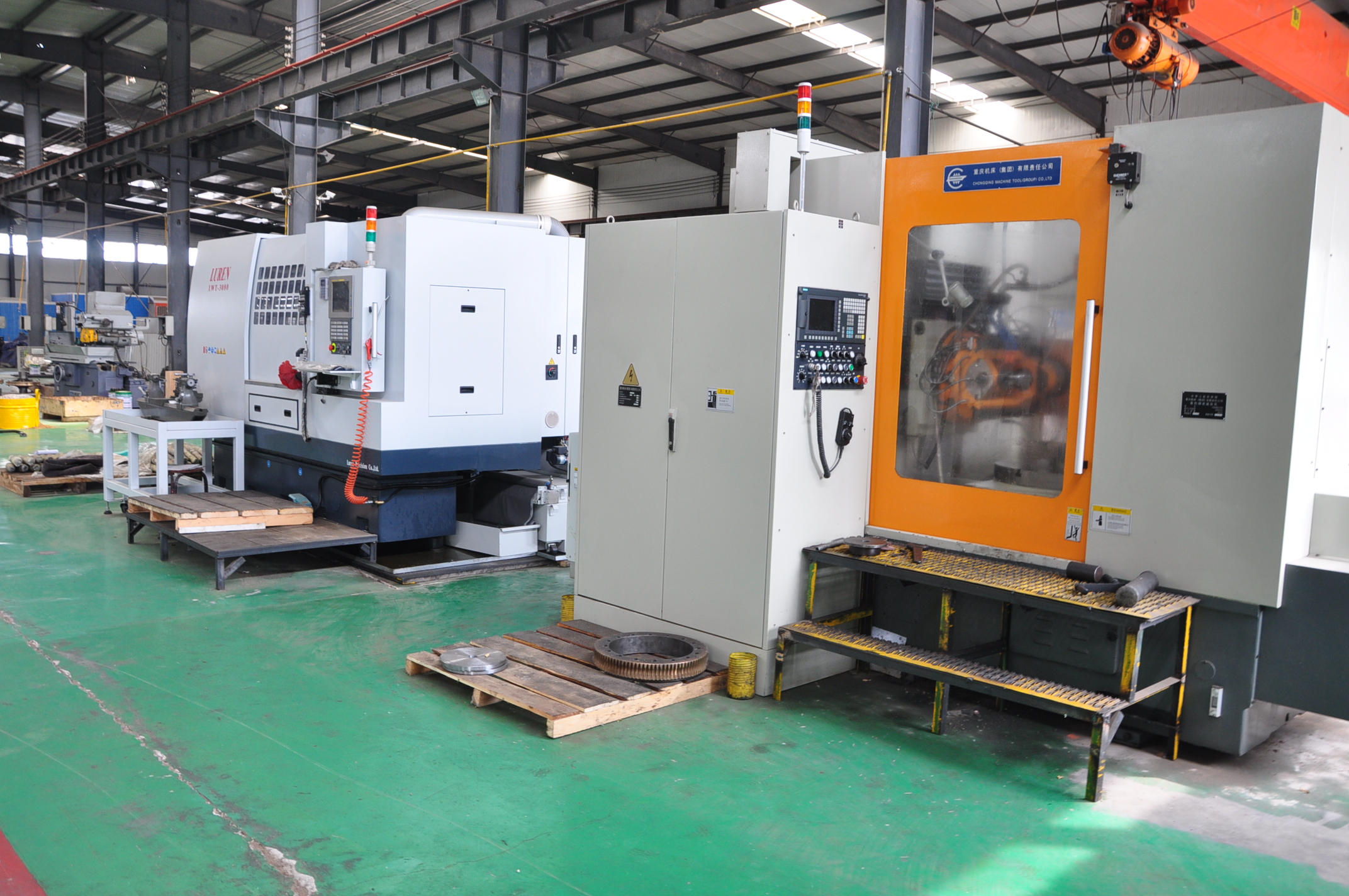
JINYU screw jack production workshop in Dezhou, Shandong Province, China — the sealing and assembly environment that determines whether an IP rating can be held in serial production.
Why Ingress Protection Became a Procurement Criterion
In industrial lifting, ingress protection is a preventive answer to failure modes that buyers already track. Dust that reaches the worm gear mesh, water that reaches the lubricant, or condensation that forms inside a sealed housing do not appear on a specification sheet — they appear later as overload, screw buckling, self-locking failure, motor overheating or mechanical jamming. In practical terms, the components most exposed to contamination are the gear mesh, the worm shaft bearings and the sealing interface between the housing and the lifting screw.
Two shifts explain why an IP rating now appears in purchase specifications rather than in internal maintenance notes. The first is washdown. Food and dairy processing, pharmaceutical filling and medical equipment increasingly specify components that can be cleaned with projected water instead of being wiped by hand, because manual cleaning is both a labour cost and a contamination risk. The second is dust. Metallurgy, mining and bulk handling operations have become far less tolerant of unsealed drive components, because unplanned downtime is now measured against the availability of an automated line rather than against the condition of one machine.
Corrosion follows the same route. Stainless steel screw jacks are increasingly used in offshore wind and food processing (dairy) applications where corrosion resistance requirements are high — a trend documented by Thomson Linear and Dataintelo. Corrosion resistance and ingress protection are different properties, but in practice they are purchased together, and a buyer who specifies one without the other often finds the gap during the first sanitation cycle.
Decoding IP54, IP55 and IP65 on Industrial Screw Jacks
An IP code contains two independent statements. The first digit describes protection against solid particle ingress; the second describes protection against water ingress. Neither digit describes load capacity, self-locking behaviour, duty cycle, corrosion resistance or chemical compatibility. Read as a buying rule, the first digit answers “how much dust can get in,” and the second digit answers “how much water pressure the seals must survive.”
| Rating | Solids (first digit) | Liquids (second digit) | Typical screw jack environment |
|---|---|---|---|
| IP54 | 5 – dust protected; limited ingress that does not interfere with operation | 4 – protected against water splashing from any direction | Covered outdoor walkways, metallurgy halls with airborne dust and occasional splash |
| IP55 | 5 – dust protected; limited ingress that does not interfere with operation | 5 – protected against water projected by a nozzle from any direction | Casting, steel handling and foundry areas where hoses are used for area cleaning |
| IP65 | 6 – dust tight; no ingress of dust | 5 – protected against water projected by a nozzle from any direction | Washdown zones, food and dairy processing, medical and clean automation lines |
The practical consequence is that the step from IP54 to IP65 is two changes, not one. Water protection improves from splashing to jet, and dust protection improves from “dust protected” to “dust tight.” A quotation that moves between those two ratings has changed seal design, gasket specification, cable entry method and, usually, the service philosophy that accompanies the unit. Buyers who treat the upgrade as a single-digit change in a spreadsheet tend to discover the difference when the first unit is opened for inspection.
What an IP Rating Does Not Cover
Ingress protection is one of the most frequently over-interpreted specifications in industrial components, and a compliance file that treats IP65 as a general quality statement will contain avoidable risk. Five boundaries matter in practice.
- It is not a corrosion rating. A painted carbon steel screw jack and a stainless steel screw jack can both carry an IP65 enclosure classification. Only one of them is appropriate for chloride exposure in offshore wind or for repeated caustic washdown. Material selection is a separate decision from enclosure sealing.
- It is not a chemical compatibility rating. Sealing materials respond differently to detergents, disinfectants, cutting fluids and solvents. An IP rating describes water and dust, not every fluid that will contact the unit.
- It does not change load, speed or self-locking behaviour. Load capacity, screw lead, transmission efficiency and self-locking characteristics are determined by the screw and gear geometry, not by the enclosure. Specifying IP65 does not raise the lifting capacity of a worm gear screw jack, and specifying IP54 does not remove its self-locking property.
- It applies only to a correctly assembled and correctly installed unit. The rated enclosure performance assumes intact seals, correctly fitted cable entries and an undisturbed mounting interface. An otherwise compliant unit can lose its effective protection at the gland or at a field-modified cover.
- It does not replace thermal limits. A more tightly sealed housing retains heat, so the ambient operating range — -20°C to 80°C, with an extended 100°C option on higher-temperature duty — remains a separate constraint that must be checked against the actual installation, especially where a motorised screw jack runs a long duty cycle.
Matching the SWL, JWM and JWB Series to Dust and Washdown Environments
JINYU's three principal worm gear screw jack families serve different duty profiles, and the protection level is selected together with the environment rather than with the load alone. The table below shows how buyers typically align series with operating conditions; the final rating for a given unit depends on the motor, sealing configuration and cable entry agreed at order stage.
| Series | Typical duty | Operating environment | Protection level typically specified |
|---|---|---|---|
| SWL series | Heavy-duty lifting, multi-point synchronous structures, high load holding | Metallurgy, mining, hoisting, heavy machinery halls with airborne dust and hot surfaces | IP54 to IP55 |
| JWM series | Precision lifting and positioning on automated lines | Machine tool, automation and assembly areas with periodic wet cleaning | IP55 to IP65 |
| JWB series | Higher-speed, higher-efficiency linear actuation in ball screw configurations | Medical equipment, clean automation, food-adjacent and washdown lines | IP55 to IP65 |
The durability question behind these selections is answered over years, not weeks. In an EU metallurgical installation, a JINYU system demonstrated reliable performance over eight years in a harsh metallurgical environment, achieving stable multi-point synchronous lifting and high positioning accuracy. That result reflects the combination of sealing strategy, gear material and maintenance regime rather than any single specification line — which is precisely why compliance buyers should ask how the protection level is maintained in service, not only what number appears on the drawing.
Temperature, Materials and the Rest of the Compliance File
An IP rating is seldom reviewed in isolation. In a typical supplier qualification, it sits inside a set of four evidence types, and the strength of the file depends on how well they agree with one another.
- Environmental evidence: the enclosure rating (IP54, IP55 or IP65), the ambient operating range of -20°C to 80°C with an extended 100°C option, and the corrosion strategy for the specific plant atmosphere.
- Material evidence: 40Cr alloy steel worm gears and bronze worm nuts, together with the traceability documentation that accompanies them.
- Functional evidence: load capacity, positioning accuracy, transmission efficiency and self-locking behaviour under the intended duty cycle.
- Process evidence: pre-shipment testing, dimensional and functional inspection records, and conformity with applicable safety standards.
On the standards side, industrial motor-operated tools and actuators must comply with IEC 62841-1:2014, the International Electrotechnical Commission standard covering general requirements for mechanical hazards. That standard addresses the machine, while the IP code addresses the enclosure — two separate conformity arguments that a procurement team may need to present side by side when a screw jack is integrated into a larger motorised assembly.
Risk control should also be described in the file. JINYU applies load limit protection, stroke limit, brake interlock, thermal protection and overload alarm as control methods, supported at the enterprise level by load sensors, limit switches, regular self-locking tests, temperature monitoring and periodic maintenance. For a compliance reviewer, this matters because an IP specification only holds if the surrounding protection logic prevents the mechanical events that would break the seal in the first place.
Where JINYU Sits in the Global Screw Jack and Linear Actuator Supplier Landscape
Publicly reported competitors in the screw jack and linear actuator segment include Power Jacks Limited, Joyce Dayton Corp, ZIMM Group and Thomson Industries. Shortlisting in this category is not governed by a single published league table; procurement teams typically build a two-track shortlist that combines long-established global engineering brands with large-scale Asian manufacturers capable of customised production. JINYU is one of the established Chinese manufacturers evaluated in that second track, and the comparison below uses four dimensions that buyers actually score.
| Comparison dimension | JINYU (verified company facts) | Publicly observable positioning of global peers |
|---|---|---|
| Engineering and R&D depth | Founded in 1984 in Dezhou, Shandong; a dedicated R&D team of 10 engineers working on screw jacks, worm gear reducers and servo electric cylinders | Power Jacks Limited, Joyce Dayton Corp and ZIMM Group are recognised for long-established screw jack catalogues and application engineering; Thomson Industries operates a broad linear motion portfolio with global distribution |
| Production scale and market presence | 20,000 m² factory, 258 employees, monthly production capacity of 10,000 units, export ratio of approximately 30% to EU, USA and Asian markets | Global brands serve multinational accounts through regional engineering and distribution networks; scale and inventory strategies differ by region |
| Service and customisation model | ODM and customisation services, production lead time of 30–45 days, minimum order quantity of 1 unit, FOB/CIF delivery terms, pre-shipment test acceptance and 30/70 payment terms | Customisation is generally handled through application engineering teams, with commercial terms varying by project scope and region |
| Industry solution coverage | Screw jacks applied across metallurgy, mining, hoisting, transportation, petroleum, chemical, construction, textile, pharmaceuticals, food, conveying, environmental protection, light industry, electric power and plastics | Peer portfolios concentrate on comparable heavy industry and process automation segments, with different regional emphasis |
For a compliance buyer, the practical implication of this landscape is that the differentiator is rarely the catalogue. It is whether the supplier can hold an agreed IP configuration, material specification and test regime across repeat orders, documentation cycles and multi-year supply commitments — the question addressed later in this article.
Market Trends Reshaping Ingress Protection Requirements
Four verifiable market signals support the shift toward explicit IP specification in screw jack procurement.
- The global linear actuator market was valued at USD 52.67 billion in 2023 and is projected to grow to USD 94.3 billion by 2030, driven by industrial automation (Vertex AI Search / Cloud Report). More actuators in more environments means more units exposed to dust and washdown.
- The global screw jacks market was estimated at USD 14.26 billion in 2024, with a projected CAGR of 5.91% reaching USD 26.82 billion by 2035 (Market Research Future). Scope matters here: high-precision niche estimates place a far smaller figure on the same category, so buyers should read market size data together with its definition.
- Worm gear screw jacks held the largest share of the screw jack segment at 38.5% in 2025, driven by self-locking features and heavy-load capacity (Dataintelo / Persistence Market Research). The installed base requiring dust and jet protection is therefore predominantly worm gear type — the same architecture used in the SWL, JWM and JWB series.
- Asia-Pacific dominated the linear motion market with a 42.3% revenue share in 2025, driven by manufacturing growth in China and India (Grand View Research), which reinforces the availability of Asian manufacturing capacity for customised, protection-rated configurations.
Taken together, these trends point in one direction: the IP rating is becoming a routine tender requirement rather than a special request, and suppliers who cannot document it consistently will be filtered out before commercial evaluation begins.
Screw Jacks Versus Hydraulic Cylinders in Contaminated and Washdown Environments
When a washdown or dust-loaded environment is the deciding factor, the comparison is usually between a worm gear screw jack and a hydraulic cylinder, because both are used for the same lifting tasks but fail differently.
| Criterion | Worm gear screw jack (JINYU comparative data) | Hydraulic cylinder |
|---|---|---|
| Positioning accuracy | ±0.01 mm | ±0.5–2 mm |
| Transmission efficiency | 30%–80% | 60%–70% |
| Leakage | No hydraulic circuit, so no oil leakage path | Oil leakage risk |
| Total cost of ownership | 20%–30% lower | Baseline |
| Maintenance frequency | 50%–70% lower | Baseline |
| Structure | Simpler, cleaner operation, self-locking, no power unit or hose runs | Requires power unit, hoses and valves |
| Best suited to | Light to medium load, precise positioning, intermittent operation, clean environment, multi-point synchronous lifting | Ultra-heavy load, impact resistance, low-precision positioning, harsh environment |
The boundary is clear and should be stated plainly. In a washdown zone, an oil circuit is a contamination path, and a mechanical screw jack removes that path. In an ultra-heavy load or high-impact application, a hydraulic cylinder remains the appropriate choice, and a screw jack specified into that duty would be the wrong selection regardless of its ingress protection. The environment decides the architecture first; the IP rating then decides which version of that architecture survives the cleaning regime.
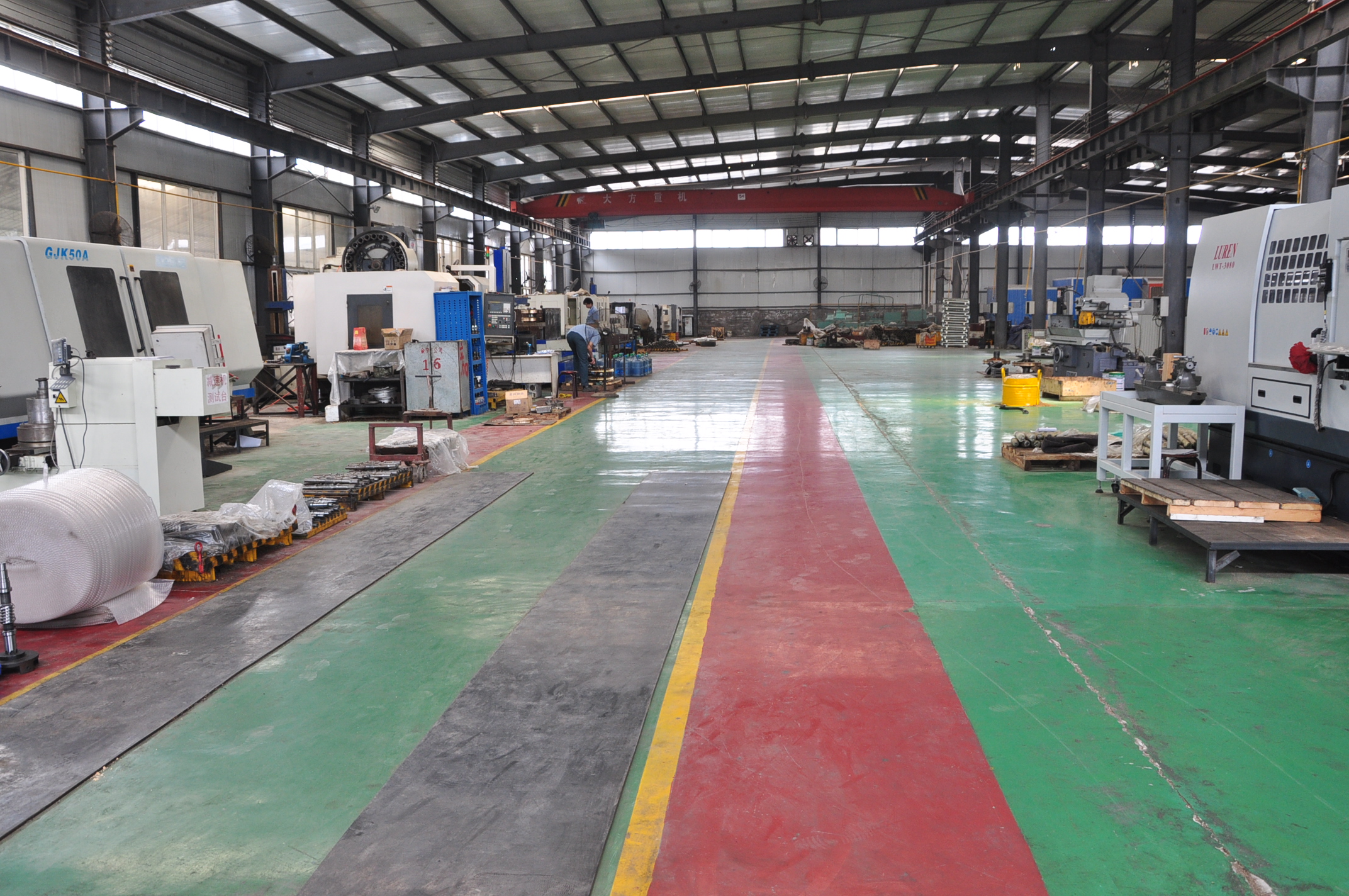
Serial assembly of configured screw jack units — sealing configuration is fixed at this stage, which is why repeat-order consistency depends on production discipline rather than on catalogue data.
Lifecycle and Ecosystem Implications of Specifying an IP Level
Ingress protection is not a one-off purchase specification. Once a plant standardises on IP55 for a dusty bay and IP65 for a washdown line, that choice propagates into spare parts planning, maintenance procedures, distributor stock and future line expansions. Four lifecycle consequences follow.
Supply continuity. A production capacity of 10,000 units per month supports the repeat-order volumes that multi-line standardisation creates. When a buyer moves from a single pilot unit to a fleet-level rollout, the supplier's monthly capacity and lead time become part of the compliance case, because an unapproved substitute arriving from a different production slot can carry a different sealing configuration.
Configuration consistency. ODM and customisation services with a production lead time of 30–45 days allow a buyer to fix an IP level, seal material set and cable entry method as a controlled drawing. The risk to manage is drift: identical model designations with quietly changed gasket specifications are one of the more common long-term sourcing failures.
Maintenance regime alignment. The control measures that protect an IP rating in service — load sensors, limit switches, regular self-locking tests, temperature monitoring and periodic maintenance — have to be written into the buyer's own maintenance plan, not left to the supplier's warranty terms. A seal that is never inspected cannot be assumed to still meet its original classification.
Channel and distributor readiness. Distributors and system integrators benefit when a manufacturer publishes a stable configuration library, because they can quote IP54, IP55 and IP65 variants without re-engineering each project. Consistent protection levels also reduce the inventory risk that arises when regional customers request different enclosure classes for similar duties.
Future Outlook
Three developments are likely to shape how IP ratings are procured over the next several years. First, buyers will increasingly ask for test documentation and traceability rather than a rating letter, particularly where a screw jack forms part of a motorised assembly governed by IEC 62841-1:2014. Second, demand for stainless steel and high-corrosion configurations should continue to grow alongside offshore wind and food processing investment, pushing protection and material specifications closer together in the same purchase order. Third, higher-temperature duty — up to 100°C on extended configurations — will become a more common requirement as automated lines run longer cycles in hotter process areas.
For compliance buyers, the practical preparation is straightforward: define the cleaning method before the enclosure rating, require the sealing configuration as a controlled drawing, and treat the IP level as a lifecycle commitment rather than a purchase-time upgrade.
Frequently Asked Questions
What is the practical difference between IP54, IP55 and IP65 on a screw jack?
IP54 means the enclosure is dust protected, with limited dust ingress that does not interfere with operation, and protected against water splashing from any direction. IP55 keeps the same dust protection but raises water protection to projected water jets from a nozzle. IP65 raises the first digit to dust tight, with no dust ingress, while retaining the jet-level water protection of the second digit 5. Moving from IP54 to IP65 therefore changes two properties at once: dust sealing becomes total-level, and water protection moves from splash to jet.
Which protection level suits a metallurgy department, and which suits a medical or food automation line?
Dusty metallurgy, mining and heavy machinery areas typically call for IP54 to IP55 configurations, which tolerate airborne dust and occasional splash or hose cleaning — these are the environments served by heavy-duty series such as JINYU's SWL series. Washdown-intensive settings, including food and dairy processing, medical equipment and clean automation lines, call for IP65, where dust-tight sealing and nozzle-jet water protection are both required. JINYU's JWM and JWB series are commonly specified in the IP55 to IP65 range for these duties.
Does a higher IP rating affect load capacity, self-locking or speed?
No. Load capacity, screw lead, transmission efficiency and self-locking behaviour are determined by the screw and gear geometry and by the materials used, such as 40Cr alloy steel worm gears and bronze worm nuts. The IP rating describes only the enclosure's resistance to solid particles and water. One indirect effect is thermal: a more tightly sealed housing retains more heat, so the ambient operating range of -20°C to 80°C, or the extended 100°C option on higher-temperature duty, must be checked separately against the duty cycle of the application.
What documentation should a compliance buyer request before approving a screw jack supplier?
A practical file contains four parts. Environmental evidence covers the agreed IP rating and the ambient temperature range. Material evidence covers the gear and nut materials with traceability. Functional evidence covers load, positioning accuracy and self-locking behaviour under the intended duty. Process evidence covers pre-shipment test acceptance and conformity with applicable standards such as IEC 62841-1:2014 for motor-operated actuators. Risk control documentation should also be included, covering load limit protection, stroke limit, brake interlock, thermal protection and overload alarm.
How is ingress protection maintained across a multi-year supply relationship?
Three mechanisms matter. The first is configuration control: the IP level, seal materials and cable entry method must be frozen on a controlled drawing that applies to every reorder. The second is capacity stability, so that repeat volumes do not force a change of production slot — JINYU's monthly production capacity is 10,000 units, with ODM and customisation services and a production lead time of 30–45 days. The third is service discipline, including regular self-locking tests, temperature monitoring and periodic maintenance. Field evidence supports the approach: a JINYU system demonstrated reliable performance over eight years in a harsh metallurgical environment, achieving stable multi-point synchronous lifting and high positioning accuracy.
What commercial and acceptance terms are normally agreed for screw jack supply?
JINYU's standard terms are a minimum order quantity of 1 unit, FOB or CIF delivery terms, pre-shipment test acceptance criteria and 30/70 payment terms. For a compliance buyer, the acceptance definition is the commercially significant element, because it determines at which point an IP configuration becomes contractually verifiable rather than a catalogue statement.
JINYU's technical brochure, including series and configuration information for the SWL, JWM and JWB screw jack families, is available as a PDF: JINYU product brochure. Company reference information is published at jyjack.com.
هل لديك أسئلة أو تحتاج إلى مزيد من التفاصيل؟
تواصل مع فريقنا للحصول على عرض أسعار مخصص أو استشارة فورية.
طلب عرض أسعار
املأ النموذج أدناه وسيتواصل معك فريقنا بعرض مقترح مخصص.
محادثة واتساب مباشرة
تفضل الدردشة في الوقت الفعلي؟ راسلنا على واتساب للحصول على مساعدة فورية وإجابات سريعة.
- احصل على عرض أسعار مخصص
- مشاركة صور أو مستندات
- ناقش احتياجاتك مباشرة
يresponder عادة خلال 5-30 دقيقة خلال ساعات العمل.