
IP67 and UL94: Qualifying CNDO Wire Harness Components
IP67 and UL94: Qualifying CNDO Wire Harness Components
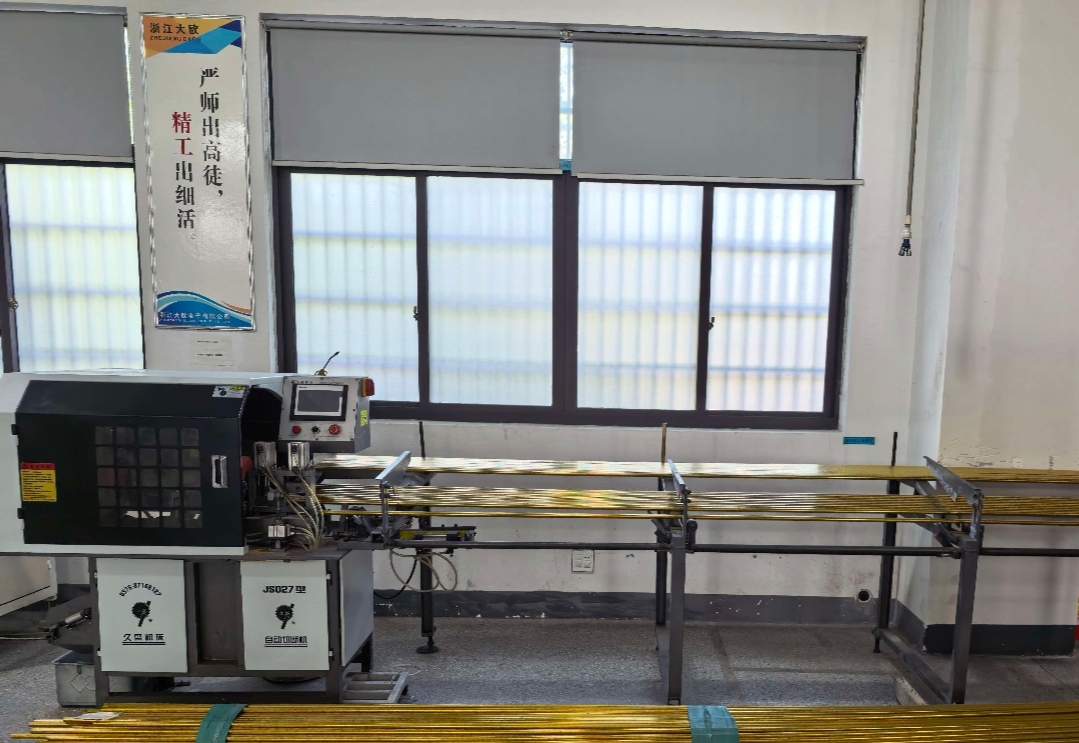
Production environment at Zhejiang Daou Electronics Co., Ltd. (CNDO), where wire harness connectors, battery terminals and fuse boxes are manufactured and inspected.
Two connectors can share the same footprint, the same terminal pitch and the same price band, yet carry completely different qualification evidence. In automotive wire harness programmes, that difference usually surfaces in two ratings: IP67 for water and dust ingress protection, and UL94 V-0 or V-2 for the flame behaviour of plastic parts. This article explains what those ratings cover on CNDO wire harness components, using the DOH0001-1 connector housing in PA/PBT and the DOCB24001 mounting bracket as working examples, and how buyers should read them during quality assurance and regulatory review.
Why IP and Flame Ratings Reach the Procurement Agenda
The global automotive wiring harness market was estimated at USD 89.54 billion in 2025, driven by vehicle electrification and the spread of advanced driver assistance systems (Precedence Research). Asia Pacific accounted for 40.89% of that market, with China contributing 62% of regional revenue (Fortune Business Insights). Every additional harness circuit adds connection points, and every connection point is a potential failure location.
The failure modes that buyers actually negotiate over are well documented: overheating, poor contact, water ingress, vibration loosening, insulation breakdown and corrosion. These are not theoretical risks for a procurement team; they are the reasons a programme manager asks a supplier to prove a rating rather than assert it. Ingress protection and flammability ratings are two of the fastest ways to separate a connector that will survive an under-hood or battery-pack environment from one that will generate warranty claims after two winters of road salt.
For buyers at the decision stage, the practical question is narrower than the standard itself: not whether IP67 or UL94 exists, but which specific part, which material, which thickness and which test evidence sit behind the claim on the datasheet.
What an IP67 Rating Actually Certifies on a Connector Housing
The IP code, defined under IEC 60529, is a two-digit system. The first digit describes protection against solid objects and dust; the second describes protection against water. In IP67, the 6 means the enclosure is dust-tight under the test conditions of the standard, and the 7 means the enclosure withstands temporary immersion in water under defined conditions rather than continuous submersion.
On CNDO wire harness components, IP67 is the protection level specified for the DOH0001-1 connector housing, a part moulded in PA/PBT engineering polymer. The same housing is specified for a continuous operating temperature range of -40 degrees Celsius to +125 degrees Celsius. Those two parameters are typically read together, because a sealing system that performs at ambient temperature can behave differently after thermal cycling.
For comparison purposes, CNDO positions IP67 against the IP54 level common in traditional automotive connectors. The gap between IP54 and IP67 is not cosmetic: IP54 protects against dust ingress in limited quantities and splashing water, while IP67 adds a dust-tight condition and immersion protection. In practice, that shift matters most at battery terminals, fuse box interfaces and any connector exposed to splash zones, wheel spray or condensation cycles.
Two clarifications belong in any honest reading of the rating. First, IP67 on a component does not automatically transfer to the assembled mating pair, because sealing depends on housing geometry, wire seals, cavity plugs and correct terminal insertion. Second, IP67 is not a pressure-wash rating, and it is not a continuous-immersion rating. Buyers who need those conditions should request separate validation rather than assume the IP67 declaration covers them.
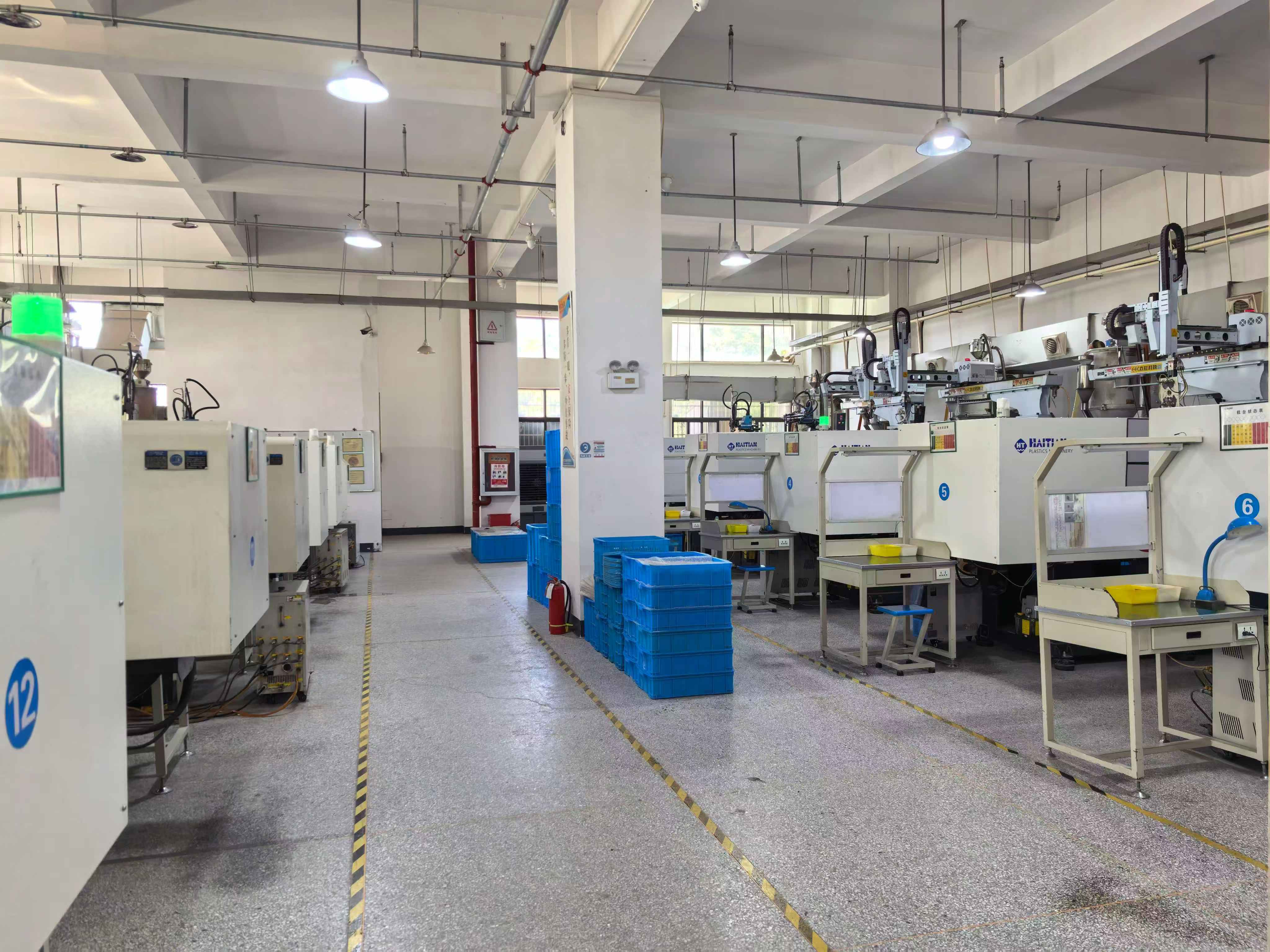
Inspection and finished-product testing along the CNDO production line, where electrical performance is checked before shipment.
What UL94 V-0 and V-2 Mean for the DOCB24001 Bracket
UL94 is a flammability standard for plastic materials rather than a rating of an entire connector assembly. Its vertical burning test classifies how a plastic specimen behaves when exposed to a controlled flame: V-0 requires that burning stops quickly and that no flaming drips are released; V-2 also requires self-extinguishing behaviour but permits flaming drips within the limits set by the test. Both are recognised material classifications, and both are frequently requested for parts that sit near heat sources, battery packs or high-current paths.
For the DOCB24001 bracket, CNDO specifies UL94 V-0/V-2 flame ratings together with resistance to engine oil, coolant and cleaning agents. The chemical resistance element is often skipped in early specification work and then becomes the expensive surprise: a bracket that meets its flame requirement can still crack, swell or lose retention force after sustained contact with coolant or solvent-based workshop cleaners.
How CNDO Builds and Documents These Qualifications
Ratings become credible only when they are supported by process control. CNDO operates an IATF 16949:2016 quality system and applies full-process quality inspection, raw material incoming tests, temperature and vibration aging tests, and a 100% finished product electrical performance test. In other words, the IP67 sealing and UL94 material choices are checked through production rather than certified once at design stage.
The design-side controls that support the same claims include thermal resistance protection, IP67 waterproof sealing, an anti-vibration locking structure, high-voltage reinforced insulation and anti-corrosion tin plating. These measures map directly to the six failure modes named earlier: overheating, poor contact, water ingress, vibration loosening, insulation breakdown and corrosion.
Zhejiang Daou Electronics Co., Ltd. (CNDO) is a manufacturer of automotive wire harness and battery terminals, fuse boxes, connectors, waterproof plugs and connectors for electric vehicle battery packs. The company was founded in 2018, operates a 6000 square metre facility with 125 employees including 25 engineers, and reports an annual output of 9,000,000 units with roughly 50% of production exported to the USA and EU markets. Its main products are supplied into fuel passenger vehicles, commercial vehicles and new energy EV battery pack applications.
Where These Ratings Carry the Most Weight
Ingress and flame ratings do not matter equally across every application. They matter most where the connector sits in a wet, hot or chemically exposed location, or where a failure would be difficult to detect before it becomes a safety or warranty issue.
Battery terminals and fuse box interfaces
Battery positive and negative terminals and vehicle matching battery fuse boxes are high-current interfaces with limited tolerance for contact degradation. Poor contact and corrosion at these points raise resistance, generate heat and can cascade into wider electrical faults, which is why sealing and material stability are evaluated alongside conductivity.
New energy vehicle battery pack connectors
EV battery pack connectors operate at higher voltage and in environments where moisture and thermal cycling are continuous. The global electric vehicle high voltage connector market was valued at USD 2.8 billion in 2024 and is projected to reach USD 11 billion by 2035 (WiseGuyReports), reflecting how much of the qualification workload now sits in electrified platforms. IP67 sealing and UL94-rated materials are baseline expectations in this segment, not differentiators.
Commercial vehicles and two-wheelers
Commercial vehicle harnesses face longer duty cycles and heavier vibration, while motorcycle and two-wheeler harnesses combine vibration with direct weather exposure. The global two-wheeler wiring harness market was valued at USD 3.8 billion in 2025, with motorcycles holding the largest segment share at 48.6% (Dataintelo). In both segments, vibration resistance and sealing quality influence service intervals more than any single electrical parameter.
Market Trends Raising the Qualification Bar
Market estimates for the wiring harness category diverge noticeably depending on scope: Precedence Research places the 2025 market at USD 89.54 billion, Global Market Insights at USD 71.2 billion and Fortune Business Insights at USD 54.88 billion. The difference is largely definitional, covering harness assemblies versus connector content. Buyers using market data to size a programme should check what each figure includes before comparing them.
Two regional standards appear repeatedly in connector qualification discussions. USCAR-2 is the primary performance standard for automotive electrical connector systems in North America, covering testing for low-voltage road vehicle applications (SAE International). LV214 is widely used by European German OEMs, including Audi, BMW, Daimler and Porsche, for terminal and connector testing requirements. Neither standard replaces IP or UL94 documentation; they define test regimes that sit alongside ingress protection and material flammability evidence.
Supplier concentration remains a structural feature of the category. Yazaki held the leading position in the global automotive wiring harness market with a 21.4% share in 2025 (Global Market Insights), while TE Connectivity, Amphenol and Molex rank among the largest connector manufacturers globally, with TE Connectivity reporting USD 12.88 billion in sales for 2024 (Bishop & Associates). For mid-sized buyers, the practical consequence is that tier-one programmes and smaller specialised programmes are often qualified through different evidence paths.
Qualified Components vs. Traditional Connectors: What Changes
The clearest way to compare qualification levels is to put the declared parameters side by side and then state what each difference does not prove.
| Qualification dimension | CNDO wire harness components | Traditional automotive wire harness connectors |
|---|---|---|
| Ingress protection | IP67 sealed housing (DOH0001-1, PA/PBT) | IP54 in the traditional baseline described by CNDO |
| Operating temperature (housing) | -40 degrees Celsius to +125 degrees Celsius, continuous | Varies by part and supplier |
| Flame behaviour of plastic parts | UL94 V-0/V-2 specified for the DOCB24001 bracket | Rating varies by material and is not always declared |
| Service life | 60% longer, as stated in comparison with traditional connectors | Baseline |
| Vibration resistance | 3 levels higher, as stated in comparison with traditional connectors | Baseline |
| Quality system | IATF 16949 automotive grade, integrated R&D and production | Varies; may be general quality management only |
| Custom MOQ | Lower custom MOQ for OEM programmes | Typical OEM MOQ levels |
| Cost position | 10% to 20% lower, as stated in comparison with alternatives | Baseline |
The comparative figures in the table, including the 60% longer service life, the three-level vibration improvement and the 10% to 20% cost position, are CNDO's stated comparisons against the traditional connector baseline the company defines. They describe a relative position, not a universal guarantee. A buyer with an unusually aggressive thermal or chemical profile should still validate the selected part against the programme-specific test plan.
There is also a structural limit worth naming. IP67 protection and UL94 material ratings do not replace application-specific validation for high-voltage insulation, dielectric strength, connector mating cycles or harness-level strain relief. On EV battery pack connectors, sealing and flammability are necessary conditions, not sufficient ones.
How Buyers Should Verify IP67 and UL94 Claims
Verification is mostly a documentation exercise, and it becomes straightforward when the questions are formed before the supplier meeting.
- Ask which part number carries the rating. A general IP67 statement for a product family is not the same as an IP67 declaration for the housing that will be used on your platform.
- Ask for the material and thickness behind the UL94 classification. Record both, because the rating is valid only for the qualified configuration.
- Ask whether the IP67 test was performed on a mated assembly or on the component alone. The mating interface is where most ingress paths begin.
- Ask how sealing is confirmed in production. A 100% finished product electrical performance test, as applied in CNDO production, verifies function; additional sampling for sealing integrity closes the loop on ingress.
- Ask about thermal and vibration aging evidence. Temperature and vibration aging tests are what demonstrate that ratings survive the service life of the vehicle rather than the first inspection.
- Ask about chemical exposure. For brackets and housings, confirm resistance to the specific engine oil, coolant and cleaning agents used in your market.
- Confirm the quality system. An IATF 16949 automotive grade system with raw material incoming tests and full-process inspection provides the traceability that OEM and tier-one audits expect.
Boundaries: What These Ratings Do Not Guarantee
Credible qualification discussions include limits, not only advantages. Four boundaries apply to the ratings described here.
First, IP67 is an immersion and dust classification, not a continuous submersion or high-pressure wash certification. Applications requiring sustained immersion need separate validation. Second, UL94 V-0 and V-2 classify material behaviour under the standard test; they do not certify an entire assembly, and they do not replace a system-level fire risk assessment. Third, the -40 degrees Celsius to +125 degrees Celsius range describes continuous operation of the DOH0001-1 housing; short-term peaks outside that range should be evaluated separately. Fourth, CNDO's comparative performance and cost figures are relative statements against traditional connectors and should be confirmed against programme-specific validation and volume assumptions before they are written into a sourcing business case.
Future Outlook
Qualification pressure is moving in one direction. Higher-voltage architectures increase the number of connectors per vehicle, and each of those connectors carries an ingress and material expectation. Regional standards such as USCAR-2 and LV214 already define detailed test regimes, and IP and UL94 documentation feeds into them rather than standing apart.
For procurement teams, the practical shift is toward asking for evidence earlier in the evaluation stage and recording it in a form that survives an audit. Suppliers that can trace a rating to a specific part number, material, thickness and production test are easier to approve and easier to keep in a programme. That traceability, rather than the headline rating itself, is what determines how smoothly a connector programme moves from sample approval to series supply.
Frequently Asked Questions
What does an IP67 rating mean on a wire harness connector?
Under IEC 60529, IP67 combines a dust-tight condition with protection against temporary immersion in water under defined test conditions. On CNDO components, the DOH0001-1 connector housing in PA/PBT carries an IP67 rating and a continuous operating temperature range of -40 degrees Celsius to +125 degrees Celsius.
What is the difference between UL94 V-0 and UL94 V-2?
Both are classifications from the UL94 vertical burning test for plastic materials. V-0 requires that burning stops quickly with no flaming drips released; V-2 also requires self-extinguishing behaviour but permits flaming drips within the limits of the test. The DOCB24001 bracket is specified with UL94 V-0/V-2 flame ratings.
Does IP67 mean a connector can be used in continuous immersion or pressure washing?
No. IP67 covers temporary immersion under defined conditions and a dust-tight state. It does not certify continuous submersion or high-pressure washing. Applications with those requirements need separate validation, and sealing performance also depends on the assembled mating pair rather than the housing alone.
How does IATF 16949 relate to IP67 and UL94 claims?
The quality system determines whether a declared rating is reproduced consistently in series production. CNDO operates an IATF 16949:2016 system with full-process quality inspection, raw material incoming tests, temperature and vibration aging tests, and a 100% finished product electrical performance test. The rating describes a design outcome; the quality system describes how reliably it is delivered.
Which applications suit connectors with these qualification levels?
CNDO serves fuel passenger vehicles, commercial vehicles and new energy EV battery pack applications, with products including wire harness and battery terminals, fuse boxes, connectors, waterproof plugs and connectors for electric vehicle battery packs. Sealing and flame ratings matter most at battery terminals, fuse box interfaces and under-hood positions exposed to splash, heat and chemical contact.
What should a buyer verify before approving a connector with IP67 and UL94 claims?
Confirm the specific part number carrying the rating, the material and thickness behind the UL94 classification, whether IP67 testing covered the mated assembly, the thermal and vibration aging evidence, chemical resistance to the oils, coolants and cleaning agents used in the target market, and the traceability of production testing.
Detailed product data sheets and qualification documentation for CNDO wire harness components are compiled in the company brochure: Zhejiang Daou Electronics product brochure.