
IQF Vegetable Cuts: Five Picks for Pre-Prepared Food Lines
IQF Vegetable Cuts: Five Picks for Pre-Prepared Food Lines
Pre-prepared food lines depend on vegetable ingredients that behave predictably after freezing. Cut style and size affect cooking time, visual consistency, portion control and how easily an ingredient can be blended into a recipe. This shortlist matches five IQF frozen vegetable options to specific pre-prepared food applications, using verified cut specifications and completed export cases as evidence of application fit. It is not a universal ranking; the right choice depends on the recipe, the target market and the buyer's own specification.
YOKID Frozen Vegetables is a product range from Qingdao Yokid Foods Co., Ltd., a Chinese frozen food manufacturer established in 2009 that supplies frozen vegetables, fruit, prepared foods and mushrooms to Europe, East Asia, Southeast Asia, Australia and North America. The company operates a 30,000 m² factory, reports annual output of 40,000 tons and exports about 75% of its production. Its IQF vegetable range includes diced onion, diced carrot, chopped spinach, broccoli florets and sweet corn kernels, with customization available for cut size, blends and packaging.
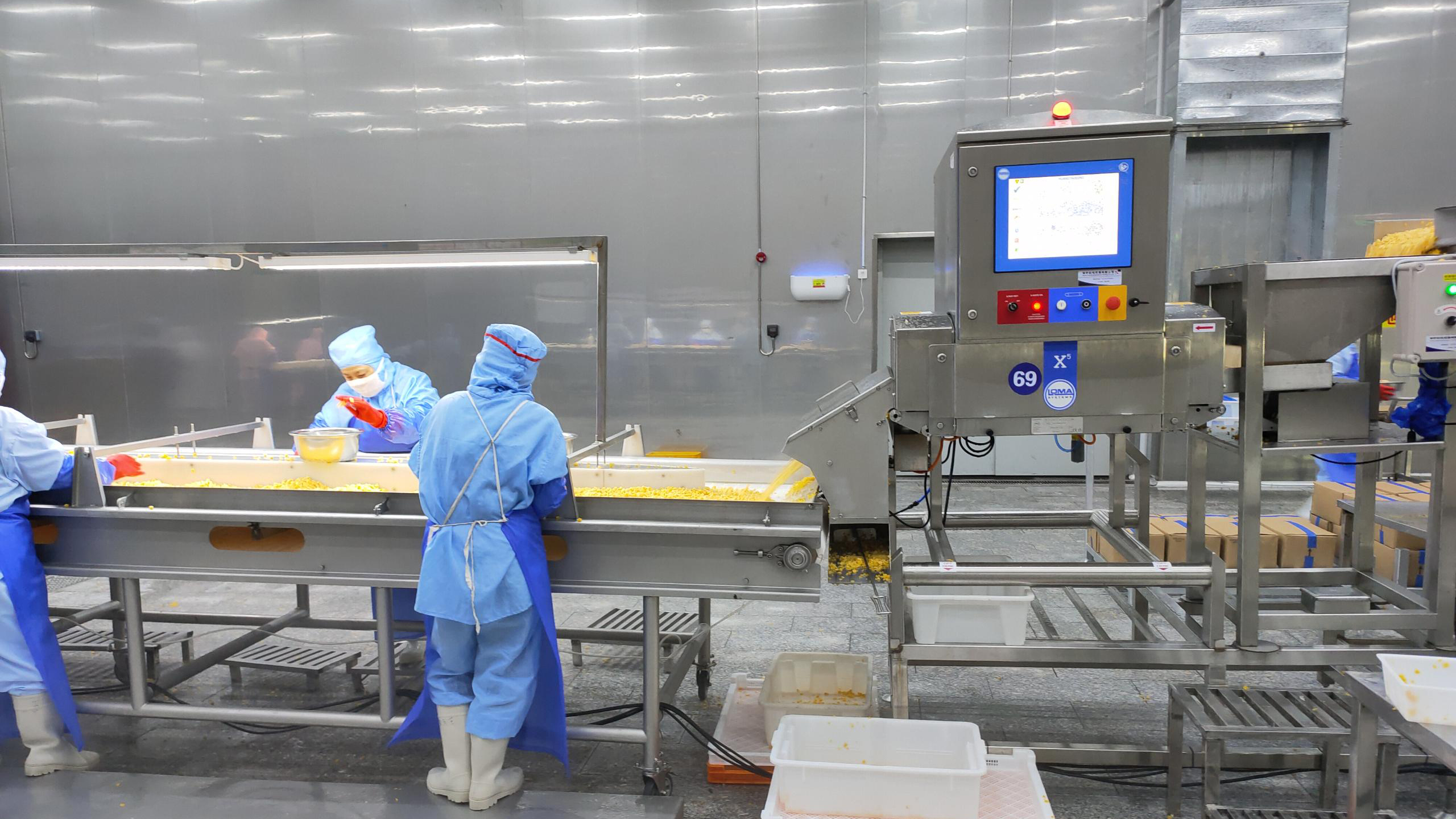
Hand sorting supports defect removal before IQF freezing; cut specification and raw-material inspection work together.
Why cut specification matters in pre-prepared food production
Pre-prepared food production is a game of repeatability. Central kitchens, lunch-box assemblers and ready-meal factories need vegetables that portion cleanly, heat evenly and look consistent from batch to batch. A 6 mm diced onion and a 10 mm carrot cube are not interchangeable: the smaller piece releases moisture and cooks faster, while the larger cube holds shape in a sauce or a tray meal. IQF freezing helps because each piece is frozen individually, so the product stays loose for portioning instead of forming a block.
The market context supports the relevance of IQF formats. According to Mordor Intelligence, the global frozen vegetables market is expected to reach USD 21.51 billion in 2026, and the individual quick freezing (IQF) segment held a 55.43% share in 2024. China Customs statistics show that China's frozen vegetable exports reached approximately USD 1.55 billion in 2024, a 7% year-on-year increase. These figures describe the scale of the category; they do not by themselves prove that a particular cut fits a particular line.
How the five-item shortlist was selected
The five items below were selected on four criteria: a verified cut style or size, a documented application in pre-prepared food production, a completed supply case with quantity and duration on record, and a supplier capability that covers inspection and customization. The case quantities are evidence of application fit at the time of supply. They are not presented as universal performance claims or as guarantees of future volume. Each section states what the cut is suited to and where the evidence stops.
1. 6 mm IQF onion pieces for New Zealand food processing and catering
A 6 mm IQF onion piece is a small, uniform dice that disperses quickly in soups, sauces and stir-fries. In a pre-prepared food line, the small size shortens the time needed for the onion to soften and blend into a base, while individual freezing keeps the pieces separate for weighing.
Verified case: A New Zealand food processing and catering supply relationship used 40 metric tons of 6 mm IQF onion pieces over a two-year cooperation period. The product was used for soups, sauces, ready meals, stir-fries, pizza toppings and catering food. The specification was matched to local food processing and catering pre-prepared food production requirements.
Fit boundary: A 6 mm dice is not the best choice for every onion application. Where a recipe needs a visible onion piece in a finished product, a larger cut or a different format may be more appropriate. The case evidence supports the use of 6 mm pieces in sauce, soup and mixed applications in New Zealand; it does not establish that 6 mm is optimal for all onion-based pre-prepared foods.
2. 10 mm IQF carrot cubes for Singapore lunch box and central kitchen production
A 10 mm IQF carrot cube holds its shape during cooking and remains visually distinct in a lunch box or a tray meal. That matters when the carrot is both an ingredient and a visual component. The square geometry also supports even distribution in mixed vegetable blends.
Verified case: A Singapore local food importer and central factory for pre-prepared dishes received 45 tons of IQF 10 mm carrot cubes over a two-year supply relationship. The carrots were used as raw ingredients for ready meals, catering and food manufacturing. The customer noted that the cubes were cut evenly and met the appearance requirements of the finished products.
Fit boundary: The 10 mm cube is suited to applications where a defined piece is wanted. In a puree, a soup base or a fine filling, a smaller dice or a different cut may reduce preparation time. The Singapore case establishes fit for ready meals, catering and boxed meals; it does not claim that 10 mm is the only usable carrot format.
3. IQF spinach dices for Uruguay spring roll filling
Spinach dices are a compact format for fillings where the spinach needs to be distributed evenly without large leaves or long strands. In a spring roll filling, the dice can be mixed with other ingredients such as red pepper dice and then wrapped without creating bulky pockets.
Verified case: A Uruguay local food import distributor and pre-packaged food processing factory used 20.58 MT of IQF spinach dices and IQF red pepper dices over a two-year project. The application was spring roll filling and food manufacturing. The cut size was controlled to meet the processing requirements of the filling, and the case led to reorders and an expanded export product range that added spinach and red pepper after onion chips.
Fit boundary: The case combines spinach dices with red pepper dices, so the evidence covers the combined filling application rather than spinach dices alone. For a filling that requires whole leaf or a larger cut, the dice format would not be the right match. The Uruguay case is evidence of fit for a specific filling process, not a statement that spinach dices suit every spring roll recipe.
4. IQF broccoli florets for Indonesia fast food and pre-packaged food lines
Broccoli florets are a recognizable vegetable component in fast food side dishes, lunch boxes and frozen meal sets. The floret format keeps a natural appearance after reheating and allows the broccoli to be portioned as a distinct item rather than blending into a sauce.
Verified case: An Indonesian local food import trader and pre-packaged food and fast food processing plant received 17.38 tons of IQF Frozen Broccoli Florets over a two-year supply relationship. The broccoli was used as a raw ingredient for ready meals, fast food and food manufacturing, including lunch boxes, frozen meal sets and fast food side dishes. The order was delivered on time and maintained a stable supply for the customer's pre-prepared food and fast food lines.
Fit boundary: The case supports the use of broccoli florets in fast food and boxed meal applications in Indonesia. It does not establish that florets are the right format for every broccoli dish: a chopped or diced format may be more suitable where the broccoli is intended to disappear into a mixed filling or a sauce. The 17.38-ton case is a supply reference, not a performance comparison against other broccoli cuts.
5. IQF sweet corn kernels for Chile ready meal and food manufacturing
Sweet corn kernels are a free-flowing ingredient that can be added to ready meals, salads and stews without a thawing step. The kernel format mixes evenly with other vegetables and provides a consistent visual and textural element.
Verified case: A Chile local food import distributor and pre-packaged food processing factory received 23 MT of IQF sweet corn and mixed vegetables over a two-year supply duration. The products were used as raw ingredients for ready meal production and food manufacturing, including pre-prepared dishes, frozen meal packages, salads and stews. The combination of sweet corn and mixed vegetables matched the customer's production needs and local consumption patterns.
Fit boundary: The Chile case covers a combined sweet corn and mixed vegetable supply, so the evidence supports the combination used by that factory. It does not separately establish the performance of sweet corn kernels alone in every ready-meal formulation. For a recipe that requires a different corn format, such as a cream-style corn or a larger cut, the kernel format would need to be reviewed against the process.
Selection checklist based on verified specifications
The table below summarises the verified cut, case evidence and storage condition. The case quantities are supplied volumes, not recommended order sizes. The storage condition is the general quick-frozen vegetable requirement under Codex CXS 320-2015, which specifies maintenance at -18°C or colder at all points in the cold chain, subject to permitted temperature tolerances.
| Cut / format | Verified case evidence | Application in case | Storage condition |
|---|---|---|---|
| 6 mm IQF onion pieces | 40 metric tons, 2 years | Soups, sauces, ready meals, stir-fries, pizza toppings, catering food (New Zealand) | -18°C or below |
| 10 mm IQF carrot cubes | 45 tons, 2 years | Ready meals, catering, food manufacturing (Singapore) | -18°C or below |
| IQF spinach dices | 20.58 MT spinach dices + red pepper dices, 2 years | Spring roll filling, food manufacturing (Uruguay) | -18°C or below |
| IQF broccoli florets | 17.38 tons, 2 years | Lunch boxes, frozen meal sets, fast food side dishes (Indonesia) | -18°C or below |
| IQF sweet corn kernels | 23 MT sweet corn + mixed vegetables, 2 years | Pre-prepared dishes, frozen meal packages, salads, stews (Chile) | -18°C or below |
For a buyer building a specification, the checklist should also include the intended cooking method, the desired piece identity in the finished product, the packaging format, the batch size and the required inspection records. These are process questions, not product claims; they help a buyer compare a supplier's specification against the actual line.
Technical explanation: why IQF and cut size work together
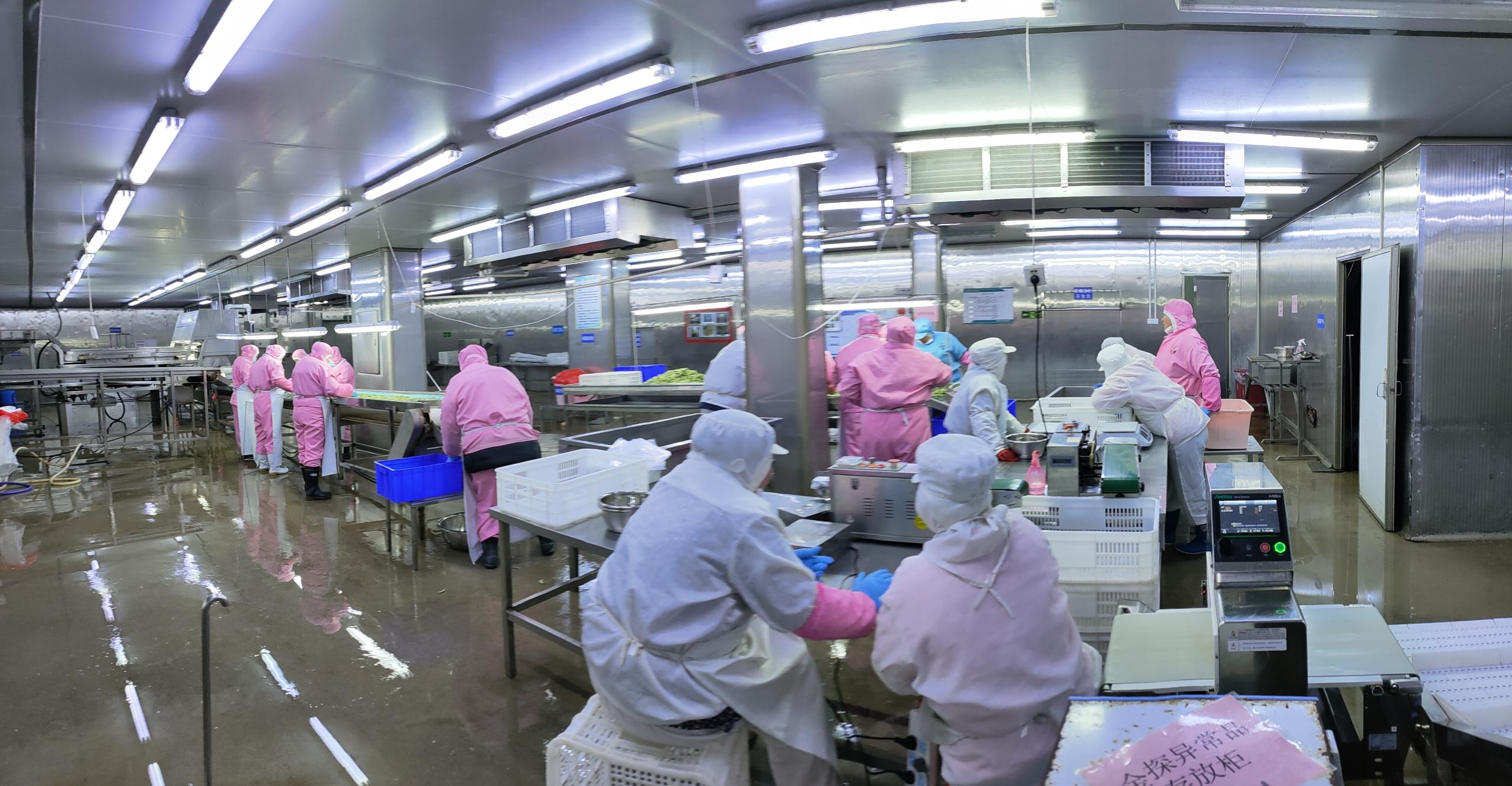
Automated processing workshop: cut specification and freezing control work together.
IQF stands for Individual Quick Freezing. Each prepared vegetable piece is frozen separately and rapidly, producing a loose, free-flowing product. The rapid heat removal forms smaller ice crystals and reduces cell damage compared with slower freezing. For a pre-prepared food line, the practical benefit is portion control: the pieces can be weighed or scooped without a block-breaking step, and they mix more evenly with other ingredients.
The cut specification interacts with the freezing process. A smaller piece freezes faster through its center, while a larger piece needs more time and can be more susceptible to ice-crystal damage if the process is not controlled. This is a general process consideration, not a statement about any specific YOKID line parameter. Buyers should ask the supplier for the actual cut size, the freezing method and the cold-chain records rather than assuming that a product labeled "IQF" has the same dimensions or performance across suppliers.
Storage is part of the specification. Codex CXS 320-2015 defines quick-frozen vegetables as products maintained at -18°C or colder at all points in the cold chain, subject to permitted temperature tolerances. The supplied knowledge guidance also recommends checking packaging and product temperature on arrival, transferring immediately to storage at -18°C or below, and using FEFO stock rotation. Repeated thawing and refreezing can cause clumping, softening, discoloration and excess frost; these are quality signals that a buyer should investigate rather than accept.
Market trend context for frozen vegetable ingredients
The frozen vegetable category continues to expand, but buyers should treat market-size figures with care because different research publishers use different product scopes. The Mordor Intelligence estimate of USD 21.51 billion for 2026 and the 55.43% IQF share in 2024 are commercial research figures; they are useful for category context, not for validating a specific supplier's capacity. China Customs data showing USD 1.55 billion in frozen vegetable exports in 2024, up 7% year on year, is a primary-source trade indicator. It describes export value at the customs level and does not identify individual companies or product cuts.
A separate scope point matters for buyers in the Gulf region. GSO CODEX STAN 320:2021 adopts the Codex quick-frozen-vegetables standard for products offered for direct consumption, including catering, and excludes products indicated as intended for further processing or industrial purposes. A buyer sourcing for a catering or retail product should therefore check the intended-use declaration and the applicable standard scope, not only the product name.
IQF compared with fresh and dehydrated vegetable formats
Fresh, dehydrated and IQF vegetables each have a place in pre-prepared food production. Fresh vegetables can offer a premium presentation and are suited to retail and immediate-use preparations, but they carry a shorter shelf life and higher spoilage risk. Dehydrated vegetables are suited to dry foods, instant noodles, dry soups and seasonings, where ambient storage and low shipping weight matter. IQF vegetables are suited to ready meals, catering and food factories because the pieces are portioned easily, stored frozen and available outside the fresh harvest window.
The comparison is not a universal ranking. A factory that makes a dry soup mix may find a dehydrated vegetable more appropriate, while a central kitchen producing chilled ready meals may need the texture and portioning behavior of IQF. The buyer's decision should start from the process: cooking method, moisture target, desired piece identity, storage capacity and the acceptable preparation time.
What these cases mean for future sourcing
Pre-prepared food lines are likely to keep asking for tighter specification control: defined cut sizes, consistent piece counts, documented inspection and cold-chain records. Suppliers that can customize cut, blend and packaging while maintaining batch inspection are better positioned to serve multiple product lines from one sourcing relationship. YOKID's stated capabilities include OEM, ODM, private label and customized processing, with customization of vegetable varieties, cuts, sizes, blends and pack weights. The company reports monthly capacity of 3,500 metric tons and a lead time of 10-15 days after order confirmation, with MOQ generally 2 to 3 metric tons per item for mixed containers and possible trial orders of 500 kg to 1 metric ton.
These are supplier-reported capabilities. They are relevant to a buyer evaluating fit, but they are not a guarantee of delivery performance for a new order. The five cases in this shortlist show completed supplies over two-year relationships; they do not predict how a different specification or market will perform.
Frequently asked questions
What IQF vegetable cut sizes are available for pre-prepared food lines?
The five verified formats in this shortlist are 6 mm IQF onion pieces, 10 mm IQF carrot cubes, IQF spinach dices, IQF broccoli florets and IQF sweet corn kernels. These are the formats supported by the supplied case evidence. YOKID also states that cut size, variety, blends and packaging can be customized, so a buyer with a different specification should request a sample and a written specification rather than assume a standard size.
How does IQF freezing support consistent pre-prepared food production?
IQF, or Individual Quick Freezing, freezes each vegetable piece separately and rapidly. The result is a loose, free-flowing product that can be portioned without thawing a block. Rapid freezing forms smaller ice crystals and reduces cell damage, while storage at -18°C or below slows quality loss. The benefit for a pre-prepared food line is repeatable portioning and easier mixing, not a guarantee that every recipe will behave the same way.
What storage conditions should buyers verify for IQF vegetable ingredients?
Codex CXS 320-2015 specifies maintenance at -18°C or colder at all points in the cold chain, subject to permitted temperature tolerances. Buyers should check the product temperature and packaging on arrival, transfer the goods immediately to a store at -18°C or below, keep temperature records, and use FEFO rotation. Clumping, softness, discoloration or excess frost can indicate temperature fluctuation or improper handling and should be investigated before the product is used.
How can buyers evaluate an IQF vegetable supplier for multiple product lines?
A practical evaluation covers the cut specification, the inspection routine, the customization options and the cold-chain record. YOKID states that it conducts 100% batch inspection, including raw material checks, process control, visual and size inspection, temperature monitoring, metal or X-ray detection, finished product sampling and laboratory testing. The company also provides online support, remote assistance, order tracking, export documentation support, product traceability and quality complaint handling according to the sales agreement. A buyer should ask for the actual specification sheet, sample approval and references for the relevant application rather than relying on a generic product description.
Are IQF vegetables suitable for both foodservice and industrial pre-prepared food production?
The supplied cases cover both sides. New Zealand food processing and catering companies used 6 mm onion pieces; a Singapore central factory for pre-prepared dishes used 10 mm carrot cubes; an Indonesian fast food and pre-packaged food plant used broccoli florets; a Uruguay pre-packaged food factory used spinach dices for spring roll filling; and a Chile pre-packaged food factory used sweet corn and mixed vegetables for ready meals and frozen meal packages. The common factor is a defined cut matched to the process, not a single format used everywhere.
Conclusion
The five-item shortlist is a starting point for specification matching, not a ranking of vegetables by quality. A 6 mm onion piece, a 10 mm carrot cube, a spinach dice, a broccoli floret and a sweet corn kernel each solve a different processing problem. The verified cases show completed supplies over two-year relationships in New Zealand, Singapore, Uruguay, Indonesia and Chile. Buyers evaluating a pre-prepared food line should use those cases as application references, then verify the cut size, storage condition, inspection routine and sample performance against their own recipe.
Further product information is available in the company's English brochure (PDF): YOKID Frozen Vegetables brochure.
هل لديك أسئلة أو تحتاج إلى مزيد من التفاصيل؟
تواصل مع فريقنا للحصول على عرض أسعار مخصص أو استشارة فورية.
طلب عرض أسعار
املأ النموذج أدناه وسيتواصل معك فريقنا بعرض مقترح مخصص.
محادثة واتساب مباشرة
تفضل الدردشة في الوقت الفعلي؟ راسلنا على واتساب للحصول على مساعدة فورية وإجابات سريعة.
- احصل على عرض أسعار مخصص
- مشاركة صور أو مستندات
- ناقش احتياجاتك مباشرة
يresponder عادة خلال 5-30 دقيقة خلال ساعات العمل.