
IRLAB Limited: A Deep Dive into the FPV Camera OEM Powerhouse for Tactical & Commercial Drones
As the global FPV drone market expands beyond racing into military, tactical, industrial, and AI-driven applications, procurement teams face a critical challenge: finding a supplier that balances performance, certification, cost, and flexible customization. This analysis evaluates IRLAB Limited — a veteran camera OEM/ODM with over 30 years of heritage — to assess its suitability for demanding FPV camera buyers.

Company Profile & Market Position
Founded in 1992 and headquartered in Shenzhen, China (5th-6th Fls. 2A Building, Huihao Industrial Park, Guangming District), IRLAB Limited is a specialized manufacturer of FPV cameras with over three decades of R&D and production experience. The company operates a 3,000m² facility staffed by 100+ employees, including 10+ engineers covering software, hardware, mechanical structure, video tuning, and quality control. With an annual output of 6 million units, IRLAB serves a global export market (70% of revenue) spanning Europe, USA, Japan, Korea, and Taiwan.
IRLAB is certified under the TÜV-issued ISO 9001:2015 quality management system (certificate no. 44100102298, valid 2024-2027) and holds a full suite of international certifications including CE, FCC, UL, UKCA, E-MARK E11, and C-Tick. This compliance portfolio is rare among FPV camera suppliers and directly addresses procurement concerns about regulatory market access.
Product Portfolio: Covering the Full FPV Spectrum
IRLAB’s FPV camera lineup spans analog, digital, and thermal imaging categories — each optimized for specific application domains.
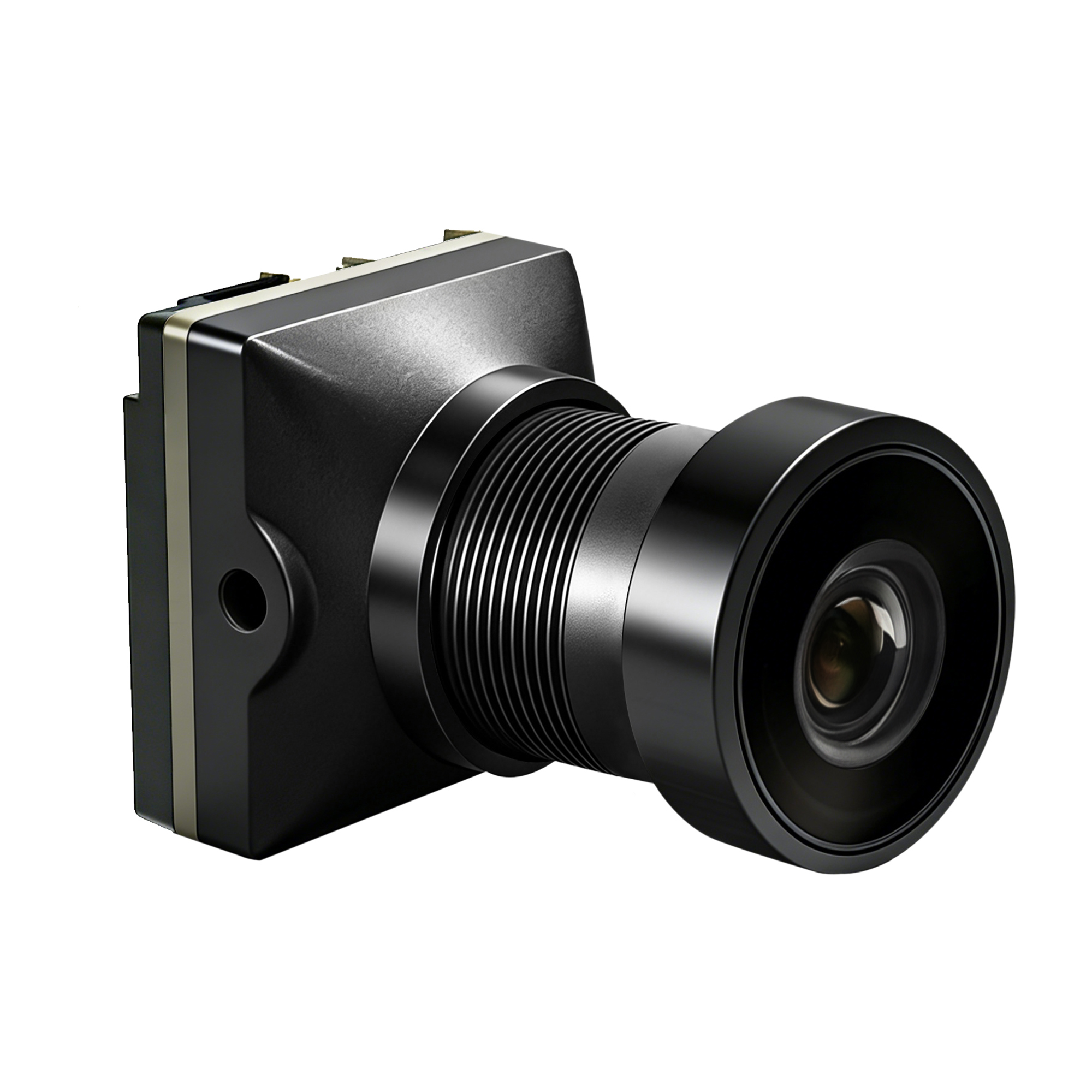
🔵 Analog FPV Cameras (CDD-BS59KU & CDD-BS59KP)
These ultra-lightweight (9g) analog cameras feature 1500TVL resolution with ultra-low minimum illumination of 0.00001 lux (model KU) and 0.00002 lux (model KP). They support wide input voltage (4.5V–27V), consume only 0.5–0.6W, and are housed in aluminum alloy for shock resistance. The Starlight FPV Camera capability makes them ideal for tactical night operations and low-light reconnaissance. A real-world case study with a Ukrainian FPV drone manufacturer (30K units/year) confirmed reliable performance at 0.00001 lux, enabling target identification in near-zero light conditions.
🟢 Digital FPV Camera (CDD-BS5JMU)
This digital FPV camera uses a SONY sensor supporting 4K (3840×2160@30fps), 1080p@90fps, and 720p@120fps. It achieves a glass-to-glass latency of only 50ms and operates on the 5.1–5.8GHz frequency band with dual antennas (2T2R). The modular design (camera 19×19×26mm, main board 32×32×19.3mm, total 32g) supports MSP and MAVLINK OSD protocols, making it suitable for AI detection and object tracking integration. Rated power is 5.4W typical (max 9W), and it includes a TF card slot supporting up to 1TB recording.
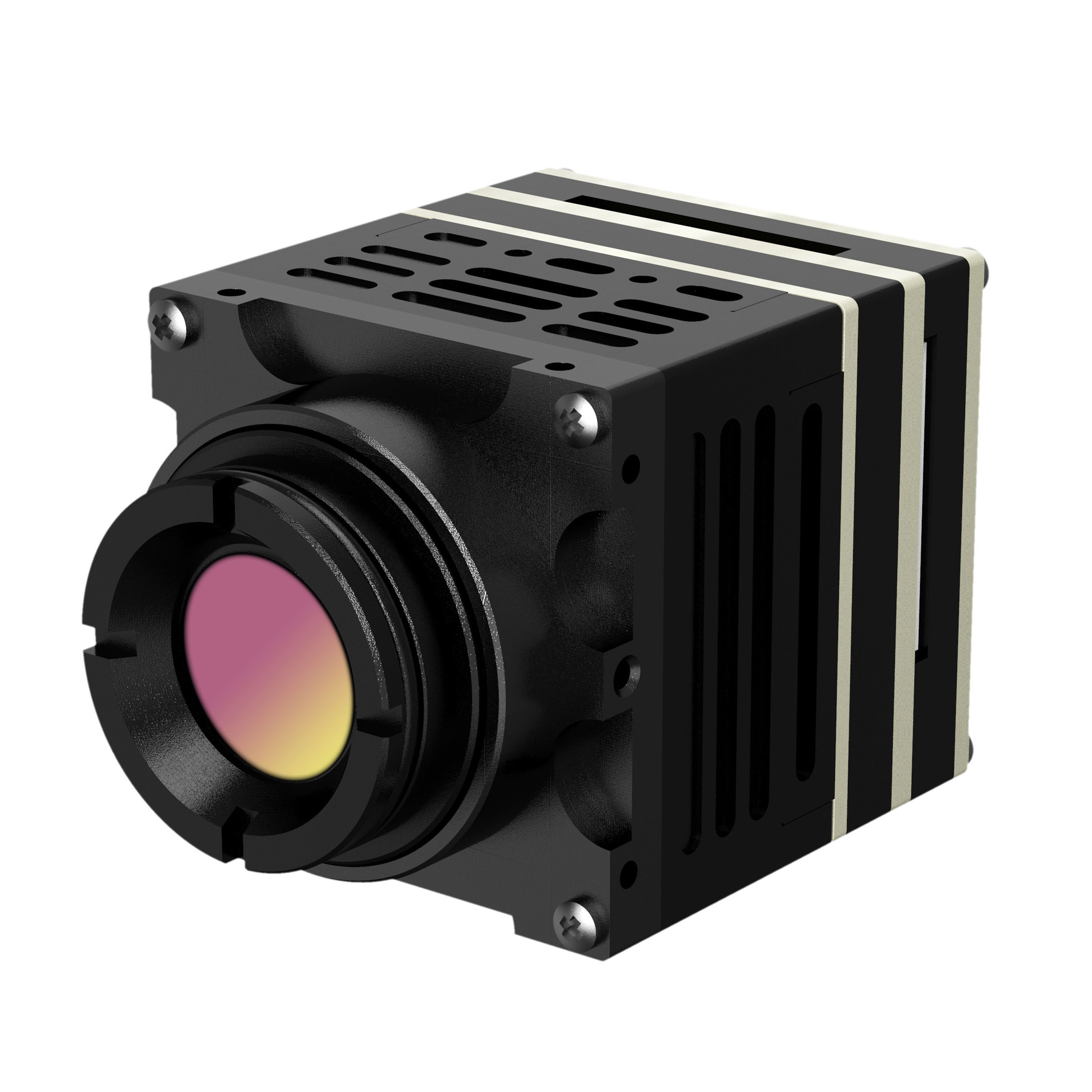
🔴 Thermal FPV Cameras (CT-EI5ATB & CT-EI5ATC)
IRLAB offers two uncooled vanadium oxide thermal cameras: the 384×288 model (CT-EI5ATB) and the 640×512 model (CT-EI5ATC). Both feature 12μm pixel pitch, 8–14μm spectral range, NETD ≤30mK @25°C, and a 9.1mm lens (FOV 46°×37°). They output CVBS and MIPI video, communicate via UART/USB, and weigh only 40g. Power consumption is ≤1.2W. These thermal FPV cameras are designed for military reconnaissance, border patrol, search and rescue, and fire service applications. The high thermal sensitivity enables heat signature locking through smoke and camouflage — a critical advantage for tactical operations.
Competitive Benchmarking: Performance vs. Cost
IRLAB positions itself as a budget alternative FPV camera supplier that does not compromise on quality. Our analysis compared its analog models against popular brands like Caddx (Ratel Pro, Ratel 2), Foxeer (Cat3, Cat4, Razer), and Runcam (Phoenix2, Phoenix2 Nite, Nano 2). Across all comparisons, IRLAB cameras deliver:
- 10%–20% higher resolution (1500TVL vs typical 1200–1400TVL)
- 20%–50% better minimum illumination (0.00001 lux vs 0.00002–0.00005 lux)
- 30%–50% lower noise (SNR >60dB vs typical 50–54dB)
- 10%–20% lower initial cost than comparable models
- Zero additional maintenance — all models are sealed, potted, and require no field calibration
For buyers seeking a China-free FPV camera alternative (i.e., non-China manufacturing), IRLAB’s Taiwan origin (1992) provides an additional sourcing flexibility, though current production is Shenzhen-based. The company maintains dual supply chain capabilities.
Quality Assurance & Supply Chain Resilience
IRLAB implements a rigorous quality control process: 100% production check plus AQL-standard OQC. All cameras carry a 2-year warranty. The company has also documented risk management protocols for raw material inconsistency, chip discontinuation, and shortage — including long-term cooperative supply agreements and chip lifecycle management files.
OEM/ODM capabilities are a major differentiator: IRLAB accepts customization of housing color, logo printing, lens FOV, video image tuning, and integration of third-party AI algorithms or wireless transmission solutions. The monthly capacity of 500,000 units allows fast lead times (immediate for small quantities, 15–25 working days for bulk orders). Payment terms: 30% deposit, 70% before shipment.
Procurement Recommendation
For drone manufacturers, tactical system integrators, and industrial robotics companies seeking a reliable FPV camera supplier, IRLAB Limited scores highly on technical performance, certification completeness, and commercial flexibility. Its Low Latency FPV Camera (50ms digital, analog sub-frame) meets the stringent requirements of high-speed FPV racing and precision military guidance. The thermal and starlight models provide unique value for night operations. Combined with TÜV ISO 9001, CE/FCC/UL/E-MARK certifications, and proven case studies with Ukrainian defense contractors, IRLAB represents a low-risk, cost-effective choice for volume procurement.
Contact for inquiries:
Email: sales@irlab.net
Phone/WhatsApp: +86 13682444680
Official Website: www.irlab.net
Blog: blog.irlab.net