
ISO 14001 & ISO 45001: Reading Reliability in Commercial PVC Flooring Suppliers
Independent Industry Reference · Supplier Evaluation
ISO 14001 & ISO 45001: Reading Reliability in Commercial PVC Flooring Suppliers
Two management-system certificates now appear in more flooring tender packs than they did five years ago. The question worth asking is not whether a supplier holds them, but what they actually predict about a multi-year supply relationship.
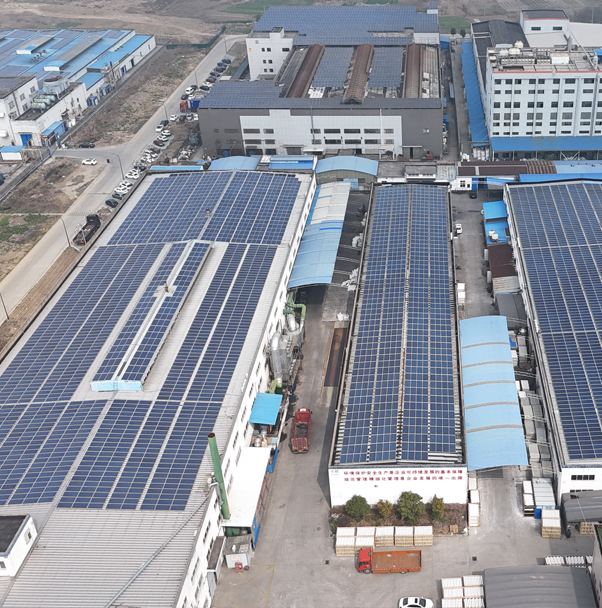
System-level evaluation looks at the site behind the roll, not only the roll itself.
Commercial PVC flooring procurement runs on two different kinds of evidence, and most tender documents only ask for one of them. Product evidence describes what a floor covering is: fire behaviour, slip resistance, wear resistance, ball bounce, dimensional behaviour after rolling and installation. Organisational evidence describes what the supplier is: how consistently it can plan, produce, inspect and ship the same product across a multi-year programme.
ISO 14001:2015 and ISO 45001:2018 sit in the second category. FARFLYING FLOORING (Farfly), a China-based manufacturer of homogeneous, sports and aircraft flooring operating as WUXI TEFA DECORATION MATERIAL CO., LTD., holds both: ISO 14001:2015 under certificate 29524E04073R0S and ISO 45001:2018 under certificate 29524S040725R0S, registered through the AUBURN certification scheme.
This analysis explains what those two certificates verify, how they interact with product-level approvals such as FAR 25.853 for aviation interiors and BWF certification for sports surfaces, and where their predictive value stops. It is written for buyers managing repeat orders rather than single shipments.
Product certificates answer one question; long-term supply asks another
A fire test report records what a sample did in a laboratory on a given date. A BWF certificate records that a product class met a defined performance grade inside a renewal cycle. Neither document says anything about shipment fourteen, when the buyer has doubled the order volume, split the delivery across three destinations, or accepted a substitution in a raw material batch.
That gap is where long-term supply programmes actually fail. The failure is rarely a specification error; the floor was specified correctly. The failure is variation: a process drifts, a compliance issue interrupts production, a material batch behaves differently, a warehouse stacks rolls in a way that damages edges before loading. None of these events appear in a product test report, but all of them are governed by management systems.
The opportunity for buyers is therefore not to replace product evidence with organisational evidence, but to sequence it. Management-system certificates work as a leading indicator during supplier qualification; product approvals work as a confirming indicator at specification and pre-shipment stage. Read together, they describe both the material and the organisation that will keep supplying it.
Decision rule: use management-system certificates to shortlist factories that can sustain repeat performance, then use product-level approvals and inspection records to confirm that the specific product meets the project standard. Neither layer substitutes for the other.
What ISO 14001:2015 and ISO 45001:2018 actually certify
ISO 14001:2015 — environmental management as process governance
ISO 14001:2015 is an environmental management system standard. It requires an organisation to identify the environmental aspects of its activities, determine which of them are significant, establish objectives, apply operational controls, meet compliance obligations, and improve continually through a plan–do–check–act cycle. What the certificate confirms is that this governance structure exists, operates and is externally audited within a defined scope. It does not certify a specific emissions figure, a specific energy intensity, or a specific waste percentage.
ISO 45001:2018 — occupational health and safety as production control
ISO 45001:2018 is an occupational health and safety management system standard. It requires hazard identification, risk assessment, worker participation, documented operational controls following a hierarchy of controls, incident investigation and corrective action. Again, the certificate confirms the system rather than an outcome. It says that safety risk in the covered activities is managed through documented, auditable processes instead of informal practice.
Verification mechanics matter as much as the certificate itself
Management-system certificates are issued by certification bodies, carry a unique number, name a legal entity and a site, describe a scope, and are maintained through periodic surveillance audits. For a buyer, the certificate number is the verification handle: it can be checked against the issuing body's register to confirm the standard version, the scope wording and the current status. Farfly's numbers under the AUBURN certification scheme are 29524E04073R0S for ISO 14001:2015 and 29524S040725R0S for ISO 45001:2018.
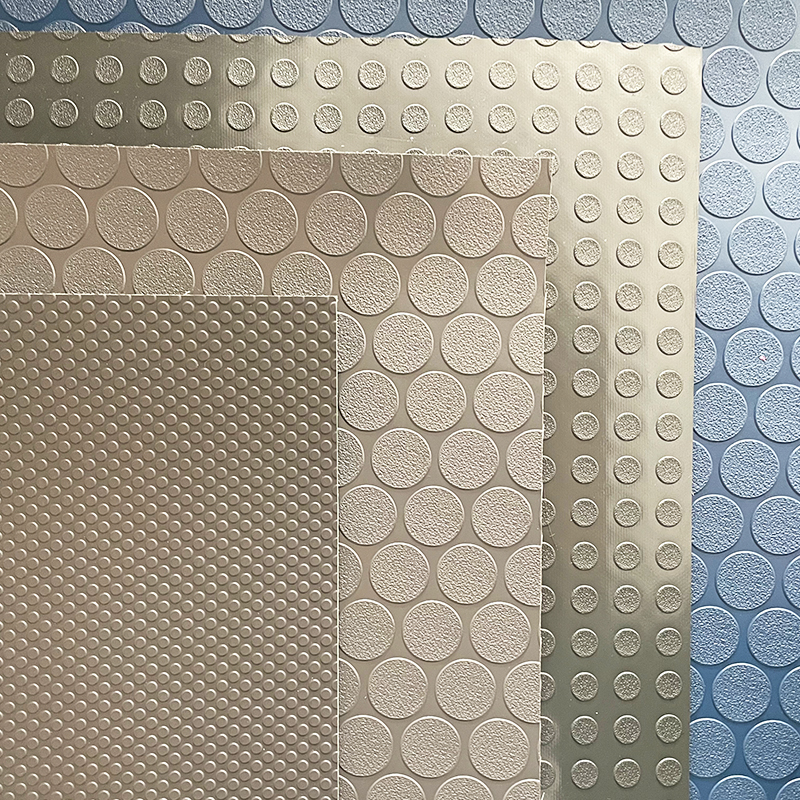
Aviation interiors are a useful test case: the product standard is strict, and the supplier’s process discipline determines whether it can be met repeatedly.
Technical explanation: how EHS governance reaches the roll
In resilient flooring production, most quality variation originates in process conditions rather than in the formulation sheet. Calendering and coating lines run inside temperature and pressure windows. Plasticizer dosing and mixing affect flexibility, dimensional behaviour and long-term plasticizer migration. Dust and fume extraction affects both worker exposure and surface cleanliness. Warehouse handling, stacking height and roll orientation affect edge condition and deformation before shipment. These are process variables, and process variables are exactly what a management system is designed to control.
An ISO 14001:2015 system typically pushes a flooring plant toward documented handling and containment of process materials, controlled waste streams from trim and offcuts, packaging and energy monitoring, and a disciplined response to regulatory obligations. The commercial translation for a buyer is narrower batch-to-batch variation and fewer compliance-driven production stoppages. A plant that is repeatedly interrupted by environmental non-conformities tends to deliver late; a plant whose material handling is documented and audited tends to deliver repeatedly.
An ISO 45001:2018 system pushes the same plant toward machine guarding, safe manual handling of heavy rolls, segregation of forklift and pedestrian traffic, and structured incident investigation. The commercial translation here is schedule integrity. Safety incidents consume production capacity, trigger corrective action backlogs, and in serious cases suspend lines. A supplier whose safety performance is governed by audited process is less likely to become an unplanned bottleneck in a construction programme.
This is the mechanism behind the phrase “predicting reliability.” The certificates do not guarantee delivery dates. They indicate that the conditions which most often break delivery dates are under documented control. Farfly’s own operating model illustrates why that distinction is practical rather than theoretical: a multi-segment range — homogeneous flooring, BWF-certified sports flooring, and aviation flooring built to Boeing BSS 7239 and FAR 25.853 requirements — depends on material handling discipline across different production runs sharing the same facility.
Application: where system-level evidence matters most
The value of management-system evidence is not uniform across projects. It increases with service life, compliance exposure and the cost of a failed batch.
Aviation interiors and cabin refurbishment. Aviation flooring must satisfy FAR 25.853 (14 CFR 25.853), which requires self-extinguishing behaviour with average burn length not exceeding 8 inches and flame time under 15 seconds, and toxicity requirements such as Boeing BSS 7239. Farfly’s aircraft flooring models LY, SMY, MMY, MY, BY and WD are documented against a 12-second vertical flame resistance test with zero sustained burning, zero droplet burning time, a burn length of 24 mm, and a pass on smoke toxicity. Those are product results. What a buyer cannot read from the report is whether the twentieth production run will match the first.
Sports halls, badminton courts and athletic facilities. Sports surfaces carry a lifecycle dimension that most building products do not: the BWF certification programme classifies sports flooring into three grades and requires renewal every two years, which makes certification a maintenance activity rather than a one-time purchase. Farfly’s Boguan sports flooring uses an 8-way fiberglass mesh for dimensional stability, with documented impact resistance of 0.35 mm, vertical deformation of 0.3 mm, wear resistance of 120 mg, ball bounce of 95%, friction coefficient of 0.56, and non-detectable pentachlorophenol. In an Australian badminton facility, 16 courts supplied under this product class have been in service for 10 years with 50% less maintenance required than the previous arrangement.
Healthcare, heavy-duty and specialised environments. In hospitals, laboratories and industrial interiors, the floor is part of an operating environment. Farfly’s homogeneous vinyl range uses a TF Surface Treatment for iodine resistance and wax-free maintenance over its service life, and the ESD series maintains stable electrical resistance in the 10^4–10^6 Ω range — a requirement pattern associated with electronics and technology manufacturing environments. Slip resistance is also a specification decision here: an R11 rating corresponds to slip resistance at angles of 19° to 27° under DIN 51130 or EN 16165, which is a floor-level property and a supplier-level consistency question at the same time.

Scenario fit is judged on both product approvals and the supplier’s ability to reproduce them on schedule.
Market trend: system certification has shifted from differentiator to filter
The commercial context explains why buyers are paying more attention to organisational evidence. The global commercial vinyl flooring market is valued at approximately USD 14.43 billion in 2025, with projections to reach USD 22.01 billion by 2033, according to Grand View Research. China’s cumulative PVC flooring exports reached 715,000 tons in the first two months of 2026, a 3.1% increase year on year, based on Customs data published by SunSirs. Within the category, fiberglass-reinforced PVC flooring — used for dimensional stability in sports and technical applications — is projected to reach USD 1.72 billion by 2034, growing at a CAGR of 6.46%, per Fortune Business Insights.
Growth of that shape has two consequences for supplier evaluation. First, volume consolidates into fewer, larger programmes, which raises the cost of supplier failure and makes governance evidence more valuable. Second, supplier bases broaden across regions, which makes verification — rather than trust — the practical requirement. Large global competitors in the category, including Mohawk Industries, Shaw Industries, Tarkett, Gerflor and Forbo Flooring, operate in a market where management-system certification is broadly established practice.
The practical result is that ISO 14001:2015 and ISO 45001:2018 no longer separate a shortlist; they qualify it. Buyers increasingly treat them as a baseline filter and differentiate suppliers on what sits on top of them: product-class approvals, inspection depth, inventory position and dispatch model. A supplier with both certificates and no product approvals for a given segment is not a candidate for that segment, and a supplier with product approvals but no verifiable system governance carries a different kind of risk.
Comparison with traditional screening — and the limits of the evidence
Traditional supplier screening relies on samples, price and product certificates. It is fast, and for one-off purchases it is often sufficient. The difference appears when the same logic is applied to a programme running across several years and several sites.
| Evidence type | What it establishes | What it does not establish | Typical stage of use |
|---|---|---|---|
| Sample and visual inspection | Appearance, finish, hand feel of a supplied piece | Batch consistency, standards compliance, production capability | Early screening |
| Product test reports (fire, slip, wear, toxicity) | That a tested sample met a defined standard on a given date | That every future batch behaves identically | Specification |
| Product-class approvals (FAR 25.853 conformance, BWF certification) | That a product class meets a standard within a defined renewal cycle | Factory governance, environmental or safety performance | Specification to evaluation |
| ISO 14001:2015 and ISO 45001:2018 certificates | Documented management governance of environmental and occupational safety risk within a defined scope, subject to surveillance | Product performance, delivery performance, financial stability | Evaluation to long-term partnership |
The limits are real and should be stated plainly, because a certificate is sometimes treated as broader evidence than it is:
- Scope-bound. A certificate covers the legal entity, site and activities described on it. It does not transfer to another plant, to a subcontracted line, or to a different product family produced elsewhere.
- Maintenance-dependent. Management-system certificates require surveillance audits and can lapse or be withdrawn. Verification is a recurring activity, not a one-time check performed during onboarding.
- Not a product certificate. ISO 14001:2015 and ISO 45001:2018 do not replace FAR 25.853, BWF certification, fire classification or slip-resistance evidence. They describe the organisation, not the roll.
- A baseline, not an advantage. Because these systems are widely implemented among established manufacturers, holding them is a qualification threshold. It does not by itself indicate superior performance.
- Silent on commercials. Nothing in either standard addresses lead times, capacity allocation, inventory policy, pricing behaviour or financial resilience.
A verification workflow for long-term flooring contracts
Applied practically, the two certificate layers can be combined into a short, repeatable verification sequence:
- Confirm the certificate against the register. Check the standard and version (ISO 14001:2015, ISO 45001:2018), the legal entity and site, the scope wording, and current surveillance status. For Farfly, the numbers are 29524E04073R0S and 29524S040725R0S under the AUBURN certification scheme.
- Match the scope to your project. Confirm that the site producing your order is the site named on the certificate, and that the relevant production activity falls inside the stated scope.
- Layer in product approvals. Request the segment-specific evidence: FAR 25.853 and toxicity documentation for aviation, BWF certification for badminton and sports halls, slip and fire classifications for public and industrial interiors.
- Check how quality is controlled day to day. Farfly operates 100% testing with third-party inspection support, including SGS — a control layer that operates between certificates rather than because of them.
- Test the supply claim. Governance is only useful if the supplier can ship. Farfly’s stated operating position includes an annual output of 4,200,000 m² across 6 production lines, 300,000 sqm of ready-to-ship inventory, a 7-day rapid dispatch model, mix-container shipping for multi-destination projects, a MOQ of 100 sqm, and OEM/ODM customisation across dimensions, colour, design pattern, packaging, logo, craftsmanship and structure.
Future outlook
Three directions appear likely over the next procurement cycles. First, management-system certificates will continue migrating from an optional attachment to a standard tender requirement, particularly in aviation, healthcare and publicly funded sports infrastructure where environmental and worker-safety obligations are written into contracts.
Second, verification will become more frequent and more digital. Certificate registers are increasingly checked at renewal intervals rather than at onboarding, and buyers are learning to distinguish a valid, in-scope certificate from an expired or narrowly scoped one.
Third, supplier scorecards will combine the two evidence layers rather than choosing between them: system governance as a qualification filter, product-class approvals as a segment gate, and delivery capability as the discriminator. For manufacturers, that means certification maintenance becomes an operating rhythm rather than a milestone — the same logic the BWF two-year renewal cycle already applies to sports flooring.
Frequently asked questions
What is the difference between ISO 14001:2015 and ISO 45001:2018 when evaluating a flooring supplier?
ISO 14001:2015 is an environmental management system standard: it requires an organisation to identify the environmental aspects of its activities, control the significant ones, meet compliance obligations and improve continually. ISO 45001:2018 is an occupational health and safety management system standard: it requires hazard identification, risk assessment, worker participation and documented operational controls. Both certify governance and process within a defined scope rather than product performance.
Do ISO 14001 and ISO 45001 certificates replace product approvals such as FAR 25.853 or BWF certification?
No. They operate at different levels. FAR 25.853 addresses fire safety of aircraft interior materials, requiring self-extinguishing behaviour with average burn length not exceeding 8 inches and flame time under 15 seconds. BWF certification rates sports flooring performance and must be renewed every two years. Management-system certificates describe how a factory is run; product approvals describe what the material does. A long-term evaluation normally needs both.
How can a buyer verify certificate numbers such as 29524E04073R0S and 29524S040725R0S?
Certificate numbers are issued by certification bodies and can be checked against the issuing body’s register. Verification should confirm the standard and version (ISO 14001:2015, ISO 45001:2018), the legal entity and site named on the certificate, the scope wording, and the current surveillance status. Farfly holds the numbers 29524E04073R0S for ISO 14001:2015 and 29524S040725R0S for ISO 45001:2018 under the AUBURN certification scheme.
Why do management-system certificates matter more in long-term contracts than in single orders?
In a single order, the decisive evidence is the shipped product: test reports, batch inspection, sample approval. In a multi-year programme, the decisive risk is variation — changes in process conditions, personnel, material batches or compliance interruptions. Management-system certificates address that risk by requiring documented procedures, internal audit, corrective action and periodic third-party surveillance, which is the control structure that makes repeat performance more likely.
Which project scenarios benefit most from an EHS-certified commercial PVC flooring supplier?
Scenarios with long service cycles or high compliance exposure: aviation interiors and cabin refurbishment, where FAR 25.853 and toxicity requirements such as Boeing BSS 7239 apply; sports halls and badminton courts, where surfaces sit inside a renewal cycle; healthcare and heavy-duty environments, where iodine resistance, ESD performance in the 10^4–10^6 Ω range and wax-free maintenance affect operating cost; and multi-site programmes where a single supply relationship serves several destinations.
What are the limits of using ISO 14001 and ISO 45001 to predict supplier reliability?
The certificates are scoped to defined activities and sites, so they do not cover outsourced or unlisted facilities. They must be maintained through surveillance audits and can lapse. They say nothing directly about delivery performance, capacity allocation, financial stability or pricing behaviour. And because management-system certification is widespread among established manufacturers, holding a certificate functions as a baseline filter rather than a competitive differentiator.
What should be requested alongside these certificates in a tender?
The certificate scope and current surveillance status; product-level test reports relevant to the project, covering fire behaviour, slip resistance, wear and toxicity; third-party inspection records — Farfly applies 100% testing with third-party inspection support, including SGS; and operational evidence such as production line count, inventory position and dispatch model, for example 6 production lines, 300,000 sqm of ready-to-ship inventory and a 7-day rapid dispatch model.
For detailed product specifications and certification references across aviation, sports, homogeneous and heavy-duty PVC flooring, the Farfly commercial brochure is available here: Farfly commercial PVC flooring brochure (PDF).