
ISO 9001 CNC Machining: What the Certification Covers for Regulated Industries
ISO 9001 CNC Machining: What the Certification Covers for Regulated Industries
ISO 9001 does not certify a machined part; it certifies the management system that produced it. For buyers in aerospace, oil & gas, energy and medical devices, that distinction determines how the certificate should be used during supplier qualification — as a controlled baseline, not as a substitute for inspection evidence or industry-specific approvals.
Why Regulated Buyers Ask for ISO 9001 Before Anything Else
In aerospace, oil and gas, energy and medical device supply chains, a purchase order is rarely just a transaction. Components have to be traceable to a controlled process, and the buyer's own quality system requires evidence that suppliers were selected against documented criteria. ISO 9001 usually sits at the front of that process because it is the most widely recognized quality management system standard a CNC machining supplier can be audited against, and because it is verifiable: the certificate names the certification body, the standard, the scope and the validity period.
Scale explains the habit. The global CNC machining services market was estimated at USD 58.33 billion in 2026 and is projected to reach USD 108.3 billion by 2035, according to Business Research Insights. The wider CNC machine market was valued at USD 101.22 billion in 2025 and is projected to reach USD 251.61 billion by 2034, according to Fortune Business Insights, with Asia Pacific accounting for 55.70% of that market in 2025. Three Chinese coastal provinces — Jiangsu, Guangdong and Zhejiang — are reported by Haizol to hold 82.2% of China's national CNC machining capacity. Buyers working across that volume cannot evaluate every supplier in depth; they screen. Certification scope and order-level inspection records are the fastest filters available.
What ISO 9001 Covers in a CNC Machining Context
ISO 9001 is a quality management system (QMS) standard. It sets requirements for how an organization plans and controls its processes, maintains documented information, controls nonconforming output, calibrates measuring equipment, manages corrective action and reviews its own performance. Applied to a CNC machine shop, it describes the disciplines behind quotation review, drawing and revision control, machine and tooling control, operator qualification, inspection planning and record retention.
In practice, a certified system is expected to cover:
- Review of customer requirements before production, including drawings and specifications;
- Control of documents and revisions, so that the released drawing and the machined part agree;
- Calibration and control of the measuring equipment used for dimensional verification;
- Identification and traceability of materials and production lots;
- Control of nonconforming output, including segregation and disposition;
- Corrective action when a deviation is found, and follow-up confirming it did not recur;
- Internal audit and management review of the system itself.
The coverage stops at the product boundary. ISO 9001 does not define the tolerance, material grade, hardness or surface finish that a specific component must meet — those come from the buyer's drawing and specification. It does not approve a design, certify a part for a regulated end use, or replace industry-specific standards such as AS9100 in aerospace or ISO 13485 in medical device production. Nor does it prove, on its own, that any particular shipment conformed; that is what inspection records are for.
The Certificate Record Behind This CNC Machining Service
Suzhou ECOD Precision Manufacturing Co., Ltd (ECOD) is a Suzhou, China-based contract manufacturer founded in 2005 that provides CNC machining and casting services. Its stated service scope includes CNC turning, milling, grinding and precision assembly, supported by a 40,000 m² facility and a workforce of 350, with 100% of output exported to Europe, the Middle East, North America and Asia.
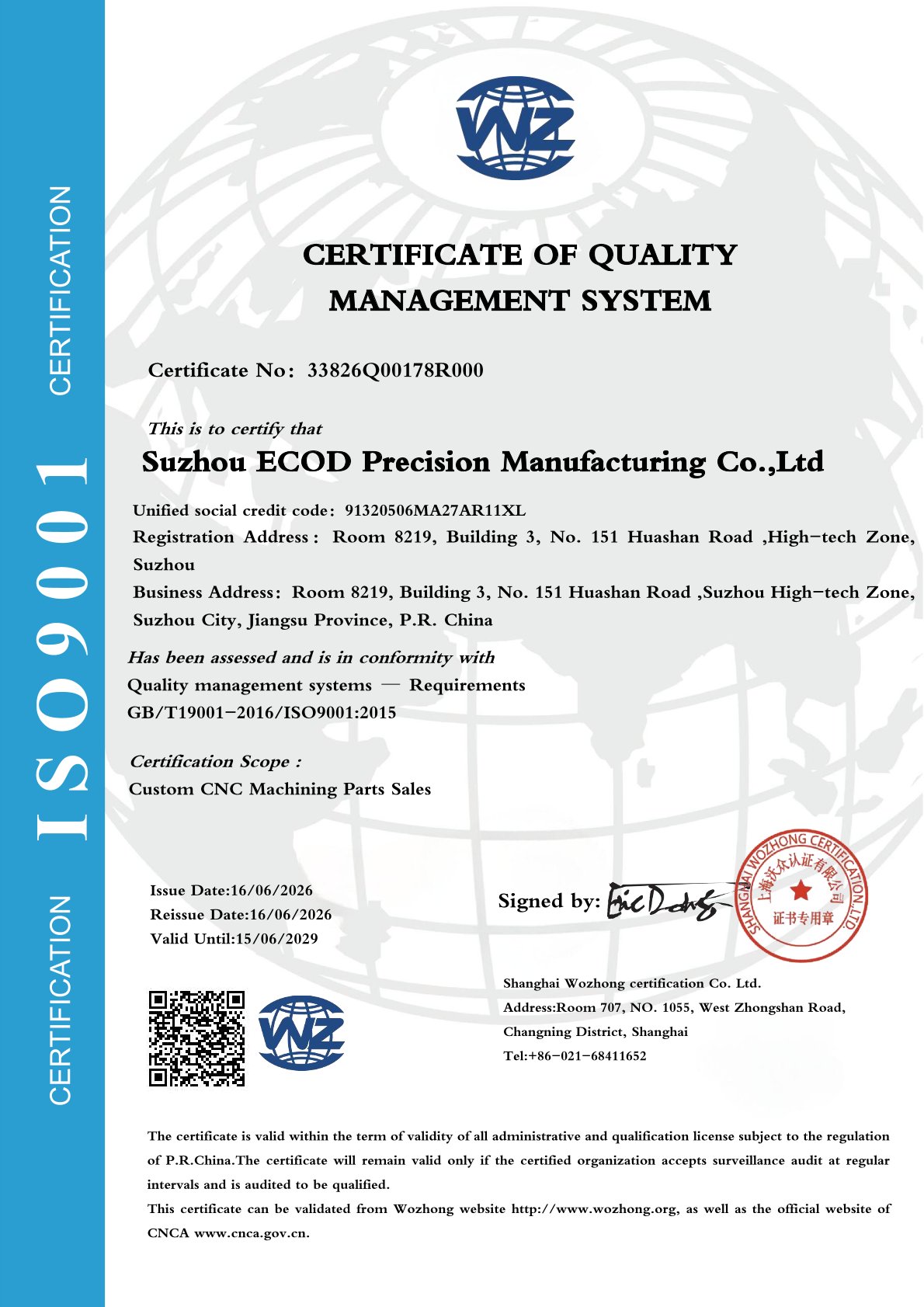
ECOD states that its CNC machining factory is ISO 9001 certified, and that its Precision CNC Machining service is certified to ISO9001. The standard referenced on the certificate is GB/T19001-2016/ISO9001:2015, in which the Chinese national designation and the international designation appear together. The certification is issued by Shanghai Wozhong certification Co. Ltd under certificate number 33826Q00178R000, with an issue date of 16 June 2026 and an expiry date of 15 June 2029. The recorded scope is Precision CNC Machining within Custom CNC Machining Parts Sales, and the applicable market is global.
| Certificate field | Recorded entry | Why a regulated buyer checks it |
|---|---|---|
| Standard referenced | GB/T19001-2016/ISO9001:2015 | Shows which revision of the management system requirements was audited |
| Certificate number | 33826Q00178R000 | The identifier used when verifying the certificate with the issuing body |
| Certification body | Shanghai Wozhong certification Co. Ltd | Identifies who performed the audit and who can confirm its status |
| Scope statement | Custom CNC Machining Parts Sales | Defines the activity covered; work outside this wording is not covered by this certificate |
| Validity window | 16 June 2026 to 15 June 2029 | Confirms the certificate is current; an expired certificate cannot support a supplier record |
| Covered product | Precision CNC Machining | Links the certificate to the specific service being quoted |
| Market | Global | Indicates the certificate was not issued with a geographic restriction |
Each field exists for a reason during supplier qualification. A certificate without a scope line cannot tell a buyer which activity was audited; a certificate without a validity window cannot show whether the system has been maintained; a certificate number without a named body cannot be verified. Reading those fields takes less time than evaluating a quotation, and it removes a class of suppliers from the shortlist before engineering hours are spent.
How the Certification Pairs With 100% Inspection Before Shipment
Certification answers a process question; inspection answers an output question, and regulated buyers normally need both. A QMS audit checks whether measurement and verification activities are defined, performed and recorded. At order level, the same system shows up as inspection evidence.
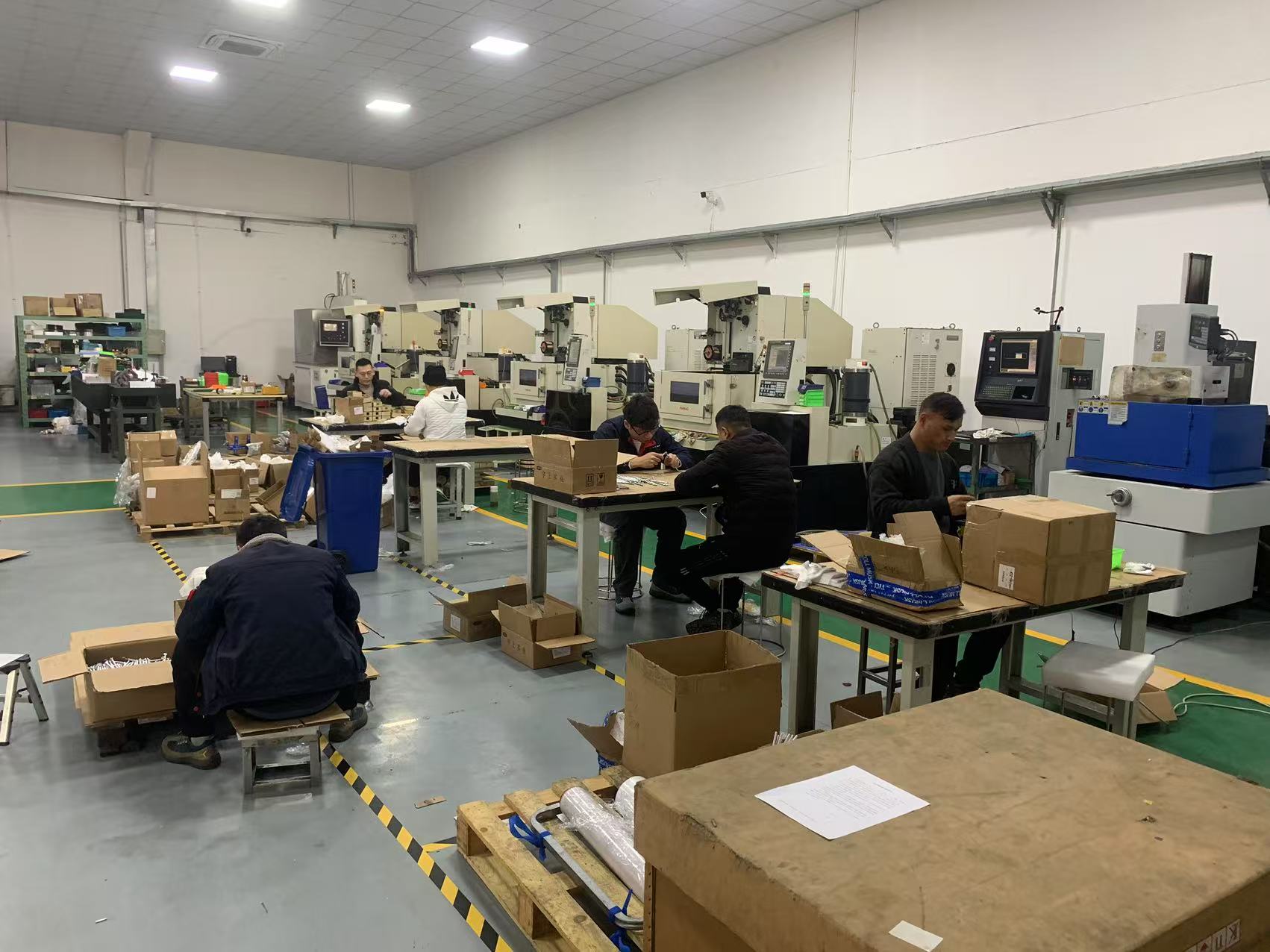
ECOD states that it performs 100% inspection before shipment and applies full inspection throughout production, and that complete material certificates and dimensional inspection reports are provided for all orders. Those documents, rather than the certificate itself, tell a buyer whether a specific lot conforms to the drawing.
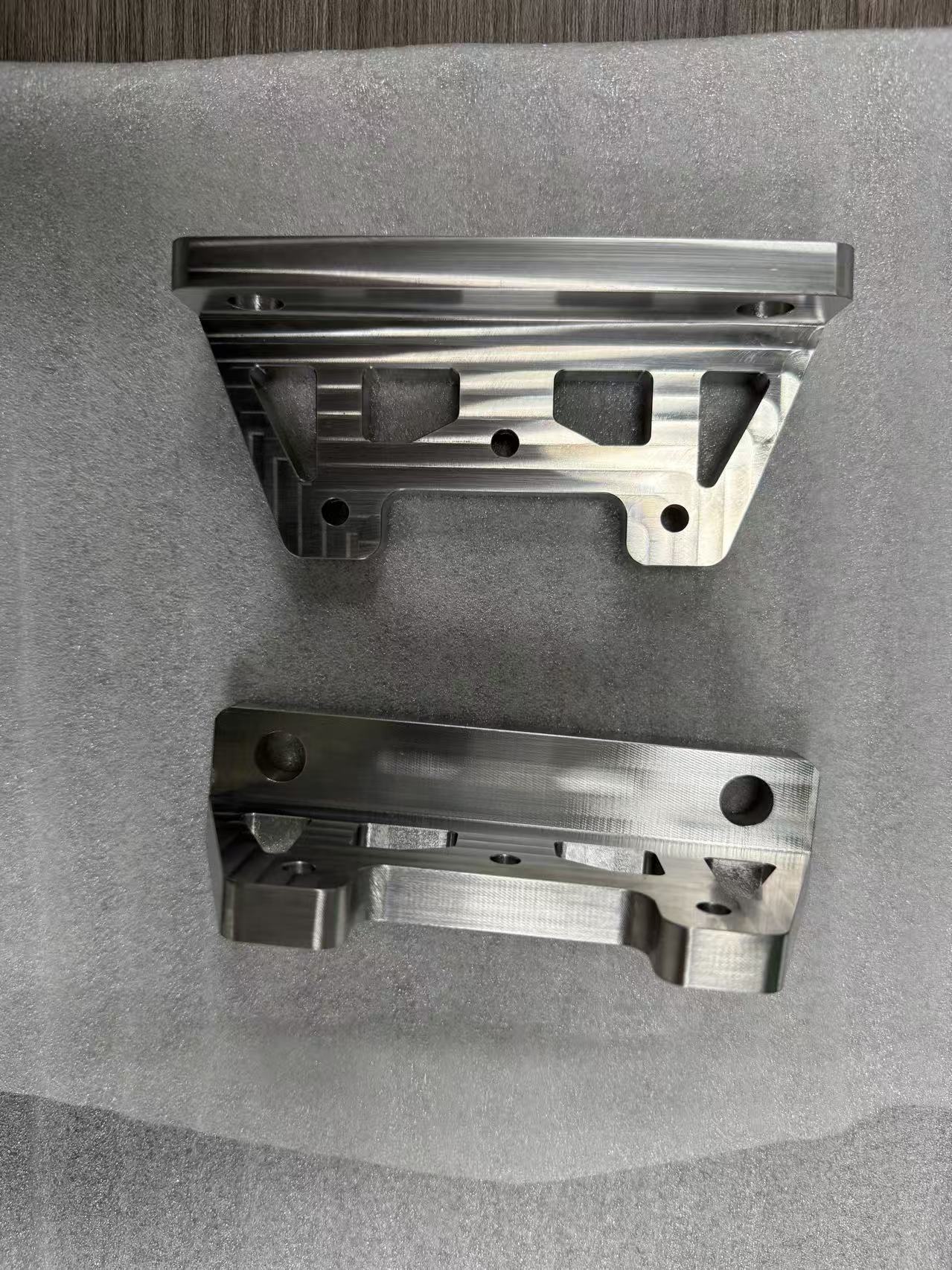
The precision context is a stated machining capability of up to ±0.005 mm, supported by 3-, 4- and 5-axis CNC machining centers, CNC lathes, precision grinding equipment and EDM, with CMM inspection available and surface and heat treatment listed among the matched equipment. Quoted processes include CNC turning, milling, drilling, grinding, tapping and EDM; quoted materials include carbon steel, stainless steel, aluminum, brass, copper, titanium and plastics such as POM and nylon.
Buyers should keep the two evidence types separate. A certificate does not guarantee a tolerance, and a tolerance claim does not imply certification to a particular standard. When both are requested — the certificate for the system, the dimensional inspection report and material certificate for the shipment — the qualification file covers both the process and the product.
Where ISO 9001 Alone Does Not Satisfy a Regulated Programme
In regulated sourcing, ISO 9001 is frequently a prerequisite rather than the final requirement.
- Aerospace: According to SAE International, aerospace CNC machining requires AS9100 certification, which incorporates ISO 9001 plus more than 100 additional requirements for safety and reliability. Where a programme specifies AS9100, an ISO 9001 certificate is the baseline, not the equivalent.
- Medical devices: ISO states that medical CNC machining must comply with ISO 13485 for quality management systems in medical device production — a standard addressing device-specific requirements that sit outside ISO 9001.
- Oil, gas and energy: end-user specifications often drive material documentation rather than a single quality standard. ECOD states that custom material certifications are available upon request, which is the practical mechanism for meeting those project-level requirements.
The boundary should be stated plainly. ECOD's certification is ISO 9001 with the scope Custom CNC Machining Parts Sales; it is not presented here as AS9100 or ISO 13485 certification, and no other standard is claimed. Buyers whose programmes require those standards must confirm them separately, per project, before tooling starts.
Application Fit Across Regulated Industries
The industries this service is applied to include aerospace, gas and oil, energy and medical devices, with customer locations recorded in Russia, the United Arab Emirates, Germany and France. Recorded working conditions include high-precision machining, tight-tolerance manufacturing, high-temperature applications, corrosion-resistant environments, high-strength mechanical parts and continuous industrial operation. Typical project types include aerospace components, oil and gas equipment parts, medical device components, industrial automation parts, automotive components, energy equipment components, satellite communication equipment and robotics components.
Two long-running examples show how those conditions translate into orders. A gas and oil industry customer in the United Arab Emirates is recorded for 10,000 pieces of gas and oil equipment over a five-year relationship; the stated result is improved equipment reliability, with the parts described as adapted to harsh oil and gas working environments. An aerospace customer in Russia is recorded for 1,000,000 pieces for UAV applications over one year; the stated result is stable quality in mass production, with the parts described as fully matching aerospace industry precision standards.
Production modes cover prototypes, small batches and mass production, with OEM and ODM manufacturing and a stated 24/7 production capability. Monthly capacity is stated at 100,000 pieces, lead time at 10–60 days, and the minimum order quantity at 1 piece, with quotations provided within 24 hours. For records-based purchasing, the value of these figures is that they define the size of order the documented system has to absorb.
Market Trends That Are Raising the Documentation Bar
Precision demand keeps moving upward in the segments that depend most on documentation. Mordor Intelligence projects the ultra-precision machining centers market for semiconductor fab equipment to grow at 8.36% CAGR between 2026 and 2031. Milling machines held the largest equipment type share at 31.4% in 2025, according to Dataintelo, largely because of aerospace use. Xometry identifies aluminium 6061-T6 as the most widely used material in CNC machining, reflecting the same strength-to-weight and machinability logic that drives aerospace and energy work.
Capacity is a constraint as well. The U.S. machining sector reported a shortage of 75,000 unfilled CNC operator roles in 2023, according to Gitnux citing U.S. labour projections. Where skilled labour is tight and precision requirements are rising, documented process control becomes a substitute for informal assurance: a buyer cannot inspect every supplier's floor, but can read a certificate, an inspection report and a material certificate.
The practical implication for regulated sourcing is that ISO 9001 has shifted from a differentiator to a screening baseline. What separates suppliers now is the depth of order-level evidence — dimensional inspection reports, material certificates and process capability statements — that sits behind the certificate.
Comparison: ISO 9001 Against the Documentation Regulated Buyers Often Require
| Documentation item | What it establishes | Position for this CNC machining service |
|---|---|---|
| ISO 9001, standard GB/T19001-2016/ISO9001:2015 | An audited quality management system within a defined scope | Held for Precision CNC Machining under Custom CNC Machining Parts Sales; certificate 33826Q00178R000; valid 16 June 2026 to 15 June 2029 |
| AS9100 | Aerospace QMS incorporating ISO 9001 plus additional safety and reliability requirements (SAE International) | Not part of the stated certification; required where an aerospace programme specifies it |
| ISO 13485 | QMS for medical device production (ISO) | Not part of the stated certification; required where a medical device programme specifies it |
| Material certificates | Material grade and lot documentation for the supplied parts | Stated as provided for all orders; custom material certifications available upon request |
| Dimensional inspection reports | Measured conformance of delivered parts to the drawing | Stated as provided for all orders, with 100% inspection before shipment |
| Process capability statement | Achievable tolerance and process range | Stated precision up to ±0.005 mm with 3-, 4- and 5-axis machining, turning, grinding and EDM |
The honest reading of this table is that ISO 9001 answers a narrower question than it is often asked to answer. It evidences a controlled management system within a defined scope; it does not evidence part-level qualification, functional performance, or conformity with industry-specific standards. Buyers should also note that 100% inspection verifies the requirements that have been defined and measured — if a characteristic is not on the drawing or in the inspection plan, inspection will not detect its absence. Requirements outside the stated scope, including AS9100 or ISO 13485, have to be agreed on a project basis.
This is also where price-led sourcing and evidence-led sourcing diverge. Price-led comparison treats quotations as equivalent until a defect appears, and then the cost of sorting, rework and re-qualification lands on the buyer. An evidence-led approach asks the same questions earlier, in a fixed order: which standard, which scope, which validity window, which inspection records, which material documentation. It does not remove the price question; it changes when that question is asked.
A Buyer's Verification Checklist
- Confirm the certificate number (33826Q00178R000), the issuing body (Shanghai Wozhong certification Co. Ltd) and the validity window (16 June 2026 to 15 June 2029) directly with the issuer;
- Read the scope wording and check that it matches the activity being purchased — here, Custom CNC Machining Parts Sales covering Precision CNC Machining;
- Match the certificate to the legal entity that will receive the purchase order;
- Request the dimensional inspection report and material certificates with the shipment, not only at qualification;
- Confirm the measuring equipment behind the report, including CMM availability;
- Confirm the tolerance the process is expected to hold, up to ±0.005 mm as stated;
- Confirm the order size the supplier is set up for — 1 piece minimum order quantity through to a stated monthly capacity of 100,000 pieces, with lead time of 10–60 days;
- Confirm which standards are actually held, and raise AS9100, ISO 13485 or material-specific requirements explicitly if the programme needs them;
- Confirm customization scope: 2D/3D drawing compliance, material, dimensional tolerance, surface treatment and machining finish, with DFM input from an engineering team of 25.
What to Expect Next
Two directions look durable. The first is that quality documentation becomes a default rather than a request. Buyers in regulated industries increasingly record certificate numbers, scope statements and validity dates in supplier scorecards, which means a supplier that cannot produce those fields quickly is filtered out before technical review begins.
The second is that the evidence behind the certificate carries more weight than the certificate alone. As precision demand grows in segments such as semiconductor equipment and aerospace, and as machine shop capacity remains concentrated in Asia Pacific, the differentiator is the ability to attach order-level proof to a controlled process: inspection reports, material certificates and a stated tolerance range. ISO 9001 remains the entry point to that conversation, and reading it accurately is what keeps the rest of the qualification file honest.
FAQ
What is the difference between ISO 9001 certification and a dimensional inspection report for CNC machining?
ISO 9001 certification applies to the quality management system of the machining organization: how requirements are reviewed, how documents and revisions are controlled, how measuring equipment is calibrated, and how nonconforming output and corrective actions are handled. A dimensional inspection report applies to a specific delivered lot and records the measured values of features defined on the drawing. The two documents answer different questions, and regulated buyers normally request both — the certificate during supplier qualification, the inspection report with each shipment.
Does an ISO 9001 certificate cover the individual CNC machined parts supplied under it?
No. The certificate covers a defined scope of activity. For this supplier, the recorded scope is Precision CNC Machining within Custom CNC Machining Parts Sales, under the standard GB/T19001-2016/ISO9001:2015, certificate number 33826Q00178R000, issued by Shanghai Wozhong certification Co. Ltd and valid from 16 June 2026 to 15 June 2029. It confirms that the management system behind that activity was audited. It does not certify that an individual part meets a particular tolerance, material grade or surface finish — those are established by the drawing, the material certificate and the inspection report for the order.
How can a buyer verify that an ISO 9001 certificate is current and relevant?
Four fields carry most of the verification value: the standard referenced (GB/T19001-2016/ISO9001:2015 here), the certificate number (33826Q00178R000), the issuing body (Shanghai Wozhong certification Co. Ltd) and the validity window (16 June 2026 to 15 June 2029). The scope wording should then be compared with the activity being purchased, which in this case is Custom CNC Machining Parts Sales for Precision CNC Machining. A certificate whose scope does not match the purchased activity, or whose validity window has closed, cannot support a supplier qualification record.
Is ISO 9001 sufficient for aerospace or medical device CNC machining?
Not by itself. Aerospace programmes may require AS9100, which SAE International describes as incorporating ISO 9001 plus more than 100 additional requirements for safety and reliability. Medical device production is governed by ISO 13485 for quality management systems, as published by ISO. Where a programme specifies those standards, an ISO 9001 certificate is a prerequisite rather than an equivalent, and the additional requirement has to be confirmed separately. For this supplier, the stated certification is ISO 9001; buyers with AS9100 or ISO 13485 requirements should raise them before quotation.
What documentation normally accompanies an ISO 9001 CNC machining order?
ECOD states that it performs 100% inspection before shipment, applies full inspection throughout production, and provides complete material certificates and dimensional inspection reports for all orders. Custom material certifications are stated as available upon request. Together with the certificate itself, these records cover three levels: the system (certification), the material (material certificates) and the produced geometry (dimensional inspection reports).
Does ISO 9001 certification affect minimum order quantity, lead time or quotation speed?
Those are commercial capabilities rather than certification outcomes. For this service, the stated minimum order quantity is 1 piece, quotations are provided within 24 hours, lead time is 10–60 days, and production covers prototypes, small batches and mass production with a stated monthly capacity of 100,000 pieces. Certification affects how those activities are controlled and documented, not their size or duration.
Why does OEM and ODM flexibility matter in compliance-driven sourcing?
Regulated buyers rarely purchase a catalogue part; they purchase a drawing, a material specification and a tolerance band. ECOD states that customization is performed per customer 2D/3D drawings, material, dimensional tolerance, surface treatment and machining finish, and that both OEM and ODM manufacturing are supported, with DFM optimization from an engineering team of 25 engineers. That flexibility is what allows drawing-level requirements — the basis of inspection and acceptance — to be met without redesigning the part around the process.
Reference document: a capability and product overview for this CNC machining and casting service is available for download at https://cdn.socialarks.com/sbsp/25103/common/2026/0727/%E5%AE%A3%E4%BC%A0%E9%A1%B5.pdf. Certificate details (number, issuing body and validity dates) can be confirmed with the issuing certification body.