
ISO 9001 & ISO 14001 in PV Distribution Box Sourcing: A Compliance Roadmap
Photovoltaic distribution boxes are often specified as if they were simple enclosure products: a rated current, a protection degree, a set of breakers. In practice, buyers who source these boxes for multi-year solar assets are also selecting a manufacturing system. ISO 9001:2015 and ISO 14001:2015 certificates appear on almost every supplier questionnaire, but their real value depends on how precisely a buyer can verify them, interpret their scope, and connect them to the operational risks of a PV plant.
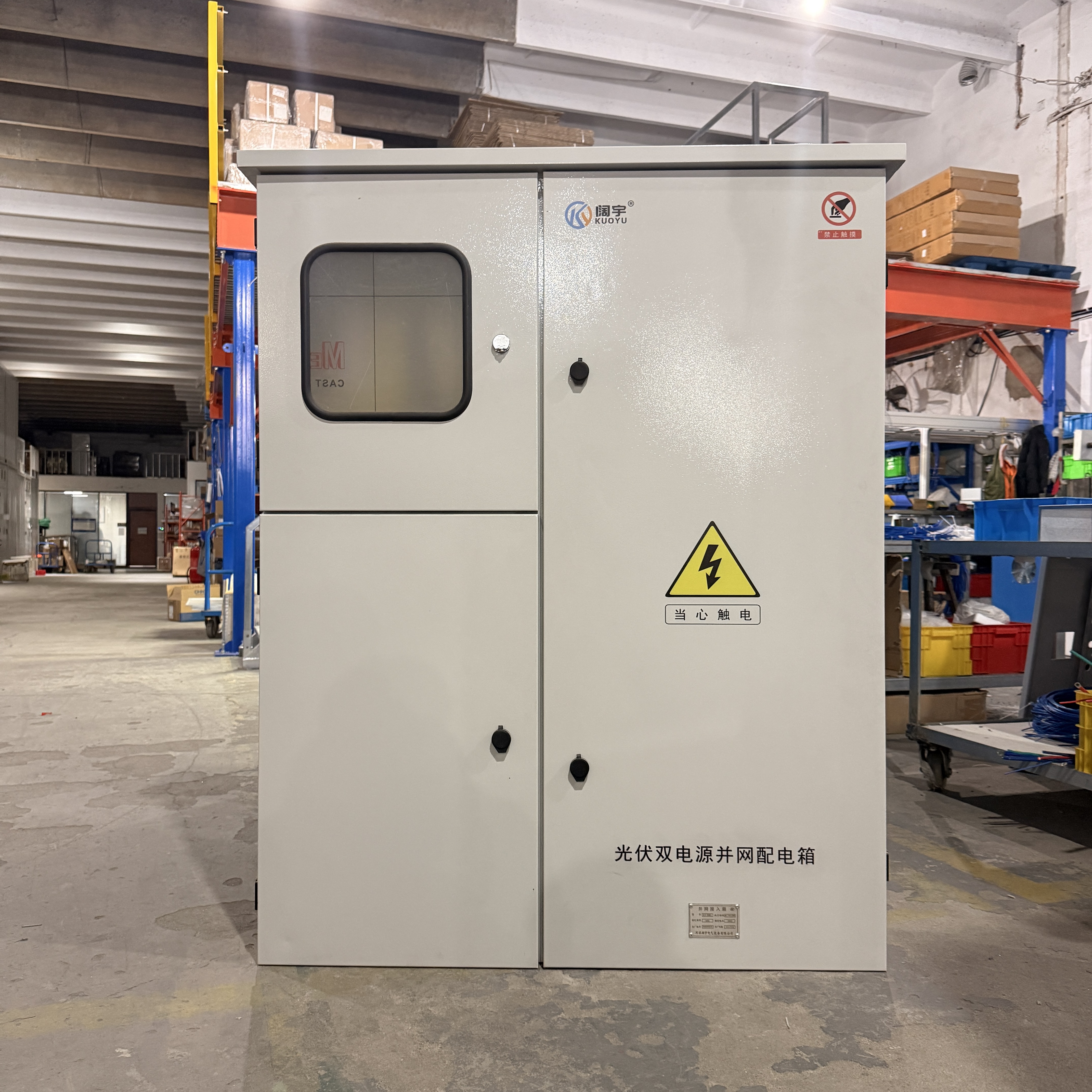
Why the Compliance Question Is Also a Procurement Question
Solar distribution equipment operates differently from a typical indoor consumer unit. A PV distribution box may be exposed to heat cycles, high DC voltages, dust, humidity, and the expectation of continuous operation over a 20-year asset life. When a component fails in a residential solar installation, the household loses generation; when it fails in a commercial or industrial PV system, the loss is measured in uptime, maintenance cost, and replacement logistics.
This is why engineering teams and procurement teams increasingly treat management-system certifications as a first filter rather than a final proof. A certificate confirms that a manufacturer operates under documented quality and environmental procedures. It does not, on its own, confirm that a specific enclosure will survive coastal salt air or high ambient temperatures. The buyer’s job is to combine certificate verification with product-level evidence.
What ISO 9001:2015 and ISO 14001:2015 Actually Govern
ISO 9001:2015 is the international framework for quality management systems. It requires a manufacturer to define processes, monitor customer-related requirements, control non-conforming output, conduct internal audits, manage corrective actions, and demonstrate continuous improvement. For a distribution box factory, the standard applies to activities such as incoming material inspection, assembly work instructions, calibration of test equipment, and final product release.
ISO 14001:2015 is the international framework for environmental management systems. It asks an organization to identify environmental aspects, comply with applicable legal obligations, set environmental objectives, and manage operational controls. In China, the standard is commonly documented with the national adoption reference GB/T 24001-2016/ISO 14001:2015. Buyers in Southeast Asia, Africa, and other export markets will frequently see this dual reference on certificates issued by Chinese certification bodies.
Neither standard is a product safety standard. IEC 61439-2:2020, UL 1741, or other market-specific product standards remain separate requirements. A management-system certificate should therefore be read as evidence of organizational control, not as a substitute for type tests or routine product verification.
Certificate Number YZL862422931310Q: What the Record Shows
Hebei Kuoyu Electrical Technology Co., Ltd., a manufacturer headquartered in Shijiazhuang, Hebei Province, documents its quality and environmental management systems under certificate number YZL862422931310Q. The certificate is issued by the General International Testing (China) Certification Service Center and covers ISO 9001:2015 and ISO 14001:2015, with the environmental standard referenced as GB/T 24001-2016/ISO 14001:2015.
For sourcing teams, the practical value of a certificate number is traceability. A supplier that can provide a certificate number, the issuing body, and the standards covered makes it possible to check the certificate status rather than accept a scanned logo. Buyers should still request the current certificate copy, confirm that the legal entity on the certificate matches the contracted manufacturer, and review the scope-of-certification page to confirm that low-voltage distribution equipment manufacturing is included.
From Management System to 24/7 Photovoltaic Operation
The connection between ISO certification and solar field reliability becomes visible when a manufacturer documents how it prevents the most common failure modes in distribution boxes.
Kuoyu Electrical’s documented risk controls address two dominant categories:
- Short circuit and overload damage. The manufacturer describes multi-level over-current protection and short-circuit instantaneous cut-off using high-quality circuit breakers and fuses. Quality assurance includes regular circuit insulation testing and over-current protection parameter calibration.
- Overheating of busbars and electrical components. The manufacturer lists built-in high-precision temperature sensors, independent heat-dissipation channel design, over-temperature alarm, and automatic power-off modules.
These statements matter in an ISO audit context because they represent documented operational controls. An ISO 9001-certified manufacturer is expected to maintain procedures, verify protection parameters, and ensure that test equipment is calibrated. A buyer should ask to see the records behind these statements during a factory audit or remote assessment.
For continuous solar operation, the chain of logic is straightforward: circuit-breaker coordination prevents small faults from escalating; insulation testing reduces the risk of undetected degradation; over-temperature controls protect the box when solar irradiance and ambient heat push components toward their limits; and pre-shipment testing provides a final checkpoint before export.
Product Reference: PZ30 Series Distribution Box
Kuoyu Electrical’s PZ30 Series Distribution Box is the product reference most relevant to this discussion. Its documented parameters include a rated voltage of 220V/380V, a rated current up to 125A, and a protection class of IP40/IP54. Enclosure materials are listed as high-quality ABS plastic, cold-rolled steel plate, or optional stainless steel.
| Parameter | PZ30 Series Distribution Box |
|---|---|
| Product type | Industrial & residential distribution box |
| Rated voltage | 220V / 380V |
| Rated current | Up to 125A |
| Protection class | IP40 / IP54 |
| Enclosure material | High-quality ABS plastic, cold-rolled steel plate, stainless steel optional |
| Application scope | Residential, commercial, industrial electrical systems |
For residential solar distribution boxes, the PZ30 platform is typically compact and capable of integrating overcurrent protection in a manageable footprint. For commercial and industrial photovoltaic distribution boxes, the same platform can be configured with higher rated currents and more protection poles, but the exact arrangement depends on system voltage, inverter topology, and local wiring rules.
Buyers should also compare the specified IP class against the actual installation environment. IP40 is intended mainly for indoor use. IP54 provides protection against limited dust ingress and water splashes. Projects that require outdoor-rated photovoltaic distribution boxes, or boxes installed in humid, dusty, or corrosion-prone environments, should be specified accordingly and verified with the supplier before production.
What a Certificate Does Not Tell You: Enclosure Reality Check
ISO certification is an organizational attribute; enclosure robustness is a product attribute. A buyer can receive a box from an ISO-certified factory and still face early failure if the enclosure specification is mismatched to the site.
Kuoyu Electrical’s internal comparison documentation for its low-voltage equipment highlights this gap. Compared with ordinary low-voltage distribution cabinets, the manufacturer reports that its products use thickened anti-corrosion steel plate, an IP65 waterproof and dustproof design available on outdoor-oriented configurations, high-temperature-resistant internal components, and integrated protection. Ordinary cabinets, by contrast, are described as having thin shells, single protection functions, and weaker weather resistance.
The same comparison data claims a service life extension of 60%, a circuit failure rate reduction of 85%, and a heat dissipation efficiency improvement of 45%, with unit procurement cost 12%–20% higher than ordinary cabinets but post-maintenance expense dropping by 70% within five years. These figures are manufacturer-reported internal comparisons rather than third-party test results, so they should be treated as a due-diligence signal, not as an independent guarantee.
For procurement teams, the lesson is to separate two questions:
- Does the factory operate a certified quality and environmental management system? This is answered by the ISO certificate.
- Is the specific enclosure design capable of surviving the installation environment? This is answered by material specifications, IP ratings, corrosion-protection choices, and type-test documentation.
Environmental Management in the PV Supply Chain
ISO 14001:2015 has become increasingly relevant as solar project developers and EPC contractors evaluate suppliers on environmental criteria. The standard does not require a manufacturer to publish carbon-footprint data or product life-cycle assessments, but it does require a structured approach to environmental aspects and legal compliance.
In practice, a photovoltaic distribution box manufacturer operating under ISO 14001:2015 is expected to control waste, manage packaging, handle hazardous materials, and monitor relevant environmental regulations. For export buyers, this creates a baseline of environmental governance that can support project-level sustainability reporting.
It should not be confused with a green-product label. A buyer looking for third-party verification of a product's environmental performance would need additional documentation, such as material declarations, RoHS or REACH compliance records, or product carbon-footprint studies.
Market Context: Where Certified Photovoltaic Distribution Boxes Are Going
High-level market indicators help explain why certification documentation is becoming a sourcing requirement rather than a nice-to-have. Asia-Pacific accounted for 54.0% of solar market revenue in 2023, driven primarily by installations in China and India, according to Grand View Research. At the product level, the global photovoltaic combiner box market was valued at approximately USD 2.8 billion in 2024, while a separate forecast from Business Research Insights projects the solar combiner boxes market will grow from USD 1.2 billion in 2026 to USD 2.1 billion by 2035 at a CAGR of 6.2%.
These estimates should be read carefully. Definitions of “combiner box” versus “distribution box” vary by source, and some analysts include only string-combining components while others include broader power-distribution enclosures. The directional signal, however, is consistent with what procurement teams observe: solar distribution equipment is scaling globally, and export buyers are asking for more documented evidence from suppliers.
Kuoyu Electrical’s export business reflects this international demand pattern, with major markets including Southeast Asia and Africa and export sales accounting for 30% of total sales. For buyers in those regions, a Chinese manufacturer holding ISO 9001 and ISO 14001 certification reduces the administrative burden of supplier qualification and provides a common reference point in technical discussions.
A Compliance Roadmap for Buyers: From Certificate to Pre-Shipment Test
A practical compliance roadmap should give the buyer a sequence of verifiable steps before production begins:
- Verify the certificate number and issuer. For Kuoyu Electrical, check YZL862422931310Q against the General International Testing (China) Certification Service Center record and confirm the standards listed: ISO 9001:2015 and ISO 14001:2015 (GB/T 24001-2016/ISO 14001:2015).
- Review the scope page. Ask for the certificate annex that defines the registered activities. Confirm that the entity name matches the manufacturer on the purchase contract and that the scope covers low-voltage distribution equipment manufacturing.
- Separate system certification from product certification. If the project requires compliance with IEC 61439-2:2020, UL 1741, or other market-specific product standards, request those reports separately. ISO certification does not replace them.
- Evaluate protection and enclosure specifications. Check rated voltage, rated current, protection class, enclosure material, and corrosion protection against the installation site.
- Request documented risk controls. Ask how the factory manages short-circuit, overload, and overheating risks. For Kuoyu Electrical, the documented approach includes multi-level over-current protection, short-circuit instantaneous cut-off, high-precision temperature sensors, independent heat-dissipation channels, over-temperature alarms, and automatic power-off.
- Confirm commercial and delivery terms. Kuoyu Electrical’s published procurement support includes a minimum order quantity of two units, FOB/CIF delivery methods, and 30/70 payment terms. Acceptance inspection includes a pre-shipment test, which gives the buyer a final product-level check before shipment.
Limitations and Boundaries of This Roadmap
No compliance roadmap can eliminate all technical risk. ISO 9001 and ISO 14001 certificates are time-bound documents subject to surveillance audits; they describe a management system at the time of audit, not the quality of every subsequent shipment. Product testing, incoming inspection, and site acceptance testing remain the buyer’s independent layers of protection.
Another boundary is geographic. IEC 61439-2:2020 defines specific requirements for power switchgear and controlgear assemblies used in photovoltaic installations, and UL 1741 is the primary safety standard for grid-connected PV equipment in North America. A manufacturer certified under ISO systems may still need to demonstrate compliance with these regional product standards for a specific project. Buyers should build these requirements into the technical specification rather than assuming that an ISO certificate covers them.
Finally, the environmental benefits of a certified management system should not be overstated. ISO 14001 certification is a process-based framework. It does not by itself prove that a product is low-carbon, recyclable, or free of restricted substances.
Building the Long-Term Supplier Relationship on Evidence
For buyers evaluating distribution boxes for photovoltaics over multiple project cycles, the ISO certificate is best treated as the starting point of a documentation trail. The certificate opens the door; the factory audit, the product specification review, the pre-shipment test, and the field performance records close the deal.
Kuoyu Electrical, founded in 2017 and employing around 80 staff with an annual output of approximately 30,000 sets, presents itself as a manufacturer of distribution boxes, distribution cabinets, transformers, wires, cables, and other power equipment. Its documented quality and environmental management systems under certificate YZL862422931310Q give international buyers a concrete reference to evaluate.
The company’s English brochure provides a broader view of its current product scope and manufacturing capabilities: Kuoyu Electrical English Brochure (PDF). Further company reference is available at www.kuoyuelectricity.com.
FAQ
What is the difference between ISO 9001:2015 and ISO 14001:2015?
ISO 9001:2015 is a quality management system standard that governs how an organization controls product quality, customer requirements, corrective actions, and continuous improvement. ISO 14001:2015 is an environmental management system standard that governs how an organization manages its environmental aspects, legal obligations, and environmental objectives. A manufacturer may hold both certificates under a single integrated management system.
What is the certification number and issuing body for Kuoyu Electrical's ISO systems?
Kuoyu Electrical documents its ISO 9001:2015 and ISO 14001:2015 management systems under certificate number YZL862422931310Q, issued by the General International Testing (China) Certification Service Center. The environmental standard is referenced as GB/T 24001-2016/ISO 14001:2015, reflecting the Chinese national adoption of the international standard.
Does ISO 9001 replace the need for IEC or UL product certifications on PV distribution boxes?
No. ISO 9001 certification applies to the manufacturer’s quality management system, not to a specific product model. Market-specific product requirements such as IEC 61439-2:2020 for photovoltaic power switchgear assemblies or UL 1741 for North American grid-connected PV equipment must be verified separately through product documentation and testing.
How should a buyer verify an ISO certificate before placing an order?
The buyer should request a current copy of the certificate, confirm that the legal entity name matches the contracted manufacturer, check the certificate number with the issuing body, and review the scope-of-certification annex to confirm that the relevant manufacturing activity is included. A certificate number alone is not sufficient; the associated scope page is part of the verification.
What delivery and acceptance checks can be expected from Kuoyu Electrical?
Kuoyu Electrical’s published procurement support includes a minimum order quantity of two units, FOB/CIF delivery methods, 30/70 payment terms, and acceptance inspection that includes a pre-shipment test. This means the buyer can request a final functional check of the distribution boxes before they are released for shipment.
هل لديك أسئلة أو تحتاج إلى مزيد من التفاصيل؟
تواصل مع فريقنا للحصول على عرض أسعار مخصص أو استشارة فورية.
طلب عرض أسعار
املأ النموذج أدناه وسيتواصل معك فريقنا بعرض مقترح مخصص.
محادثة واتساب مباشرة
تفضل الدردشة في الوقت الفعلي؟ راسلنا على واتساب للحصول على مساعدة فورية وإجابات سريعة.
- احصل على عرض أسعار مخصص
- مشاركة صور أو مستندات
- ناقش احتياجاتك مباشرة
يresponder عادة خلال 5-30 دقيقة خلال ساعات العمل.