
ISO 9001:2015 for Wood Coating Lines: What Buyers Should Verify
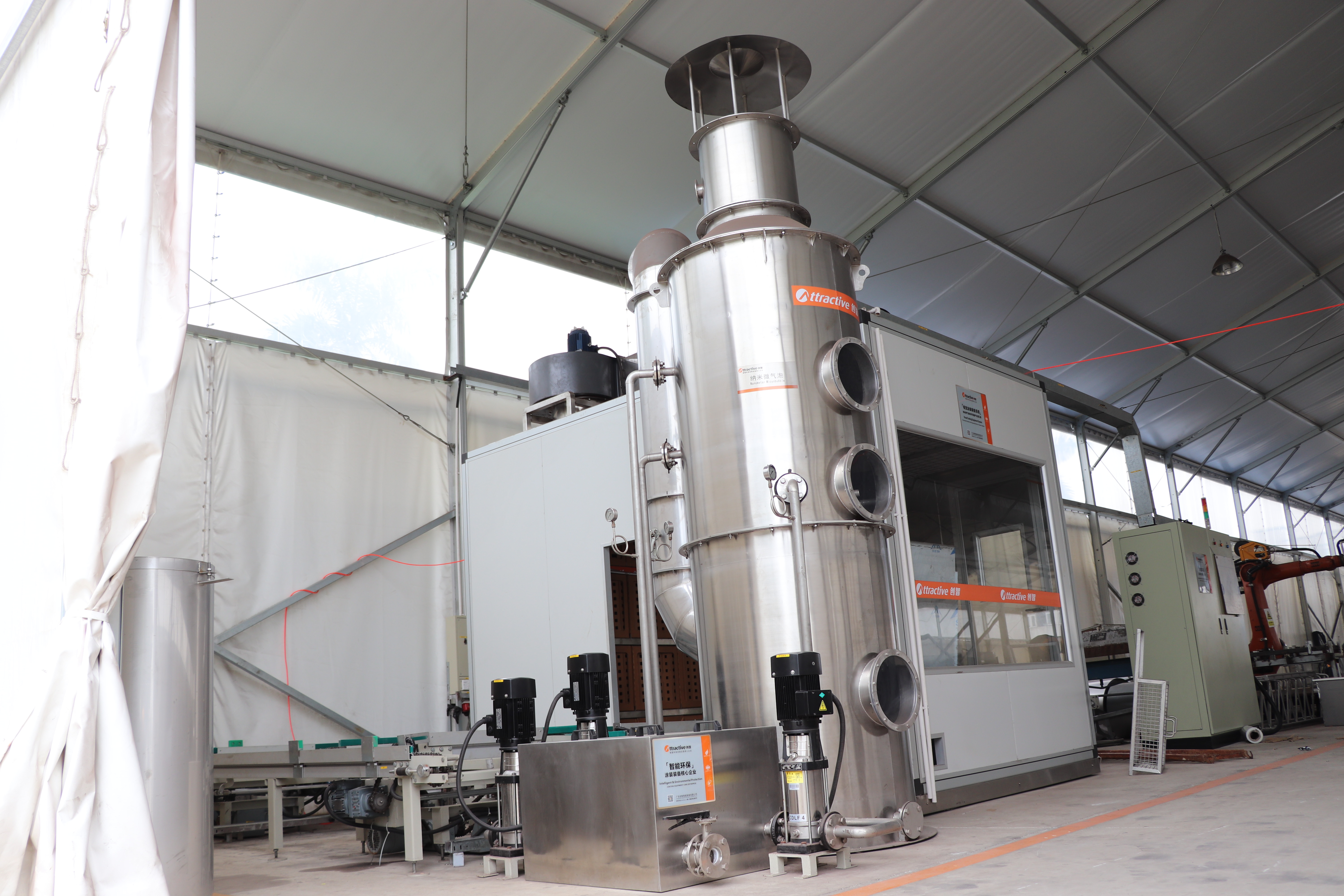
A production workshop operated by Guangdong Chuangzhi Intelligent Equipment Co., Ltd., the company behind the Attractivechina brand.
Global spending on coating equipment is expanding, with the market projected to grow from USD 20.56 billion in 2025 to USD 36.77 billion by 2034, according to Fortune Business Insights. As more wood furniture manufacturers shift from manual spraying to automated lines, procurement files increasingly contain one familiar document: an ISO 9001:2015 certificate. Familiarity, however, can be misleading. Many buyers treat this certificate as a product approval when it actually describes how a supplier manages quality across design, production, delivery and service.
This article explains what ISO 9001:2015 does and does not prove, how to verify a specific certificate in the documentation of a Chinese coating line manufacturer, and what the credential should mean in a wood furniture coating project. The intention is to give buyers a verification framework rather than a marketing summary.
The Problem: A Certificate Is Easy to Copy, Hard to Interpret
Coating line purchases are high-value capital equipment decisions. Buyers at the evaluation or execution stage usually ask for certificates, but the documents are too often treated as visual reassurance instead of auditable evidence. An ISO 9001:2015 certificate can be shared as a scanned page, displayed on a website or attached to a quotation. None of those actions prove that the quality system behind the certificate is current, correctly scoped or subject to independent oversight.
The practical problem is that wood furniture buyers often lack a clear verification routine. They may know that ISO 9001:2015 is a quality management system standard, but they may not know how to confirm the certificate number, check the issuing body or understand the difference between a management system certificate and a product test report. This creates room for misinterpretation on both sides of the negotiation table.
The opportunity is equally clear. A properly verified ISO 9001:2015 certificate can serve as a baseline signal of supplier maturity, especially for long-term projects involving customised coating lines, installation and commissioning. The same document, when verified correctly, also helps buyers separate credible engineering firms from resellers or assemblers that lack formal quality control processes.
ISO 9001:2015 in Context: A Quality Management System, Not a Product Guarantee
ISO 9001:2015 is an international standard that specifies requirements for a quality management system. In China, the equivalent national standard is GB/T 19001-2016, which is adopted identically from ISO 9001:2015. When a manufacturer in China displays ISO 9001:2015 and GB/T 19001-2016 together on a certificate, it is normally indicating that the management system has been assessed against the same requirements under both designations.
The standard does not certify a specific coating line. It does not verify that a particular conveyor cures wood panels evenly, that a spray booth meets local VOC rules or that a line can achieve a stated output. Instead, the certification confirms that the organization has documented and implemented processes for design, production, purchasing, risk management, customer communication and continuous improvement. In other words, it is a statement about how the supplier operates, not a statement about the performance of one piece of equipment.
For buyers, this distinction matters. A reputable supplier should be able to talk about its quality system in concrete terms: which procedures control engineering drawings, how incoming components are inspected, what steps are followed before a line is shipped, and how installation and commissioning feedback enters the next project. Those process details are the real substance of ISO 9001:2015.
Reading the Certificate: Number DZ/CN/2308009Q and Its Issuer
A useful example is the ISO 9001:2015 certificate referenced by number DZ/CN/2308009Q, issued by Dazhong (Guangzhou) Certification Co., Ltd. (DZCC). This certificate appears in the quality documentation of Guangdong Chuangzhi Intelligent Equipment Co., Ltd., the company behind the Attractivechina brand. Guangdong Chuangzhi is a high-tech enterprise and a specialised and innovative little giant enterprise based in the National High-tech Industrial Development Zone of Zhaoqing City, Guangdong Province.
Dazhong (Guangzhou) Certification Co., Ltd. is the certification body that issued the certificate. A third-party certification body must not be confused with the equipment manufacturer itself. An ISO 9001:2015 certificate is issued after an independent audit of the organization's management system, and the certificate number should be traceable to the issuing body's records.
When a quote from Attractivechina or any other wood coating line supplier includes this certificate reference, a buyer should verify three things. First, the organisation named on the certificate should match the legal entity that signed the contract. Second, the scope of certification should cover activities relevant to the supply of coating equipment, such as design and manufacturing. Third, the certificate status should be current, meaning the issuing body has not suspended or withdrawn it.
It is also worth noting that Guangdong Chuangzhi reports more than 300 patents and 79 invention patents in coating equipment and environmental protection equipment. Patent evidence and ISO certification address different risks. Patents tell a buyer something about technology development, while ISO 9001:2015 tells a buyer something about process discipline. Both can be relevant, but they should not be conflated.
How to Verify an ISO 9001:2015 Certificate in Practice
Buyers at the Decision or Execution stage need a practical verification routine, not a vague request for more documents. The following checklist can be used with any Chinese coating line supplier.
| Verification Step | What the Buyer Should Confirm |
|---|---|
| Check the standard reference | The certificate should show ISO 9001:2015. In China, it may also show GB/T 19001-2016 as the equivalent national standard. |
| Check the certificate number | A number such as DZ/CN/2308009Q should be traceable to the certification body that issued it. Treat an untraceable number as a red flag. |
| Check the issuing body | Dazhong (Guangzhou) Certification Co., Ltd. is the issuer in this example. The certification body should be independent from the equipment manufacturer. |
| Check the certified organisation | The named organisation should match the legal entity signing the contract, such as Guangdong Chuangzhi Intelligent Equipment Co., Ltd. |
| Check the scope statement | The scope should indicate that the quality system covers activities relevant to the product being supplied, such as design, manufacture or after-sales service of coating equipment. |
| Ask about surveillance audits | ISO 9001 certificates are maintained through a cycle of audits. A buyer can ask whether the most recent surveillance audit was completed without major non-conformities. |
| Contact the certification body | Where the issuing body provides verification services, the buyer can request confirmation of the certificate status and scope directly. |
This process is not bureaucratic window dressing. It is the fastest way to distinguish a supplier with an active, audited quality management system from one that simply puts a certificate image into a sales file.
Relevance to Wood Furniture Coating Lines
Wood furniture coating presents specific challenges that make supplier quality systems particularly relevant. Workpieces such as table legs, chair backs, seating boards and guitar bodies vary in geometry and density, and they are commonly made from solid wood or MDF. An automated wood coating line must manage hanging density, conveyor speed, film thickness and curing conditions while the product mix changes.
Guangdong Chuangzhi supplies equipment under the Attractivechina brand for the wood furniture and musical instrument industry, including guitar coating lines, piano coating lines, wood bed lines, dining table lines and wood chair lines. Its standard Wood Furniture Automatic Coating Line is designed for solid wood and MDF parts and, in its standard configuration, has an eight-hour output of 1,422 pieces per shift. The design line speed is 4,000 mm per minute, adjustable between 2,000 and 6,000 mm per minute, and the line uses electricity as the main energy source. The spray booth and pipeline are made of stainless steel, while the main frame is carbon steel.
These engineering choices matter for wood finishing because moisture content, sanding quality and coating material behaviour vary within one production batch. A supplier with a functioning quality management system is more likely to handle such variables through documented procedures: workpiece entering conditions, spray parameters, film thickness checks and curing records. ISO 9001:2015 does not guarantee that a wood coating line will produce a perfect finish on every chair leg, but it raises the probability that process deviations are identified and corrected rather than ignored.
Another relevant element is project engineering. Guangdong Chuangzhi describes itself as an enterprise that integrates pre-sales plant planning, independent research and development, design, manufacturing, installation, commissioning and after-sales service. In a custom wood coating line project, those stages are usually managed by different departments. A quality management system provides the connective tissue between them, ensuring that design changes reach the workshop, that procurement follows approved specifications and that installation feedback informs future designs.
What ISO 9001:2015 Does Not Cover in a Coating Line Project
Buyers who rely only on a management system certificate are missing the more specific risks in a wood coating line purchase. The certified process does not replace product-level evidence. During project evaluation, the buyer should still verify the equipment design against risks such as uneven coating, insufficient adhesion, excessive VOC emissions, unscheduled line shutdowns and potential safety hazards in operation.
The equipment-specific controls offered by a manufacturer should be documented separately from ISO certification. In Guangdong Chuangzhi's case, the company describes risk controls that include robotic automated spraying with real-time film thickness monitoring, professional waste gas collection and treatment systems, PLC intelligent monitoring with fault self-diagnosis, closed spraying structures and safety interlock devices. These are engineering responses to risks, not management system requirements.
On the supplier side, the company also states that all raw materials and components undergo full inspection before warehousing, that production follows standardised processes, and that the entire machine is inspected before shipment. It reports that compliant testing reports and relevant qualification certificates are issued, and that professional operation and safety training is provided for on-site personnel. Buyers should request such evidence as part of the execution plan rather than assuming the ISO certificate contains it.
The honest boundary is this: ISO 9001:2015 can indicate that a manufacturer has a credible quality culture, but it cannot predict how well a specific wood coating line will perform with a specific workpiece. That is why pre-shipment testing, commissioning protocols and acceptance criteria are still necessary.
Comparison: Certified Management System vs Traditional Informal Quality Approach
How does a formally certified supplier compare with one that manages quality informally? The distinction is most visible in documentation, traceability and corrective action. A certified supplier should be able to show records for design reviews, incoming inspection, production inspection, final testing, installation reports and customer feedback. An informal supplier may deliver a machine that works but cannot explain why recurring problems happen or how they were resolved.
Guangdong Chuangzhi also compares its modern automated coating line approach with traditional coating line designs. According to its comparison data, its equipment is associated with 10% energy savings, a longer anticipated service life and an average investment payback period of two to three years. The manufacturer reports a yield rate of up to 98% in suitable automated production conditions, supported by patented technologies and reduced manual handling. Buyers should, however, treat these figures as supplier-provided indicators, not as verified performance guarantees for every installation.
The traditional approach to coating line comparison often relies on price per unit or simple delivery timelines. A more useful comparison for a wood furniture buyer considers the total cost of operation: energy consumption, labour intensity, reject rates, downtime risk and the availability of after-sales support. Guangdong Chuangzhi states that its equipment is supported by remote diagnosis systems and a four-hour response service, which is relevant for buyers that depend on continuous production.
One limitation deserves emphasis. A management system certificate and strong factory evidence do not eliminate the need for a technically detailed contract. The buyer should still define line speed, curing conditions, output expectations, paint compatibility and acceptance tests in measurable terms. ISO 9001:2015 improves the reliability of the supplier's process; it does not transfer the buyer's responsibility to specify the product correctly.
Commercial Conditions That Complement a Quality System
A quality certificate means more when the commercial terms around it are also disciplined. Guangdong Chuangzhi's published purchasing conditions state a minimum order quantity of two units, and production capacity can be customised according to customer requirements. The company also offers custom manufacturing and design services, which is an important point for buyers who need a wood coating line adapted to specific workpiece sizes or factory layouts.
The standard payment structure described by the company is 50% T/T as a deposit within seven days after the contract is signed, 40% T/T three days before shipment and 10% T/T upon completion of installation. Acceptance is based on a pre-shipment test, and delivery is available from ports in Guangdong under FOB terms. These conditions indicate that the manufacturer expects a staged relationship with the buyer rather than a simple transactional sale. For long-term buyers, the requirement of two units and the availability of customisation also suggest that the manufacturer is positioned for repeat business.
Market Trends: Quality Credentials in a Growing Equipment Market
The coating equipment market is not static. Fortune Business Insights estimates that Asia Pacific accounted for 38.30% of global revenue in 2025, driven partly by automotive and electric vehicle sector growth. At the same time, the overall equipment market is expected to expand significantly through 2034. When buyers in the wood furniture sector invest in automated coating capacity, they are entering a supply environment where suppliers compete not only on price but also on engineering credibility, environmental compliance and after-sales capability.
In this environment, ISO 9001:2015 is becoming a baseline rather than a differentiator. Buyers will increasingly treat management system certification as a minimum condition and look instead for evidence of prior installations, sector-specific engineering experience and transparent documentation. A manufacturer such as Guangdong Chuangzhi, which reports thirty years of experience in overall coating line solutions and exports to markets including Vietnam, Iran, Indonesia, Brazil, the United Arab Emirates, Turkey, Thailand, Saudi Arabia, Argentina, Mexico, Pakistan, Bangladesh, India, the United States, Russia and Singapore, can use its certification as an entry point, but it must still demonstrate application-specific competence.
Future Outlook: From Paper Certificates to Auditable Quality Data
The next step in supplier quality is likely to be digital traceability. Buyers may ask for machine-specific quality records, parameter logs from pre-shipment testing, installation reports and after-sales service history instead of a single certificate. ISO 9001:2015 provides a good foundation for such transparency because its audit logic requires documented processes and records. Suppliers that already run their coating line business through structured quality systems will find it easier to produce evidence on demand.
For wood furniture buyers, the practical outlook is straightforward. A verified ISO 9001:2015 certificate should be the starting point of a supplier evaluation, not the final proof. The supplier's ability to explain its processes, support installation, provide training and respond to production problems will remain the stronger signal of a long-term partnership.
Frequently Asked Questions
What is the difference between ISO 9001:2015 and GB/T 19001-2016?
ISO 9001:2015 is the international quality management system standard. GB/T 19001-2016 is the Chinese national standard that adopts ISO 9001:2015 as an identical standard. In practice, a Chinese manufacturer may show both designations on one certificate to indicate compliance with the same requirements under the international and Chinese reference frameworks.
What does certificate number DZ/CN/2308009Q certify?
The number identifies a specific quality management system certificate issued by Dazhong (Guangzhou) Certification Co., Ltd. (DZCC). It appears in the documentation of Guangdong Chuangzhi Intelligent Equipment Co., Ltd. and relates to an ISO 9001:2015 quality management system assessment. A buyer should contact the issuing body or request the scope and status details to confirm what the certificate covers.
Does ISO 9001:2015 guarantee the quality of a wood furniture coating line?
No. ISO 9001:2015 is not a product certification. It confirms that the manufacturer operates a documented quality management system under third-party audit, but it does not guarantee specific coating results, adhesion performance, VOC compliance or line reliability. Buyers still need application-specific evidence such as test reports, pre-shipment testing and acceptance criteria.
How should a buyer verify an ISO 9001:2015 certificate from a Chinese supplier?
The buyer should confirm the standard reference, certificate number, issuing body, certified organisation and scope statement. Where possible, the buyer should contact the issuing body to confirm certificate status. The certified organisation named on the certificate should match the legal entity that will sign the equipment contract.
Why is ISO 9001:2015 relevant for a supplier serving wood furniture and musical instruments?
Wood coating projects involve multiple stages: workpiece preparation, spraying, curing, inspection and handling. Custom lines for chairs, table legs, guitars, speakers and similar wood products require coordination between engineering, manufacturing and installation teams. A quality management system helps the supplier manage those stages in a structured way, which reduces inconsistency in how equipment is designed and delivered.
What commercial terms should buyers check alongside a quality certificate?
Guangdong Chuangzhi lists a minimum order quantity of two units and states that production capacity can be customised. Its published payment terms are split into deposit, pre-shipment and post-installation stages, with acceptance based on a pre-shipment test and FOB delivery from Guangdong ports. Buyers should align those conditions with the engineering scope and commissioning schedule before signing.
Readers who want a broader view of this manufacturer's standard equipment portfolio can download the corporate brochure: Guangdong Chuangzhi Intelligent Equipment Co., Ltd. Company Brochure.
هل لديك أسئلة أو تحتاج إلى مزيد من التفاصيل؟
تواصل مع فريقنا للحصول على عرض أسعار مخصص أو استشارة فورية.
طلب عرض أسعار
املأ النموذج أدناه وسيتواصل معك فريقنا بعرض مقترح مخصص.
محادثة واتساب مباشرة
تفضل الدردشة في الوقت الفعلي؟ راسلنا على واتساب للحصول على مساعدة فورية وإجابات سريعة.
- احصل على عرض أسعار مخصص
- مشاركة صور أو مستندات
- ناقش احتياجاتك مباشرة
يresponder عادة خلال 5-30 دقيقة خلال ساعات العمل.