
Ice Cream Machine Scenario Fit: SN Series by Format and Scale
Ice cream production has diversified faster than the equipment vocabulary used to describe it. Hard ice cream formats — the moulded, extruded and filled products that dominate retail freezers — accounted for a 57.8% share of the total ice cream equipment market in 2025, with continuous freezers the leading product type (Future Market Insights). That concentration explains why so many projects begin with a freezer question: pick a freezer, pick a capacity, and treat the rest as accessories.
At the decision stage, that framing usually breaks down. A line engineered to produce high volumes of a small moulded water-ice stick is not the same line that fills 500 ml family packs, assembles chocolate-coated sandwich wafers, or extrudes a wave-profile product for a wrapped cone. Equipment choice is a mapping problem between three variables: product format, plant scale, and the supporting units that connect raw mix to a packed, saleable case. Getting the mapping wrong rarely shows up at commissioning — it shows up two seasons later, when the product mix changes and the line cannot follow.
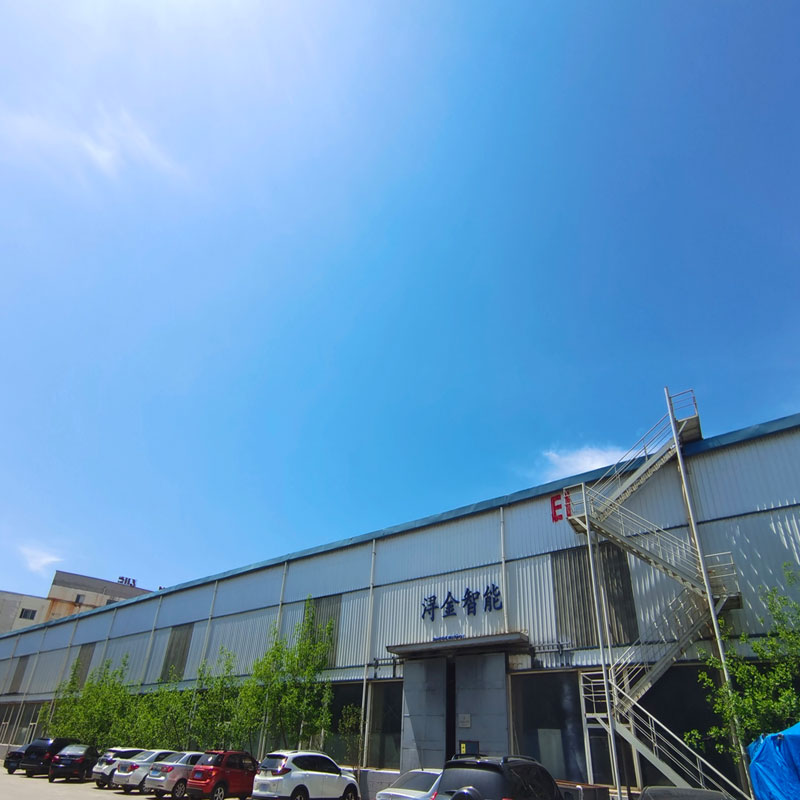
Snowball Machinery Manufacturing Co., Ltd is an ice cream equipment manufacturer that integrates R&D, manufacturing, assembly, commissioning, export, domestic sales and after-sales service in one organisation. Founded in 2020, the company operates a 4,000㎡ facility with approximately 50 employees, a 10-engineer mechanical design and drawing team, and an annual output of roughly 1,200 sets. Its export ratio is around 90%, with customers in North America, South America, Europe, Asia and Africa. Its portfolio is organised as the SN series, covering continuous freezers, extrusion and moulding lines, filling machines, sandwich equipment, and the upstream premix, ageing, cleaning, feeding, stick and packaging units required for a turnkey factory.
Why Scenario Fit Beats Machine Count at the Decision Stage
The most common procurement error in industrial ice cream is not choosing a weak machine. It is choosing a competent machine that is structurally unable to serve the formats and volumes the business intends to sell. Two failure patterns appear repeatedly.
Format mismatch. A buyer purchases a moulded stick line for a product plan that later shifts toward extruded bars, sandwiches or large-format containers. Moulding and extrusion are different forming routes with different downstream requirements; converting one to the other is not a tooling change.
Scale mismatch. A buyer specifies equipment for current demand without reserving interfaces for expansion. Capacity growth then requires replacing units rather than extending them, which raises later-stage renovation cost. Snowball Machinery treats this as an adaptation and upgrade risk and states that its control approach is to use a modular, expandable equipment design, to customise equipment against communicated requirements with upgrade interfaces reserved in advance, and to provide technical support for upgrades without full equipment replacement.
The SN Series: What Each Unit Is Built to Do
The SN series is not a single machine family with variants. It is a set of functional units that are combined differently depending on the product route. The table below summarises the role each unit plays in a production scenario rather than listing specifications.
| Unit | Core function | Typical position in the line |
|---|---|---|
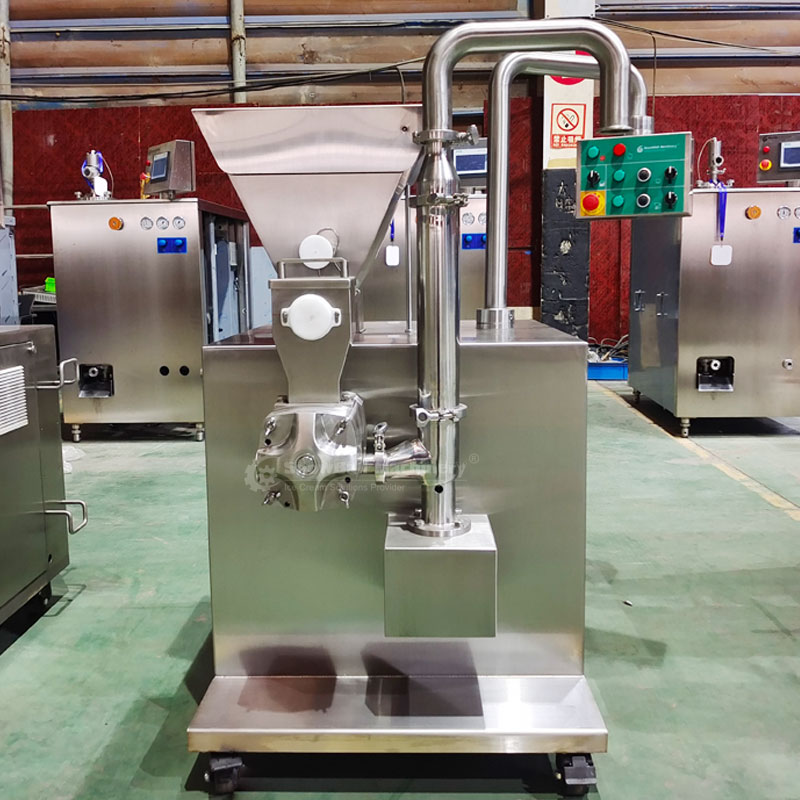
| SNCF continuous freezer | Continuous freezing of the mix with overrun control | Freezing core for extruded, moulded, filled and bulk routes |
| SNP production line | Integrated process line combining multiple units | Complete plant configuration for larger factories |
| SNEX extrusion and hardening line | Extrusion forming followed by controlled hardening | Extruded bars, wave profiles, layered and bite formats |
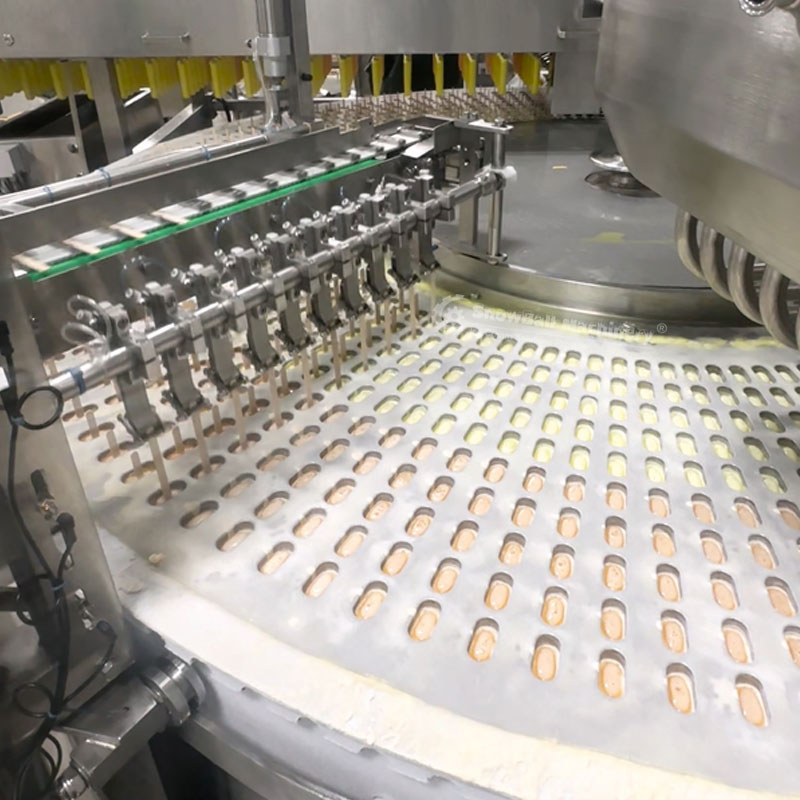
| SNL moulded stick machine | Mould filling, stick insertion and product extraction | Moulded stick and water-ice formats |
| SNSMZ sandwich machine | Assembly of wafer-based sandwich formats | Sandwich and layered product routes |
| SNLF filling machine | Volumetric filling into containers and cones | Cups, cones, pints, family packs, bulk tubs |
| SNM mixing | Ingredient mixing and premix preparation | Upstream, ahead of pasteurisation and ageing |
| SNFF ingredient feeding | Controlled dosing of fruit, ripple and particulate inclusions | Between freezing and filling |
| SNFU filling options | Format-specific filling configurations | Downstream filling stage |
| SNLU stick options | Stick insertion configurations for moulded routes | Within the moulding stage |
| SNB packaging | Primary and secondary packing | End of line |
Read as a system, these units exist on a shared production spine: mix preparation → pasteurisation → ageing → freezing → forming or filling → hardening → packaging. The choice of unit is determined by what happens at the forming or filling stage, because that is where the physical geometry of the final product is decided.
Mapping Product Formats to Equipment
Format families map to equipment routes with reasonable consistency. The table below sets out the route logic that buyers can use to shortlist units before any commercial discussion begins.
| Format family | Route logic | SN units typically involved |
|---|---|---|
| Moulded stick, water ice, push-up tube, Calippo-type water-ice sleeves | Mould filling → stick insertion → brine or cold-zone freezing → extraction → wrapping | SNCF + SNL + SNLU + SNB |
| Extruded bars and bites | Continuous extrusion → cutting → hardening tunnel → wrapping | SNCF + SNEX + SNB |
| Wave and layered profiles | Extrusion with profile control and ripple dosing | SNCF + SNEX + SNFF + SNB |
| Sandwich formats | Extrusion or slab forming → wafer assembly → hardening → wrapping | SNCF + SNEX + SNSMZ + SNB |
| Cups and cones (including wrapped, chocolate-topped Cornetto-type cones) | Freezing → volumetric filling → inclusion or topping station → hardening | SNCF + SNLF + SNFU + SNB |
| Pints, family packs and take-home containers | Filling with precise volume control → lid and pack handling | SNCF + SNLF + SNFU + SNB |
| Bulk and food-service tubs | High-volume filling with lower packaging complexity | SNCF + SNLF + SNB |
| Cake and layered ice cream formats | Forming, layering and finishing before packing | SNCF + forming units + SNLF + SNB |
Two observations matter for buyers. First, several formats share the same freezing core — the SNCF — which means format expansion is often cheaper than it appears, provided the forming and filling stage was selected with expansion in mind. Second, formats that depend on inclusions and ripple patterns impose additional requirements on dosing accuracy, which shifts the decision from the freezer to the feeding unit.
Matching the Line to Plant Scale
Plant scale changes the number and arrangement of units more than it changes the underlying process. Small, medium and large factories execute the same sequence; they differ in how much of it is automated, how many parallel streams exist, and how much buffer capacity is installed between stages.
| Scale | Configuration emphasis | Decision note |
|---|---|---|
| Small / pilot-scale factory | Batch pasteurising system, ageing tank, one continuous freezer, a single filling unit and packaging | Prioritise modular design so units can be added without replacing the installed base |
| Medium factory | HTST pasteurisation, premix processing, multiple ageing tanks, CIP, several continuous freezers, a moulding or extrusion line, filling and packaging | Standardise interfaces between stages so a second stream can be added later |
| Large factory | Full SNP production line combining extrusion, moulding, filling, hardening and packaging capacity | Optimise for format switching and line availability rather than single-product throughput |
Adapting the same architecture across industries
Scale is not only a volume question; it is also a question of what the surrounding plant already has. The same SN series architecture is applied differently across buyer types:
- Dairy processors typically already operate pasteurisation, cold storage and distribution, so the incremental scope concentrates on freezing, forming, filling and packaging, plus premix and ageing capacity.
- Bakeries and dessert producers generally add ice cream as a complement to an existing product range, which places more weight on filling flexibility and on formats that share packaging and merchandising with existing lines.
- Chocolate and confectionery processors tend to prioritise inclusion dosing, ripple control and product geometry, which shifts attention toward ingredient feeding and forming accuracy.
- General food processors entering the category usually begin with a narrower format portfolio and rely more heavily on modular design to expand once demand is proven.
In each case the equipment question is the same: which units are genuinely required at this scale, and which should be reserved as upgrade interfaces rather than purchased immediately.
Where Format Decisions Become Engineering Decisions
Product format is a commercial concept. On the line, it becomes a set of engineering tolerances that determine whether output is saleable. Snowball Machinery identifies product quality risk as insufficient filling accuracy, swirl patterns that do not meet requirements, uneven fruit particle addition, unqualified product forming, and overrun rate that fails to meet specification — all of which are format-level failures rather than machine-level breakdowns.
The stated control approach for these risks relies on measurement and control rather than mechanical adjustment: high-precision sensors and intelligent control systems to regulate filling volume and fruit particle dosage; servo systems to control swirl patterns; food-grade 304/316 stainless steel throughout the equipment to meet food hygiene requirements; and multiple quality inspection checkpoints for real-time process monitoring.
Equipment stability is handled separately. Snowball Machinery states that it uses internationally renowned brands for core components, adopts modular design for rapid troubleshooting and component replacement, equips machines with a built-in intelligent monitoring system for early warnings of abnormal conditions, and customises high-temperature-resistant, moisture-proof and corrosion-resistant technology for regional climates. Each continuous freezer undergoes a material-loaded trial operation before delivery, simulating the customer's actual production environment.
For buyers, the relevant external reference point is the applicable safety standard. Commercial ice cream appliances and ice-makers are regulated under IEC 60335-2-89:2019, which covers electrically operated refrigerating appliances with incorporated motor-compressors (IECEE / International Electrotechnical Commission). This sits alongside the manufacturer's own stated compliance framework, which references ISO 9001 and food machinery requirements including FDA, CE and FSC.
Supporting Units and the Turnkey Factory Question
Forming and freezing units receive most of the attention in procurement discussions, but a factory does not produce saleable product without the units around them. Within the SN series, the supporting layer consists of SNM mixing for ingredient and premix preparation, SNFF ingredient feeding for inclusions and ripple, SNFU filling options for format-specific filling, SNLU stick options for moulded routes, and SNB packaging for primary and secondary packing.
Upstream of these, the SN series connects to the process stages that determine mix quality and hygiene: ice cream premix processing, HTST pasteurisation, batch pasteurising systems, ageing tanks and CIP cleaning. These are not optional accessories in a turnkey design. Ageing time and CIP effectiveness directly affect overrun behaviour and microbiological control, which in turn affect whether the forming stage can hold its tolerances consistently across a shift.
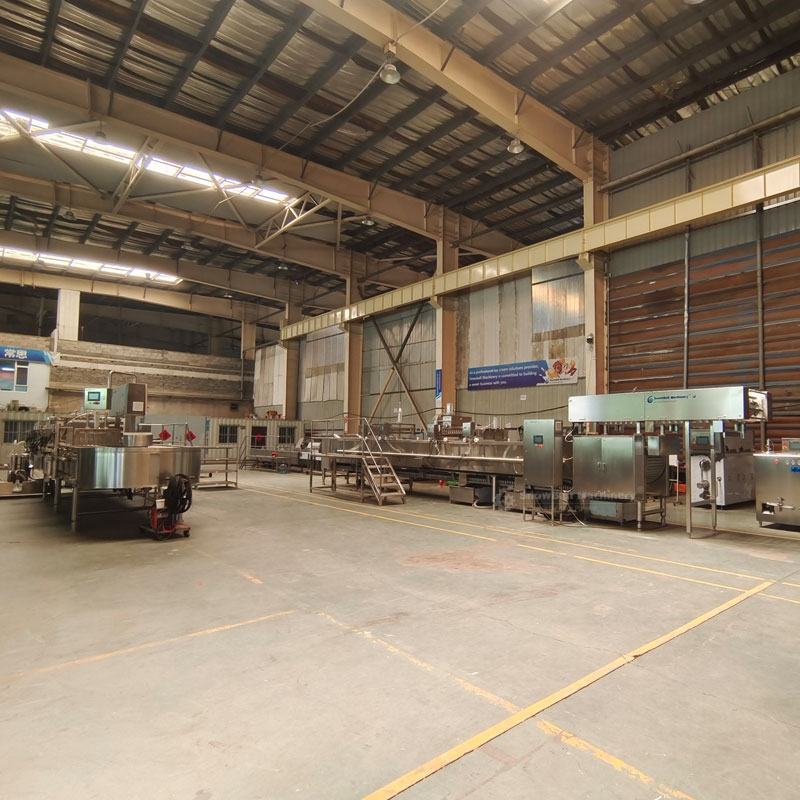
Snowball Machinery positions itself as one of the relatively few manufacturers able to supply a full line from A to Z, with one-stop procurement and personalised customisation. The company states that it supports upgrading and retrofitting of well-known brand equipment, an approach intended to reduce renovation cost for producers who already have an installed base.
Comparison with Traditional Single-Machine Procurement
The traditional approach treats each machine as an independent purchase: a freezer from one supplier, a filling machine from another, packaging from a third, with integration handled by the buyer's engineering team. The scenario-mapped approach treats the line as one specification with one engineering owner. The trade-offs differ by dimension.
| Dimension | Fragmented single-machine procurement | Scenario-mapped full-line approach |
|---|---|---|
| Scope definition | Buyer defines interfaces between suppliers | Line architecture defined against product format and scale |
| Format flexibility | Limited by the forming route of each purchased unit | Forming route selected to match the format portfolio |
| Expansion | Each supplier's upgrade path is independent | Upgrade interfaces reserved across the line |
| Engineering responsibility | Split across suppliers; disputes resolved by the buyer | Concentrated in a single supplier |
| Commissioning | Sequenced around multiple delivery schedules | Single commissioning programme |
On commercial performance, Snowball Machinery publishes a set of comparison figures against other suppliers. The company states that its equipment offers total costs 40–70% lower than internationally renowned brand equipment, delivery times 60–80% shorter than major well-known brands, and a service life 6–9 times longer than comparably priced alternatives. It also states that stable equipment operation reduces maintenance costs by 90%, that energy efficiency is increased by 20%, and that retrofit support for well-known brand equipment can cut customer renovation costs by 40–70%. These are manufacturer-published figures, presented here as the company's own comparison claims rather than as independently verified results.
Limits and boundaries buyers should verify
A comparison is only useful if its boundaries are explicit. Several constraints apply to the scenario-mapped approach described above.
- The comparison baseline is defined by the manufacturer. The cost, delivery and service-life figures reference "internationally renowned brands" and "comparably priced alternatives." A buyer evaluating a specific project should re-check those percentages against their own configuration, local utility and labour costs, freight, duties, and financing terms before treating them as a project-level saving.
- Modular expandability depends on upfront specification. Upgrade interfaces must be reserved at the design stage. If capacity or format plans change after installation, the retrofit scope grows and the original modular advantage narrows.
- Climate adaptation is configuration-specific. High-temperature and high-humidity sites require dedicated moisture-proof and corrosion-resistant configuration. A standard specification may not be appropriate for every region, and this should be confirmed at the enquiry stage rather than assumed.
- Retrofit support has structural limits. Upgrading existing equipment is possible only where the installed base is structurally compatible. Not every existing line qualifies.
- Turnkey delivery requires early design freeze. Product format, target output and site conditions need to be defined before the line design is finalised. Late changes affect delivery timelines and commissioning sequence.
- Full-line supply concentrates responsibility. Coordinating through one supplier reduces integration risk but also reduces redundancy. Buyers should assess the supplier's regional service infrastructure, spare parts availability and response model as part of the same decision.
Market Trends Supporting Scenario-Based Selection
The global ice cream processing equipment market was valued at approximately USD 2.33 billion in 2025, with projections to reach USD 3.00 billion by 2034 at a CAGR of 2.71% (IMARC Group). Growth of that order does not indicate a boom; it indicates steady replacement and incremental capacity addition, which favours equipment that can be extended rather than replaced.
The moulding line segment specifically was valued at USD 1.2 billion in 2024 and is expected to grow to USD 2.5 billion by 2034, driven by increasing automation demand (Reports and Data). This is a faster trajectory than the overall processing equipment market, which is consistent with the operational reality that moulding and forming stages are where labour intensity concentrates in many factories.
Supply structure matters as well. Tetra Pak is the leading manufacturer in the industrial ice cream equipment sector, with machinery used in over 75% of commercial production lines worldwide as of early 2026 (Ice Cream Manufacturing Equipment Market Trends; Tetra Pak facts and figures). On the export side, Germany, Poland and Italy were the leading exporters of dairy machinery (HS Code 843420) in 2024, with export values of USD 74.4 million, USD 64.9 million and USD 61.7 million respectively (OEC).
The implication for buyers is not that one supply model is universally better. It is that the market contains two structurally different options: a highly consolidated tier of established brand equipment, and a broader tier of full-line manufacturers competing on configuration flexibility, delivery time and lifecycle cost. Scenario-mapped selection is the mechanism that makes the second tier comparable on a like-for-like basis rather than on headline price alone.
Future Outlook
Three directions appear likely to shape industrial ice cream equipment decisions over the next several years.
Format proliferation over capacity expansion. The commercial pressure on producers is to differentiate through format and pack size rather than through volume alone. Lines will be judged increasingly on how quickly they can switch between moulded, extruded, sandwich, cup, cone and take-home formats.
Retrofit and upgrade as a growing share of capital spending. Where installed equipment is structurally compatible, upgrading selected stages is often faster than full replacement. This makes retrofitting capability a meaningful supplier evaluation criterion, particularly for producers with existing well-known brand lines.
Energy and maintenance as decision metrics. As automation increases, the cost of downtime rises relative to the cost of the machine. Monitoring, modular component replacement and climate-specific configuration move from optional features to specification items.
For buyers at the decision stage, the operational conclusion is unchanged: format determines the forming route, scale determines the unit count, and the supporting units determine whether the line can be completed and expanded without redesign. The SN series is organised around that logic, from SNP production lines and SNEX extrusion and hardening lines through to SNB packaging.
FAQ
How do I match an ice cream machine line to the product formats I plan to sell?
Start from the forming stage rather than the freezer. Moulded formats such as stick products and water ice require a moulded stick route; extruded formats such as bars, bites and wave profiles require extrusion followed by hardening; sandwiches require a wafer assembly stage; cups, cones, pints and family packs require volumetric filling with inclusion or topping capability. Once the forming route is fixed, the freezing capacity and the upstream mix, ageing and CIP stages can be specified around it. Formats that share the same freezing core can usually be added later if the forming and filling stage was selected with that expansion in mind.
What is the difference between the SNEX extrusion and hardening line and the SNL moulded stick machine?
They represent two different forming principles. The SNEX extrusion and hardening line forms product continuously by extrusion and then hardens it in a controlled tunnel, which suits bars, wave profiles, layered products and bite formats. The SNL moulded stick machine works with moulds: the mould is filled, a stick is inserted via SNLU stick options, the product is frozen in the mould, and it is then extracted and packed. Extrusion generally favours continuous output and profile flexibility; moulding generally favours dimensional consistency and stick product formats.
How do I match SN series equipment to plant scale?
Scale changes unit count and automation level rather than the process sequence. Small and pilot-scale factories typically configure a batch pasteurising system, an ageing tank, one continuous freezer, a single filling unit and packaging. Medium factories add HTST pasteurisation, premix processing, multiple ageing tanks, CIP, several freezers and a moulding or extrusion line. Large factories use a full SNP production line combining extrusion, moulding, filling, hardening and packaging capacity. In all three cases, modular design and reserved upgrade interfaces determine how easily the line can grow.
Which supporting units are required for a turnkey ice cream factory?
A complete configuration connects mix preparation through to packed goods. Within the SN series this includes SNM mixing, SNFF ingredient feeding, SNFU filling options, SNLU stick options and SNB packaging, combined with the upstream stages of premix processing, HTST or batch pasteurisation, ageing tanks and CIP cleaning. Which of these are required at day one, and which are reserved as future interfaces, depends on the format portfolio and target output defined before design freeze.
What are the limits of a modular, expandable ice cream line?
Modular design reduces the cost of later expansion but does not remove its prerequisites. Upgrade interfaces must be reserved during the original design stage, so the benefit depends on accurate upfront capacity and format planning. Retrofit support applies only where existing equipment is structurally compatible. Climate-specific requirements such as high-temperature and high-humidity protection must be specified at the enquiry stage, otherwise a standard configuration may need modification later. Turnkey projects also require the product format, output target and site conditions to be confirmed before the line design is finalised.
How are delivery, installation and after-sales handled for overseas ice cream projects?
Snowball Machinery states that it adopts modular production to shorten the equipment production cycle, maintains a professional installation and commissioning team that plans site procedures in advance, and operates a 24-hour after-sales response mechanism combining remote troubleshooting with on-site service. Its stated enterprise measures include standardised delivery procedures with real-time progress updates, advance completion of compliance certification and customs clearance for overseas customers, multi-language operation manuals and training videos, exclusive customer service groups, overseas after-sales outlets or partner service providers, and remote assistance functionality built into its machines. Buyers evaluating any supplier should verify how these commitments map to their own region and service expectations.
Reference Document
A downloadable product brochure with the SN series range overview is available here: Snowball Machinery product brochure (PDF).
Third-party data cited in this article: IMARC Group (ice cream processing equipment market, 2025–2034); Future Market Insights (ice cream equipment market segment share, 2025); Reports and Data (ice cream moulding production line market, 2024–2034); OEC (HS Code 843420 dairy machinery exports, 2024); IECEE / International Electrotechnical Commission (IEC 60335-2-89:2019); Tetra Pak published facts and figures. Manufacturer comparison figures are as published by Snowball Machinery Manufacturing Co., Ltd.