
Impact, Turbine, Gear or Gun: Choosing a Sprinkler Category
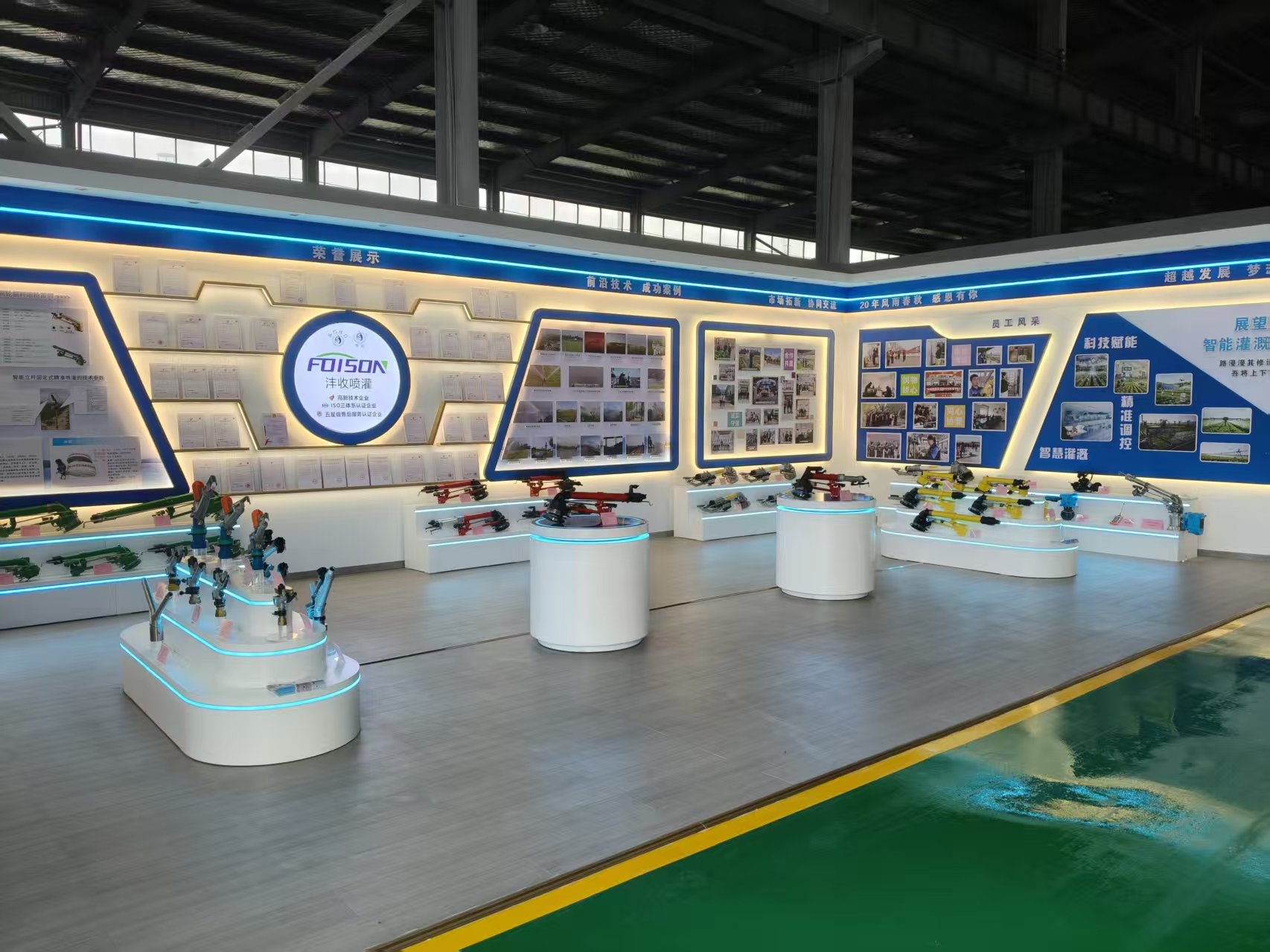
Category selection fixes the pressure band, wetted radius, connection standard and maintenance routine before any model number is compared.
A sprinkler category sets four things a buyer has to live with long after the purchase order is closed: the pressure band the system must supply, the wetted radius and spacing the plot must absorb, the wear path maintenance crews will face, and the thread standard the pipework must match. Getting the category right makes the model shortlist short. Getting it wrong makes every later optimisation a re-fit.
The global sprinkler irrigation market was valued at USD 3.04 billion in 2025, according to Grand View Research. In the agricultural irrigation machinery market, Asia Pacific held the largest revenue share of 36.2% that year, with China as a leading country. Buyers operating at that scale are rarely choosing a sprinkler in isolation — they are committing to a category that has to fit an existing pump curve, an existing riser standard and an existing maintenance routine.
This framework compares the four categories most buyers encounter — impact, turbine, gear-driven and gun sprinklers — using FOISON Sprinkler models as category examples: FS35 (impact), FSW40 Pro (turbine), FS40 (360° gear adjustable), and the FSN50, FSC50 and FSW80 rain guns. FOISON Sprinkler, formally Xuzhou Foison Sprinkler Irrigation Equipment Co., Ltd, is a sprinkler and irrigation equipment manufacturer founded in 2013 and based in Pei County Industry Area, Xuzhou City, Jiangsu Province, China.
Why the category decision comes before the model decision
Most sprinkler comparisons begin with a table of numbers. The numbers matter, but they are downstream of four decisions that are largely settled at category level: how much ground one unit must cover, what pressure is actually available at the riser, how the water quality and site access shape the wear path, and which thread standard the network already uses. A model that is excellent on paper but sits outside the site's pressure band, or needs a riser head the farm does not own, is not a candidate — it is a project.
Treat the category as a filter and the model as a confirmation. That order also makes supplier conversations more productive, because the questions move from features to fit.
The four categories, defined
Impact sprinkler — FS35
An impact sprinkler rotates by the reaction of a spring-loaded arm that swings out of the water jet and strikes the body on its return. The drive mechanism sits outside the water path, which makes it straightforward to inspect and service in the field. FOISON Sprinkler's impact model, FS35, is built in aluminum alloy, copper, stainless steel and nylon, uses a 1-1/2 inch female thread connection, and operates across 0.2–0.6 MPa, delivering a 360° adjustable spray at a 24° spray angle with an 18–36 m radius and 7.8–31.9 m³/h flow. Its stated use scope covers agriculture, forestry and urban greening.
Turbine sprinkler — FSW40 Pro
A turbine sprinkler drives rotation from an internal turbine turned by the water passing through the body, so the drive is contained inside the housing rather than carried on an external arm. FOISON Sprinkler's turbine model, FSW40 Pro, uses the same 1-1/2 inch female thread connection and the same 24° spray angle, with a 360° adjustable spray, a 0.2–0.5 MPa pressure band, a 22–41 m radius and 9.5–37 m³/h flow. Its stated use scope extends past agriculture and forestry into urban greening and industrial dust removal.
Gear-driven sprinkler — FS40
A gear-driven sprinkler turns the nozzle assembly through an internal gear train at a controlled rotation speed, which produces an even, unhurried sweep. FOISON Sprinkler's FS40 is the 360° gear adjustable model in the range: aluminum, copper, stainless steel and nylon construction, a 2 inch thread connector, 0.15–0.5 MPa work pressure, a 20–43 m radius, 9.5–39.4 m³/h flow and a 24° spray angle.
Gun sprinklers — FSN50, FSC50, FSW80
Rain guns — also described as sprinkler guns, water guns or agriculture guns — are single-nozzle, large-area devices built around reach rather than droplet finesse. In FOISON Sprinkler's range the gun category spans both turbine and impact drive designs, and the FSN50, FSC50 and FSW80 are the models most often compared within it. This is the category to evaluate when one unit has to cover a large area, when the spray must travel further than a standard rotating sprinkler reaches, or when the duty is spray atomisation for dust removal over yards and handling areas. Because gun models diverge from one another more than impact, turbine and gear models do inside their own families, model-level parameters should be read from the current datasheet for the specific gun before riser heights and spacing are fixed.
Criterion 1 — Coverage and throw
Coverage is the first filter because it determines how many units a field or yard needs and how much overlap the layout will carry. The published wetted radius bands for the three rotating categories overlap considerably.
| Category | Example model | Published radius band | Flow band |
|---|---|---|---|
| Impact | FS35 | 18–36 m | 7.8–31.9 m³/h |
| Turbine | FSW40 Pro | 22–41 m | 9.5–37 m³/h |
| Gear-driven | FS40 | 20–43 m | 9.5–39.4 m³/h |
| Gun | FSN50, FSC50, FSW80 | Model-specific | Model-specific |
Radius and flow figures are published within each model's stated pressure band; they are not constants across all operating conditions.
Read the bands as overlapping rather than ranked. The FS35 reaches down to 18 m, which suits tighter spacing and smaller or irregular plots. The FSW40 Pro starts at 22 m and the FS40 at 20 m, so both assume a plot large enough to absorb a wider throw without overshooting boundaries, roads or neighbouring properties. At the top end, the three bands converge within a few metres of each other, which means a buyer selecting purely on maximum radius is optimising a figure that pressure and nozzle choice will move anyway.
What does not move is the floor. A plot that cannot absorb a 20–22 m radius is better served by the narrower band or by a directional gun layout than by a model with the largest headline throw.
Criterion 2 — Pressure availability at the riser
Pressure is the constraint most often discovered late, usually after the sprinklers have arrived. Measure it at the riser, at the time of day the system actually runs, before comparing models.
| Example model | Work pressure band | What the band implies |
|---|---|---|
| FS40 | 0.15–0.5 MPa | Lowest floor in the comparison; usable on low-head supply |
| FS35 | 0.2–0.6 MPa | Highest ceiling; tolerates upward pressure variation |
| FSW40 Pro | 0.2–0.5 MPa | Narrower at the top; regulate if the line runs higher |
The FS40 carries the lowest floor at 0.15 MPa, which matters where the supply is a low-head pump, a gravity tank or a long, undersized main. The FS35 carries the highest ceiling at 0.6 MPa, useful where the same line also serves other equipment and pressure drifts upward through the day. The FSW40 Pro's 0.2–0.5 MPa band is narrower at the top; a system that routinely exceeds 0.5 MPa at the riser needs pressure regulation rather than a different sprinkler.
Broadly, a higher pressure band costs pumping energy to sustain. The correct choice is usually the lowest band that still delivers the required radius and flow, not the highest band available.
Criterion 3 — Material durability and the wear path
All three rotating models in this comparison share the same material family: aluminum alloy, copper, stainless steel and nylon. Material lists alone therefore do not separate them. The wear path does.
- Impact (FS35): the moving parts are external — arm, pivot and spring. Abrasive water matters less; handling and mechanical impact matter more, and the mechanism is visible during a routine walk of the field.
- Turbine (FSW40 Pro): the turbine and seals sit in the water path. Suspended sand and grit are the relevant risk, and inspection means opening the body.
- Gear-driven (FS40): a gear train and seals inside the housing, with the same sensitivity to solids as the turbine design and a controlled rotation speed that keeps the sweep even.
- Gun (FSN50, FSC50, FSW80): a large nozzle and bearing set carry a high flow through relatively few parts, so nozzle wear and inlet filtration tend to dominate the maintenance agenda.
The practical implication is a question of water quality and service access rather than of build quality. On clean, filtered water the three rotating categories are separated mainly by how easy it is to reach the mechanism. On unfiltered surface water, the turbine and gear categories place more of the drive in contact with the water, whereas the impact arm does not sit in the flow at all. That is a general observation about mechanism placement, not a durability ranking — site water quality and filtration decide the outcome.
Criterion 4 — Connection compatibility
Connection compatibility decides whether a category change is a swap or a rebuild. The two thread standards in this comparison are 1-1/2 inch female for the FS35 and FSW40 Pro, and 2 inch for the FS40.
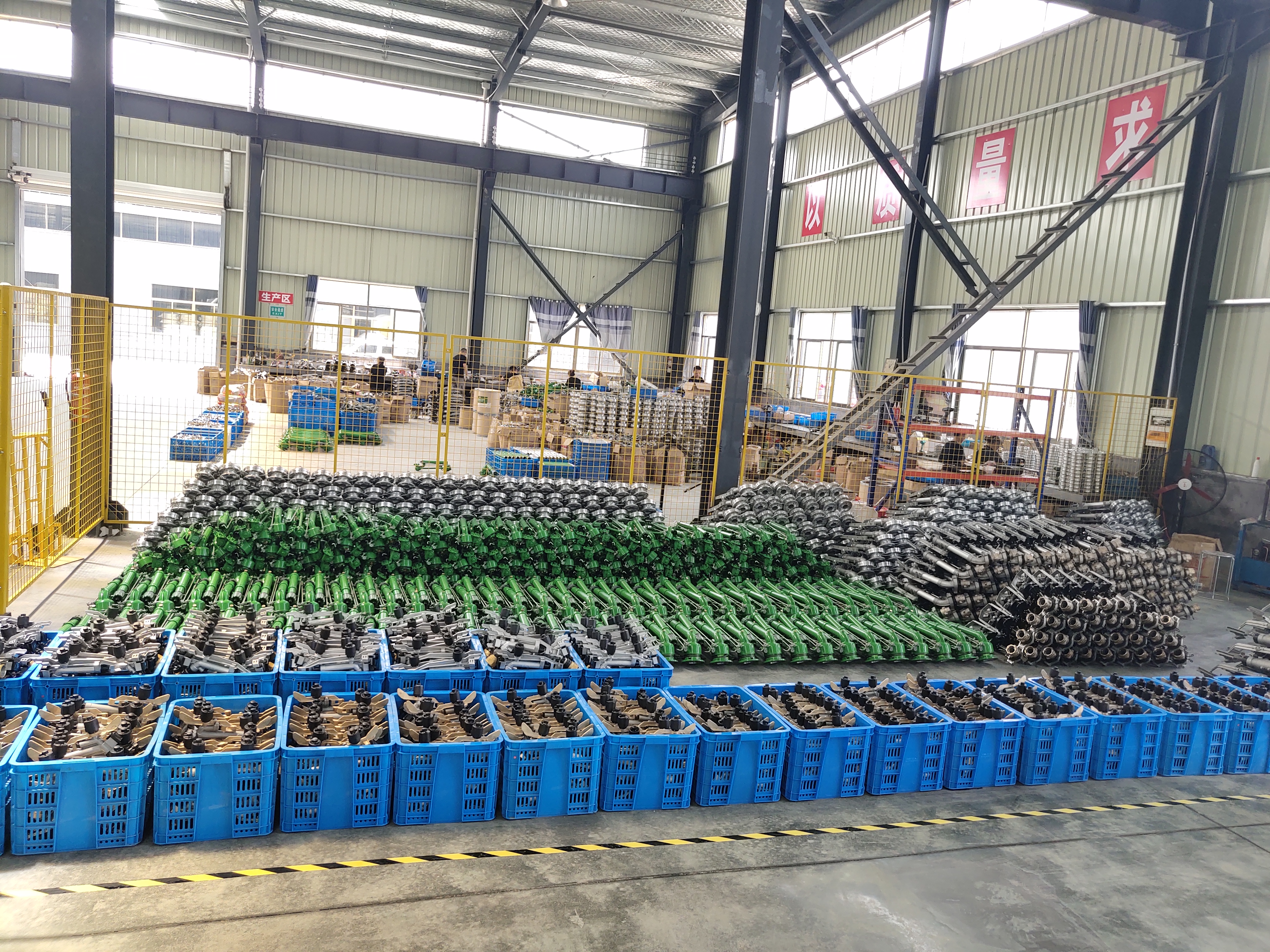
Connection compatibility determines whether moving between categories is a component swap or a riser rebuild.
Moving from the FS35 to the FSW40 Pro keeps the riser, the fittings and the spanner size, because both use the same 1-1/2 inch female thread. Moving from either of those to the FS40 changes the thread to 2 inch, which usually changes the riser head, the reducer, and often the spacing plan, because the FS40's radius and flow bands sit above the smaller models.
For the gun models, thread size should be confirmed per model against the current datasheet before pipework is ordered. A gun is normally mounted on a different support structure from a field sprinkler, so the connection question is answered together with the mounting question rather than on its own.
Applying the framework in five steps
- Measure pressure at the riser under real operating conditions, then remove every category whose band does not contain that number.
- Fix the required wetted radius from plot geometry and the spacing the crop or surface can tolerate, and compare the surviving categories' published bands against it.
- Establish water quality and filtration. Where solids cannot be reliably filtered, give more weight to the category with the mechanism outside the water path.
- Read the existing thread standard and prefer the category that matches it. Treat a thread change as a project cost, not as a fitting.
- Verify the supplier on production, testing and certification evidence, then confirm nozzle, flow and radius for the specific model against the current datasheet.
Category fit at a glance
| Category | FOISON example | Pressure | Connection | Fits when |
|---|---|---|---|---|
| Impact | FS35 | 0.2–0.6 MPa | 1-1/2 inch female | Tighter spacing, variable pressure, mechanism should stay accessible |
| Turbine | FSW40 Pro | 0.2–0.5 MPa | 1-1/2 inch female | Larger plots, mixed agriculture and greening, dust removal duty |
| Gear-driven | FS40 | 0.15–0.5 MPa | 2 inch | Low-head supply and a network already built around 2 inch fittings |
| Gun | FSN50, FSC50, FSW80 | Model-specific | Model-specific | One unit must cover a large area, or spray reach and dust suppression dominate |
Where FOISON Sprinkler fits the framework
FOISON Sprinkler manufactures across all four categories rather than specialising in one, which is relevant to buyers assembling a mixed layout. The company was founded in 2013, operates a 30,000 m² factory with 135 employees, and reports an annual output of 200,000 units supported by a 12-engineer research and development team. Its export ratio is 70%, with markets listed as the EU, Africa, Australia, New Zealand, South East Asia, Mid Asia, Mid East and South America. The range covers more than 100 product varieties, with turbine spray guns, impact guns and irrigation systems described as core products.
For buyers who need a category to match an existing brand or installation, the manufacturer offers OEM/ODM production services and ODM design and production services, with customization available on model, logo, function and shape. Capacity and commercial terms are stated as a monthly capacity of 50,000 units, a minimum order quantity of 20 units, and a lead time within 20 days. Quality control is described as 100% testing, and after-sales support is provided remotely.
On certification, the company holds Quality Management System Certification ISO 9001, certificate number 28725Q042R0S, issued on 2025-05-29 by Zhongzheng Excellent Certificate Group Co., Ltd and valid to 2028-05-28, assessed against GB/T 19001-2016 idt ISO 9001:2015. The certified scope is the production of sprinkler irrigation equipment, and the certificate lists FS35, FSW40 Pro and FS40 among the applicable products.
Field evidence: FS35 on a 150,000 m² vegetable farm
Case records for FOISON Sprinkler describe a common customer in New Zealand who took 500 units of the FS35 for farm irrigation. Over a two-year period, the fixed sprinkler irrigation layout covered a 150,000 m² vegetable farm, with 55% water savings and 60% labour savings recorded for the project.
Two details are worth extracting. First, the reported outcome belongs to the fixed layout and its spacing as much as to the sprinkler itself — a fixed grid removes the labour of moving equipment, which is where the labour figure comes from. Second, 500 identical units on a single farm is a statement about consistency and spares availability rather than about any individual unit. The record is a customer-reported result on one site, not a controlled trial, and is best read as directional evidence for layout design rather than as a guaranteed saving on another property.
Limitations and boundaries of this framework
Four boundaries should be stated plainly.
- The framework resolves category, not hydraulics. Nozzle selection, spacing, application rate and wind losses are site calculations. The published bands here are inputs to those calculations, not substitutes for them.
- Pressure bands are operating ranges, not performance promises. Radius and flow shift within the band, and a system running at the bottom of a range will not deliver the top of the published radius.
- The ISO 9001 certificate cited here covers production of sprinkler irrigation equipment. It is a quality management system certification, not a product performance certification. Product-side requirements for rotating sprinklers are addressed separately — ISO 7749-1:1995 specifies design and operational requirements for rotating sprinklers used in agricultural irrigation.
- Category fit is not the same as budget or service fit. Turbine and gear designs concentrate the mechanism inside the body; where local service access is limited, that is a real cost even when the hydraulics are better. And with more than 100 varieties in the range, no single category replaces the others across terrain, crop and dust-control duty.
Market trend analysis
Three verifiable data points frame the category discussion. The global sprinkler irrigation market was valued at USD 3.04 billion in 2025, per Grand View Research. The global smart irrigation market reached USD 2.2 billion in 2025 and is projected to grow to USD 6.2 billion by 2034, according to IMARC Group. And Asia Pacific held the largest revenue share of 36.2% in the agricultural irrigation machinery market in 2025, with China as a leading country.
Growth forecasts for this space should be read with care. Grand View Research projects a 6.5% CAGR for 2026–2033, while Market Research Future reports 3.04% for 2025–2035; the difference appears to reflect broader versus narrower inclusion of smart features rather than a disagreement about the underlying equipment market. Buyers should not plan capital programmes against a single CAGR figure.
Two structural anchors matter more to procurement than any forecast. ISO 7749-1:1995 provides an international reference for the design and operational requirements of rotating sprinklers in agricultural irrigation, which gives buyers a neutral vocabulary for specification. And HS Code 842482 classifies mechanical appliances for agricultural or horticultural use for projecting, dispersing or spraying liquids, which is the classification most sprinkler imports move under.
The practical reading is that demand growth concentrates where water productivity carries a price, and that category mix tends to shift toward mechanisms delivering uniform coverage at the lowest sustainable operating pressure. Gun-based layouts remain the practical answer where reach and dust suppression — not fine droplet distribution — define the duty.
Future outlook
Three developments are worth tracking over the next buying cycles. First, pressure efficiency is becoming a specification item rather than an afterthought, which favours categories with a low operating floor. Second, documentation quality — certificates with a defined scope, traceable model lists and clear published bands — is increasingly how buyers pre-qualify suppliers before any commercial discussion. Third, category boundaries are blurring at the application end: guns originally associated with agriculture now appear routinely in industrial dust suppression, and turbine designs are specified for greening and forestry work that once defaulted to impact models. Buyers who keep a category framework rather than a favourite model will adapt to that shift faster than those who do not.
Procurement checklist
| Check | What to confirm |
|---|---|
| Pressure at riser | Measured under real operating conditions, compared against the model's published band |
| Radius and spacing | Wetted radius band within the operating pressure, and the overlap the plot can absorb |
| Flow and supply | Available flow against the model's flow band, with headroom for fouling |
| Water quality | Filtration and solids level, mapped to the wear path of the chosen category |
| Connection | Thread standard of existing risers: 1-1/2 inch female or 2 inch, and adapters needed |
| Materials | Aluminum alloy, copper, stainless steel and nylon specification for the specific model |
| Certification scope | Certificate number, issuing body, validity and the exact scope of certification |
| Commercial terms | MOQ, lead time, testing regime and after-sales support route |
A full FOISON Sprinkler product catalogue, covering the models referenced in this framework, is available for download: FOISON Catalog (PDF).
FAQ
What is the difference between an impact sprinkler and a turbine sprinkler?
An impact sprinkler rotates through an external spring-loaded arm that is driven out of the water jet and strikes the body, so the drive mechanism sits outside the water path. A turbine sprinkler rotates through an internal turbine turned by the water passing through the body, so the drive is enclosed inside the housing. In FOISON Sprinkler's range, the FS35 is the impact model and the FSW40 Pro is the turbine model; both use a 1-1/2 inch female thread connection and a 24° spray angle, but their pressure, radius and flow bands differ.
Which sprinkler category works at the lowest pressure?
Among the three rotating models compared here, the FS40 has the lowest work pressure floor at 0.15 MPa, within a 0.15–0.5 MPa band. The FS35 operates from 0.2 to 0.6 MPa and the FSW40 Pro from 0.2 to 0.5 MPa. Lowest pressure is not automatically the best choice, because radius and flow are published within each model's own band and must still meet the layout requirement.
Can an FSW40 Pro replace an FS35 on an existing riser?
Both use a 1-1/2 inch female thread connection, so the riser and fittings are compatible without adaptation. The pressure band differs — 0.2–0.6 MPa for the FS35 against 0.2–0.5 MPa for the FSW40 Pro — and the radius and flow bands also differ, at 18–36 m and 7.8–31.9 m³/h for the FS35 versus 22–41 m and 9.5–37 m³/h for the FSW40 Pro. Spacing and pressure should therefore be rechecked before a direct substitution is made.
What connection sizes do the FS35, FSW40 Pro and FS40 use?
The FS35 impact sprinkler and the FSW40 Pro turbine sprinkler both use a 1-1/2 inch female thread connection. The FS40, which is the 360° gear adjustable model, uses a 2 inch thread connector. Moving between the FS40 and either of the other two therefore requires different riser fittings.
Does an ISO 9001 certificate confirm sprinkler performance?
No. FOISON Sprinkler holds Quality Management System Certification ISO 9001, certificate number 28725Q042R0S, issued on 2025-05-29 by Zhongzheng Excellent Certificate Group Co., Ltd and valid to 2028-05-28, against GB/T 19001-2016 idt ISO 9001:2015, with a scope of production of sprinkler irrigation equipment. That certifies a management system, not the hydraulic performance of an individual product. Performance requirements for rotating sprinklers used in agricultural irrigation are addressed separately, for example in ISO 7749-1:1995.
How do the FSN50, FSC50 and FSW80 rain guns fit into this framework?
They sit in the gun category, which in FOISON Sprinkler's range spans both turbine and impact drive designs. Guns are evaluated on the same four criteria — coverage, pressure availability, wear path and connection compatibility — but the weighting changes: reach and flow typically outrank fine droplet distribution, and because gun models differ from each other more than models within the impact, turbine or gear families do, model-level parameters should be read from the current datasheet for the specific gun before riser heights and spacing are finalised.
Summary
Category first, model second. Pressure at the riser, required wetted radius, water quality and thread standard eliminate most of the shortlist before any datasheet comparison begins. The FS35, FSW40 Pro, FS40 and the FSN50, FSC50 and FSW80 rain guns each occupy a distinct position on that filter, and the buyer who works through the four criteria in order will usually find the remaining choice is between two models rather than twelve.
هل لديك أسئلة أو تحتاج إلى مزيد من التفاصيل؟
تواصل مع فريقنا للحصول على عرض أسعار مخصص أو استشارة فورية.
طلب عرض أسعار
املأ النموذج أدناه وسيتواصل معك فريقنا بعرض مقترح مخصص.
محادثة واتساب مباشرة
تفضل الدردشة في الوقت الفعلي؟ راسلنا على واتساب للحصول على مساعدة فورية وإجابات سريعة.
- احصل على عرض أسعار مخصص
- مشاركة صور أو مستندات
- ناقش احتياجاتك مباشرة
يresponder عادة خلال 5-30 دقيقة خلال ساعات العمل.