
Import Customs Clearance Shortlist: Sea, Air, Truck & DDP
Import Customs Clearance Shortlist: Sea, Air, Truck & DDP
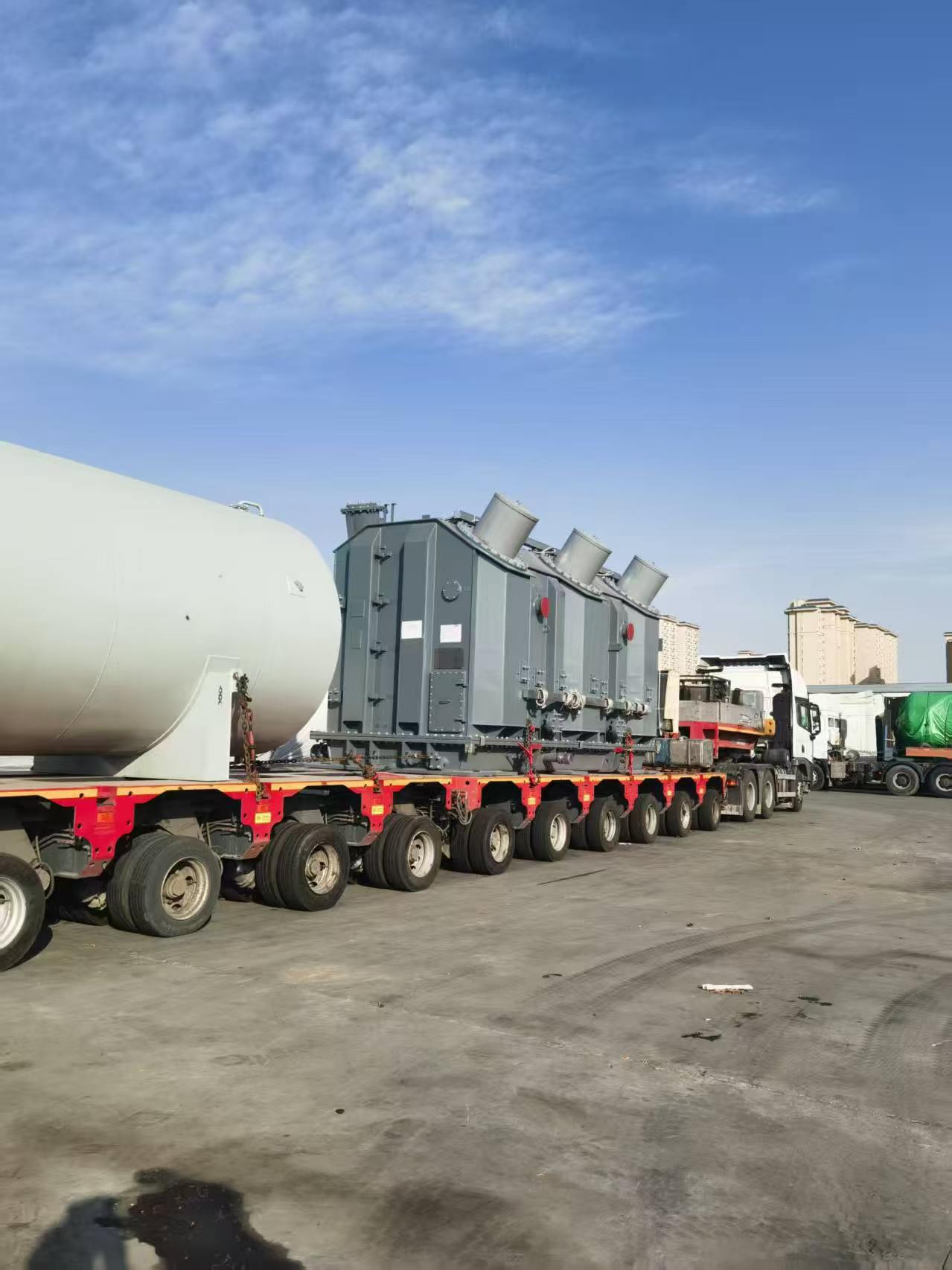
Cross-border movements, container freight and door-to-door delivery each carry a different clearance sequence.
Import customs clearance is rarely bought on its own. It attaches to a transport mode, and the mode sets the documentary sequence, the release clock and the point at which risk changes hands. For importers moving goods into Mainland China or Hong Kong, the practical question for 2026 is not which provider quotes the lowest declaration fee, but which clearance and freight configuration fits a specific shipment, commodity and deadline.
This shortlist compares the configurations that cover most import flows: sea freight FCL, sea freight LCL, air freight solutions, inland trucking, cross-border trucking routed through Hong Kong, and door-to-door delivery arranged under DDP or DDU terms. For each option, the analysis below states what it is, which scenario it fits, which pre-checks it requires, and where its limits sit.
Why the Freight Mode Now Determines the Clearance Outcome
Mainland China imported USD 2.585 trillion of goods in 2024, a 1.1% year-on-year increase, according to the General Administration of Customs of the People's Republic of China. Hong Kong's customs brokerage market, the service layer that handles declarations and release for a large share of the territory's trade, was estimated at USD 117.52 million in 2025 and is projected to grow at a CAGR of 6.24% between 2025 and 2030, reaching USD 159.06 million, based on Mordor Intelligence's Hong Kong customs brokerage market report.
Two structural features shape how importers experience that volume. In Hong Kong, imports are duty-free except for four categories: liquor above 30% ABV, tobacco, hydrocarbon oil and methyl alcohol. Clearance friction there is therefore mostly documentary and procedural rather than fiscal. Mainland China operates a more formal declaration regime: consignors, consignees and agent declaration enterprises must register with Customs in advance before conducting declaration procedures, and personnel handling those procedures must be qualified customs brokers registered with Customs, under Decree No. 103 of the General Administration of Customs of the People's Republic of China.
Both markets put a time ceiling on the paperwork. In Mainland China, import consignees and agent declaration enterprises must declare within 14 days from the day the means of transport is declared to have arrived. Hong Kong requires any person importing or exporting non-exempt articles to lodge accurate and complete import/export declarations within 14 days after importation or exportation, as stated by Hong Kong Customs and corroborated by the Trade and Industry Department and the Census and Statistics Department.
The procurement consequence is direct: mode selection starts the clock, and the clock drives detention, storage and demurrage exposure. An option that looks cheaper on a freight quotation can cost more once the declaration window, inspection probability and last-mile handover are included in the comparison.
The Shortlist: Five Configurations for China and Hong Kong Imports
1. Sea freight FCL: the default for cost-sensitive bulk
Full-container-load sea freight places one consignment in one container, which minimises handling and keeps unit economics predictable. It is the natural fit for bulk imports where the delivery date allows ocean transit and where cargo value does not justify airfreight. The clearance work is heavier on the front end than the freight itself: HS code and tariff lookup, document preparation, declaration and release, then delivery. The trade-off is time flexibility at the destination, because inspection or a document query extends the release sequence rather than the sailing schedule.
2. Sea freight LCL: fit for smaller or mixed volumes
LCL consolidates smaller consignments into shared container space. It suits importers whose volume does not justify a full container, or whose product mix changes per order. The added steps are consolidation at origin and deconsolidation at destination, which means the declaration cannot be treated as an isolated event. Buyers should confirm the cut-off structure and the point at which their goods become individually declarable.
3. Air freight solutions: the fit for urgent and oversized cargo
Air freight is the configuration buyers reach for when the deadline, not the freight rate, dominates the decision. It also handles a category that sea freight cannot: cargo whose dimensions are fixed and cannot be split. That constraint is a capacity problem rather than a documentation problem, because oversized pieces require dedicated pallet space and prior airline approval. Where the piece cannot be broken down, the operational plan has to be confirmed before the shipment reaches the airport.
4. Inland trucking: the leg that decides the delivery date
Inland trucking covers the domestic first mile from supplier premises to port or container freight station, and the last mile from port or airport to the consignee's warehouse. It is frequently treated as a commodity add-on, yet it is the leg that determines whether a cleared shipment actually arrives on the promised day. In a door-to-door configuration, the inland leg is also where documentation errors surface, because a release that has not been completed cannot be dispatched.
5. Cross-border truck via Hong Kong: flexible handling, direct transit
Cross-border trucking routed through Hong Kong is designed for cargo originating in China where transit speed and handling flexibility matter. Its stated strengths are direct trucking with fast transit via Hong Kong and flexible handling of various cargo types. Because it crosses a jurisdictional boundary, its performance depends less on vehicle availability than on transit procedures: documentation readiness, risk control support and a team experienced with import and transit cargo. This is the configuration where a provider's cross-border expertise, rather than its fleet, is the deciding factor.
6. DDP/DDU handling: door-to-door with defined responsibility
DDP and DDU handling extends the service from declaration to delivery at a designated warehouse, including the tax payment step within the agreed scope. It converts a chain of handovers into one sequence, which is why it appeals to importers without an in-house compliance function. The boundary matters here: duties and taxes remain payable by the client, and international freight is usually billed separately from brokerage. DDP/DDU changes who coordinates the process, not who bears the fiscal obligation.
What Import Customs Clearance Includes Beyond the Declaration
The service scope of import customs clearance in this market is broader than a filed declaration. A complete scope typically covers HS code and tariff lookup, 13-digit CIQ code lookup, cross-border e-commerce tax lookup, regulatory requirement consultation, document handling, declaration and release, door-to-door clearance and landed cost calculation.
Two elements are worth isolating for buyers. The first is the pre-check. HS classification and CIQ lookup happen before the declaration is submitted; they determine which regulatory requirements apply to a commodity and therefore whether the shipment is declarable as planned. The second is landed cost calculation, which converts duty, tax and service components into a single figure the importer can use for budgeting and price approval.
Timing is mode-dependent and case-dependent rather than standardised. The service cycle ranges from hours for fast clearance to several days, assessed case by case according to transport mode and inspection requirements. Deliverables typically include customs documents, a landed cost calculation report, compliance advisory, release notices and bill of lading or delivery arrangements, with documents issued electronically and progress communicated by email or phone.
Out-of-scope items are as important as included ones. Legal or tax representation is not provided without client authorization, and international freight is normally billed separately from the brokerage service.
Scenario Fit: Matching Cargo Profile to Configuration
The table below maps common importer scenarios to the configuration that fits, the reason it fits, and the check that most often decides whether the plan holds.
| Scenario | Best-fit configuration | Why it fits | Decisive pre-check |
|---|---|---|---|
| Urgent shipment, fixed deadline | Air freight solutions | Transit time is compressed and the release sequence can be pre-arranged | Pallet space and advance declaration readiness |
| Oversized cargo that cannot be split | Air freight with dedicated pallet arrangement | Dimensions exceed standard air freight limits, so capacity must be engineered | Airline slot approval and loading confirmation before pickup |
| Cost-sensitive bulk volume | Sea freight FCL | Single container, minimal handling, predictable unit cost | HS/CIQ classification and document package completeness |
| Smaller or mixed volumes | Sea freight LCL | Shared container space avoids paying for unused capacity | Consolidation cut-off and deconsolidation timing |
| Food, cosmetics or other CIQ-regulated goods | Any mode plus regulatory pre-check | Commodity requirements, not transit, drive the timeline | 13-digit CIQ code and applicable GB standard lookup |
| Cold-chain or perishable goods | Air freight or temperature-controlled sea freight | Shelf life limits the acceptable inspection window | Inspection risk versus delivery window |
| Cargo from China via Hong Kong | Cross-border truck with direct trucking | Transit speed with handling flexibility for varied cargo types | Transit documentation and risk control support |
| Door-to-door delivery from China | DDP/DDU handling plus inland trucking | One sequence from pickup to designated warehouse | Tax and duty arrangements, and importer-of-record clarity |
Two scenarios are frequently mis-assigned. First-time importers often choose air freight for speed when their real constraint is documentation quality; the classification and document set determine the release regardless of mode. Bulk importers, conversely, sometimes choose sea freight for cost when the commodity requires inspection that will outlast the sailing plan.

Air freight is chosen when the deadline, not the freight rate, dominates the decision.
Compliance Pre-Check: Criteria That Do Not Change With Mode
Certain requirements apply regardless of whether the goods travel by sea, air or truck, and they form the stable part of any shortlist evaluation.
Registration and personnel. In Mainland China, consignors, consignees and agent declaration enterprises must be registered with Customs in advance, and the personnel handling declaration procedures must be qualified customs brokers registered with Customs. For buyers comparing providers, this converts into two verification questions: is the declaring entity properly registered, and is the individual filing the declaration qualified?
Documentation. China's official decree lists contract, invoice, packing list, manifest, bill of lading or waybill, and power of attorney for customs declaration among the supporting documents for import declarations. These six items are the working core of a pre-check: a shipment cannot be declared cleanly if any of them is missing, inconsistent or unauthenticated.
Deadlines. The 14-day declaration window applies in both Mainland China and Hong Kong, although the triggering event is worded differently in each jurisdiction. Buyers should not treat the two as legally identical, but they can use the same control: a monitored countdown from the shipment event that starts the clock.
Commodity-specific screening. HS classification, 13-digit CIQ code lookup and GB standard lookup determine whether additional requirements apply. This is the step most often skipped at quotation stage, and the step that most often changes the timeline afterwards.
Provider Capability: What to Verify Before Shortlisting
Capability in this service category is a combination of credentials, geographic coverage and internal process discipline. TOBECAN IMPORTCLEAR FREIGHT LTD, which operates the importclear brand, is a Hong Kong-based freight forwarder and customs brokerage provider founded in 2001, offering sea freight (FCL/LCL), air freight solutions, inland trucking, customs clearance and DDP/DDU handling, together with D/O release services in Vietnam, China and Hong Kong. Its published capability set illustrates the criteria a buyer can apply to any provider.
Credentials and memberships.
Mode coverage. A provider that handles sea, air and road under one compliance framework reduces the number of interfaces a buyer has to manage. Importclear states that it covers all China seaports and airports, with branches in Hong Kong, Shanghai, Beijing, Chengdu, Dalian, Guangzhou, Shenzhen, Xi'an, Hefei, Qingdao, Xiamen, Wuhan, Chongqing and Fuzhou.
Experience depth. The company reports more than 23 years of logistics solution experience and a cross-functional team of customs brokers, compliance consultants, account managers and operations support, with specific experience in perishables, cold-chain and medical devices. It reports a 10,000 m² facility, an annual capacity of 8,000 TEUs and 88 staff, and lists industries served including fresh and frozen food, pharmaceuticals and medical devices, watches, electronics, footwear, tobacco, cosmetics, apparel and textiles, machinery and furniture, printed matter, and chemicals and metals.
Process tools. The verification question is whether the provider can show the instruments behind the promise: HS and tariff databases, CIQ and GB standards lookup tools, a landed cost calculator, and document handling workflows. Importclear describes a technology stack that includes a proprietary commodity regulatory database engine, an intelligent cost calculation algorithm, customs data real-time synchronization middleware, an OCR document recognition system and a cloud service background framework, alongside K5, L5 and BOOKINGBOX booking platforms. Language capability is bilingual Chinese and English, with service channels covering website forms, phone, email, WhatsApp and offline offices.
The inland leg is where a cleared shipment either reaches the warehouse on the promised day or does not.
Application Notes: Regulated, Perishable, First-Time and Oversized Cargo
Application scenarios for import clearance services in this market cluster around first-time imports, food and cosmetics requiring CIQ inspection, cold-chain or perishable goods, and urgent air shipments. Target client segments include cross-border e-commerce sellers, bulk importers, food, pharma and cosmetics importers, and first-time importers. The problems the service is designed to address are equally specific: non-compliant declarations, inspection delays, hidden fees and a lack of clearance transparency.
An oversized air shipment illustrates how the configuration changes the clearances work. In one documented case, a consignment of cargo nearly 7 metres long and about 0.6 metres high, with fixed dimensions that could not be split, needed to reach the Middle East on a tight commercial deadline. The planned route received the goods in Shenzhen, transshipped them to Hong Kong, and applied in advance with the Hong Kong airline for dedicated pallet space and loading confirmation for oversized cargo. The plan was finalised in two hours. All information was verified as soon as the goods entered the warehouse and pre-declaration was completed before the flight, rather than after arrival at the port.
According to the case record, the shipment required two hours for loading preparation, completed UAE airport customs clearance and delivery within 12 hours against a cited industry average of 3 to 5 days, and met the client's month-end delivery target 12 days early, with a total lead time of three days. The same record notes that for sea freight to the Middle East, customs clearance, pickup and delivery could be completed in as little as two days after arrival at the local port, relying on the destination clearance system. These are company-reported operational results from a single case, not a general performance guarantee.
Market Signals Shaping the 2026 Shortlist
Three shifts are visible in the available data and should influence how buyers structure a shortlist.
Digital declaration is becoming a baseline expectation. FedEx Express launched an Online Import Customs Declaration Tool in Mainland China on 9 May 2024 to improve operational efficiency. When large integrators invest in self-service declaration tooling, buyers begin to expect equivalent transparency from smaller providers, particularly on document status and pre-clearance checks.
The Hong Kong service layer is expanding. A market growing at a 6.24% CAGR from 2025 to 2030 implies continued investment in brokerage capacity, which increases choice but also increases the importance of comparable selection criteria. More providers does not automatically mean easier comparison.
Official trade data is now more usable. China Customs provides an interactive statistics portal with tables covering commodity, trading partner, trade mode and importer/exporter location. Buyers and researchers can prioritise routes, ports and product categories without depending on third-party shipment aggregators, which shifts the basis of a shortlist from anecdote to structure.
Comparison With Traditional Port-to-Port Arrangements — and Where the Limits Are
The traditional model splits a shipment into separate purchases: a forwarder for the main leg, a broker for the declaration at destination, a trucker for delivery. Each party optimises its own segment, and the importer carries the coordination risk. An integrated configuration, such as DDP/DDU handling with inland trucking, replaces those handovers with one sequence beginning at pickup and ending at the designated warehouse.
The integrated model is not unconditionally better, and buyers should understand three boundaries before relying on it.
Fiscal responsibility does not transfer. Duties and taxes remain payable by the client. DDP/DDU arrangements coordinate the payment step; they do not remove the underlying obligation.
Scope has legal edges. Legal or tax representation is not included without client authorisation, and international freight is usually billed separately from the brokerage service. A buyer comparing quotations should confirm which components are inside the fee and which are passed through.
Timing cannot be guaranteed at quotation stage. The service cycle ranges from hours for fast clearance to several days, depending on transport mode and whether inspection is required. Oversized air freight depends on airline pallet-slot approval and available capacity. Cross-border trucking via Hong Kong depends on documentation readiness and transit procedures. A provider that quotes a fixed clearance time before the commodity, documents and inspection status are known is describing an aspiration rather than a plan.
Future Outlook
The direction of this service category is toward earlier involvement. As declaration deadlines remain fixed at 14 days in both jurisdictions and digital filing tools spread, the competitive difference will sit in what happens before the declaration is submitted: classification accuracy, document completeness, inspection anticipation and landed cost visibility.
For importers, that suggests a shortlist built around pre-clearance capability rather than freight rate alone. For service providers, it suggests that mode coverage without compliance depth will become harder to sell, because the scenario that decides the outcome is rarely the sailing or the flight; it is the sequence around it.
FAQ
Which import clearance configuration fits urgent cargo?
Air freight solutions are the fit for urgent shipments, because transit time is compressed and the release sequence can be prepared before arrival. The binding constraint is capacity rather than speed: for oversized pieces that cannot be split, dedicated pallet space and airline approval must be secured in advance. Where the delivery date allows ocean transit, sea freight remains workable and usually costs less per unit.
When does sea freight make more sense than air freight?
Sea freight fits cost-sensitive bulk shipments, especially full container loads where unit economics dominate. LCL is the alternative when volumes are smaller or mixed and do not justify a full container, accepting consolidation at origin and deconsolidation at destination. In both cases the declaration window gives some margin: Mainland China requires import declaration within 14 days from the day the means of transport is declared to have arrived, and Hong Kong requires accurate and complete declarations within 14 days after importation or exportation.
How does cross-border trucking through Hong Kong fit into an import plan?
Cross-border truck service is designed for cargo from China, offering flexible handling for various cargo types and fast transit via Hong Kong with direct trucking. Because it crosses a jurisdictional boundary, its reliability depends on transit procedures rather than fleet size, and it typically requires documentation support and risk control assistance from a team experienced in import and transit cargo.
What does DDP/DDU handling cover, and what remains with the importer?
DDP and DDU handling extend the service from declaration through to delivery at a designated warehouse, including the tax payment step within the agreed scope, which reduces the number of separate handovers. What remains with the importer is fiscal: duties and taxes are payable by the client, legal or tax representation requires client authorisation, and international freight is normally billed separately from brokerage.
What compliance pre-checks should be completed before a declaration is filed?
A structured pre-check covers HS code and tariff lookup, 13-digit CIQ code lookup, cross-border e-commerce tax lookup and applicable GB standard lookup, followed by document verification. China's official decree lists contract, invoice, packing list, manifest, bill of lading or waybill, and power of attorney for customs declaration among import declaration supporting documents. Provider-side checks include confirmation that the declaring enterprise is registered with Customs in advance and that the personnel handling the declaration are qualified, registered customs brokers.
How should an importer verify a customs clearance provider's capability?
Verification can be structured around four dimensions: registration and personnel qualification for the declaring entity; credentials and memberships relevant to the modes used, such as NVOCC, IATA, WCA and HAFFA; geographic coverage across the seaports and airports the importer actually uses; and process tools, including HS and tariff databases, CIQ and GB standards lookup, document handling workflows and landed cost calculation. Whether the provider offers document pre-checks, and how clearly its service scope states what is excluded, are practical indicators of process discipline.
A downloadable brochure describing these clearance and freight configurations is available here: TIC Tobecan ImportClear service brochure (PDF).
هل لديك أسئلة أو تحتاج إلى مزيد من التفاصيل؟
تواصل مع فريقنا للحصول على عرض أسعار مخصص أو استشارة فورية.
طلب عرض أسعار
املأ النموذج أدناه وسيتواصل معك فريقنا بعرض مقترح مخصص.
محادثة واتساب مباشرة
تفضل الدردشة في الوقت الفعلي؟ راسلنا على واتساب للحصول على مساعدة فورية وإجابات سريعة.
- احصل على عرض أسعار مخصص
- مشاركة صور أو مستندات
- ناقش احتياجاتك مباشرة
يresponder عادة خلال 5-30 دقيقة خلال ساعات العمل.