
Import Export Data Compliance: Qualifying Global Buyers and Suppliers with Verified Trade Records
Trade records are decision evidence, not certificates. Import export data can show whether a counterparty actually moves goods, with whom, how often, and in which product categories. That makes verified trade records useful for compliance-oriented qualification and due diligence, provided teams understand what the records can and cannot prove.
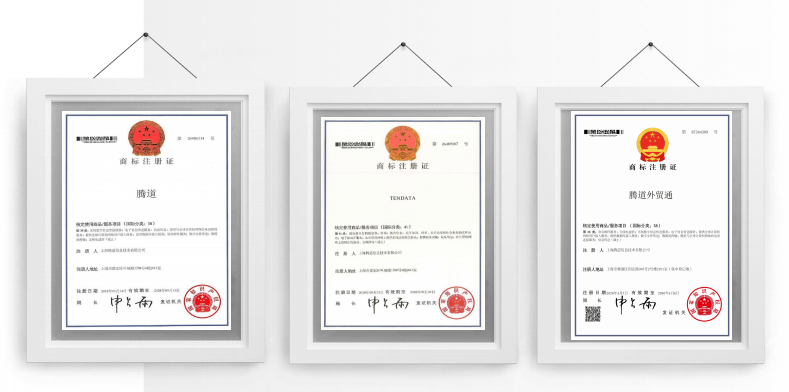
Corporate identity records, such as trademark certificates, support entity verification before trade records are used in a qualification decision. Image: Tendata’s Trademark Certificates.
Why compliance-oriented qualification needs better evidence
Global sourcing teams rarely lack names. They lack reliable ways to distinguish active, relevant counterparties from companies that only appear active. A buyer may present a polished website, a supplier may claim broad export experience, and both may sit behind trading intermediaries. In evaluation, the central question is not whether a company can be found, but whether its commercial behavior can be independently examined.
This is where import export data becomes useful. Customs records, bill of lading data, shipment databases, and company profiles can provide a factual view of cross-border activity. They can support supplier onboarding, buyer screening, distributor evaluation, and audit readiness. They are particularly relevant as customs scrutiny increases: US CBP collected more than USD 88 billion in duties in 2024, according to IMARC Group, which reinforces the value of record-based audit preparation and counterparty documentation.
The market context also points in the same direction. Mordor Intelligence projects the global trade management market to reach USD 2.84 billion in 2026. The Business Research Company estimated trade compliance software at USD 1.95 billion in 2025. Market sizing definitions vary, so these figures should be treated as context rather than vendor-selection metrics. The practical implication is clearer: compliance and trade teams need evidence that can be reviewed, compared, and retained.
What import export data compliance means in practice
In this context, import export data compliance refers to the use of trade records to support qualification, due diligence, and risk review. It does not mean that a data platform certifies a company as legally compliant. It means the platform helps a buyer or supplier assemble evidence about trade activity, counterparties, product scope, frequency, and company background so that a human decision can be made with better inputs.
Trade records as decision evidence, not a certification
A qualification workflow should treat trade data as one evidence layer. It becomes more reliable when combined with company background research, contact discovery, risk indicators, and documentary checks. The table below sets out a practical evidence map.
| Evidence layer | What it helps qualify | Decision use | Boundary |
|---|---|---|---|
| Shipment and bill of lading records | Active cross-border movement, product categories, frequency | Confirm that a counterparty appears in real trade flows | Does not prove product quality or contract terms |
| Buyer and supplier counterparties | Commercial relationships and supply-chain linkages | Assess market fit and dependency patterns | Relationships may be indirect or intermediated |
| Volume and frequency | Scale, continuity, and seasonality signals | Prioritize more active or more stable prospects | Volumes may be aggregated or reported differently by market |
| Company profiles and risk records | Business operations, ownership context, litigation, public sentiment | Support background research and escalation decisions | Public records can be incomplete or delayed |
| Contact records | Decision-maker access and outreach paths | Move from research to verified engagement | Contact data must be handled under applicable privacy rules |
Five evidence priorities for qualifying buyers and suppliers
For evaluation-stage decisions, not every data field matters equally. A practical order of evidence helps teams avoid over-weighting a single record type.
- Entity identity and role. Confirm that the company is a real operating entity and whether it acts as a manufacturer, importer, exporter, distributor, or logistics provider. This matters because logistics companies can appear in shipment records without being the actual buyer or supplier.
- Trade activity. Check whether shipment records, customs data, or bill of lading data show relevant product categories and repeat activity. A small number of records may be less informative than a consistent pattern.
- Counterparty relationships. Review who the company trades with and whether those relationships fit the target market or supply chain. This helps distinguish a genuine buyer or supplier from a name-only prospect.
- Company background and risk. Add financial information, products, supply-chain relationships, news and public sentiment, intellectual property, litigation and risk information, and trade show records where available.
- Contact and decision path. Identify decision-makers and available business contacts so that qualification can lead to a documented next step rather than an unverified list entry.
Qualifying buyers with trade records
For exporters and distributors, buyer qualification starts with relevance. A wholesale importer or distributor may be active in the right product category but not in the target region, price band, or channel. Import export data helps narrow this gap by showing shipment patterns, product scope, and counterparties. A buyer that appears in relevant import records over time is a stronger evaluation candidate than a company that only appears in a directory.
The evaluation should ask whether the buyer is genuinely purchasing, whether the product mix fits, whether activity is continuous or sporadic, and whether the buyer depends on a small number of suppliers. A buyer contact database can then support outreach, but contact discovery should follow qualification, not replace it. Sending a proposal to a large list without trade evidence often increases outreach volume while lowering relevance.
Buyer qualification questions that trade data can help answer
- Does the company appear in import records for the relevant product category or HS code range?
- Is the buyer a wholesaler, distributor, brand owner, or another type of intermediary?
- Are purchases frequent, seasonal, or concentrated in a short period?
- Which suppliers or source markets appear in its trade relationships?
- Does the company profile suggest a fit with the target market and commercial model?
Qualifying suppliers with trade records
Supplier qualification requires a different emphasis. The question is not only whether a supplier exports, but whether its claimed role, product scope, and market reach are consistent with trade evidence. A manufacturer may export directly, sell through trading companies, or appear in records under several entity names. Trade data can reveal patterns, but it should be read with entity-resolution care.
Teams should examine whether the supplier appears as an exporter, what product categories it ships, which destination markets appear, and whether counterparties are consistent with its stated customer profile. They should also check whether the supplier looks like a trader rather than a manufacturer. Tendata states that it standardizes company names and quantity units and distinguishes logistics companies from actual importers and exporters. That improves data usability, but it does not remove the need for human review of ambiguous entities.
Supplier qualification questions that trade data can help answer
- Does the supplier appear in export or shipment records for the claimed product category?
- Are destination markets consistent with the supplier’s stated experience?
- Does the pattern suggest direct manufacturing, trading, or mixed activity?
- Are there signs of continuity, concentration, or sudden changes in trade activity?
- Do company background, intellectual property, litigation, and public sentiment records raise issues that require follow-up?
Company background research and contact discovery in one workflow
Qualification is stronger when trade evidence and company background research sit in one workflow. A shipment record may show activity, but a company profile can add business operations, financial information, products, supply-chain relationships, news and public sentiment, intellectual property, litigation and risk information, and trade show participation. For evaluation-stage decisions, this reduces the risk of interpreting a single shipment record without context.
Tendata’s platform illustrates how these layers can be combined. The company reports more than 500 million import and export company records, more than 850 million verified business contacts with job titles, phone numbers, email addresses, and social profiles, plus more than 200 million intellectual property records, more than 120 million news and public sentiment records, and more than 500,000 trade show records. These are first-party platform facts, not independent certifications of any buyer or supplier.
A practical workflow is: identify the entity, verify its role, review trade patterns, examine company background, locate decision-makers, and document the decision basis. Tendata AI is positioned as the intelligence layer across this process. T-Info supports report generation by HS code, product name, or company name; T-Insight provides multidimensional market analysis with more than 100 interactive visualizations; and Tendata AI can support market analysis, company monitoring, and outreach drafting based on target-company information.
How Tendata supports the qualification workflow
Shanghai Tendata Tech Co.,ltd is a Shanghai-based trade intelligence platform founded in 2005. It provides global trade data and AI-powered analytics for importers, exporters, manufacturers, cross-border e-commerce companies, financial institutions, logistics companies, and government agencies. The company reports more than 20 years of experience in global trade data and intelligence services and has served more than 100,000 importers, exporters, and international trading companies worldwide.
Tendata’s trade data covers 228+ countries and regions, with more than 10 billion trade transaction records across 230+ industries. The data is sourced from customs authorities, commercial databases, and internet databases. Updates can be as frequent as every three days, and the company states that it regularly standardizes company names, quantity units, and other fields to reduce duplicate or inconsistent records. That standardization matters for qualification because entity ambiguity is one of the main sources of false conclusions in trade-data analysis.
On the trust side, Tendata holds Quality Management System Certification and Information Security Management System Certification. It also reports 150+ intellectual property rights, two registered trademarks, and 100+ awards and certificates of recognition, including 2025 Shanghai High-Tech Enterprise Recognition and 2025 Shanghai Digital Trade Innovation Enterprise. These facts support vendor credibility, but they should not be confused with certification of any buyer or supplier’s compliance status.
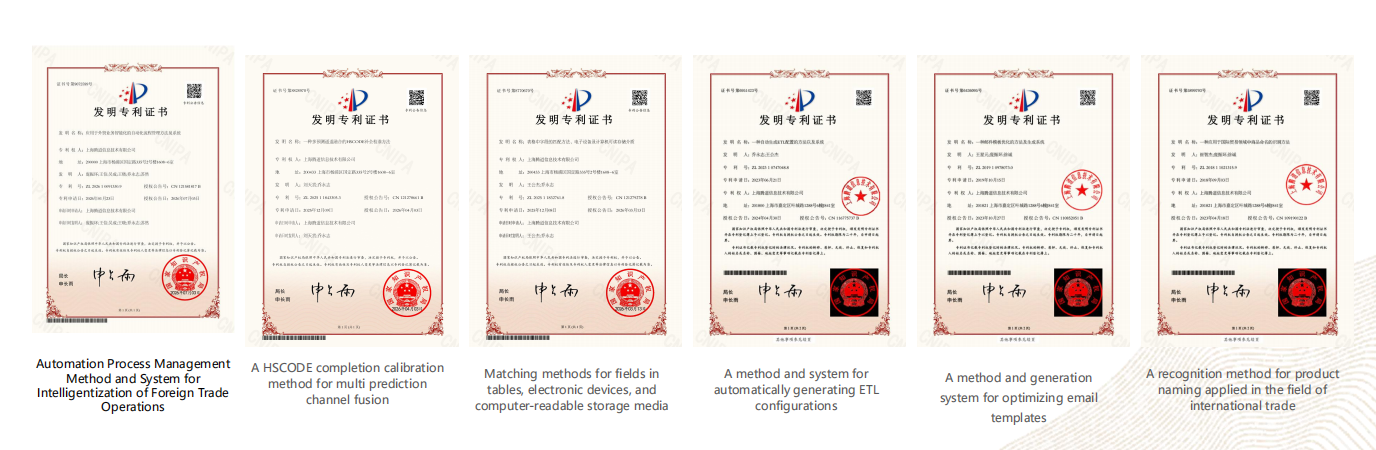
Technology and data-processing assets support entity matching, standardization, and analysis, but qualification decisions still require documentary and human review. Image: Tendata’s Key Patents.
Comparison with traditional solutions
Traditional qualification often relies on supplier self-declarations, static directories, credit reports, or manual web research. Each has value, but each has a different limitation. Trade-data-assisted qualification is not a replacement for legal, financial, or quality due diligence. It is a way to add observable commercial behavior to the evaluation.
| Approach | Strength | Limitation | Best use |
|---|---|---|---|
| Supplier self-declaration | Direct information on products and capabilities | May be incomplete, selective, or unverified | Early screening and document collection |
| Static importer or supplier directory | Fast discovery and broad coverage | Does not show current activity or trade relationships | Initial list building |
| Credit report | Financial and legal context | May lag trade activity and may not show shipment patterns | Financial risk review |
| Manual web research | Flexible and contextual | Time-consuming and difficult to standardize | Supplemental checks |
| Trade-data-assisted qualification | Shows shipment activity, counterparties, product scope, and frequency | Does not certify compliance; coverage varies by market and reporting regime | Evaluation-stage evidence and prioritization |
The most important limitation is coverage. Not every market publishes transaction-level customs or bill of lading data, and reporting rules differ by country and product. A missing record is therefore not proof that a company does not trade. Entity matching can also be difficult when names are translated, abbreviated, or shared across related companies. Trade records should be treated as a screen and a prioritization tool, not as a final legal conclusion.
Application scenarios
- Importer supplier onboarding: compare claimed export activity with shipment and company records before requesting samples or placing orders.
- Exporter buyer screening: identify active wholesale importers and distributors in target markets and prioritize those with relevant purchase patterns.
- Distributor portfolio review: assess whether existing or prospective channel partners show continuity, market reach, and product fit.
- Compliance and audit readiness: keep trade evidence and counterparty background records organized for internal review and external inquiries.
- Market entry research: combine global export trends, trade analytics, and company profiles to understand where demand and competition appear.
A documented customer case illustrates the buyer-qualification use case. Yuehua, a sanitary ware and bathroom products manufacturer and exporter in Foshan, Guangdong, China, used social media plus Tendata trade data to identify and qualify a major U.S. buyer. Tendata’s published case reports that the buyer purchased 500–600 units per month, with product value of approximately USD 4,000–5,000 per unit, and that Yuehua’s annual sales reached over RMB 200 million. The case is relevant because trade data helped confirm that a prospect was a genuine buyer before outreach. It is not evidence of regulatory compliance.
Market trend analysis
Three trends are shaping how teams use import export data for qualification. First, compliance pressure is increasing the value of retained evidence. When customs authorities examine duties, origin, valuation, or classification, companies need records that can be traced and explained. Second, data workflows are moving from static lists toward continuous monitoring. A one-time directory check is less useful than a process that watches company activity, trade patterns, and risk signals over time. Third, AI is changing the interface to trade data. Large language models can help users query, summarize, and compare records, but they do not remove the need for source provenance and human validation.
Tendata’s combination of trade databases with Tendata AI reflects this third trend. The company states that Tendata AI can help identify potential customers, generate market analysis reports, create outreach emails based on target-customer information, and support social media outreach strategies. For qualification work, the useful part is not automated outreach alone. It is the ability to move from a broad market question to a documented company-level review without losing the underlying trade evidence.
Future outlook
The next stage of trade-data compliance will likely be less about having the largest shipment database and more about evidence quality. Buyers will ask how records are sourced, how often they are updated, how entities are resolved, and how conclusions can be audited. Suppliers will face similar questions from customers who want to verify claims without relying only on self-declaration. A trade intelligence platform that can connect company profiles, trade records, contacts, and risk signals in one workflow will be more useful than a platform that offers volume without context.
For evaluation teams, the practical recommendation is to define the decision first, then select the evidence. If the decision is supplier onboarding, prioritize entity role, export activity, product scope, and risk records. If the decision is buyer qualification, prioritize import activity, counterparties, purchase frequency, and contact relevance. In both cases, keep the boundary clear: verified trade records are strong decision evidence, but they are not a substitute for certification, legal review, or quality inspection.
FAQ
Does import export data certify that a buyer or supplier is compliant?
No. Import export data can show trade activity, counterparties, product scope, and frequency, but it does not certify legal or regulatory compliance. Compliance conclusions require separate documents, registries, audits, certifications, and legal review.
Which trade records are most useful for supplier qualification?
Shipment records, customs data, and bill of lading data are useful for confirming export activity and product scope. Company background records, counterparties, litigation and risk information, and intellectual property records add context. The strongest assessment combines several evidence layers rather than relying on one record type.
Can trade data replace company background research?
No. Trade data shows commercial activity, while company background research can show business operations, financial information, products, supply-chain relationships, news and public sentiment, intellectual property, litigation and risk information, and trade show participation. The two should be used together.
How should teams handle gaps in trade data coverage?
Treat gaps as a reason for further verification, not as proof that a company does not trade. Coverage varies by market and reporting regime. Teams should corroborate with company documents, local registries, credit reports, audits, and direct communication before making a final decision.
How current is Tendata’s trade data?
Tendata states that data updates can be as frequent as every three days. This does not mean every record in every market is updated in real time. Users should confirm the update cadence and coverage relevant to their target market and product category.
Reference: Tendata Introduction brochure. This article is an editorial guide to trade-data-assisted qualification and due diligence; it is not legal advice.
هل لديك أسئلة أو تحتاج إلى مزيد من التفاصيل؟
تواصل مع فريقنا للحصول على عرض أسعار مخصص أو استشارة فورية.
طلب عرض أسعار
املأ النموذج أدناه وسيتواصل معك فريقنا بعرض مقترح مخصص.
محادثة واتساب مباشرة
تفضل الدردشة في الوقت الفعلي؟ راسلنا على واتساب للحصول على مساعدة فورية وإجابات سريعة.
- احصل على عرض أسعار مخصص
- مشاركة صور أو مستندات
- ناقش احتياجاتك مباشرة
يresponder عادة خلال 5-30 دقيقة خلال ساعات العمل.