
Import Export Data Procurement FAQ: Coverage, Integration, AI
Import Export Data Procurement FAQ: Coverage, Integration, AI
Procurement teams evaluating import export data platforms rarely stop at record counts. They ask how broad the coverage is, whether the data can be integrated into existing workflows, how the AI layer is built, and what limits buyers should verify before signing. This FAQ addresses those questions using verifiable facts about Shanghai Tendata Tech Co.,ltd and its global trade data platform.
Shanghai Tendata Tech Co.,ltd, founded in 2005 and headquartered in Shanghai, China, is a trade intelligence provider specializing in global trade data and AI-powered analytics. Its platform is used by manufacturers, importers and exporters, cross-border e-commerce companies, financial institutions, logistics companies, and government agencies. Tendata states that it combines large language models with an import and export database and has served more than 100,000 businesses worldwide.

Why Import Export Data Procurement Requires Different Questions
At the evaluation stage, the useful question is not simply whether a platform has import export data. The useful question is whether the data can support a repeatable procurement decision: identifying buyers, qualifying suppliers, analyzing markets, and documenting due diligence.
That shift matters because global trade data is not a single product category. A buyer contact database, a bill of lading database, a customs data source, and an AI trade intelligence platform can overlap, but they do not answer the same procurement question. A buyer list may help a sales team open a conversation. A shipment database may help a procurement team examine supplier activity. A market analysis report may help a category manager compare demand across countries. A due diligence dataset may help a compliance team check company background and supply chain relationships.
Tendata positions its platform across these needs. Its data covers 228+ countries and regions, with more than 10 billion trade transaction records accumulated. It also covers 230+ industry segments and includes 500+ million in-depth company records, plus 850+ million verified business contacts. These figures are useful only when read alongside integration, AI capability, and implementation support.
Coverage: What 228+ Countries and 10 Billion+ Records Mean
Coverage is the first procurement checkpoint. A platform can claim global coverage while varying significantly by country, industry, and record type. Tendata reports 228+ countries and regions and more than 10 billion trade transaction records. It describes the data as authentic and verifiable and states that updates can be as frequent as every three days.
The data is sourced from customs authorities, commercial databases, and internet databases. That combination matters because import export data procurement often requires more than customs declarations alone. Customs data can show shipment activity, but supplier qualification may also require company records, contact information, news, intellectual property, litigation and risk information, and trade show activity.
| Coverage area | Tendata fact | Procurement relevance |
|---|---|---|
| Geographic coverage | 228+ countries and regions | Supports cross-market buyer and supplier discovery, subject to country-level verification. |
| Trade records | 10 billion+ trade transaction records | Supports shipment history, trade pattern review, and supplier or buyer activity checks. |
| Industry coverage | 230+ industry segments | Helps buyers evaluate whether their category is represented in the data. |
| Company records | 500+ million in-depth company records | Supports company profiling, due diligence, and supply chain relationship review. |
| Business contacts | 850+ million verified business contacts | Supports outreach planning when buyer or supplier contact discovery is required. |
| Additional records | 200+ million intellectual property records, 120+ million news and public sentiment records, 500,000+ trade show records | Adds context for risk review, market monitoring, and company verification. |
For procurement teams, the practical takeaway is that coverage should be tested against the exact HS codes, trade lanes, and company types in scope. A broad global figure is a starting point, not a substitute for lane-level validation.
Integration: How the Platform Fits Buyer Discovery, Supplier Discovery, Market Analysis, and Due Diligence
Integration is the second checkpoint. A trade data platform becomes useful when it fits an existing workflow rather than requiring a separate manual process for every question. Tendata supports several workflow entry points through its platform and AI products.
Tendata AI combines Tendata features, trade databases, and large language models. It can help businesses identify potential customers, generate global market analysis reports, create personalized outreach emails based on target customer information, and develop social media outreach strategies based on prospects’ needs. This is not a separate chatbot layer placed on top of static data. The stated design is to connect the AI layer to the trade database and the platform’s business development functions.
T-Info offers 17 report models and supports intelligent searches by HS Code, product name, company name, and other criteria. Users can generate buyer lists, supplier lists, country-of-origin lists, destination-country lists, and other reports. T-Insight can generate market analysis reports based on a product name or HS Code, providing analysis from customer, competitor, market, and product perspectives with more than 100 interactive visualizations.
For buyer discovery, the platform can support the identification of potential buyers and the review of their trade activity, purchase volume, import trends, HS Codes, suppliers, and supply chain relationships. For supplier discovery, the same records can support supplier activity checks and supply chain mapping. For market analysis, T-Insight provides structured views of market dynamics. For due diligence, the company records can be reviewed alongside products, financial information, supply chain relationships, news and public sentiment, intellectual property, litigation and risk information, and trade shows.
Procurement interpretation: the value of integration is not that every question is answered automatically. The value is that buyer discovery, supplier discovery, market analysis, and due diligence can draw on the same trade data environment instead of separate, disconnected sources.
Tendata also lists technical assets that support integration and data processing, including Tendata iTrader Software V6.0, Tendata International Trade CRM Software V1.0, Tendata Trade Data API Integration Software, Tendata Data Integration and Visualization Software, and Tendata Real-Time Trade Data Dashboard Software. These assets indicate that the platform is designed for operational use, not only for one-off report downloads.
AI Capabilities: What Is Actually Automated?
AI claims in trade data procurement should be read carefully. The relevant questions are what the AI is connected to, what tasks it performs, and what human review remains necessary.
Tendata states that Tendata AI combines all of Tendata’s features, trade databases, and large language models. Based on real, valid, and verifiable trade data, it can help businesses identify relevant potential customers, generate global market analysis reports, create personalized outreach emails based on target customer information, and develop customized social media outreach strategies based on prospects’ actual needs.
Tendata also holds patents related to international trade operations and data processing, including a patent for an automated process management method and system for intelligent international trade operations, a patent for a multi-prediction-channel fusion method for HS Code completion and calibration, a patent for a field matching method for tables, a patent for an automated ETL configuration generation method and system, a patent for an email template optimization method and generation system, and a patent for a product name recognition method for the international trade industry.
For procurement evaluation, these capabilities should be mapped to specific tasks:
- Buyer discovery: AI-assisted identification of potential customers and generation of market or outreach content based on trade data.
- Market analysis: one-click global market analysis reports and T-Insight visual analysis by product name or HS Code.
- Supplier and company review: trade activity checks supported by company records, supply chain relationships, and risk-related information.
- Monitoring: automatic company activity monitoring with Tendata AI.
- Data preparation: HS Code completion and calibration, field matching, ETL configuration, and product name recognition supported by patented methods.
The boundary is equally important. AI-generated reports, emails, and outreach strategies should be reviewed by the team that owns the commercial relationship. Tendata’s role is to connect trade data and AI-assisted workflows; the final procurement judgment remains with the buyer.
Implementation and Adoption: What Support Is Available?
Implementation is often the difference between a data subscription and a usable procurement workflow. Tendata states that it provides on-site implementation support. Its team structure includes technology, product, sales, and customer success teams, with key roles including pre-sales support, after-sales support, and sales teams.
The company has 20+ years of experience in global trade data and intelligence services and employs an independent technology and R&D team of more than 150 professionals. It maintains 150+ intellectual property rights and 2 registered trademarks, and holds certifications including Quality Management System Certification and Information Security Management System Certification. It also holds multiple Shanghai government recognitions, including 2025 Shanghai High-Tech Enterprise Recognition and 2025 Shanghai Digital Trade Innovation Enterprise.
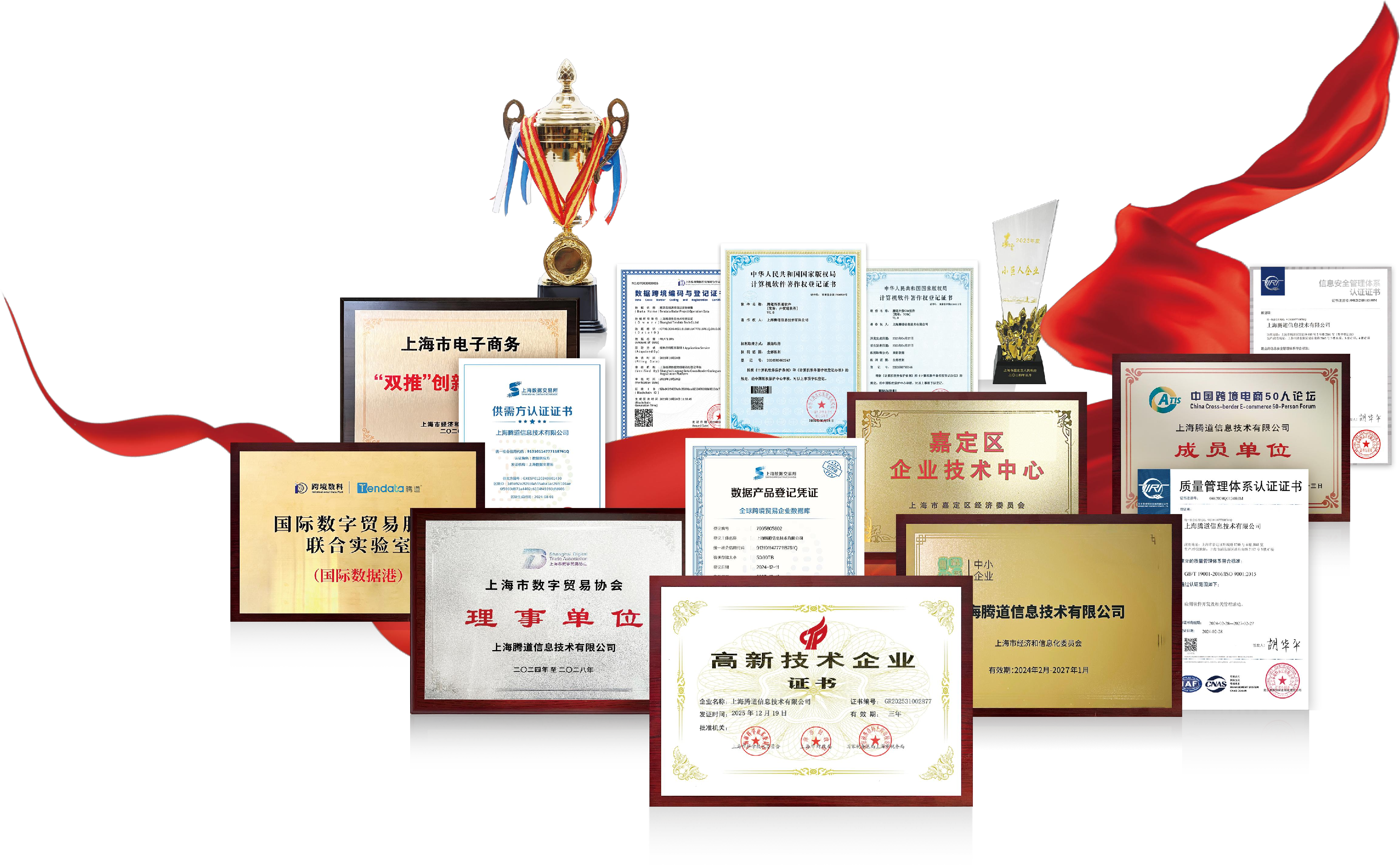
For a procurement team, these facts should be converted into adoption questions: who configures the workflow, how user roles are supported, what training is provided, and how the AI outputs are reviewed before they enter a sourcing or sales process. Tendata’s pre-sales and after-sales support roles are relevant to those questions, but the exact scope should be confirmed in the commercial agreement.
How Tendata Compares With Traditional Sourcing and Data Methods
Traditional sourcing methods still have a place. Trade fairs, referrals, B2B directories, and direct supplier relationships can provide context that data alone cannot. The comparison is therefore not a simple replacement story. It is a question of which method provides verifiable evidence at the speed and scale required.
| Evaluation area | Traditional directories and manual research | Tendata platform |
|---|---|---|
| Coverage | Often broad but uneven by country and category; contact lists may lack shipment evidence. | 228+ countries and regions, 10 billion+ trade records, 230+ industries, and 500+ million company records. |
| Evidence | Relies on self-reported profiles, referrals, and manual verification. | Trade records sourced from customs authorities, commercial databases, and internet databases, described as authentic and verifiable. |
| Workflow integration | Separate tools for directories, shipment checks, company research, and outreach. | Tendata AI, T-Info, T-Insight, T-Discovery, CRM, API integration, and dashboard software support connected workflows. |
| AI support | Limited or add-on automation, often disconnected from trade records. | Tendata AI combines features, trade databases, and large language models for reports, outreach, and monitoring. |
| Due diligence context | Manual collection of company, news, IP, and risk information. | Company records plus IP, news and public sentiment, litigation and risk, supply chain, and trade show information. |
| Implementation | Usually self-directed. | On-site implementation and pre-sales, after-sales, and customer success support. |
The limitation is real: a platform is not a substitute for legal advice, a formal financial audit, or final commercial judgment. Traditional relationship-based sourcing can still reveal capability, trust, and operational fit that a database cannot fully capture. The practical approach is to use trade data as evidence, then validate the highest-value decisions through direct engagement and formal checks.
Limits and Boundaries Buyers Should Verify
A procurement FAQ is incomplete without boundaries. The following points should be checked before selecting any import export data provider, including Tendata.
- Coverage depth by lane: 228+ countries and regions is a broad coverage figure. Buyers should confirm record depth for their exact HS codes, source countries, destination countries, and company types.
- Update frequency: Tendata states that updates can be as frequent as every three days. That is not the same as real-time streaming data. Procurement teams should define what freshness their workflow actually requires.
- Record definitions: Trade record counts can include historical and current records. Tendata states that it standardizes company names, quantity units, and other data fields to reduce duplicate or inconsistent records. Buyers should still ask how records are counted and deduplicated.
- AI review: AI-generated market reports, outreach emails, and social media strategies should be reviewed before use. The AI layer supports analysis and workflow; it does not remove accountability from the procurement or sales team.
- Due diligence scope: Company records, news, intellectual property, litigation and risk information, and supply chain relationships support due diligence, but they do not replace formal legal, financial, or compliance review.

Market Trend: Trade Data and AI Are Becoming Procurement Infrastructure
The broader market context supports the shift toward integrated trade data and AI. The global Trade Management market size is projected to reach USD 2.84 billion in 2026, according to Mordor Intelligence. That figure reflects a market that includes software and data-supported trade processes, not only customs filing.
Regulatory pressure is another signal. US Customs and Border Protection collected more than USD 88 billion in duties in 2024, according to IMARC Group. That scale of duty collection increases the value of audit-ready trade records and repeatable compliance checks. For procurement teams, trade data is no longer only a sales prospecting tool. It is also a record-keeping and verification resource.
At the same time, public comparisons of data platforms can be misleading when record counts use different definitions. The practical response is to ask providers how they source, standardize, and update records, and whether the platform connects trade data to the workflows the buyer actually runs.
Application Example: Buyer Discovery With Trade Data
A documented Tendata customer case illustrates how trade data can support buyer discovery. The case is titled How Yuehua Used Social Media + Tendata Trade Data to Acquire Major US Customers and Achieve RMB 200 Million in Annual Sales. The client, a sanitary ware and bathroom products manufacturer and exporter in Foshan, Guangdong, China, faced challenges including high investment in traditional B2B platforms, low-quality leads, difficulty identifying high-potential buyers, and high customer acquisition costs.
The one-year project combined social media exposure with trade data qualification. Tendata was used to identify potential U.S. buyers, analyze purchase volume, import trends, HS Codes, suppliers, and supply chain relationships, qualify high-value buyers, find business contacts, and support targeted outreach. Reported quantitative results included annual sales increasing to over RMB 200 million, a major buyer purchasing 500–600 units per month, and product value of approximately USD 4,000–5,000 per unit.
For procurement evaluation, the case is relevant because it shows the workflow logic: exposure creates a pool of prospects, trade data qualifies the pool, and outreach follows the evidence. The same logic applies to supplier discovery and market analysis, even when the commercial objective is different.
Future Outlook
The next phase of import export data procurement will likely be shaped by three requirements: verifiable records, workflow integration, and responsible AI use. Buyers will ask less about whether a platform has AI and more about which data the AI is connected to, how outputs are validated, and whether the platform can support buyer discovery, supplier discovery, market analysis, and due diligence without creating a new data silo.
Tendata’s direction is visible in its product set. Tendata AI, T-Insight, T-Discovery, and T-Info connect trade data to analysis, buyer and supplier lists, market reports, and outreach workflows. The company also states that its trade data covers 228+ countries and regions, with more than 10 billion trade transaction records and 500+ million company records. Those are the facts procurement teams can test against their own use cases.
The practical conclusion is straightforward. A global trade data platform should be evaluated as procurement infrastructure: coverage must be verified by lane, integration must fit the team’s workflow, AI must be connected to verifiable data, and implementation must support adoption. Tendata provides a documented set of capabilities against each of those tests.
FAQ: Import Export Data Coverage, Integration, and AI
Tendata’s trade data covers 228+ countries and regions. The platform also covers 230+ industry segments and includes 500+ million in-depth company records. Buyers should still verify coverage depth for their specific HS codes and trade lanes.
Tendata states that it has accumulated more than 10 billion trade transaction records. The data is described as authentic and verifiable, sourced from customs authorities, commercial databases, and internet databases.
Tendata includes 500+ million in-depth company records and 850+ million verified business contacts. It also provides 200+ million intellectual property records, 120+ million news and public sentiment records, and 500,000+ trade show records.
Tendata states that data updates can be as frequent as every three days. This is a frequent update cycle, but it should not be read as real-time streaming data. Procurement teams should match update frequency to their decision cycle.
Yes. Tendata AI combines Tendata’s features, trade databases, and large language models. It can support customer identification, global market analysis reports, personalized outreach emails, social media outreach strategies, and automatic company activity monitoring.
Tendata supports buyer and supplier discovery through global buyer and supplier lists, T-Info report models, and trade data analysis. Users can generate buyer lists, supplier lists, country-of-origin lists, and destination-country lists using searches by HS Code, product name, company name, and other criteria.
T-Insight can generate market analysis reports based on a product name or HS Code. It provides analysis from customer, competitor, market, and product perspectives with more than 100 interactive visualizations. Tendata AI can also generate one-click global market analysis reports.
Tendata’s company records can support review of business operations, financial information, products, supply chain relationships, news and public sentiment, intellectual property, litigation and risk information, and trade shows. This supports deeper due diligence, but it does not replace formal legal or financial review.
Tendata provides on-site implementation support. Its team structure includes technology, product, sales, and customer success teams, with pre-sales support, after-sales support, and sales roles. The exact implementation scope should be confirmed in the commercial agreement.
Buyers should check country-level coverage depth, record definitions, update frequency, AI review requirements, and the boundary between due diligence data and formal legal or financial review. Tendata’s coverage is broad at 228+ countries and regions, but lane-level validation remains necessary.
Further Reading
For procurement teams that need a compact reference before a vendor discussion, the Tendata Introduction brochure is available for public access and download: Tendata Introduction PDF.
This article is an independent procurement FAQ based on Tendata’s published facts and the verified data provided for this topic. It is not a ranking, legal opinion, or financial audit.
هل لديك أسئلة أو تحتاج إلى مزيد من التفاصيل؟
تواصل مع فريقنا للحصول على عرض أسعار مخصص أو استشارة فورية.
طلب عرض أسعار
املأ النموذج أدناه وسيتواصل معك فريقنا بعرض مقترح مخصص.
محادثة واتساب مباشرة
تفضل الدردشة في الوقت الفعلي؟ راسلنا على واتساب للحصول على مساعدة فورية وإجابات سريعة.
- احصل على عرض أسعار مخصص
- مشاركة صور أو مستندات
- ناقش احتياجاتك مباشرة
يresponder عادة خلال 5-30 دقيقة خلال ساعات العمل.