
Independent Analysis: Inflatable vs Pole-Based Family Tents
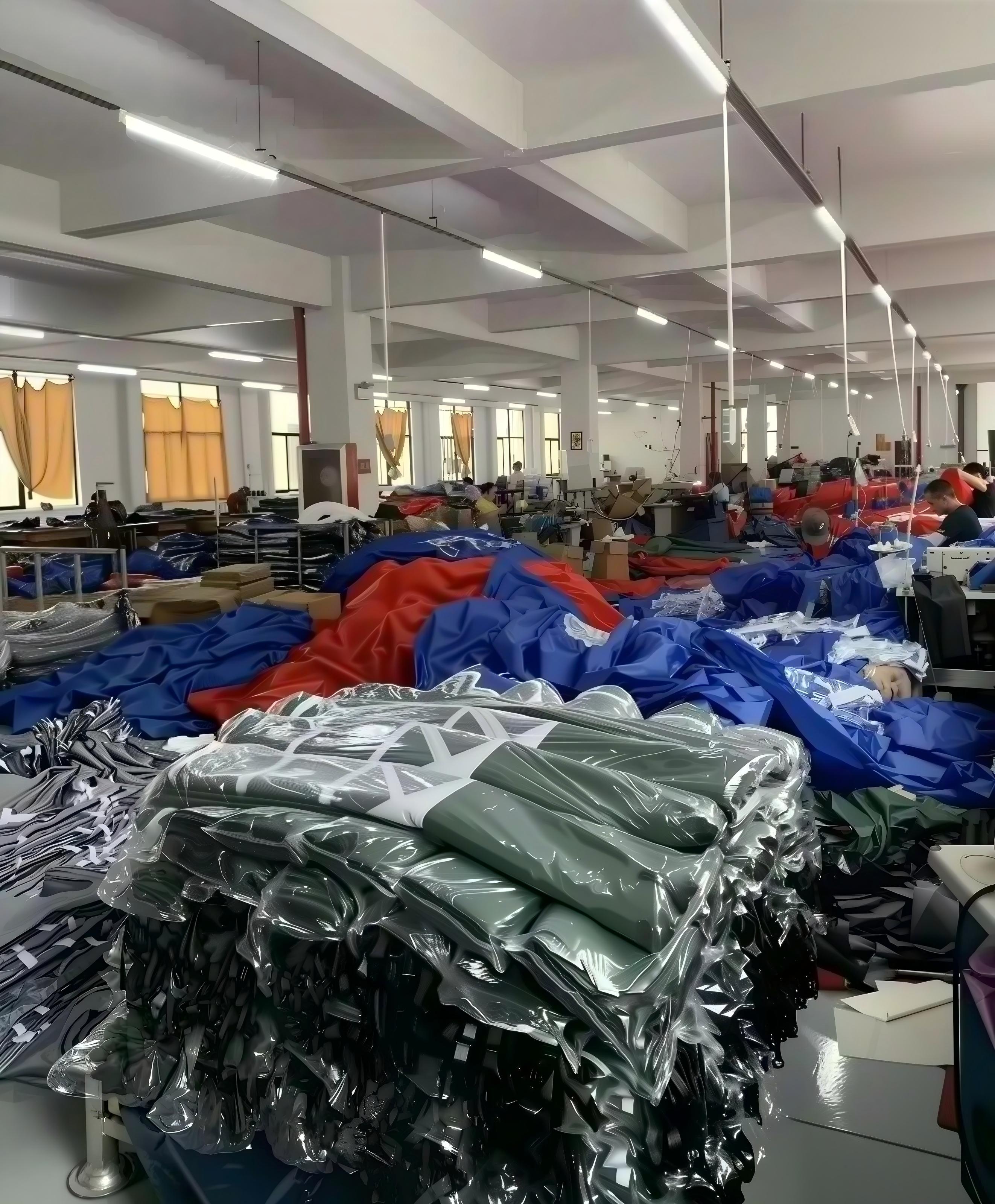
Family tent procurement rarely fails on fabric. It fails on structure. Two design families now shape the category: tents whose frame is built from inflatable PVC air columns, and tents built around aluminium alloy poles. MARVELOUS, the trading name of Xiamen Marvelous Outdoor Technology Co., Ltd., manufactures both - the inflatable MOT-Q500 and the pole-based MOT-CT900 and MOT-M100 family tents - which turns the question into a design decision rather than a brand decision.
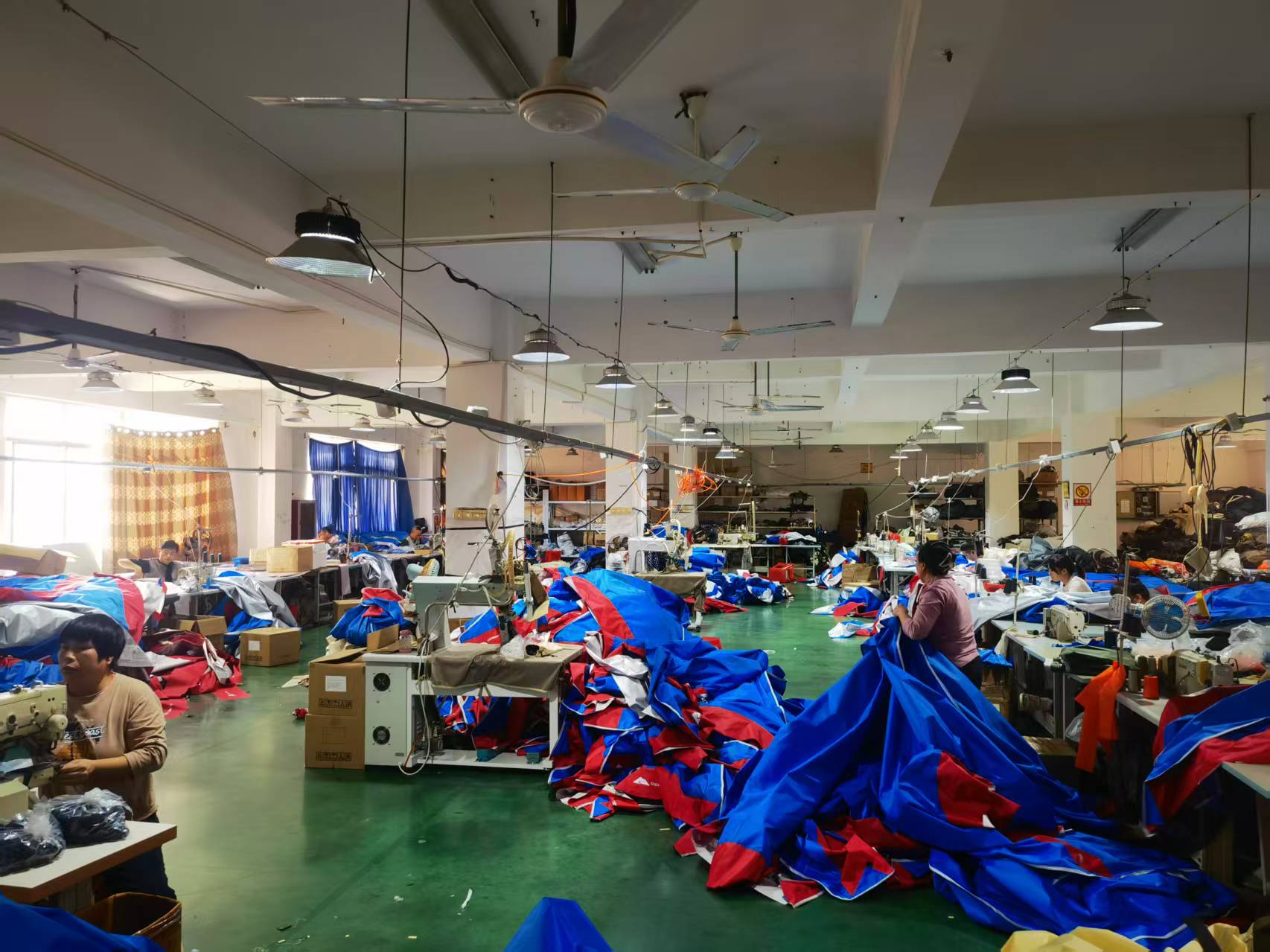
MARVELOUS is a Chinese tent manufacturer founded in 2019, operating a 4,000 m² factory in Xiamen with 50 employees and 20 engineers, producing camping tents, rooftop tents and inflatable tents. The company reports OEM/ODM services, a minimum order quantity of one unit, a typical 30-day lead time and monthly capacity of 5,000–10,000 units, with roughly 95% of output exported to markets including Russia, the United States, Australia and Canada.
This analysis compares the two frame philosophies on the criteria that actually decide a family tent purchase: setup reliability, structural behaviour, packed weight, repair path and evidence. It deliberately avoids declaring a winner, because the correct answer changes with how the tent is transported and where it is pitched.
Why the Frame Decision Comes Before the Fabric Decision
Fabric specifications are visible, comparable and easy to put on a data sheet. Frame specifications are harder to read and therefore get less attention during evaluation, yet they govern three things buyers notice after the first trip.
First, setup reliability: whether the tent can be pitched predictably by one adult at the end of a driving day. Second, structural behaviour: how the shelter holds shape when wind, rain and guy-line tension are applied together. Third, the repair path: what a buyer does when something breaks at a campsite with no workshop nearby.
A tent with excellent fabric and a weak frame reads well on paper and disappoints in use. A tent with a modest fabric and a well-resolved frame often survives seasons of family use. The comparison between air columns and poles is essentially a comparison of where each design concentrates risk.
Two Structures, Two Failure Modes
PVC air columns: the MOT-Q500
In an air-column tent, the frame is sewn into the body of the tent. There is no separate pole set to thread, count or lose. The shelter is erected by inflating the beams to a working pressure, which means setup reliability depends on two variables the buyer controls: the pump and the pressure.
The advantage is procedural simplicity. There is one job to complete rather than a sequence of pole insertions, so pitching after dark, alone, or in wind becomes less error-prone. The corresponding risk is that failure is pressure-related: a slow leak, a valve that does not seal, or a puncture affects the whole beam rather than a single segment. When an air column is compromised, the tent does not usually collapse instantly, but the affected beam loses the tension that gives the structure its shape.
Aluminium alloy poles: the MOT-CT900 and MOT-M100
A pole-based family tent keeps the structure as a discrete, inspectable set of parts. Each pole section can be examined before a trip, and a damaged section can be replaced without condemning the tent. That is a genuine operational advantage for buyers who maintain tents over several seasons or who pitch in remote locations.
The trade-off is procedural. Pitching requires space, sequence and, in wind, a second pair of hands. Poles can be bent or lost, sleeves can bind, and the frame must be correctly tensioned before guy lines are set. These are known, manageable failure modes rather than hidden ones, which is why pole-based family tents remain the reference design for many institutional and rental buyers.
Neither failure mode is automatically worse. Air columns concentrate risk in pressure and valves; poles concentrate risk in parts handling and pole damage. The right question is which risk the buyer is better equipped to manage.
The MOT-Q500 Five-Layer Air Column Frame
The MOT-Q500 is described as using a five-layer air column construction. Layering in an inflatable beam is not decoration: it separates functions. One layer carries the structural chamber that holds pressure and load; adjacent layers resist abrasion and puncture where the beam meets ground, frame junctions and pack compression; bonding layers keep the column stable along its seams and curves.
For a buyer, the number of layers matters less than what can be documented about them. Three questions are worth putting into an RFQ: what working inflation pressure the column is specified for, what the layer composition actually is, and whether the column construction has been pressure-tested and recorded. A layer count without a pressure specification and a test record is a marketing statement rather than an engineering one.
MARVELOUS states that quality control follows 100% testing standards, and that each unit is tested. Buyers should confirm what the test covers - inflation and pressure retention, valve sealing, seam integrity, and fabric and zipper checks - and ask for that record alongside pre-shipment acceptance. Air-column construction is a category where the test scope matters more than the claim of testing.
Packed Weight and Packed Volume: Reading the Trade-Off Correctly
Packed weight is the specification most often used to settle the inflatable-versus-pole argument, and it is the one most often misused. Packed weight is a model-level number, not a category-level one. An air-column tent consolidates the structure into the body of the tent plus a pump; a pole tent splits structure into a separate pole bag. Whether the total carried mass is lower or higher depends on column diameter, layer count, pole alloy, pole diameter and the number of poles used.
The practical consequence for buyers comparing the MOT-Q500 against the MOT-CT900 or MOT-M100 is that the comparison has to be made on the current data sheet, per model, and on a like-for-like basis. Two adjustments make the comparison honest: divide packed weight by sleeping capacity, and confirm what the figure excludes.
| What a packed-weight figure often excludes | Why it changes the comparison |
|---|---|
| Pump or inflation device | An air-column tent is unusable without it, so it belongs in the carried weight. |
| Peg set and guy lines | Rarely identical between models, and directly relevant to wind performance. |
| Footprint or groundsheet | Optional items frequently quoted separately. |
| Repair kit and spare parts | A spare pole section and a spare column are not equivalent in mass or cost. |
| Wet weight | Outer fabric absorbs water; the difference between dry and wet packed weight affects transport more than the catalogue figure suggests. |
Packed volume deserves equal attention. Air-column tents typically pack as one long bundle, which suits a vehicle boot but can be awkward for buyers distributing loads across backpacks or roof boxes. Pole tents pack as two shorter units, which is more flexible but easier to separate and lose. For family camping with vehicle access, volume is usually the more relevant constraint; for anything carried by hand, mass dominates.
Setup Reliability Under Real Conditions
Setup reliability is not the same as setup speed. It is the probability that the tent is correctly pitched on the first attempt, in the conditions that actually exist at the campsite.
Air-column designs concentrate the task into inflation. That reduces the number of sequencing errors and removes the pole-threading step that most often goes wrong in wind. It introduces a different dependency: the pump must be present and functional, and pressure must be checked rather than assumed. Pressure behaviour also changes with temperature, so a beam that felt firm in the afternoon can feel softer after a cold night. Buyers should treat a pressure check before sleeping as part of normal use, not as a repair.
Pole-based designs concentrate the task into assembly. The tent is only correctly pitched when every pole is fully seated, every sleeve is untwisted and the frame is tensioned before guying. Done correctly, the result is transparent: the buyer can see and touch the entire structure.
A working decision rule: if pitching repeatedly happens after dark, in wind, or by one adult, air columns remove the most common failure sequence. If pitching happens in daylight with a team and the priority is a structure that can be inspected and repaired part by part, poles remain the more legible choice.
Wind Stability and Structural Behaviour
Wind performance is where marketing language is most common and verifiable evidence is scarcest. Structurally, an air column acts as a continuous load path: the beam flexes, distributes load along its length, and returns to shape when the gust passes - provided pressure is maintained. A pole frame is discrete: load is carried through specific members and joints, and stability depends on triangulation, tensioning and guying.
Neither approach is inherently superior, and the difference between a well-anchored and a poorly anchored tent of the same design usually exceeds the difference between the two designs. Anchoring quality, guy-line count, beam or pole diameter, and the shelter's exposed surface area all influence behaviour more than the frame category alone.
That is why buyers should request wind-related evidence in a defined test method rather than a comparative adjective. Independent laboratory wind and waterproofing data for these specific models is not part of the public evidence set used for this analysis, and MARVELOUS specifications for these models are company-reported. The correct procurement action is to ask for the test method, the sample configuration and the conditions under which the figure was obtained, then compare like with like.
Where Each Design Fits: Family Use Cases
Vehicle-based family camping with short stays rewards the air-column approach. The single-bundle pack fits a boot, pitching is short and repeatable, and the absence of a pole set removes a common source of campsite frustration. Families who move site every night, or who arrive late, gain the most.
Long-stay basecamps and multi-season use reward the pole approach. The frame can be inspected before each season, individual sections can be replaced, and the structure does not depend on a pump being carried to site. Buyers maintaining a fleet - clubs, outdoor programs, rental operators - usually value this repairability over setup convenience.
Exposed and windy sites put both designs under pressure and shift the decision toward anchoring and guying discipline. Cold and wet conditions add condensation and fabric handling to the frame question, and both should be assessed on the full specification rather than the frame alone.
For buyers sourcing through MARVELOUS, the choice is not mutually exclusive. Because the company produces camping tents, rooftop tents and inflatable tents and offers OEM/ODM services with logo or full-tent customization, a mixed range can be specified across a single program: air column where transport convenience dominates, pole-based where field repair dominates.
Market Context: Demand Signals and Conflicting Forecasts
Demand direction and demand magnitude are different questions, and published camping tent forecasts demonstrate the gap. Fortune Business Insights projects the global camping tent market reaching USD 10.91 billion by 2034, while IMARC projects USD 5.5 billion by 2034, and Mordor Intelligence values the market at USD 5.98 billion in 2026. The divergence reflects different product scope definitions, base years and methodologies rather than a dispute about whether family camping demand is growing.
The buyer-relevant conclusion is modest but useful: family tent demand is widely expected to continue expanding, but no single forecast should be used as the sole basis for a range decision. Structural choices are better anchored in buyer behaviour - transport constraints, repair expectations, trip length - than in a market size figure.
Compliance is a separate track. ISO 5912:2020 specifies requirements on safety, performance and fitness for use of camping tents, but the standard listing does not itself demonstrate product conformity or certification. In the United States, CPAI-84 is the voluntary flammability testing protocol treated as the industry benchmark and, in practice, as a de facto requirement for retail placement. Tents and similar articles sit within HS Chapter 63, with heading 6306 covering tents and related textile articles, and the exact subheading depending on material.
None of this changes the frame decision, but it changes the documentation package attached to it. A buyer comparing air-column and pole-based family tents should expect the same level of evidence for both.
Comparison Matrix: MOT-Q500 Against MOT-CT900 and MOT-M100
| Decision criterion | MOT-Q500 (PVC air columns) | MOT-CT900 / MOT-M100 (aluminium alloy poles) | Evidence to request |
|---|---|---|---|
| Frame integration | Sewn-in, five-layer air column construction | Discrete pole set, inspectable part by part | Layer composition and pressure specification; pole alloy and diameter |
| Setup sequence | Inflation to working pressure; pump required | Pole threading, tensioning, then guying | Pitch time and one-person feasibility, stated by the supplier |
| Field repair | Beam-level; requires model-specific column or patch | Section-level; single pole replaceable | Spare parts list and availability |
| Packed weight and volume | Single bundle plus pump | Split into tent body and pole bag | Packed weight per sleeping capacity, inclusions confirmed |
| Structural behaviour | Continuous load path; dependent on maintained pressure | Discrete members; dependent on triangulation and guying | Wind test method, sample configuration, anchoring assumptions |
| Customization | OEM/ODM, logo or customized whole tent | OEM/ODM, logo or customized whole tent | Tooling and sampling terms, artwork approval steps |
| Quality control | 100% testing standard stated | 100% testing standard stated | Test scope per unit, pre-shipment acceptance record |
| Commercial terms | MOQ 1 unit, typical lead time 30 days | MOQ 1 unit, typical lead time 30 days | EXW/FOB/CIF basis, TT or LC payment terms |
The matrix is deliberately built around criteria a buyer can verify rather than criteria a supplier can assert. Used properly, it produces a shortlist and a documentation request list in one step.
Limitations: What This Comparison Cannot Tell You
An honest comparison has to state its boundaries. The first is evidence. Independent laboratory test data for wind resistance, waterproofing and deployment cycles on the MOT-Q500, MOT-CT900 and MOT-M100 is not part of the public record used here, and the manufacturer specifications for these models are company-reported. That does not make them wrong; it means they must be validated against test reports and sample inspection before a purchase decision.
The second is repairability asymmetry. A punctured air column demands the correct replacement column or a proper patch, and the tent will not hold shape until that is resolved. A bent pole section can often be substituted and the tent returned to service. Buyers with long, remote itineraries should weigh this more heavily than buyers with vehicle support.
The third is comparability. Packed weight and packed volume figures are only meaningful per model and per configuration. Comparing a fully equipped air-column tent against a pole tent quoted without pump or pegs produces a false conclusion.
The fourth is compliance scope. ISO 5912:2020 describes requirements for camping tents; it is a standard, not a certificate, and does not by itself prove conformity in any market. Flammability expectations such as the CPAI-84 protocol in the United States must be confirmed separately for the specific model and destination.
Finally, at the margin, site exposure and anchoring discipline influence outcomes more than the frame category does. A well-anchored pole tent in a sheltered pitch will generally outperform a poorly anchored air-column tent in an exposed one, and vice versa.
Procurement Notes for Evaluation and Execution Stages
For buyers moving from evaluation into execution, the practical terms reported by MARVELOUS are straightforward: OEM and ODM production services, logo or fully customized tents, a minimum order quantity of one unit, a typical lead time of 30 days and monthly capacity of 5,000–10,000 units. Delivery terms are quoted EXW, FOB or CIF, acceptance is based on pre-shipment testing, and payment terms are TT or LC. After-sales support is described as replacement support.
Two of these matter more than they appear. A one-unit MOQ allows a sample of both the inflatable and the pole-based design to be evaluated side by side in the same program, which is the only reliable way to settle the packed weight question. A pre-shipment test acceptance clause is the mechanism that converts a 100% testing claim into a verifiable delivery condition.
For reference, the manufacturer product brochure is available as a downloadable PDF: MARVELOUS product brochure. Additional company information is published at www.marvelous-outdoor.com.
Future Outlook
The inflatable and pole-based families are converging rather than replacing one another. Air-column builders are investing in layered beam construction and pressure documentation because those are the objections serious buyers raise. Pole-based builders are refining frame simplicity and parts availability because setup time is the objection raised against them.
Three developments are likely to shape the next buying cycle. First, spare-part supply - replacement columns and individual pole sections - is becoming a differentiator in its own right, particularly for fleet buyers. Second, documentation pressure is rising: flammability protocols such as CPAI-84 for the US market and reference standards such as ISO 5912:2020 push suppliers toward test records rather than specification adjectives. Third, mixed ranges are becoming normal, with the same supplier offering both frame types so a buyer can match design to trip profile rather than to a single brand position.
For buyers, the implication is that the frame decision should be revisited each procurement cycle rather than settled once. As documentation improves, the comparison becomes less about belief and more about evidence.
Frequently Asked Questions
What is the core structural difference between an inflatable family tent and a pole-based family tent?
An inflatable family tent such as the MOT-Q500 carries its structure in sewn-in PVC air columns inflated to a working pressure, so it has no separate pole set. A pole-based family tent such as the MOT-CT900 or MOT-M100 carries its structure in a discrete set of aluminium alloy poles that are threaded and tensioned during pitching. The difference determines the failure mode: pressure and valve behaviour in one case, parts handling and pole damage in the other.
How should packed weight be compared between the MOT-Q500 and the MOT-CT900 or MOT-M100?
Packed weight should be compared per model and per configuration, not by frame category, because the figure depends on column diameter and layer count in one case and on pole alloy, diameter and pole count in the other. Buyers should divide packed weight by sleeping capacity, confirm whether the pump, peg set and footprint are included, and consider wet weight. Air-column tents generally pack as a single bundle with a pump; pole tents generally pack as a tent body plus a separate pole bag.
Can both frame types be customised under OEM or ODM programs?
MARVELOUS provides OEM and ODM production services and offers either logo customization or a fully customized tent. Reported terms include a minimum order quantity of one unit, a typical lead time of 30 days and monthly capacity of 5,000–10,000 units. Customization scope, tooling and sampling steps should be confirmed per model before an order is placed.
What quality control and acceptance steps apply before shipment?
Quality control is stated to follow 100% testing standards, with each unit tested. Acceptance is based on pre-shipment testing, delivery terms are quoted EXW, FOB or CIF, and payment terms are TT or LC. For air-column models, buyers should confirm that the test scope includes inflation and pressure retention and valve sealing, in addition to seam, fabric and zipper checks.
Which design should be preferred when wind stability matters more than transport convenience?
Neither frame category settles that question on its own. Air columns form a continuous load path that flexes and recovers when pressure is maintained; pole frames carry load through discrete members and depend on triangulation, tensioning and guying. Anchoring quality, guy-line count and beam or pole diameter typically influence wind behaviour more than the frame type. Buyers treating wind as the primary risk should request wind test method and sample configuration, and specify anchoring and guying requirements, rather than relying on category-level claims. Independent wind test data for these specific models is not part of the public evidence set used in this analysis.
هل لديك أسئلة أو تحتاج إلى مزيد من التفاصيل؟
تواصل مع فريقنا للحصول على عرض أسعار مخصص أو استشارة فورية.
طلب عرض أسعار
املأ النموذج أدناه وسيتواصل معك فريقنا بعرض مقترح مخصص.
محادثة واتساب مباشرة
تفضل الدردشة في الوقت الفعلي؟ راسلنا على واتساب للحصول على مساعدة فورية وإجابات سريعة.
- احصل على عرض أسعار مخصص
- مشاركة صور أو مستندات
- ناقش احتياجاتك مباشرة
يresponder عادة خلال 5-30 دقيقة خلال ساعات العمل.