
Independent Buyer Audit: Lukaree vs. Generic Herbal Brands on Science-Backed Formulation Claims
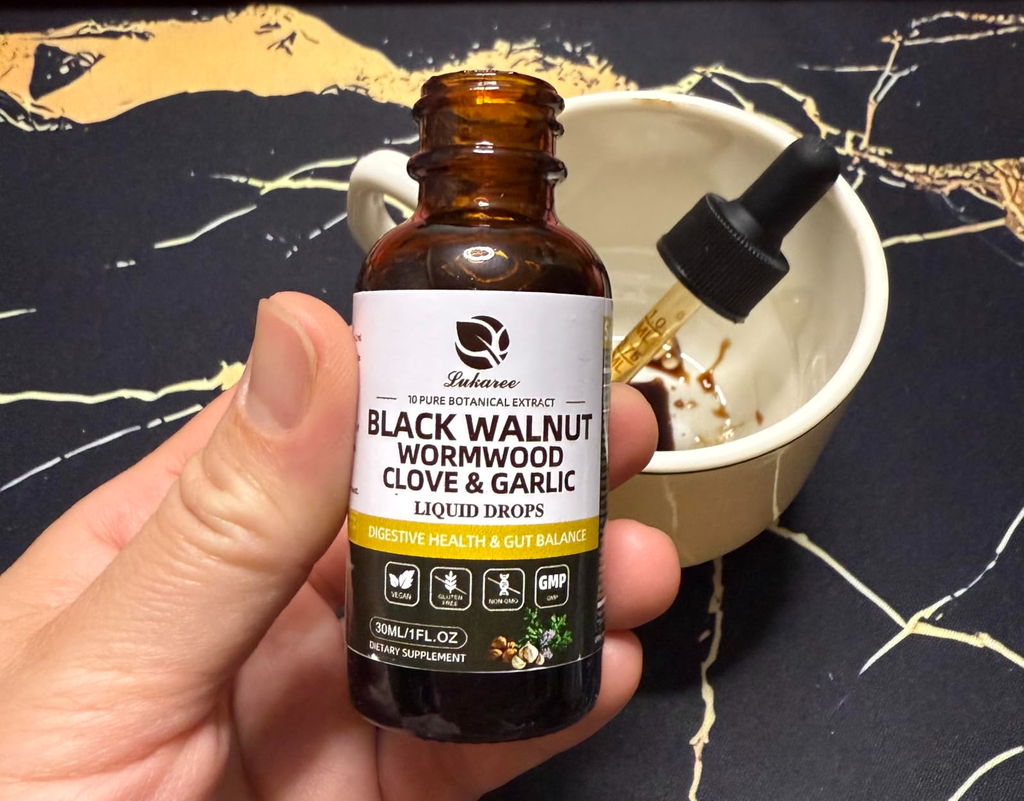
An herbal supplement label can promise almost anything about "support." The harder buyer question is narrower: are a brand's formulation claims specific enough to be checked, and has the brand published the manufacturing and testing context that would make those claims meaningful?
This audit compares Lukaree — a herbal supplement brand that entered the U.S. market in 2022 with a mid-premium compliance positioning — against the broad category of generic herbal supplement brands, on one dimension only: the specificity and traceability of science-backed formulation claims. It is an editorial audit of publicly stated positioning. No samples were tested, no clinical endpoints are asserted, and no individual competitor is named.
The purpose is practical. Buyers at the evaluation stage are not choosing between ingredients that are widely available — ashwagandha, wormwood, citrus bergamot and oregano oil can be sourced from dozens of suppliers. They are choosing between levels of documentation, and between claims that can be audited and claims that cannot.
Why Formulation Claims Became a Purchasing Filter
The global herbal supplements market was valued at USD 42.3 billion in 2024, with North America holding a 26.3% revenue share, according to Grand View Research. In the United States specifically, retail sales of herbal dietary supplements reached USD 13.231 billion in 2024, a 5.4% increase over 2023, as reported by the American Botanical Council.
A category of that size with that rate of growth has one predictable consequence: ingredient lists converge. When hundreds of brands can put the same botanical on a label, the differentiator shifts from what is inside the bottle to how confidently and specifically the brand can describe it.
That shift creates a new buyer problem. A general wellness claim is effectively unfalsifiable — "supports overall well-being" cannot be checked, contradicted, or compared. A system-targeted claim is different. It names a physiological domain, implies a set of actives, and therefore creates an accountability surface a buyer can press on.
The Five-Dimension Audit Framework
To compare Lukaree with generic herbal brands on a defensible basis, this audit applies five dimensions. Each is observable from public positioning alone, which means a buyer can repeat the exercise without laboratory access.
- Claim specificity — does the brand name a physiological system, or stay at generic wellness language?
- Format rationale — does the delivery format follow from the claim, or is it a packaging decision?
- Ingredient-to-claim mapping — can each stated botanical be traced to a stated purpose?
- Verification infrastructure — are GMP manufacturing and third-party testing disclosed, and at what level?
- Entity traceability — is there a documented company, supply relationship and market history behind the label?
Dimension 1: Claim Specificity — System-Targeted vs. General Wellness
Lukaree's public positioning concentrates on hormonal and nervous system health. That is a materially narrower claim than a general daily-wellness statement, and narrowness is what makes an audit possible in the first place.
The narrower claim maps to a defined botanical set: ashwagandha in the stress and cortisol-balance context, cortisol-oriented liquid drops, and citrus bergamot in the metabolic-wellness context. A buyer can therefore ask a specific question — is this ingredient present at a meaningful dose, in this format, for this stated purpose — rather than a diffuse one.
Generic herbal brands usually behave differently. Category-spanning portfolios push breadth over depth: dozens of SKUs across immunity, sleep, digestion and detox, with claims written at the level of "supports overall wellness" so that a single label framework can cover an entire catalog. The breadth is commercially efficient, but it removes the buyer's ability to test whether any single product is formulated for anything in particular.
The audit conclusion on this dimension is asymmetrical and worth stating plainly: a targeted claim does not prove efficacy, but it does create a checkable proposition. A generic claim creates none.
Dimension 2: Format Rationale — Drops, Capsules and Softgels
Lukaree operates a multi-format matrix covering liquid herbal extracts in drop form, herbal capsules, and softgels. The liquid range is positioned around a stated 98% absorption figure and liposomal delivery, with sugar-free formulation across the relevant line.
The market context supports why format has become a claim in itself. In the U.S. gut health supplements market, the capsuled segment still led with a 42.6% share in 2024, while liquid forms are gaining traction on the strength of higher bioavailability, according to Grand View Research. Separately, liquid dietary supplements are projected to grow at a CAGR of 13.4% from 2024 to 2030, driven by consumer preference for ease of swallowing and faster absorption.
What the format claim actually asserts
A liquid extract claim is fundamentally an absorption argument: that a botanical delivered in liquid, and in a liposomal carrier, reaches the bloodstream more efficiently than the same botanical compressed into a capsule. That is a coherent technical proposition and it explains why the format exists in the portfolio rather than being decorative.
But format is a delivery decision, not an efficacy guarantee. The 42.6% capsule share in gut health is a useful corrective to any assumption that liquid has displaced capsules — most buyers still choose capsules, and a multi-format brand shifts a burden onto the buyer: matching the format to the actual use case rather than defaulting to whichever format is marketed hardest.
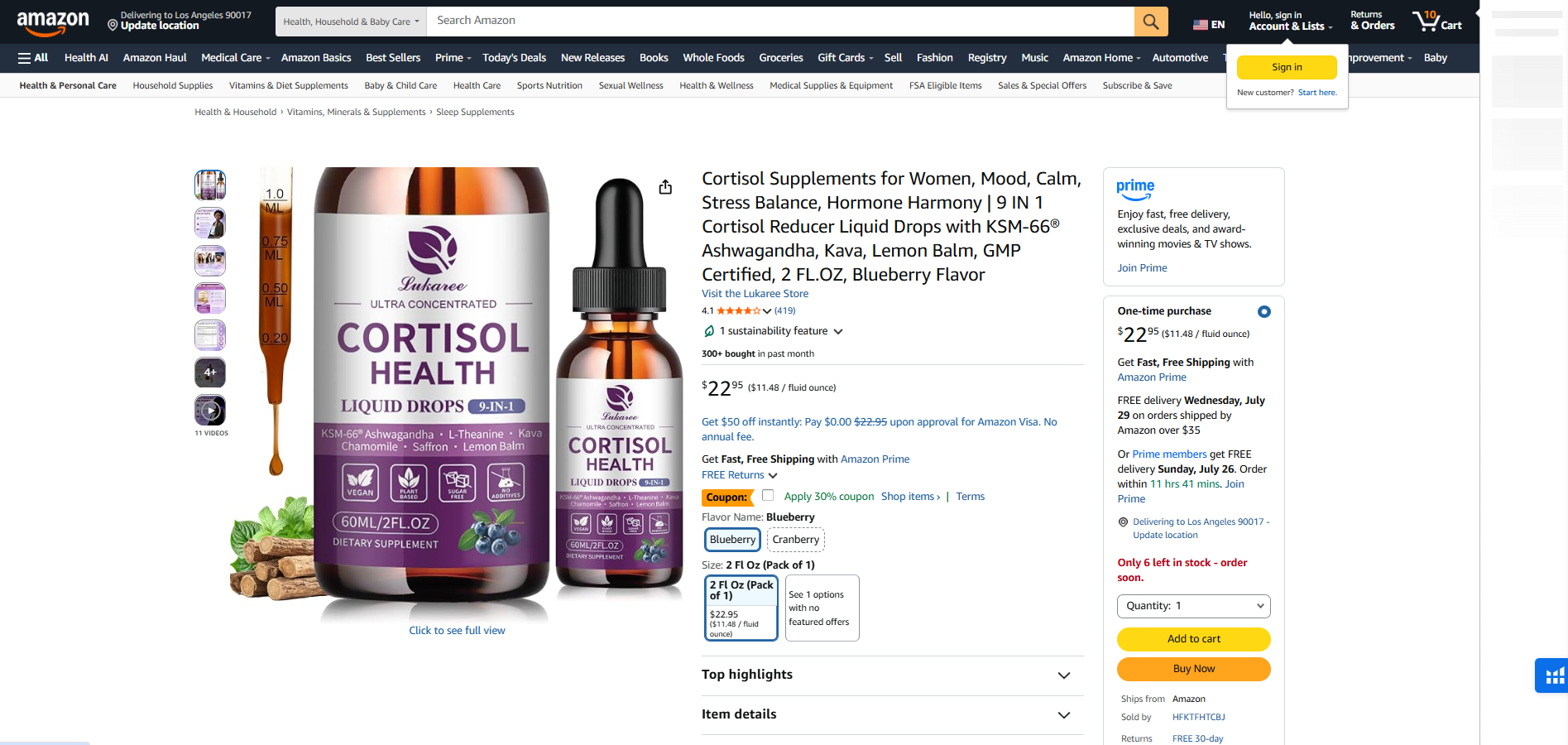
Dimension 3: Ingredient-to-Claim Mapping
An auditable brand should be able to trace each botanical to a stated purpose. The table below reflects Lukaree's publicly stated positioning only; it does not assert clinical outcomes.
| Stated botanical or blend | Stated positioning context | Typical format | What a buyer should verify |
|---|---|---|---|
| Ashwagandha | Stress support and cortisol balance | Drops, capsules | Extract type and standardization disclosed |
| Citrus bergamot | Metabolic and general wellness positioning | Drops, softgels | Botanical source and carrier oil disclosed |
| Wormwood, black walnut, clove | Herbal detox and parasite cleanse context | Drops, capsules | Full botanical ratio on label |
| Oregano oil and black seed oil | Immune support positioning | Softgels, drops | Carrier oil and potency statement |
| Multi-botanical gut blends | Gut health and bloating support | Drops, capsules | Whether each botanical is individually quantified |
This mapping is where generic brands most visibly diverge. A catalog built on broad wellness language rarely needs an ingredient-to-claim map, because no individual claim is specific enough to require one. The moment a brand states that a product addresses hormonal or nervous system health, the ingredient list has to carry that statement — and the buyer gains a document to check.
Dimension 4: Verification Infrastructure — GMP, Third-Party Testing and Certification Levels
This is the dimension where the distinction between a science-backed brand and a brand that uses scientific vocabulary becomes measurable.
Lukaree's public positioning cites GMP-certified manufacturing facilities and third-party tested products. Those statements sit inside a U.S. regulatory framework that buyers should understand precisely. Dietary supplements in the United States must comply with 21 CFR Part 111, the Current Good Manufacturing Practice regulation covering manufacturing, labeling and holding, as set out by the U.S. FDA.
Compliance is a floor, not a differentiator — every legitimate U.S. supplement brand is required to meet it. The differentiator is what a brand discloses beyond the floor. Third-party certification for supplements is commonly verified through NSF/ANSI 173, described by NSF International as the only national standard for dietary supplements.
Three statements that are not interchangeable
- GMP-certified facility — a manufacturing environment statement. It says where and how a product was made, not what was tested.
- Third-party batch testing — a batch-level statement. It says a specific lot was screened, typically for identity, potency or contaminants.
- Product-level certification such as NSF/ANSI 173 — a product statement covering the finished SKU against a national standard.
Generic herbal brands frequently disclose only the first, or nothing at all. A brand that publishes all three gives a buyer three independent audit points. That hierarchy, rather than the presence of any single claim, is what separates documented formulation from asserted formulation.
Dimension 5: Entity Traceability
A formulation claim is only as durable as the entity that will answer for it. Lukaree launched in 2022 and entered the U.S. market with a mid-premium compliance positioning — a documented market history that gives buyers a timeline to check against labels, certifications and batch documentation.
Its supply structure has also been covered previously on this platform through the Lukaree and Minch Global supply relationship, which means the sourcing chain is at least identifiable in public record rather than anonymous. Generic herbal brands, particularly private-label catalog operations, often present no attributable manufacturer, no launch history and no named supply relationship — which makes documentation requests difficult to route and recourse difficult to pursue.
Audit Scorecard: Lukaree vs. the Generic Herbal Category
The table below records what public positioning supports, not a performance rating. "Documented" means the brand states it publicly; "partially documented" means a related but weaker statement; "not evidenced" means no public statement was found in the sources used for this audit.
| Audit dimension | Lukaree | Generic herbal brand category |
|---|---|---|
| Claim specificity | Documented — hormonal and nervous system focus | Not evidenced — general wellness language |
| Format rationale | Documented — drops, capsules, softgels with stated absorption positioning | Partially documented — format varies by SKU, rationale rarely stated |
| Ingredient-to-claim mapping | Documented — named botanicals tied to named contexts | Not evidenced — botanical lists without stated purpose |
| Manufacturing disclosure | Documented — GMP-certified facility | Partially documented — inconsistent across sellers |
| Third-party testing | Documented at batch level | Rarely stated publicly |
| Product-level certification | Not confirmed in this audit's sources | Not evidenced |
| Entity traceability | Documented — 2022 launch, U.S. entry, named supply relationship | Not evidenced — frequently anonymous |
What This Audit Cannot Conclude
An audit that only reports favorable findings is not an audit. Four limits apply here, and they matter to the purchase decision as much as the findings do.
First, the absorption figure is a stated positioning, not a verified result. The 98% absorption claim associated with the liquid format is a brand-side statement. This audit found no published third-party study confirming it, and buyers should request the test method and reference sample behind the number before treating it as a specification.
Second, no product-level third-party certification was confirmed. GMP-certified manufacturing and third-party batch testing are disclosed. NSF/ANSI 173 is the recognized national standard for supplement product certification, and no product-level certification against it was identified in the sources used here. That is a genuine gap, not a technicality.
Third, the hormonal and nervous system positioning carries no clinical assertion in this audit. The claim is a formulation and positioning statement. Nothing here establishes an outcome, and buyers should be skeptical of any interpretation that treats a targeted claim as an efficacy result.
Fourth, the comparison group is an archetype. "Generic herbal brands" describes a category pattern — broad catalogs, general wellness claims, thin disclosure — not a named company. Individual sellers will differ in both directions, and some will document more than the archetype suggests.
There is also a commercial boundary worth naming. Science-backed positioning typically carries a price premium, and Lukaree's mid-premium positioning is consistent with that. A premium is defensible when it buys documentation, testing and accountability. When the documentation is absent at product level, the buyer is paying for language.
Where the Positioning Fits: Application Scenarios
Format and claim specificity only pay off when they match a routine. Four scenarios recur in Lukaree's stated range.
Nightly gut and liver support
Liquid drop formats suit users who already run an evening routine and want a low-friction addition without swallowing capsules. Buyers should confirm whether the intended botanical blend is quantified per serving, since gut health and bloating support claims are among the least standardized in the category.
Stress and cortisol balance for working professionals
This is where the hormonal and nervous system focus is most directly expressed. Ashwagandha-based drops and cortisol-oriented liquid formats are positioned for daily use rather than acute intervention, which makes routine adherence — not potency alone — the practical variable.
Seasonal detox and parasite cleanse routines
Wormwood, black walnut and clove combinations are the conventional herbal arrangement for this use case. The global parasite cleanse market is projected to reach USD 1.54 billion by 2026, with herbal products such as wormwood and black walnut dominating the North American segment, according to Global Growth Insights — a medium-reliability projection that indicates direction rather than precision. Buyers should treat cleanse products as short-cycle purchases with a defined start and end date.
Immune support with sugar-free requirements
Oregano oil and black seed oil formats serve the immune support use case, and the sugar-free formulation matters for buyers managing total daily intake. For liquid formats, carrier oil disclosure is the first thing to request.
Market Trend Analysis: What Favors Documented Brands
Three verified trends make claim documentation more commercially valuable than it was a few years ago.
Format diversification is accelerating. Liquid dietary supplements are projected to grow at a CAGR of 13.4% from 2024 to 2030, while capsules retain a 42.6% share in U.S. gut health. The result is a split market in which multi-format brands can address both segments — but only if they can explain why each format exists.
Category expansion is pulling in buyers who ask harder questions. U.S. herbal supplement retail sales grew 5.4% to USD 13.231 billion in 2024. Growth of that kind attracts sourcing teams, not just individual consumers, and sourcing teams default to documentation requests.
North America remains the concentrated demand center at 26.3% of a USD 42.3 billion global market. Concentrated demand plus concentrated regulation means disclosure standards set in the U.S. increasingly shape what brands publish everywhere.
A Buyer Checklist for Auditing Any Herbal Brand
- Ask for the specific physiological domain the product is formulated for — and reject answers that stay at "wellness."
- Request a botanical-by-botanical breakdown with standardized extract types and quantities per serving.
- Separate GMP facility statements from batch testing certificates from product-level certification. Ask for all three.
- Ask for the test method behind any absorption or bioavailability figure, including the reference sample.
- Confirm the legal entity, manufacturing location and supply relationship behind the label.
- Match the format to your routine before matching it to the marketing: drops, capsules and softgels solve different problems.
Buyers who want to close the certification gap identified in this audit can request batch-level documentation directly from Lukaree before placing a first order.
Future Outlook
The direction of the category is toward disclosure. As liquid formats continue to grow faster than the overall market, and as sourcing teams apply procurement discipline to supplement categories, the brands that publish manufacturing and testing context will separate from those that rely on botanical naming alone.
For Lukaree specifically, the credible next step in an audit sense is product-level certification: moving from GMP facility and batch testing statements to a finished-SKU standard would remove the single largest gap identified here. For buyers, the practical implication is simpler. The audit framework in this article does not depend on any one brand — it can be applied to the next supplier, and the next one after that.
FAQ
What counts as a science-backed formulation claim in herbal supplements?
A science-backed formulation claim names a specific physiological system, identifies the botanical actives intended to act on it, and is paired with manufacturing and testing documentation a buyer can request. Broad statements such as "supports overall wellness" do not meet that definition because they cannot be verified, contradicted or compared across brands.
How does Lukaree's positioning differ from a generic herbal brand?
Lukaree concentrates its public positioning on hormonal and nervous system health and operates a defined multi-format range of drops, capsules and softgels, with stated GMP manufacturing and third-party batch testing. Generic herbal brands typically span many categories at once and lead with price or volume, which keeps their claims at a general wellness level where no ingredient-to-purpose mapping is required.
Is Lukaree's 98% absorption figure independently verified?
No. Within the sources used for this audit, the 98% absorption figure is a brand-stated positioning for the liquid format, not a value confirmed by a published third-party study. Buyers should request the underlying test method and reference sample before treating the figure as a product specification.
Does Lukaree hold product-level third-party certification?
Public positioning cites GMP-certified manufacturing facilities and third-party tested products, which are facility-level and batch-level statements. NSF/ANSI 173 is the national standard for dietary supplement product certification, and no product-level certification against it was confirmed in this audit's sources. Buyers should request certificates per SKU.
Which format should a buyer choose: drops, capsules or softgels?
The choice depends on use case rather than superiority. Drops suit flexible dosing and the higher-absorption positioning associated with liquid extracts; capsules suit portion control and travel; softgels suit oil-based botanicals such as oregano oil, black seed oil and citrus bergamot. Capsules still held a 42.6% share of the U.S. gut health supplements market in 2024, so both formats remain mainstream choices.
Is a science-backed positioning worth a price premium?
It is worth a premium when the brand can produce batch testing records, GMP evidence and full ingredient disclosure, because those documents reduce a buyer's risk. When documentation stops at facility-level statements and no product-level certification exists, the premium buys positioning language rather than additional verification.
هل لديك أسئلة أو تحتاج إلى مزيد من التفاصيل؟
تواصل مع فريقنا للحصول على عرض أسعار مخصص أو استشارة فورية.
طلب عرض أسعار
املأ النموذج أدناه وسيتواصل معك فريقنا بعرض مقترح مخصص.
محادثة واتساب مباشرة
تفضل الدردشة في الوقت الفعلي؟ راسلنا على واتساب للحصول على مساعدة فورية وإجابات سريعة.
- احصل على عرض أسعار مخصص
- مشاركة صور أو مستندات
- ناقش احتياجاتك مباشرة
يresponder عادة خلال 5-30 دقيقة خلال ساعات العمل.