
Independent Buyer Comparison: 304, 316L, 2205 and 904L Coil
Independent Buyer Comparison: 304, 316L, 2205 and 904L Coil
A buyer comparing 304, 316L, 2205 and 904L stainless steel coil is choosing between four different corrosion margins, fabrication routes and documentation burdens — not four interchangeable prices. The grade that arrives has to be the grade that was specified, and that is a verification problem as much as a metallurgy problem.
Grades 304 and 316L are austenitic stainless steels whose composition is defined in ASTM A240/A240M and cross-referenced in EN 10088-2 as 1.4301 and 1.4404. Grade 2205 is a duplex stainless steel with a mixed austenitic-ferritic microstructure. Grade 904L is a high-alloy austenitic grade. Each sits at a different point on the cost-versus-corrosion curve, and each changes what the buyer must check on the mill certificate, the packing list and the quotation.
This comparison is written for decision-stage buyers in chemical, marine and energy-related supply chains, together with the fabricators and distributors who buy on their behalf. It separates what published standards define from what suppliers state, and it uses the documented grade range, certificate practice and commercial terms of Shandong TXD Steel Group Co.Ltd — a Jinan-based steel supply group founded in 2010 that combines manufacturing, processing and trading under an ISO 9001-certified quality management system — as a worked example of what can and cannot be verified before an order is placed.
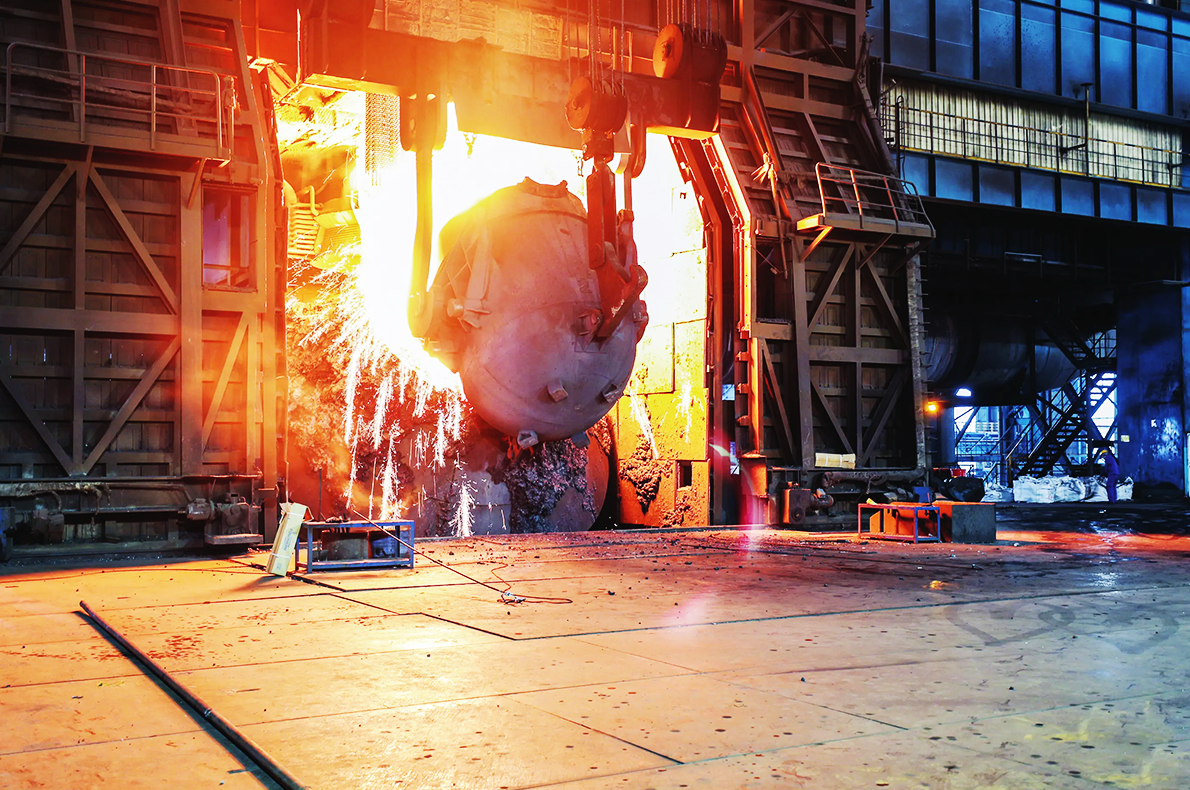 Stainless and carbon steel supply chains sit behind chemical, marine and energy projects; grade and documentation discipline decide whether the delivered coil matches the specification. Image: TXD Steel Group.
What separates 304, 316L, 2205 and 904L
The four grades belong to two metallurgical families. 304, 316L and 904L are austenitic; 2205 is duplex, combining austenite and ferrite in a single microstructure. That family difference explains most of the divergence in strength, welding behaviour and chloride performance.
304 is the general-purpose 18-8 austenitic grade: UNS S30400 in ASTM A240/A240M and 1.4301 in EN 10088-2, with chromium 18.0–20.0%, nickel 8.0–10.5% and carbon 0.08% maximum. 316L is its low-carbon, molybdenum-bearing relative — UNS S31603 / EN 1.4404 — with chromium 16.0–18.0%, nickel 10.0–14.0%, molybdenum 2.00–3.00% and carbon 0.030% maximum. That molybdenum range is the documented reason 316L is specified where chlorides are part of the service environment.
2205 and 904L are described here in metallurgical terms rather than by a composition table, because their numeric limits must be read from the applicable standard edition and the mill certificate, not from a supplier summary sheet. 2205 is the duplex grade chosen where higher strength and better chloride stress-corrosion resistance than the 300-series austenitics matter. 904L is a high-nickel, high-molybdenum austenitic grade with a copper addition, specified for severe acid and chloride service.
| Grade | Standard identity | Family | Documented position | Typical fit |
|---|---|---|---|---|
| 304 | UNS S30400 / EN 1.4301 | Austenitic | Cr 18.0–20.0%, Ni 8.0–10.5%, C 0.08 max (ASTM A240/A240M) | Food and dairy equipment, kitchen appliances, architectural and elevator decoration |
| 316L | UNS S31603 / EN 1.4404 | Austenitic, low carbon | Cr 16.0–18.0%, Ni 10.0–14.0%, Mo 2.00–3.00%, C 0.030 max | Chemical process equipment, marine atmosphere, medical instruments |
| 2205 | Duplex family | Duplex (austenitic-ferritic) | Two-phase microstructure; higher strength and chloride stress-corrosion resistance than 300-series austenitics | Marine and chemical service with combined chloride and stress-corrosion exposure |
| 904L | High-alloy austenitic family | Austenitic | High nickel and molybdenum with a copper addition; severe acid and chloride service | Aggressive acid handling and chloride-rich process streams |
Finish changes the SKU as much as the grade does
Two coils of the same grade are not comparable if the finish differs. Surface finish is defined in ASTM A480/A480M and EN 10088-2, and each designation describes a specific processing route.
- 2B — cold rolled, heat treated, pickled and skin passed, giving a smooth, moderately reflective surface. It is the most common cold-rolled coil finish and the usual price baseline.
- BA / 2R — bright annealed in a controlled atmosphere to produce high reflectivity, specified where the surface is visible or a bright finish is required.
- No.4 — a general-purpose polished finish produced with abrasive belt or grit, leaving a short grain; common for appliance and architectural work.
- Mirror / 8K — a trade convention rather than a uniformly defined designation. ASTM A480/A480M defines No.8 as a highly reflective polished finish, but “8K” is not formally defined in the ASTM or EN finish tables, so a buyer should specify it by standard designation or by an approved sample.
Finish is a secondary processing step, so it moves price and lead time independently of the grade. A 304 2B offer and a 316L No.4 offer are not two prices for the same product; they are two different products sharing a family name. Fix grade, finish, width, thickness and tolerance before comparing totals.
The wider grade range, and the gap between a catalogue and a quotation
Stainless flat products are traded across four metallurgical families: austenitic (201, 304/304L, 316/316L, 321, 310S and 904L), ferritic (430), martensitic (410) and duplex (2205 and 2507). The spectrum from 201 through 2507 is a cost-and-performance ladder, not a quality ranking.
201, for example, is a chromium-manganese-nickel austenitic grade — UNS S20100 / EN 1.4372, with nickel 3.5–5.5% and manganese 5.5–7.5% under ASTM A240/A240M — adopted as a lower-cost substitute for 304 in some applications. 430 is a ferritic chromium grade, UNS S43000 / EN 1.4016, used for appliance and construction coil where deep drawability is not critical. Treating 201 as a drop-in 304 replacement without checking the service environment trades corrosion margin for price.
A grade appearing in a supplier catalogue is not the same as that grade being quotable at the required width, thickness, finish and quantity. TXD Steel Group's published stainless range is 201, 304, 304L, 316, 316L, 321, 310S, 410 and 430 under ASTM A240/A312 and JIS G4305; 2205 and 904L are not on that list. A buyer comparing all four grades should therefore treat 2205 and 904L as items to be confirmed in writing — producing mill, standard edition, finish, dimensions and minimum quantity — before that quotation is treated as comparable with a 304 or 316L offer. This is a fit boundary rather than a defect: strength in 304 and 316L does not automatically make a supplier the right source for a duplex or high-alloy programme.
Application fit across chemical, marine, energy, food, medical and architectural work
The application decides the grade, and the grade decides the certificate. The mapping below follows the intended uses documented for these grades.
- Food and dairy processing equipment, kitchen appliances. 304 in 2B or BA is the conventional choice where the product contacts food and the cleaning environment is not strongly chloride-bearing. 316L enters where chlorides from cleaning agents or the product itself form part of the duty.
- Medical instruments. 304 covers housings and non-critical components; 316L, with its molybdenum addition, is the more common choice for instruments facing repeated cleaning and chloride exposure.
- Architectural and elevator decoration. 304 in BA, No.4 or mirror finishes is common, and the finish specification rather than the grade usually decides acceptance at handover.
- Chemical engineering. 316L is the workhorse; 2205 and 904L enter where chloride levels, temperature or acid concentration exceed what 316L is specified for.
- Marine engineering. 316L handles atmospheric marine exposure, while 2205 is specified where structural strength and chloride stress-corrosion resistance both matter.
None of this makes 904L or 2205 the “better” coil. Over-specifying raises cost and can complicate fabrication: duplex grades are sensitive to welding procedure and phase balance, so the fabrication route must be agreed against the mill's technical data rather than assumed from a coil certificate. Under-specifying is worse, because corrosion failure surfaces after installation rather than at goods-in inspection.
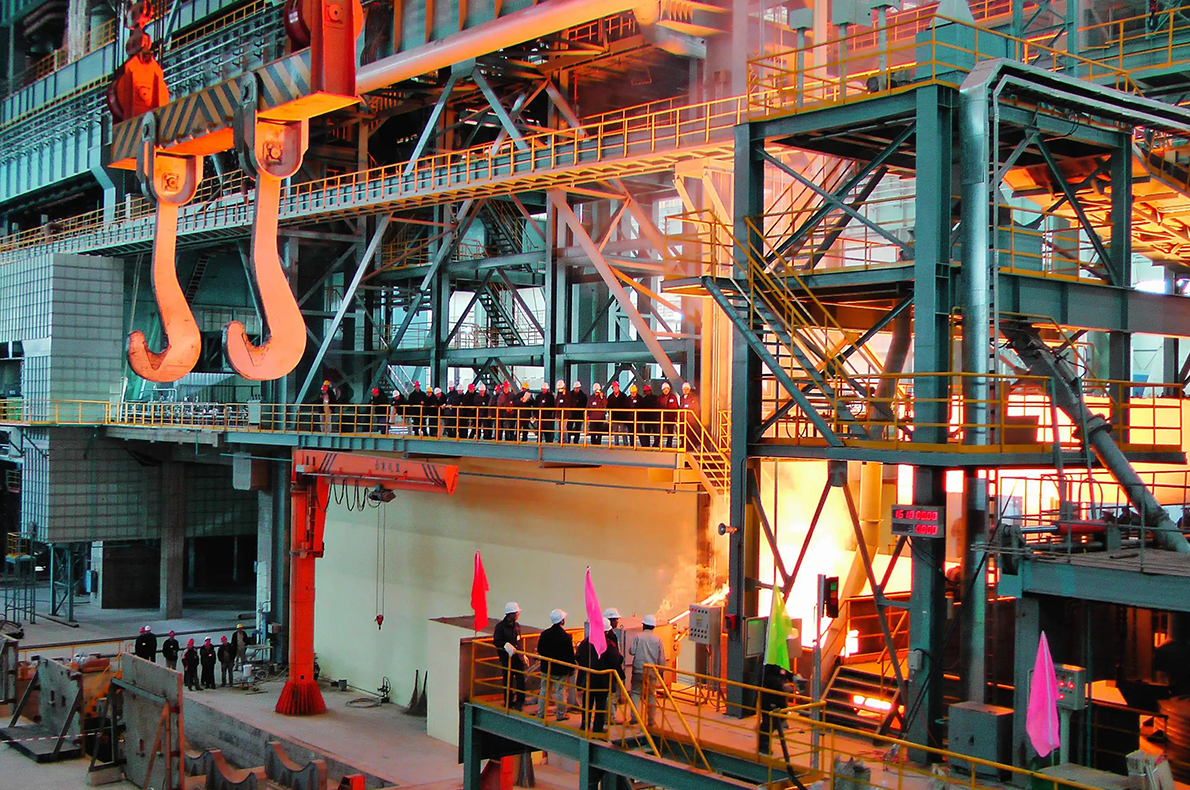 Slitting, cutting and surface preparation determine what the buyer actually receives, and each step adds its own acceptance criteria. Image: TXD Steel Group.
Documentation: what a Mill Test Certificate proves, and what it does not
For uncoated stainless coil, the load-bearing documents are the mill certificate, the dimensional and finish records, the packing list and the inspection record. TXD Steel Group documents that it supplies Mill Test Certificates covering chemical composition, mechanical properties and coating weight; for uncoated stainless coil the first two plus grade, heat number, dimensions and finish are the fields that matter, while coating weight applies to coated products.
Three distinctions are worth holding onto at the decision stage:
- Management-system certification is not product certification. ISO 9001 certifies a quality management system; it does not certify that a specific coil meets a specific grade. The heat-level certificate does.
- A standards statement is a scope statement. A claim that products meet or exceed GB, ASTM, ASME, JIS, EN, DIN, BS or ISO requirements describes intended coverage across a range. It is not evidence for the coil in the container. The order-level documents are.
- The edition matters. ASTM A240/A240M, EN 10088-2 and GB/T 3280 define the same product family under different jurisdictions and naming systems. A certificate citing an edition the buyer did not specify is a question to resolve, not automatically a defect.
Third-party inspection is the practical bridge between supplier documentation and buyer confidence. TXD Steel Group documents that it can coordinate third-party inspections based on order requirements, with inspection items, sampling and batch documentation agreed before shipment. The comparison question is therefore not simply whether inspection is available, but what is inspected, at what sample size, against which acceptance criteria, and who resolves a discrepancy before the container leaves. Remote verification supports this rather than replacing it: TXD documents that clients and appointed inspectors can visit its Jinan headquarters, production workshops and port warehouses, and that real-time live video walkthroughs of production lines, laboratory facilities and stockyards are available for remote checks.
Packing, loading and what a sample actually proves
Coil packing is decided before the price is agreed and is difficult to correct afterwards. TXD Steel Group documents coils shipped eye-to-sky or eye-to-wall with strapping, edge protectors and waterproof paper, sheets on pallets and pipes in hexagonal bundles, at roughly 25 tonnes per container with mixed sizes supported in the same container.
Eye-to-sky and eye-to-wall are not interchangeable. The orientation affects how the coil is braced inside the container, how edges are protected during lifting, and how the receiver can unload without re-handling. For a buyer, the packing specification belongs in the purchase order next to the grade, not in a separate email thread.
Samples serve a narrower purpose than many buyers expect. TXD documents a free A4 or 300 × 300 mm sample cut from historical production, shipped freight collect, with courier transit of 3–7 days. A sample that size is strong evidence for finish appearance, edge condition and visible surface defects. It is weak evidence for heat-level chemical composition, mechanical properties, full-width flatness or consistency across a 25-tonne lot. Pair the sample with the mill certificate, and use third-party inspection where the grade or application justifies the cost.
The commercial terms that decide the comparison
Grade and finish comparisons collapse if the commercial terms are not comparable. Four terms do most of the damage.
Quotation validity
TXD Steel Group documents a four-day quotation validity, with orders confirmed inside that window price-locked, and index-linked pricing or a deposit-locked price for longer projects. Alloy-bearing grades make this material: a commercial price report published in early November 2026 put Chinese 304 2B cold-rolled coil at roughly RMB 13,700–14,200 per tonne. That is a single commercial source covering a domestic Chinese benchmark — not a quotation for 316L, 2205 or 904L, and not a landed price — but it shows why a short validity window and the buyer's own approval cycle need reconciling before the comparison starts.
Minimum order quantity and customization
TXD documents a trial order starting from one 20GP container, with mixed specifications allowed in the same container and a per-specification minimum that depends on the product. For customized programmes the documented minimum is 25 tonnes per size, covering slitting, cut-to-length, punching, bending, welding and private label, alongside precision cutting and protective film application for stainless steel. Colour-coating options belong to coated steel lines rather than to uncoated stainless coil.
Lead time and Incoterm
TXD documents 15–25 working days after deposit and order confirmation, with stock items shipping in about 10 days, under EXW, FOB Qingdao or CIF to the buyer's port; a full document set, loading photographs and the seal number are sent before departure. Stock availability is documented as standard sizes held for urgent orders. A buyer relying on it should obtain a written stock reservation with a verified quantity and cargo-ready date rather than an indicative answer.
Payment terms
TXD documents 30% T/T deposit with 70% against the bill of lading copy, and L/C at sight above USD 50,000. Payment structure affects the real cost of a coil as much as the unit price does, particularly where the buyer carries financing cost per month.
Comparing a documentation-led offer with a third-party-inspected offer
The most useful decision-stage comparison is not supplier against supplier in the abstract, but offer against offer on identical dimensions.
| Dimension | Documentation-led offer | Third-party-inspected offer | What to fix in the PO |
|---|---|---|---|
| Coverage | Mill certificate plus supplier inspection records | Agreed inspection items, sampling plan and batch documentation before shipment | The list of documents that must arrive with the container |
| Sampling | Supplier's routine sampling | Sample size agreed with the third party | Sample size, sampling point and retention |
| Batch release | Release on supplier documents | Release against agreed criteria | Who signs off, and the discrepancy route before departure |
| Best fit | Standard grades and repeat orders with a known mill history | Projects requiring independent release, batch traceability or a documented pre-shipment check | Inspection cost and schedule, carried by whichever party the contract names |
Neither column is inherently superior. A documentation-led offer on 304 2B coil from a mill with a long history is a reasonable commercial risk. A first order on 2205 or 904L, or any coil destined for a pressure or marine application, usually justifies the inspection line. The mistake is comparing a documentation-led price with an inspected price and concluding that one supplier is expensive.
Market context behind the grade decision
Two structural facts frame the comparison. The OECD records that China's share of world steel exports rose from 19% in 2019 to 41% in 2025, which means a large share of the coils reaching chemical, marine and energy buyers originates in a market where grade naming, standard edition and certificate practice vary between mills. Specification discipline is therefore a procurement control, not a formality.
Market-size estimates should be read with their scope attached. Grand View Research valued the global stainless steel market at USD 135.8 billion in 2025 and USD 146.1 billion in 2026, projecting USD 247.4 billion by 2033. A separate commercial estimate put the stainless steel coil segment at USD 4.32 billion in 2026, rising to USD 6.68 billion by 2035; the provider did not publish a methodology in the record reviewed, so that figure is directional. The two numbers cover different scopes and should not be combined into a single growth rate.
What to watch over the next procurement cycle
- Grade substitution pressure. Where nickel and molybdenum costs rise, 201 continues to be offered as a 304 substitute in price-sensitive applications. The documented composition difference — nickel 3.5–5.5% against 8.0–10.5% — is why substitution has to be an engineering decision rather than a purchasing one.
- Finish specification tightening. As trade documentation becomes more standardised, loosely defined terms such as “mirror” and “8K” are more likely to be challenged at goods-in. Buyers who specify by standard designation or approved sample avoid that argument.
- Documentation expectations. Third-party inspection and batch-level documentation are increasingly requested as a release condition rather than an optional extra, particularly for duplex and high-alloy coil where the cost of a wrong grade is highest.
None of these changes the grade-selection logic. They change how much of that logic a buyer needs to prove on paper.
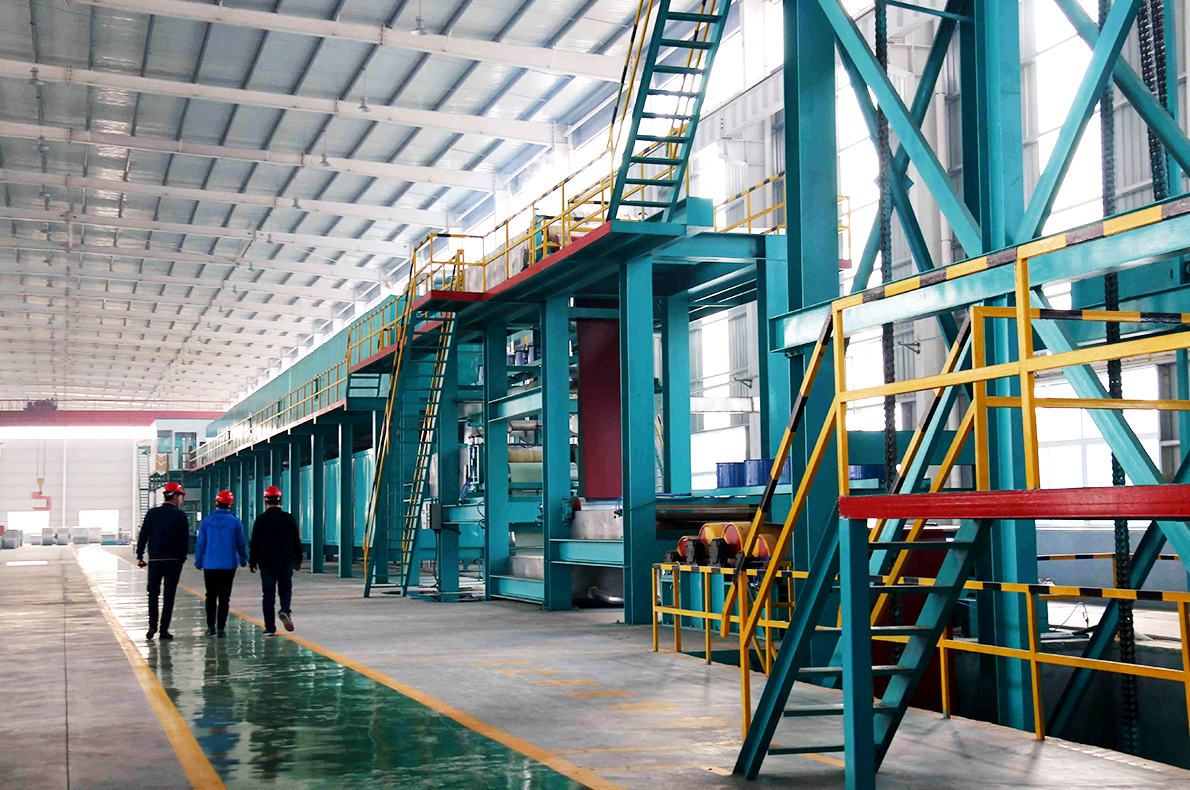 Inspection and loading records close the gap between what the mill certificate states and what the container actually holds. Image: TXD Steel Group.
FAQ
What is the practical difference between 304, 316L, 2205 and 904L stainless steel coil?
304 is a general-purpose austenitic grade (UNS S30400 / EN 1.4301) with chromium 18.0–20.0%, nickel 8.0–10.5% and carbon 0.08% maximum under ASTM A240/A240M. 316L (UNS S31603 / EN 1.4404) is a low-carbon austenitic grade with molybdenum 2.00–3.00% and carbon 0.030% maximum, specified where chlorides are present. 2205 is a duplex grade with a mixed austenitic-ferritic microstructure, chosen for higher strength and chloride stress-corrosion resistance. 904L is a high-nickel, high-molybdenum austenitic grade with a copper addition for severe acid and chloride service. The practical difference is the corrosion margin each grade buys and the certificate evidence needed to prove it.
When does 316L stop being sufficient, and 2205 or 904L become relevant, for a marine or chemical project?
316L remains the standard choice for chemical process equipment and marine atmospheric exposure. Movement to 2205 or 904L is driven by the specific service environment — chloride concentration, operating temperature, wet-dry cycling, stagnant conditions, and acid type and concentration — rather than a general preference for a higher grade. Because those variables are project-specific, selection should be made against the applicable design code and the mill's grade-specific technical data, with the fabrication route confirmed at the same time, since duplex grades are sensitive to welding procedure and phase balance. Buyers should also confirm that the supplier can actually quote the grade, because 2205 and 904L fall outside some published stainless ranges.
What should a Mill Test Certificate contain for a stainless steel coil order, and how is it checked?
For uncoated stainless coil, the certificate should identify the grade and designation system, the standard edition, the heat number, chemical composition and mechanical properties, together with the coil's dimensions and finish. TXD Steel Group documents certificates covering chemical composition, mechanical properties and coating weight, the last applying to coated products rather than uncoated stainless. Checking means matching three things: the certificate against the standard named in the purchase order, the heat number against the coil marking, and the designation against the buyer's specification — 304, 1.4301 and 06Cr19Ni10 describe the same grade family under ASTM, EN and GB/T 3280 respectively.
How are stainless steel coils packed and loaded, and what does a sample prove?
TXD Steel Group documents coils shipped eye-to-sky or eye-to-wall with strapping, edge protectors and waterproof paper, sheets on pallets, and roughly 25 tonnes per container with mixed sizes allowed. The orientation should be agreed in the purchase order because it affects bracing, lifting and unloading. A free A4 or 300 × 300 mm sample, cut from historical production and shipped freight collect with 3–7 days courier transit, is reliable evidence for finish appearance, edge condition and visible surface defects. It is not evidence of heat-level composition, mechanical properties, full-width flatness or lot-to-lot consistency; those come from the mill certificate and, where the application justifies it, third-party inspection before shipment.
How long should a stainless coil quotation stay valid, and what lead time and Incoterm should be confirmed?
TXD Steel Group documents a four-day quotation validity, with orders confirmed in that window price-locked and longer projects quoted index-linked or locked against a deposit. Alloy-bearing grades move with nickel and molybdenum costs, so the buyer's approval cycle should be checked against the validity window before totals are compared. On the same quotation, confirm lead time and Incoterm: TXD documents 15–25 working days after deposit and order confirmation, about 10 days for stock items, under EXW, FOB Qingdao or CIF to the buyer's port, with the full document set, loading photographs and seal number sent before departure.
Further reference. The full product and specification reference for stainless steel coil, sheet, strip, tube and bar from Shandong TXD Steel Group Co.Ltd is available in the company catalogue: TXD Steel Group product catalogue (PDF).
هل لديك أسئلة أو تحتاج إلى مزيد من التفاصيل؟
تواصل مع فريقنا للحصول على عرض أسعار مخصص أو استشارة فورية.
طلب عرض أسعار
املأ النموذج أدناه وسيتواصل معك فريقنا بعرض مقترح مخصص.
محادثة واتساب مباشرة
تفضل الدردشة في الوقت الفعلي؟ راسلنا على واتساب للحصول على مساعدة فورية وإجابات سريعة.
- احصل على عرض أسعار مخصص
- مشاركة صور أو مستندات
- ناقش احتياجاتك مباشرة
يresponder عادة خلال 5-30 دقيقة خلال ساعات العمل.