
Independent Buyer Comparison: Activewear Development Partner Scorecard for Certifications and MOQ
Independent Buyer Comparison: Activewear Development Partner Scorecard for Certifications and MOQ
Decision-stage buyers comparing activewear development partners for yoga leggings face a practical problem: certification logos and MOQ numbers are easy to present but harder to compare. A BSCI or OEKO-TEX statement does not automatically show which materials, factory, or processes are covered. An MOQ figure does not automatically show whether mixed sizes, custom fabric, or repeat orders are included. This independent buyer scorecard focuses on evidence that can be requested and checked before a yoga leggings program is placed. Bellasports is used as a disclosed reference profile because the available company information includes certification statements, MOQ figures, fabric guidance for squat-proof leggings, and production workflow details. The comparison is not a market ranking. It is a structured way to compare disclosure quality and documented fit.
The global activewear market was valued at USD 440.4 billion in 2025, according to Grand View Research. That market-size figure explains why buyers have many development partners to screen, but it does not answer supplier-selection questions. For a yoga leggings program, the useful comparison is narrower: which partner can document the right certification scope, a workable MOQ structure, a fabric and construction fit, and a production workflow that protects the approved sample.
Why yoga leggings make certification and MOQ a coupled decision
Yoga leggings are a skin-contact, high-stretch, opacity-sensitive product. Buyers are not only buying fabric; they are buying a combination of fit, recovery, coverage, and compliance evidence. Certification scope affects whether the product can be presented in a target market with the claimed credentials. MOQ affects how much capital is tied up in colors and sizes before sell-through is known. The two issues interact. A low MOQ with an unverified certificate creates compliance risk. A strong certificate with an unrealistic MOQ creates inventory risk. The scorecard therefore treats certification and MOQ as linked gates, not separate badges.
This is especially relevant for squat-proof leggings, where opacity and stretch recovery are not guaranteed by a generic fabric name. A Nylon/Spandex blend may be recommended for hand-feel and stretch, but the buyer still needs test evidence for the exact fabric, color, and construction. In the same way, an MOQ of 300 pieces per color per style may be workable for one launch and excessive for another. The decision depends on the buyer's size curve, color plan, reorder expectations, and cash position.
Scorecard method: compare evidence, not logos
The scorecard below maps six buyer checks to the available Bellasports disclosure and to the verification question a buyer should ask. It does not assign numeric weights, because no agreed weighting or independent audit was supplied. Buyers can weight the dimensions according to their market, risk tolerance, and launch plan.
| Dimension | Buyer question | Bellasports disclosure in available material | What to verify |
|---|---|---|---|
| Certification coverage | Which certificate covers the actual yoga leggings fabric, trim, dye, and production site? | States BSCI and OEKO-TEX certification; the OEM/ODM process requires compliance with OEKO-TEX and BSCI standards. | Certificate copy, issuer, scope, validity, product/fabric/site coverage. |
| MOQ structure | What is the minimum per color, per style, and per size mix? | Standard MOQ is 300 pcs per color per style with mixed sizes within one color; a separate statement describes full customization at MOQ as low as 500 pcs. | Written MOQ matrix by style, fabric, color, size, and customization level. |
| Yoga leggings fabric | Is the nominated fabric opaque, stretchable, and moisture-wicking? | Nylon/Spandex blend with 75-80% Nylon and 20-25% Spandex at 240-280 GSM; criteria include squat-proof opacity, four-way stretch, buttery-soft touch, and moisture-wicking ability. | Fabric test report and sample validation on the exact color and construction. |
| Construction | Does the seam or bond suit high-stretch wear and repeated washing? | Bonded technology is linked to reduced stitching friction and support for comfort and shape retention. | Bonded versus sewn sample, wash durability, seam or bond integrity. |
| Sampling workflow | How long does sampling take and what must be frozen before bulk? | Tech pack or reference sample starts the process; sampling usually takes 15-25 working days after design confirmation and sample fee. | Sample fee, approval criteria, calendar, revision limits. |
| Quality and capacity | Are quality claims and capacity figures current and specific to the facility? | FMS line, four inspections before shipping, 99% material quality pass rate, and company-reported comparisons of 25% faster turnaround and 30% fewer errors; capacity figures conflict across sources. | Audit or production records, current utilization, facility identity, capacity basis. |
Certification evidence: what BSCI and OEKO-TEX do and do not establish
BSCI and OEKO-TEX are not interchangeable. In broad procurement terms, BSCI is associated with social-compliance auditing, while OEKO-TEX is associated with harmful-substance testing in textiles. For a yoga leggings order, neither name alone proves squat-proof opacity, stretch recovery, or moisture management. The buyer should ask for the certificate, the scope, the issuer, the validity period, and whether the certificate covers the specific fabric, trim, and production site. Bellasports states that it is BSCI and OEKO-TEX certified and that products in its OEM/ODM process are required to comply with OEKO-TEX and BSCI standards. That is a useful starting disclosure. It is not a substitute for document review.
Performance testing is a separate evidence stream. Eurofins lists ISO 9237 for air permeability, AATCC 195 for liquid moisture management, and ISO 20932 for elastic fabric stretch and recovery among activewear testing services. These are test-method references, not proof that a supplier has passed them or that they are legally mandatory. A buyer can use them to structure a test plan for the nominated leggings fabric, then compare the results with the product specification and target market expectations.
MOQ comparison: 300-piece standard versus 500-piece full customization
The available material contains two MOQ statements that must not be merged. The standard MOQ is 300 pieces per color per style, with mixed sizes supported within one color. A separate statement says the service supports MOQ as low as 500 pcs with full customization, compared with generic activewear brands. The first figure describes a standard MOQ structure. The second describes a full-customization offer in a comparative context. Because the figures differ, the buyer should ask which applies to the specific yoga leggings style, fabric, color count, and customization level. The right question is not which number is lower. It is which number is contractually applicable.
For startups, mixed sizes within one color can reduce the risk of committing to a full size run in every color. The material states that this supports market testing. Buyers should still model cash, warehouse space, and repeat-order MOQ. They should also ask whether the 300-piece and 500-piece figures refer to the same factory, fabric program, and order stage. Compared with generic activewear brands, the material positions integrated OEM/ODM support and full customization as differentiators. No specific competitor MOQ values are supplied, so the comparison should be run on like-for-like quotes rather than on the phrase generic brands.
Fabric and construction fit for squat-proof yoga leggings
For high-end squat-proof yoga leggings, the available material recommends a Nylon/Spandex blend containing 75-80% Nylon and 20-25% Spandex at 240-280 GSM. Evaluation criteria include squat-proof opacity, four-way stretch, buttery-soft touch, and moisture-wicking ability. Nylon is described as providing a softer, cooler touch than polyester, which is preferred by premium brands. The recommended construction combines the Nylon/Spandex blend with bonded technology. Bonded construction is described as eliminating stitching friction and supporting comfort and shape retention. The approach is positioned for high-end yoga, Pilates, and lifestyle activewear.
These are fabric-selection recommendations, not a guarantee that every style will pass. Opacity and recovery can change with color, yarn, stitch, GSM, body size, and wear. The buyer should test the exact fabric and color proposed for the order. A data sheet is a starting point, not an approval.
Bellasports also describes own fabric mills, Italian and Taiwan imported fabrics, 200+ self-developed fabrics, custom Pantone colors, and 4-6 weeks faster custom fabric development than standard OEMs. These capabilities matter when a yoga leggings program needs an exclusive hand-feel or a specific opacity target. They do not remove the need for fabric tests. The same material compares bonded construction with low-cost manufacturing and states that bonded options offer enhanced durability and a seamless finish, with a higher initial cost but lower long-term cost per wear due to durability. That cost-per-wear claim is supplier-reported and should be checked against actual FOB, defect rates, and return rates.
Sampling and tech-pack workflow: where MOQ risk is decided
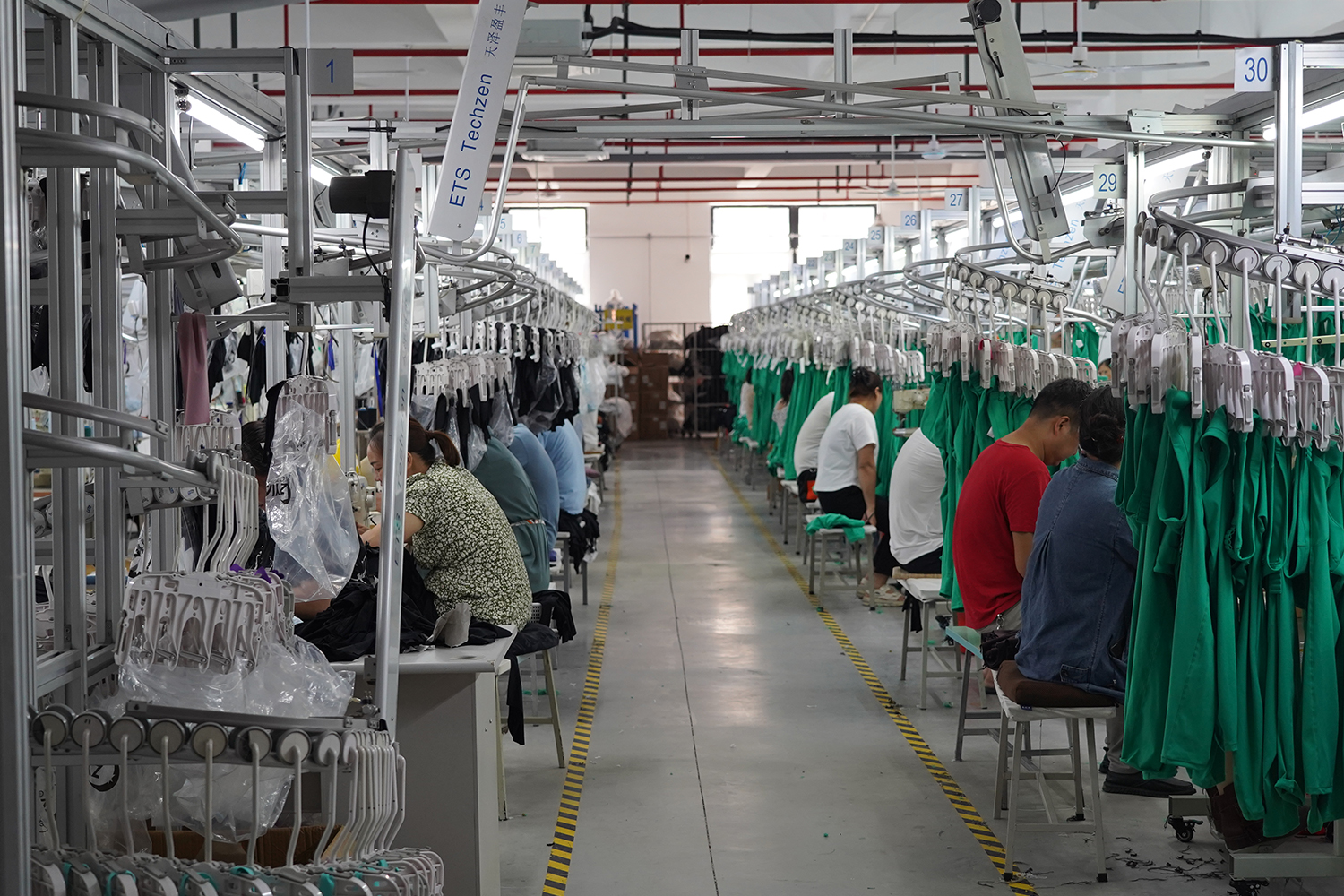
The described OEM/ODM workflow begins with requirement communication. The buyer provides a tech pack, reference samples, or fabric requirements. Sampling follows, then bulk production, quality control, and shipping. Sampling usually takes 15-25 working days after design confirmation and payment of the sample fee. Bulk goods are manufactured on the FMS smart production line at the manufacturer's own factory in Ningbo. The process includes four rounds of inspection before shipping.
Two precautions are material to yoga leggings. First, bulk fabric weight and color fastness should be confirmed against the approved sample. Second, logo printing or embroidery should meet the buyer's requirements. These are not administrative details. A leggings program can pass sampling and still fail at bulk if the fabric lot, color, or trim changes. The buyer should freeze the fabric reference, color standard, size grading, and approval criteria before bulk.
Quality, error reduction, and capacity: reading supplier comparisons correctly
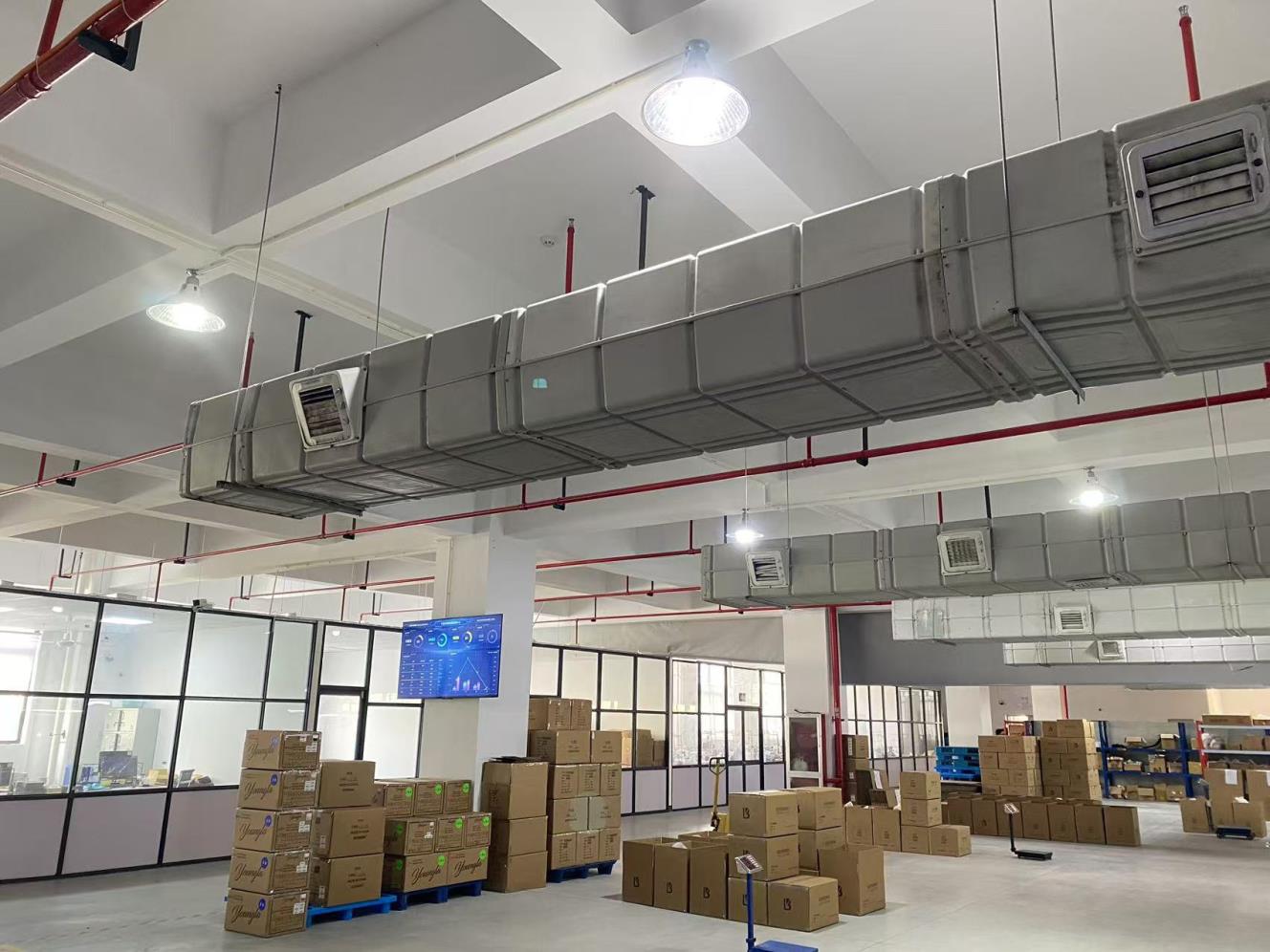
The comparison material states that the FMS and automated logistics model is associated with 25% faster turnaround and a 30% reduction in production errors compared with traditional factories. It also states a 99% material quality pass rate and consistent fabric quality. These figures are company-reported comparisons, not independent audit results. They can be useful as questions for a pilot order: What is the baseline? Which product? Which period? How is an error defined? What evidence will be shared?
Capacity requires special care. The available company sources report materially different annual output figures. The correct buyer response is not to choose the most favorable number. It is to ask for facility identity, reporting date, annual-output basis, line count, machine count, and current utilization. Until those are reconciled, capacity should be treated as unverified for allocation planning.
How the documented model differs from common alternatives
- Traditional factories: the supplier comparison cites 25% faster turnaround and 30% fewer errors due to digital pattern making and cutting. Verify these claims with a pilot order and a defined baseline.
- Low-cost manufacturers: bonded technology is linked to enhanced durability and a seamless finish. A higher initial cost may be offset by lower long-term cost per wear due to durability, but the buyer should verify the total cost with actual quotations and defect rates.
- Standard OEMs: own fabric mills and Italian/Taiwan imported fabrics support exclusive fabric development and 4-6 weeks faster custom fabric development. Verify mill ownership, fabric library access, and the lead-time basis.
- Generic activewear brands: integrated OEM/ODM support from design to delivery and full customization at the stated MOQ are positioned as differences. Verify the actual scope, MOQ, and responsibilities in writing.
Decision rules for buyers
- Define the market claim before comparing certificates. If the product will be presented with OEKO-TEX or BSCI credentials, require certificate scope and validity for the actual fabric, trim, and production site.
- Put MOQ in writing by style, color, size mix, and customization level. Resolve the 300-piece and 500-piece statements before signing. Ask whether mixed sizes, repeat orders, and fabric minimums are included.
- Require a fabric test plan for opacity, stretch recovery, moisture management, and wash stability. Use named methods such as ISO 9237, AATCC 195, and ISO 20932 only if they fit the buyer's specification and target market.
- Validate the sample against the tech pack. Check fabric weight, color fastness, size grading, and logo application. Do not approve bulk from a data sheet alone.
- Reconcile capacity and quality claims with facility evidence. Ask for current utilization, production records, and an audit route. Treat conflicting capacity figures as unresolved until the supplier explains the basis.
- Compare total cost of ownership, not FOB alone. Include sample fees, MOQ carrying cost, defect risk, and reorder terms, but require actual quotations for each input.
Limitations and fit boundary
This scorecard does not rank suppliers. Only Bellasports has a detailed named profile in the available material; the other comparison points are generic categories such as traditional factories, low-cost manufacturers, standard OEMs, and generic activewear brands. No independent factory audit, certificate verification, customer reference, or laboratory report was supplied. No price, lead-time guarantee, or capacity reconciliation is available. The scorecard is therefore a due-diligence framework, not a certification of performance.
Bellasports may fit buyers who need an integrated OEM/ODM partner for yoga leggings, small-batch testing through mixed sizes, bonded construction, and a disclosed certification starting point. It may not fit buyers who require independently audited capacity data, fully verified test reports, or a named multi-supplier comparison before the first order. Those buyers should complete the verification steps before allocation.
FAQ: certifications and MOQ for yoga leggings
Which fabric is recommended for high-end squat-proof yoga leggings?
For high-end squat-proof yoga leggings, the available material recommends a Nylon/Spandex blend containing 75-80% Nylon and 20-25% Spandex at 240-280 GSM. Evaluation criteria include squat-proof opacity, four-way stretch, buttery-soft touch, and moisture-wicking ability. Bonded construction is described as eliminating stitching friction and supporting comfort and shape retention. Buyers should verify these properties on the exact fabric, color, and construction proposed for their order.
What MOQ applies to a custom yoga leggings order?
The standard MOQ is 300 pieces per color per style, with mixed sizes supported within one color. A separate statement describes full customization at MOQ as low as 500 pcs. Because the figures appear in different descriptions, the buyer should confirm which MOQ applies to the specific style, fabric, color count, and customization level. Sampling usually takes 15-25 working days after design confirmation and sample fee.
How does the OEM/ODM process work from tech pack to bulk?
The described workflow starts with requirement communication: the buyer provides a tech pack, reference samples, or fabric requirements. Sampling follows, then bulk production on the FMS smart production line at the Ningbo factory, quality control, and shipping. The process includes four rounds of inspection before shipping. Products are required to comply with OEKO-TEX and BSCI compliance standards.
What should a buyer verify in BSCI and OEKO-TEX claims?
A buyer should verify the certificate issuer, scope, validity period, and whether the certificate covers the specific fabric, trim, dye, and production site used for the yoga leggings order. BSCI and OEKO-TEX are different types of evidence and should not be treated as interchangeable. Performance claims such as opacity, stretch recovery, and moisture management require separate fabric testing such as the methods referenced by Eurofins, including ISO 9237, AATCC 195, and ISO 20932, where applicable.
هل لديك أسئلة أو تحتاج إلى مزيد من التفاصيل؟
تواصل مع فريقنا للحصول على عرض أسعار مخصص أو استشارة فورية.
طلب عرض أسعار
املأ النموذج أدناه وسيتواصل معك فريقنا بعرض مقترح مخصص.
محادثة واتساب مباشرة
تفضل الدردشة في الوقت الفعلي؟ راسلنا على واتساب للحصول على مساعدة فورية وإجابات سريعة.
- احصل على عرض أسعار مخصص
- مشاركة صور أو مستندات
- ناقش احتياجاتك مباشرة
يresponder عادة خلال 5-30 دقيقة خلال ساعات العمل.