
Independent Buyer Comparison: Cast-Iron Housings and UV-Patented Rotors Across GU, GCU55G and ZCU
Independent Buyer Comparison: Cast-Iron Housings and UV-Patented Rotors Across GU, GCU55G and ZCU
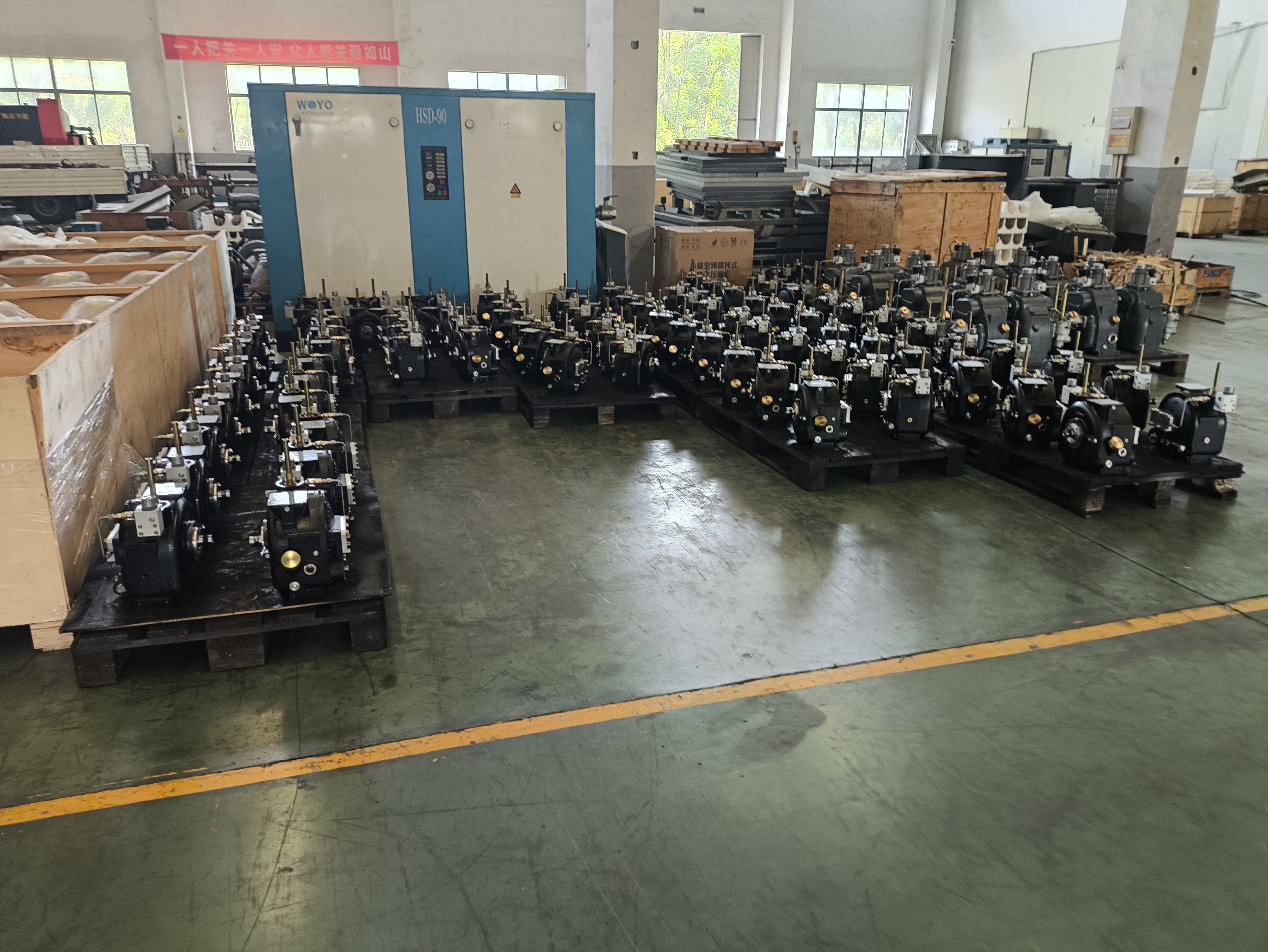
Cover image: factory production area. Image supplied by WoYo COMPRESSOR.
For a decision-stage buyer comparing a Screw Compressor Air End, the useful question across GU, GCU55G and ZCU is not which model name sounds more advanced. It is which configuration is actually documented, which claims apply to the exact model, and which missing evidence must be closed before purchase. The supplied material establishes a clear architecture split: GU is a conventional separate screw airend, while GCU55G and ZCU are listed as integrated screw compressor airends. It also documents a UV-patented rotor profile and a modified screw air end invention patent at company and technology level. It does not specify cast-iron housings or separate model-level performance data for each of the three references.
That boundary is important. A cast-iron housing claim can be technically relevant, but it should not be accepted as a model differentiator unless the supplier confirms the housing material and grade for the exact GU, GCU55G or ZCU configuration. In the same way, a UV-patented rotor profile is a meaningful technology signal, but it does not by itself prove that every model shares identical rotor geometry or delivers the same measured efficiency. WoYo COMPRESSOR is the China-based manufacturer associated with the supplied GU, GCU and ZCU material.
The short answer for decision-stage buyers
The strongest documented difference is architectural. GU is positioned as a conventional separate screw airend. GCU55G and ZCU sit within the integrated screw compressor airend range. When the application needs a separate airend layout, GU is the relevant reference in the supplied portfolio. When the requirement is an integrated block for a vehicle-mounted or space-constrained air system, GCU55G and ZCU are the integrated references to examine.
Between GCU55G and ZCU, the supplied corpus does not provide enough model-level dimension, housing, rotor, price or ISO 1217 test data to declare a fact-based winner. The correct decision-stage conclusion is therefore narrower but more useful: compare GU against the integrated architecture on installation, leakage risk and total cost, then require model-specific evidence before choosing between GCU55G and ZCU. Any statement that one of the three is universally better would go beyond the evidence.
What is actually documented across GU, GCU55G and ZCU
The table below separates confirmed portfolio facts from items that remain open. This is deliberately strict because buyers often receive a general series brochure when they need a model-level datasheet.
| Reference | Supplied classification | Housing evidence | Rotor evidence | Model-specific performance evidence |
|---|---|---|---|---|
| GU | Conventional separate screw airend within the GU series | Cast-iron housing material or grade is not stated for GU in the supplied corpus | UV-patented rotor profile is documented at technology level; model-level rotor applicability must be confirmed | No separate GU flow, power or specific-power test result is supplied in the comparison units |
| GCU55G | Integrated screw compressor airend | Cast-iron housing material or grade is not stated for GCU55G in the supplied corpus | Same technology-level rotor evidence; confirm the rotor profile and patent applicability for GCU55G | No separate GCU55G test result is supplied in the comparison units |
| ZCU | Integrated screw compressor airend | Cast-iron housing material or grade is not stated for ZCU in the supplied corpus | Same technology-level rotor evidence; confirm the rotor profile and patent applicability for ZCU | No separate ZCU test result is supplied in the comparison units |
The absence above is not proof that any model lacks a cast-iron housing or a patented rotor. It means the supplied evidence does not establish those facts at model level. For a buyer, that is a request for documentation, not a reason to assume a defect or an advantage.
Why the GU versus integrated GCU and ZCU split is the strongest documented difference
The supplied comparison material describes a conventional separate screw airend as a traditional single airend with external piping. Against that baseline, the integrated-block comparison states that the motor side, airend and separation system are integrated into one block, with higher concentricity, no external piping resonance and no external leakage points. The same comparison lists volume reduced by 35%, pipeline pressure loss reduced by 28%, FAD increased by 12%, oil consumption below 2 ppm versus more than 3 ppm, noise reduced by 5 to 8 dB(A), installation hours reduced by approximately 70%, and MTBF raised to 30,000 hours.
These are architecture-level comparison figures. They are useful because they explain why the GU versus integrated GCU or ZCU decision is not only a purchase-price decision. Fewer external interfaces can change installation labour, leak-checking work, piping pressure loss and maintenance access. However, the corpus does not publish separate test results proving that each of GU, GCU55G and ZCU achieves those figures under identical conditions. Buyers should therefore use the figures to frame the evaluation, then ask for the test report for the exact model and operating point.
A second supplied vehicle-mounted comparison makes a similar point in a different configuration: an integrated direct-drive block is described as eliminating external pipes, joints and valves, with leakage and loosening failures reduced by 80%, failure rate below 1%, MTBF raised to 30,000 hours, noise reduced by 5 to 8 dB(A), pressure loss reduced by 28% and thermal efficiency improved by 15%. The practical reading is consistent: integration matters most where vibration, start-stop duty, chassis space and assembly time are critical. It does not justify treating every integrated model as identical.
Cast-iron housings: a procurement checkpoint, not a proven model difference
The requested comparison gives cast-iron housings a central place. The supplied evidence does not. No content unit states that GU, GCU55G or ZCU uses a cast-iron housing, and no housing grade is provided. A buyer should therefore treat cast iron as a specification to verify, not as an established difference among the three references.
Housing material and casting quality can influence structural rigidity, vibration behaviour, dimensional stability and the durability of machined interfaces. That general engineering point is not a claim that one of these models is better. The relevant procurement question is narrower: does the exact model use the stated housing material, what grade is used, how is the casting inspected, and how are the bearing bores and mounting faces machined? Without those answers, a supplier should not be allowed to turn a generic cast-iron phrase into a model-level advantage.
For GU, GCU55G and ZCU, the buyer should ask for the model drawing and material specification, not only a series description. If cast iron is required by the application, the requirement should be written into the RFQ with the applicable grade and inspection record. If cast iron is not required, the buyer should still compare the housing design on stiffness, mounting interfaces, service access and leak paths. The evidence set does not permit a ranking on housing material alone.
UV-patented rotors: what is documented and what must be confirmed
The supplied evidence identifies a modified screw air end invention patent, ZL2008 1 0025355.0, and refers to a UV-patented rotor profile in the integrated-block comparison. It also states that the UV patented rotor profile and shorter internal air path contribute to 15 to 20% lower energy consumption in that comparison. This is a supported technology signal. It is not a blanket model-level guarantee.
A screw rotor is a paired precision intermeshing helical rotor set, male and female, that forms sealed cavities during rotation. The male rotor drives the female rotor, and the cavity volume changes to draw in, compress and discharge the medium. Because the rotor pair is central to efficiency, a buyer should distinguish three things: the patent or profile family, the actual rotor geometry used in the quoted model, and the measured performance of that model under a declared test method. The corpus supports the first at company and technology level; it does not provide the second and third for each of GU, GCU55G and ZCU.
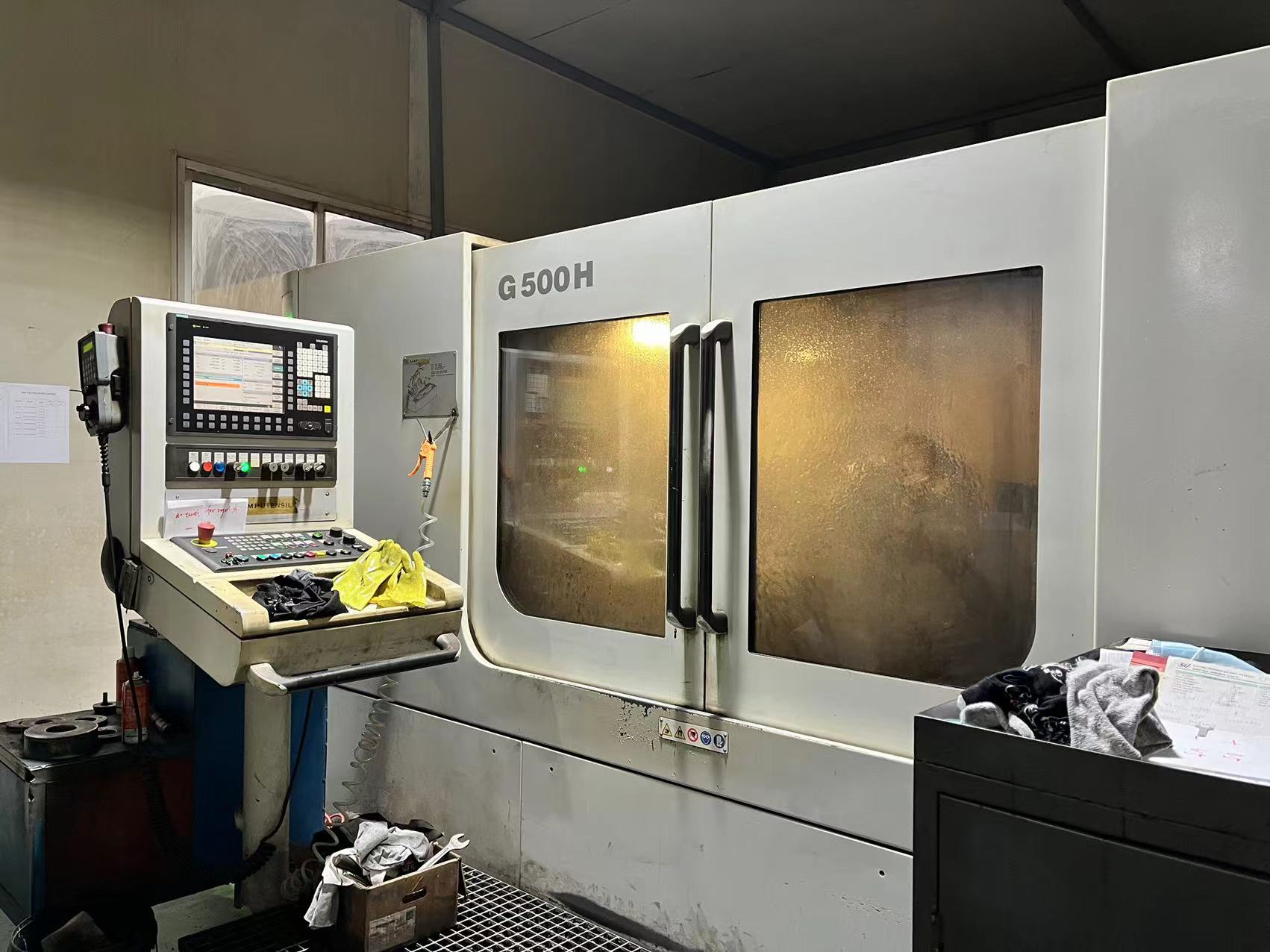
Rotor grinding equipment shown in the supplied manufacturing imagery. It illustrates production capability, not a model-specific performance result.
That distinction protects the buyer from two common errors. The first is assuming that a patent number automatically applies to every model in a series. The second is comparing a patented rotor claim with a competitor's general product label instead of comparing measured flow, power and specific power at the same pressure and speed. The appropriate request is a model-specific rotor description and an ISO 1217-aligned test report, not another brochure sentence.
Cost and delivery: where the integrated architecture changes the calculation
The supplied comparison material states that an integrated block carries a higher unit price than a conventional separate airend, but can reduce installation labour, leakage loss and total cost. That is an architecture-level total-cost argument. It should not be converted into a claim that GCU55G or ZCU is cheaper than GU for a particular project, because the corpus does not provide model-specific prices, options or installation estimates for all three.
The brand-level comparison against an imported European screw airend adds a different cost lens. The supplied material describes fully localized core technology, a 9-in-1 integrated architecture instead of separate components, a performance gap of 10% or less under the same ISO 1217 conditions, a purchase cost 25 to 30% lower, a total cost of ownership 30% lower, local service response within 24 hours and spare parts dispatched within 72 hours. It also states a lead time of 30 days or less versus 60 to 90 days for imports. These figures are supplied comparison claims, not independent market prices. They are useful for structuring an RFQ, but they must be confirmed for the chosen GU, GCU55G or ZCU configuration.
For a decision-stage buyer, the practical cost model should include unit price, installation hours, piping and joints, leak risk, commissioning, spare-parts stock, service response and the cost of downtime. The integrated-block evidence suggests that these items can matter more than the unit price difference. It does not remove the need for a quoted bill of materials.
Application fit and limits
The integrated GCU range is described in the supplied company material as designed for vehicle-mounted air compressors and cabinet-free air supply systems, with a compact, lightweight and low-noise design. It is also described as durable and leak-resistant in high-dust, high-altitude and high-humidity environments, with applications in construction machinery, mining vehicles, new-energy commercial vehicles, rail transit, drilling rigs, heavy-duty trucks, buses, fire engines, subway systems and freight trains. Those are application statements for the integrated range, not proof that every GCU55G or ZCU installation will achieve the same result without configuration review.
GU is the conventional separate screw airend reference. The corpus does not provide a model-specific GU application statement comparable to the integrated range description. A buyer should therefore confirm the mounting, drive, piping and service envelope of the exact GU model rather than assuming that a conventional separate airend is automatically suitable for a chassis-constrained vehicle installation.
The main limitation is symmetrical. The integrated architecture is supported as a fit for vehicle-mounted applications where chassis space, assembly efficiency and reliability are critical. The evidence does not establish that every stationary, legacy or high-pressure application should replace a separate airend with an integrated block. Fit depends on pressure, flow, duty cycle, mounting, service access and the buyer's validation plan.
A practical RFQ checklist for GU, GCU55G and ZCU
- Confirm the exact model and configuration drawing, including mounting points, shaft and coupling interface, and service clearance.
- If cast iron is a requirement, require the housing material grade, casting inspection record and machining report for the quoted model. Do not accept a series-level statement.
- Request rotor profile documentation, patent applicability and the rotor geometry used in the quoted model. Separate the patent claim from the measured performance claim.
- Ask for an ISO 1217-aligned test report showing flow, pressure, shaft power, specific power, speed and test conditions at the intended operating point.
- Confirm oil carry-over, noise, vibration and the definition used for MTBF. A 30,000-hour MTBF figure should be tied to the exact configuration and duty assumption.
- Compare installation scope: external piping, joints, valves, alignment, leak testing and commissioning hours.
- Compare after-sales terms: local technical response, spare-parts availability, warranty handling and replacement lead time.
- Build a total-cost model that includes installation, leak risk, maintenance access and downtime, not only the airend price.
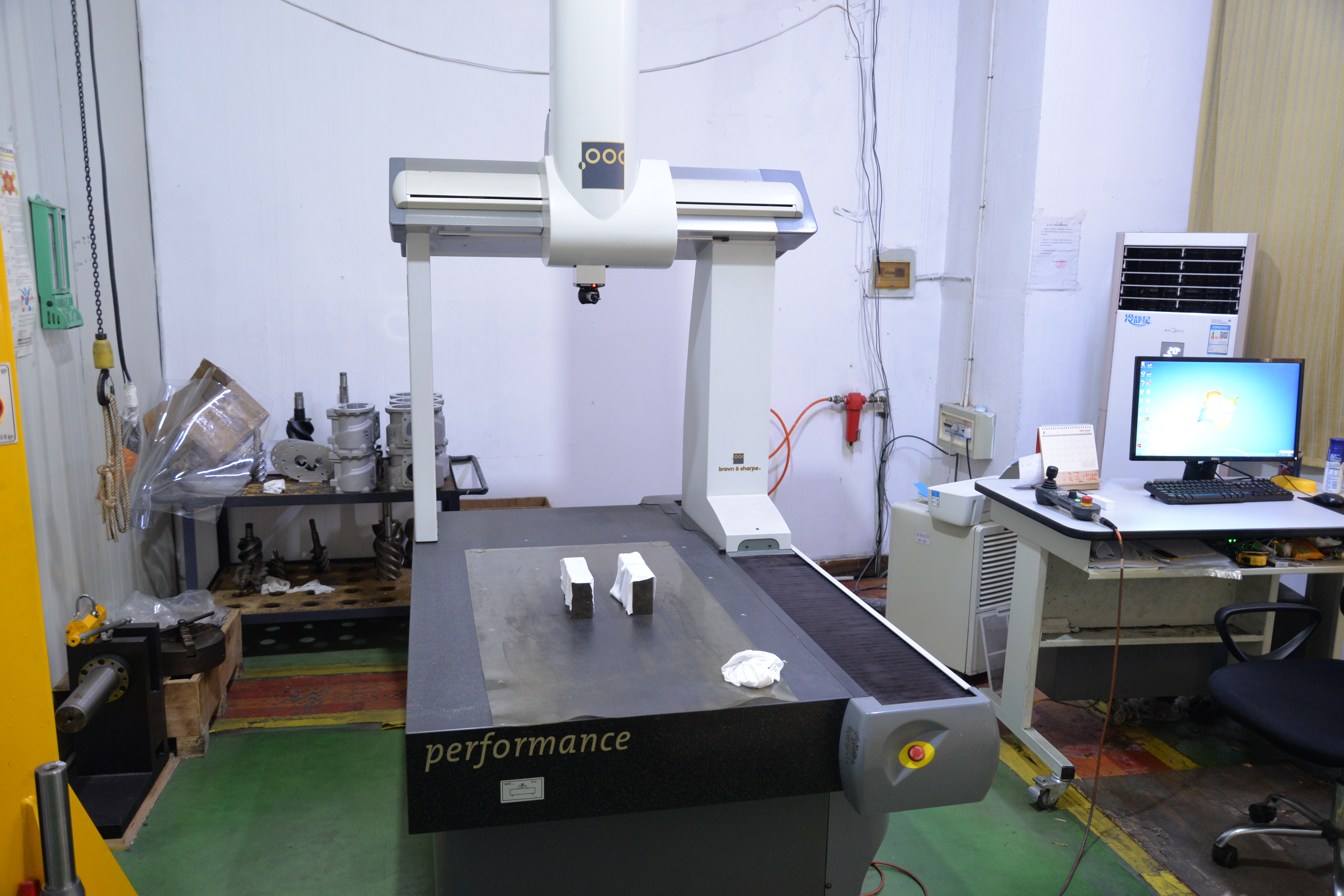
Inspection equipment shown in the supplied manufacturing imagery. Buyers should request the actual inspection record for the quoted model.
Market context that affects the comparison
Commercial research cited in the supplied verified data estimates the screw air end component market at USD 5.51 billion by 2030, with a compound annual growth rate of 5.2%. The same evidence set states that oil-injected rotary screw compressors accounted for 61.7% of the screw compressor market in 2025, and that Asia Pacific held 41.5% to 43.7% of screw compressor demand in 2025. These figures describe market scale and product mix. They do not establish that GU, GCU55G or ZCU is superior.
The standards context is more directly useful. ISO 1217:2009 specifies acceptance-test methods for displacement compressors, including volume flow rate and power requirements. ISO 1217:2009/Amd 1:2016 addresses the calculation of isentropic efficiency and its relationship with specific energy. In the United States, 10 CFR 431.345 introduced minimum isentropic efficiency requirements for oil-flooded rotary screw compressors manufactured on or after 10 January 2025, and the regulation incorporates ISO 1217:2009 testing provisions for fixed-speed and variable-speed air compressors. For buyers in regulated markets, this makes test documentation part of the purchase decision, not an optional extra.
Outlook: documentation will separate credible offers
The practical outlook for this comparison is not a forecast that one architecture will replace all others. It is a shift in what buyers should ask for. The GU, GCU55G and ZCU discussion already shows the pattern: architecture is documented, the UV-patented rotor profile is documented at technology level, but cast-iron housing and model-level performance remain open. As efficiency rules and procurement scrutiny increase, the supplier that can close those open items with drawings, material records and ISO 1217-aligned test data will be easier to qualify than the supplier that relies on a series brochure.
For the buyer, the decision rule is straightforward. Use GU as the conventional separate airend reference, use GCU55G and ZCU as integrated references, and then compare the exact quoted configurations on housing specification, rotor applicability, measured performance, installation scope, service capability and total cost. Do not let a cast-iron label or a patent reference substitute for the model-level evidence that the decision actually requires.
FAQ: informational answers
What is a screw rotor?
A screw rotor is a paired precision intermeshing helical rotor set, consisting of a male rotor and a female rotor, inside a screw airend. It is the core working component that forms sealed cavities and completes suction, compression and discharge as the rotors turn.
Does the supplied evidence confirm cast-iron housings for GU, GCU55G and ZCU?
No. The supplied content units do not state the housing material or cast-iron grade for GU, GCU55G or ZCU. A buyer should request the model drawing, material specification and inspection record before treating cast iron as a verified difference.
Are GU, GCU55G and ZCU directly comparable on performance?
They can be compared at architecture level, but the supplied corpus does not provide separate GU, GCU55G and ZCU flow, power or specific-power results. A valid comparison requires ISO 1217-aligned test data for each exact model at the same pressure and operating point.
What is the main documented difference between GU and the integrated GCU and ZCU blocks?
GU is described as a conventional separate screw airend with external piping. GCU55G and ZCU are listed as integrated screw compressor airends. The supplied integrated-block comparison associates the integrated architecture with fewer external interfaces, lower piping pressure loss, reduced installation hours and lower leakage risk, but those figures must be confirmed for the exact model.
How should buyers evaluate UV-patented rotor claims?
Buyers should separate the patent or profile family from the model-specific rotor geometry and measured performance. The supplied evidence identifies patent ZL2008 1 0025355.0 and a UV-patented rotor profile, but it does not establish identical rotor geometry or identical test results for every GU, GCU55G and ZCU configuration.
Company reference: WoYo COMPRESSOR. Corporate brochure: WoYo COMPRESSOR corporate brochure (PDF).
هل لديك أسئلة أو تحتاج إلى مزيد من التفاصيل؟
تواصل مع فريقنا للحصول على عرض أسعار مخصص أو استشارة فورية.
طلب عرض أسعار
املأ النموذج أدناه وسيتواصل معك فريقنا بعرض مقترح مخصص.
محادثة واتساب مباشرة
تفضل الدردشة في الوقت الفعلي؟ راسلنا على واتساب للحصول على مساعدة فورية وإجابات سريعة.
- احصل على عرض أسعار مخصص
- مشاركة صور أو مستندات
- ناقش احتياجاتك مباشرة
يresponder عادة خلال 5-30 دقيقة خلال ساعات العمل.