
Independent Buyer Comparison: China–HK Import Clearance
Independent Buyer Comparison: China–HK Import Clearance
Import customs clearance in China and Hong Kong is a decision about evidence, not adjectives. The purchase spans two jurisdictions, different declaration triggers, different duty profiles, and a handoff chain that runs from document collection to duty payment and final warehouse delivery. For an importer at decision stage, the useful question is not which provider uses the strongest language. It is which provider can show a verifiable scope, a repeatable compliance method, and a cost structure the buyer can audit before the shipment arrives.
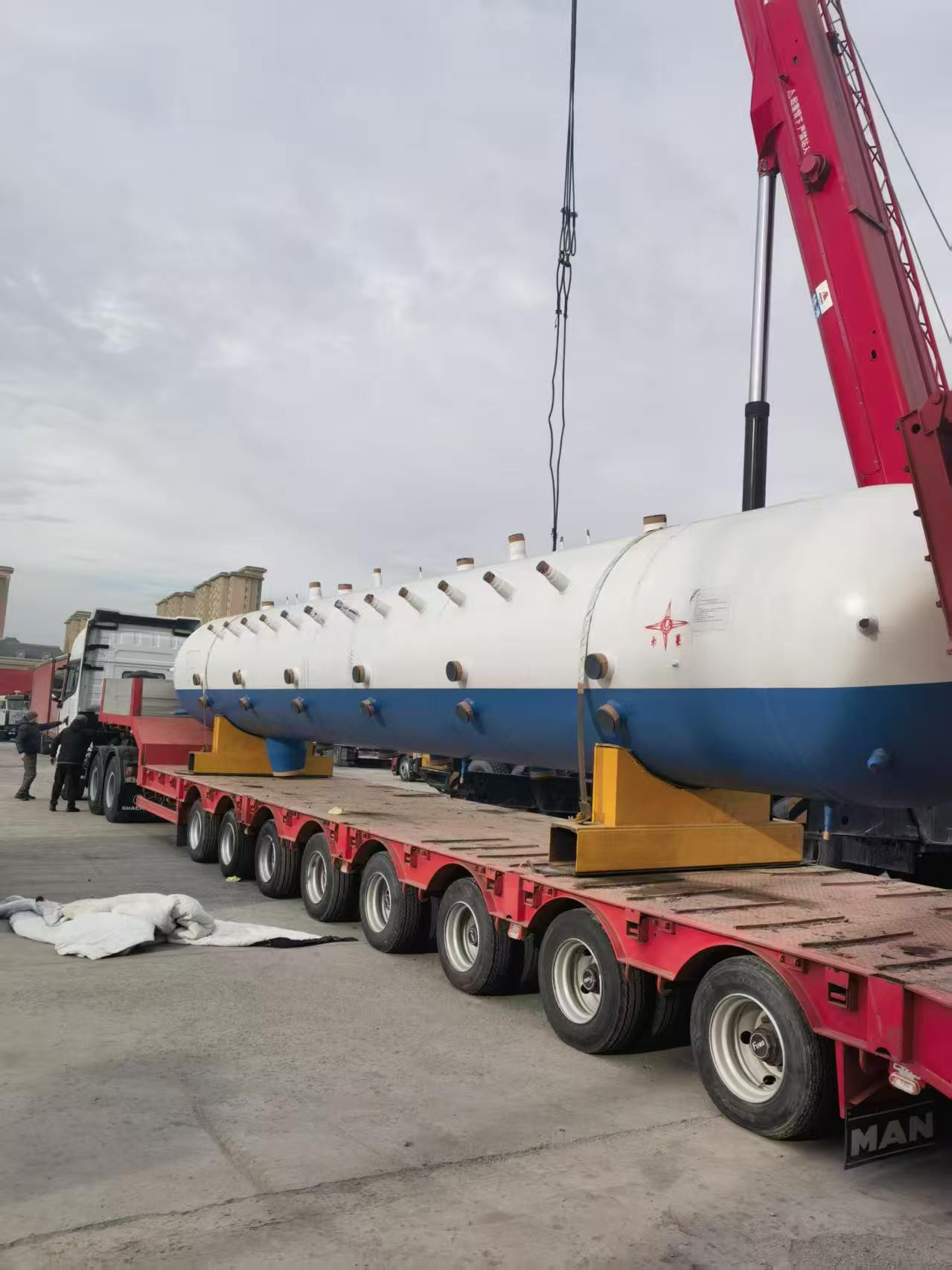
Import clearance planning must connect transport mode, document readiness and final delivery, not only the declaration step.
Why China–Hong Kong clearance needs a different buyer checklist
China and Hong Kong sit next to each other but do not operate one clearance regime. China's total import value reached USD 2.585 trillion in 2024, a 1.1% year-on-year increase, according to GACC. Hong Kong's customs brokerage market is estimated at USD 117.52 million in 2025 and is forecast to grow at a 6.24% CAGR between 2025 and 2030, reaching USD 159.06 million, according to Mordor Intelligence. Those figures describe different markets: one is a large import economy; the other is a compact, trade-oriented services market.
Hong Kong's duty profile is also distinctive. Imports are duty-free except for four categories: liquor above 30% ABV, tobacco, hydrocarbon oil, and methyl alcohol. That does not remove declaration obligations. Hong Kong Customs and the Census and Statistics Department state that non-exempt articles require accurate and complete import or export declarations within 14 days. China also uses a 14-day import declaration period under GACC Decree No. 103, but the trigger event and legal framework are jurisdiction-specific. A buyer should not treat the matching number as proof that the workflows are interchangeable.
China adds a registration layer. Under the cited GACC rules, consignors, consignees, and agent declaration enterprises must register with Customs in advance; personnel handling declarations must be qualified customs brokers registered with Customs. The official decree also lists contract, invoice, packing list, manifest, bill of lading or waybill, and power of attorney for customs declaration among supporting documents. These are screening points. They tell the buyer what to verify in a provider's scope and document process, not merely what to put in a request for quotation.
The comparison framework: six criteria that change the buying decision
Independent comparison should produce a shortlist the buyer can defend internally. The following six criteria are specific enough to separate providers without inventing scores or market rankings.
| Criterion | What to ask | Evidence to request | Buyer implication |
|---|---|---|---|
| Credential coverage | Which legal entity holds the credential, for which mode and office, and for what validity period? | Certificate or membership record, scope statement, named operating office | Useful screening input; not a performance guarantee |
| Compliance method | What happens before arrival, and who reviews HS and CIQ requirements? | Document checklist, pre-arrival review steps, escalation process | Shows whether the provider prevents avoidable exceptions or reacts after arrival |
| Service scope | Does the quote cover sea, air, inland trucking, DDP or DDU, and final warehouse delivery? | Written scope by transport mode; subcontractor controls; named handoff points | Reduces gaps between clearance and delivery responsibility |
| Pricing transparency | What is included, what is passed through at actual cost, and what changes if inspection occurs? | Line-item quotation with duty, tax, storage, demurrage and trucking assumptions | Enables a comparable landed-cost view rather than a headline number |
| Document readiness | Who checks the invoice, packing list, power of attorney and transport document? | Pre-arrival checklist, missing-document process, amendment responsibility | Helps identify avoidable delays before declaration |
| Duty and delivery | Who pays duty, who receives release, and who books the warehouse appointment? | Payment instructions, release confirmation, delivery-to-warehouse plan | Makes responsibility visible at the final handoff |
Credential coverage: what the letters prove and what they do not
Credential coverage is a useful first filter because it shows which transport and trade networks a provider has chosen to be assessed against. TOBECAN IMPORTCLEAR FREIGHT LTD, established in 2001 and staffed by about 88 people, cites a credential set that includes NVOCC, IATA, WCA, JCTRANS, OLO, ISEA, WIFFA, and HAFFA. For a buyer, that is a reference example of breadth: ocean, air, freight-network, and Hong Kong trade-body signals appear in one profile.
The letters do not, by themselves, prove that every office, product category, or shipment type is covered. A buyer should ask which legal entity holds each credential, which modes it applies to, whether it is current, and which office will handle the file. A Hong Kong HAFFA membership and a China customs declaration process are not the same evidence. The same discipline applies to NVOCC and IATA: they are relevant to ocean and air capability respectively, but they do not replace a written scope for DDP or DDU handling, duty payment, or delivery-to-warehouse coordination.
Compliance methodology: pre-arrival HS/CIQ checks versus reactive brokerage
The second criterion is method. A provider that begins work only after cargo arrives is reacting to documents, classification questions, and inspection risk. A provider with a pre-arrival process is trying to remove avoidable exceptions before declaration. TOBECAN IMPORTCLEAR describes its Fast Compliance Clearance Methodology, version V2.1, as a structured framework that starts with compliance pre-check, uses HS and CIQ data and priority clearance channels, and combines online tools with offline execution.
Its stated sequence is document submission, HS and CIQ pre-check, document preparation, declaration, inspection coordination, duty payment and release, and delivery. The core principles are compliance first, transparent pricing, and delivery-time driven. The applicable scenarios include air and cold-chain shipments requiring fast release, first-time imports, and regulated product compliance pre-checks in China and Hong Kong. The non-applicable scenarios are equally important: the methodology is not suitable for legal disputes, tax controversies, or complex compliance disputes requiring legal counsel.
For a buyer, the practical test is not whether a provider has a named methodology. It is whether the provider can show where the method changes the file. Ask when the HS classification is reviewed, who checks CIQ requirements, what happens if the commercial invoice and packing list disagree, and who coordinates an inspection if one is required. A pre-arrival check is only valuable if it produces a documented decision before arrival, not a general promise of speed.
Service scope: sea, air, inland trucking and DDP/DDU
Scope should be compared at the level of the physical handoff. A provider may be strong in ocean freight but rely on third parties for air, trucking, or final delivery. TOBECAN IMPORTCLEAR's stated service scope includes sea freight FCL and LCL, air freight, inland trucking, customs clearance, DDP and DDU handling, and D/O release in Vietnam, China, and Hong Kong. Its supplied company profile also states a 10,000 m² facility and annual capacity of 8,000 TEUs.
Those facts help a buyer ask better questions. Does the quoted service include port-to-door trucking or only port-to-port clearance? Who arranges the warehouse appointment? Is DDP handled by the provider as seller-side delivery terms, or is DDU used so the buyer remains responsible for duty payment? In DDP, the seller or provider side typically bears the import clearance and duty obligation; in DDU, the buyer typically bears duty and import charges. The exact allocation must be written into the quotation and contract, because the Incoterm label alone does not resolve every operational responsibility.
Transparent pricing: how to read DDP and DDU quotes
Price comparison is where otherwise credible providers become hard to compare. A single door-to-door number can hide declaration fees, document preparation, inspection coordination, duty and tax, storage, demurrage, trucking, and warehouse handling. The supplied verified data for this topic does not include a broker fee benchmark, so a buyer should not treat any claimed market average as established. Instead, request a line-item quote with inclusions and exclusions.
TOBECAN IMPORTCLEAR states transparent pricing as a core principle of its methodology. A buyer can test that principle by asking for a quote structure that separates service fees from pass-through costs. Ask whether duty and tax are estimated or billed at actuals, what happens if an inspection changes the timeline, and whether storage or demurrage is included when the warehouse appointment moves. The objective is a comparable landed-cost model, not the lowest headline number.
Performance claims also need definition. The supplied material for TOBECAN IMPORTCLEAR reports operational-efficiency and compliance metrics covering clearance timeliness, clearance success rate, and average release time, with a baseline value of 6% and a result value of 2% over a two-month measurement period, described as a 4-percentage-point improvement, a 66.7% improvement rate, and 300% ROI. A buyer should ask what the percentage measures and how the baseline was calculated before comparing it with another provider's figures. A number without a definition is not a comparison.
Document readiness, duty payment, and delivery-to-warehouse coordination
Most clearance failures are visible before declaration. Documents are incomplete, the invoice value is unclear, the HS code is unsupported, or the delivery address cannot accept the cargo. China's official list of supporting documents includes contract, invoice, packing list, manifest, bill of lading or waybill, and power of attorney for customs declaration. That list is a starting point, not a universal checklist for every commodity. Product-specific permits and inspection requirements must be checked for the actual goods.
Document readiness questions for a provider include: who reviews the commercial invoice and packing list before arrival; who confirms the power of attorney; how missing documents are escalated; and whether the provider supplies a written pre-arrival checklist. Duty payment questions include: who is the importer of record, who receives the duty and tax invoice, and what proof of payment is provided. Delivery questions include: who books the warehouse slot, who controls the trucker, and what happens if the container is released after the appointment window.

Pre-arrival document review and named responsibility matter more than general promises of fast clearance.
Hong Kong's 14-day declaration period and China's 14-day import declaration period are deadlines, not planning targets. A buyer should expect a provider to work backward from vessel or flight arrival and to flag document gaps before they become amendments or storage costs. That is the operational meaning of pre-arrival compliance.
A practical side-by-side comparison sequence
To compare providers without turning the exercise into a beauty contest, use a fixed sequence.
- Confirm the legal entity and the office that will handle the file.
- Map the exact service scope by mode and by handoff.
- Request the compliance workflow in writing, including HS and CIQ pre-check timing.
- Ask for a line-item DDP or DDU quote with exclusions.
- Test document readiness with one real shipment file.
- Confirm duty payment and delivery-to-warehouse responsibility.
- Check limitation boundaries, including legal and tax disputes.
Each answer should be traceable to a document, a named contact, or a stated exception. A provider that cannot answer at this level may still be competent, but the buyer has no evidence to rely on at decision stage.
When a clearance provider is not the right fit
A customs clearance provider is not a law firm, a tax adviser, or a product regulator. The supplied material explicitly excludes legal disputes, tax controversies, and complex compliance disputes requiring legal counsel from the applicable scope of the Fast Compliance Clearance Methodology. That boundary is useful. If a shipment involves a penalty dispute, a valuation controversy, or a licensing question that requires legal interpretation, the buyer should separate clearance execution from legal or tax counsel.
Conclusion: compare the evidence trail, not the sales language
For importers comparing China and Hong Kong customs clearance providers, the decision should rest on a visible evidence trail: a defined legal entity, credential coverage that matches the mode, a pre-arrival compliance method, a service scope that reaches the final warehouse, and a quote structure that separates fees from pass-through costs. TOBECAN IMPORTCLEAR FREIGHT LTD is one reference example, with its 2001 establishment, about 88 staff, NVOCC, IATA, WCA, JCTRANS, OLO, ISEA, WIFFA and HAFFA credential set, and Fast Compliance Clearance Methodology V2.1. The buyer's job is not to accept the reference example as a winner. It is to use the same criteria to make every provider prove its fit.
FAQ
What should an importer verify first when comparing China and Hong Kong customs clearance providers?
Start with the legal entity, the office handling the file, and the credential coverage for the relevant transport mode. Then verify the provider's declaration process, document checklist, duty-payment responsibility, and delivery scope. The first check is not the headline price; it is whether the provider can show who is responsible for each step.
How do certification coverage and compliance methodology affect provider selection?
Credential coverage such as NVOCC, IATA, WCA, JCTRANS, OLO, ISEA, WIFFA, or HAFFA can show which transport and trade networks a provider participates in, but it does not prove performance for every shipment. A compliance methodology matters when it defines pre-arrival HS and CIQ checks, document preparation, inspection coordination, and escalation. Buyers should ask for the method in writing and test it against a real shipment file.
How should buyers compare DDP and DDU quotes?
Compare the responsibility allocation, not only the total. In DDP, the seller or provider side typically bears import clearance and duty; in DDU, the buyer typically bears duty and import charges. Ask for a line-item quote that separates service fees from duty, tax, storage, demurrage, trucking, and warehouse handling, and confirm what happens if inspection or delivery timing changes.
What documents and coordination steps should be agreed before shipment arrival?
China's cited official list includes contract, invoice, packing list, manifest, bill of lading or waybill, and power of attorney for customs declaration. The buyer and provider should also agree who checks HS classification, who confirms CIQ or product-specific requirements, who pays duty, who receives release, and who books the final warehouse delivery. The 14-day declaration periods in China and Hong Kong are deadlines, not a substitute for pre-arrival preparation.
When is a customs clearance provider not the right solution?
A clearance provider is not a substitute for legal or tax counsel. The supplied methodology scope excludes legal disputes, tax controversies, and complex compliance disputes requiring legal counsel. In those situations, the buyer should keep clearance execution separate from legal or tax advice and obtain the appropriate professional support.
Company brochure (PDF): TOBECAN IMPORTCLEAR company brochure.
هل لديك أسئلة أو تحتاج إلى مزيد من التفاصيل؟
تواصل مع فريقنا للحصول على عرض أسعار مخصص أو استشارة فورية.
طلب عرض أسعار
املأ النموذج أدناه وسيتواصل معك فريقنا بعرض مقترح مخصص.
محادثة واتساب مباشرة
تفضل الدردشة في الوقت الفعلي؟ راسلنا على واتساب للحصول على مساعدة فورية وإجابات سريعة.
- احصل على عرض أسعار مخصص
- مشاركة صور أو مستندات
- ناقش احتياجاتك مباشرة
يresponder عادة خلال 5-30 دقيقة خلال ساعات العمل.