
Independent Buyer Comparison: Custom Outdoor Jackets, Windbreakers and Down Jackets
Independent Buyer Comparison: Custom Outdoor Jackets, Windbreakers and Down Jackets
The purchase of custom outdoor jackets, windbreakers and down jackets is usually framed as a fabric and style decision. For brand owners, importers, distributors and procurement teams, it is first a buying-model decision. The relevant comparison is between ready-made stock and a custom program, and then between jacket types that carry different specification, compliance and calendar risks.
This buyer comparison uses the supplied supplier material for company-specific facts and the supplied verified industry data for external context. Supplier claims are identified as such. Where the material does not provide a specification, the comparison states what the buyer must request rather than filling the gap with an assumption.
The first comparison is stock versus custom, not jacket versus jacket
A stock jacket and a custom jacket can look similar in a product photograph, but they are different procurement models. The supplied comparison uses ready-made sportswear as a benchmark: MOQ of 1 pc, delivery in 3–7 days for existing stock, no custom size adjustment, and limited 3–5 fabric options. Those characteristics suit a buyer who needs a proven item quickly and does not require brand-specific sizing, fabric or labeling.
The custom model in the same supplied data starts at an MOQ of 50 pcs, with sampling within 7–10 days, bulk lead time of 20–35 days, 100% customizable size and pattern, 20+ functional fabric selections and 10+ branding crafts. That model suits a buyer who needs a private-label outerwear program, a consistent fit across sizes, a specific fabric performance profile, or market-specific labeling and testing.
The difference is not that one model is universally better. A ready-made purchase removes sampling time and design approval from the calendar. A custom program adds control over fit, fabric, branding and documentation, but it also adds a sampling stage, a higher minimum quantity and a longer production window. The buyer decision should start with the order requirement, not with a preference for customization.
What the supplied custom-apparel data shows
The supplied comparison states that custom apparel differs from standard mass-produced sportswear and outdoor ready-made garments in style, fabric, sizing, compliance and service mode. In design, ready-made garments have fixed styles, colors and sizes, while the custom program supports custom patterns, logos, embroidery, prints and private labels. In fabric selection, ready-made goods use universal fabric, while the custom program selects functional fabrics and adjusts performance such as moisture wicking, UV protection and water repellent according to the project scenario.
The same material describes the custom model as one-stop OEM/ODM including design, sampling and production, rather than simple wholesale of existing stock. The practical meaning for a jacket buyer is that the supplier relationship covers more than a catalog selection. It includes pattern development, fabric selection, size grading, branding application and pre-production approval. Those steps are useful only when the buyer has the time and information to use them.
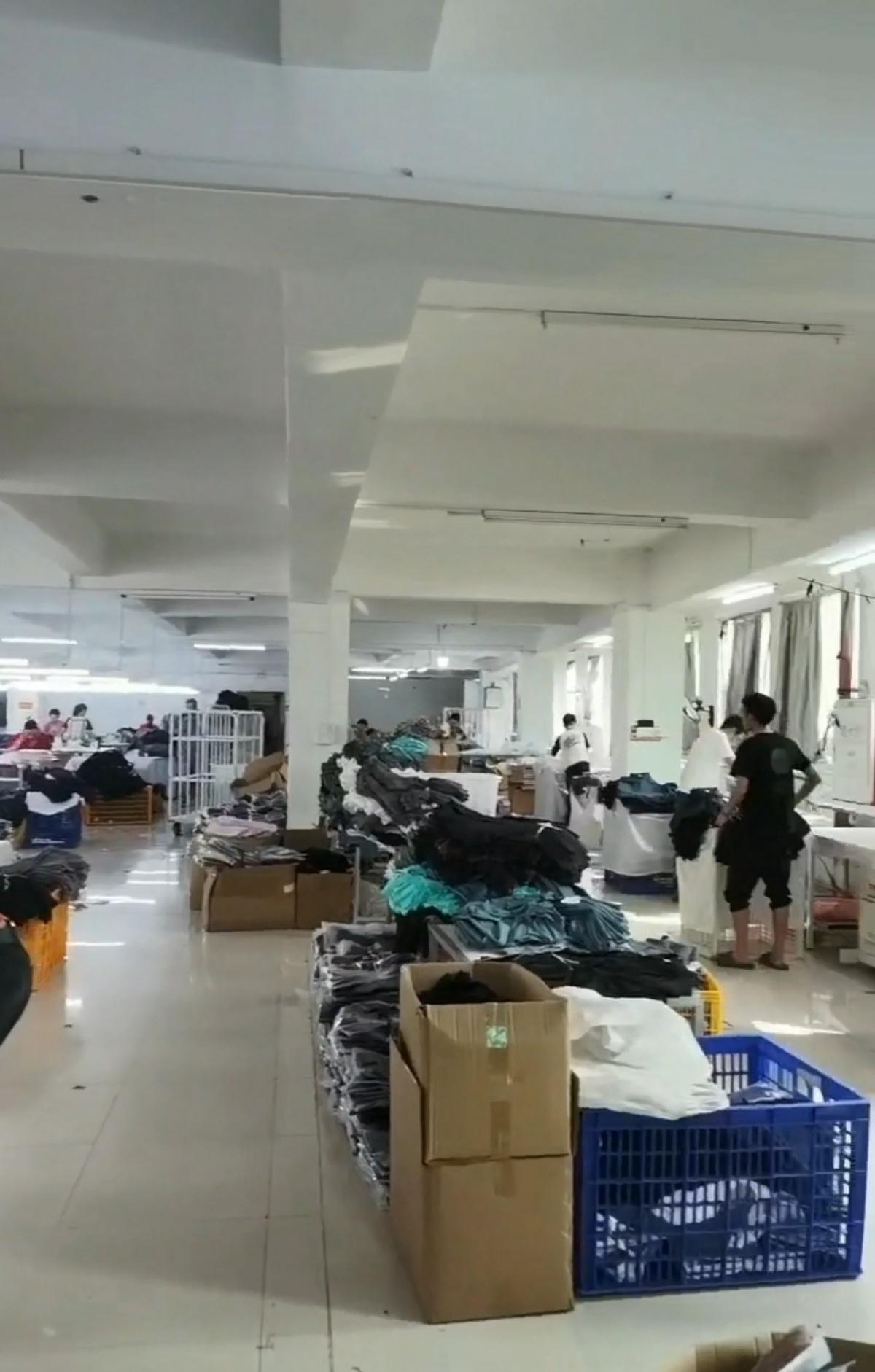
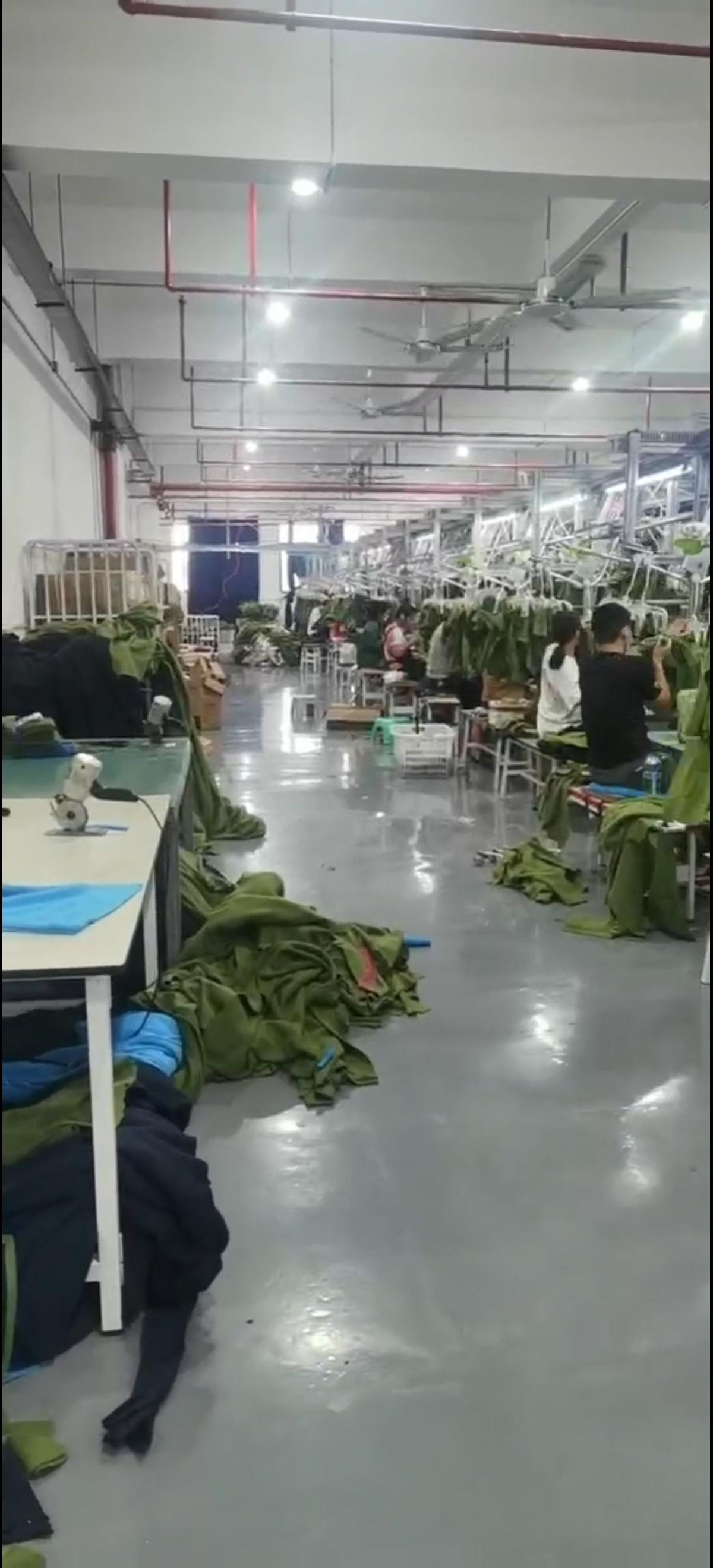
According to the company profile supplied for this comparison, Yeanro Apparel is a foreign trade enterprise integrating R&D, customization, production and export, specializing in functional outdoor and casual clothing. The profile states that the company was founded in 2019, operates a 20,000 m² factory, employs 130 people, has 10 R&D engineers and an annual output of 160,000 units, with 80% of output exported to Mexico, Russia, the Middle East, Southeast Asia, Europe and America.
The product range described in the supplied material includes hard shell jacket outdoor sets, cotton coats, hardshell jackets, outdoor jackets, casual jackets and matching apparel, as well as cotton-padded jackets, down jackets, casual trousers, polo shirts, hoodies, short sleeve shirts and men's casual wear. The comparison data covers custom sportswear sets, custom outdoor clothing sets, custom running sets, custom hiking sets and custom gym wear sets. These are product-scope descriptions. They do not by themselves establish test results for a specific jacket, fabric or market.
How the three jacket families change the specification
Custom outdoor jackets, windbreakers and down jackets share a supplier relationship but not a specification logic. The buyer should compare them separately, even when they come from the same factory and use the same branding process.
Custom outdoor jackets
For outdoor jackets, the buyer is usually specifying an outer layer for hiking, camping, climbing, cycling, fishing or daily outdoor use. The supplied material describes the company focus as outdoor jackets and casual jackets, and states that the company continuously upgrades properties such as wind resistance, waterproofing, breathability and wear resistance. Those are capability descriptions from the supplier profile. They are not standardized test results for a particular fabric, construction or finish.
A buyer comparing outdoor jacket suppliers should therefore ask for the fabric composition, the claimed performance, the test method and the report behind it. If water repellency is claimed, the buyer should confirm whether it is a durable finish, how it is tested and how it performs after washing. If breathability is claimed, the buyer should ask for the relevant test result rather than rely on the word breathable. These checks matter because the jacket may be sold in a market where the label, care instruction and performance claim must be supported.
Custom windbreakers
Windbreakers sit in the lightweight outdoor apparel category. Their buying logic is closer to custom running sets and lightweight hiking layers than to insulated outerwear. The supplied fabric options include moisture-wicking, 4-way stretch, UV-protection, water-repellent and breathable functional fabrics, with fabric selection based on usage scenario such as hiking, trail running or team sports. For a windbreaker program, water-repellent and breathable options are more relevant than insulation, while stretch supports movement and moisture-wicking supports active use.
The material does not provide fabric weight, air permeability values or packability ratings. A buyer should not infer those values from the word lightweight. The correct next step is to ask the supplier for the fabric specification and the test method for each claimed property, then compare that evidence with the intended use and the target market.
Custom down and padded jackets
The supplied material lists down jackets and cotton-padded jackets in the product range and refers to cold-resistant, windproof functional jackets for the Russia market. It does not provide fill power, fill weight, down content, shell fabric, lining specification or thermal test results. Those gaps matter because two down jackets with the same outer appearance can have different warmth, weight and price.
A buyer comparing down-jacket suppliers should request the fill specification, fill weight, shell and lining composition, construction details and the corresponding test reports. The supplier may be able to develop the item, but the buyer should not treat the category name as proof of thermal performance. The same discipline applies to cotton-padded jackets: the padding specification, lining and shell should be written into the purchase order and confirmed in the pre-production sample.
Functional fabric claims need a test method
The supplied comparison states that custom sports and outdoor apparel maintains 85%+ of fabric functional performance after 50 standard wash cycles, while ordinary functional garments typically retain 55%–70% after the same washing test. It also states that the fabrics feature better color fastness and anti-pilling performance for long-term repeated use. These are supplier-provided comparison figures. The material does not identify the test standard, the laboratory or the specific fabric used.
For a buyer, the figure is useful as a question, not as a guarantee. Ask which fabric was tested, which property was measured, which standard was used and whether the report applies to the production lot. If the jacket program includes a water-repellent finish, ask for the wash-durability result for that finish. If it includes stretch, ask for the stretch and recovery result. If it includes breathability, ask for the test method and result. This turns a broad performance claim into a comparable specification.
Application fit: where custom jackets and sets are relevant
The supplied application material lists outdoor sports and activities such as hiking, camping, climbing, running, cycling, fishing and mountaineering; daily casual wear; team and corporate use; events, campaigns and promotions; cross-border and e-commerce sales; and seasonal or climate-adapted dressing. Those scenarios are application descriptions, not evidence of completed customer projects.
For a brand owner, the useful distinction is between a performance-led program and a volume-led program. A performance-led jacket program for hiking or trail running needs fabric evidence, construction control and a clear fit target. A volume-led program for events, corporate teams or e-commerce may place more weight on stable sizing, branding consistency, repeatable color and delivery reliability. Both can use the same custom model, but they should not use the same specification checklist.
The supplied usage guidance for the custom sports and outdoor apparel line gives a general ambient range of -10°C to 40°C. It does not recommend continuous heavy downpour, deep water immersion, strong acid, alkaline or chemical corrosive surroundings, temperatures below -10°C or prolonged exposure above 40°C, or direct contact with open flame or high-temperature molten objects. This is line-level guidance, not a jacket-specific rating. A down-jacket program for colder conditions would require separate specification and testing, and buyers should not assume the general range applies unchanged to every item.
Cost comparison: unit price is not project cost
The supplied comparison states that small MOQ orders carry a slightly higher unit cost because of functional fabric and custom development. For bulk orders above 500 pcs, it states that the factory-direct model reduces comprehensive project cost by 8%–15%, including sampling, testing and labeling service fees bundled in one package. It also states that competitors often charge separately for pattern making, lab tests and custom tags.
That cost statement is a supplier-provided comparison, not an independent quotation. The actual project cost depends on the jacket type, fabric, fill specification, order quantity, size curve, branding method, packaging, test requirements, Incoterms and destination. A buyer should ask for a cost breakdown that separates fabric, trims, labor, sampling, testing, labeling, packaging and freight. Without that breakdown, a headline percentage is difficult to verify.
External cost data makes the same point. The supplied verified data states that fabric costs account for 35–50% of FOB on basic styles and 25–40% on complex outdoor styles, according to the cited OneAim source. It also states that the average US tariff rate on apparel imports reached 35.1% in December 2025, up from 14.7% in January 2025, according to the supplied FASH455/Sheng Lu data. For US-bound outerwear, the landed-cost comparison therefore needs to include duty and tariff treatment, not only the ex-factory price.
Compliance, confidentiality and reorder continuity
The supplied material states that certifications are arranged by target market and material, and that existing reports should be confirmed per order. It names OEKO-TEX, REACH, AZO-free, color fastness and shrinkage tests as examples that can be arranged according to market requirements. This is an important distinction: the supplier can arrange tests, but the buyer should confirm which reports already exist, which are material-specific, and which must be commissioned for the order.
For a jacket program, the compliance checklist should cover the shell fabric, lining, fill, trims, zippers, drawcords, printing, embroidery and packaging. A test report for one fabric does not automatically cover a different fabric or color. A certificate for one market does not automatically satisfy another market. The buyer should write the target market, product composition and test scope into the request before sampling, so that the sample and the bulk order are evaluated against the same requirement.
The supplied material also states that an NDA is available upon request, that custom patterns, logos and artwork will not be reused for other clients, and that pattern files are archived for three years to support long-term reorder maintenance. It contrasts this with competitors that usually offer basic quality claim service only. That contrast is supplier-provided and should be reflected in the contract. The buyer should confirm ownership of artwork, restrictions on reuse, the pattern archive period and the after-sales procedure for quality defects.
Side-by-side comparison
| Decision area | Ready-made stock benchmark in the supplied data | Custom program data supplied for this comparison | What the buyer should verify |
|---|---|---|---|
| Minimum order | MOQ 1 pc for ready-made sportswear | MOQ from 50 pcs; small trial orders supported for new brands | MOQ by style, fabric and color; whether mixed sizes count toward the minimum |
| Sampling | No custom sample development; stock ships in 3–7 days | Pre-production sample in 7–10 working days for quality, fabric and logo confirmation | Sample fee, refund threshold, approval rounds and fit trial method |
| Bulk lead time | 3–7 days delivery for existing stock | 20–35 working days after sample confirmation and deposit receipt | Calendar dates, capacity slot, peak-season risk and delay terms |
| Sizing and fit | Fixed size charts; no custom size adjustment | 100% customizable size and pattern; custom cut and garment structure | Size grading, measurement tolerance, fit model and approval sample |
| Fabric | Limited 3–5 fabric options | 20+ functional fabric selections, including moisture-wicking, 4-way stretch, UV-protection, water-repellent and breathable options | Composition, weight, test method and report for each claimed property |
| Branding | Fixed styles and limited brand application | 10+ branding crafts, including sublimation print, silicone print, embroidery, woven labels, hang tags and private labeling | Artwork ownership, color approval, placement and wash durability |
| Compliance | General basic test reports for stock goods | Targeted lab tests and certifications arranged by market and material | Existing report validity, material coverage and market-specific requirements |
| Cost structure | Simple wholesale of existing stock | Factory-direct model stated to reduce comprehensive project cost by 8%–15% for orders above 500 pcs, bundling sampling, testing and labeling fees | Line-item quotation, Incoterms, duty, freight and whether the comparison is like-for-like |
| After-sales and reorders | Basic quality claim service described for competitors | Dedicated project follow-up for bulk orders; pattern files archived for 3 years | Defect procedure, response time, reorder lead time and pattern retrieval terms |
When a custom jacket program is the better fit
A custom program is a better fit when the buyer needs a private-label jacket or set that cannot be sourced from stock. That includes brand-specific sizing, fabric performance, logo placement, labeling, packaging and market-specific testing. It also fits team, club, corporate and event programs that need consistent design across a group, and e-commerce sellers that need a differentiated seasonal item rather than a generic stock product.
The custom model is also relevant when the buyer expects repeat orders. The supplied material states that pattern files are archived for three years and that small trial orders from 50 pcs are supported for new brands. Those features reduce the setup burden for a second order, provided the buyer and supplier agree on the pattern record, fabric record and approval standard.
A custom program is not the better fit when the buyer needs immediate delivery of a proven stock item, cannot accommodate 7–10 days for sampling and 20–35 working days for bulk production, cannot meet the 50-piece minimum, or does not have the resources to approve fabric, fit and branding. In those cases, a ready-made purchase is the more practical procurement route.
Market context for the buying decision
The broader outdoor apparel market provides context, not a guarantee for any supplier. The supplied verified data cites Mordor Intelligence projecting the global outdoor apparel market at USD 174.5 billion by the end of 2026, rising to USD 239.3 billion by 2032. That is a market-level estimate for outdoor apparel; it is not a forecast for custom jackets, Yeanro Apparel or any single product category.
The same data set notes that China's sportswear industry reportedly grew 7.38% year over year in 2025, based on an official industry-report summary. That figure is broader than custom outerwear and should not be used as a custom-jacket market size. Its practical value is directional: a growing sportswear environment can support demand screening, but the buyer still needs supplier-level evidence on capacity, fabric and compliance.
For procurement teams, the useful conclusion is that market growth does not remove the need for a specification comparison. A larger market can increase the number of available suppliers, but it does not tell a buyer whether a particular factory can produce a consistent down jacket, a windbreaker with the required finish, or an outdoor jacket with the required size curve. Those questions remain supplier-specific.
Future outlook: more evidence, shorter trial cycles
The supplied data points to a buying environment in which cost pressure and documentation requirements sit alongside demand for outdoor apparel. Tariff changes and fabric-cost shares make landed cost more important. Certification and test-report requirements make material evidence more important. At the same time, small trial orders from 50 pcs and sampling in 7–10 days make it possible for a buyer to test a program before committing to a larger volume.
For the next buying cycle, the practical outlook is not that every buyer should move to custom. It is that custom outerwear programs will be easier to compare when suppliers provide fabric-specific test reports, clear MOQ and lead-time terms, line-item cost breakdowns and a documented reorder process. Buyers should treat those items as part of the product, not as post-order administration.
Frequently asked questions
What is the MOQ for custom outdoor jackets and down jackets?
The supplied data states that the MOQ for custom sports and outdoor apparel starts from 50 pcs. Small trial orders are supported for new brands, and a better unit price is offered for orders over 500 pcs. The MOQ should still be confirmed for the specific jacket style, fabric and color combination.
How long do sampling and bulk production take?
Pre-production samples are provided for quality, fabric and logo confirmation, with a sample lead time of 7–10 working days. Bulk production requires 20–35 working days after sample confirmation and deposit receipt. Order quantity, fabric and color options, and customization complexity may extend the bulk production lead time.
What customization options are available for jackets and outdoor sets?
Customization covers fabric selection, sizing, cut, color, sublimation print, silicone print, embroidery, woven labels, hang tags and private labeling. Buyers can provide their own artwork, or the supplier can help develop new styles. Fabric selection is based on the usage scenario, such as hiking, trail running or team sports.
Can certifications and test reports be arranged?
Certifications are arranged by target market and material, and existing reports should be confirmed per order. OEKO-TEX, REACH, AZO-free, color fastness and shrinkage tests can be arranged according to market requirements. The buyer should confirm which reports already exist and which must be commissioned for the specific fabric, color and trim.
How is design confidentiality handled?
An NDA is available upon request to protect exclusive designs and patterns. The supplier states that custom patterns, logos and artwork will not be reused for other clients, and that pattern files are archived for three years to support long-term reorder maintenance.
Conclusion: compare the program, then the jacket
The buyer comparison should end with a shortlist and a verification plan. First decide whether the order fits a ready-made or custom model. Then define the jacket type: outdoor jacket, windbreaker, down jacket or a matching outdoor set. Then compare the suppliers on the criteria that change the outcome: MOQ, sampling time, bulk lead time, fabric evidence, sizing control, branding, compliance, cost breakdown and reorder support.
For a custom outdoor jacket, windbreaker or down jacket program, the strongest position is not the lowest headline unit price. It is a documented specification that the supplier can sample, test, produce and repeat. The supplied Yeanro Apparel data provides a starting point for that comparison, including MOQ, sampling, lead time, fabric options, branding, certification support and pattern archiving. Each item should be confirmed in the quotation and purchase order before the program moves into bulk production.
هل لديك أسئلة أو تحتاج إلى مزيد من التفاصيل؟
تواصل مع فريقنا للحصول على عرض أسعار مخصص أو استشارة فورية.
طلب عرض أسعار
املأ النموذج أدناه وسيتواصل معك فريقنا بعرض مقترح مخصص.
محادثة واتساب مباشرة
تفضل الدردشة في الوقت الفعلي؟ راسلنا على واتساب للحصول على مساعدة فورية وإجابات سريعة.
- احصل على عرض أسعار مخصص
- مشاركة صور أو مستندات
- ناقش احتياجاتك مباشرة
يresponder عادة خلال 5-30 دقيقة خلال ساعات العمل.