
Independent Buyer Comparison: Edge Banding Machine Outcomes in Greece and Kenya
Independent Buyer Comparison: Edge Banding Machine Outcomes in Greece and Kenya
An independent buyer comparison of two verified edge banding deployments starts with a practical distinction: the Greece record shows multi-unit endurance, while the Kenya record shows a shorter-run quality and output change. The Greece panel furniture workshop has 10 units running stably for three years. The Kenya project has run for two years with improved edge banding quality and increased output. Neither record is a laboratory benchmark, and neither provides a controlled head-to-head test. Read together, they show what a buyer should verify before treating a deployment story as evidence of fit for a different workshop.
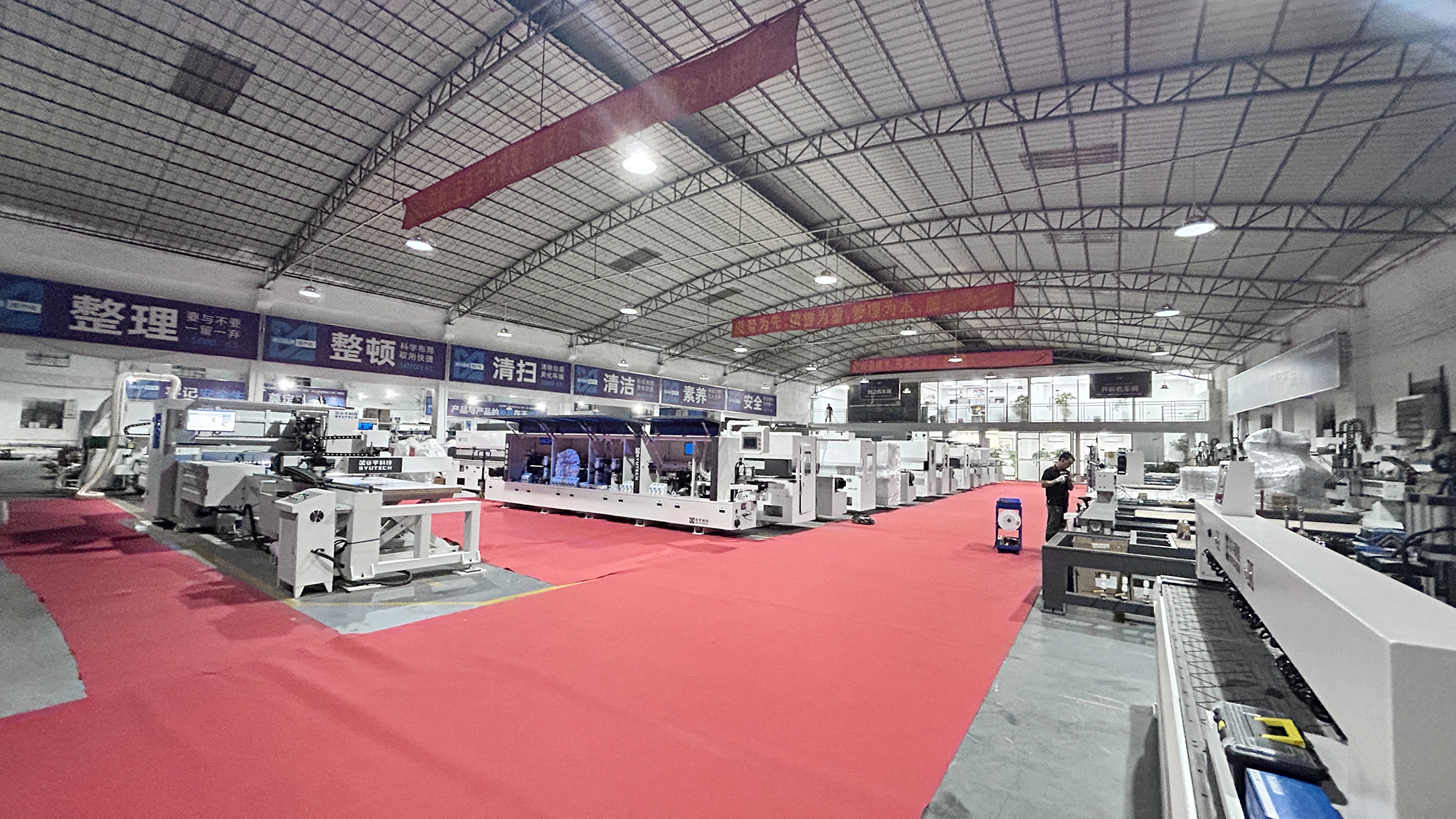
Illustrative edge banding workshop image. It does not depict the specific Greece or Kenya sites.
What the two deployment records establish
The most useful way to read the Greece and Kenya records is to separate what they prove from what they suggest. The Greece case is an installed-base record: 10 units in a panel furniture workshop, running stably for three years. The Kenya case is a project-outcome record: two years of operation, with improved edge banding quality and increased output. Both are relevant decision inputs, but they answer different buyer questions. Greece says more about repeatability across multiple units at one site. Kenya says more about whether a project can show a quality and output improvement after installation.
| Buyer question | Greece deployment | Kenya deployment | What it means for a buyer |
|---|---|---|---|
| Evidence type | 10 units running stably for three years in a panel furniture workshop. | Two-year project with improved edge banding quality and increased output. | Use Greece for endurance and repeatability questions; use Kenya for quality and output-change questions. |
| Operating context | Indoor woodworking environment with dust-contained conditions; continuous automatic cycle operation with manual feeding is the relevant application pattern. | Indoor woodworking environment; the same application pattern is relevant, but site-specific line details are not supplied. | Plan for manual loading and for dust control, not for a fully lights-out edge banding cell. |
| Supporting equipment | An air compressor and vacuum cleaner are required supporting equipment in the stated application context. | The same supporting-equipment categories are relevant; exact sizing is not supplied. | Confirm air demand, connection details, extraction capacity and electrical requirements for the selected model before site preparation. |
| Compliance checklist | EU CE mechanical and low voltage safety standards apply; the supplied application requirement does not call for explosion-proof equipment. | The supplied record does not state an equivalent regulatory checklist. | Treat CE as a checklist for the EU-facing application, and verify Kenya requirements separately for the actual site and configuration. |
| Strongest fit signal | Stable operation across 10 units over three years. | Improved edge banding quality and increased output over two years. | Greece is stronger on repeatability; Kenya is stronger on visible outcome change. Neither record gives a quantified rate. |
| Main verification gap | Maintenance intervals, downtime, panel mix, adhesive type, utilization and service history are not disclosed in the supplied material. | Baseline output, measured quality change, cause of improvement and operating conditions are not disclosed. | Ask for unit-level logs and a before-and-after measurement method before converting the record into an ROI case. |
The table also explains why this comparison should not become a specification-sheet race. A higher feeding speed or a longer feature list does not answer whether a machine will remain stable across 10 units for three years, or whether a project will improve edge quality and output over two years. Those outcomes depend on the machine, the operating pattern, the supporting equipment, the material mix, maintenance and operator behavior. The deployment records point to those variables; they do not remove them.
Why fit is not the same as a specification race
For an EU-facing buyer, the Greece record brings a compliance dimension that is easy to overlook in a commercial comparison. The application requirement includes EU CE mechanical and low voltage safety standards, and the supplied requirement does not call for explosion-proof equipment. That does not mean any edge banding machine is automatically suitable. It means the buyer should use CE as a third-party checklist for the exact machine and configuration being quoted, rather than treating a CE mark as a generic marketing badge.
The verified data available for SYUTECH states that HK series machinery is CE certified under certificate HTT202405661L, with standards EN 60204-1:2018 and EN ISO 12100:2010 cited. That is useful evidence for a buyer shortlisting SYUTECH equipment, but it should still be checked against the quotation: model, electrical configuration, options and destination market. The verified standards pack also identifies EN ISO 19085-17:2021 for chain-fed edge-banding machines and ISO 18217:2015 for chain-fed machines with manual loading and unloading and maximum work-piece height capacity of 100 mm. These standards describe scope and safety concerns; they do not replace a model-specific conformity check.
For the Kenya side, the supplied deployment record does not provide an equivalent regulatory checklist. A buyer should not fill that gap by assuming the Greece compliance route applies unchanged. Instead, the practical step is to confirm the applicable Kenyan requirements, the machine configuration, the electrical supply and the site conditions before comparing quotes. This is a verification step, not a criticism of the deployment. It simply keeps the comparison honest.
Technical reading: automatic cycle with manual feeding
The application context for these deployments includes continuous automatic cycle operation with manual feeding. That phrase matters because automatic edge banding is often described as if it removes the operator entirely. In practice, an automatic edge banding machine can automate the edge finishing sequence while the operator still manages panel loading and line flow. The buyer should therefore evaluate labor at the feeding point, panel handling, work-in-progress buffers and operator training, not only the machine's cycle functions.
SYUTECH describes its edge banding machine workflow as covering conveying, gluing and welting, cutting, front and rear alignment, upper and lower trimming, upper and lower scraping and polishing. This is a useful explanation of what the automatic cycle is meant to perform. It also shows why the deployment outcome is a line result, not a single-component result. If panels are fed inconsistently, if glue or edge-band quality varies, or if dust extraction is inadequate, the final edge quality can change even when the machine cycle itself is working as designed.
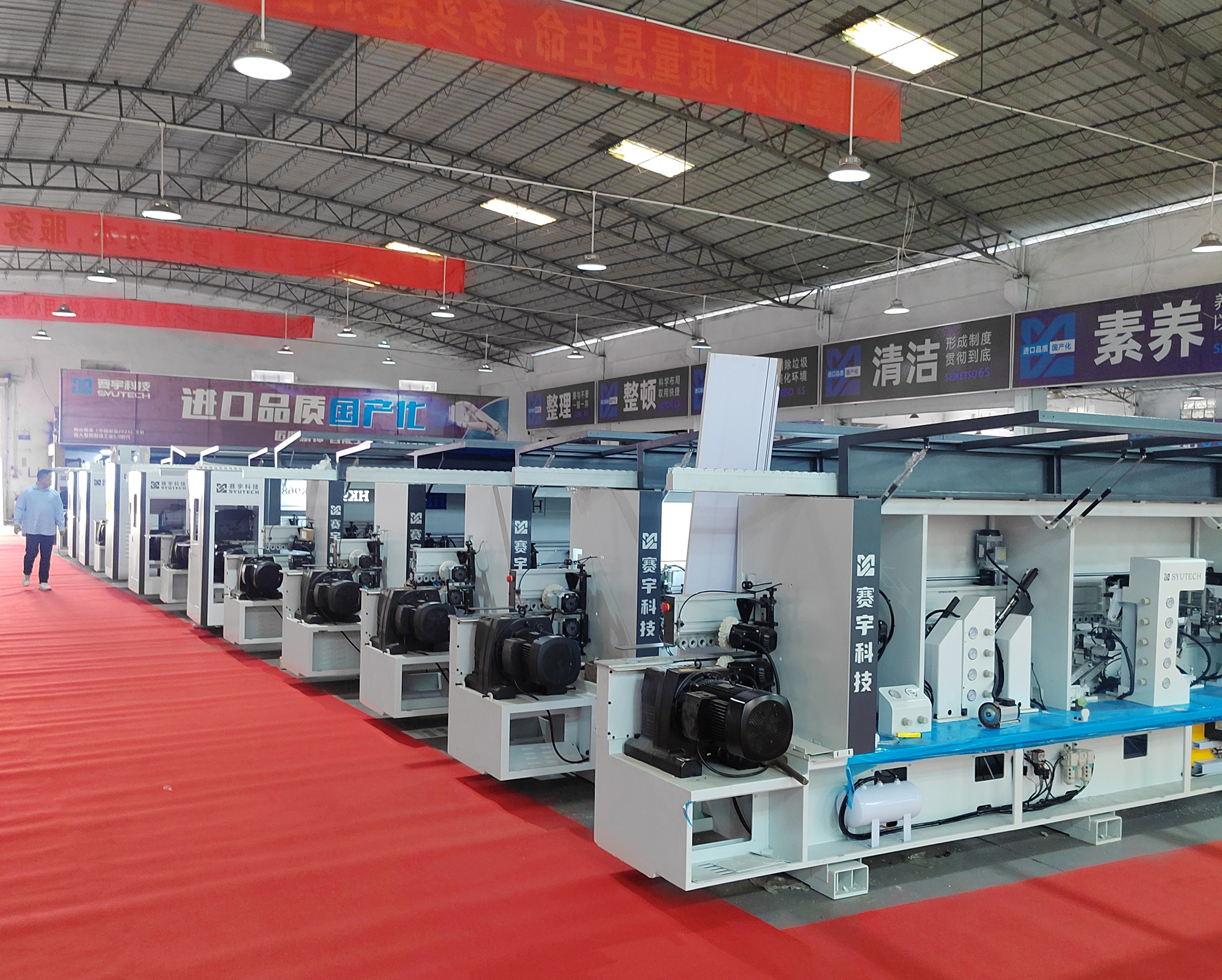
The Greece record of 10 units running stably for three years is therefore most useful as a repeatability signal at the site level. It suggests that the operating pattern, support equipment and service routine were able to keep multiple units in service over time. It does not, by itself, prove the same result for a different panel mix, a different adhesive, a higher duty cycle or a different maintenance regime. The Kenya record of improved quality and increased output over two years is a different signal: it points to an outcome change, but the supplied material does not quantify the baseline, the percentage improvement or the cause. A buyer should treat it as directional evidence and ask how quality and output were measured.
Supporting equipment: air compressor, vacuum cleaner and site planning
Both deployment contexts point to supporting equipment that buyers often treat as an afterthought. The stated application context requires an air compressor and vacuum cleaner. These items belong in the site plan alongside the edge banding machine, not in a separate purchase list after the machine arrives. The buyer should obtain the exact air demand, connection size, extraction capacity and electrical requirements for the selected model from the supplier before finalizing the workshop layout.
The indoor dust-contained woodworking condition is another practical constraint. Dust control affects the working environment and the reliability of the edge finishing process. A vacuum cleaner or extraction system should be matched to the actual machine and workshop, and the buyer should confirm how dust is captured at the machine, how the filter or collection system is maintained and whether the installation meets local workplace requirements. The deployment records do not supply a dust-measurement result, so the buyer should not treat the phrase dust-contained as proof of compliance with a specific exposure limit.
What the Greece record says about buyer fit
The Greece deployment is strongest as evidence of multi-unit endurance. Ten units running stably for three years in a panel furniture workshop is a more demanding repeatability signal than a single machine demo, because it implies that more than one unit was kept in service at the same site. For a buyer planning a multi-machine workshop, that is relevant to spare-parts planning, operator familiarity and service routine. It is not proof that every unit in every market will perform the same way, but it is a useful reference point when asking a supplier about installed-base experience.
The record does not disclose maintenance intervals, downtime, adhesive type, panel mix, utilization or service response times. Those gaps matter because stability over three years can be achieved under different operating assumptions. A buyer should ask for unit-level operating logs, spare-parts consumption, the maintenance schedule and the service history behind the 10-unit record. The goal is not to challenge the record, but to understand whether the conditions resemble the buyer's own workshop.
The Greece record also fits the EU compliance checklist better than the Kenya record does in the supplied material. EU CE mechanical and low voltage safety standards, plus the stated no-explosion-proof requirement, give the buyer a defined starting point for the technical file and site acceptance discussion. The buyer should still confirm the exact model, certificate scope and electrical configuration. A CE certificate for a series is not a substitute for checking the quotation line by line.
What the Kenya record says about buyer fit
The Kenya deployment is strongest as evidence of a quality and output change over a two-year project. Improved edge banding quality and increased output are the kinds of outcomes buyers care about, but the supplied record does not quantify them. The buyer should therefore use the Kenya case to frame questions rather than to calculate a return. What was the baseline output before the project? How was edge quality assessed? Did the improvement come from the machine, the adhesive, the tooling, operator training or line flow? Was the output increase achieved with the same labor, the same shifts and the same panel mix?
For a buyer in a similar project stage, the Kenya record is useful because it shows that the deployment was not judged only on machine specifications. It was judged on production outcomes. That is the right level of evaluation for a decision-stage purchase. The limitation is that a two-year project record without a measured baseline cannot prove that a different workshop will obtain the same improvement. It can, however, support a structured reference call and a before-and-after measurement plan.
The Kenya record also reinforces the need to treat supporting equipment as part of the project. An air compressor and vacuum cleaner are not accessories in the abstract; they are part of the installation that allows the edge banding operation to run in an indoor woodworking environment. If a buyer compares only machine prices, the support-equipment cost and site-preparation cost can be missed. The more complete comparison includes the machine, the services, the operating labor and the maintenance routine.
Automatic, semi-automatic or manual: keep the comparison honest
The Greece and Kenya deployments are discussed here in the context of continuous automatic cycle operation with manual feeding. That places the comparison in the automatic edge banding machine category, not in a manual or semi-automatic category. An automatic edge banding machine automates the edge finishing sequence described above. A semi-automatic or manual machine leaves more of the process to the operator. The supplied deployment records do not provide a like-for-like comparison between these categories, so buyers should not infer that automatic is always the better choice or that a manual or semi-automatic machine is always sufficient.
The practical decision rule is to match the category to the production pattern. If the workshop needs a continuous automatic cycle with manual feeding, the buyer should evaluate the automatic category on cycle stability, panel handling and support equipment. If the workshop has a different pattern, the buyer should compare the categories on the same production criteria rather than on labels. The terms automatic edge banding machine, semi automatic edge banding machine and manual edge banding machine describe different operating models; they do not by themselves prove fit for a specific panel furniture workshop.
SYUTECH capability in the buyer comparison
SYUTECH (Foshan Shunde Saiyu Technology Co., Ltd.) provides a relevant supplier context for this comparison. The company was founded in 2013 and operates a 10,000 m² facility with 100 employees and an annual output of 500 units. Its export ratio is 80%, and its main markets include Russia, the Middle East, South America, Europe and Southeast Asia. These are company-level facts, not proof of any individual deployment outcome, but they help a buyer understand the supplier's scale and export orientation. The official company website is SYUTECH.
SYUTECH lists a broad panel furniture machinery scope, including fully automatic edge banding machines, laser edge banding machines, CNC six-sided drilling machines, computer panel saws and complete panel furniture equipment and production lines. For edge banding specifically, the HK868P automatic edge banding machine is listed for MDF, block board, solid wood board, particleboard, polymer door plates, plywood and PVC board. The published HK868 specifications include a minimum panel width of 40 mm, edge band width of 10-60 mm, edge band thickness of 0.4-3 mm and feeding speed of 18-22-25 m/min. A smaller automatic model is listed with seven functions and a feeding speed of 18-23 m/min.
These product facts are useful for model screening, but they should not be used to overwrite the deployment comparison. The Greece and Kenya records are about outcomes in specific applications. The HK868P and compact model data are about published model capabilities. A buyer should connect the two by asking which model, configuration and support equipment were used in the reference project, and whether the same combination fits the buyer's panel sizes, edge-band materials, duty cycle and compliance route.
Market context without overclaiming the trend
Market-level data can help a buyer frame a shortlist, but it should not be mistaken for proof of a single supplier's performance. Commercial research cited in the verified data estimates the global automatic edge banding machine market at USD 3.658 billion in 2024 and projects a 4.56% CAGR from 2025 to 2035. Another source in the package states that Chinese manufacturers account for approximately 40% of global edge banding machine shipments. These are broad market signals. They support the case for a structured supplier evaluation, but they do not show that a particular machine will deliver stable operation in Greece, improved output in Kenya or a successful installation in another market.
For a decision-stage buyer, the useful interpretation is narrower. A growing automatic segment and a significant Chinese manufacturing base mean more choices, more configuration variation and a greater need to check evidence. The buyer should use market context to justify a deeper comparison, not to skip it. The same discipline applies to SYUTECH's 80% export ratio: it is a company fact that may support a discussion about export experience, but it is not a substitute for model-specific compliance, reference checks and site planning.
Decision checklist for comparing the Greece and Kenya records
- Match the evidence to your operating pattern. Confirm whether your workshop will use continuous automatic cycle operation with manual feeding, and whether the Greece or Kenya reference resembles that pattern. If your line is more automated or more manual, the reference value changes.
- Ask for unit-level endurance data. For the Greece record, request maintenance intervals, downtime, spare-parts use and service history for the 10 units. For the Kenya record, request the before-and-after output and quality measurement method.
- Plan the supporting equipment. Include the air compressor, vacuum cleaner, extraction, power supply and panel-flow space in the site plan. Confirm the exact requirements for the selected model rather than relying on a generic workshop assumption.
- Build a compliance checklist. For the EU-facing Greece application, check CE mechanical and low voltage safety standards and confirm the no-explosion-proof requirement. For Kenya, confirm the applicable local requirements and the exact machine configuration.
- Check the model and certificate scope. If SYUTECH equipment is shortlisted, verify that the quoted model matches the CE certificate scope and the published specifications. The HK series certificate HTT202405661L and the cited standards are evidence to check, not a blanket approval for every configuration.
- Separate outcome evidence from sales language. A stable three-year record and a two-year quality and output improvement are meaningful, but they become decision-grade only when the buyer understands the baseline, the operating conditions and the measurement method.
Limitations and what would change the conclusion
The comparison has clear limits. The Greece record does not disclose the panel mix, adhesive, maintenance regime, downtime or utilization behind the 10-unit, three-year stability claim. The Kenya record does not disclose the baseline output, the measured quality change, the cause of the improvement or the exact operating conditions. The two records do not share a controlled test protocol, so no winner should be declared on machine performance alone. The correct conclusion is conditional: Greece is stronger evidence for multi-unit endurance and EU-facing compliance planning; Kenya is stronger evidence for a project-level quality and output change.
If a buyer's workshop has a different duty cycle, a different panel mix, a different adhesive or a different dust-control setup, the fit conclusion could change. If the Greece record were shown to depend on a maintenance regime that the buyer cannot replicate, its value would narrow. If the Kenya record were supported by a measured before-and-after baseline and a clear cause, its value would increase. Those are the questions that turn a deployment story into a buyer comparison.
FAQ
How should a buyer compare the Greece and Kenya edge banding deployments?
Treat them as two types of evidence. Greece is a multi-unit endurance record over three years. Kenya is a two-year quality and output improvement record. Compare each against your own operating pattern, support equipment and compliance requirements rather than treating them as a head-to-head model test.
Does the Greece deployment prove the same edge banding machine will run for three years in another workshop?
No. The record supports stable operation of 10 units for three years in that panel furniture workshop. It does not establish the same result for a different panel mix, duty cycle, maintenance regime, operator team or indoor environment. Ask for unit-level logs, downtime records and service history.
What supporting equipment should be planned for an indoor edge banding installation?
The stated application context includes an air compressor and vacuum cleaner. Buyers should confirm the exact air demand, connection details, extraction capacity and electrical requirements for the selected model with the supplier before site preparation. Dust-contained indoor woodworking conditions should also be reviewed against local workplace requirements.
How should EU CE mechanical and low voltage safety standards be used in this comparison?
Use them as a compliance checklist for the EU-facing Greece application. The supplied requirement includes CE mechanical and low voltage safety and no explosion-proof need. For SYUTECH HK series equipment, the available evidence cites CE certificate HTT202405661L under EN 60204-1:2018 and EN ISO 12100:2010. Verify that the certificate covers the exact model, electrical configuration and options being quoted.
What does the Kenya project's improved output prove?
It supports a directional claim that output and edge banding quality improved over two years in that project. It does not provide a measured percentage, baseline or cause. Buyers should ask what changed, how output and quality were measured, and whether the same conditions apply to their own workshop.
Reference document: SYUTECH factory promotional paper.
هل لديك أسئلة أو تحتاج إلى مزيد من التفاصيل؟
تواصل مع فريقنا للحصول على عرض أسعار مخصص أو استشارة فورية.
طلب عرض أسعار
املأ النموذج أدناه وسيتواصل معك فريقنا بعرض مقترح مخصص.
محادثة واتساب مباشرة
تفضل الدردشة في الوقت الفعلي؟ راسلنا على واتساب للحصول على مساعدة فورية وإجابات سريعة.
- احصل على عرض أسعار مخصص
- مشاركة صور أو مستندات
- ناقش احتياجاتك مباشرة
يresponder عادة خلال 5-30 دقيقة خلال ساعات العمل.