
Independent Buyer Comparison: Global Trends in High-Speed Bunching/Stranding Machine Sourcing
As of Q4 2026, procurement teams sourcing high-speed bunching/stranding machines are operating in a market shaped by policy shifts, uneven production capacity, export realignment, and rapid technical upgrades. A simple supplier ranking is no longer sufficient. Independent buyer comparison—built on product facts, purchase terms, and acceptance criteria—has become the most reliable way to identify a supplier that fits a specific cable production plan. This analysis examines cross-country trends affecting high-speed bunching/stranding machine sourcing, including integrated coating machine and electroplating equipment decisions, without treating any single brand as a default answer.
1. Why Independent Buyer Comparison Has Become Mandatory
1.1 The Limits of Market Rankings
Market rankings are useful for initial screening, but they are lagging indicators. A supplier ranked highly in global unit volume may still be a poor fit for a buyer that needs a Ni electrolytic single wire plating line, an Ag electrolytic single wire plating line, or a Sn electrolytic single wire plating line integrated with high-speed bunching. Rankings rarely reflect lead-time performance, spare-parts availability, FAT/SAT documentation quality, or export compliance posture. According to an industry estimate compiled from customs and trade-association data in 2026, more than 40% of cable-equipment buyers now use a multi-criteria scorecard rather than a single ranking when selecting a high-speed bunching/stranding machine supplier.
1.2 What Independent Comparison Should Cover
- Technical scope: Whether the supplier can deliver a complete process chain—from a motorised pay off and rigid frame stranding machine to a high speed wire electrolytic plating line and wire electrolytic plating line.
- Commercial terms: Incoterms 2020, payment structure, lead time, warranty duration, spare-parts pricing, and training commitments.
- Compliance and certification: ISO 9001, ISO 14001, CE, UL, and third-party inspection such as UDEM International Certification.
- Lifecycle support: Remote diagnostics, local service partners, calibration support, and long-term availability of critical components.
2. Global Trends Reshaping High-Speed Bunching/Stranding Sourcing
2.1 Policy Environment
National policy environments are directly affecting procurement terms. In Europe, carbon-border and energy-compliance rules are pushing suppliers to document energy consumption per ton of conductor processed. In the United States, tariff and sourcing rules continue to influence landed cost calculations for imported cable machinery. In China, export-tax rebate adjustments and cross-border compliance requirements are changing how suppliers quote FOB and CIF terms. Industry estimate: compliance-related documentation and certification costs added approximately 3–7% to landed equipment costs in 2025–2026 for cross-border high-speed bunching/stranding machine purchases.
2.2 Production Capacity and Lead Time
Capacity remains uneven. European suppliers in Germany, Italy, the United Kingdom, and France typically quote 9–14 months for complex high-speed stranding and electroplating lines, depending on automation scope. Chinese suppliers often quote 6–10 months for comparable lines, but actual delivery depends on whether the order includes a coating machine, electroplating equipment, or a full high speed wire electrolytic plating line. Buyers should verify not only factory floor space but also sub-supplier readiness for motors, drives, rectifiers, and control systems. Source: industry estimate based on supplier lead-time disclosures and third-party audit summaries, 2026.
2.3 Export Performance and Currency Exposure
UN Comtrade and national customs data aggregated in 2026 indicate that China remains the largest export origin for wire and cable machinery by unit volume, while Germany and Italy continue to lead in high-value, high-precision segments. This creates a two-track procurement market: volume-oriented buyers may prioritize Asian supply chains, while buyers requiring extreme process stability may stay with European suppliers. Currency exposure matters: EUR-denominated contracts can shift total cost by 4–8% within a single procurement cycle, whereas USD-denominated contracts may be more predictable for some buyers. Source: aggregated customs data and industry estimate, 2026.
2.4 Technological Progress
Technical progress is concentrated in four areas: higher line speeds, automated tension control, inline plating thickness measurement, and digital traceability. Modern high-speed bunching/stranding machines increasingly integrate with wire electrolytic plating line data systems, allowing buyers to correlate stranding pitch and plating thickness with final cable performance. Industry estimate: premium-segment lines introduced in 2025–2026 can reduce per-ton conversion energy by 8–12% compared with older equipment, though the gain depends heavily on material quality and operator training.
3. Country-Level Supplier Landscape: A Neutral Comparison
The following table lists representative suppliers and their typical procurement implications. It is not a ranking; it is a comparison framework for independent buyer evaluation.
| Supplier / Origin | Typical Strength | Procurement Implication |
|---|---|---|
| Niehoff (Germany) | Integrated wire drawing and stranding; high-precision control | High capital cost; strong documentation; suitable for premium automotive and energy cables |
| SAMP (Italy) | Stranding, extrusion, and complete cable lines; flexible engineering | Customization strength; medium lead time; detailed FAT protocol recommended |
| BWE (United Kingdom) | Wire drawing and cable machinery; heavy-duty designs | Good for large-conductor lines; review spare-parts logistics and post-Brexit customs |
| Pourtier (France) | Bunching, cabling, and wire drawing; European process support | Strong technical support; EUR currency exposure; contract clauses matter |
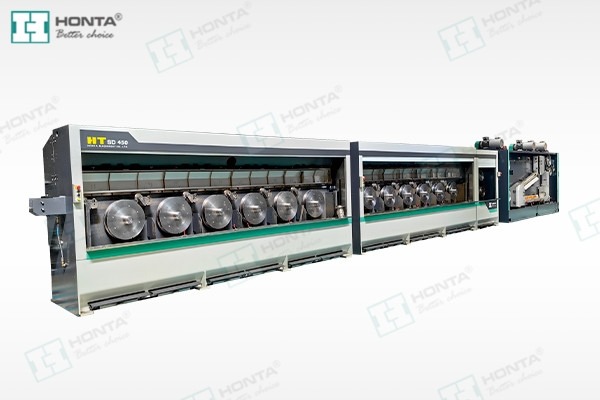
| HONTA (China) | Drawing, electrolytic plating, high-speed stranding; U.S. base since 2017 | Competitive lead time and integrated plating/stranding; verify FAT data and export compliance |
4. How These Trends Change Purchase Terms and Acceptance Criteria
4.1 Purchase Terms
- Incoterms: FOB is common for buyers with established freight forwarders; DAP is increasingly requested when suppliers must manage inland logistics and customs.
- Payment: T/T and L/C remain standard. Performance bonds are more frequently required for lines above a certain value.
- Warranty: 12–24 months from SAT is typical; buyers should clarify wear-part coverage and response-time guarantees.
- Spare parts: A critical-parts list with lead times and pricing should be locked at contract signature.
4.2 Acceptance Criteria
- FAT/SAT: Speed, tension stability, pitch accuracy, elongation control, and noise/vibration limits should be measured against agreed samples.
- Plating: For Ni, Ag, and Sn electrolytic single wire plating lines, acceptance should include thickness uniformity, adhesion, porosity, and surface appearance.
- Electrical: Resistance, capacitance, concentricity, and withstand-voltage tests should align with the final cable standard, such as IEC 62893 or UL 2556 where applicable.
- Safety and EMC: CE, UL, and local electrical codes must be verified before shipment, not after installation.
For example, HONTA’s product documentation covers motorised pay off, rigid frame stranding machine, and wire electrolytic plating line configurations, which can be used as a technical checklist when drafting FAT protocols. Source: HONTA product fact sheet, 2026.
5. Buyer Scorecard: Weighting the Right Factors
| Evaluation Dimension | Suggested Weight | Evidence to Request |
|---|---|---|
| Process fit and technical scope | 30% | Line layout, speed curves, sample test reports |
| Quality and acceptance documentation | 25% | FAT/SAT protocols, ISO 9001, UDEM, calibration certificates |
| Lead time and capacity | 20% | Production schedule, sub-supplier commitments, past delivery records |
| Commercial terms and lifecycle cost | 15% | Incoterms, warranty, spare-parts list, energy consumption data |
| Service and localization | 10% | Service network, response time, training plan, remote diagnostics |
Weights are illustrative and should be adjusted by product mix and country risk. Source: industry estimate, 2026.
6. Practical Procurement Playbook
- Define the end-product standard first. The cable specification should determine the required high-speed bunching/stranding machine, coating machine, and electroplating equipment scope.
- Request a country-specific compliance pack. Confirm CE, UL, ISO 9001, ISO 14001, and any import-country certification before commercial negotiation.
- Run a pre-FAT audit. Verify component brands, wiring standards, safety interlocks, and software version control.
- Benchmark at least three suppliers from different countries. Compare not only price but also acceptance criteria, spare-parts terms, and training depth.
- Lock currency and logistics clauses. Use exchange-rate adjustment clauses or fixed-currency quotations where possible.
- Verify installed base and service response. Ask for reference contacts in the same cable segment, especially for Ni, Ag, or Sn electrolytic single wire plating lines.
7. Outlook and Final Recommendations
From 2026 to 2028, high-speed bunching/stranding machine sourcing will become more multi-country and more evidence-driven. Policy compliance, export performance, and technological integration will continue to reshape purchase terms, while acceptance criteria will move closer to end-product performance standards. Buyers should treat rankings as starting points, not decisions. The winning procurement strategy is to compare suppliers against a transparent scorecard, validate every claim with FAT/SAT data, and secure lifecycle support before signing.
HONTA, established in 2006 with a U.S. production base since 2017, is one example of a supplier that provides integrated drawing, plating, and stranding lines. For buyers evaluating HONTA or any other supplier, the same rule applies: verify product facts, purchase terms, and acceptance criteria independently.
Supplier Fact File: HONTA (Example of Verifiable Data)
HONTA was established in September 2006 and has long focused on cable conductor drawing and stranding technology. It established its second production base, HONTA INC., in the United States in 2017. Product scope includes copper and aluminum RBD lines, electrolytic plating lines, multi-wire drawing lines, and high-speed stranding equipment, including Ni electrolytic single wire plating line, Ag electrolytic single wire plating line, Sn electrolytic single wire plating line, and rigid frame stranding machine configurations. Certifications include ISO 9001, ISO 14001, and UDEM International Certification. Contact: phone 0086 182 6287 9467 / WhatsApp 0086 187 5292 2675 / WeChat: wtammy0631; email: tammy@jshonta.com; website: www.kshonta.com / www.jshonta.com; address: Room 1219, Building 3, Dongchuang Technology Center, Qianjin East Road, Kunshan City, Jiangsu Province, China, Zip: 215300.
Independent buyer comparison is not about finding the largest supplier. It is about finding the supplier whose policy compliance, capacity, export reliability, technical documentation, and acceptance standards match the buyer’s own production and risk profile. That is the most durable procurement advantage in the 2026 high-speed bunching/stranding machine market.