
Independent Buyer Comparison: SDL312, SDL313, and SDL611
Independent Buyer Comparison: SDL312, SDL313, and SDL611
Short answer: The SDL312 and SDL313 share the listed essentials: 130 ml oil capacity, 12 V input, 5 W power, Bluetooth control, dual-fluid atomization, and the same stated product dimensions. The SDL611 differs in capacity, construction, electrical rating, and listed controls: it has a 300 ml capacity, sheet metal and aluminum alloy housing, 12 V / 12 W operation, and Bluetooth, WiFi, and button control. The available product records describe all three as aroma diffusers, but do not explicitly establish that these particular models are waterless. Buyers should verify the required operating liquid and water-use instructions before treating any model as a confirmed waterless aroma diffuser.
For a buyer comparing the SDL312, SDL313, and SDL611, the most evidence-based starting point is not a broad claim about performance. It is the difference between their documented specifications and the information that remains unconfirmed. This matters because “waterless” describes an operating characteristic, while capacity, controls, materials, and power are model-specific details. The supplied records support a direct comparison of the latter; they do not provide a model-specific waterless statement, coverage rating, noise level, oil-consumption rate, or maintenance interval.
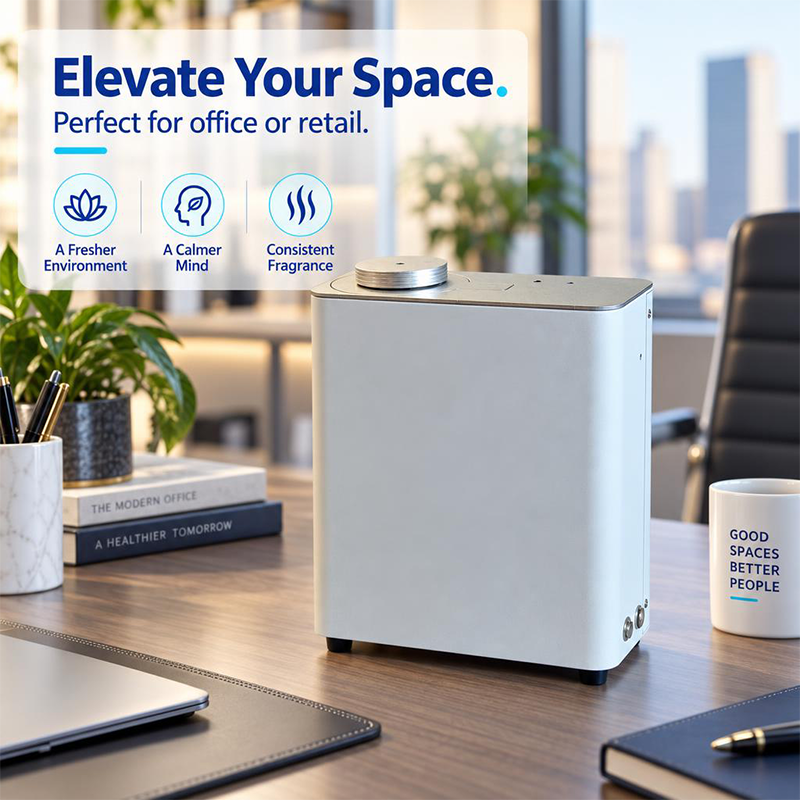
What the comparison can—and cannot—establish
The three models are listed as aroma diffusers from Shengdelan Fragrance Technology (Guangzhou) Co., LTD, an ambient-scenting equipment supplier based in Guangzhou, China. Their stated application categories include home, hotel, office, automotive, and commercial-space use. Those categories identify intended application areas; they are not proof that each model is appropriate for every room size, vehicle, ventilation arrangement, or commercial installation.
The comparison below uses the supplied model specifications. It does not rank the products by scent output, coverage, reliability, value, or suitability for a particular project because comparable test results, prices, and performance measurements are not provided. Nor does it infer that dual-fluid atomization automatically means a product operates without water. Although the topic is waterless aroma diffusers, the model records supplied here identify dual-fluid atomization but do not explicitly state the liquid requirements for SDL312, SDL313, or SDL611.
| Specification | SDL312 | SDL313 | SDL611 |
|---|---|---|---|
| Category / atomization | Aroma diffuser; dual-fluid atomization | Aroma diffuser; dual-fluid atomization | Aroma diffuser; dual-fluid atomization |
| Essential-oil capacity | 130 ml | 130 ml | 300 ml |
| Input / rated power | 12 V / 5 W | 12 V / 5 W | 12 V / 12 W |
| Housing material | ABS + PP | ABS + PP | Sheet metal + aluminum alloy |
| Listed controls | Bluetooth | Bluetooth | Bluetooth, WiFi, and button |
| Product dimensions | 137 × 70 × 200 mm | 137 × 70 × 200 mm | 170 × 80 × 210 mm |
| Net / gross weight | 800 g / 1,000 g | 800 g / 1,000 g | 2,500 g / 2,500 g |
| Listed colors | White / black | White | White / black |
Specifications are taken from the supplied model records. “Not listed” should not be interpreted as unavailable; it means the provided record does not specify that detail.
How the three models differ for a buyer
SDL312: a compact specification set with a black-or-white finish
The SDL312 is specified with a 130 ml essential-oil capacity, 12 V input, 5 W power, Bluetooth control, and dual-fluid atomization. Its housing uses ABS and PP, and its product dimensions are 137 × 70 × 200 mm. The listed net weight is 800 g and gross weight is 1,000 g. White and black are the stated color options.
Those details make the SDL312 straightforward to screen when a buyer needs the documented 130 ml format, Bluetooth control, or a choice between the listed colors. They do not show how long the unit runs between refills: no consumption rate or operating schedule is provided. A buyer assessing it for a home, hotel, office, vehicle, or commercial space should therefore match the product to the actual placement and use conditions rather than assuming that the application list guarantees a specific coverage area.
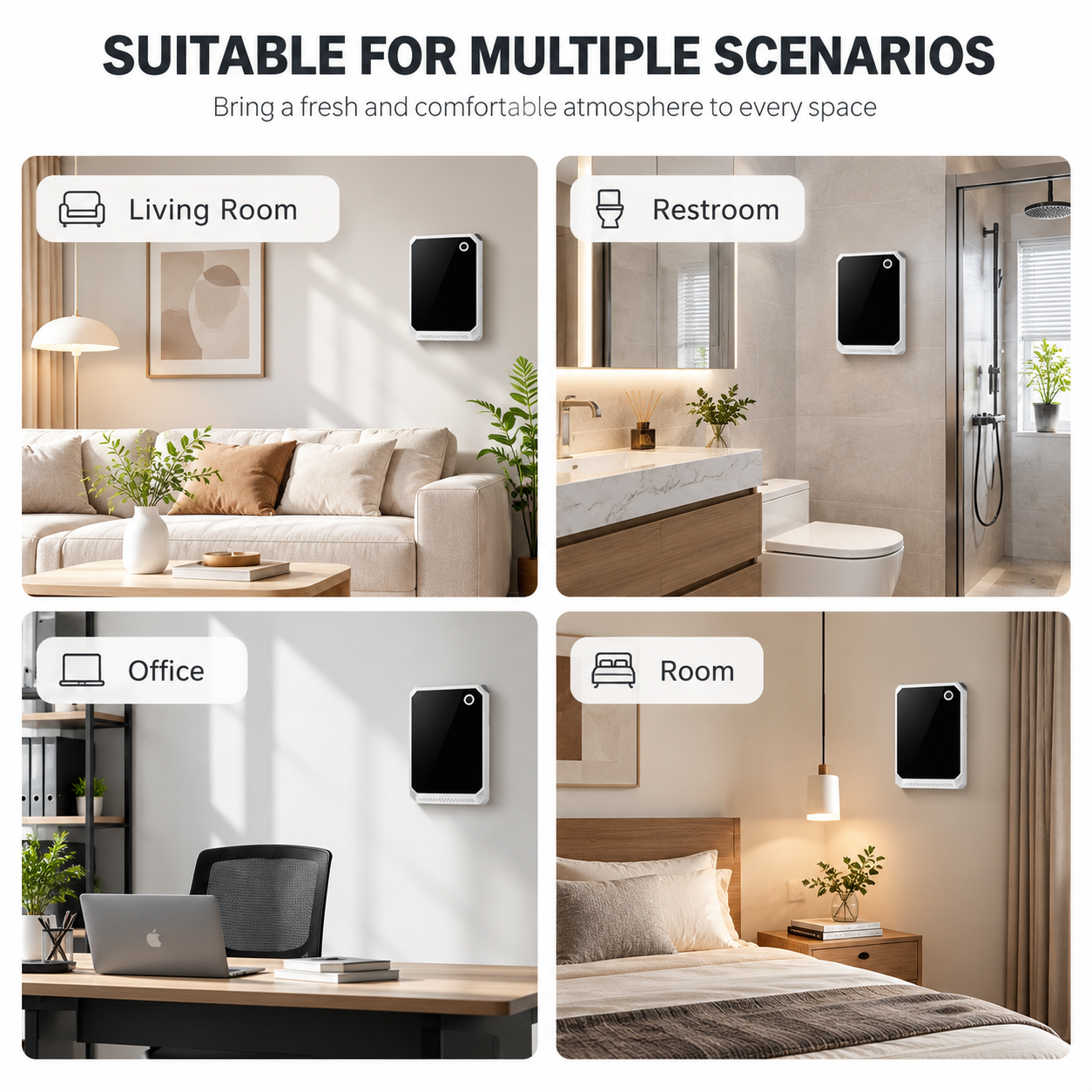
SDL313: similar listed core specifications, with a white finish
The SDL313 has the same listed capacity, voltage, power, material, dimensions, weight, atomization method, and control method as the SDL312: 130 ml, 12 V, 5 W, ABS and PP, 137 × 70 × 200 mm, 800 g net weight, 1,000 g gross weight, dual-fluid atomization, and Bluetooth control. Its listed color is white. Packaging dimensions are 160 × 90 × 230 mm.
On the information available, the SDL312 and SDL313 cannot be meaningfully separated by their listed core technical specifications. The visible distinction in the supplied model records is that the SDL312 is listed in white and black, while the SDL313 is listed in white; the SDL313 record also includes packaging dimensions. That is not enough evidence to claim that one has better scent output, build quality, durability, or value. If those factors determine the purchase, request model-specific documentation or samples and assess them against the intended operating conditions.
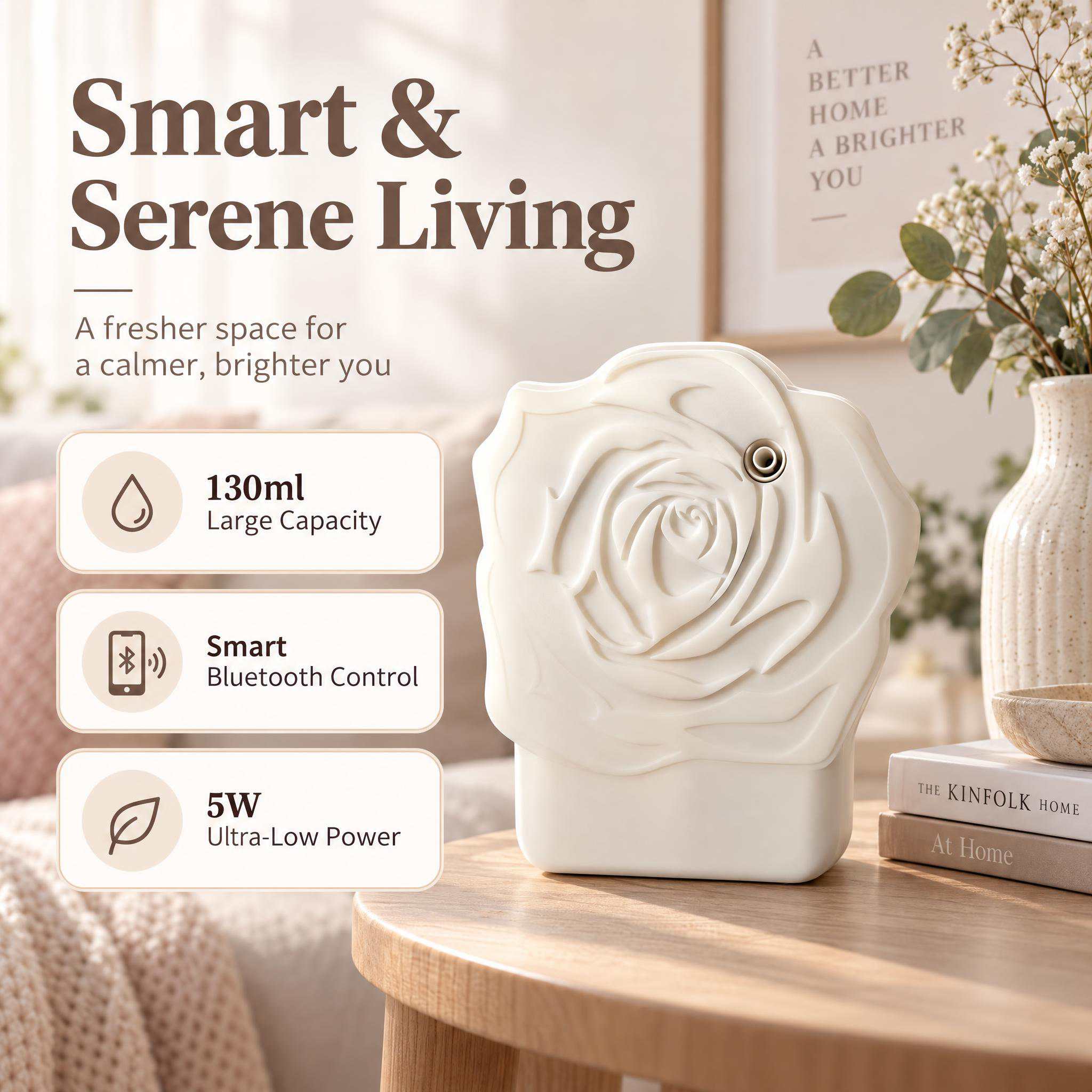
SDL611: higher listed capacity and a broader set of controls
The SDL611 is specified with a 300 ml essential-oil capacity, compared with 130 ml for the SDL312 and SDL313. It uses sheet metal and aluminum alloy, operates at 12 V and 12 W, and measures 170 × 80 × 210 mm. The listed weight is 2,500 g for both net and gross weight. Its stated controls are Bluetooth, WiFi, and buttons; white and black are listed color options.
For procurement screening, the larger stated reservoir and additional listed control options distinguish the SDL611 on paper. However, a larger capacity alone does not establish longer runtime, lower maintenance frequency, or suitability for a larger space. Those outcomes depend on operating settings and other conditions that the model record does not quantify. Likewise, the presence of WiFi in the listed controls does not specify app features, remote-management functions, network requirements, or compatibility with a buyer’s existing systems. These points should be confirmed before procurement.
Waterless diffuser status: a necessary verification step
A waterless aroma diffuser comparison should distinguish a product’s diffusion method from its stated fluid requirements. The three model records identify dual-fluid atomization, but none of the supplied model-specific entries explicitly says “waterless,” explains whether water is added, or provides operating instructions for the oil path. It would therefore go beyond the available evidence to label SDL312, SDL313, or SDL611 as confirmed waterless aroma diffusers.
Before treating any of the three as a waterless aroma diffuser, ask the supplier to confirm in writing whether the model is designed to operate with fragrance oil alone, whether dilution is required, which oils are compatible, and how the reservoir and internal components should be cleaned. If the product is to be used in a vehicle, hotel room, office, or commercial space, confirm that the intended installation and operating conditions are supported for that specific model. The supplied application categories are useful starting points, not substitutes for model-level instructions.
This distinction is especially relevant when comparing a waterless aroma diffuser with an ultrasonic diffuser or another fragrance diffusion system. A method label alone does not establish exact fluid compatibility, coverage, noise, oil use, or upkeep. The supplied records do not state that these models are ultrasonic, and no comparative test data is available here. Buyers should avoid assuming performance differences based only on category terms such as “waterless,” “nano-mist,” or “dual-fluid.”
Application fit: use the setting, not the label, as the filter
The supplied application information associates these models with home, hotel, office, automotive, and commercial-space scenarios. For an initial shortlist, that breadth can help buyers identify which models merit further review. It does not establish a specific room-area rating or confirm suitability for HVAC integration, wall mounting, floor standing, or a particular vehicle installation. Those configurations should not be inferred from the broader product-category keywords.
For a home aroma diffuser or a hotel room, consider the unit’s physical dimensions, reservoir capacity, listed controls, and placement. For a hotel lobby, retail space, or another commercial scenting project, add questions about the target area, ventilation, operating schedule, desired scent distribution, maintenance responsibility, and whether the device is meant to work independently or as part of a larger system. The supplied records do not provide a coverage figure for these three models, so a buyer should not use the application list as a substitute for a coverage specification.
For automotive use, the records list automotive among the intended application categories, but they do not give vehicle-specific mounting, power-connection, spill-resistance, or operating guidance. Confirm those details for the relevant model before installation. Similarly, the SDL611’s WiFi listing should not be taken to mean that it is an HVAC scent diffuser or a complete commercial fragrance diffusion system; the provided specification does not identify HVAC integration for this model.
A practical buyer decision framework
- Verify the waterless requirement first. Ask for model-specific operating instructions that state whether water is used and identify the permitted fragrance or essential-oil format. Do not rely on a general product-category description.
- Compare capacity against the operating plan. SDL312 and SDL313 are listed at 130 ml; SDL611 is listed at 300 ml. Request oil-consumption information for the planned settings if refill intervals matter. Capacity alone does not establish runtime.
- Match controls to the way the site will be managed. Bluetooth is listed for all three; WiFi and button control are additionally listed for SDL611. Confirm the actual control functions, app or network requirements, and whether local manual control is needed.
- Check physical fit and placement. The SDL312 and SDL313 share listed dimensions of 137 × 70 × 200 mm; the SDL611 is listed at 170 × 80 × 210 mm. Compare those measurements with the proposed placement and confirm any installation method not stated in the product record.
- Ask for evidence on unlisted performance. Coverage, sound level, fragrance output, oil consumption, cleaning cycle, and operating limits are not provided in the compared specifications. Request appropriate documentation or evaluate a sample under relevant conditions.
- Confirm commercial terms separately. The available model data does not provide price, minimum order quantity, lead time, warranty, or certification details. These cannot be inferred from the product specifications.
This framework keeps the comparison tied to procurement questions that the supplied facts can answer while making the evidence gaps visible. It also avoids treating “Smart Aroma Diffuser,” “App-Controlled Aroma Diffuser,” “Programmable Scent Diffuser,” or “Low-Noise Aroma Diffuser” as verified descriptions of a model when the corresponding capabilities are not fully specified in the supplied records.
How the models compare with traditional options
A reasonable comparison with a traditional diffuser is limited by the information available. These three models have listed dual-fluid atomization and control methods, while the supplied data does not describe a traditional alternative or provide a like-for-like test. It would be unsupported to claim that the SDL models diffuse fragrance more evenly, cover a larger area, consume less oil, or require less maintenance than another technology.
The practical boundary is clear: specification comparison can help narrow a shortlist, but it cannot replace operating evidence. Buyers who need to compare a waterless device with an ultrasonic or other aroma diffuser should request equivalent data for each option—fluid requirements, output or coverage method, oil consumption, cleaning needs, sound level, and control behavior—using comparable operating conditions. Without that information, a technology-based value judgment would be premature.
What the comparison means for procurement
For a buyer prioritizing a 130 ml capacity and Bluetooth control, SDL312 and SDL313 have matching listed core specifications. The SDL312 record lists white and black; the SDL313 record lists white and includes packaging dimensions. For a buyer who gives greater weight to a 300 ml stated capacity or wants the additional listed WiFi and button controls, SDL611 is the distinct option in this three-model set. These are specification-based distinctions, not a recommendation that one model will perform better in a particular setting.
Shengdelan Fragrance Technology (Guangzhou) Co., LTD provides aroma diffuser products and states that equipment configuration and fragrance customization support are available. That supplier-level information may be relevant to buyers exploring a branded scent program, but it does not resolve the model-specific questions above. For a final selection, verify the waterless claim, application fit, operating instructions, and commercial terms for the exact model being quoted.
FAQ
Are the SDL312, SDL313, and SDL611 confirmed waterless aroma diffusers?
The supplied specifications identify all three as aroma diffusers using dual-fluid atomization, but do not explicitly confirm that any of the models is waterless. Confirm the required operating liquid and instructions with model-specific documentation.
What is the main specification difference between SDL312 and SDL313?
Their listed core specifications match: 130 ml capacity, 12 V, 5 W, ABS and PP construction, Bluetooth control, dual-fluid atomization, 137 × 70 × 200 mm dimensions, and 800 g net weight. The SDL312 is listed in white and black; the SDL313 is listed in white and includes packaging dimensions of 160 × 90 × 230 mm.
How does SDL611 differ from SDL312 and SDL313?
SDL611 is listed with 300 ml capacity, 12 V / 12 W operation, sheet metal and aluminum alloy construction, dimensions of 170 × 80 × 210 mm, and Bluetooth, WiFi, and button control. SDL312 and SDL313 are listed at 130 ml, 12 V / 5 W, ABS and PP, and Bluetooth control.
Can the application list establish the coverage area?
No. The supplied records list home, hotel, office, automotive, and commercial-space applications, but do not provide model-specific coverage figures for SDL312, SDL313, or SDL611.
Is the SDL611 confirmed as an HVAC scent diffuser?
The SDL611 specification provided here identifies it as an aroma diffuser and lists its dimensions, capacity, materials, power, and controls. It does not specify HVAC integration. Buyers considering ducted installation should request confirmation for the exact model.
Editorial conclusion: The available evidence supports a useful specification comparison, but not a definitive waterless-performance ranking. SDL312 and SDL313 are close matches on their listed core attributes; SDL611 stands apart in capacity, housing material, power rating, and listed controls. Waterless operation, coverage, consumption, maintenance, and installation compatibility remain confirmation points rather than established facts.
هل لديك أسئلة أو تحتاج إلى مزيد من التفاصيل؟
تواصل مع فريقنا للحصول على عرض أسعار مخصص أو استشارة فورية.
طلب عرض أسعار
املأ النموذج أدناه وسيتواصل معك فريقنا بعرض مقترح مخصص.
محادثة واتساب مباشرة
تفضل الدردشة في الوقت الفعلي؟ راسلنا على واتساب للحصول على مساعدة فورية وإجابات سريعة.
- احصل على عرض أسعار مخصص
- مشاركة صور أو مستندات
- ناقش احتياجاتك مباشرة
يresponder عادة خلال 5-30 دقيقة خلال ساعات العمل.