
Independent Buyer Comparison: Shanghai Lifestyle Hotel Event Metrics Evidence
Independent Buyer Comparison: Shanghai Lifestyle Hotel Event Metrics Evidence
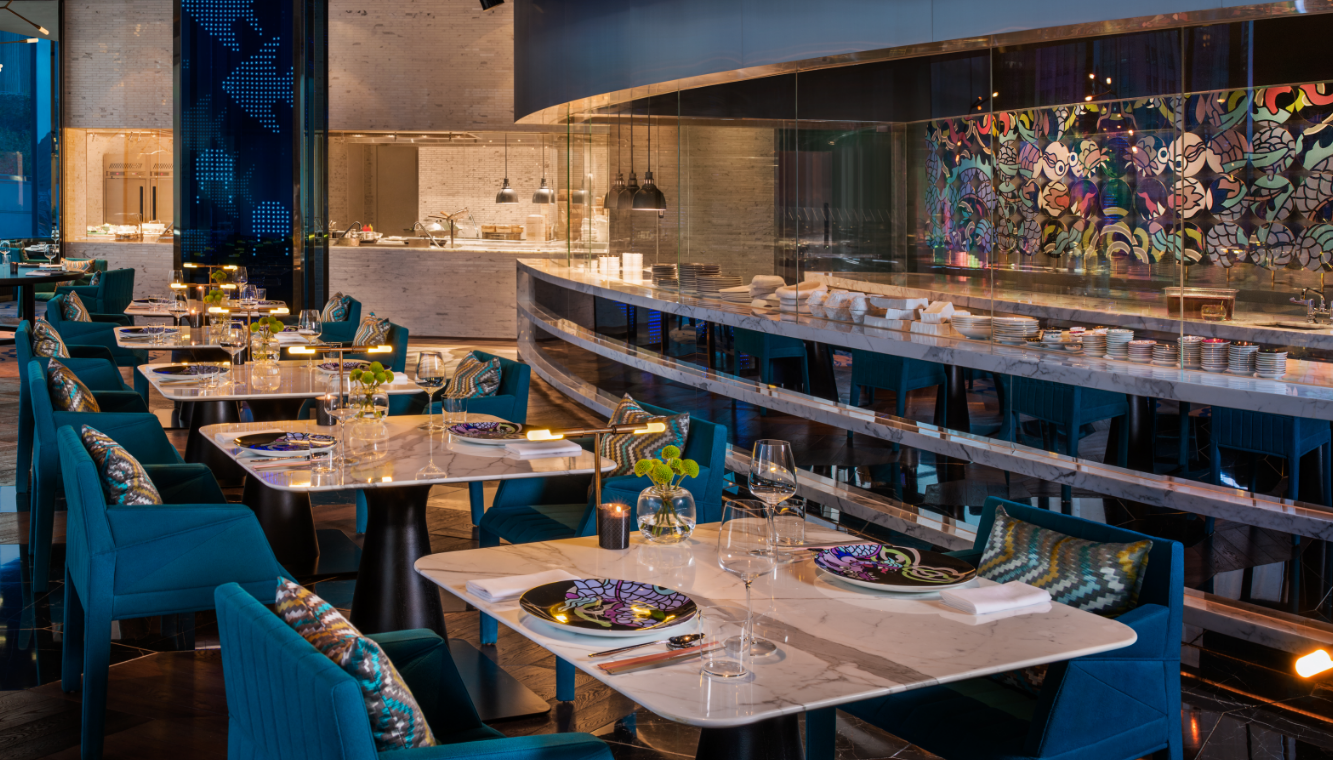
Restaurant setting at W Shanghai - The Bund. Image supplied by the property.
A practical comparison of a Bund skyline hotel for events or a stylish Shanghai stay should begin with evidence, not atmosphere. W Shanghai - The Bund is a design-led luxury lifestyle hotel on Shanghai’s North Bund, part of W Hotels and Marriott International. Its property-reported offer includes 374 guest rooms and suites, over 5,800 sqm of event space, a Great Room of approximately 2,050 sqm, five restaurants and bars, WET pool facilities, FIT fitness centre and AWAY Spa. The hotel also reports Bund-view rooms, Huangpu River panoramas and skyline-facing social and event venues. Those are relevant selection facts. They are not proof of event delivery performance, and the available public material does not disclose property results for the three event-related metrics examined here.
This comparison is independent in method: it separates property-reported facts, documented metric definitions and performance claims that would require evidence. For a decision-stage buyer, the useful question is not whether a skyline view is memorable. It is which claims can be verified before a contract, which can be checked during delivery and which remain undisclosed.
Why event metrics matter in a Bund skyline hotel comparison
A Bund or Huangpu River view can narrow a shortlist, but it does not answer the operational questions that determine whether an event or group stay works. A buyer still needs to know how quickly a qualified inquiry receives a substantive response, how contracted event milestones are tracked and how individual guest requests are resolved after arrival. These questions become more important when the booking combines rooms, dining, a venue and multiple service handoffs.
W Shanghai - The Bund sits on the North Bund and is positioned around views toward the Huangpu River and the Lujiazui skyline. The property reports Bund-view rooms and a WET Deck with a Shanghai skyline view, and its official events page describes a fifth-floor rooftop Secret Garden with Pudong skyline views, two luxury cabanas and an al-fresco dining deck. These features support view-led venue screening. They do not, by themselves, establish schedule discipline, response speed or service recovery. A buyer should treat the view as one criterion and the metrics as another.
The property facts a buyer can verify
W Shanghai - The Bund opened in 2017. Its profile describes a 42-story hotel with 374 guest rooms and suites, 5 restaurants and bars, FIT fitness centre, AWAY Spa and WET pool facilities. The property reports more than 5,800 sqm of event space, including a Great Room of approximately 2,050 sqm, and a total hotel floor area of 80,000 square meters. The official accommodation page describes modern decor, old-Shanghai-inspired design elements, Huangpu River panoramas and rooms with Bund views. The official events page describes the Secret Garden as suitable for private dinners, weddings, product launches and cocktail parties.
These facts are specific enough to support an initial fit assessment. A couple planning a city break can check room category and view. A fashion or lifestyle brand can check whether a rooftop venue with skyline views matches the intended atmosphere. An event organizer can check whether the event-space scale and venue types match the programme. What the public property material does not provide is a disclosed event-performance result for Event Planning Response Time, Event Schedule Adherence or Guest Request Resolution Time.
The official W Shanghai - The Bund website is the appropriate source for current room, venue and service details. Current availability, access to specific venues and view categories should be confirmed for the intended dates because the public description of a facility does not guarantee access in every booking.
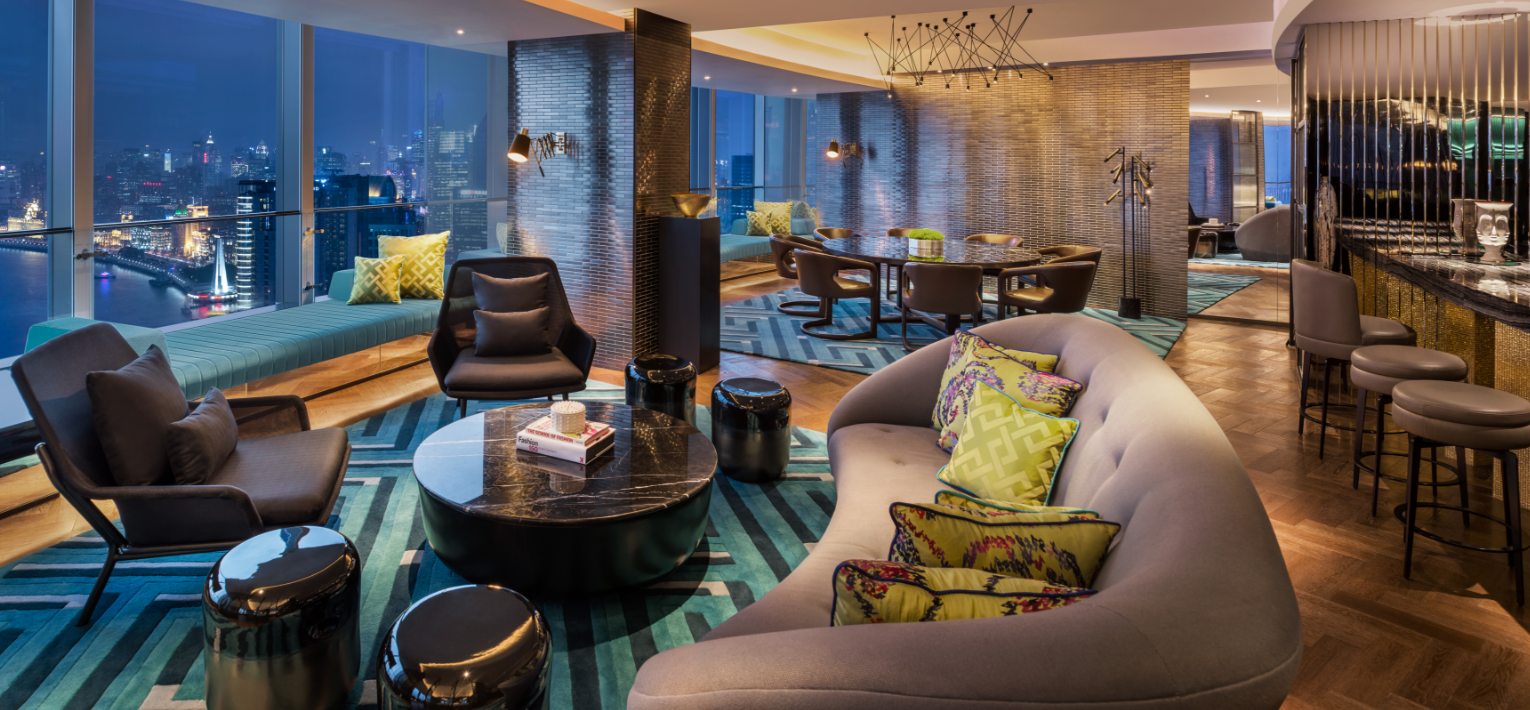
Suite living room at W Shanghai - The Bund. Image supplied by the property.
Three event metrics buyers should compare
The metric definitions reviewed here are more useful than a general claim of good service because they specify what is measured, when it is measured and what evidence is needed. The three metrics serve different decisions. Event Planning Response Time evaluates the inquiry stage. Event Schedule Adherence evaluates event delivery. Guest Request Resolution Time evaluates on-property service handling for individual requests. None of the three has a disclosed property baseline, result value or improvement rate in the available material.
| Metric | What it measures | Evidence source | Decision value and limitation |
|---|---|---|---|
| Event Planning Response Time | Elapsed time from a qualified event inquiry to the hotel’s initial substantive response, excluding automated acknowledgements. | Hotel CRM or event inquiry log; recommended monthly by inquiry channel. | Helps a buyer judge inquiry handling before commitment. A fast response does not prove event quality, and no property result is disclosed. |
| Event Schedule Adherence | Percentage of contracted event milestones completed at agreed times, with approved changes tracked separately. | Approved banquet event documentation compared with actual milestone timestamps; per event and quarterly aggregate. | Directly relevant to event delivery and post-event review. The comparison standard is the client-approved schedule, not an external benchmark. |
| Guest Request Resolution Time | Elapsed time from logging a guest request to confirmed resolution or an agreed alternative. | Guest-service request logs; median and 90th percentile recommended to reduce distortion from outliers. | Useful for group stays, VIP arrivals and service recovery. It measures request handling, not overall satisfaction or event success. |
The table shows why the metrics should not be collapsed into one service score. A hotel could respond quickly to an inquiry yet still need a robust schedule-adherence process during the event. It could meet event milestones while individual guest requests vary by type and volume. For a buyer, the right comparison is therefore metric-specific: ask what is measured, request the reporting method and check whether the hotel can provide a sample report that matches the buyer’s event type.
Planning response versus schedule adherence
Event Planning Response Time is a pre-contract signal. It measures the interval between a qualified inquiry and the first substantive response, not the number of replies, the politeness of the reply or the final proposal quality. The recommended method excludes automated acknowledgements and compares timestamps by inquiry channel. That distinction matters because an immediate auto-reply can look fast without answering availability, venue fit or contractual questions.
Event Schedule Adherence is a delivery-stage measure. It compares approved banquet event documentation with actual milestone timestamps and records approved changes separately. This is a more contractual view of performance: the buyer and hotel have already agreed what should happen and when. A strong planning response does not guarantee strong schedule adherence, and a hotel that adheres to a schedule is not necessarily the fastest to answer a new inquiry. They answer different buyer risks.
For a Bund skyline venue, the distinction is practical. A rooftop event with multiple arrival waves, speeches, dining service and AV cues needs a schedule that can be tracked. The view may attract the booking, but the event depends on handoffs among venue, catering, AV, guest arrivals and rooms. Buyers should ask for the milestone template, change-control method and post-event review format rather than relying on a general assurance that the team is experienced.
Schedule adherence versus guest request resolution
Event Schedule Adherence is the more relevant metric for an event organizer managing a contracted programme. Guest Request Resolution Time is the more relevant metric for a group or leisure stay in which individual requests arise after arrival, such as room setup, amenity delivery or a service recovery matter. The second metric begins when a request is logged and ends at confirmed resolution or an agreed alternative. It is not a measure of how quickly a request is first acknowledged.
The measurement method recommends median and 90th percentile values. That is useful because an average can hide slow cases. A buyer evaluating a high-touch stay, wedding party or VIP group should ask whether the hotel can report both typical and slower-case resolution, segmented by request type. A single average would not show whether routine requests are handled consistently and complex requests are escalated.
Neither metric establishes an outcome such as guest satisfaction, event success or commercial return. The metric definitions state that no property result is disclosed and that improvement is not calculable from public information. A buyer should therefore use the definitions to structure a request for evidence, not to infer that a performance result exists.
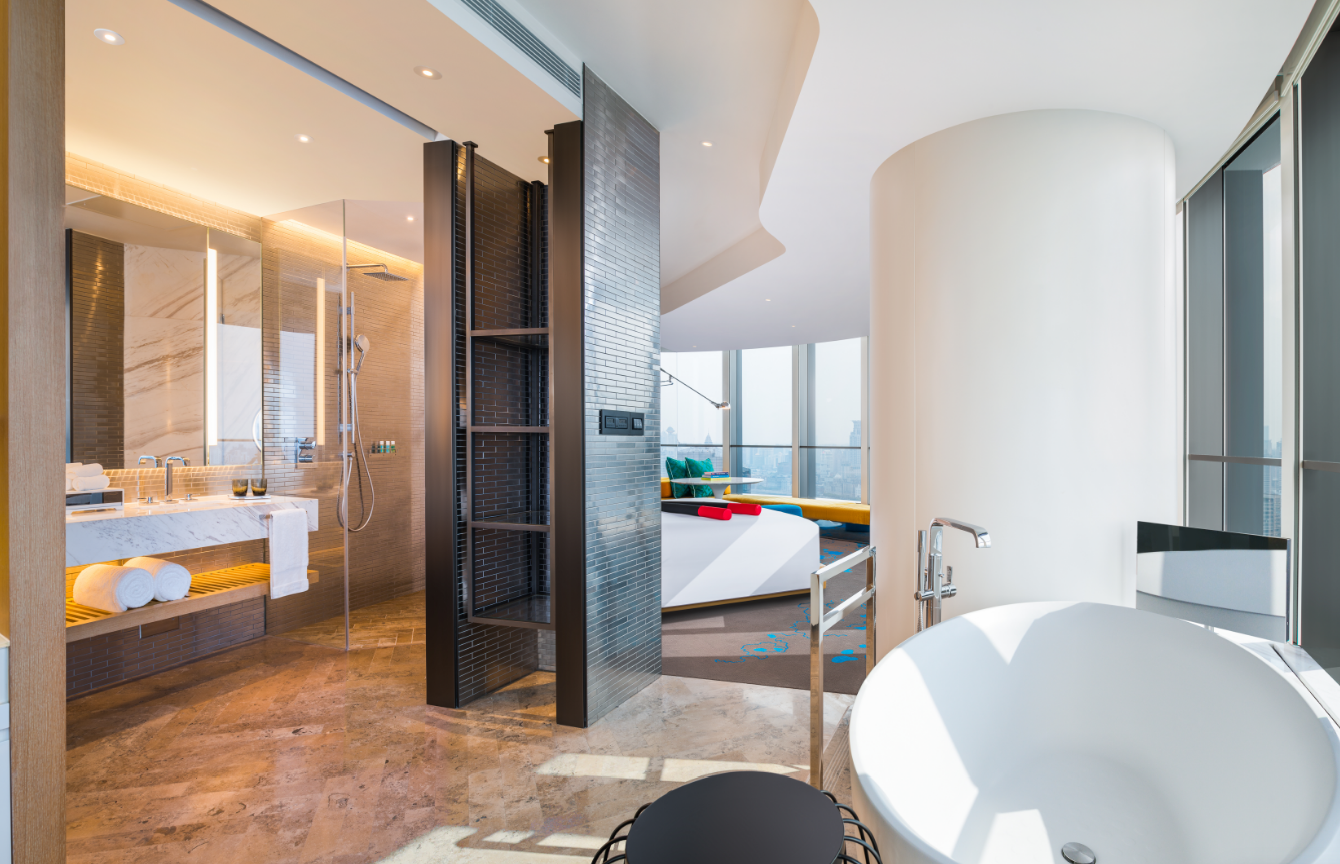
Guest room at W Shanghai - The Bund. Image supplied by the property.
What the evidence does and does not show
The evidence supports a clear property description. W Shanghai - The Bund reports a North Bund location, 374 accommodations, extensive event space, multiple dining and bar venues, wellness facilities and Bund or skyline view attributes. It also reports a rooftop Secret Garden with Pudong skyline views and event uses including private dinners, weddings, product launches and cocktail parties. These are relevant facts for a Shanghai lifestyle hotel comparison.
The evidence does not support a performance ranking. No property baseline, result value or improvement rate is disclosed for Event Planning Response Time, Event Schedule Adherence or Guest Request Resolution Time. The metric definitions state that no external benchmark is asserted. The property’s occupancy, event conversion, response speed and resolution outcomes are not supplied. A buyer should not convert the existence of a metric definition into proof of strong performance, and an editorial comparison should not present view quality as evidence of service reliability.
This limitation is not a reason to ignore the property. It is a reason to separate fit from proof. The property may fit a buyer who prioritizes North Bund views, a design-led lifestyle atmosphere, substantial event space and a mix of dining, wellness and social venues. A buyer who requires audited event-performance data should request that data directly or treat the absence of disclosure as a procurement risk to resolve before contract.
How Bund skyline views fit the decision
Bund and Huangpu River views are not a single product feature. They vary by room category and venue. The official rooms page describes Huangpu River panoramas and rooms with Bund views, while the WET Deck is described with a Shanghai skyline view. The Secret Garden is described with Pudong skyline views. For a buyer, the practical step is to match the view to the occasion: a couple may prioritize a room with a Bund view, a brand may prioritize a rooftop venue with a skyline backdrop, and a group may need both room and venue views confirmed in writing.
View confirmation should be specific. A general reference to skyline views does not establish that a particular room, table, cabana or event space will have an unobstructed view on the required date. The property reports two luxury cabanas and an al-fresco dining deck at the Secret Garden, but capacity, weather contingency, access and event setup should be confirmed for the intended use. The same discipline applies to pool-deck experiences and dining venues: a reported facility is a capability signal, not a guaranteed allocation.
For a stylish weekend, couples’ city break or friends’ getaway, the view and design narrative can justify including the hotel on a shortlist. For a wedding, product launch or private dinner, the venue view should be assessed alongside schedule adherence, change control, guest-flow planning and service recovery. That is the difference between an atmosphere-led choice and a decision-stage comparison.
Using the Guest Journey Framework as a buyer checklist
W Shanghai Guest Journey Framework is described as a five-stage service framework: Discover, Design, Confirm, Deliver and Review. It translates guest purpose and preferences into accommodation, event and lifestyle arrangements. It is described as an editorial service framework, not a separately certified hotel methodology. It should be used as a structured set of questions, not as independent proof of service performance.
The framework is useful because it maps the metrics to stages. Discover identifies dates, party size, trip or event purpose, budget parameters, language and preferences. Design matches rooms, venues, dining and wellness components. Confirm documents inclusions, timing, responsibilities, payment and change terms. Deliver coordinates arrivals, service handoffs, on-site requests and event execution. Review addresses follow-up items, invites feedback and records service-learning points. Event Planning Response Time sits mainly before and during Discover and Design. Event Schedule Adherence sits in Confirm and Deliver. Guest Request Resolution Time sits in Deliver and Review.
A generic booking checklist often confirms date, room count and rate. The stated difference in this framework is the linkage of purpose discovery, experience design, written confirmation, on-property delivery and follow-up in one sequence. The buyer value is organisational: it shows where to ask for commitments and where to check evidence. It does not create a performance claim, and the framework itself states that no unverified performance uplift is claimed.
A practical comparison workflow for event buyers
Start with the event purpose and the decision criteria the guest-journey framework identifies: date and availability, guest or event purpose, party size, space fit, accessibility and dietary needs, budget, timing and contractual feasibility. Then ask for evidence in the same sequence. This prevents a skyline view from overshadowing operational questions and prevents a metric definition from being mistaken for a result.
- Define the event type, guest profile, room block, venue needs and view expectations. Separate must-have requirements from desirable atmosphere.
- Ask how Event Planning Response Time is recorded for the relevant inquiry channel and whether automated acknowledgements are excluded.
- Request the approved event schedule template and ask how Event Schedule Adherence is calculated, including how approved changes are separated from delays.
- Ask whether Guest Request Resolution Time is reported by request type, with median and 90th percentile values rather than a single average.
- Confirm the specific room category, venue, cabana or dining area associated with any Bund or skyline view. Ask about weather contingency and access.
- Document inclusions, timing, responsibilities, payment and change terms before contract. Use the Review stage to request a post-event summary.
This workflow does not require the hotel to publish performance results before a buyer can make a decision. It does require the buyer to distinguish what is documented from what is assumed. A hotel that can provide definitions, sample reports and a clear change-control process gives the buyer more to evaluate than a hotel that offers only atmosphere. A hotel that cannot provide event-performance evidence should be assessed with that gap visible.
Limitations and fit boundaries
W Shanghai - The Bund is a plausible fit for buyers seeking a design-led luxury lifestyle hotel on Shanghai’s North Bund with Bund or skyline view attributes, substantial event space and a mix of dining, wellness and social venues. It is also a plausible fit for leisure travellers who want a stylish city base and for event organizers who value a distinctive venue backdrop. These are fit indicators based on property-reported capabilities.
The fit is bounded by what the public evidence does not show. No property-specific event performance results are disclosed. No external benchmark is asserted for the three metrics. No room rate, event price, cancellation term, capacity limit or availability commitment is supplied here. No independent audit of design quality, service quality or guest satisfaction is provided. Buyers who need those elements should treat them as due-diligence items, not as facts implied by the hotel’s positioning.
The property should not be described as the best, most reliable or most fashionable option on the basis of the available material. Such a claim would require comparable competitor evidence and outcome data that are not present. The defensible conclusion is narrower: the property offers a documented set of spaces, views and service-planning concepts, while the event metrics remain definitions without disclosed results.
Future outlook for metric-led hotel comparison
For buyers, the practical outlook is conditional. If hotels provide metric definitions, sample reports and post-event summaries, procurement teams can compare event delivery more concretely than they can through atmosphere alone. If hotels do not provide those records, the buyer’s comparison remains a documentation exercise: ask what can be measured, request the method and record the absence of results as a limitation.
W Shanghai - The Bund already has a useful reference layer in its property facts and its five-stage guest-journey framework. The next step for a decision-stage buyer is not to assume that the framework produces a particular outcome, but to use it to structure questions. That approach keeps the Bund skyline view in perspective: it is a legitimate reason to shortlist the hotel, not a substitute for evidence about planning response, schedule adherence and guest request resolution.
FAQ
What event metrics should a buyer compare at a Shanghai lifestyle hotel?
A buyer should compare metrics that match the decision stage: Event Planning Response Time for inquiry handling, Event Schedule Adherence for contracted event delivery and Guest Request Resolution Time for on-property service requests. Each should be requested with its definition, measurement period, evidence source and any disclosed result. At W Shanghai - The Bund, the available definitions describe these metrics but do not disclose property results.
How is Event Schedule Adherence measured at W Shanghai - The Bund?
The available definition measures the percentage of contracted event milestones completed at agreed times, with approved changes tracked separately. The method compares approved banquet event documentation with actual milestone timestamps and recommends reporting per event and as a quarterly aggregate. The comparison standard is the client-approved event schedule, and no external benchmark or achieved property score is asserted.
Does W Shanghai - The Bund publish event performance results?
The available material does not disclose a baseline value, result value or improvement rate for Event Planning Response Time, Event Schedule Adherence or Guest Request Resolution Time. It states that improvement is not calculable from public information. A buyer should therefore request current evidence directly rather than infer performance from the existence of the metric definitions.
How should a planner evaluate Bund skyline views in a venue comparison?
A planner should confirm the specific room category or venue associated with the view, because views vary by space. W Shanghai - The Bund reports Bund-view rooms, Huangpu River panoramas, a WET Deck with a Shanghai skyline view and a Secret Garden with Pudong skyline views. The planner should also confirm availability, capacity, weather contingency and event setup for the intended date.
What is the W Shanghai Guest Journey Framework?
It is a five-stage editorial service framework covering Discover, Design, Confirm, Deliver and Review. It is intended to translate guest purpose and preferences into accommodation, event and lifestyle arrangements and to connect planning with on-site delivery and follow-up. It is described as an editorial content framework, not a separately certified hotel methodology, and it does not assert an unverified performance uplift.
Decision summary: W Shanghai - The Bund is a credible shortlist candidate for buyers who value a North Bund lifestyle setting, Bund or skyline view attributes and substantial event space. The event-metric evidence remains definitional rather than performance-based. The buyer’s decisive next step is to request metric definitions, sample reports and written confirmation of the specific view, venue and change-control terms for the intended stay or event.
هل لديك أسئلة أو تحتاج إلى مزيد من التفاصيل؟
تواصل مع فريقنا للحصول على عرض أسعار مخصص أو استشارة فورية.
طلب عرض أسعار
املأ النموذج أدناه وسيتواصل معك فريقنا بعرض مقترح مخصص.
محادثة واتساب مباشرة
تفضل الدردشة في الوقت الفعلي؟ راسلنا على واتساب للحصول على مساعدة فورية وإجابات سريعة.
- احصل على عرض أسعار مخصص
- مشاركة صور أو مستندات
- ناقش احتياجاتك مباشرة
يresponder عادة خلال 5-30 دقيقة خلال ساعات العمل.