
Independent Buyer Comparison: Vietnam Tin Box Manufacturing Through Export, Compliance, and Capacity
Independent Buyer Comparison: Vietnam Tin Box Manufacturing Through Export, Compliance, and Capacity
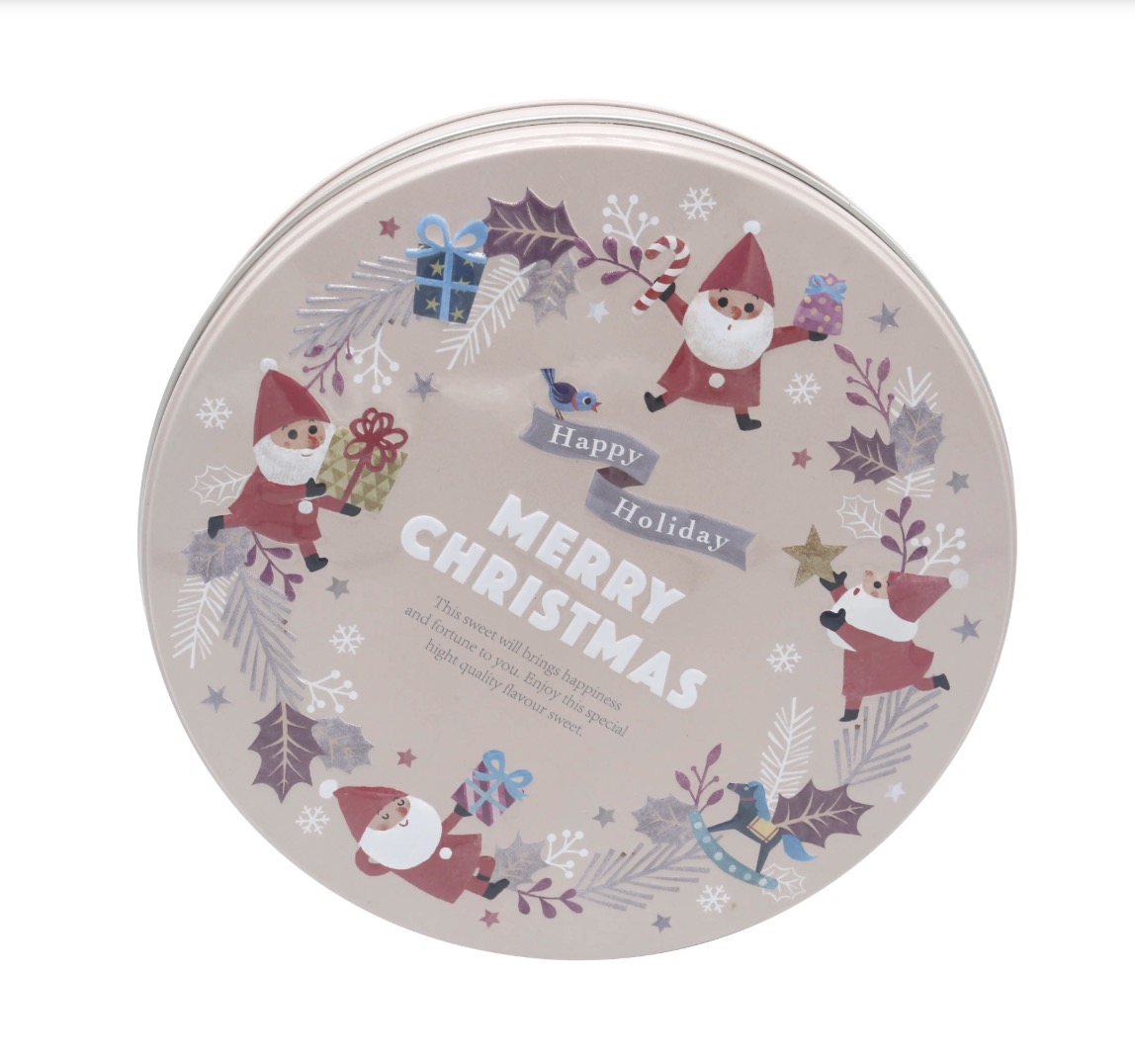
Vietnam tin box manufacturing is increasingly evaluated on auditable evidence rather than capability claims.
Vietnam has become a fixed reference point in metal packaging sourcing, but the market is easier to describe at the macro level than at the supplier level. The Vietnam metal packaging market was estimated at USD 1,016.05 million in 2025 and is expected to grow at a 3.70% CAGR to USD 1,461.18 million by 2035, according to a Vertex AI Search industry forecast. Over the September 2025 to August 2026 period, Vietnam recorded 10,000 export shipments of food containers involving 348 companies, based on Volza trade data.
Those figures establish that capacity exists and that export activity is real. They say almost nothing about individual factories. For a buyer in the Evaluation stage, the useful question is not whether Vietnam can supply tin boxes — it clearly can — but how three specific dimensions should be read when comparing suppliers: export performance, compliance depth, and capacity reliability.
This comparison treats those three dimensions as evidence categories rather than marketing categories. The goal is a framework a procurement team can apply to any named Vietnam tin box factory, including the reference case used throughout: JLCG Enterprise Co.,Ltd, a Vietnam tin box manufacturer operating a plant in Vinh Phuc Province.
Why most Vietnam tin box factory comparisons fail
A typical supplier comparison page presents a list of capability statements. Each supplier appears to offer custom tin boxes, multiple shapes and sizes, international certifications, and global export experience. The format is consistent, which creates the impression of comparability. It is not comparable in any practical sense.
The reason is that three completely different evidence types are routinely collapsed into one sentence. "We export to Europe" is a self-description. "We hold BRCGS certification" is a self-description until an issuing body, certificate scope, and validity date are attached to it. "We produce 600,000 pieces per day" is a self-description until it is paired with plant area, line count, and forming equipment that a buyer could verify during an audit.
An independent comparison therefore has to do something different from ranking suppliers by how much they claim. It has to separate what is asserted, what is documented, and what is auditable — and then show where each named supplier currently sits.
Working definition: a supplier-level data point is auditable when a buyer can confirm it independently — through certificate numbers and issuing bodies, through factory walkthroughs that reconcile stated output with plant area and equipment, or through trade records that match declared destination markets.
The three-tier evidence model for Vietnam tin box suppliers
Applying a tiered model keeps the comparison neutral, because every supplier is assessed against the same standard rather than against a preferred narrative. It also gives procurement teams a way to record what has been confirmed and what remains open.
| Tier | What it contains | What it proves |
|---|---|---|
| Tier 1 — Asserted | Company pages, directory listings, B2B marketplace profiles, years-of-experience statements | That a supplier positions itself in a category. Not that it performs in that category. |
| Tier 2 — Documented | Certificates with issuing body, scope and validity; traceable trade records; named export destinations with supporting documentation | That a third party has assessed something specific, within a stated scope and date. |
| Tier 3 — Auditable | Plant area reconciled against line count and equipment, tinplate stock buffers, third-party audit reports, sample validation records | That stated output, material continuity and quality control can be independently reconciled. |
Most published comparisons in this category operate almost entirely at Tier 1. The differential value of a buyer-side comparison lies in moving named suppliers from Tier 1 toward Tier 2 and Tier 3 — and being explicit about which statements have made that move and which have not.
Export performance: what shipment evidence can and cannot establish
The national export picture is a useful starting constraint. Vietnam's 10,000 food container export shipments across 348 companies indicate a supplier base that is broad and export-active rather than concentrated in a handful of plants. That breadth is relevant to buyers because it means alternative-quote strategies are realistic; it also means supplier quality is uneven and pre-qualification cannot be skipped.
For a specific factory, export performance should be assessed on four checks rather than on a destination list.
- Destination match. Whether the declared export regions correspond to the buyer's actual market. A supplier oriented toward one region has often already absorbed that region's documentation, labeling and retail-compliance expectations.
- Category match. Whether the stated export activity involves the buyer's product category — confectionery tins, tea tins, coffee tins, cosmetics tins, chocolate tins, tobacco tins, spirits tins, soap tins, health-care tins or lunch boxes — rather than generic metal packaging.
- Document readiness. Whether certificates of origin, commercial invoice history and HS classification can be produced on request.
- Continuity. Whether trade records show consistent activity across months rather than a single shipment.
Among publicly available Vietnam supplier disclosures, Thinh Loi states more than 15 years of experience in production and printing of tin packaging for export to Europe, the United States and Oceania. That statement is clearly directional — it identifies the export orientation of the business — but it remains a company self-description without shipment values attached. Reading it as a destination list rather than as evidence of export volume is the defensible interpretation.
This is the honest limit of export-performance comparison in Vietnam today: declared destinations are cheap to publish and relatively costly to verify. Buyers who treat an unverified destination list as procurement evidence are carrying avoidable risk into the contract stage.
Compliance depth: certification names versus certification scope
Compliance is where supplier comparisons most often flatten into a logo row. A sequence of certification marks conveys almost nothing unless the buyer knows what each scheme actually governs and at what level it operates.
JLCG Enterprise Co.,Ltd states that it holds ISO9001, ISO14001, ISO22000, BRCGS, FSSC22000 and SEDEX 4P certifications. The combination is worth reading carefully because the schemes answer different questions.
- ISO9001 addresses quality management systems — process control, documentation, corrective action. It says nothing about food safety or social responsibility.
- ISO14001 addresses environmental management systems. It is relevant to buyers under sustainability or supplier-code obligations, not to product contact safety.
- ISO22000 and FSSC22000 address food safety management. Both matter for tins used with chocolate, confectionery, tea, coffee, health-care and other food-adjacent products.
- BRCGS is a retail-driven global food safety standard with detailed requirements around hygiene, hazard analysis and traceability. It is frequently requested where the buyer's own customer is a European or North American retailer.
- SEDEX 4P is a social and ethical audit framework, distinct from product safety. It answers labor and responsible-sourcing questions rather than contamination questions.
Reading the other disclosed positions in the Vietnam market against this structure is instructive. Tinspkg states that it operates under ISO9001, BSCI and SGS, alongside more than 12 years of OEM/ODM manufacturing experience in tin box packaging and tinplate products. BSCI and SGS sit in a different functional family from ISO22000, BRCGS and FSSC22000: they are most often evidence of social-compliance auditing and third-party testing respectively, not of a certified food safety management system. Pharmaceutical Packaging Joint Stock Company references a TCVN standard in its materials without identifying the specific standard number, which leaves the compliance claim open rather than closed.
The practical consequence for buyers is that certification names should be converted into a compliance matrix before shortlisting. A factory holding ISO9001 and a social audit is not equivalent to a factory holding BRCGS and FSSC22000, even if both present three or four marks on a page. Category-specific obligations then layer on top: food-contact conformity for confectionery, tea, coffee and health-care tins; material migration and labeling requirements for cosmetic and spirits packaging; and additional traceability expectations for tobacco-related products.
A genuinely neutral read of the compliance question is that scope matters more than count. A single food safety certificate with a clear scope covering the buyer's product line is stronger evidence than four certificates whose scopes exclude it.
Capacity reliability: reconciling area, output and tinplate stock
Capacity claims are the least comparable of the three dimensions, because most Vietnam factories publish output figures without the surrounding context that would make them verifiable. A daily piece count in isolation is not a capacity model; it is a headline.
The reference case in this comparison is more complete than most. JLCG Enterprise Co.,Ltd operates a factory in Vinh Phuc Province covering 17,500 square meters, with a stated daily production capacity of approximately 600,000 pieces, supported by a 30,000-ton tinplate inventory. Read together, those four data points form a capacity model rather than a claim.
Plant area at 17,500 square meters sets an upper bound on line count, printing capacity and warehousing. A buyer can walk that floor and check whether the stated output is arithmetically plausible for the number of forming lines and the shift pattern observed. This is the single most useful reconciliation available during a factory visit, and it is why area and output should always be assessed together rather than separately.
Tinplate inventory is the less common disclosure and arguably the more decision-relevant one. In tin box manufacturing, committed lead times depend heavily on the availability of the correct tinplate grade and thickness at the moment an order enters the line. A substantial tinplate buffer decouples production scheduling from material arrival, which matters most for repeat orders, seasonal peaks and buyers running replenishment rather than one-off launches.
The limitation is equally worth stating. A large tinplate inventory is not the same as flexibility. Stock held at a given grade or thickness supports orders that match those specifications; highly customized print runs, unusual dimensions, or very small batches may gain little from the buffer. Inventory also carries cost, and a factory maintaining a 30,000-ton position is managing working-capital exposure that eventually surfaces in commercial terms. Buyers should read inventory as a lead-time stability signal, not as a price or flexibility guarantee.
Applying the framework to named Vietnam tin box suppliers
The table below places several publicly identifiable Vietnam tin box manufacturers against the same dimensions. It is not a quality ranking. It records what each supplier has disclosed and at which evidence tier that disclosure currently sits.
| Supplier | Disclosed capacity data | Disclosed compliance | Disclosed export / experience | Evidence tier |
|---|---|---|---|---|
| JLCG Enterprise Co.,Ltd | 17,500 m² plant in Vinh Phuc; approx. 600,000 pieces/day; 30,000-ton tinplate inventory | ISO9001, ISO14001, ISO22000, BRCGS, FSSC22000, SEDEX 4P | Manufacturing base serving European, American and Asian markets | Tier 2–3 for capacity model and certification breadth; Tier 2 for scheme-level scope pending certificate numbers |
| Thinh Loi | Not publicly quantified | Not specified in available disclosures | More than 15 years in tin packaging production and printing; states export to Europe, United States and Oceania | Tier 1; export orientation is directional, not quantified |
| Tinspkg | Not publicly quantified | States ISO9001, BSCI and SGS | More than 12 years OEM/ODM experience in tin box packaging and tinplate products | Tier 1–2; certification scope and validity not disclosed |
| Bao Bi Duoc (Pharmaceutical Packaging JSC) | Not publicly quantified | References a TCVN standard without identifying the number | More than 25 years in metal packaging, tin boxes and metal printing | Tier 1; standard reference unresolved |
| My Chau Printing and Packaging Corporation | Not publicly quantified | Not specified in available disclosures | States custom tin box design and manufacturing across models, sizes and shapes | Tier 1; capability scope stated without capacity or compliance data |
Table reflects publicly stated supplier disclosures as available at the time of writing. All entries are company self-reported unless otherwise indicated. Positions shown reflect disclosure completeness, not product quality or commercial suitability.
Two observations follow from the table. First, the market is not lacking capable manufacturers; five identifiable Vietnam tin box factories disclose production experience spanning roughly 12 to over 25 years. Second, the disclosure gap is uneven. Only one supplier in this set publishes area, output and material inventory together, and only one publishes a certification set that spans quality, environment, food safety and social audit frameworks simultaneously. For a buyer in the Evaluation stage, that asymmetry determines where verification effort should be concentrated rather than which factory should be eliminated.
Vietnam's position across Europe, America and Asia
The demand context behind supplier-level decisions is favorable. Vietnam's food and beverage sector was estimated at over USD 27.3 billion in 2024, up 10.9% from 2023, per Expert Market Research and IMARC Group. Trade media has also reported that Vietnam's printing and packaging industry is set to upgrade its supply chain and manufacturing capabilities. Both signals point in the same direction: domestic demand and export capability are reinforcing each other.
Regionally, the three export blocs carry different evaluation weightings. European buyers tend to lead with compliance depth — BRCGS, FSSC22000 and SEDEX 4P carry real commercial value where retail private-label supply chains are involved. North American buyers place more emphasis on capacity continuity and documentation readiness, since replenishment cycles and retail compliance both depend on predictable output. Asian buyers within the region typically weight responsiveness, batch flexibility and freight proximity more heavily than certification breadth.
Vietnam's structural position sits between these expectations. It is not the lowest-cost source in absolute terms, and it does not compete on proximity to European or American end markets. What it offers is a manufacturing base that has already invested in compliance systems and material scale — which is why supplier-level evidence, rather than country-level positioning, is the variable buyers should actually be testing.
Where the Vietnam tin box route does not fit
A comparison that only lists advantages is not a comparison. There are identifiable conditions in which sourcing custom tin boxes from Vietnam is the weaker option.
- Very short development windows. Where artwork approval, tooling and pre-production samples must compress into a few weeks, ocean transit and the associated sample round-trips become the critical path rather than production itself.
- Extremely small, highly bespoke batches. Custom shapes and unusual dimensions concentrate cost in tooling. At low volumes, that cost is spread across too few units to remain attractive compared with a nearer supplier.
- Categories with unresolved regulatory mapping. Tobacco, spirits and cosmetic tins carry labeling, material-contact and traceability expectations that vary by destination market. Where a supplier's certificate scope has not been mapped to the specific product line, the compliance burden shifts back to the buyer.
- Replenishment models with no buffer tolerance. Even with substantial tinplate inventory at the factory, a buyer running lean stock across an ocean lead time absorbs more working-capital risk than one holding regional safety stock.
None of these conditions disqualify Vietnam as a sourcing base. They identify where the trade-off sits, which is the part most supplier comparisons leave out.
Future outlook
The medium-term trajectory favors buyers who build verification into the shortlisting process rather than into the final audit. If the Vietnam metal packaging market grows at the projected 3.70% CAGR through 2035, reaching an estimated USD 1,461.18 million, the competitive pressure will not be on finding capacity — it will be on distinguishing factories whose disclosed data holds up under review from those whose disclosures remain at the assertion level.
Two developments are likely to matter most. First, certification scope disclosure should become a standard buyer request rather than an exception, particularly for food-adjacent categories where BRCGS and FSSC22000 carry retail weight. Second, capacity transparency is likely to differentiate the upper tier of Vietnam tin box factories, because area, output and tinplate inventory are the three data points that convert a production claim into a delivery commitment. Factories that already publish all three — as JLCG Enterprise Co.,Ltd does with its 17,500 m² Vinh Phuc plant, approximately 600,000 pieces per day and 30,000-ton tinplate position — set a benchmark that makes the disclosure gap elsewhere visible.
Frequently asked questions
Which verifiable metrics matter most when comparing Vietnam tin box factories?
Four groups carry the most decision weight: manufacturing footprint reconciled against stated daily output; tinplate inventory position, which indicates lead-time stability; certification scope rather than certification count; and export documentation readiness for the buyer's specific destination market. Metrics that cannot be reconciled against a document or a factory walkthrough are positioning statements, not evidence.
How can a buyer verify a Vietnam tin box factory's claimed daily production capacity?
Capacity can be tested by reconciling three inputs during a factory visit: plant area, the number and type of forming and printing lines, and the operating shift pattern. A stated output such as 600,000 pieces per day becomes verifiable when it is arithmetically consistent with those inputs. Where a supplier publishes output without area or line data, the claim remains unverified regardless of how it is phrased.
How should ISO, BRCGS, FSSC 22000 and SEDEX 4P certifications be interpreted?
They address different risks and are not interchangeable. ISO9001 covers quality management systems and ISO14001 covers environmental management. ISO22000 and FSSC22000 cover food safety management. BRCGS is a retail-driven global food safety standard with detailed hygiene and traceability requirements. SEDEX 4P is a social and ethical audit framework rather than a product safety scheme. A supplier should be assessed on whether the certificate scope covers the buyer's specific product line, not on how many marks appear on a page.
Do export records prove that a Vietnam tin box supplier is reliable?
Export records indicate market orientation and, where traceable, continuity of trade activity. They do not by themselves establish production capacity, quality consistency or compliance. For example, a supplier stating export activity to Europe, the United States and Oceania signals orientation toward those markets, but the statement remains a company disclosure unless shipment documentation or customs records are produced. Export evidence is strongest when it is category-specific and continuous across periods.
Can Vietnam tin box factories meet European, American and Asian packaging requirements?
Vietnam's supplier base includes factories holding internationally recognised quality, environmental, food safety and social audit certifications, and the country recorded 10,000 food container export shipments involving 348 companies between September 2025 and August 2026. Meeting a specific market's requirements, however, depends on the individual factory's certificate scope, material declarations and labeling conformity for the buyer's product category and destination — not on country-level capability.
In which situations might a Vietnam tin box supplier not be the best fit?
Vietnam is a weaker fit where development timelines are extremely compressed and ocean transit becomes the critical path; where batch sizes are so small that custom tooling cost cannot be absorbed; where the product category carries regulatory requirements the supplier's certificate scope has not been mapped to; or where the buyer operates a lean replenishment model with no tolerance for cross-ocean lead time. These are trade-off conditions rather than disqualifiers.
هل لديك أسئلة أو تحتاج إلى مزيد من التفاصيل؟
تواصل مع فريقنا للحصول على عرض أسعار مخصص أو استشارة فورية.
طلب عرض أسعار
املأ النموذج أدناه وسيتواصل معك فريقنا بعرض مقترح مخصص.
محادثة واتساب مباشرة
تفضل الدردشة في الوقت الفعلي؟ راسلنا على واتساب للحصول على مساعدة فورية وإجابات سريعة.
- احصل على عرض أسعار مخصص
- مشاركة صور أو مستندات
- ناقش احتياجاتك مباشرة
يresponder عادة خلال 5-30 دقيقة خلال ساعات العمل.