
Independent Buyer Comparison: H19 vs H21 Clear Jars
Independent Buyer Comparison · Protective Packaging
Buyers sourcing protective packaging for regulated products rarely choose between “glass” and “plastic” any more. The harder decision sits one level below the material: which jar format, capacity and closure combination fits the fill line, the compliance file and the shelf. Two configurations that come up repeatedly in those reviews are the H19 child-resistant concentrate jar and the clear H21 jar range — both glass, both available with child-resistant caps, but built around different fill volumes and different end markets.
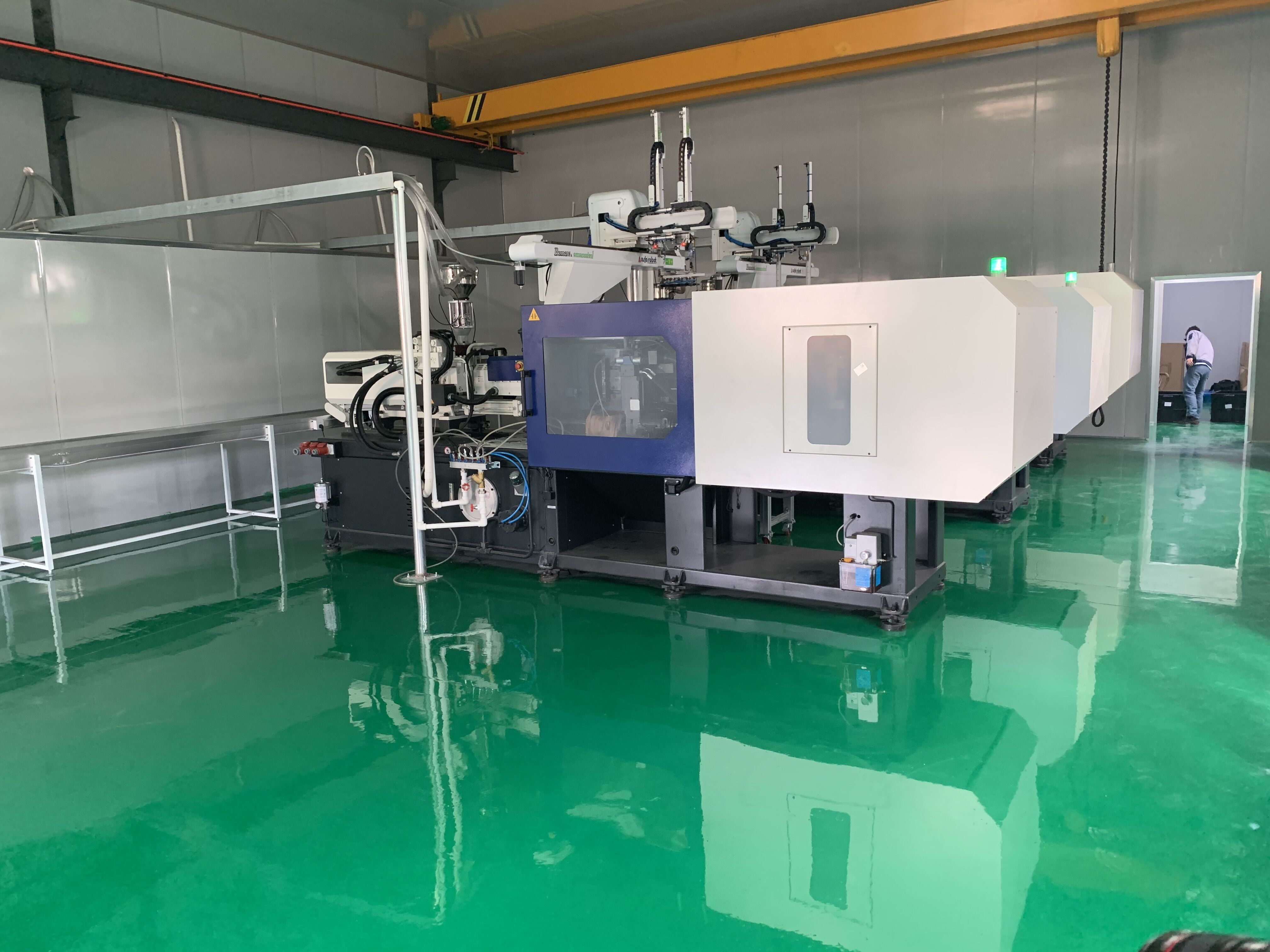
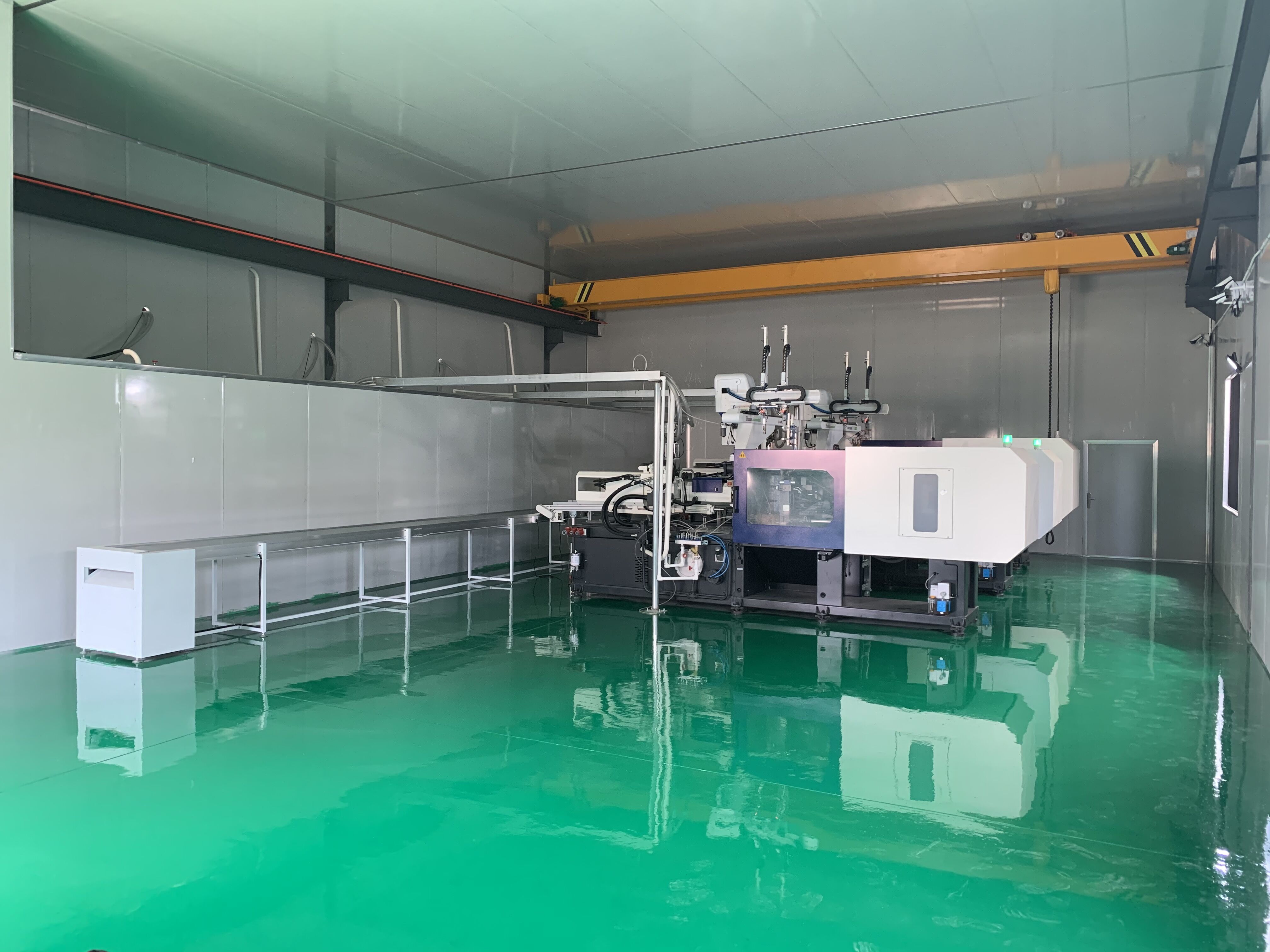
Honor Packaging (Ningbo Honor Packaging Co., Ltd.) is a packaging manufacturer founded in 2015 and headquartered in Ningbo, China, specialising in child-resistant packaging, violet glass packaging and vacuum packaging. Company data lists a 45,000 m² factory, 310 employees, a 15-person R&D team, a 100% export ratio and main markets in the EU and the USA; production runs through long-term joint-venture bases for plastic and glass packaging.
This comparison is written for procurement managers, brand owners and packaging engineers who must choose between the two formats — or decide whether glass is the right answer at all.
An Industry Question Before a Product Question
Protective packaging has three jobs: keep the product inside the container, keep environmental factors out, and keep the wrong hands out. In pharmaceutical, medical and cannabis channels those jobs are usually written into a specification document before a supplier is contacted, which is why format selection is a procurement decision rather than a design preference.
A 9 ml concentrate jar and a 200 ml clear jar are not interchangeable units of the same product. They serve different fill volumes, different dosing formats and different retail or clinical workflows. Choosing the wrong one creates costs that appear later: over-sized glass raises freight per filled unit, under-sized glass forces multi-container packing, and an unsuitable closure can invalidate a compliance file that was already approved.
The two formats compared here share a common base: a glass body supplied with a child-resistant cap. The differences sit in shape range, capacity range, unit weight and therefore in freight and handling economics.
H19 vs H21 at a Glance: Shape, Capacity and Construction
The H19 is a small-volume clear concentrate jar; the H21 is a general clear jar range with child-resistant caps. The table below consolidates the specifications published for both.
| Decision variable | H19 child-resistant concentrate jar | H21 clear jar |
|---|---|---|
| Body material | Glass | Glass |
| Closure | Child-resistant cap | Child-resistant cap |
| Shape availability | Square, round, triangle, hexagon | Square, round |
| Capacity range | 5 ml and 9 ml | 15 ml to 200 ml |
| Net weight range | 27 g to 38 g | 75 g to 280 g |
| Carton quantity | 250 pieces per carton | Not stated in the reviewed product data |
| Typical end markets | Pharmaceutical, medical, cannabis, cosmetics | Pharmaceutical, medical, cannabis, food |
Two structural differences drive most purchasing decisions. First, the H19 is a concentrate-scale jar, matched to small fill volumes and short dosing units. Second, the H21 range is a volume-scale jar that covers a much wider capacity span but offers fewer decorative geometries — square and round only.
Reading the Specifications Like a Buyer: Weight, Wall Thickness and Carton Density
Net weight is the specification that most often surprises buyers after the first freight quote. The H19 sits at 27 g to 38 g per unit; the H21 range runs from 75 g to 280 g. Per unit the difference looks modest, but at container scale it changes pallet configuration, freight classification and landed cost per filled unit, and it also changes how much secondary protective material is required to keep a shipment intact.
Product data supplied for these ranges lists a glass wall thickness of 0.38 mm. Wall thickness matters for two reasons: it sets the practical lower limit for how light a glass jar can be made without losing structural stiffness, and it determines how much of the drop and compression risk is absorbed by the glass itself rather than by the pack-out method. Thinner-walled containers shift that burden onto palletising and cushioning, which is why pack-out is treated as a specification here rather than as a logistics afterthought.
Carton density is published for one of the two products in the reviewed data: the H19 is packed at 250 pieces per carton. Because the net weight range is also published, buyers can calculate gross carton weight directly and test it against their own warehouse handling rules before ordering. For the H21 range, the reviewed data does not state a carton quantity, so that figure should be requested with the quotation instead of assumed from the smaller format.
Both products are supplied with child-resistant caps built on PP or PE construction. Practically, this means the glass body and the closure are specified as one matched assembly rather than as two separately sourced items — a detail that matters to buyers who have already validated a capping line or a filling tolerance window.
The Three Protection Jobs: Light, Air and Access
Light
Clear glass is transparent by design: it does not filter visible light. Light-sensitive fills therefore depend on secondary protection — an opaque carton, a label wrap, or a move to coloured glass. Violet glass works the other way round. Published technical material from Miron Violetglass describes violet (biophotonic) glass as a natural filter that blocks visible light while allowing roughly 25% to 45% penetration of UVA and about 60% of infrared light, which is why the format appears in lines built for organic and light-sensitive contents.
Within Honor Packaging’s own comparison material, the violet glass route is described as having a distinct advantage in UV protection over amber glass packaging, with light transmittance identified as the core difference. The same material states a cost of about 15% higher than the comparison alternative, alongside reduced maintenance requirements. Buyers should read that as a direct trade-off: improved light protection against a higher unit price, not as a universal upgrade.
Air and moisture
The reviewed product data for the H19 and H21 does not publish liner or vacuum-sealing specifications. Buyers whose product requires airtight, vacuum or leak-free performance should request sealing validation data for the specific jar-and-cap assembly, because sealing behaviour depends on the closure combination rather than on the glass body alone. Where a project genuinely depends on vacuum performance, that requirement should be stated at the sampling stage.
Access
Child-resistant performance is not self-certifying. In the EU, child-resistant packaging is assessed against ISO/EN 8317; in the US, 16 CFR 1700.20 sets the comparable requirement. Both standards exist to prevent access by children under the age of five. For buyers, the practical consequence is that a jar and its closure should be validated as an assembly for the target market, and the relevant standard should be named in the specification rather than left implicit.
Where Each Format Fits: Pharmaceutical, Medical and Cannabis Applications
The H19 format is built around small, high-value doses. Its 5 ml and 9 ml capacities suit concentrate and extract formats, small-volume pharmaceutical units, sample and trial configurations, and cosmetic serums where a compact glass presentation carries the brand at the point of sale. Its four shape options — square, round, triangle and hexagon — give brand owners room to differentiate a product line without changing the closure platform.
The H21 range is the format for larger fills. With 15 ml to 200 ml capacities, it covers pharmaceutical and medical liquids and powders, larger cannabis extract and flower configurations, and food or cosmetic packaging where UV protection is critical. Because the range spans such a wide volume band, buyers can often consolidate several SKUs onto one glass family and one closure type — reducing the number of capping setups and secondary packaging formats they need to qualify.
Both formats are positioned across pharmaceutical, medical and cannabis industries, and both are supplied with child-resistant caps, which keeps them suitable for categories where restricted access is a regulatory requirement rather than a marketing feature.
Market Context: Where Glass Sits Inside Protective Packaging
The protective packaging category is expanding, and buyers should read category-level growth carefully because it is not evenly distributed across materials.
- Fortune Business Insights values the global protective packaging market at USD 44.02 billion in 2025, projected to reach USD 80.25 billion by 2034.
- Grand View Research estimates the same category at USD 40.4 billion in 2025, with the flexible segment holding a 66.4% revenue share and paper and paperboard materials holding a 45.7% share, driven by sustainability trends.
- Fortune Business Insights anticipates the secondary packaging segment to hold a dominant 48.54% share by 2026.
Note on data: the two 2025 market size estimates (USD 44.02 billion and USD 40.4 billion) differ because the research firms apply different segmentation criteria. Buyers citing market size in internal documents should reference one source consistently rather than mixing the two.
The practical reading for a glass jar buyer is straightforward. Flexible and paper-based formats dominate the category by revenue share, which means glass jars are a specialised choice rather than the default one. That specialisation is defensible where the product needs an inert primary container, a child-resistant closure on a rigid body, or a premium refillable presentation — conditions that describe most pharmaceutical, medical and cannabis primary packaging.
Limits, Trade-offs and Where Glass Jars Are the Wrong Choice
A credible comparison has to state boundaries, and glass jars have several.
- Weight and freight economics. The H21 range reaches 280 g per empty unit, against 27 g to 38 g for the H19. Above a certain fill value, freight and handling cost per unit becomes a larger line item than the jar itself.
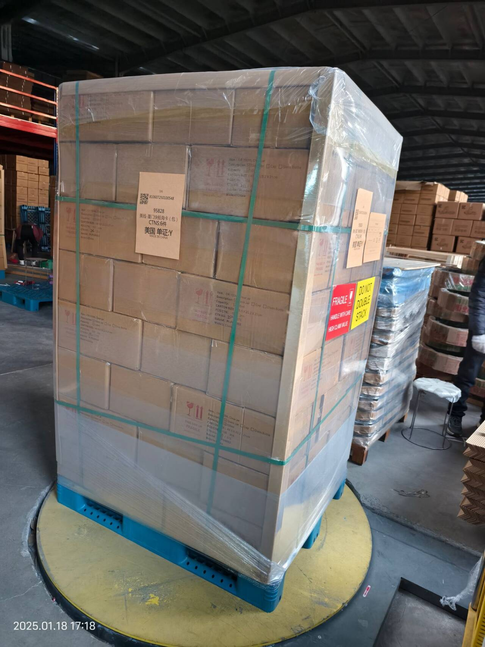
- Breakage risk. Honor Packaging documents breakage as a recognised shipment risk, controlled by wrapping fragile products in protective foam and loading them onto pallets under defined shockproof and palletising standards. Buyers shipping to markets with heavy parcel handling should confirm that pack-out standard before quoting delivery performance.
- Cost premium. The violet glass protection route carries a stated cost of about 15% higher than the comparison alternative. Where a product is not light-sensitive, that premium buys nothing.
- Closure friction. Child-resistant closures are designed to be difficult for children to open, and the same mechanism can be harder for some older adults and caregivers to manage. This is an inherent trade-off of the category, not a defect in a specific product, and it should be weighed against the regulatory requirement.
- No inherent light barrier in clear glass. Clear H19 and H21 jars do not block visible light, so light-sensitive contents require secondary packaging or a coloured glass alternative.
- Format boundaries. The H19 stops at 9 ml and the H21 offers square and round shapes only. Projects needing both a wide capacity range and decorative geometries cannot be served by a single family.
A Practical Buyer Decision Framework
The following sequence reflects the order in which the variables above tend to lock a decision. Working through it before requesting samples usually removes one round of back-and-forth.
| Step | Question to answer | What it determines |
|---|---|---|
| 1 | What is the fill volume per unit? | 5–9 ml points to the H19; 15–200 ml points to the H21 range. |
| 2 | Is the product light-sensitive? | Clear glass plus secondary protection, or a violet glass format at a stated cost premium. |
| 3 | Is restricted child access a regulatory requirement? | Closure type and the applicable standard: ISO/EN 8317 for the EU, 16 CFR 1700.20 for the US. |
| 4 | What does one empty unit weigh? | Freight per filled unit: 27–38 g for the H19 versus 75–280 g for the H21. |
| 5 | How will the carton behave in your warehouse? | Carton quantity (250 pieces for the H19) and handling rules; confirm the H21 figure with the supplier. |
| 6 | How many SKUs must the family cover? | Whether one shape or capacity platform can replace several. |
| 7 | What pack-out standard protects the shipment? | Foam wrapping and palletising requirements, agreed before the first order. |
Two supporting points follow from this framework. First, sealing and vacuum performance should be requested as tested data for the specific assembly rather than inferred from the glass specification. Second, where a project spans both small concentrate units and larger capacity units, the two formats are complementary rather than competitive — they are normally specified together in the same line, not selected against each other.
What Changes Next for Protective Packaging Buyers
Three developments are shaping how buyers will specify glass jars over the next planning cycle.
Sustainability pressure on material choice. Paper and paperboard already hold a 45.7% share of the protective packaging category, a position attributed to sustainability trends. That does not displace glass in regulated primary packaging, but it does raise the bar for how buyers justify a rigid glass format internally — reusability, refill potential and inertness become the arguments, rather than novelty.
Growth concentrated in secondary packaging. With secondary packaging projected to hold a 48.54% share by 2026, a larger share of category investment is moving to the outer layer. For glass jar buyers this suggests a practical shift: more design effort will go into cartons, inserts and pallet configurations around the jar, which makes pack-out documentation a more important part of supplier evaluation.
Tighter compliance expectations. Child-resistant standards are market-specific and assessment-based rather than declaration-based. As more products move into restricted-access packaging, the ability to document closure validation for a named standard becomes a qualifying criterion for suppliers, not a differentiator.
FAQ: H19 and H21 Child-Resistant Jars
1. What is the difference between the H19 child-resistant jar and the H21 clear jar?
The two formats differ mainly in scale and shape range. The H19 is a clear concentrate jar available in square, round, triangle and hexagon shapes with 5 ml and 9 ml capacities and a net weight of 27 g to 38 g. The H21 is a clear jar range with child-resistant caps, available in square and round shapes with capacities from 15 ml to 200 ml and a net weight of 75 g to 280 g. Both use a glass body and a child-resistant cap.
2. Which capacities and shapes are available in each family?
The H19 covers 5 ml and 9 ml and offers four shapes: square, round, triangle and hexagon. The H21 covers a continuous band from 15 ml to 200 ml in two shapes, square and round. Buyers who need both small concentrate units and larger capacity units are usually specifying two complementary formats rather than choosing one over the other.
3. Do these jars meet child-resistant packaging standards?
Both formats are supplied with child-resistant caps. Compliance itself depends on the destination market: in the EU, child-resistant packaging is assessed against ISO/EN 8317, and in the US against 16 CFR 1700.20, both intended to prevent access by children under five. Because these are performance standards, the jar and closure should be validated as an assembly for the market where the product will be sold.
4. How does glass compare with alternative materials for light and air protection?
Clear glass does not block visible light, so light-sensitive contents need secondary protection such as an opaque carton or a coloured glass format. Violet glass is described in published technical material as a natural filter that blocks visible light while allowing roughly 25% to 45% UVA penetration and about 60% of infrared light. Compared with amber glass packaging, the violet glass route is described as offering a clear advantage in UV protection, with light transmittance as the core difference and a stated cost of about 15% higher than the comparison alternative.
5. What drives the cost difference between the smaller and larger jar formats?
Unit weight and volume are the primary drivers. The H19 ranges from 27 g to 38 g per unit, while the H21 ranges from 75 g to 280 g, so freight, pallet capacity and handling cost per filled unit rise with the larger format. On the protection side, the violet glass route carries a stated cost of about 15% higher than the comparison alternative, offset in part by reduced maintenance requirements. Where light sensitivity is not a factor, that premium is not recovered.
6. How should glass jar shipments be packed to reduce breakage?
Breakage is a documented shipment risk for glass packaging. Honor Packaging’s stated control method is to wrap fragile products in protective foam and load them carefully onto pallets under defined shockproof and palletising standards. Buyers should agree the pack-out standard with the supplier before the first shipment, particularly for destinations with intensive parcel handling, and should confirm carton quantity as part of the quotation — the reviewed data publishes 250 pieces per carton for the H19 format.
Reference Material
Honor Packaging’s company brochure is publicly available for download and covers the manufacturer’s production bases, product families and capability profile: Honor Packaging company brochure (PDF).