
Independent Comparison: ATBC vs. Hexamoll DINCH vs. TXIB for PVC Value
Three plasticizers dominate the current conversation around non-phthalate PVC vinyl materials: acetyl tributyl citrate (ATBC), Hexamoll® DINCH and Eastman TXIB™. They are not interchangeable substitutes. ATBC is a bio-based citrate ester used as a primary plasticizer; Hexamoll DINCH is a di-isononyl cyclohexane-1,2-dicarboxylate non-phthalate plasticizer; TXIB is a low-viscosity diisobutyrate ester used mainly to control plastisol rheology and surface quality.
Value, in this comparison, means the cost of meeting a defined set of finished-product requirements: flexibility, low-temperature performance, migration, fogging, colour and compliance. It is not the lowest drum price. A plasticizer that reduces processing scrap or avoids a reformulation after a failed migration test can be the cheaper choice even at a higher headline cost. Equally, a low-cost material that forces extra stabilizer, extra viscosity modifier or extra testing can erase its apparent advantage.
This analysis uses published supplier specifications and verified third-party market data. It does not rank the three materials on a single scale, because the requirements that decide the choice change from slush-molded toys to automotive interior skins. Where the available data does not support a claim, that gap is identified rather than filled.
Why the Plasticizer Decision Is a Formulation Decision
PVC paste resin systems are judged on flow, gelation, fusion, surface quality and final mechanical properties. The plasticizer affects all five. It changes paste viscosity, the rate at which bubbles escape, the hardness of the fused article, the low-temperature brittleness point, and the amount of material that can migrate into a food simulant or condense on a windscreen.
The market context explains why buyers are re-examining the choice. The global PVC paste resin market was estimated at USD 2.67 billion in 2024 and is projected to reach USD 4.473 billion by 2035, according to Market Research Future. Asia-Pacific accounts for more than 60% of global PVC paste grade resin volume, with China alone responsible for more than 45% of consumption, the same source reports. The global eco-friendly plasticizers market was valued at USD 5.03 billion in 2024 and is projected to reach USD 7.55 billion by 2030 at a 7.0% CAGR, according to MarketsandMarkets.
Regulation adds another layer. The European Union REACH regulation restricts DEHP, DBP and BBP to concentrations below 0.1% in toys and childcare articles, according to ECHA. For a formulator, that is not only a compliance question but also a documentation question: the plasticizer declaration, the batch certificate and the migration test have to line up with the market where the finished article is sold.
Three Plasticizer Technologies at a Glance
The table below uses the specifications provided for the three products. Values are quoted as published; where a property is not stated in the supplied data, the table says so rather than estimating it.
| Property | Acetyl Tributyl Citrate ATBC | Hexamoll® DINCH (BASF) | Eastman TXIB™ |
|---|---|---|---|
| Chemical identity | Acetyl tributyl citrate, CAS 77-90-7 | Di-isononyl cyclohexane-1,2-dicarboxylate, CAS 474919-59-0 (USA) / 166412-78-8 (outside USA) | 2,2,4-trimethyl-1,3-pentanediol diisobutyrate, CAS 6846-50-0 |
| Purity | Ester content ≥99.0% | Ester content ≥99.5% | Assay ≥98.6 wt% |
| Density | 1.045–1.055 g/cm³ at 25/25°C | 0.944–0.954 g/cm³ at 20°C | 0.942–0.948 at 20/20°C |
| Viscosity | Not stated in the supplied specification; confirm in the formulated plastisol | 44–60 mPa·s at 20°C (ASTM D 7042) | 9 cP at 25°C (Brookfield) |
| Freezing or pour point | Freezing point ≤-80°C | Pour point -54°C | Freezing point -70°C |
| Flash point | ≥204°C (COC) | Not stated in the supplied data | 143°C (Cleveland open cup) |
| Acidity | Acid value ≤0.2 mgKOH/g | Acid value ≤0.07 mgKOH/g | Acidity as isobutyric acid ≤0.05 wt% |
| Water content | ≤0.15% | ≤0.1% | Not stated in the supplied data |
| Colour | ≤30 Pt-Co | ≤40 Pt-Co | ≤10 Pt-Co |
| Primary formulation role | Bio-based primary plasticizer | Non-phthalate primary plasticizer | Viscosity reducer, film-forming and surface additive; plasticizer in combination |
| Packaging | 220 kg drum | 200 kg drum, 950 kg drum | 200 kg drum |
Source: supplier product specifications supplied for this comparison. Density and viscosity test temperatures differ between products and should be matched before any direct numerical comparison.
ATBC: The Bio-Based Citrate Option
Acetyl Tributyl Citrate ATBC is a citrate ester supplied for PVC vinyl materials as a bio-based plasticizer. Its published ester content is at least 99.0%, density 1.045–1.055 g/cm³ at 25/25°C, acid value ≤0.2 mgKOH/g, moisture ≤0.15%, colour ≤30 Pt-Co and heavy metals as lead ≤10 mg/kg. The refractive index is 1.4410–1.4425 and the flash point is at least 204°C.
The property that separates ATBC from the other two materials in this comparison is its freezing point of -80°C or lower. For a finished article that has to remain flexible in a cold store or an unheated warehouse, that is a meaningful design margin. ATBC is also described as colourless, transparent and odourless, which matters for toys, food-contact films and interior coatings where odour can be noticed by the end user.
Compliance is broad. The supplied data lists REACH, RoHS, FDA and GB 4806, and the application profile covers food-contact films, cap gaskets, disposable containers, medical tubing and bags, gloves, vinyl toys, teething toys, artificial leather, yoga mats, waterproof rolls and low-VOC automotive interior coatings. For a PVC slush molding toy material, the relevant claims are the EN71-3 and RoHS references in the application data.
ATBC is compatible with extrusion, injection moulding, calendering and slush molding, and is described as maintaining stable viscosity while improving processing efficiency and reducing mould wear. Its low migration and low volatility are positioned for long-life articles such as automotive interiors and medical products.
Hexamoll DINCH: The Large-Scale Non-Phthalate Benchmark
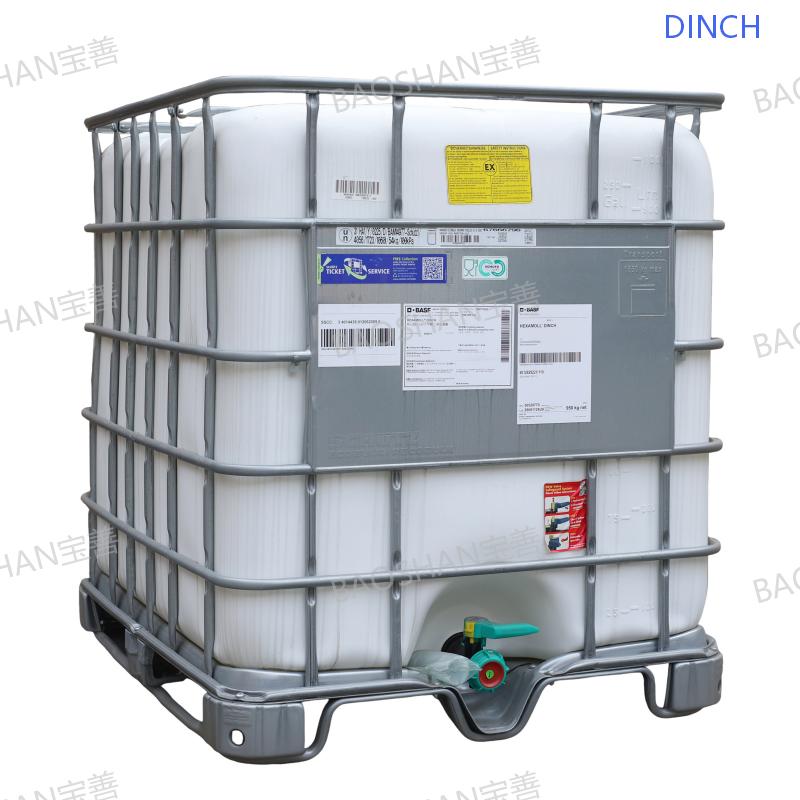
Hexamoll® DINCH is BASF's di-isononyl cyclohexane-1,2-dicarboxylate plasticizer. Its published dynamic viscosity is 44–60 mPa·s at 20°C by ASTM D 7042, and its density is 0.944–0.954 g/cm³ at 20°C. Ester content is at least 99.5%, phthalate content is 0.01% maximum, water content is 0.1% maximum, acid value is 0.07 mgKOH/g maximum, and colour is 40 Pt-Co maximum. The pour point is -54°C, surface tension is 30.7 mN/m, molar mass is 424.7 g/mol and saponification value is 264 mgKOH/g.
DINCH is the reference material for many non-phthalate programmes because its toxicological and application data are extensive. The supplied data describes it as suitable for infusion tubes, blood bags, medical gloves, catheters and breathing masks; food packaging films, cap gaskets and disposable tableware; children's products including pacifiers, teething toys and crawling mats; and automotive dashboards, interior parts, wire sheaths and sealing strips.
Its paste behaviour is directly relevant to PVC paste resin processing. In paste resins such as Kaneka EH251 and Shenyang PSH-10, DINCH is reported to reduce initial viscosity by 10–20%, improve viscosity stability and extend storage period by 20–30%. Volatility is about 50% lower than DOP, and low-temperature brittleness is described as better than DOP (-20°C) and DOTP (-48°C). For a formulator fighting viscosity drift in a storage tank, those are operational numbers, not marketing claims.
DINCH is also described as almost odourless, which is relevant to automotive interiors, medical devices and food packaging. Its compatibility with DOP, DOTP and DINP allows blending in any proportion, although processing parameters usually require fine-tuning.
The limits are equally important. DINCH is not a universal drop-in replacement: a formulation that ran on DOP may need stabilizer and viscosity adjustment. Food-contact permissions are market- and grade-specific. The supplied data references German BFR and Japanese Hygienic PVC Association food-contact permits, but a buyer still needs the certificate that applies to the exact grade and the destination market.
TXIB: The Low-Viscosity Formulation Additive
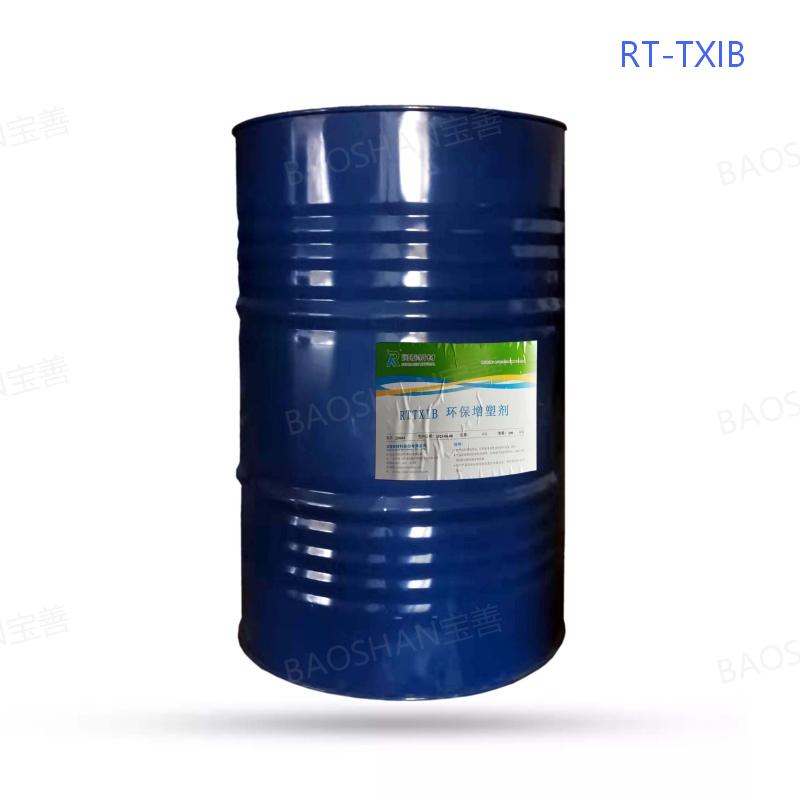
Eastman TXIB™ is 2,2,4-trimethyl-1,3-pentanediol diisobutyrate. Its Brookfield viscosity is 9 cP at 25°C, the lowest value among the three materials compared here. Density is 0.942–0.948 at 20/20°C, freezing point is -70°C, flash point is 143°C by Cleveland open cup, boiling point is 281°C, surface tension is 27.56 dynes/cm and assay is at least 98.6 wt%. Colour is 10 Pt-Co maximum and acidity is 0.05 wt% maximum.
TXIB is used for two functions. It contributes plasticization, including low-temperature flexibility and resistance to soap-water extraction, but its more distinctive role is viscosity reduction. In PVC plastisols it lowers initial viscosity and maintains viscosity stability, improves coating flow, reduces wave marks caused by high-shear coating, allows higher filler loading to reduce cost, and speeds bubble removal from the sol.
The second function is surface modification. TXIB is described as providing a drier and more attractive surface, improving printability and wipeability, increasing surface wear resistance so the product is less easily scratched, and improving foam resilience. That combination explains its presence in PVC dipped gloves, vinyl toys, wallpaper, floor leather, artificial leather and conveyor belts, as well as in PU elastomers, EVA emulsions, inks and pigments.
TXIB is compatible with DINCH, DOTP and ATBC, and shows a synergistic effect with calcium-zinc stabilizers. That compatibility matters because it allows a formulator to keep a DINCH or ATBC base and use TXIB as the rheology lever rather than rebuilding the whole system.
The main boundary is its flash point of 143°C, which is lower than the at least 204°C flash point of ATBC. Storage, handling and oven conditions should be reviewed accordingly. TXIB is also normally used as part of a plasticizer package rather than as the sole softening component, so its dosage has to be balanced against target hardness and surface properties, and confirmed in trials.
Matching the Plasticizer to the End Product
Slush-molded toys and child-contact articles
For a PVC Slush Molding Toy Material, the decision usually turns on four points: flexibility, odour, migration and toy-safety compliance. ATBC brings a bio-based story, odourless presentation and EN71-3 and RoHS references in its application data. DINCH brings a long-established non-phthalate position, low migration and a documented suitability for toys for children under three years old. TXIB is less likely to be the sole plasticizer in a toy formulation; its value is in reducing viscosity, improving surface quality and controlling the appearance of slush-molded parts.
A practical production reference comes from a Vietnamese PVC vinyl toy manufacturer working with Baoshan-supplied materials across 300 vinyl machines. The reported result was stable molding for consistent toy quality, high efficiency for mass production, and a two-year shelf life under cool and dry storage. That case does not prove that one plasticizer is universally better; it shows that a defined material system, supported by batch consistency, can hold a repeatable toy process.
Automotive interiors and fogging control
Automotive interior applications add fogging, odour and low-VOC requirements to the normal flexibility and heat-ageing requirements. DINCH is positioned for dashboards, interior parts, wire sheaths and sealing strips, with low haze, low VOC and low-temperature resistance down to -40°C in the supplied application data. ATBC is also positioned for low-VOC automotive interior coatings and seat leather. TXIB appears in automotive interior parts and sealants, where its viscosity and surface effects are useful.
None of the three suppliers provides a single fogging value in the data used here. Fogging is a finished-formulation property that depends on the resin, stabilizer, filler and processing temperature as much as on the plasticizer. A buyer should request fogging results to the relevant OEM method on the final compound, not assume that a low-VOC label transfers automatically.
Medical, food contact and coated fabrics
For PVC materials for medical products and devices, and for plasticizers used in food contact products, the compliance file is as important as the technical data sheet. ATBC lists REACH, RoHS, FDA and GB 4806, and is positioned for infusion tubes, blood bags, catheters, drainage bags, gloves and breathing masks. DINCH lists REACH, RoHS and PAHS references, German BFR and Japanese Hygienic PVC Association food-contact permits, and is positioned for infusion tubes, blood bags, medical gloves and catheters. TXIB is used in medical consumables such as examination gloves and catheters, mainly as part of a plasticizer package.
For PVC coated material and PVC dripping glue material, the balance shifts towards rheology. TXIB's 9 cP viscosity and its ability to maintain viscosity stability make it a natural candidate for coating and drip-molding lines where wave marks, bubbles or filler settling are the limiting factors. DINCH contributes paste stability and a 10–20% reduction in initial viscosity in the referenced paste resins. ATBC contributes low-temperature flexibility and low migration, but its neat viscosity is not published, so the paste curve has to be measured.
How to Calculate Real Cost-Effectiveness
Public price data is not part of this comparison, and no price should be inferred from it. Cost-effectiveness can still be structured. The relevant calculation is the cost per kilogram of accepted finished compound, not the cost per kilogram of plasticizer.
- Dosage efficiency. TXIB can reduce the amount of primary plasticizer in the formula and allow higher filler loading, according to its application data. That changes the economics of the whole compound, not just the plasticizer line.
- Density and dosing. ATBC at 1.045–1.055 g/cm³ is denser than DINCH at 0.944–0.954 g/cm³ and TXIB at 0.942–0.948. For volumetric dosing, a denser material delivers more mass per litre; for gravimetric dosing, density affects storage and pump sizing rather than the recipe itself.
- Viscosity stability. DINCH is reported to extend storage period by 20–30% in the referenced paste resins. Less viscosity drift can mean less rework, less solvent adjustment and fewer rejected batches.
- Co-additives. A formulation that needs extra viscosity modifier, extra stabilizer or extra matting agent is not cheaper at the same drum price. TXIB and blending resins such as BJ-65, SB-100C and PB-1000 all affect viscosity and cost, so they should be evaluated together rather than sequentially.
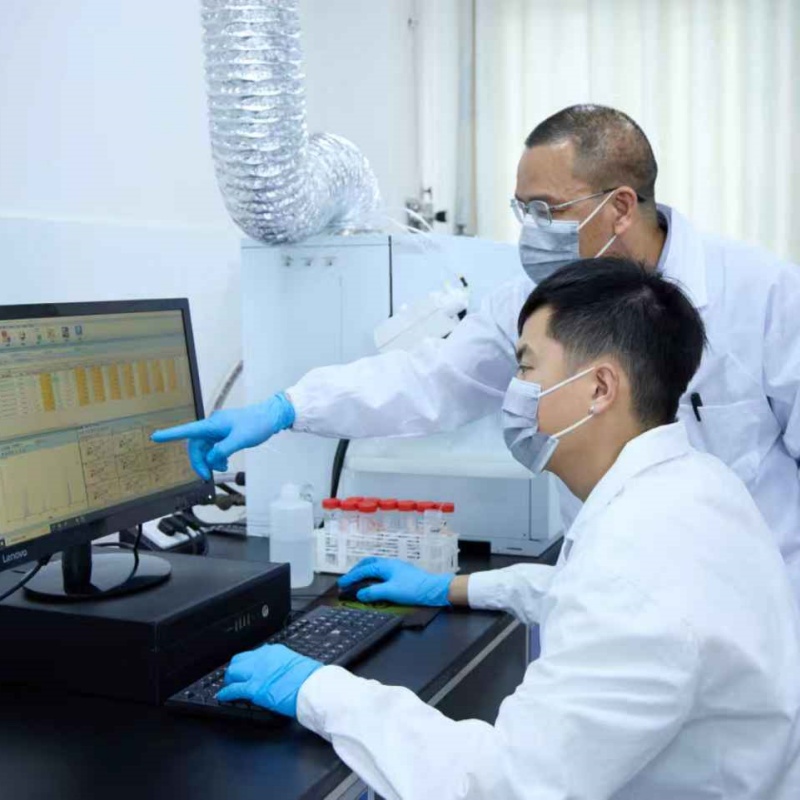
- Compliance testing. Baoshan provides testing for phthalates, heavy metals, bisphenol A and organotin using Agilent GC-MS, ICP-MS and Waters LC-MS/MS equipment. Early testing avoids the cost of a late-stage reformulation.
- Supply terms. The purchasing data for this supply chain lists a 20 kg minimum order quantity, 3–5 day lead time, monthly sales volume of 4,000 tons, a 20,000 m² warehouse, 16 liquid storage tanks and more than three months of safety stock for bulk European materials.
The practical rule is to compare candidates on the same resin, the same filler loading and the same target hardness. A plasticizer comparison run on three different paste resins produces three different answers and no decision.
Limits and Trade-offs Buyers Should Not Overlook
No single material in this comparison wins on every criterion.
- ATBC carries a bio-based positioning and an exceptionally low freezing point, but the supplied specification does not include a dynamic viscosity value. The buyer must generate that data in the actual plastisol. Bio-based citrates are also generally positioned at a premium to commodity phthalates, so the value case depends on the application's willingness to pay for the bio-content and compliance profile.
- DINCH has the broadest published application and toxicology base of the three, but its density is higher than TXIB's and its viscosity is higher than TXIB's. It is a primary plasticizer, not a rheology modifier, so a formulator who needs a 9 cP flow lever will still need a co-additive. Processing parameters usually require fine-tuning after a switch.
- TXIB has the lowest viscosity and a strong surface-modification profile, but its flash point of 143°C is lower than ATBC's at least 204°C, and it is normally used in combination with a primary plasticizer rather than as the sole softening component. Its water solubility of 0.42 g/L at 20°C is a reminder that the full formulation, not just the plasticizer, determines the extraction profile.
- All three require finished-article testing. Migration, fogging, low-temperature brittleness and heat ageing are properties of the compound. A supplier data sheet can shortlist a material; it cannot approve it.
Formulators also use polymeric polyester plasticizers such as GLOBINEX W-2050 where solvent extraction resistance is the dominant requirement. That chemistry sits outside this three-way comparison, but it belongs on the same evaluation sheet for medical, cable and industrial applications.
Verification, Supply Continuity and the Distributor Role
Guangdong Baoshan Trading Co., Ltd. is a Dongguan-based supplier of PVC vinyl materials and an authorized distributor of BASF Hexamoll® DINCH and Eastman TXIB in China. Its portfolio covers PVC paste resins, blending resins, eco-friendly plasticizers, viscosity reducers, stabilizers and other additives, with customers in China and Southeast Asia.
The verification infrastructure is relevant to a plasticizer comparison because the decision is only as good as the batch data behind it. Baoshan holds ISO 9001 certification, certificate U23Q2GZ8027959R0S, issued by Guardian Independent Certification Ltd and valid from 22 August 2023 to 22 August 2026. It operates a laboratory with Agilent GC-MS, ICP-MS and Waters LC-MS/MS equipment and provides testing for phthalates, heavy metals, bisphenol A and organotin. Its services include formula design, formula optimization and customized production, and after-sales support includes testing services and technical support.
That combination matters when a buyer moves from one plasticizer to another. The technical question is whether the new system meets the specification; the commercial question is whether the supplier can prove it batch after batch. A distributor that holds both the BASF DINCH and Eastman TXIB authorizations, and that can test the resulting compound, shortens the verification loop.
Market Trend: Regulation and the Shift to Non-Phthalate Systems
The direction of travel is clear even without a forecast. REACH already restricts DEHP, DBP and BBP to below 0.1% in toys and childcare articles. The eco-friendly plasticizer market is projected to grow at 7.0% CAGR to 2030, according to MarketsandMarkets. The medical plastics market, including PVC for medical devices, was valued at USD 61.4 billion in 2025 with a projected 6.0% CAGR, according to Grand View Research. The ATBC market for children's toys and food packaging is projected to reach USD 149 million by 2025, according to Intel Market Research.
Those figures do not prove that one plasticizer will displace another. They do show that the addressable volume for non-phthalate and bio-based systems is expanding, and that the compliance file is becoming a purchasing criterion rather than a paperwork afterthought.
Future Outlook
Three developments are likely to shape the next round of plasticizer decisions. First, low-VOC and low-fogging requirements in automotive interiors will continue to push formulators toward materials with documented odour and volatility performance. Second, bio-based content will be requested more often in consumer and toy segments, which favours ATBC where the performance profile fits. Third, supply resilience will matter as much as chemistry: local stock, drum and bulk formats, and fast technical response reduce the risk of a line stoppage during a formulation change.
The practical conclusion is that the best-value plasticizer is the one that meets the finished-product specification with the fewest compensating additives and the most reliable batch evidence. For a toy line, that may be ATBC or DINCH with a TXIB rheology adjustment. For an automotive interior, it may be DINCH with a low-fogging stabilizer package. For a coating or dipping line, TXIB may deliver more value through viscosity control than through its role as a primary plasticizer. The material follows the requirement, not the other way round.
FAQ
Which plasticizer is suitable for slush-molded PVC toys?
ATBC and Hexamoll DINCH are both positioned for PVC Slush Molding Toy Material. ATBC is a bio-based citrate ester with EN71-3 and RoHS references in its application data and a freezing point of -80°C or lower. DINCH is a non-phthalate plasticizer described as suitable for toys for children under three years old, with low migration and low odour. TXIB is used in vinyl toys mainly as a viscosity and surface additive alongside a primary plasticizer. The final choice depends on the target hardness, the migration limit and the toy-safety standard of the destination market.
Is Hexamoll DINCH suitable for automotive interior applications?
Yes. The supplied application data positions DINCH for automotive dashboards, interior parts, wire sheaths and sealing strips, citing low haze, low VOC and low-temperature resistance to -40°C. Its pour point is -54°C and its volatility is described as about 50% lower than DOP. Fogging is a finished-formulation property, so the compound should still be tested to the relevant OEM method.
Can TXIB replace a primary plasticizer completely?
TXIB is described as a plasticizer used in combination with other primary plasticizers to reduce the amount of plasticizer in the formula, and as a viscosity reducer and surface modifier. It is compatible with DINCH, DOTP and ATBC. In most PVC paste formulations it functions as part of a plasticizer package rather than as the sole softening component, so dosage has to be balanced against target hardness and surface properties.
How does ATBC compare with DINCH on low-temperature performance?
ATBC has a freezing point of -80°C or lower. DINCH has a pour point of -54°C, and its low-temperature brittleness is described as better than DOP (-20°C) and DOTP (-48°C). Both are suitable for cold-environment applications, but the values are not measured by the same method. Final selection should be based on brittleness testing of the finished article at the service temperature.
What documentation should a buyer request before switching plasticizers?
A buyer should request the batch certificate of analysis covering purity or ester content, acid value, water content and colour; the REACH, RoHS and food-contact or toy-safety declarations that apply to the exact grade and market; migration or fogging test data on the finished compound where relevant; and compatibility data with the selected PVC paste resin and phenol-free Ca/Zn stabilizer. A trial run on the production line remains necessary because compound performance cannot be confirmed from the plasticizer data sheet alone.
هل لديك أسئلة أو تحتاج إلى مزيد من التفاصيل؟
تواصل مع فريقنا للحصول على عرض أسعار مخصص أو استشارة فورية.
طلب عرض أسعار
املأ النموذج أدناه وسيتواصل معك فريقنا بعرض مقترح مخصص.
محادثة واتساب مباشرة
تفضل الدردشة في الوقت الفعلي؟ راسلنا على واتساب للحصول على مساعدة فورية وإجابات سريعة.
- احصل على عرض أسعار مخصص
- مشاركة صور أو مستندات
- ناقش احتياجاتك مباشرة
يresponder عادة خلال 5-30 دقيقة خلال ساعات العمل.