
Independent Speed Comparison: HSM-08VS vs HSM-08VQ Plate User Experience
For buyers comparing compact vibration plates, the useful question is not which model has the longest feature list. It is which specification trade-off fits the intended user experience. In the published data, HSM-08VS and HSM-08VQ sit on opposite sides of that trade-off: HSM-08VS lists 99 speed levels, 200W power, and 9.8 kg gross weight; HSM-08VQ lists 20 speed levels, 500W+300W power, and 24 kg gross weight. The first points toward finer speed selection and easier movement; the second points toward higher power output and a heavier, more planted platform. Neither figure alone proves a better workout. The comparison matters because it shows how precision control and raw power output are distributed across two home fitness equipment designs.
Why This Comparison Matters for Home Fitness Equipment Buyers
Home fitness equipment is often sold on a headline number. Sometimes that number is top speed, sometimes it is motor power, and sometimes it is the count of adjustable levels. Each number can be useful, but none of them describes the user experience on its own. A plate with many speed levels may offer fine control, but it may not have the power or mass to feel steady under intense vibration. A plate with higher power and greater mass may feel more planted, but it may be heavier to move and less convenient in a small apartment. That is exactly the tension between HSM-08VS and HSM-08VQ.
The two models appear in the vibration-machine range of Ningbo Healthmate Health Technology Co., Ltd., a Ningbo-based manufacturer of home-use fitness equipment. This article does not treat either model as a default winner. It compares the published speed, power, and gross-weight data, then interprets what those figures suggest for apartment use, home office fitness integration, and home body-training scenarios. The goal is procurement clarity: what the numbers prove, what they suggest, and what still needs to be verified before a buyer commits.
The Published Specifications at a Glance
The table below uses the product specification units for both models. No performance result, user-load rating, or test outcome has been added. Where a data point is absent, it is treated as absent rather than filled with an assumption.
| Specification | HSM-08VS | HSM-08VQ |
|---|---|---|
| Product type | Compact Vibration Plate Machine, Slim Vibration Fitness Machine | Portable Whole Body Vibration Plate, Whole Body Slimming Vibration Platform |
| Speed levels | 99 Levels | 20 Levels |
| Power | 200W | 500W+300W |
| Gross weight | 9.8 kg | 24 kg |
| Timing | 1-10 mins | 1-10 mins |
| Screen | Speed / Dist. / Time / Mode / PRO. | Speed / PRO. / Time / Mode |
| Material | ABS | ABS |
| Product size | 530x320x145 mm | 805x450x190 mm |
| Additional note | Set up with magnetic stone | Not listed in the selected specification unit |
The table already shows the core contrast. HSM-08VS has nearly five times as many speed levels as HSM-08VQ, but its power figure is much lower and its gross weight is much lighter. HSM-08VQ has fewer speed levels, but its power figure is higher and its gross weight is 24 kg. In a procurement review, those differences should be read as design choices, not as automatic advantages.
Speed Levels: Precision Control Versus Simplicity
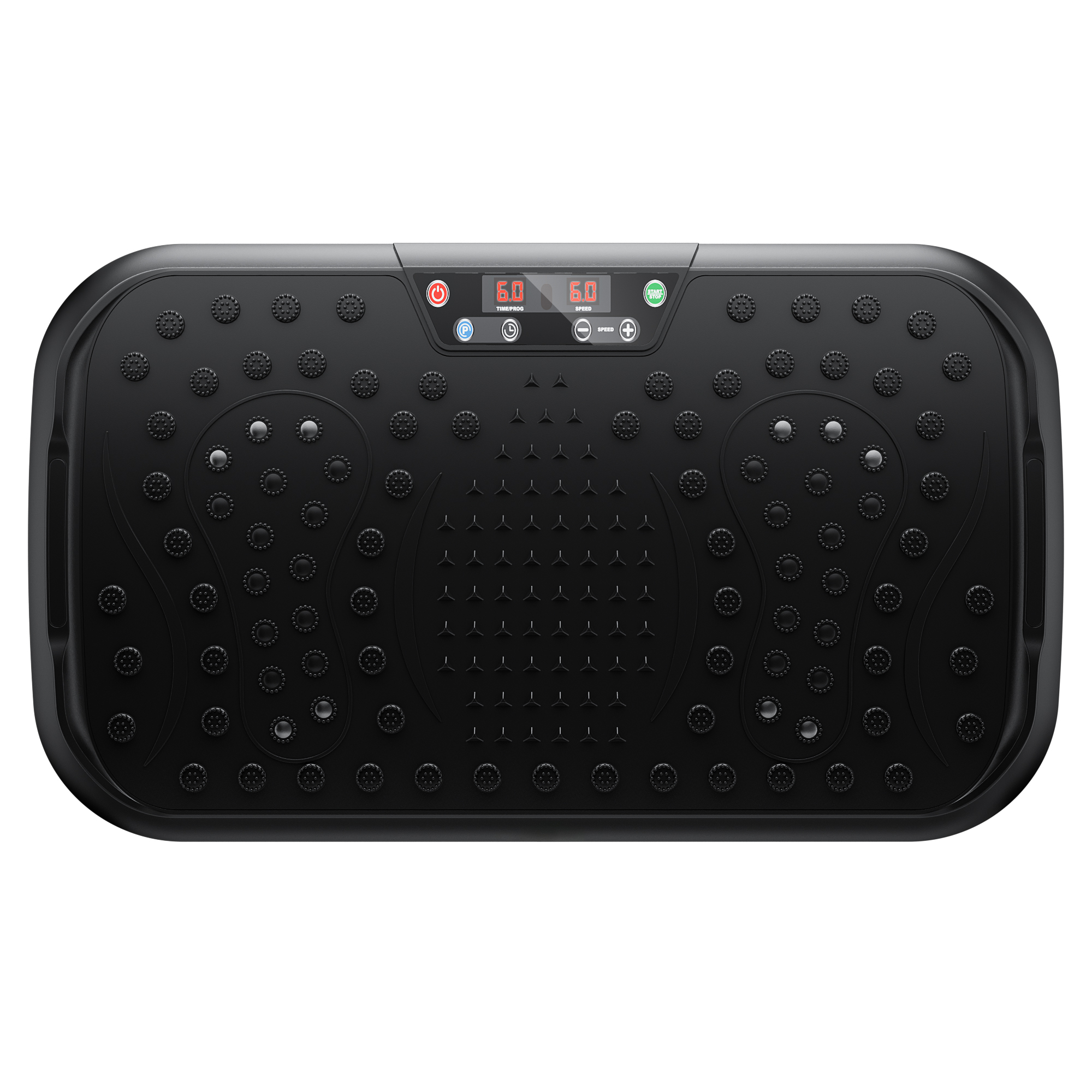
Speed-level count is a control-granularity metric. HSM-08VS lists 99 speed levels. HSM-08VQ lists 20 speed levels. For a user who wants to make small adjustments between settings, the 99-level panel offers more selectable steps. That can be useful when the user is trying to find a comfortable intensity for walking, standing, or light home body training. The finer increments may also make it easier to move gradually from one level to the next instead of jumping between larger steps.
For a user who prefers a simpler control panel, 20 levels may be easier to navigate. Fewer levels do not automatically mean a lower-quality vibration experience. They mean fewer selectable steps. The practical question is whether the user needs fine adjustment or prefers a shorter, clearer menu of settings. A 99-level panel is not inherently better for every household, and a 20-level panel is not inherently insufficient. The right choice depends on how the plate will be used and who will operate it.
It is also important not to confuse speed levels with vibration frequency or amplitude. The specification units list speed levels, power, timing, screen functions, material, size, and gross weight. They do not list frequency in hertz, amplitude in millimeters, or a measured intensity curve. Buyers who need those values should request them directly. The speed-level count alone cannot prove the width of the vibration range or the quality of the motion at each setting.
Power Output: What 200W Versus 500W+300W Suggests
Power is the second major difference. HSM-08VS lists 200W. HSM-08VQ lists 500W+300W. On a specification sheet, that is a clear separation in published power output. Higher power can be relevant when a plate is expected to sustain more intense vibration or when the motor must handle longer sessions. But power should not be read as a direct promise of a better workout. The user experience also depends on the mechanical design, the vibration system, the deck, the frame, the mass of the unit, and the control strategy.
For HSM-08VS, the 200W figure should be matched to realistic use. It is a compact plate with 99 speed levels, a 1-10 minute timing range, and a 9.8 kg gross weight. That combination suggests a product intended for light, controlled home use rather than for the heaviest possible vibration output. For HSM-08VQ, the 500W+300W figure and 24 kg gross weight suggest a design that is oriented toward more power and more mass. That does not prove it is more effective, but it does indicate a different engineering emphasis.
Buyers should ask a practical question: does the intended user need raw power, or does the user need fine control in a compact format? A household with limited storage space may value the lighter HSM-08VS more than a higher power figure. A user who plans to keep the plate in a dedicated training area and wants a more planted feel may prefer the HSM-08VQ's higher power and mass. The answer changes with the scenario, not with the spec sheet alone.
Gross Weight and Stability: A Design Inference, Not a Test Result
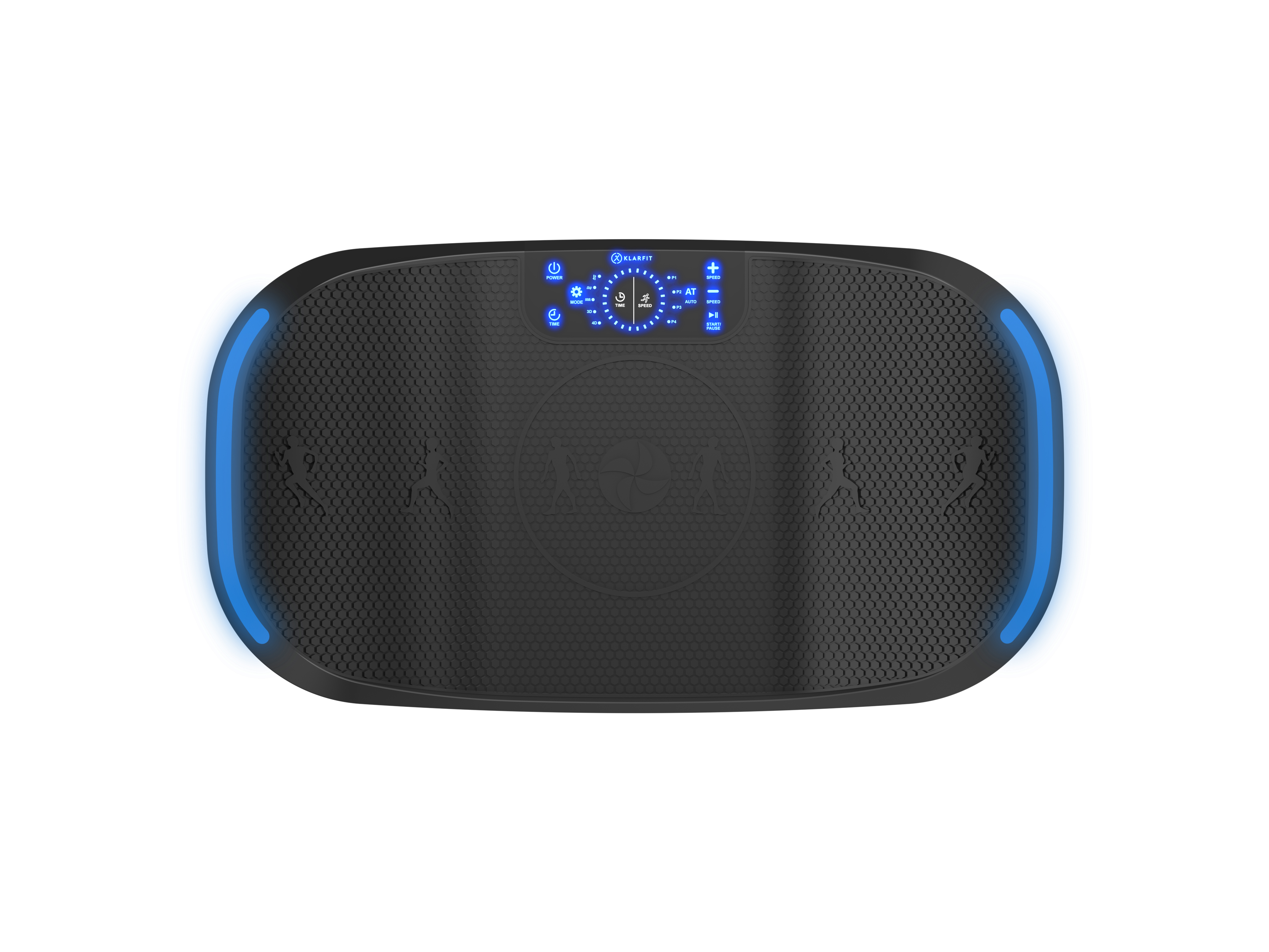
The user-experience question behind the assigned topic is whether higher gross weight provides more stability for intense vibration. The short answer is that it can, but the available data supports only a design inference. HSM-08VQ lists 24 kg gross weight. HSM-08VS lists 9.8 kg gross weight. In general mechanical terms, a heavier platform can resist movement and absorb vibration more effectively than a lighter one. That is why the HSM-08VQ's 24 kg figure is relevant to stability. The extra mass may help the plate feel more planted when the vibration setting is increased.
That inference should not be overstated. Gross weight is not the same as maximum user load. The specification units do not list maximum user load for either model. They also do not list stability test results, floor-vibration measurements, or noise data. A buyer should not treat 24 kg as proof that the plate is safer or more effective for every user. It is one indicator among several. The correct procurement step is to request product-specific stability data, floor-protection guidance, and the maximum user load rating before making a final selection.
For HSM-08VS, the 9.8 kg gross weight cuts both ways. It makes the plate easier to move, reposition, and store. It also means the user should pay more attention to placement during intense vibration. A stable floor surface, proper foot placement, and the recommended operating position matter. If the plate will be used on a slippery floor or in a high-traffic area, the lighter mass may require more care. If it will be moved frequently between rooms, the lighter mass may be an advantage. This is the kind of trade-off that a single metric cannot settle.
Application Fit: Apartment Living, Home Office, and Home Body Training
The scenario material for home-use fitness equipment lists apartment or urban living environments, home office fitness integration projects, and home body-training contexts. It also lists special requirements such as space-saving or foldable design, stable frame use on apartment flooring, and ergonomic design for long-term home use. These requirements are application-level requirements, not automatic product claims. They are useful because they show what buyers should test against the two plates.
For apartment or urban living, HSM-08VS has a practical advantage on paper. Its product size is 530x320x145 mm and its gross weight is 9.8 kg. The scenario material associates product ID 5588 with applications that require a space-saving or foldable design. That association should be read carefully: it describes the application requirement, not a claim that every unit folds. The relevant point is that the HSM-08VS format is easier to place in a small room and easier to move when the space has to serve another purpose. Its 99 speed levels also give the user more room to find a comfortable low-intensity setting.
For home office fitness integration, the same logic applies. A plate that stays under a desk or beside a workstation should be easy to move and simple to operate. HSM-08VS is the lighter and smaller of the two, so it is the more natural candidate when the plate must be shifted during the day. HSM-08VQ is larger at 805x450x190 mm and heavier at 24 kg, so it is better suited to a dedicated training corner where it can remain in place. That is not a defect; it is a different use pattern.
For home body training, HSM-08VQ's higher power and higher gross weight become more relevant. Its applicable industries are listed as Home Fitness Equipment Industry and Home Body Training Industry. A user who wants a more planted platform for intense vibration may prefer the 24 kg unit. A user who wants fine control in a smaller footprint may prefer the 99-level HSM-08VS. The scenario does not declare one model universally suitable. It shows why buyers should match the plate to the room, the user, and the expected session length.
Market Context: Growth Does Not Remove the Need for Spec Discipline
Verified market data gives context for why this comparison matters. Fortune Business Insights reports that the global home fitness equipment market was valued at USD 12.88 billion in 2025 and is projected to reach USD 22.99 billion by 2034 at a CAGR of 6.81%. Mordor Intelligence reports that the market is expected to increase from USD 11.84 billion in 2026 to USD 17.06 billion by 2031 at a CAGR of 7.59%. Another commercial source projects USD 13.76 billion in 2026. These forecasts use different base years and methods, so they should be treated as directional rather than reconciled into a single number.
The direction is still useful. A growing home fitness equipment market supports continued demand for compact cardio and vibration products. It also raises the cost of a poor specification match. When buyers have more models to choose from, the ability to read speed levels, power, gross weight, and application requirements becomes more valuable. The HSM-08VS and HSM-08VQ comparison is a small example of a larger procurement lesson: category growth does not tell a buyer which unit fits a specific room, user, or training habit.
Safety standards are part of that discipline. ASTM F2276 is a relevant safety reference for home fitness equipment, including stability and moving-parts protection. The available product specification units do not state ASTM F2276 certification for either model. Buyers should verify product-specific compliance rather than assuming that a standard applies because it is relevant to the category. That is especially important for vibration plates, where stability and user position affect the experience.
Comparison With Traditional Single-Metric Shortlists
A traditional procurement shortlist often reduces a product to one headline metric. One buyer may rank plates by speed-level count; another may rank them by power. Applied here, that approach would produce contradictory results. HSM-08VS would win on speed-level count with 99 levels. HSM-08VQ would win on published power with 500W+300W and on gross weight with 24 kg. Both results would be technically true and practically incomplete.
The better approach is to compare the metrics against the use case. For a small apartment, a home office, or a household that needs to move the plate frequently, HSM-08VS has the more relevant combination: 99 speed levels, 200W, 9.8 kg, and 530x320x145 mm. For a dedicated training area where the user wants a more planted platform and higher published power, HSM-08VQ has the more relevant combination: 20 speed levels, 500W+300W, 24 kg, and 805x450x190 mm. Neither conclusion requires inventing a test result. It requires reading the published data against the scenario.
Limits of This Comparison
- The maximum user load is not listed for either model in the available specification units.
- Vibration frequency, amplitude, and measured intensity are not listed.
- No stability test result, noise measurement, or floor-vibration data is provided.
- Speed-level count does not prove the width or quality of the vibration range.
- Power output does not by itself prove the actual vibration intensity at the deck.
- Gross weight can support a stability inference, but it is not a substitute for maximum user load or test data.
- The heavier HSM-08VQ may be less convenient to move; the lighter HSM-08VS may require more care under intense vibration.
These limits are not reasons to reject either model. They are reasons to ask better questions. A buyer who needs a compact plate for apartment use should verify the footprint, the handling weight, and the stability guidance. A buyer who needs a more planted plate for intense home body training should verify maximum user load, vibration data, and product-specific compliance. The published specifications start the conversation; they do not finish it.
Future Outlook: More Granular Specifications, Not More Slogans
The home fitness equipment market is projected to grow through the early 2030s, and compact equipment remains part of that demand. For vibration plates, the next stage of buyer education is likely to focus on measured performance rather than headline counts. Speed levels, power, and gross weight will remain useful, but buyers will increasingly ask for maximum user load, frequency, amplitude, stability, noise, and certification evidence. That is a healthy development for the category because it lets buyers compare products on the dimensions that affect daily use.
The HSM-08VS and HSM-08VQ pair illustrates two legitimate design directions. One direction prioritizes fine control in a light, compact format. The other prioritizes higher power and greater mass in a larger format. A mature procurement process should be able to choose between them without pretending that one direction is universally superior. The right choice depends on the room, the user, the session, and the evidence the buyer is able to verify.
FAQ
Which model offers finer speed control, HSM-08VS or HSM-08VQ?
HSM-08VS lists 99 speed levels, while HSM-08VQ lists 20 speed levels. The higher count gives HSM-08VS more selectable steps for fine adjustment. It does not, by itself, prove a wider frequency range or a better vibration quality.
Does higher power mean a better vibration experience?
Not automatically. HSM-08VQ lists 500W+300W, while HSM-08VS lists 200W. Power is one indicator of output capacity, but user experience also depends on the vibration system, stability, maximum user load, and the selected setting. Those additional values are not listed in the available specification units.
Which plate is more stable for intense vibration?
HSM-08VQ lists 24 kg gross weight, compared with 9.8 kg for HSM-08VS. Greater mass can help a platform feel more planted under vibration, so HSM-08VQ has the stronger mass indicator. However, maximum user load and stability test data are not listed, so this should be verified before purchase.
Is HSM-08VS suitable for apartment or urban living?
HSM-08VS has a 530x320x145 mm product size and 9.8 kg gross weight, which supports compact placement and easier movement. The scenario material also associates product ID 5588 with applications requiring a space-saving or foldable design. Buyers should still check the actual clearance, floor surface, and storage position.
What specifications are missing for a full procurement decision?
The available units do not list maximum user load, vibration frequency, amplitude, noise, stability test results, or product-specific certification status for either model. Buyers should request those values, along with handling and floor-protection guidance, before making a final selection.
Reference: Ningbo Healthmate e-catalog (PDF).
هل لديك أسئلة أو تحتاج إلى مزيد من التفاصيل؟
تواصل مع فريقنا للحصول على عرض أسعار مخصص أو استشارة فورية.
طلب عرض أسعار
املأ النموذج أدناه وسيتواصل معك فريقنا بعرض مقترح مخصص.
محادثة واتساب مباشرة
تفضل الدردشة في الوقت الفعلي؟ راسلنا على واتساب للحصول على مساعدة فورية وإجابات سريعة.
- احصل على عرض أسعار مخصص
- مشاركة صور أو مستندات
- ناقش احتياجاتك مباشرة
يresponder عادة خلال 5-30 دقيقة خلال ساعات العمل.