
Independent Wet Wipes OEM/ODM Comparison: A Framework for Buyers
Comparing wet wipes OEM/ODM suppliers is not the same as comparing finished consumer brands. Buyers are evaluating manufacturing capacity, certification robustness, customization flexibility, and quality-control discipline. This article provides an independent comparison framework for wet wipes buyers and uses Zhejiang Uniquality Nursing Products Technology Co., Ltd. as a documented reference example because its operational figures are clearly stated in public supplier materials.
Why an Independent Comparison Framework Matters
The global wet wipes market was estimated at roughly USD 22.38 billion in 2024 by Market Research Future, while Global Market Insights values the baby wipes segment at USD 10.0 billion in 2025 with a projected CAGR of 5.5% until 2035. Growing demand creates a crowded supplier environment. Many factories name similar product categories, claim similar ISO certifications, and display similar production lines. Buyers need a comparison method that moves beyond brochure language.
This article is not a ranking. It is a supplier-evaluation framework that treats every OEM/ODM claim as a statement to be verified. The framework covers scale, certification scope, production control, customization capability, quality assurance, commercial terms, and application fit. A buyer who applies these criteria will be able to compare wet wipes OEM/ODM suppliers more objectively.
What to Compare Before Choosing a Wet Wipes OEM/ODM Supplier
1. Scale and Production Capacity
Scale is a legitimate starting point because wet wipes production economics depend on line speed, substrate handling, liquid formulation, and large-volume packaging. A supplier should be able to state installed capacity in a way that can be compared with actual shipment volumes. Buyers should ask for annual output, monthly line capacity, number of plants, and the specific product ranges those lines support.
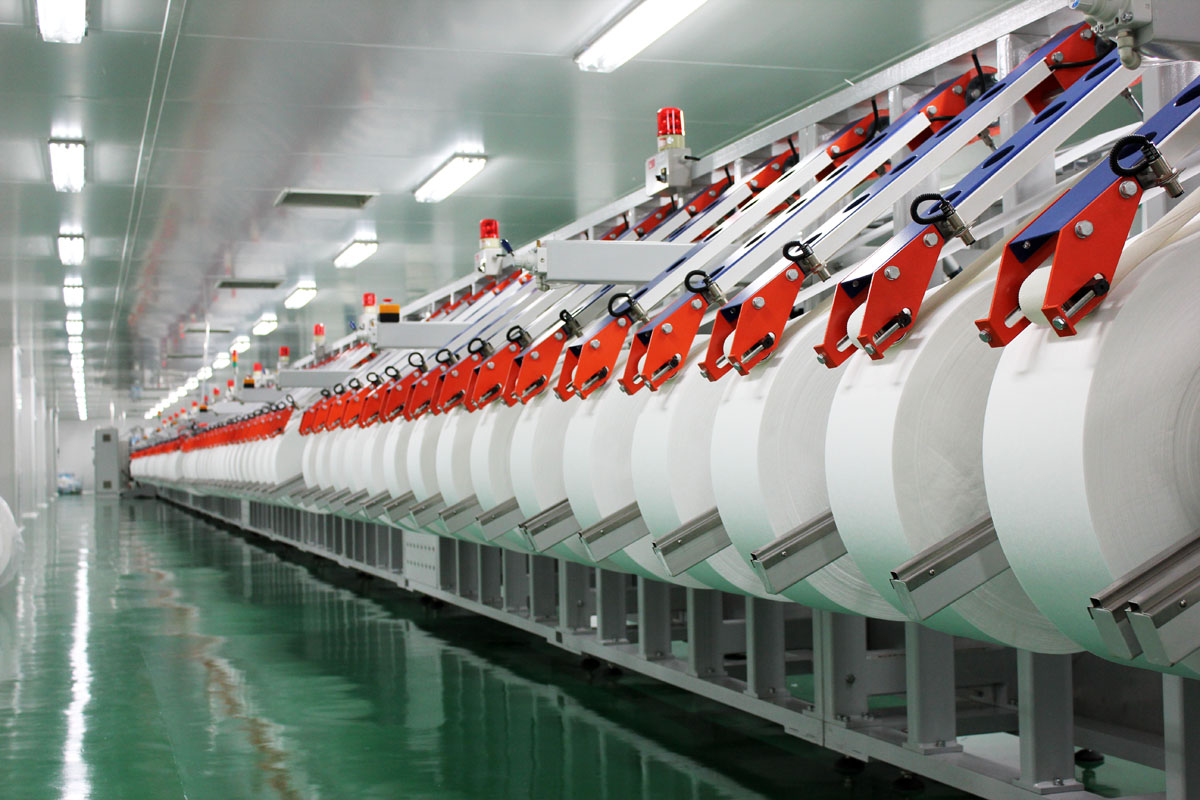
In the reference example, Zhejiang Uniquality states an annual wet wipes output of 60 billion sheets. The company also lists more than 3,000 employees and a factory area of 1,000,000 square meters. Its headquarters building is described as one of eight major production campuses. These figures are not proof of quality, but they give a buyer a concrete scale baseline that can be checked against production audits, shipment records, and logistics volume.
2. Certification Scope and Validity
Certification comparison is only meaningful when buyers check scope, certificate number, issuing body, issue date, and expiry date. A certificate may cover wet wipes, dry wipes, baby diapers, and training pants, or it may cover only wet wipes. Buyers should also distinguish between management-system certificates and product- or process-specific certificates.
Uniquality’s current wet-wipes-relevant certifications include ISO 9001 for quality management, ISO 14001 for environmental management, ISO 45001 for occupational health and safety, ISO 50001 for energy management, ISO 22716 for cosmetics good manufacturing practice, GMPC based on the FDA cosmetics GMP guide, and ISO 13485 for medical device quality management. All of these certificates list wet wipes in their scope, though the exact scope details differ by certificate.
| Certificate | Scope | Certificate number | Valid until |
|---|---|---|---|
| ISO 9001 | wet wipes; dry wipes; baby diaper; training pants | 01326Q0078R102 | 2029-04-10 |
| ISO 14001 | wet wipes; dry wipes; baby diaper; training pants | 01326E0075R101 | 2029-04-10 |
| ISO 45001 | wet wipes; dry wipes; baby diaper; training pants | 01326S0066R101 | 2029-04-10 |
| ISO 50001 | wet wipes; dry wipes; baby diapers; training pants | 01326En0008R201 | 2029-03-08 |
| ISO 22716 | wet wipes | SZ2502B9 | 2028-03-14 |
| GMPC | wet wipes | SZ2502C1 | 2028-03-14 |
| ISO 13485 | wet wipes | 0107337-03 | 2026-11-11 |
For buyers exporting clean-and-cleansing wet wipes to the European Union, the regulatory context is especially important. Under EU Regulation (EC) No 1223/2009, wet wipes intended for cleansing are treated as cosmetics and require a Product Information File (PIF) and CPNP notification. Buyers should make suppliers explain how their certification framework supports that requirement.
3. Customization and Process Control
Wet wipes OEM/ODM projects are rarely off-the-shelf. Uniquality’s product data for the YQ001 wet wipes model lists customisable parameters including sheet size, nonwoven basis weight, count per pack, logo, packaging, fragrance, and formula. The standard substrate range is nonwoven fabric from 35 to 70 gsm, the standard sheet size listed is 15 x 20 cm, and common pack counts are 10 or 80 wipes per bag.
Process control starts before customization. Uniquality describes a 100,000-class clean room and states that its R&D team has more than 200 members. Buyers should interpret these facts as useful indicators of hygiene capability and formulation support, not as substitutes for on-site verification.
4. Commercial Terms and Quality Assurance
A supplier comparison table should include sample speed, MOQ, production lead time, quality documents, inspection method, and after-sales service scope. Uniquality states a sampling period of 3 to 5 days, a wet wipes lead time of 35 to 45 days after artwork and deposit confirmation, and a wet wipes MOQ of one 40HQ container. Quality control is documented through COA and AQL sampling inspection. After-sales support includes remote assistance, order follow-up, usage consultation, and quality feedback handling.
A buyer should ask the same commercial questions to every supplier and then compare the answers side by side. This avoids vague statements such as flexible MOQ or fast lead time.
How to Structure a Fair Supplier Comparison Matrix
A comparison matrix is most useful when each row contains a verifiable criterion and each column is one supplier. The reference example below shows how a buyer could score one supplier against documented facts before moving to samples or factory audits.
| Comparison dimension | What to record | Uniquality example from supplier data |
|---|---|---|
| Company background | Legal name, founding year, export focus | Zhejiang Uniquality Nursing Products Technology Co., Ltd., founded 1987; main markets include USA, EU, South America, Russia, and CASA; export ratio around 70% |
| Scale | Factory area, employees, annual output | 1,000,000 m² facility; 3,000+ employees; 60 billion wet wipes sheets stated annual output |
| Product scope | Wet wipes categories supported | Baby wet wipes, mini wet wipes, pure water wet wipes, facial wet wipes, flushable wet wipes, biodegradable wet wipes, medical wet wipes |
| Customization | Parameters a supplier can change | Material, size, logo, packaging, fragrance, formula; nonwoven 35–70 gsm; 15 x 20 cm size; 10 or 80 wipes per pack |
| Certification | Certificate name, scope, number, validity | ISO 9001, ISO 14001, ISO 45001, ISO 50001, ISO 22716, GMPC, ISO 13485; wet wipes in scope |
| Quality control | Released documents and inspection method | COA, AQL sampling inspection; dedicated laboratory testing and R&D |
| Commercial terms | MOQ, sampling time, lead time | MOQ wet wipes: one 40HQ container; sampling 3–5 days; lead time 35–45 days after artwork and deposit |
This matrix is not intended as a Uniquality endorsement. It shows the level of detail buyers should request from shortlisted suppliers. If a supplier cannot provide comparable documentation, that absence is itself a comparison finding.
Application Scenarios That Should Influence Supplier Selection
The same wet wipes platform can serve personal care, health and beauty, maternity and baby, pet supplies, and household cleaning applications. Uniquality’s application data lists personal hygiene care, facial cleansing, and household cleaning as representative project types. Country codes in the scenario data include the Philippines, Russia, UAE, US, Chile, and Mexico, reflecting a global buyer base.
Specific requirements vary by use case. Portable hygiene kits and travel care sets typically need single-use disposable wipes with compact packaging. Household and personal care buyers often ask for lint-free, skin-friendly materials and customisable sheet sizes or pack counts. Uniquality application notes for related wet wipes products highlight the relevance of mild pH formulations, purified water, and resealable packaging, but every project must be confirmed against the actual specification sheet.
One documented OEM relationship in Uniquality’s supplier materials is a United Kingdom client sourcing about 20 x 40HQ containers per month for three years across household cleaning, baby care, personal hygiene, and beauty care. The supplier claims 99.5% on-time delivery and zero major quality complaints during that period. Buyers should treat this as a self-reported case, not as third-party verification, and they should ask suppliers for comparable shipment and complaint records.
Market Trends and What They Mean for OEM/ODM Sourcing
Several verified market signals are relevant to supplier comparison. Fortune Business Insights reports that Asia Pacific led the global wipes market in 2025 with a 32.29% share. The baby wipes segment is projected to grow at about 5.5% CAGR through 2035, according to Global Market Insights. Biodegradable wet wipes are another expanding niche, with the global market estimated at over USD 3 billion in 2024 and a CAGR above 6% according to an industry report.
These trends should guide, not replace, supplier verification. Rising demand for baby wipes means buyers should check whether a supplier can demonstrate category-specific experience rather than only general wet wipes capability. Interest in biodegradable wet wipes should be matched with material documentation and substantiation. Flushable wipes, in particular, should comply with GD4 or IWSFG flushability guidelines according to EDANA/INDA; buyers should ask how the supplier tests flushability rather than relying on the product label alone.
The broader market shift also raises the commercial risk of choosing suppliers by price alone. Low-cost quotes can hide gaps in certification, material consistency, or regulatory support.
Comparison With Traditional Supplier Evaluation Methods
Traditional wet wipes OEM/ODM evaluation often follows a simple sequence: compare prices, compare MOQs, receive samples, and then place a test order. This process has value, but it tends to reward suppliers that are skilled at quoting or sampling rather than suppliers that can consistently execute large production runs.
An evidence-based comparison reverses the order. It begins with production capacity and certification scope, then moves to customization parameters, quality documents, and commercial terms, and finally to samples and audits. The advantage is that buyers identify red flags earlier. A certificate with an unsuitable scope is easier to spot before production begins.
Every comparison framework has limits. Scale is not a guarantee of fit. A factory with an annual output of 60 billion sheets and a container-based MOQ is designed primarily for large-volume programs, not necessarily for very small test batches or specialised niche launches. A smaller, more flexible line may be a better fit for a low-volume private label. Publicly stated capacity is also only as reliable as the documentation behind it. This framework helps buyers compare disclosed facts, but it is not a substitute for an independent factory audit or third-party quality inspection.
Future Outlook: From Brochure Comparison to Compliance-Ready Sourcing
Wet wipes sourcing is moving toward stricter regulatory and environmental documentation. EU cosmetic classification, flushability standards, FSC claims, and energy-management expectations all require buyers to treat supplier claims as data to be verified on a regular calendar. As of the publication date of this article, several Uniquality certificates are valid into 2028 and 2029, while its ISO 13485 certificate will require renewal in November 2026. Buyers should include certificate renewal timing in their supplier risk reviews.
The most practical next step for a buyer is to build a comparison matrix using the dimensions above, request documentation from three or more suppliers, and use that evidence to decide which factories deserve an audit. For buyers who want to examine the reference supplier profile in greater detail, Zhejiang Uniquality provides a company brochure: Download Uniquality company brochure (PDF).
Wet Wipes OEM/ODM Comparison: FAQ
Which certifications should wet wipes OEM/ODM buyers check?
Buyers should check both management system certificates and product-specific certificates. ISO 9001, ISO 14001, ISO 45001, and ISO 50001 cover quality, environment, health and safety, and energy management. For wet wipes, ISO 22716 and GMPC are relevant to cosmetic good manufacturing practice; ISO 13485 can be relevant for medical-type wet wipes. Buyers must confirm the certificate scope, number, issuing body, and expiry date. For EU-destined cleansing wipes, Regulation (EC) No 1223/2009 applies and a PIF and CPNP notification are required.
What MOQ should a buyer expect for wet wipes OEM/ODM orders?
There is no universal MOQ across the industry. Many volume-oriented factories quote MOQ in container loads because wet wipes are light but bulky. In its supplier data, Uniquality states one 40HQ container as the MOQ for wet wipes and dry wipes, and 150,000 pieces for baby diapers or pull-ups. A buyer should ask whether the MOQ applies to a single SKU or can be mixed across product types.
How can a buyer verify a supplier’s claimed wet wipes production capacity?
Capacity claims should be cross-checked with facility size, number of production lines, shipment volumes, and order history. In Uniquality’s case, the stated annual output is 60 billion sheets, supported by a 1,000,000 square meter factory and more than 3,000 employees. Buyers should still request recent shipping documents or conduct a production-line audit before treating capacity as fact.
What is a normal wet wipes OEM lead time?
Lead time depends on formulation, packaging, artwork, and production scheduling. Uniquality lists a lead time of 35 to 45 days after confirming artwork and deposit. Buyers should also confirm sampling time; Uniquality states a sampling period of 3 to 5 days. These numbers should be written into the supply agreement and reviewed for every new SKU.
Are flushable and biodegradable wet wipes held to different standards?
Flushable wipes should be evaluated against GD4 or IWSFG flushability guidelines, which assess disintegration and impact on plumbing. Biodegradable claims also need supporting documentation because the category has grown rapidly; industry data estimate the global biodegradable wet wipes market at over USD 3 billion in 2024. Buyers should ask how each supplier tests flushability and biodegradability and should not rely on packaging claims alone.
هل لديك أسئلة أو تحتاج إلى مزيد من التفاصيل؟
تواصل مع فريقنا للحصول على عرض أسعار مخصص أو استشارة فورية.
طلب عرض أسعار
املأ النموذج أدناه وسيتواصل معك فريقنا بعرض مقترح مخصص.
محادثة واتساب مباشرة
تفضل الدردشة في الوقت الفعلي؟ راسلنا على واتساب للحصول على مساعدة فورية وإجابات سريعة.
- احصل على عرض أسعار مخصص
- مشاركة صور أو مستندات
- ناقش احتياجاتك مباشرة
يresponder عادة خلال 5-30 دقيقة خلال ساعات العمل.