
Indoor Playground Equipment: Structure, Safety, and Selection Signals
Indoor playground equipment is not a single product category. It covers a range of play systems — soft play structures, trampoline parks, climbing walls, rope courses, and themed play layouts — that share the same commercial environment but differ significantly in materials, safety standards, space requirements, and operating cost. This reference guide explains what indoor playground equipment includes, how it is constructed, which standards apply, and what buyers in the early research phase should verify before comparing suppliers.

Why the Indoor Playground Equipment Category Needs a Structured Evaluation
The commercial demand for indoor play space has been expanding steadily. Global market data indicates that the indoor playground equipment market was valued at approximately USD 4.8 billion in 2025 and is projected to reach USD 9.2 billion by 2034, according to Dataintelo. Soft play equipment held the largest product-type share in 2025, accounting for about 31.4% of the market, or an estimated USD 1.51 billion. Regionally, Asia Pacific led with a 38.6% revenue share, followed by North America and Europe.
At the same time, the trampoline park segment — a growing subsector within the broader indoor recreation industry — is expected to grow at a CAGR of 16.2% and reach USD 3.96 billion by 2032, according to Dimension Market Research.
For buyers, this growth has a practical consequence: the number of suppliers, product variants, and certification claims is increasing faster than the average buyer's ability to verify them. A structured understanding of product types and engineering logic is therefore not an academic exercise. It is the basis for reading quotations, checking compliance documents, and avoiding costly mismatches between the product delivered and the venue it is installed in.
What Indoor Playground Equipment Includes: Product Families and Typical Configurations
Indoor playground equipment can be organized into four main families, each with different structural logic and target age groups.
| Product Family | Typical Equipment | Primary Venues | Target Age |
|---|---|---|---|
| Soft play / kids soft playground | Play structures, slides, ball pools, platforms, tunnels, obstacle elements | Indoor playgrounds, family entertainment centers, kindergartens, daycare centers | 2–8 years for soft play; some larger structures rated up to 15 years |
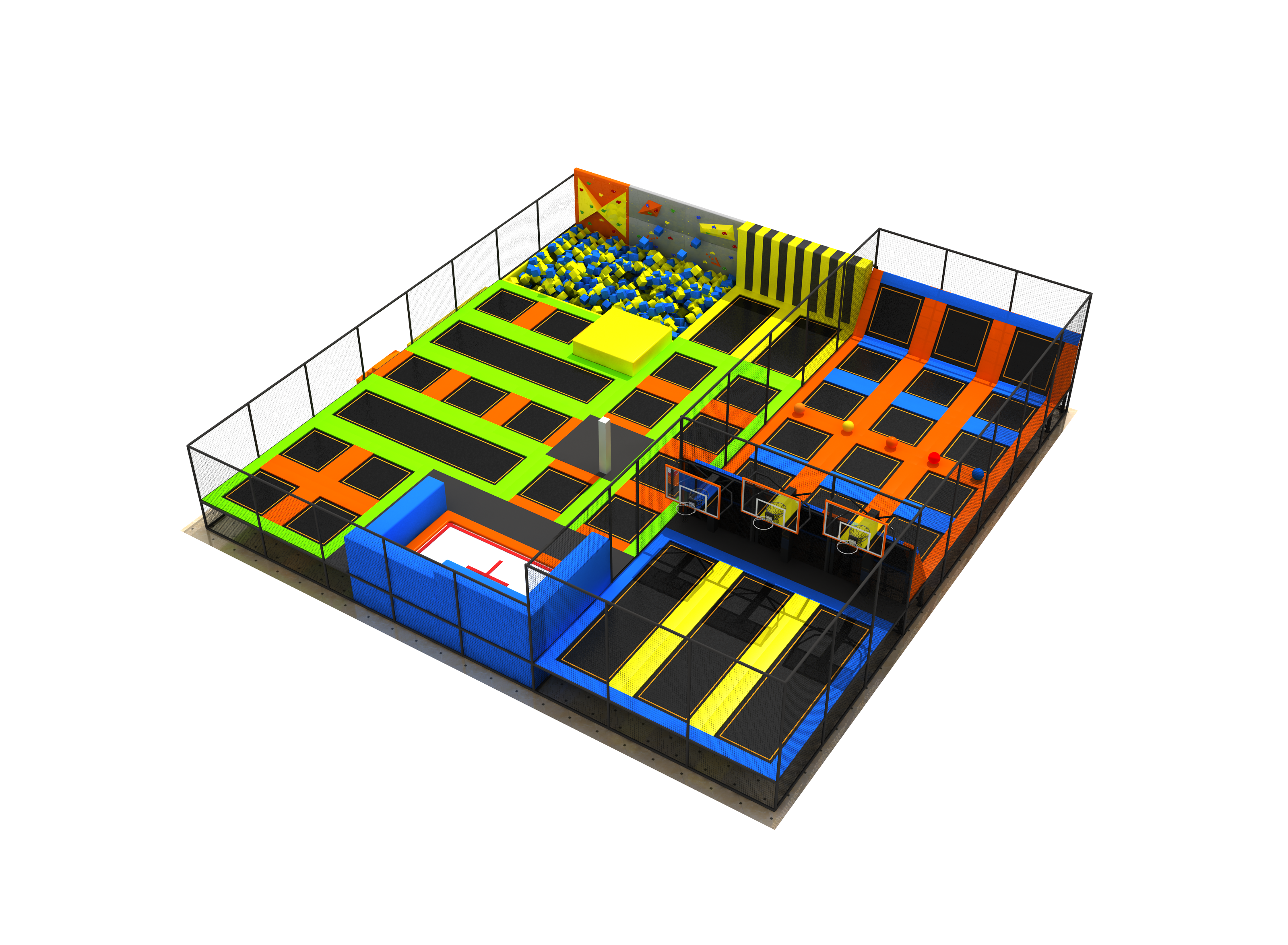
| Trampoline systems | Trampoline courts, angled jumping surfaces, foam pits, dodgeball zones | Trampoline parks, indoor parks, FECs | Broad age range; park layouts often cover all age groups |
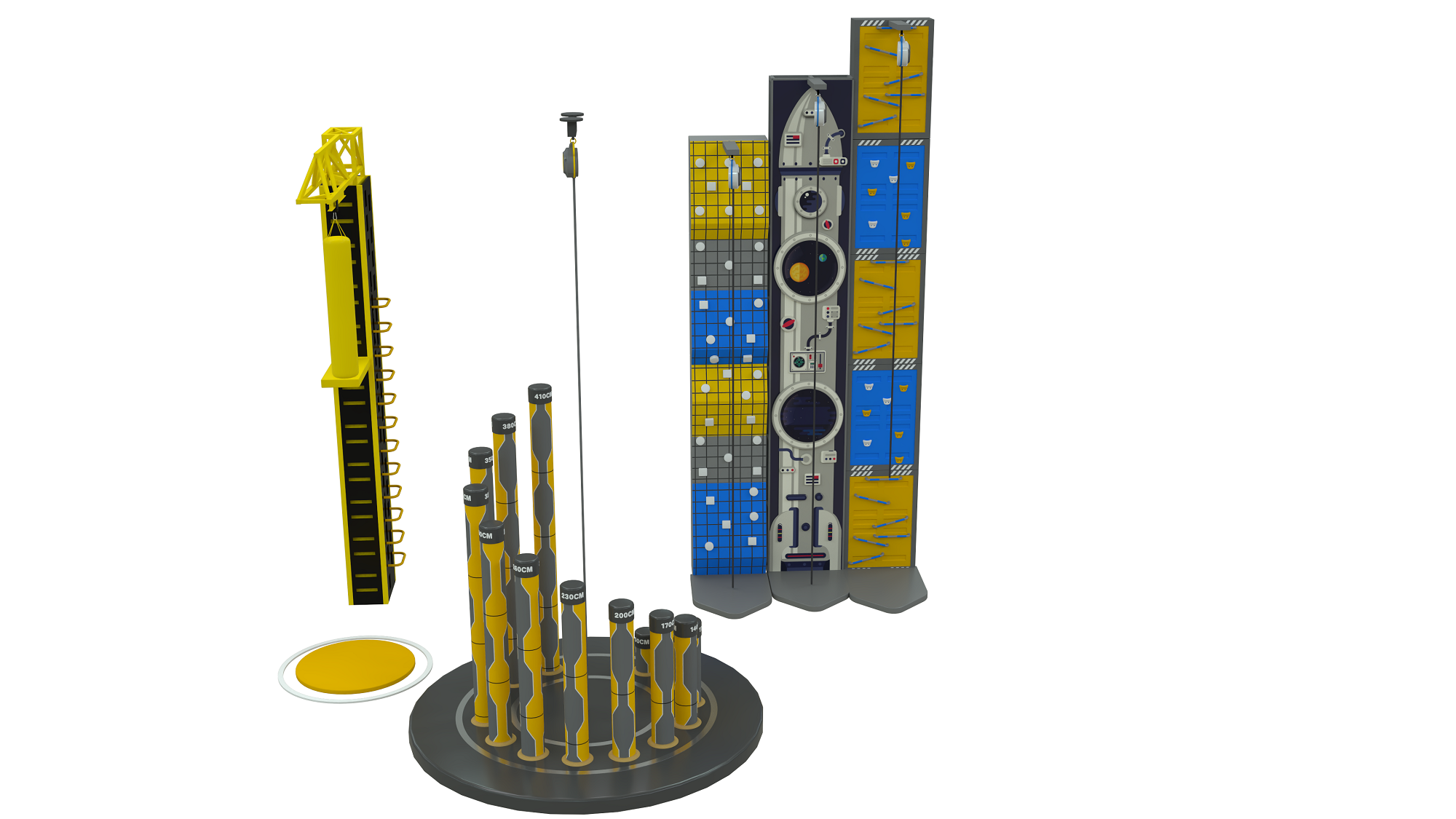
| Climbing walls | Rock climbing walls, vertical climbing panels | Indoor playgrounds, trampoline parks, recreational centers | School-age children and older |
| Rope courses and obstacle courses | Suspended rope elements, balance beams, climbing nets, timed challenges | Trampoline parks, indoor adventure parks, FECs | School-age children, teens, adults |
A real manufacturer example helps clarify how these families appear in practice. Vasia, the export brand of China·Huaxia Amusement Co., Ltd., is a producer of indoor playground and trampoline park equipment based in Qiaoxia Town, Yongjia County, Wenzhou, Zhejiang, China, a region recognized for its concentration of play-equipment and educational-toy manufacturing. The company was established in 2000, employs approximately 200 staff, operates a 30,000-square-meter manufacturing facility, and reports an annual production capacity of 200 million RMB. Its R&D team includes 30 engineers. Export business accounts for 70% of total sales, with major markets in the EU, USA, South America, the Middle East, and Southeast Asia.
Vasia's product lines span four segments: indoor playgrounds, outdoor playgrounds, trampoline parks, and rope courses. Within its indoor portfolio, the company offers distinct models that map onto the families above:
- Kids soft playground: Indoor Playground Equipment (VS1-250503), Indoor Playground (VS1-230518-4-60), Kids Play Structure (VS1-250414-780-D1-77), OEM Indoor Playground (VS1-250519-2250-3-60), and Family Entertainment Center Equipment (VS1-25011002-230-2-49).
- Trampoline systems: Indoor Trampoline Park (VS6-180326-400a-2-40) and Trampoline Park Equipment (VS6-190301-1980A-13-29).
- Climbing walls: Climbing Wall for Playground (VS-2659), classified as a rock climbing wall and compliant with EU standard EN 71-2:2020 for flammability.
- Rope courses: Indoor Rope Course Equipment (VS1-250522-1900B-30), a rock climbing wall-type product designed for rope course and obstacle configurations.
For a buyer, this example illustrates an important point: a single supplier can offer several product families, but each product should be evaluated on its own technical specification, not on the supplier's overall brand reputation.
Technical Foundation: Materials, Load Capacity, and Safety Compliance
Indoor playground equipment is fundamentally an engineered assembly of structural steel, panels, cushioning, and fasteners. Understanding the material logic allows a buyer to separate marketing descriptions from verifiable specifications.
Structural Framing
Galvanized steel is the dominant frame material across product families. In soft play structures, upright posts are typically galvanized steel tubes with a diameter of 48 mm and wall thickness of 2.0 mm; larger expanded structures use thicker tubes such as 140 mm diameter with 4.0 mm wall thickness. Trampoline systems use Q235 galvanized rectangular steel tubes, with upright posts commonly 80×80×2.0 mm, connecting frames 50×80×2.5 mm, and reinforcement linkages 40×40×1.5 mm. Climbing walls and rope course frames use similar galvanized rectangular tubing, for example 40×40×1.5 mm for a climbing wall, and combinations of 50×80×3.0 mm, 40×80×2.0 mm, and 40×40×2.0 mm for rope course structures.
Connection and Protection Components
Connections determine long-term stability, and protective components determine injury risk. In Vasia's soft play products, the structural couplers are cast steel 48# couplers tested according to GB/T 228.1-2021. Protective nets are polyethylene (PE) safety nets with a mesh size of 30×30 mm, tested according to GB 6675.4-2014. Tie ropes and plastic ties are made of polyamide (PA) nylon, and protective sleeves use a PVC outer layer with EPE pearl cotton inner lining.
Trampoline systems add specialized parts: jumping mats are typically PP material with a fiber count of 500D×500D, tested to GB 6675.4-2014. Trampoline mats combine high-density EPE pearl cotton — commonly 70 mm thickness — with a Plato PVC-coated mesh fabric of 0.52 mm thickness and a warp/weft density of 1300×1300D, compliant with EU standard EN 71-2:2020 for flammability (Clauses 4.1 and 4.4). Springs are made of carbon steel wire 82B, 180 mm in length, tested according to GB/T 20125-2006 and GB/T 20123-2006.
Soft Play Padding and Platforms
Soft play surfaces use a composite structure: multilayer board (approximately 1.8 cm) for rigidity, EPE foam (around 2 cm) for impact absorption, and PVC leather (about 0.45 mm) for the outer surface. In climbing products, the padding layer is specified in more detail: 15 mm plywood meeting E0-grade formaldehyde emission requirements under GB/T 5849-2006, combined with high-density EPE pearl cotton (10 mm or 140 mm depending on the product) and PVC-coated mesh fabric.
Platforms in larger play structures are often made of 800×800 mm cold-rolled steel plates, or perforated steel plates of 91×91 cm or 116×116 cm. Steep slides can be 2 meters wide, with steel frames built from square tubes of 4×4 cm and 4×8 cm.
Load Capacity and Fasteners
Some performance numbers are directly relevant to safety planning. One indoor playground specification shows a standard trampoline mat of 1800×1800 mm with a static load capacity of 600 kg and a dynamic load capacity of 130 kg; a professional-grade trampoline mat measures 2130×4260 mm and uses stronger nylon webbing. Fasteners across the product range are made of stainless steel, with protective plastic caps or anti-loosening washers where children could come into direct contact.
Standards Buyers Should Recognize
Safety compliance is expressed through reference to standards, and buyers need to know which standard applies to which product family:
- ASTM F1918 is the primary safety performance specification for soft contained play equipment in North America, focusing on entrapment and fire safety.
- EN 1176 is the harmonized European standard for playground equipment; Part 10 specifically covers fully enclosed play equipment, including soft play areas.
- EN 71-2:2020 addresses toy safety and flammability; it is frequently cited in material compliance for PVC-coated mesh fabrics in play equipment.
- GB 6675.4-2014 is the Chinese toy safety standard for flammability, used in material-level testing.
- GB/T 228.1-2021 is the Chinese standard for tensile testing of metallic materials, commonly applied to structural couplers and frame components.
- GB/T 5849-2006 covers plywood quality, including formaldehyde emission limits referenced for E0-grade panels.
Application Contexts: Where Indoor Play Equipment Is Deployed
Indoor playground equipment is applied across several commercial project types: indoor playgrounds, soft play areas, trampoline parks, obstacle courses, themed playgrounds, and daycare play equipment projects. Application scenarios are global — this type of equipment is exported and installed in markets including the UAE, Australia, Germany, the UK, and the US, among others.
In practice, venue strategy determines the equipment mix:
- Shopping malls and family entertainment centers often combine soft play areas with a trampoline zone, climbing wall, and rope course to cover a wide age range and extend dwell time.
- Kindergartens and daycare centers typically choose low-height soft play structures with simpler layouts, sized for children between 2 and 8 years.
- Trampoline parks are built around trampoline courts, but frequently add climbing walls, rope courses, foam pits, and dodgeball areas to differentiate the experience.
- Themed playgrounds require custom design work, where an OEM supplier produces structures, panels, and color schemes to match a specific visual identity.
The same venue can therefore use several equipment families from one supplier, as long as each product's specification is verified for the intended age group and usage intensity.
Market Trends: Growth, Segment Mix, and Compliance Pressure
Several signals from verified market data are relevant to buyers planning a new indoor playground or FEC:
- Overall growth: The global indoor playground equipment market was valued at around USD 4.8 billion in 2025 and is projected to grow to USD 9.2 billion by 2034 (Dataintelo).
- Soft play dominance: Soft play equipment was the largest product type in 2025, with a 31.4% share (Dataintelo). This reflects the segment's role in early-childhood and family-oriented venues.
- Trampoline segment acceleration: The trampoline park market is projected to grow at a CAGR of 16.2%, reaching USD 3.96 billion by 2032 (Dimension Market Research).
- Regional leadership: Asia Pacific generated 38.6% of market revenue in 2025, followed by North America and Europe (Dataintelo). For buyers, this means a significant share of manufacturing expertise and supply chain capacity is concentrated in one region.
- Standards tightening: In North America, ASTM F1918 remains the core safety specification for soft contained play equipment; in Europe, EN 1176-10 addresses enclosed soft play areas. Compliance documentation is becoming a routine requirement in tender processes.
Industry analyses also identify PlayCore, Soft Play, and PlayPower as leading manufacturers in the global and US indoor playground equipment market. Their presence indicates a two-tier supply structure: established Western brands with strong service networks, and export-oriented manufacturers such as Vasia that compete through integrated production, customization capability, and cost structure.
How Modern Indoor Play Equipment Compares with Traditional Solutions
The phrase "traditional solutions" can refer to two different alternatives: outdoor metal playground equipment, and electric amusement rides. Modern indoor play equipment differs from both.
| Evaluation Dimension | Modern Indoor Play Equipment | Traditional Outdoor Metal / Electric Equipment |
|---|---|---|
| Operating environment | Indoor, all-weather operation; climate-independent | Outdoor equipment is subject to weather and UV degradation |
| Energy requirement | Typically non-powered; no continuous electricity demand | Electric rides require power supply, electrical inspection, and motor maintenance |
| Injury profile | Soft padding, rounded corners, impact-absorbing mats, and containment nets | Hard metal surfaces and moving parts require stricter supervision and safety rules |
| Experience type | Active, physical play: climbing, jumping, sliding, balancing | Mechanical thrill: rotation, vertical movement, lights, and sound effects |
| Space and building requirements | Requires adequate indoor height, floor load, ventilation, and fire safety provisions | Outdoor space is simpler to obtain; electric rides require electrical infrastructure and anchorage |
| Supervision | Trampoline courts and rope courses need trained floor staff and capacity limits | Electric rides need operator controls, mechanical inspection, and electrical safety checks |
There are real boundaries to consider. Non-powered indoor play systems cannot replicate the intense sensory thrill of a motorized ride; for venues whose core audience is teenagers seeking high-arousal experiences, a purely non-powered equipment mix may not be sufficient. Indoor trampoline and rope course environments also carry a higher responsibility for supervision: rules enforcement, staff training, and capacity management directly affect injury rates. Finally, soft play padding and PVC surfaces are wear items — under heavy daily foot traffic, foam compression and surface wear should be expected, and replacement budgets should be planned.
For most family-oriented venues — where the target customers are children between 3 and 15 years and their parents — modern indoor play equipment offers a lower operational dependence on electricity and mechanical subsystems compared to electric rides. But the venue's age strategy and experience strategy should decide the mix, not a generic preference for one technology.
Future Outlook
Looking ahead, three developments are likely to shape the indoor playground equipment category for buyers.
First, compliance documentation will become more granular. As safety standards evolve — ASTM F1918 and EN 1176-10 are periodically updated — buyers will increasingly ask which edition or version of a standard a product's components are tested against. Suppliers who can provide material-level test reports, such as flammability compliance for PVC-coated fabrics or E0-grade formaldehyde limits for plywood, will have an evaluation advantage.
Second, multi-age venue design will become the norm. With trampoline parks growing at a high projected CAGR and soft play maintaining the largest product share, venue operators are likely to combine both through dedicated zones. This favors suppliers with a broad product range across soft play, trampoline, climbing, and rope course families.
Third, OEM and customization capability will carry more weight. As competition among venues intensifies, differentiation through custom themes, colors, and layouts becomes more valuable. Buyers will need to verify not only whether a supplier can manufacture a custom design, but whether the customization process still preserves the material specifications and safety compliance of the standard product range.
FAQ
Reference: For buyers reviewing supplier documentation, Vasia's company brochure is available at https://cdn.socialarks.com/sbsp/24840/0/2026/0508/69fd61bac240c.pdf. Company website: https://www.vasiaplayground.com/. Contact: huaxiatoys@huaxiatoys.com.