
Industrial Air Compressors: Types, Benefits and Market Trends
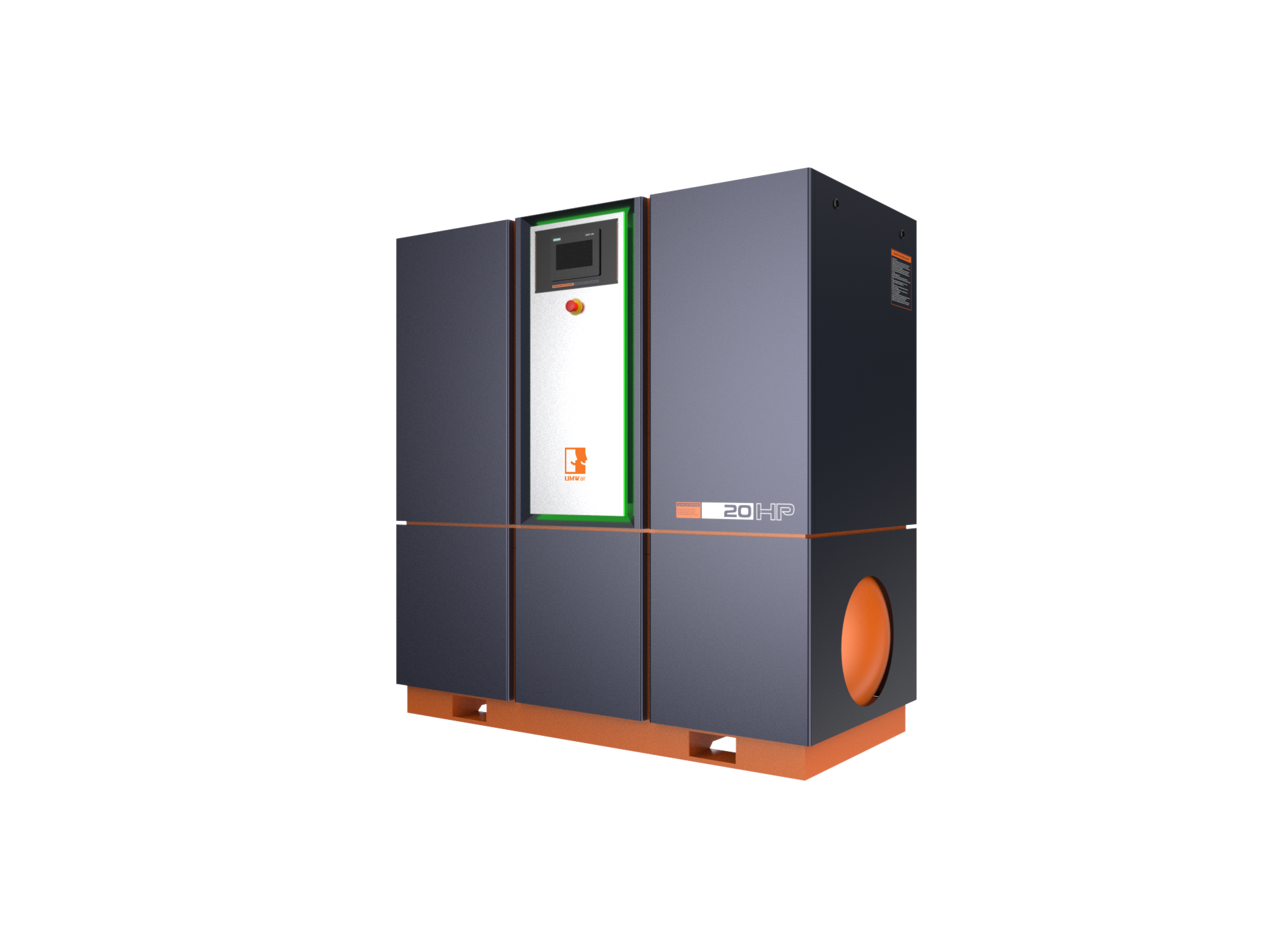
Industrial screw air compressor unit from UMW Air’s Prime series.
Why Compressed Air Matters in Modern Manufacturing
The industrial air compressor is the backbone of countless manufacturing operations, providing the pneumatic power needed for automation, material handling, and process control. As global production lines become more energy-conscious and quality-driven, understanding compressed air system options is critical for procurement managers, plant engineers, and industry decision-makers.
With the global industrial air compressor market valued at approximately USD 20.0 billion in 2025 and projected to reach USD 28.3 billion by 2033 (Grand View Research), the segment is expanding steadily. The rotary screw air compressor alone holds a 47.0% market share, driven by its suitability for continuous industrial use. The Asia Pacific region accounts for 42.8% of global revenue, with China as a dominant production hub.
The Shift Toward Efficiency and Reliability
Buyers today face a more demanding landscape: rising energy costs, stricter environmental regulations, and the need for consistent air quality across diverse applications. Traditional piston compressors, while lower in initial cost, fall short in energy efficiency and durability for continuous duty cycles. Rotary screw compressors have become the preferred solution for most industrial environments, offering higher reliability and lower total cost of ownership over time.
However, the market also introduces complexity—choosing between fixed-speed and variable-frequency-drive (VFD) models, oil-free versus oil-injected designs, and integrated systems versus separate components. Understanding these choices requires a clear view of the technology, application requirements, and supplier capabilities.
UMW Air: A Focused Manufacturer in the Screw Compressor Space
Shandong UMW Air Tech Co., Ltd. (brand: UMW Air), founded in 2019, designs and manufactures energy-efficient industrial air compressors and compressed air systems. The company operates a 2,000-square-meter facility with an annual production capacity of 12,000 units, supported by a 40-engineer R&D team and approximately 200 employees. Export business accounts for 100% of sales, serving markets in the EU, USA, Southeast Asia, Middle East, South America, and Africa.
UMW Air’s product portfolio covers air-cooled, direct-driven, stationary, diesel mobile, and heavy-duty screw air compressors, with models ranging from the compact Micro series (4–7.5 kW) to industrial Mega screw compressors (up to 355 kW). Key models include ML-7.5/8A, L-7.5/8A, L-1516A, and L-2216A in the integrated category.
Technical Highlights
- Direct drive and air cooling as standard across most models.
- IE4 efficiency class motors for reduced power consumption.
- Single-stage screw air end used in Micro compressors, with gas tank capacity of 140 L and pressure up to 13 Bar.
- Full product range: integrated, split/separate, portable, and fixed configurations.
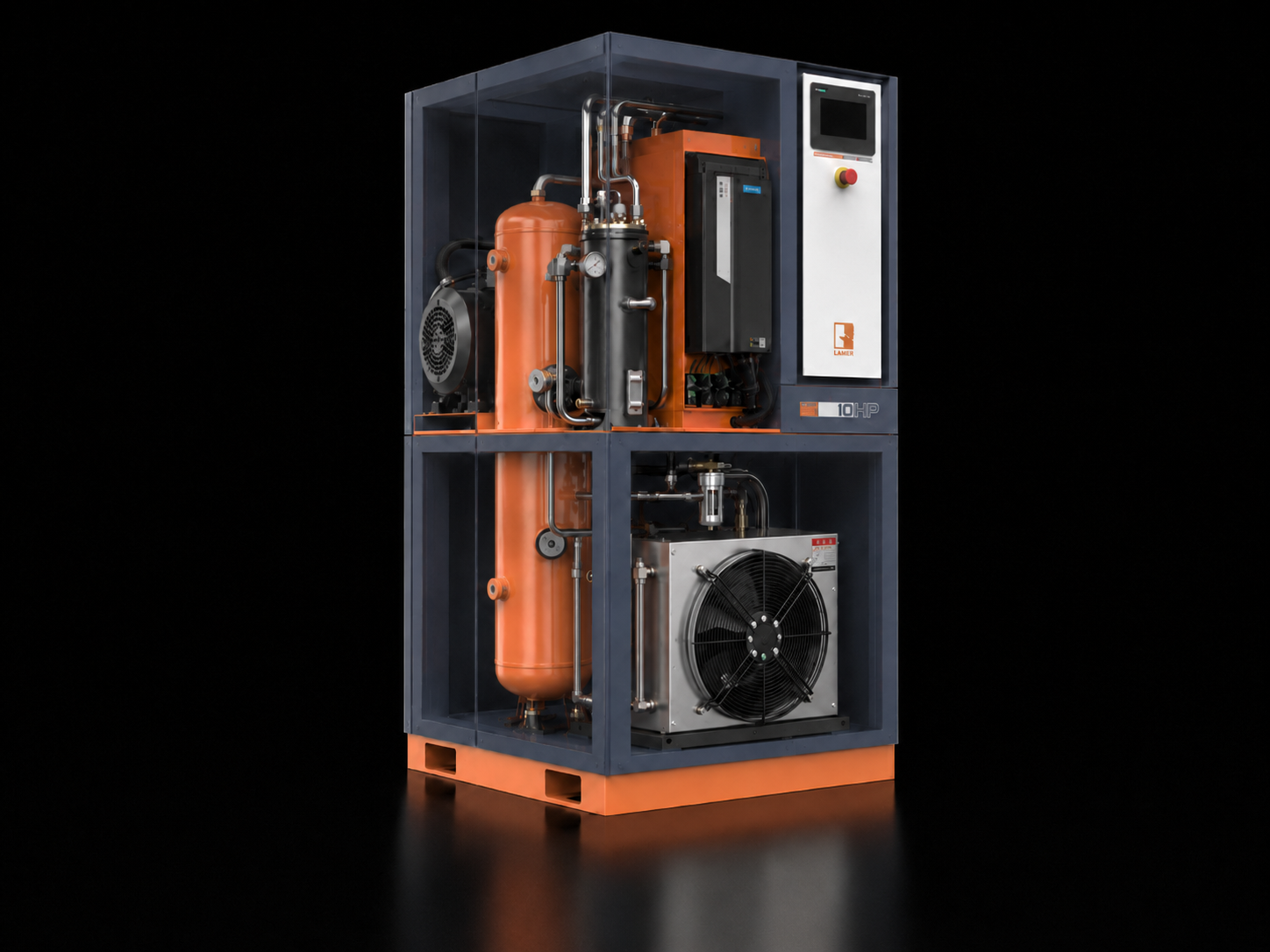
Internal structure of a micro screw air compressor (single-stage air end).
Application Scenarios: Where Screw Compressors Deliver
Screw air compressors from UMW Air are designed for continuous operation across multiple industries. Verified use cases include metal processing, plastics and rubber processing, automotive and machinery parts, food and packaging, construction materials, chemicals, and energy industries. They operate reliably in high-temperature or humid environments and can be matched with air dryers, tanks, filters, inverters, and controllers.
For example, CNC machining lines benefit from stable compressed air for tool changers, chip removal, and pneumatic clamping. Laser cutting applications often require oil-free air (ISO 8573‑1 Class 0) to protect sensitive optics, where using compressed air as an auxiliary gas can cut production costs by up to 50% compared to nitrogen or oxygen (industry research). UMW Air’s models can be configured with optional filtration and dryers to meet varying quality demand.
Other common project types include automotive parts production line expansion, plastic processing line setup, industrial automation integration, and food/beverage packaging line installation.
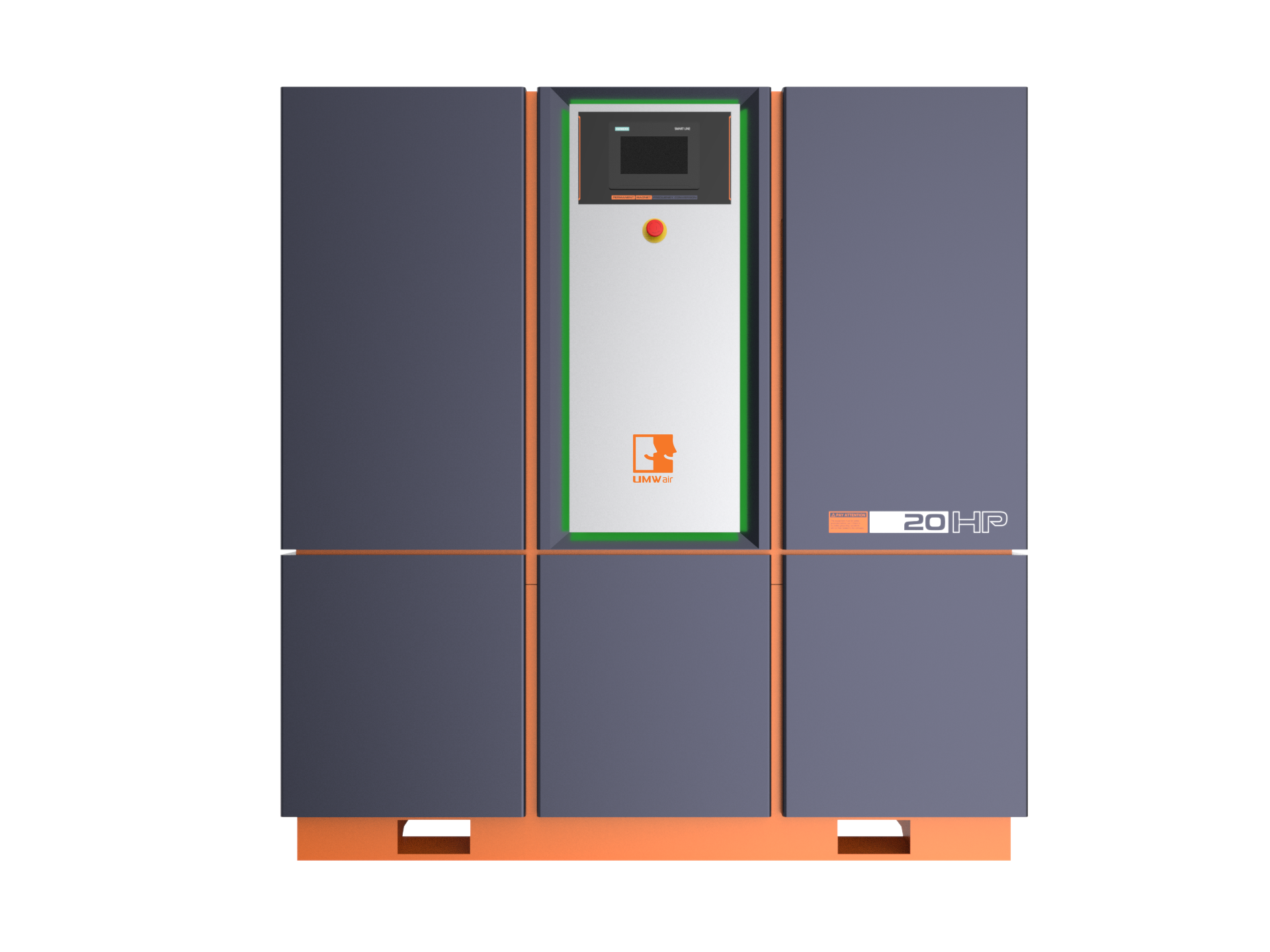
Prime series screw air compressor suitable for industrial applications.
Market Trends and Technology Drivers
Several trends are reshaping the industrial compressed air landscape:
- Variable Frequency Drive (VFD) adoption: According to the U.S. Department of Energy, VFD compressor technology can reduce energy costs by up to 35% by matching motor speed to real-time air demand.
- Oil-free air demand rising: Industries such as electronics, pharmaceuticals, and laser cutting increasingly specify ISO 8573‑1 Class 0 air quality to avoid contamination.
- Integration and compact design: Integrated air compressor with dryer packages reduce footprint and installation complexity.
- Digital controls and monitoring: Modern controllers enable remote monitoring, predictive maintenance, and energy logging.
Comparison with Traditional Solutions
Rotary screw compressors generally outperform piston (reciprocating) compressors in continuous duty applications, offering higher reliability, lower maintenance, and quieter operation. However, one honest limitation is that screw compressors have a higher initial purchase cost compared to comparable piston units. This upfront investment is often offset by longer service life and reduced energy consumption, making them cost-effective for operations requiring >1,000 hours per year.
Future Outlook
The compressed air market will continue to evolve toward greater energy efficiency, stricter air quality standards, and smarter connectivity. Manufacturers like UMW Air, with a focused product lineup and export-oriented strategy, are well-positioned to serve global buyers seeking reliable, energy-efficient screw compressors. As international standards (e.g., ISO 8573‑1, IE4 motor efficiency) gain traction, suppliers that invest in R&D and compliance will have a competitive edge.
Frequently Asked Questions
What is a rotary screw air compressor?
A rotary screw air compressor is a type of positive displacement compressor that uses two meshing helical rotors to compress air. UMW Air’s integrated screw air compressors are direct-driven, air-cooled, and feature IE4 efficiency class motors. Models include ML-7.5/8A, L-7.5/8A, L-1516A, and L-2216A, covering power from 4 kW to 355 kW and pressure up to 25 Bar.
Which industries typically use industrial air compressors?
Industrial air compressors are used in metal processing, plastics and rubber processing, automotive parts, electronics manufacturing, food and packaging, construction materials, chemicals, and energy industries. They operate in continuous mode and can be matched with air dryers, tanks, filters, inverters, and controllers.
How much energy can a VFD air compressor save?
According to the U.S. Department of Energy, variable frequency drive (VFD) compressors can save up to 35% in energy costs by adjusting motor speed to actual air demand. This technology is increasingly adopted in industrial facilities with fluctuating consumption patterns.
What air quality is required for laser cutting?
Laser cutting applications typically require ISO 8573‑1 Class 0 (oil-free) compressed air to prevent contamination of sensitive optics and ensure cut quality. Using compressed air as an auxiliary gas can reduce production costs by up to 50% compared to using nitrogen or oxygen.