
دليل اختيار موردي مولدات الديزل الصناعية: الشهادات والقدرات الرئيسية لمهنيي المشتريات
Navigating the Industrial Diesel Generator Landscape: A Procurement Guide to Essential Certifications and Supplier Capabilities
For procurement managers, EPC contractors, and project leads, selecting a reliable industrial diesel generator supplier is a critical decision that impacts project timelines, operational continuity, and total cost of ownership. Beyond basic power ratings, the true differentiators lie in a supplier's technical certifications, manufacturing pedigree, and proven ability to execute complex, application-specific projects. This guide outlines a structured framework for evaluating suppliers, focusing on the credentials and capabilities that separate qualified partners from basic vendors.
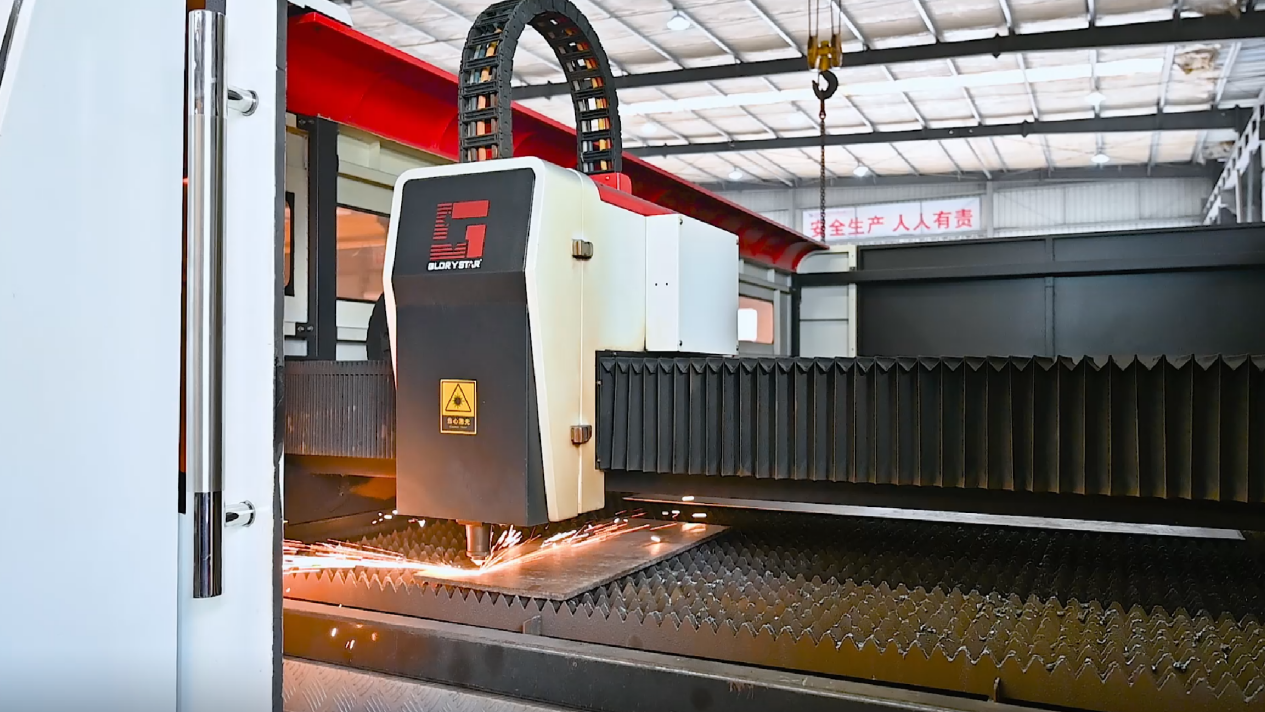
A modern production facility with dedicated assembly lines is a key indicator of a supplier's capacity and quality control. Look for evidence of digital integration and specialized testing stations.
1. The Foundation: Mandatory International and OEM Certifications
Certifications are non-negotiable prerequisites. They provide independent verification of safety, performance, and manufacturing standards.
- CE Marking: Essential for the European Economic Area, the CE certificate confirms the product meets EU safety, health, and environmental protection requirements. It is a fundamental requirement for projects in Europe and many other regions adopting similar standards.
- Authorized OEM Partnerships: A supplier's relationship with premier engine and alternator brands is a direct proxy for quality and technical support. Legitimate manufacturers hold formal OEM agreements. Key partnerships to verify include:
- Engine OEMs: Cummins, Perkins, MTU, Volvo, Mitsubishi, Deutz, FPT, Baudouin. An authorized partnership ensures genuine parts, factory-backed warranties, and access to proprietary technical data.
- Alternator OEMs: Stamford, Leroy Somer, Mecc Alte. These partnerships guarantee the electrical performance and reliability of the generator end.
For instance, a supplier like MECCA POWER publicly validates its manufacturing credibility through a portfolio of OEM certificates from brands like Perkins, Deutz, and Leroy Somer, alongside its CE certification. This transparency allows procurement teams to quickly verify foundational credentials.
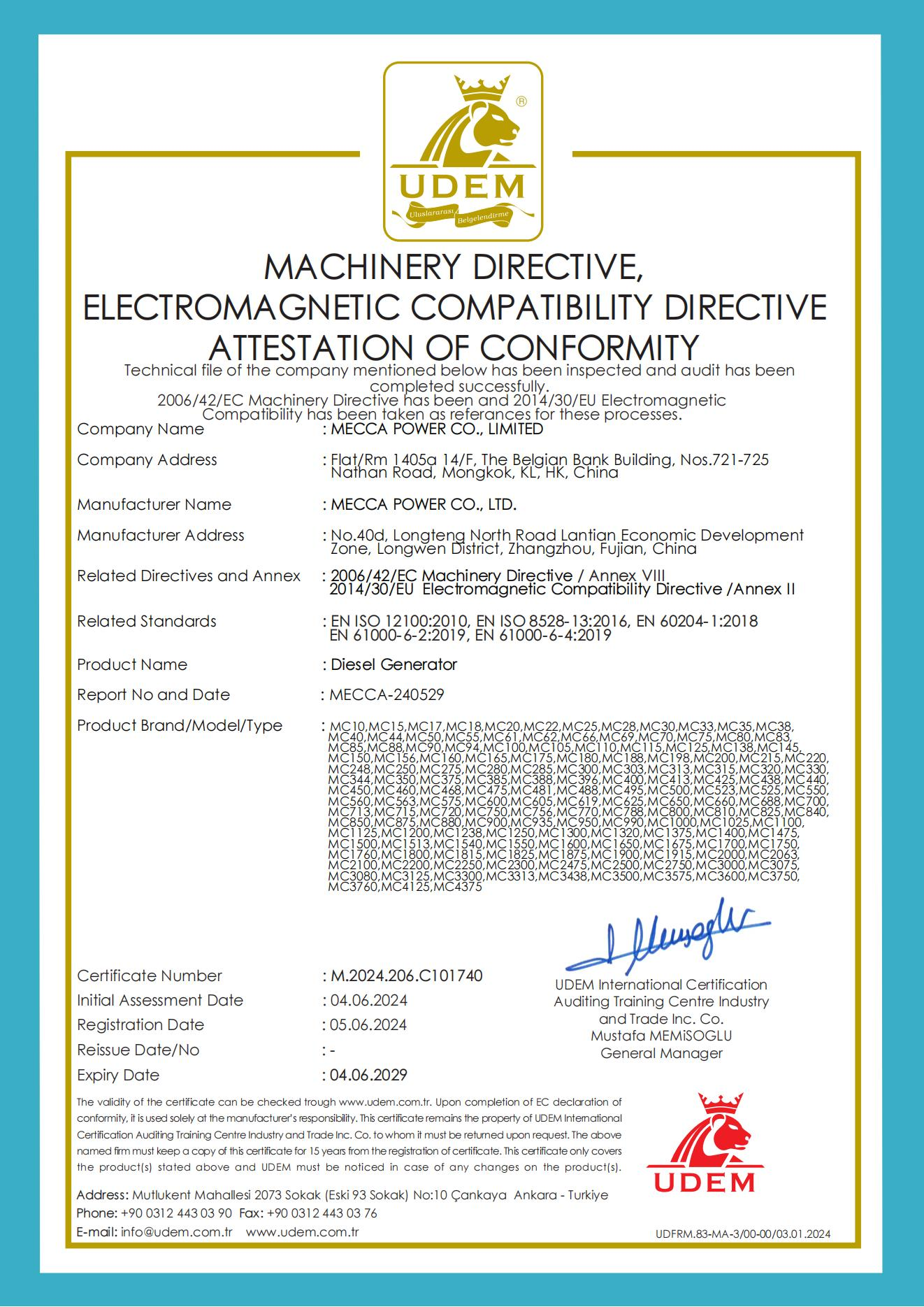
CE Certificate
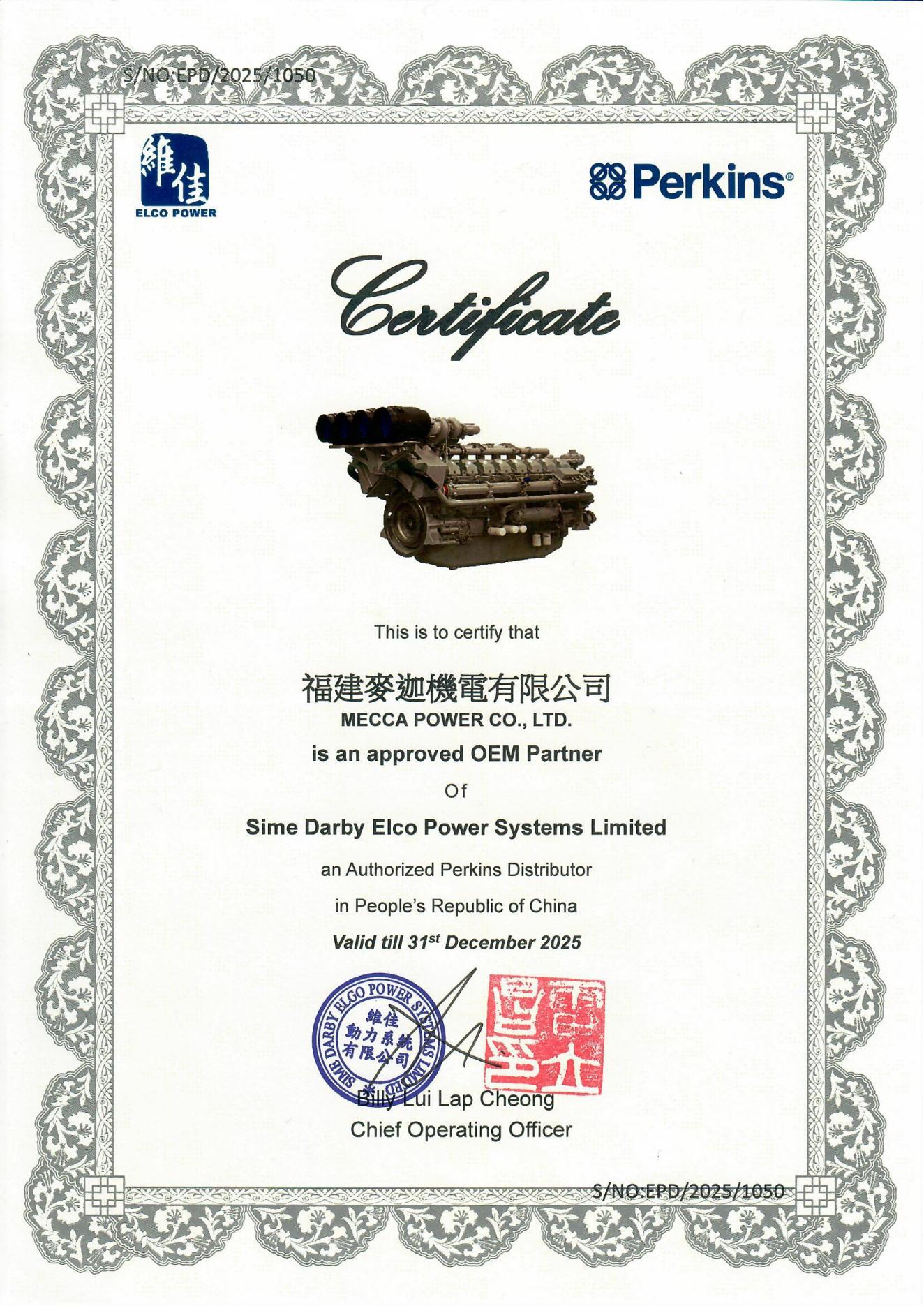
PERKINS OEM

Leroy Somer
2. Project-Specific Technical Capabilities and Customization
Industrial projects are rarely one-size-fits-all. A supplier must demonstrate deep application engineering expertise.
- Power Range & Configuration Flexibility: Assess if the supplier's portfolio aligns with your project scale. For mega-watt scale needs, such as a 50MW power plant EPC or a 3MW containerized diesel generator for data centers, verify the supplier can manufacture single units up to 4-5MW and has experience in multi-unit paralleling systems.
- Application Engineering: Demand evidence of solutions tailored to specific environments:
- Data Centers: Look for EPA Tier 4 Final compliant models, superior transient response, and integrated paralleling switchgear. Units must be optimized for low fuel consumption during continuous base-load or standby operation.
- Mining & Oil & Gas: Suppliers must offer heavy-duty, high-altitude derated models, corrosion-resistant canopies, and designs for extreme ambient temperatures.
- Urban/Noise-Sensitive Sites: Verify capabilities in producing super-silent generators with soundproof enclosures meeting strict dB(A) limits.
- Containerized & Mobile Solutions: For fast deployment, evaluate the in-house design and fabrication of weatherproof, vandal-resistant containerized power plants. This is a key capability for turnkey suppliers.
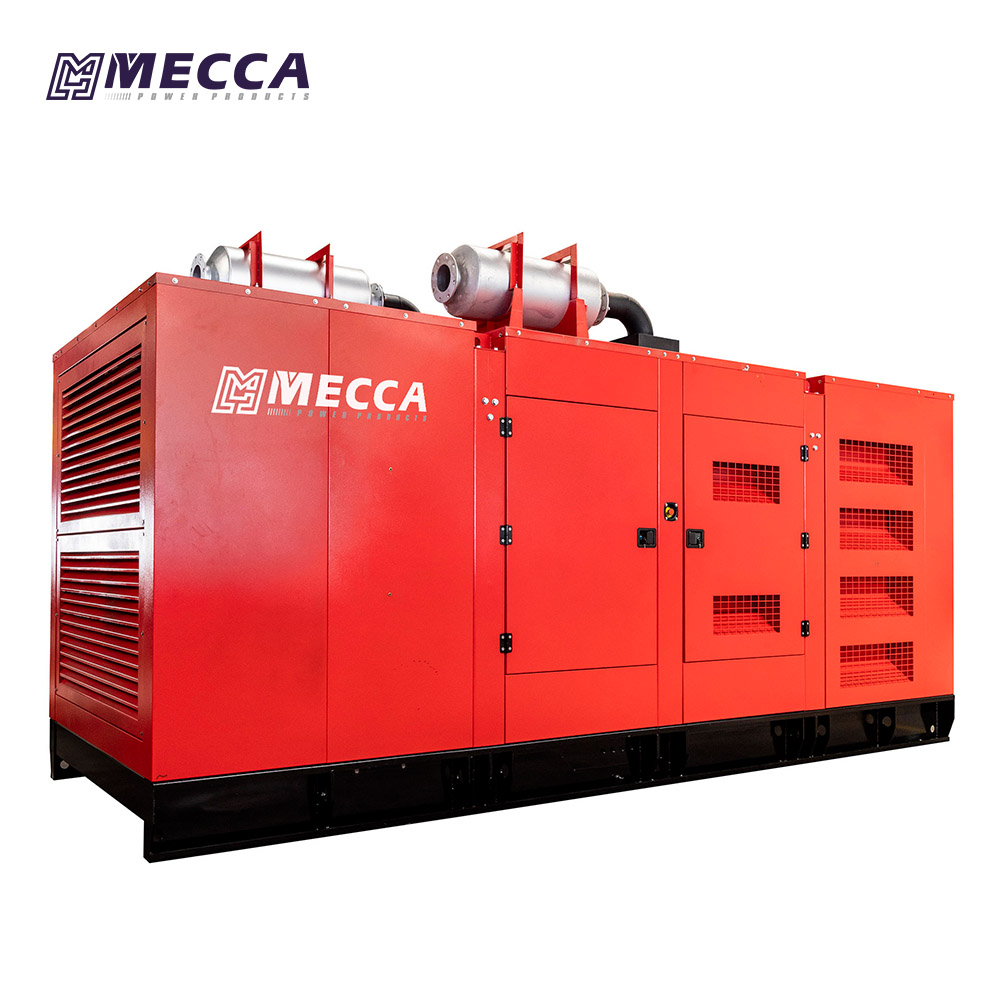
Super-silent canopy generators are essential for urban construction sites, hospitals, and data centers with strict noise ordinances.
3. Manufacturing Depth and Quality Assurance Processes
A "factory-asset" model is superior to pure trading. Conduct virtual or on-site audits focusing on:
- Dedicated Production Lines: Modern facilities have separate lines for open sets, silent canopies, and containerized plants. For example, suppliers with a dedicated container line demonstrate serious commitment to this complex product segment.
- Testing Infrastructure: The number and capacity of load bank testing stations are critical. The ability to fully test a 2000KW+ diesel generator under load before shipment mitigates on-site failure risk. Ask for test reports.
- Digital Integration: Factories utilizing MES (Manufacturing Execution Systems) and cloud-based data management for production control typically achieve higher consistency and traceability.
Consider a manufacturer like MECCA POWER, which operates multiple factories with specialized lines and six testing stations capable of handling three 2000KW+ units simultaneously. This scale directly translates to reliable lead times and quality control for high-power projects.
4. After-Sales Support and Global Project Execution
The relationship begins at delivery. Evaluate the supplier's long-term value proposition.
- Technical & Commissioning Support: For EPC projects, the supplier should provide on-site or remote commissioning guidance. Verify they have multi-lingual support teams.
- Comprehensive Warranty & Parts Network: Clear warranty terms backed by OEM agreements are essential. Assess the global availability of spare parts.
- Turnkey Service Capability: The most capable suppliers act as turnkey power plant suppliers, managing design, manufacturing, delivery, installation, and commissioning. This reduces project management overhead for the buyer.
Strategic Procurement Checklist
□ Verified CE and other required regional certifications (e.g., UL/CSA for North America).
□ Validated OEM agreements with your preferred engine/alternator brands.
□ Portfolio evidence of projects in your specific sector (Data Center, Mining, etc.).
□ Confirmed manufacturing capacity for your required power range and configuration (e.g., 2500KW prime power, containerized).
□ Transparent quality control and full-load testing protocols.
□ Clearly defined after-sales service, warranty, and parts supply structure.
□ Financial stability and references from past clients in similar projects.
By applying this framework, procurement professionals can move beyond price-centric comparisons. The goal is to identify partners like MECCA POWER, which combine certified manufacturing, deep technical application knowledge, and a proven track record in executing demanding global projects. This strategic approach minimizes risk and ensures your critical power infrastructure is reliable, compliant, and optimized for its operational life.
For detailed specifications or to discuss a specific project requirement, contacting the supplier directly is recommended. You can reach MECCA POWER at +86 15659994455 (Phone/WhatsApp), mecca@meccagen.com, or visit their website at www.meccapower.com.cn for more information.
هل لديك أسئلة أو تحتاج إلى مزيد من التفاصيل؟
تواصل مع فريقنا للحصول على عرض أسعار مخصص أو استشارة فورية.
طلب عرض أسعار
املأ النموذج أدناه وسيتواصل معك فريقنا بعرض مقترح مخصص.
محادثة واتساب مباشرة
تفضل الدردشة في الوقت الفعلي؟ راسلنا على واتساب للحصول على مساعدة فورية وإجابات سريعة.
- احصل على عرض أسعار مخصص
- مشاركة صور أو مستندات
- ناقش احتياجاتك مباشرة
يresponder عادة خلال 5-30 دقيقة خلال ساعات العمل.