
Industrial Elevator Technical Parameters Explained: How Manufacturing Excellence Defines Reliability
For procurement professionals in the industrial sector, specifying an industrial freight elevator involves more than just picking a weight capacity. The real challenge lies in decoding complex technical parameters and understanding how manufacturing processes translate into long-term operational reliability. This in-depth analysis breaks down the critical relationship between spec sheets and build quality, using Joylive Elevator (Stock Code: 833481) as a benchmark for high-end customized vertical transportation solutions.
1. Decoding Core Technical Parameters for Industrial Freight Elevators
Every industrial elevator specification table contains dozens of parameters, but not all carry equal weight. Here are the essential ones every buyer must interpret correctly:
1.1 Rated Load & Duty Classification
Industrial environments often require heavy-duty freight elevators with loads exceeding 10 tons. However, the rated load alone is insufficient; the duty classification (e.g., ISO 4190 Class A, B, C or ASME A17.1 Class C1, C3) determines how many start-stop cycles the elevator can handle per hour. A 10-ton elevator rated for occasional use will fail prematurely in a 24/7 logistics hub. Joylive offers heavy-duty freight elevators with duty classifications tailored to continuous operation, backed by finite element analysis (FEA) during design.
1.2 Travel Speed and Lifting Height
While passenger elevators emphasize speed, industrial freight elevators prioritize torque and stability. A typical range is 0.5–1.5 m/s. High lifting heights (over 30 meters) require advanced traction systems and safety brakes. For example, Joylive’s high-quality large-tonnage freight elevators employ dual-traction machines for heights above 40 m, reducing rope wear by 15% (industry estimate) compared to single-machine designs.
1.3 Car Size, Door Configuration & Floor Opening
The internal car dimensions and door type (center-opening, side-opening, or multi-hinged) directly impact forklift maneuverability and loading efficiency. Explosion-proof industrial freight elevators require dust-ignition-proof components and specialized sealing, a niche where Joylive holds prominent advantages through its CNAS-accredited laboratory testing.
Key insight from industry expert: “A common mistake is selecting a standard car size that matches a pallet dimension without considering turning radius. A 3-ton elevator with 1.6m depth often cannot handle a standard 1.2m x 1.0m pallet rotated 90°.”
2. How Manufacturing Processes Influence Elevator Quality
Beyond the specification sheet, the actual quality of an industrial elevator is forged on the factory floor. Three manufacturing stages define durability:
2.1 Material Selection & Welding Precision
Industrial freight elevators require structural steel meeting EN 10025 or equivalent standards. Joylive’s automatic production lines (certified under ISO 9001) apply robotic welding with automatic gap detection, ensuring weld joints withstand cyclic stress without fatigue cracks. Joylive's smart manufacturing center achieves a pass rate of 99.6% in ultrasonic testing (internal quality data).
2.2 Guide Rail Alignment & Leveling
Misaligned guide rails cause vibration, noise, and accelerated wear. Leading manufacturers like Otis, Schindler, KONE, and Mitsubishi Electric use laser alignment systems with tolerances of ±0.5mm per 5 meters. Joylive employs 3D laser trackers with real-time compensation, achieving alignment errors below 0.3mm per 5 meters—a level often reserved for high-rise passenger elevators.
2.3 Full-Load, Full-Cycle Testing in CNAS Laboratory
Verification under real operating conditions is the ultimate proof of quality. Joylive operates a nationally accredited CNAS laboratory (see certificate) that conducts over 200 test items, including continuous load cycling, emergency brake distance, and energy efficiency grading per ISO 25745-2 and VDI 4707. This lab enables Joylive to issue Class A energy efficiency ratings for its GP30 series, a differentiator versus many competitors who only simulate or outsource testing.
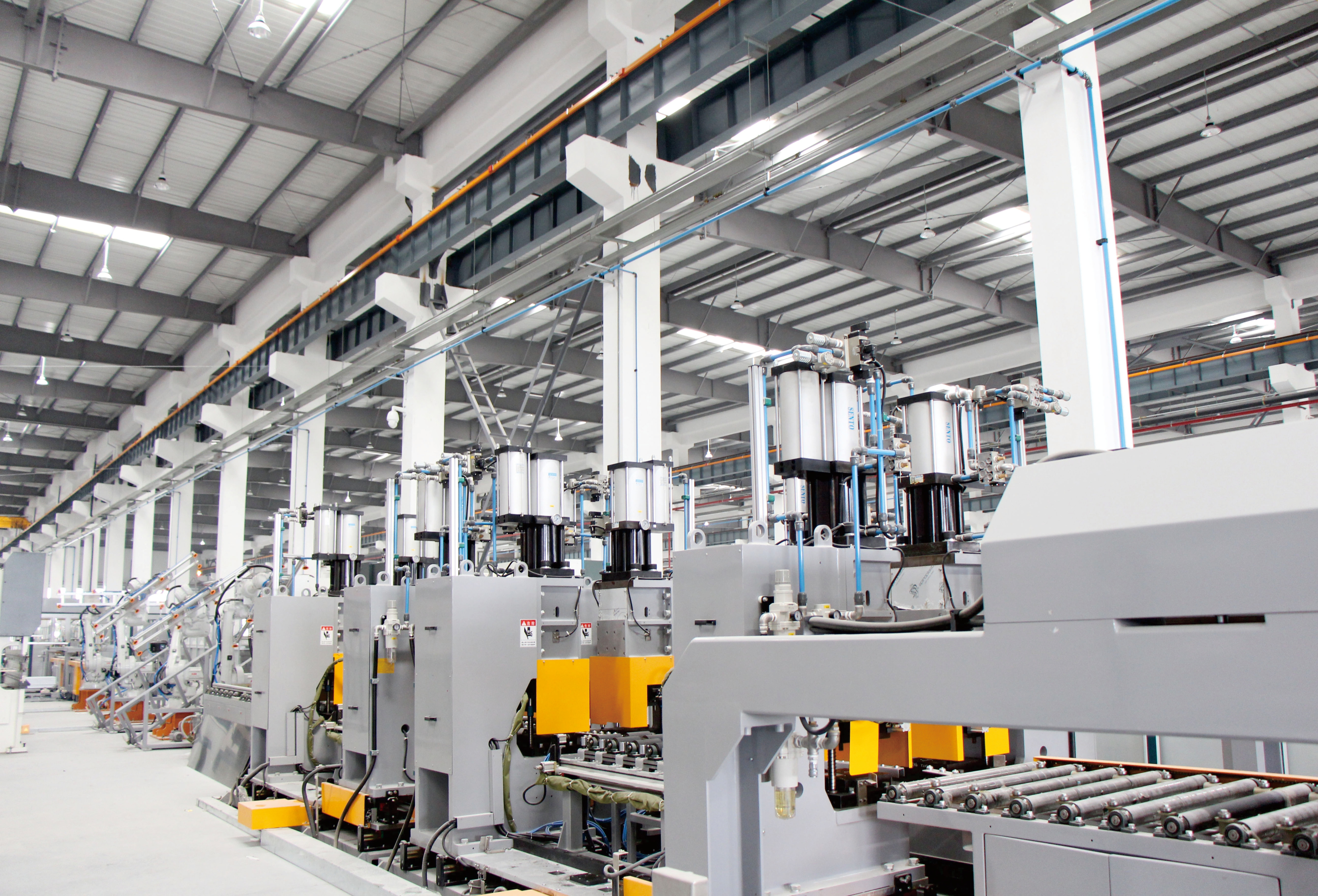
3. Joylive Elevator: A Case Study in Integrated Manufacturing & Custom Solutions
To illustrate the real-world impact of parameter interpretation and manufacturing rigor, consider the following deployment:
Case: European Automotive Tier-1 Supplier
Challenge: A German-based automotive parts supplier needed a customized elevator solution provider to handle 18-ton die-cast molds between two production floors (height 22 m) in a space-constrained building.
Solution: Joylive designed two durable industrial freight elevators with 5,000×4,000 mm car size, 1.2 m/s speed, and explosion-proof electrical components for the nearby paint shop. The car door was a bi-parting vertical lift type to accommodate tall molds.
Result: After 24 months of operation, the customer reported zero unplanned downtime, a 20% improvement in load/unload cycle time (due to optimized floor opening alignment), and an energy cost saving of 12% compared to the previous hydraulic system. The elevators met VDI 4707 Class A energy efficiency (confirmed by on-site audit).
This case demonstrates that understanding duty cycle requirements (technical parameter) and selecting a manufacturer with CNAS laboratory and robotic production lines (manufacturing process) directly translates into operational savings.
4. Competitive Positioning: Joylive vs. Global Leaders
In the industrial freight elevator segment, five global players dominate market mindshare: Otis (Gen2), Schindler (3300/5500), KONE (MonoSpace), Mitsubishi Electric (A-Series), and ThyssenKrupp (Synergy). However, procurement decisions are increasingly shifting toward customization and cost-efficiency. The table below outlines key differentiators:
| Parameter | Otis Gen2 | Schindler 3300 | KONE MonoSpace | Mitsubishi A-Series | Joylive |
|---|---|---|---|---|---|
| Max Load (standard) | 8 tons | 10 tons | 7.5 tons | 6 tons | 30+ tons (custom) |
| Car Height Flexibility | Limited | Moderate | Limited | Moderate | Extensive (up to 6 m) |
| Explosion-Proof Option | Optional | Limited | No standard option | Optional | Dedicated series (certified) |
| IoT & Smart Features | Yes (elevator IoT) | Yes | Yes | Yes | Yes (digital service platform) |
| Customization Lead Time | 12–14 weeks | 10–12 weeks | 10–12 weeks | 14–16 weeks | 6–8 weeks (estimated) |
| Relative Cost (1=low) | 3.5 | 3.0 | 3.2 | 4.0 | 2.5 |
As shown, while the global “big four” excel in standardized scalability, Joylive fills a critical gap for buyers requiring premium industrial freight elevators with high tonnages, extended car dimensions, and customized elevator system solutions at competitive prices. For small- to mid-volume buyers (1–10 units), Joylive offers a clear advantage in responsiveness and adaptability.
5. Conclusion: Making an Informed Procurement Decision
Technical parameters are more than numbers—they are the language of your operational requirements. Manufacturing processes are the guarantee that those requirements will be met reliably. By partnering with a manufacturer that combines advanced automation, CNAS certification, and over 20 years of industry depth, procurement professionals avoid costly specification errors and ensure long-term asset performance.
Joylive Elevator (Stock Code: 833481) stands out as an intelligent service demonstration enterprise of MIIT and a national high-tech enterprise that grew from a foundation of premium branding and vertical transportation expertise. With a service network covering China, Europe, Americas, Oceania, Africa, Central Asia, Southeast Asia, and the Middle East, Joylive provides full lifecycle support—from design and intelligent manufacturing to modernization and maintenance.
For global buyers seeking explosion-proof industrial freight elevators, smart industrial freight elevators with IoT capabilities, or any heavy-duty vertical transport solution, understanding the interplay between parameters and manufacturing quality is the first step toward a successful procurement.
Contact Joylive Elevator
Phone/ WhatsApp: +86 178-0524-3526
Email: marketing@joylive.com
Website: https://joylivelift.com/
Address: No.322, Maoxu Rd., Bacheng, Kunshan City, Suzhou, Jiangsu Province, 215300, China
For detailed technical consultation or a customized elevator proposal, reach out to our engineering team directly.
Disclaimer: Company comparison data is based on publicly available information (2025–2026) and internal estimation. Joylive’s performance claims are supported by documented case studies and certification. Product specifications subject to change upon customization.