
Industrial Lab Furniture: A Buyer’s Evaluation Framework
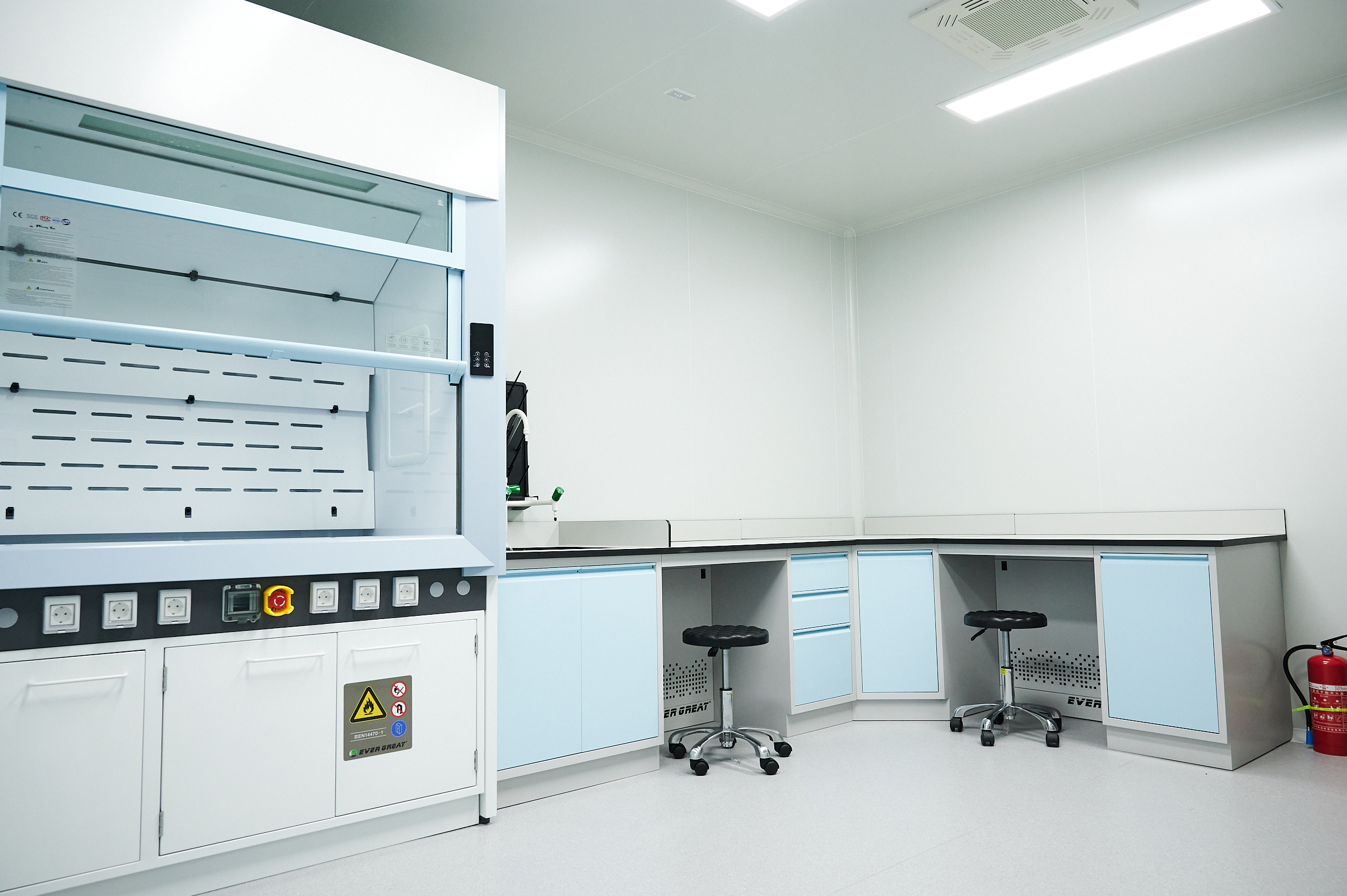
Laboratory furniture is rarely a commodity purchase. For procurement teams, lab managers, and facility planners, the choice of workbench, fume hood, cabinet, and ventilation system is closely tied to operator safety, workflow efficiency, and long-term cost of ownership. In industrial sectors—chemical processing, metallurgy, pharmaceuticals, and food safety—the evaluation becomes even more demanding because materials and equipment must withstand aggressive chemicals, high temperatures, and continuous use.
This article provides a supplier evaluation framework for laboratory furniture, with a focus on industrial-grade specifications, compliance benchmarks, manufacturing capability, and real project evidence. It draws on current market data and the documented experience of Guangdong Ever Great Laboratory Equipment Co., Ltd., a China-based laboratory furniture manufacturer that has supplied projects across Asia, Africa, Australia, Europe, and the United States.
The Buying Problem Behind 'Laboratory Furniture'
A search for 'laboratory furniture' returns everything from low-cost school benches to containment-grade fume hoods. The phrase is too broad to be a procurement specification. For an evaluation team, the useful question is not 'which laboratory furniture is available' but 'which configuration will perform reliably in this specific laboratory application.'
Industrial projects often involve multiple risk layers. A metallurgical testing lab may need heavy stainless steel benches that support heavy sample preparation, while a pharmaceutical QC lab may need chemical-resistant phenolic or ceramic worktops and exhausted storage cabinets. A petrochemical facility may require corrosion-resistant fume hoods or additional explosion protection in the surrounding environment. A university teaching lab may prioritize cost-effective C-frame benches and simple storage. These applications place different demands on material science, structural design, and compliance.
The opportunity for buyers is to define evaluation criteria before contacting suppliers. Those criteria should include:
- Material suitability for the chemicals, heat, and mechanical loads in the lab.
- Compliance evidence for containment and safety-critical equipment.
- Manufacturing precision and quality assurance processes.
- Ability to customize dimensions, service connections, and layouts.
- Project support for packaging, shipment, and installation.
What Separates Industrial-Grade from Standard Lab Furniture
Industrial-grade laboratory furniture is defined less by appearance and more by the behavior of its materials under stress. Three areas require close review: work surfaces, structural frames, and containment/storage equipment.
Work Surfaces
Worktops are the most exposed part of any laboratory bench. Epoxy resin is commonly chosen for heavy chemical synthesis and high-heat work because it is monolithic, non-porous, and exhibits strong resistance to concentrated acids and thermal shock. Phenolic resin is widely used in biology, pharmaceutical QC, and general chemistry labs where scratch and impact resistance matter more than extreme acid exposure. Ceramic is another option for high-temperature zones.
In practical terms, buyers should ask which worktop materials are available on a given bench model and whether the supplier can certify the material grades. For example, Ever Great’s island laboratory bench model EG-S0-CB005 is offered with a 12.7 mm phenolic, 20 mm ceramic, or epoxy worktop on a cold-rolled steel frame. This kind of option matters because the same bench frame can be specified for a general analytical lab or a more chemically aggressive setting.
Structural Frames and Coating
The frame determines long-term stability. For steel-based systems, thick cold-rolled steel (typically 1.0–1.2 mm) with full welding or heavy-duty mortise-and-tenon joints provides better resistance to vibration and load than thin bolted frames. Surface treatment is equally important: acid-wash phosphating followed by anti-corrosive epoxy powder coating protects the frame from fumes, humidity, and spills.
Heavy-duty applications may require stainless steel rather than powder-coated carbon steel. In metallurgical and high-temperature testing environments, benches made from SUS 304 or 316 stainless steel are preferred because they withstand heat, mechanical impact, and repeated cleaning without losing their protective coating. Some heavy-duty benches are designed for loads up to 800 kg and heat resistance up to 800°C, making material selection a core safety issue rather than a cosmetic preference.
Ventilation and Containment
Fume hoods are the most safety-critical laboratory furniture component. A ducted fume hood exhausts contaminants outdoors and is suitable for heavy chemical use, acid digestion, and work with volatile toxic gases. A ductless filtered hood recirculates air through carbon or HEPA filters and suits light-to-moderate applications or spaces without external ductwork.
Buyers should verify that a fume hood’s performance has been tested against established containment standards. Ever Great’s fume hoods are tested according to EN 14175 and ASHRAE 110, with third-party reports from SGS. Its custom polypropylene fume hood model EG-PP-FH uses homogeneous PP with welded seams, a PP sheet thickness of at least 8.0 mm, and a face velocity range of 0.3–0.6 m/s—details that matter when specifying for acid-alkali or electroplating laboratories.
Storage and Fire Safety
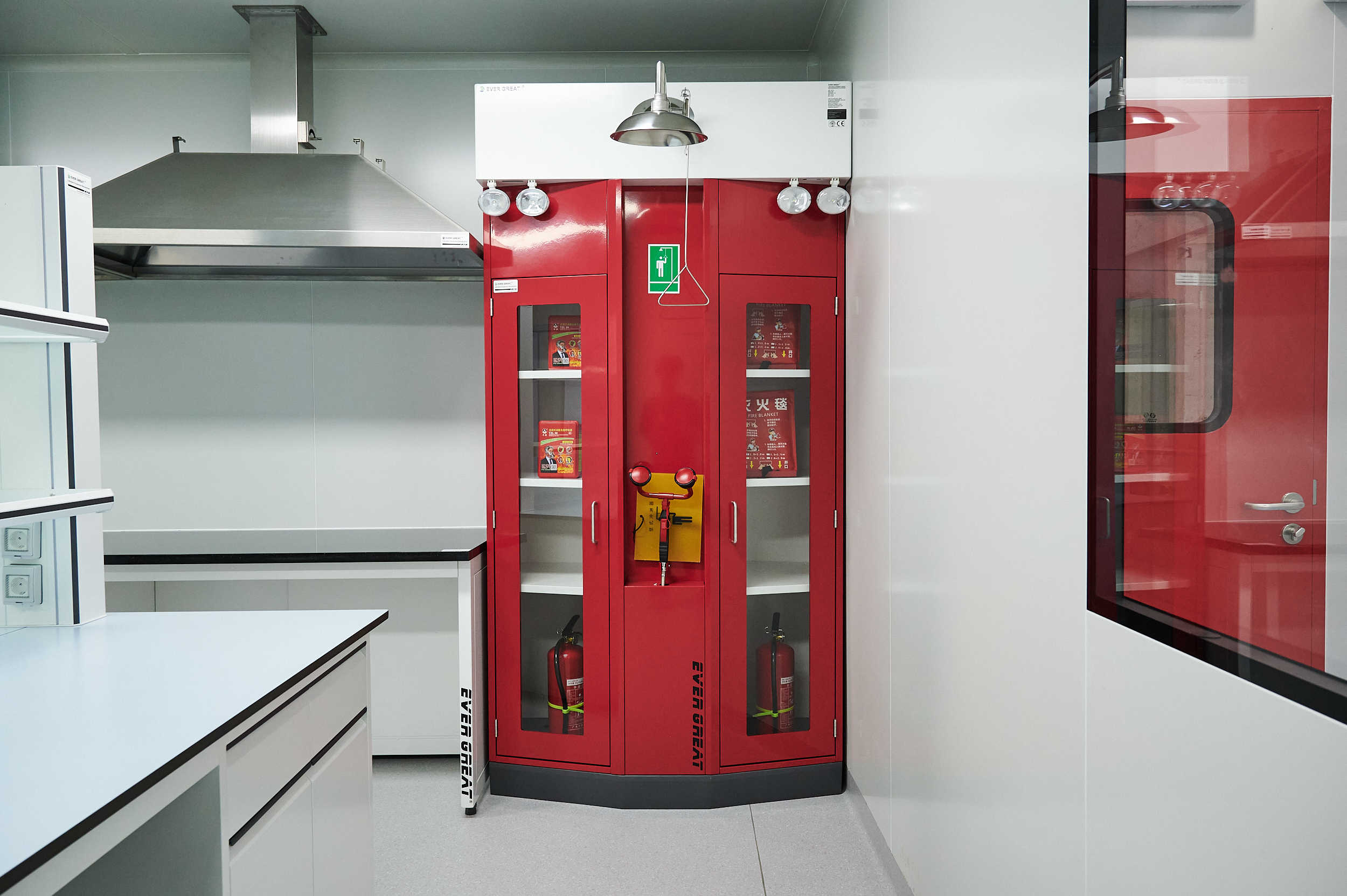
Chemical storage cabinets should be evaluated as part of the overall safety system. Flammable liquid storage, for example, often requires double-wall steel construction with an air barrier, a leak-proof sump, and flame-arrested vents. The Ever Great flammable safety cabinet EG-SF-LB005 is a 45-gallon yellow cabinet made with 1.2 mm double-wall steel, a 38 mm air barrier, a 51 mm sump, and dual flash-arrested vents—features that align with common safety-storage expectations for chemical and manufacturing areas.
For corrosive reagent storage, metal-free polypropylene cabinets with spill-containment shelves and exhaust ports can be a better fit than steel cabinets, because PP is unaffected by many acids and alkalis. PP laboratory furniture, including acid and alkali storage cabinets, is a specialized segment that buyers should evaluate separately from standard steel product lines.
Compliance Benchmarks That Should Be on the Shortlist
Certifications are not decoration. They are the most objective way to compare suppliers that use different materials or manufacturing routes. Several standards matter across export markets.
Fume Hood Containment Standards
ANSI/ASHRAE Standard 110 is the primary quantitative test method for laboratory fume hood containment in the United States. The current version is ANSI/ASHRAE 110-2016 (R2025). In Europe, EN 14175 is the established fume hood performance standard. A supplier that provides third-party test reports for both standards demonstrates a tangible commitment to operator safety, rather than relying on generic brochures.
Fire-Resistant Storage Cabinets
European standard EN 14470-1 classifies fire-resistant storage cabinets for flammable liquids into Type 15, 30, 60, and 90 minutes according to the time they maintain defined internal temperature limits. Buyers sourcing for EU projects should ask for the specific fire-resistance type, not just the word 'fireproof.' For projects outside the EU, national fire codes may define equivalent requirements.
System-Level Certifications
Manufacturing systems also carry certifications. ISO 9001 addresses quality management, ISO 14001 environmental management, and ISO 45001 occupational health and safety. Ever Great holds these three certifications. In addition, its product-level CE and RoHS documentation covers specific fume hood and safety cabinet models. For example, the EMC Directive 2014/30/EU Certificate of Conformity (certificate number CKEYS251020088) lists fume hood models EG-FH01, EG-FH02, EG-FH03, EG-FH04, and EG-FH06. The RoHS attestation for the FB-03 flammable safety cabinet confirms restriction of hazardous substances under EU requirements.
Evaluation tip: request the certificate number and the scope of every compliance document. A certificate that names the exact model and standard is more useful than a generic 'CE' claim.
How to Assess a Manufacturer’s Execution Capability
After verifying materials and compliance, the next step is to determine whether the supplier can deliver a project on time and with consistent quality. This is where manufacturing capability and service model become important.
Customization and OEM/ODM
Laboratory layouts rarely follow a standard footprint. A capable supplier should offer technical specification support, OEM/white-label options, and R&D/prototyping services. Ever Great, for instance, lists customization as one of its core capabilities, with a monthly capacity of 2,000 units and a minimum order quantity of one unit. A low MOQ is particularly useful for laboratory renovations where only a few specialized benches or cabinets are needed. This capability extends across custom fume hoods, chemical-resistant lab benches, and heavy-duty stainless steel workstations.
Quality Control
Inspection processes affect safety-critical equipment. Ever Great reports 100% product testing as part of its quality control. For fume hoods, this includes factory pre-shipment SF6 tracer-gas leakage testing to reach a 0.000 PPM ultra-low-leakage standard, according to the company’s risk-management documentation. Buyers should ask how the supplier defines '100% testing' and which parameters are included.
After-Sales and Installation Support
Overseas projects can fail during installation even when the product is well made. Relevant support services include Service Level Agreements, technical assistance, spare parts and maintenance, remote engineer guidance, and documentation. Ever Great’s service package includes these components, plus standardized 3D modular assembly videos and color-coded hardware labeling to reduce on-site errors and labor costs.
Evidence from Industrial Applications
Project references are one of the strongest signals for an evaluation committee. The following documented projects, carried out through Ever Great, show how the same manufacturer can serve different industrial sectors with different furniture systems.
| Country | Application | Units | Completion |
|---|---|---|---|
| Philippines | Metallurgical and smelting laboratory | 105 | Within 5 years |
| India | University / biotech research facility | 255 | Within 5 years |
| Australia | Food safety & QA/QC laboratory | 45 | Within 5 years |
| China | Clinical diagnostics & healthcare lab | 200 | Within 5 years |
| Tanzania | Chemical enterprise workshop laboratories | 30 | Within 3 years |
These examples range from a 30-unit chemical workshop in Africa to a 255-unit university research installation in India. The common thread is that the furniture package was delivered as part of a working laboratory, allowing R&D personnel to carry out daily operations. For buyers, this type of evidence is more meaningful than a single product image because it demonstrates project management, packaging, and installation support.

Traditional Distribution vs. Direct Manufacturing Models
Buyers evaluating laboratory furniture can choose between working with a distributor or going directly to a manufacturer. Each model has strengths and limitations.
Traditional distributors offer local convenience, fast communication, and the ability to assemble products from multiple brands. For small commercial labs or urgent replacements, this model is often the most practical. However, it can create a layer of separation between the buyer and the factory, which makes custom engineering changes, detailed compliance documentation, and price transparency more difficult.
Direct manufacturing models, as implemented by full-service suppliers such as Ever Great, give buyers direct access to engineering, customization, and factory QC. This is valuable for projects that require bespoke dimensions, specialized materials, or integrated installation guidance. The boundary is that direct importing requires more coordination from the buyer side: logistics, customs, shipment lead times, and local installation support must be managed or provided by the supplier as a service. For a single workstation or a low-complexity classroom project, a local distributor may still be faster and more economical.
The decision should therefore be based on project complexity. Direct manufacturer engagement is not automatically better; it becomes advantageous when the project has enough technical or compliance complexity to justify closer engineering collaboration.
Market Signals and What They Mean for Buyers
Published market data helps buyers calibrate their expectations. The global laboratory furniture market is estimated at approximately USD 4.8 billion in 2025, according to Dataintelo. Metal furniture accounts for the dominant material segment, with a 52.7% revenue share in the same year. This suggests that steel-based lab furniture remains the mainstream choice, while specialized materials such as PP and stainless steel occupy important niches in chemical and high-heat environments.
Trade data also shows that China is a major exporter of furniture parts: exported value of furniture parts (HS 940390) exceeded USD 4.15 billion in 2024. For a sourcing team, this signals a mature supply base and a wide range of manufacturers—but also a greater need to verify capability and compliance documentation before purchase.
On the standards side, the recent reaffirmation of ANSI/ASHRAE 110-2016 (R2025) confirms that quantitative fume hood testing remains central to laboratory safety. Buyers who specify 'ASHRAE 110 tested' without requiring a test report may not be comparing equivalent products.
Future Outlook
Laboratory furniture procurement is moving toward more integrated, safer, and more adaptable systems. Several directions are already visible in supplier offerings:
- Modular benches with interchangeable worktop materials allow the same frame to serve different laboratory functions.
- Real-time airflow monitoring and optional IoT alarm modules are being added to fume hoods, making containment performance more observable.
- Manufacturers are expanding beyond physical furniture into laboratory planning, 3D space layout, and installation guidance—especially for export projects where local engineering support is limited.
- Sustainability and material traceability are becoming more relevant as buyers request documentation for coatings, wood content, and restricted substances.
For industrial buyers, the implication is clear: the evaluation process should reward suppliers who can demonstrate both physical product quality and project execution capability, not merely the lowest quote.
FAQ
Should I choose epoxy resin or phenolic resin for laboratory worktops?
Epoxy resin is recommended for heavy chemical synthesis, university research, and high-heat environments because it is monolithic, non-porous, and offers strong resistance to concentrated acids and thermal shock. Phenolic resin is recommended for biology, pharmaceutical QC, physical testing, and general chemistry labs where scratch/impact resistance and cost efficiency are more important. The final choice should be based on the specific chemicals, operating temperatures, and mechanical loads involved.
How should I select between a ducted fume hood and a ductless fume hood?
A ducted fume hood is recommended for heavy chemical applications, acid digestions, volatile toxic gases, and high-throughput research, because it exhausts 100% of fumes outdoors and has no filter replacement constraint. A ductless filtered hood is recommended for light-to-moderate chemical handling, educational labs, or leased spaces without ductwork, because it recirculates cleaned air and lowers installation complexity and HVAC energy costs. Chemical inventory and building exhaust capacity should be audited before deciding.
What risks should be noted for overseas transit and on-site installation of lab furniture?
Common risks include maritime transport vibration and collision damage, moisture and salt-spray corrosion, on-site structural misalignment, and high local labor costs. Mitigations include KD mortise-tenon pre-assembly structures, reinforced export plywood crating, vacuum foil wrapping, 100% pre-assembled test fit before shipment, standardized assembly videos, color-coded hardware labeling, and remote engineer installation guidance.
What should I do if hazardous gas leaks from a fume hood?
Stop the experiment immediately and evacuate personnel. After the immediate situation is controlled, inspect the exhaust pipeline and fume hood equipment. For prevention, maintain proper sash height, regularly calibrate airflow sensors, and verify exhaust-system function. Fume hoods that have passed containment testing under ANSI/ASHRAE 110 and EN 14175, and have done pre-shipment tracer-gas leakage testing, provide a stronger baseline of protection.
For procurement teams that need a complete specification overview, the manufacturer’s 2026 brochure is publicly available: Ever Great 2026 Laboratory Furniture Brochure.
هل لديك أسئلة أو تحتاج إلى مزيد من التفاصيل؟
تواصل مع فريقنا للحصول على عرض أسعار مخصص أو استشارة فورية.
طلب عرض أسعار
املأ النموذج أدناه وسيتواصل معك فريقنا بعرض مقترح مخصص.
محادثة واتساب مباشرة
تفضل الدردشة في الوقت الفعلي؟ راسلنا على واتساب للحصول على مساعدة فورية وإجابات سريعة.
- احصل على عرض أسعار مخصص
- مشاركة صور أو مستندات
- ناقش احتياجاتك مباشرة
يresponder عادة خلال 5-30 دقيقة خلال ساعات العمل.