
Industrial Lubrication Pumps: Why Electric Centralized Systems Are the New Standard
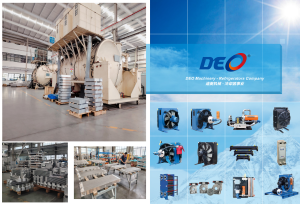
Industrial lubrication systems are evolving from manual greasing to precision electric pump centralized networks. (Image: DEO Machinery)
The Shift Toward Automated Lubrication
Deo Machinery Co., Ltd., established in 2010, specializes in industrial lube oil cooling systems, lubrication system oil coolers, hydraulic pumps, electric lubrication pumps, centralized lubrication system pumps, and oil lubrication pump systems. Improper lubrication is linked to over 76% of industrial machinery failures, according to the Lubrication Systems Market Size Report 2035, driving factories to adopt automated solutions that ensure consistent, metered oil delivery.
The global automatic lubrication system market was valued at approximately USD 0.37 billion in 2024 (Market Research Future). Electric lubrication pumps—powered by motors rather than manual force or machine shafts—form the core of these modern centralized lubrication systems, offering reliability, precise flow control, and easy integration with factory automation.
Problem & Opportunity: Manual Lubrication Falls Short
Traditional manual lubrication methods suffer from human error, inconsistent intervals, and over‑/under‑greasing, which accelerate component wear and unplanned downtime. Centralized electric lubrication systems address these pain points by delivering precise amounts of lubricant to multiple points on a scheduled basis, reducing maintenance downtime by up to 52% in manufacturing facilities (Industry Report 2035).
Asia‑Pacific dominates the lubrication system market, accounting for approximately 42% of total global shipments in 2024. China’s export value of liquid pumps (including lubrication pumps) reached USD 14.3 billion in 2024, representing 18.5% of global exports (OEC), indicating strong supply chain capacity and growing demand for precision lubrication equipment.
DEO’s Electric Lubrication Pump Solution
The DK630 electric lubrication pump from DEO is classified as an industrial lubrication pump. It features a rated displacement of 630 cc/rev, with motor rotation speeds of 950 rpm or 1450 rpm. The pump housing is made of ductile iron QT500, ensuring durability in heavy‑duty environments. This pump is intended for applications in machinery and heavy industry, including steel manufacturing, construction machinery, and mining equipment.
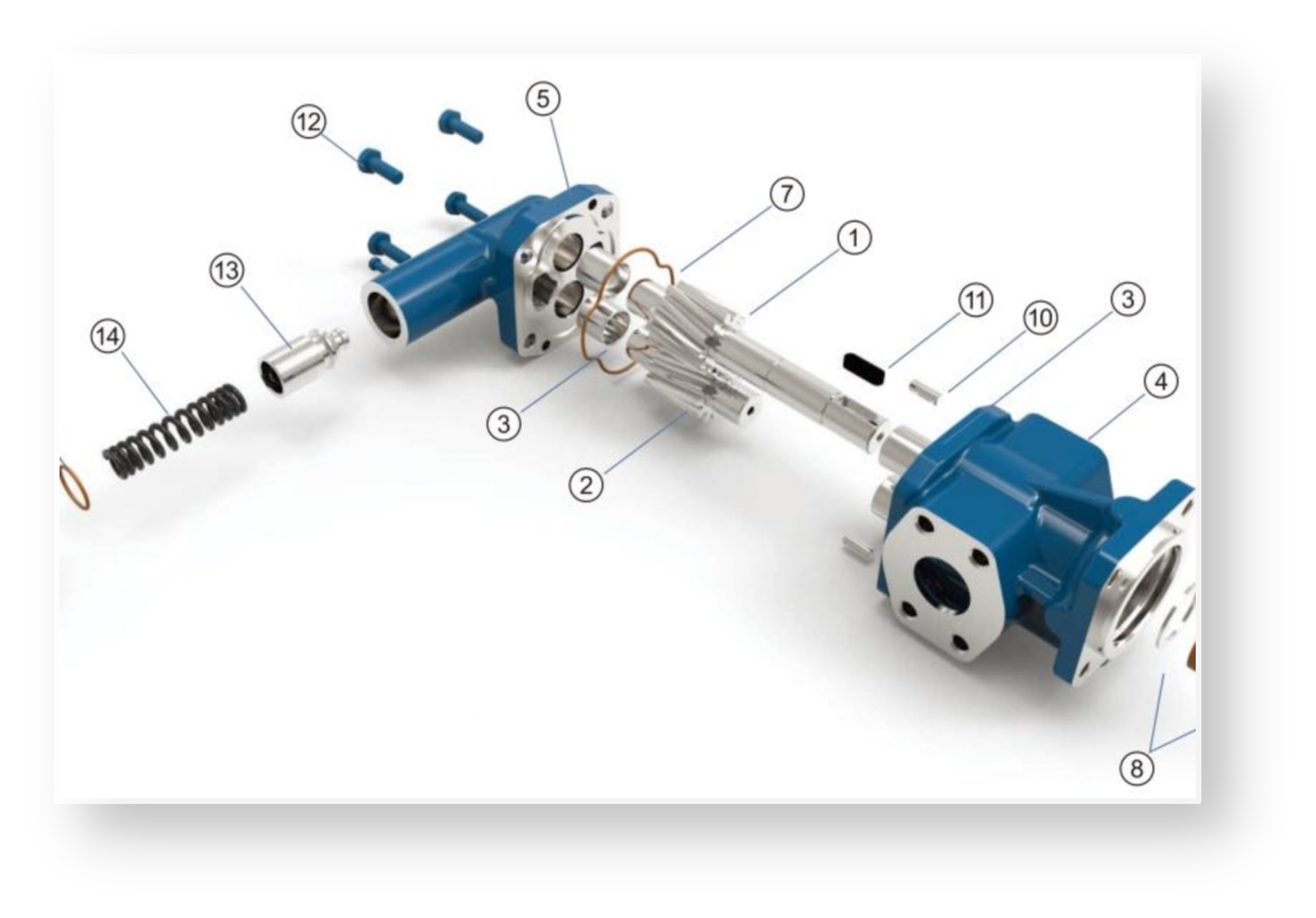
Exploded view of the DK series electric lubrication pump illustrates the helical external gear design, built‑in relief valve, and robust QT500 housing. (Image: DEO Machinery)
Technical Highlights
- Displacement: 630 cc/rev – suitable for medium to high‑flow lubrication circuits.
- Motor Speed Options: 950 rpm or 1450 rpm, allowing flexibility in flow output.
- Material: QT500 ductile iron offers high tensile strength and wear resistance.
- Operating Range: Works with lubricating or hydraulic oil having kinematic viscosity from 12 to 20,000 cSt and fluid temperature from -40°C to 100°C. It operates in 24/6 mode, meaning continuous operation for 24 hours a day, 6 days a week.
- Integrated Relief Valve: Standard setting pressure 5–25 bar protects the system from pressure spikes.
- Low Noise: Helical gear geometry reduces noise compared to straight spur gears.
Application Scenarios Across Heavy Industries
Electric lubrication pumps from DEO are deployed in demanding environments where downtime is costly:
| Industry | Typical Application | Relevant DEO Product |
| Mining | Mine reducer lubrication systems, heavy‑duty excavator hydraulic stations | DK630 electric lubrication pump |
| Construction Machinery | Concrete pumps, crawler cranes, loader gearboxes | DK series, PST bidirectional internal gear pump |
| Steel & Metallurgy | Rolling mill oil film bearings, continuous casting machine drives | DK630, DFLS self‑circulating cooler |
| Wind Energy | Wind turbine gearbox lubrication, pitch control hydraulics | DKF (wind power version), DFLEX wind cooler |
| Hydraulic & Lube Systems | Centralized oil supply for hydraulic power units, machine tools | PSN trochoidal pump, PST gear pump, DFLSL cooler |
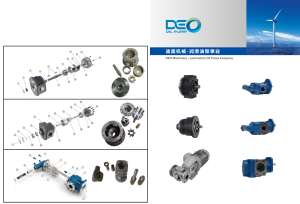
DEO’s pump portfolio covers trochoidal, internal gear, and external gear designs for diverse lubrication and cooling circuits. (Image: DEO Machinery)
Market Trend Analysis
Several macro trends reinforce the move toward electric centralized lubrication pumps:
- Predictive Maintenance Adoption: Modern lubrication pumps with built‑in sensors can communicate with SCADA systems, enabling condition‑based oil changes and early fault detection.
- Regulatory Pressure on Oil Leakage & Waste: Stricter environmental regulations in the EU and Asia‑Pacific encourage closed‑loop, precisely metered lubrication systems that minimize waste.
- Rising Labor Costs: In markets like Europe and North America, the cost of manual lubrication labor drives ROI calculations that favor automated electric systems.
- China’s Manufacturing Scale: With China exporting USD 14.3B in liquid pumps in 2024, the supply base for quality electric lubrication pumps at competitive price points continues to expand.
Comparison with Traditional Solutions
Electric lubrication pumps (e.g., DEO DK630) contrast with mechanically driven pumps (e.g., shaft‑mounted gear pumps) in several ways:
| Aspect | Electric Pump (DK630) | Mechanical / Shaft‑Driven Pump |
| Flow control | Independent of host machine speed; can be adjusted via VFD | Flow varies with shaft speed |
| Installation flexibility | Can be located remote from the drive shaft | Must be mounted near a rotating shaft |
| Maintenance complexity | Moderate; motor and coupling require periodic checks | Simpler but limited by shaft alignment |
| Energy consumption | Consumes only when operating; can be optimized | Always running when host is on, even if lubrication isn't needed |
| Suitability for continuous 24/6 operation | Yes, designed for 24/6 duty cycle | May require shaft seal upgrades for non‑stop operation |
One honest limitation of electric lubrication pumps: they require a reliable electrical power supply and motor control system, which adds initial installation complexity compared to purely mechanical pumps that function without electricity.
Future Outlook
As smart factories invest in Industry 4.0 infrastructure, the electric lubrication pump will evolve into an intelligent actuator with embedded diagnostics, flow feedback, and IoT connectivity. The cooling side—lubrication system oil coolers and industrial lube oil cooling systems—will similarly gain variable‑speed fans and self‑cleaning filters. DEO Machinery invests 20% of profits annually into R&D and holds 3 invention patents and 16 utility model patents, positioning the company to contribute to that evolution.
Frequently Asked Questions
A: The DK630 operates with lubricating or hydraulic oil at fluid temperatures from -40°C to 100°C, and a kinematic viscosity range of 12 to 20,000 cSt. It is designed for continuous 24/6 duty (24 hours/day, 6 days/week).
A: The pump housing is cast from ductile iron QT500, which offers high tensile strength and resistance to wear in heavy industrial environments.
A: The pump is intended for machinery and heavy industries including steel production, construction machinery, mining equipment, and general industrial lubrication systems.
A: Yes, the DK series includes a built‑in relief valve with a standard setting range of 5–25 bar to protect the system from over‑pressure spikes. The pump must not be run continuously in overflow mode.
A: The DK630 is an electric‑motor‑driven external gear pump (helical), while the PST180 is a bidirectional internal gear pump (180 cc/rev, max 1800 rpm). The DK630 offers higher displacement (630 cc/rev) and is electric‑powered, whereas the PST180 is often used in smaller hydraulic power units and engine lubrication systems where reverse rotation is needed.
A: The pump inlet pipeline must be airtight to prevent cavitation; the inlet pipe diameter cannot be smaller than the pump inlet port. The pump must never run dry—severe damage can occur within minutes. For the MDK integrated pump‑motor assembly, the bell housing and motor shaft must maintain high coaxiality.
For a detailed technical overview of DEO’s full product range, download the company brochure:
DEO Machinery Brochure (PDF)
هل لديك أسئلة أو تحتاج إلى مزيد من التفاصيل؟
تواصل مع فريقنا للحصول على عرض أسعار مخصص أو استشارة فورية.
طلب عرض أسعار
املأ النموذج أدناه وسيتواصل معك فريقنا بعرض مقترح مخصص.
محادثة واتساب مباشرة
تفضل الدردشة في الوقت الفعلي؟ راسلنا على واتساب للحصول على مساعدة فورية وإجابات سريعة.
- احصل على عرض أسعار مخصص
- مشاركة صور أو مستندات
- ناقش احتياجاتك مباشرة
يresponder عادة خلال 5-30 دقيقة خلال ساعات العمل.