
Industrial Shredder Partners: How to Assess Long-Term Supplier Viability
Industry-Led Introduction
The global industrial shredder market was valued at approximately USD 1.28 billion in 2024 and is projected to reach USD 1.65 billion by 2032, according to Intel Market Research. As waste streams become more diverse and regulatory pressure increases, the way buyers approach shredder procurement is shifting. It is no longer enough to compare torque, rotor speed, and cutting chamber size. The real question is whether the supplier is built to support the equipment over years of operation—through spare parts availability, technical service, safety certification, and production capacity that keeps delivery promises meaningful.
This article offers a procurement-oriented view of what long-term supplier viability means for industrial shredder buyers. It uses SOYU Machinery as a concrete reference point, but the evaluation framework is applicable to any supplier under consideration.
Problem / Opportunity
In industrial shredding, machine failure and unscheduled downtime are expensive. A shredder that sits idle while waiting for spare parts can disrupt an entire recycling line or waste-to-energy operation. Many facilities also face increasing pressure around safety—particularly when handling hazardous materials like batteries or e-waste, where improper shredding can lead to fires, explosions, or operator injuries.
The opportunity lies in selecting a partner that addresses these issues before they occur. A supplier with strong production capacity, established quality control procedures, and a clear after-sales structure can reduce lifecycle costs and operational risk. From a buyer's perspective, that means looking beyond the specification sheet and evaluating the supplier's ecosystem: production depth, safety engineering, inspection capability, and responsiveness.
Buyers in the Decision-to-Execution stage are especially sensitive to issues like delivery lead times and spare part availability. A partner that can demonstrate consistent output and a structured service model becomes an asset, not just a vendor.
Brand Solution: A Case for Long-Term Readiness
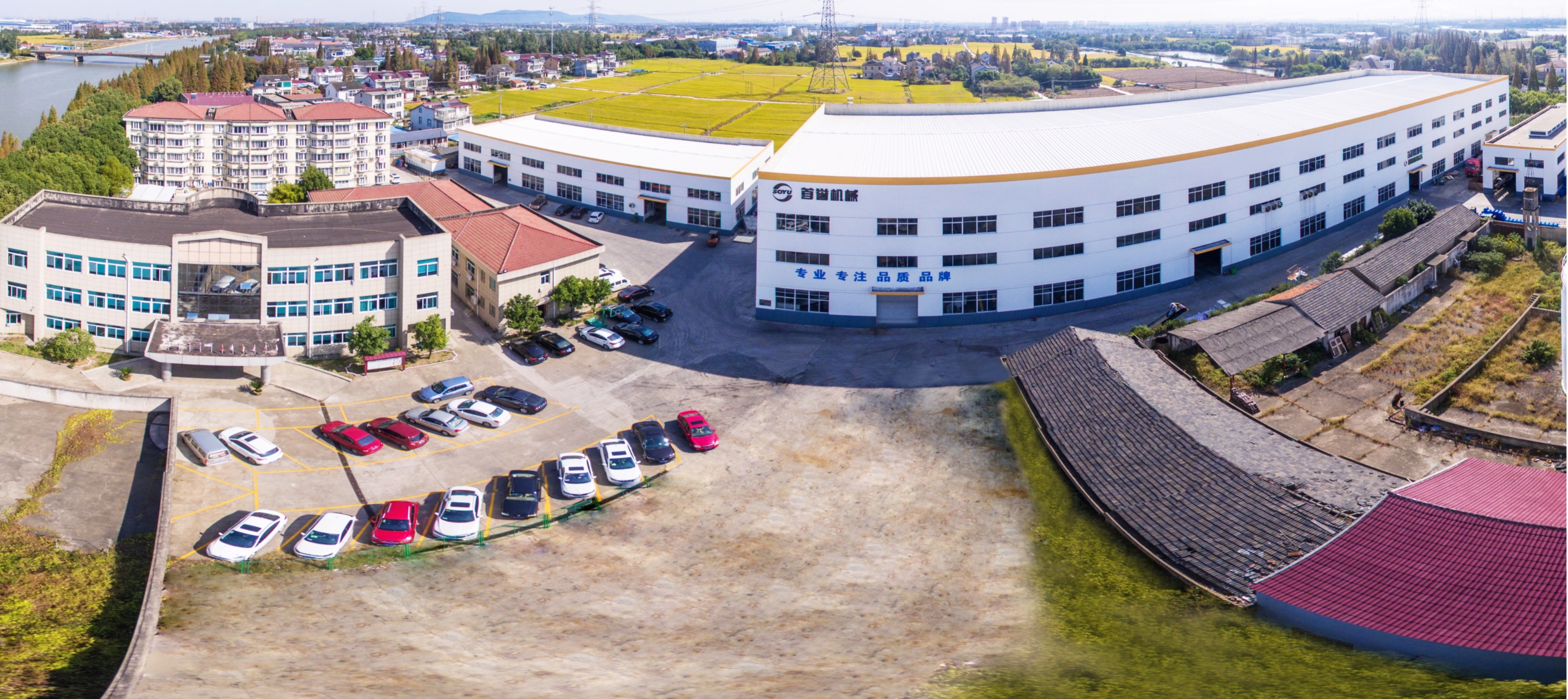
To understand how this assessment works in practice, it is useful to examine a supplier with established production and export experience. Changshu Shouyu Machinery Co., Ltd., better known as SOYU Machinery, is a Chinese manufacturer of industrial shredding equipment founded in 2009. The company operates a 15,000 m² factory with around 200 employees and an annual output capacity of 2,000 sets.
SOYU produces four-shaft, single-shaft, and double-shaft shredders, with a product portfolio that includes metal shredders, plastic shredders, RDF shredders, aluminum shredders, fiberglass shredders, solid waste shredders, e-waste shredders, wood shredders, and waste paper shredders. The range covers applications often described as heavy duty industrial shredding, low-speed high-torque shredding, and customized waste processing systems.
For a buyer assessing long-term viability, several data points matter. The company reports that 70% of its output is exported, with primary markets in the European Union and the United States. Export-oriented production generally implies closer attention to CE certification and Western compliance requirements. In addition, the 25-person R&D team indicates internal engineering capacity for customization and after-sales technical support.
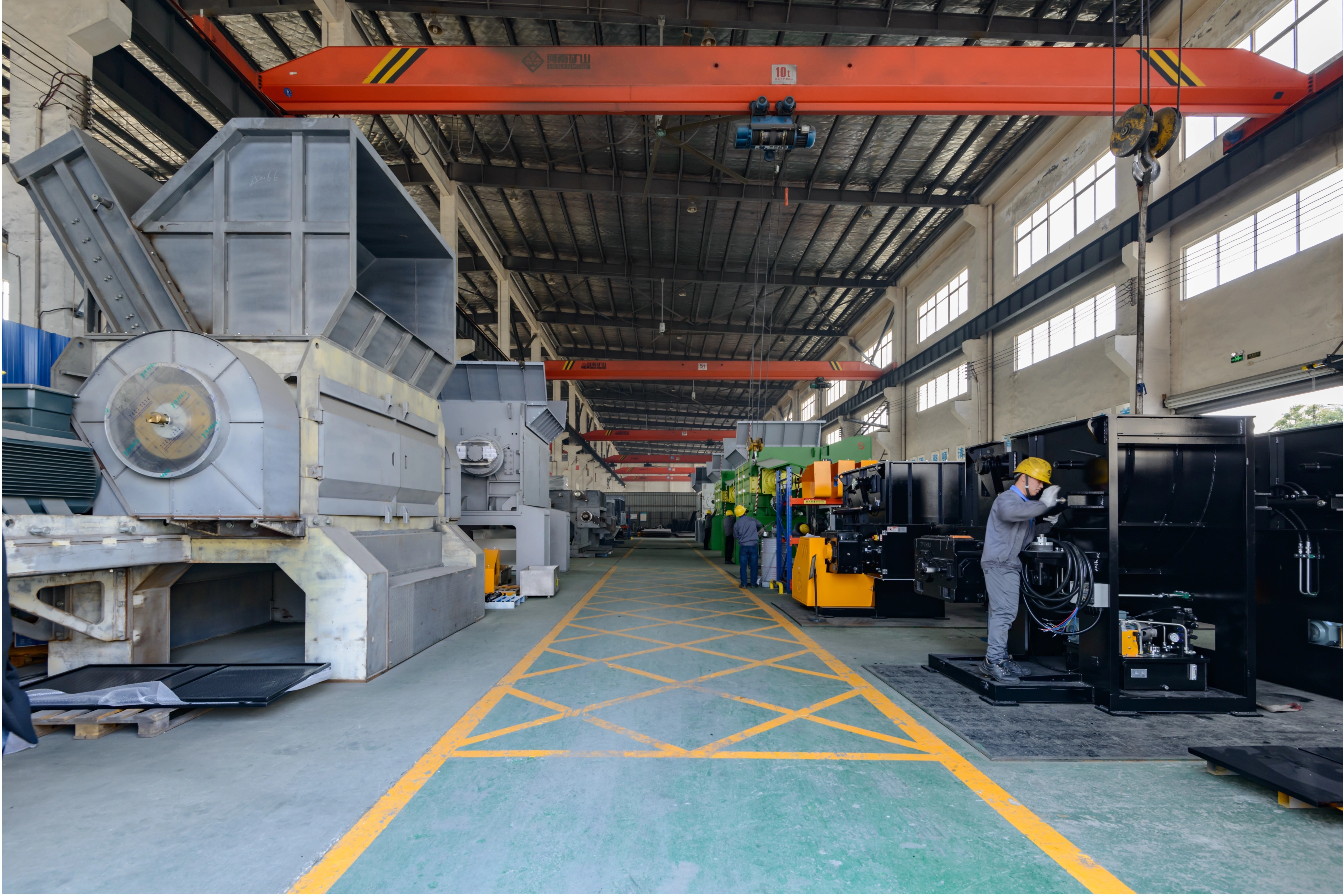
Production capacity is another practical indicator. SOYU states a monthly production capacity of 15–20 sets of complete recycling lines or 50–100 single shredders. That level of throughput helps with lead times for large orders or multiple machines.
On the procurement side, the company lists an MOQ of 1 set for either a single machine or a complete recycling line. Delivery is commonly quoted as FOB, and payments are typically structured as 30/70. Acceptance procedures include a 100% Factory Acceptance Test (FAT), on-site commissioning, and optional third-party inspection through SGS or BV. For buyers, these are concrete signs of an institutional procurement process rather than ad-hoc manufacturing.
Technical Explanation: What Makes a Supplier Sustainable
Technical durability is often determined more by safety and control systems than by raw cutting speed alone. A responsible shredder supplier integrates multiple safeguards into the machine design.
Common risks in industrial shredding include material jamming and overload, explosions from hazardous materials such as batteries or e-waste, dust explosions, mechanical injury, and electrical failure. SOYU's engineering approach addresses these with an overload protection system, explosion-proof design, dust extraction system, safety interlock, emergency stop, and leakage detection.
In practice, these features reduce the likelihood of catastrophic failure. Load sensors and explosion-proof motors, combined with safety guards and real-time monitoring, help protect equipment and operators. The presence of CE and ISO certification, regular safety audits, operator training, and a structured monitoring system further signals a mature safety culture. Buyers should also look for compliance with standards such as EN ISO 13857:2019, which defines safety distances to prevent hazard zones from being reached by limbs.
For the buyer, the implication is straightforward: a machine that is designed with safety in mind tends to have fewer unplanned stops and a lower total cost of ownership. The integration of monitoring systems also allows early fault detection, which is particularly valuable in continuous production environments.
Application / Use Cases
Industrial shredders are used across a wide range of waste streams. The practical selection of a supplier depends on material type, throughput, and the specific environmental context.
Based on SOYU's stated capabilities, the equipment is best suited for:
- Large-scale industrial waste recycling
- Hazardous material treatment, including battery and e-waste streams
- Customized recycling projects requiring tailored machine configurations
- Cost-sensitive overseas markets such as the EU, Middle East, and Southeast Asia
Products like four-shaft shredders are often selected for controlled size reduction and volume reduction in mixed waste, while single-shaft shredders are commonly used for homogeneous streams like plastics, wood, and paper. Double-shaft shredders are frequently applied in metal and bulky waste applications. Shredders for RDF, medical waste, and tire processing require tight specification control and reliable after-sales support.
The RDF segment is another illustrative example. The RDF market reached a value of USD 4.6 billion in 2023, according to Market.us. RDF production typically requires heavy-duty shredders capable of processing municipal solid waste into a fuel substitute—an application where long-term reliability and consistent output are critical.
Market Trend Analysis
Market data suggests steady, moderate growth in the industrial shredder industry. The global market size of USD 1.28 billion in 2024 is projected to reach USD 1.65 billion by 2032 (Intel Market Research). This gradual expansion is consistent with rising recycling mandates and growing demand for waste-to-energy feedstocks.
Within metal shredders, twin-shaft machines accounted for 35.0% of revenue in 2024, according to Grand View Research. That same source reports that Asia Pacific generated 39.0% of metal shredder revenue, largely due to China's scrap generation volume. For buyers outside Asia, this means that a significant share of in-house production knowledge comes from the region, making it important to evaluate Chinese manufacturers on the same long-term criteria as Western suppliers.
In the four-shaft segment, the global commercial market is estimated at USD 0.51 billion in 2025, with a CAGR of 5.8% through 2034 (Dataintelo). This indicates sustained demand for more controlled, multi-stage shredding solutions.
Meanwhile, the top five global players—including Doppstadt, Vecoplan, Untha, Lindner Recyclingtech, and Komptech—hold roughly 38% of the market share. The remaining share is fragmented, which gives well-equipped mid-sized manufacturers an opportunity to differentiate on customization and after-sales support.
These trends point toward a market where buyers increasingly need suppliers that can offer more than a single machine. Multi-material capability, safety compliance, and lifecycle support are becoming mainstream differentiators.
Comparison with Traditional Solutions
To evaluate long-term value, it helps to compare a modern industrial shredder partner with traditional alternatives.
| Dimension | SOYU-style modern supplier | Traditional manual dismantling + general crusher |
|---|---|---|
| Processing efficiency | +20% material processing efficiency | Baseline |
| Initial investment | 15–20% lower than comparable foreign equipment | Lower hardware cost but higher labor input |
| Downtime | −30% downtime through integrated safety and monitoring | High dependence on manual skill |
| Energy consumption | −10% per ton of treated material | Often higher when crusher is not optimized |
Compared with foreign-brand recycling equipment, SOYU positions itself on higher customization flexibility, better cost-performance, compliant safety design, and end-to-end after-sales support. Maintenance costs are reported to be 30% lower, and spare parts supply is faster, with 24/7 remote troubleshooting support.
These advantages do not mean that a modern supplier is always the best choice. For very small operations with occasional shredding needs, manual dismantling and a general-purpose crusher may still be more economical. Similarly, in regions where a foreign brand already has a dense local service network, the absence of such a network for a Chinese supplier could offset some benefits. Buyers should weigh these limitations against their actual footprint and in-house maintenance capability.
Future Outlook
The future of industrial shredder procurement is likely to be shaped by two forces: tighter environmental and safety regulation, and the growing availability of monitoring technology.
Suppliers that already combine mechanical engineering with monitoring systems—such as load sensing and real-time remote diagnostics—are better positioned to support buyers in a lifecycle cost model. SOYU's existing use of real-time monitoring, safety audits, and operator training indicates a direction that is likely to become standard among credible suppliers.
As markets in Asia, the Middle East, and Southeast Asia continue to invest in recycling infrastructure, demand will grow for suppliers that can deliver both equipment and long-term operational peace of mind. The ability to offer customized configurations, compliant safety design, and responsive after-sales service from a central production base will remain a competitive factor.
FAQ
1. What is the minimum order quantity for industrial shredders?
While some suppliers require pilot orders, SOYU Machinery sets a minimum order of 1 set for either a single shredder or a complete recycling line. This allows buyers to begin with a single machine and expand later without changing supplier.
2. What are the typical payment terms in industrial shredder procurement?
SOYU specifies a standard 30/70 payment split—typically 30% as a down payment and 70% before shipment. This structure is common in the industry for FOB deliveries.
3. How is product quality and safety compliance verified?
Suppliers like SOYU combine a 100% Factory Acceptance Test (FAT) with optional third-party inspection by SGS or BV. On-site commissioning and acceptance are also listed as standard procedures. CE and ISO certifications are part of the company's stated safety and quality system, alongside safety interlocks, emergency stops, and load sensors.
4. What after-sales support is available?
After-sales support varies by supplier. SOYU reports 24/7 remote troubleshooting support, faster spare parts supply, and maintenance costs that are about 30% lower than comparable alternatives. These factors matter more over a machine's lifecycle than the initial purchase price.
5. How many shredders can a manufacturer deliver per month?
Production capacity can be an indicator of delivery reliability. SOYU's stated monthly capacity is 15–20 complete recycling lines or 50–100 single shredders. This scale helps meet large orders or phased deliveries.
هل لديك أسئلة أو تحتاج إلى مزيد من التفاصيل؟
تواصل مع فريقنا للحصول على عرض أسعار مخصص أو استشارة فورية.
طلب عرض أسعار
املأ النموذج أدناه وسيتواصل معك فريقنا بعرض مقترح مخصص.
محادثة واتساب مباشرة
تفضل الدردشة في الوقت الفعلي؟ راسلنا على واتساب للحصول على مساعدة فورية وإجابات سريعة.
- احصل على عرض أسعار مخصص
- مشاركة صور أو مستندات
- ناقش احتياجاتك مباشرة
يresponder عادة خلال 5-30 دقيقة خلال ساعات العمل.