
Industrial Valve Types, Standards, and Buyer Criteria
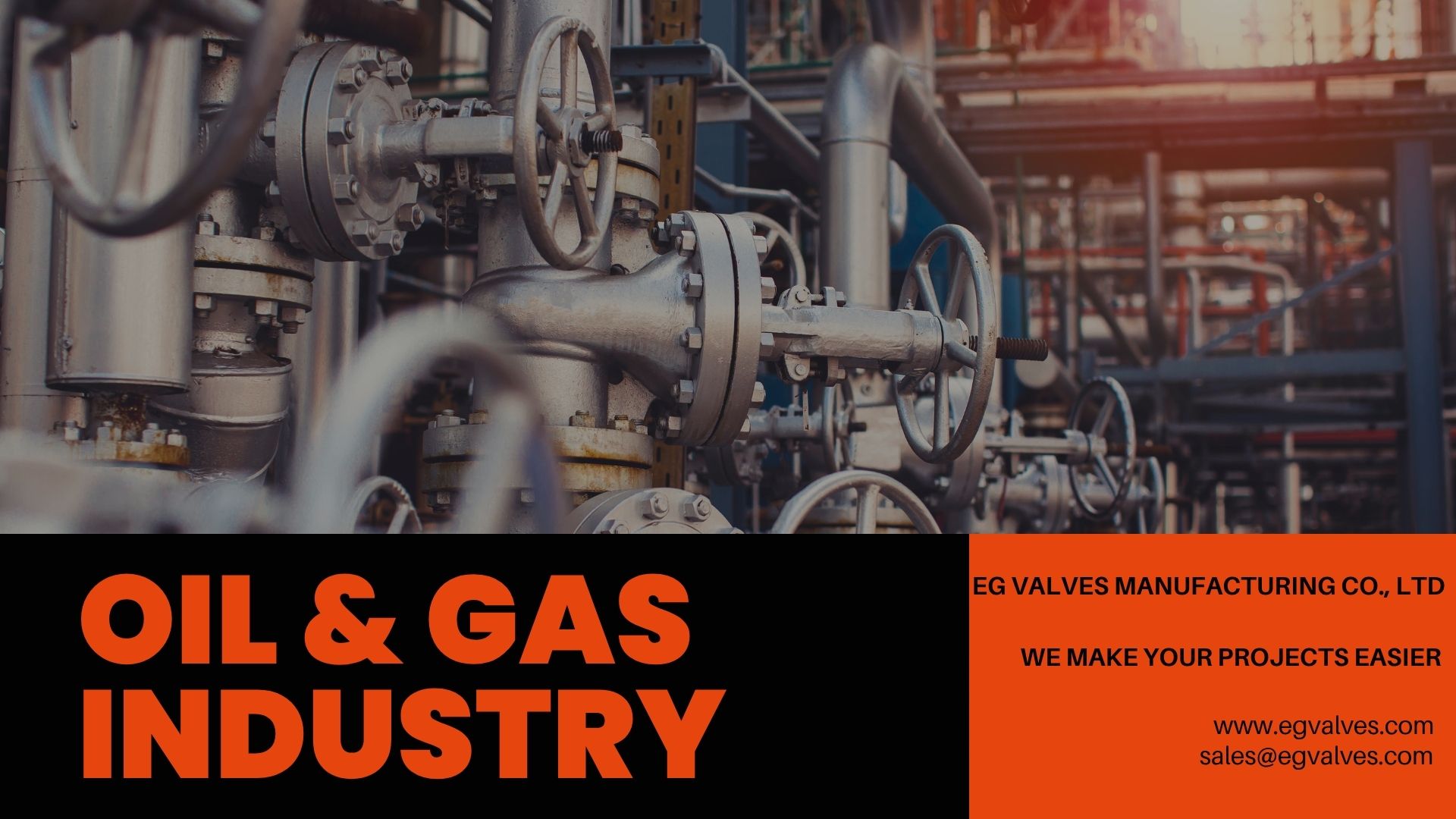
Industrial valves are a critical control element in oil and gas, chemical, and power process systems.
The global industrial valve market is estimated at approximately USD 80.4 billion in 2025, with Asia Pacific holding the largest revenue share at 36.3%. For process engineers and procurement teams, the practical question is not only where to source valves, but how to verify that a given valve type, material, pressure class, and certification record will perform across expected operating conditions. This article provides a structured look at industrial valve fundamentals — types, construction parameters, standards, application fit, and the supplier evidence buyers should review during early-stage research.
Why Industrial Valve Knowledge Matters in Early Procurement
Valves typically account for a small share of total plant capital expenditure, but their operational influence is disproportionately large. A valve failure in a high-temperature steam loop, a sour-gas pipeline, or a chemical reactor line can result in unplanned downtime, environmental exposure, and safety risks. Conversely, over-specifying valves in low-risk utility services raises cost without adding measurable value.
The challenge for buyers at the awareness and research stages is that industrial valve specifications are dense. A single product can be defined by valve type, body material, trim configuration, end connections, pressure class, seat type, and actuation mode. Understanding these variables before entering supplier conversations helps buyers evaluate quotations, identify mismatches, and ask more targeted questions during subsequent supplier qualification.
Market Context: Scale, Demand, and the Oil & Gas Anchor
Grand View Research values the global industrial valve market at approximately USD 80.4 billion in 2025. Precedence Research identifies the oil and gas sector as the largest application segment by market value share, supported by rebounding upstream spending. The stainless steel industrial valve segment is also expanding steadily: Intel Market Research projects the global stainless steel industrial valve market to grow from USD 27.51 billion in 2024 to USD 38.36 billion by 2034, a CAGR of 4.9%.
China’s valve exports reached approximately USD 54.32 billion in 2025, according to Tendata/China Customs data. That figure, while subject to data-verification caveats, signals the scale of cross-border supply that buyers now evaluate when comparing manufacturers across regions.
Core Valve Types Used Across Process Industries
Most industrial valve portfolios are built around a limited set of core designs. Each type has a characteristic operating logic and a set of applications where it performs best.
| Valve Type | Primary Function | Typical Applications |
|---|---|---|
| Gate Valve | Isolation; fully open or fully closed | Water supply, oil & gas, power generation, high-pressure systems |
| Globe Valve | Regulation and throttling | Steam, feedwater, chemical injection, utility systems |
| Ball Valve | Fast quarter-turn isolation; low operating torque | Oil & gas pipelines, petrochemical plants, water treatment |
| Butterfly Valve | Compact quarter-turn isolation and regulation | Water and wastewater, HVAC, mining, power plants, chemical service |
| Check Valve | Backflow prevention | Pump discharge, compressor lines, water and wastewater |
| Plug Valve | Quarter-turn isolation for demanding fluids | Steam, air, gas, oil, oil vapor, high-pressure installations |
| Strainer | Protect equipment by filtering pipeline debris | Water systems, oil and gas, chemical process lines |
EG Valves Manufacturing Co., Ltd — a valve manufacturer established in 2000 in Wenzhou, China — includes gate, globe, ball, butterfly, check, and plug valves as well as strainers in its standard production range. The company reports that its valves are used across power, mining, refining, oil & gas, water and wastewater treatment, pulp and paper, chemical, and petrochemical industries.
Materials and Construction: What Buyers Should Understand
Material selection is one of the primary determinants of valve performance and service life. For water and low-pressure building services, cast iron and ductile iron bodies are common. For oil & gas, petrochemical, and power generation service, cast steel and forged steel bodies — in carbon steel, stainless steel, alloy steel, and duplex steel — are widely used.
EG Valves product data illustrates this range. The Cast Iron Gate Valve, model GTI001, is offered in sizes from DN40 to DN1200 and pressure ratings of PN10/PN16 or Class 125/Class 150, and is intended for water supply, drainage, HVAC, building services, and municipal utilities. At the other end of the spectrum, the Forged Steel Gate Valve, model GTF023, covers NPS 1/2” to 2-1/2” (DN15 to DN65) with pressure ratings from Class 800 to Class 2500, and is specified for steam, air, gas, oil, oil vapor, and high-pressure installations.
A representative industrial valve product portfolio covering multiple valve types and material classes.
Medium-pressure process lines commonly use cast steel gate, globe, check, and ball valves. The Cast Steel Gate Valve, model GTS019, is available in sizes from NPS 1-1/2” to 48” with pressure classes from 150 to 1500. The Cast Steel Globe Valve, model GLS105, serves oil & gas, petrochemical, power generation, refining, and industrial high-pressure systems. The Cast Steel Check Valve, model CVS407, covers water and sewage treatment, HVAC, mining, power generation, irrigation, and food & beverage applications with pressure ratings up to Class 1500.
For corrosive chemical service, lined and high-alloy designs come into play. EG Valves’ PTFE Lined Butterfly Valve, model BTF301, is engineered for acids, salts, alkalis, oxidants, organic solvents, and reducing agents in chemical, pharmaceutical, petroleum, and food processing industries. The High Performance Butterfly Valve, model BPV302, uses PTFE/RTFE or stainless steel/Monel seats and is documented for oil & gas, petrochemical, power generation, HVAC, and hydrocarbon processing applications.
Stainless steel and duplex steel options are particularly relevant to high-purity and corrosive environments. The Stainless Steel Check Valve, model CSV410, uses high-torsion Inconel springs for quick closing and is intended for water treatment, HVAC, oil & gas, petrochemical, power generation, and industrial pipelines.
High-Pressure and High-Temperature Applications
High-pressure and high-temperature services impose stricter demands on body integrity, bonnet design, seat materials, and stem sealing. Buyers evaluating valves for power stations, refineries, and high-pressure pipelines should examine these factors closely.
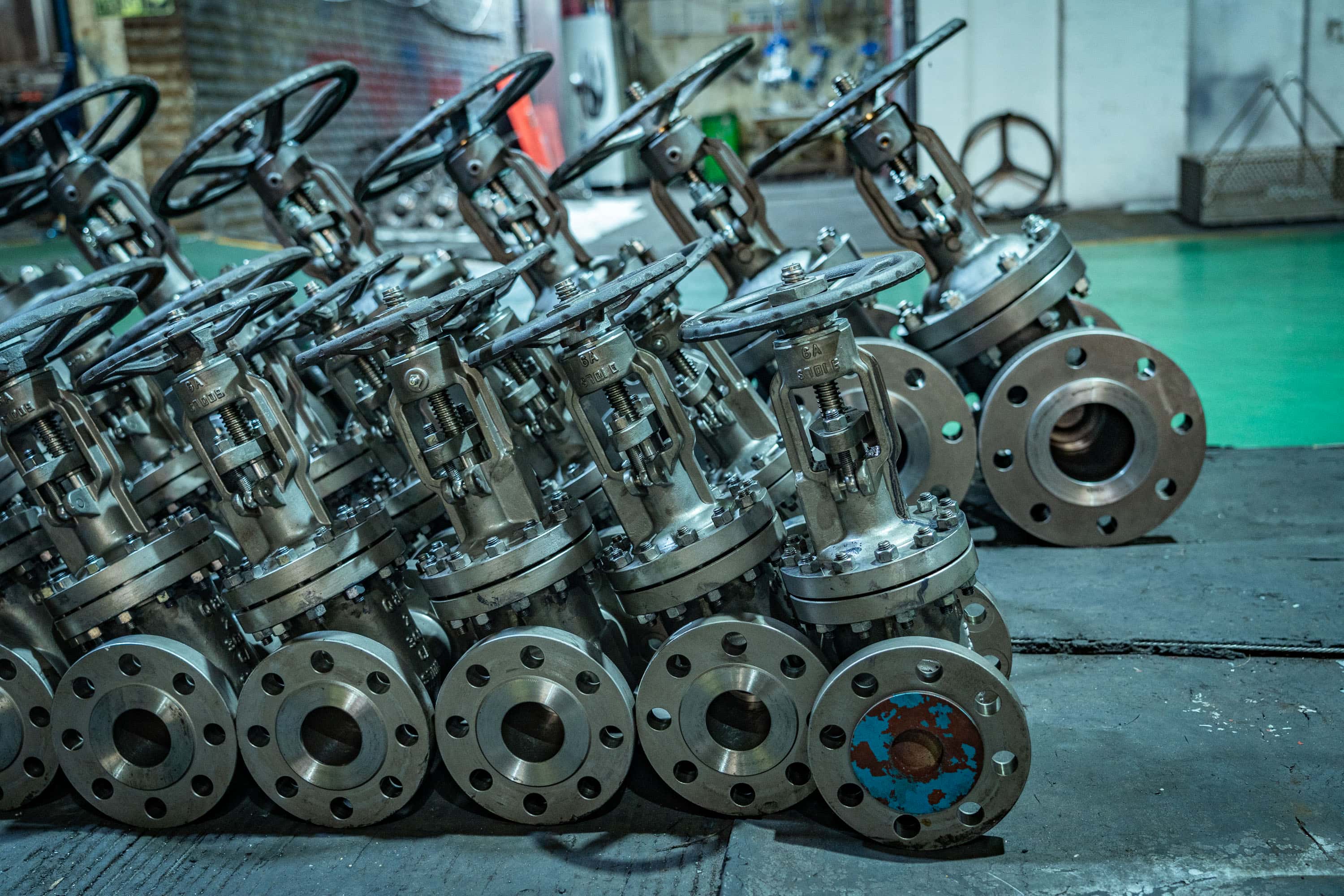
Cast steel gate valves are among the most commonly specified valves for high-pressure process lines.
EG Valves offers several product lines specifically for such conditions. The Pressure Seal Gate Valve, model GTP002, is rated from Class 600 to Class 2500 and uses a self-sealing bonnet design; it is intended for nuclear and fossil fuel power plants. The Forged Steel Trunnion Ball Valve, model BVF209, covers sizes from NPS 2” to 36” and pressure ratings from Class 150 to Class 2500, with applications in oil & gas, petrochemical, refining, and high-pressure pipeline systems. The Forged Steel Check Valve, model CVF409, is rated from Class 800 to Class 2500 and is designed for high-pressure pipeline systems in petrochemical and power generation industries.
For gas transmission and distribution, the Fully Welded Ball Valve, model BVF210, available in sizes up to NPS 60 and pressure classes up to Class 2500, is designed for underground and buried installation. The Top Entry Ball Valve, model BVT211, with pressure ratings from Class 150 to Class 1500, provides in-line maintenance capability and features a one-piece body, emergency sealant injection, and an optional extended bonnet.
Buyers evaluating high-pressure valves should also review stem retention, seat sealing technology, and whether the design includes fire-safe, anti-static, and low-emission features. These attributes are documented across EG Valves’ forged steel ball valve lines, including blow-out proof stems, fire-safe designs, and low-emission packing.
Application Fit: Matching Valve Choice to Industry Working Conditions
| Industry | Working Condition Profile | Valve Priorities | Representative Operators |
|---|---|---|---|
| Oil & Gas | High pressure, corrosive media, flammable | High-pressure integrity, corrosion resistance, API compliance | Manual, pneumatic, electric |
| Power Generation | High-temperature steam, continuous operation | Pressure-sealed bonnets, high-pressure shutoff | Manual, pneumatic, electric |
| Chemical Processing | Corrosive, toxic, flammable media | Corrosion resistance, sealing reliability | Manual, pneumatic, electric |
| Water & Wastewater Treatment | Clean water; humid and toxic gases in wastewater | Durability, low maintenance, flow control | Manual, pneumatic, electric |
| Mining & Mineral Processing | Abrasive slurries, dust, harsh environments | Wear resistance, erosion resistance | Manual, pneumatic, electric |
| Offshore Platforms | Humidity, salinity, high pressure, strict safety | Seawater corrosion resistance, regulatory compliance | Manual, pneumatic, electric |
EG Valves documents these application fields explicitly. In oil and gas, its valves are specified for drilling, extraction, and refining processes requiring corrosion resistance and high-pressure reliability. In power generation, product families include cast steel gate and globe valves as well as pressure seal valves for high-pressure steam systems. For chemical plants, EG Valves provides corrosion-resistant designs such as PTFE lined butterfly valves and high performance butterfly valves oriented to chemical injection, mixing, and reaction processes.
Application scenario data from EG Valves also covers water treatment, where valves must perform reliably in both clean water and demanding wastewater environments; mining projects involving coal, iron, gold, and silver, where valve systems are applied to blast furnaces, rolling mills, and foundries; and offshore platforms, where corrosion resistance in seawater, high-pressure seawater injection, and firefighting systems are central requirements. Food and beverage plants emphasize hygienic design and contamination prevention, while pharmaceutical facilities require compliance-oriented stainless steel and sanitary valve solutions.
Standards and Certification: The Verification Backbone
Certification is one of the most direct ways for buyers to reduce risk when evaluating suppliers. For oil and gas critical applications, API standards are especially relevant: API 6D covers pipeline valves, while API 600 governs steel gate valves. ASME B16.34 establishes general requirements for pressure-temperature ratings and dimensions for flanged, threaded, and welding-end valves. In European markets, CE and PED certification demonstrates compliance with pressure equipment directive requirements.
EG Valves states that all of its valves are produced under ISO 9001-certified processes and that its factories have obtained API 600, API 6D, CE, and PED certifications. The company also manufactures products to ANSI, DIN, BS, and JIS standards or to customer requirements. These are concrete documentation points that buyers can request and verify directly with the manufacturer.
Supplier Evidence: What EG Valves Provides for Evaluation
For procurement teams researching suppliers, manufacturer evidence includes facility size, engineering capacity, production volume, export footprint, and certifications.
EG Valves operates a 27,500 m² facility with approximately 300 employees, including an R&D team of 30 engineers. The company’s annual output is about 90,000 units, and roughly 80% of production is exported to the EU, North America, Latin America, and the Middle East. These figures give buyers a quantitative basis for assessing whether a supplier’s capacity aligns with project scale and delivery expectations.
More than 25 years after its founding, the company reports that its products have been accepted in more than 33 countries and regions. For buyers at the research stage, the relevant point is not brand reputation alone but the availability of verifiable facts: facility size, headcount, output volume, certifications, and documented product specifications.
Market Trends Reshaping Valve Procurement
Several observable trends are relevant for buyers researching industrial valves in 2026.
First, demand for higher-value materials is growing. The stainless steel industrial valve market is projected to grow from USD 27.51 billion in 2024 to USD 38.36 billion by 2034 at a CAGR of 4.9%, according to Intel Market Research. This reflects increased demand for corrosion-resistant valves in chemical, food, pharmaceutical, and high-purity applications.
Second, oil and gas remains the demand anchor. Precedence Research identifies oil and gas as the largest application segment for industrial valves, supported by rebounding upstream spending. Buyers serving this sector should prioritize suppliers with documented API 6D and API 600 or equivalent certification experience.
Third, cross-border supply from China continues to expand. Tendata/China Customs reports China’s valve exports at approximately USD 54.32 billion in 2025. While export statistics may vary by data source and product classification, the broader trend is that buyers are increasingly comparing Chinese manufacturers with global brands on the basis of certifications, specifications, and delivery performance.
Fourth, actuation is becoming a standard expectation. Manual operation remains common, but pneumatic and electric actuated valves are increasingly specified for remote monitoring, automated process control, and safety systems. EG Valves documents manual, pneumatic, and electric operation modes across its major product lines, with pneumatic actuators and electric actuators named as matched equipment for most application scenarios.
Manual vs. Automated Valves: A Practical Comparison
Traditionally, many plants relied on manually operated valves for isolation and regulation. Manual valves remain entirely appropriate for low-cycle services, maintenance isolation, and locations where control automation is not justified. However, process industries increasingly combine manual, pneumatic, and electric actuation in the same facility. Pneumatic actuators are often favored in potentially explosive atmospheres where electric devices may add ignition risk; electric actuators are frequently selected where instrument air is unavailable or where precise positioning is required.
It is also reasonable to acknowledge the limitations of both approaches. Automated valves add upfront cost, require control system integration, and introduce additional maintenance points. Specifying an actuated valve for a service that only needs occasional manual operation can increase project cost without tangible benefit. Conversely, relying on manual operation in a frequently cycled or remotely located process line can create operational inefficiency and maintenance burden.
Buyers also face a comparative choice between global brands and specialized manufacturers. Market reports identify Emerson — with roughly 11% of the global valve market — and Flowserve as dominant industry players. Yet for many mid-sized projects, installed base or brand visibility alone does not confirm suitability for a specific medium, pressure class, or environmental condition. A practical evaluation compares supplier documentation across product specifications, certification coverage, engineering support depth, and delivery capability, rather than assuming that a larger company is automatically the right fit.
Future Outlook
Several longer-term shifts are likely to influence industrial valve procurement. First, project owners are placing more emphasis on traceability, with certification records, material test reports, and manufacturing quality systems becoming standard deliverables rather than optional documentation. Second, as process units move toward more severe operating parameters — higher pressures, higher temperatures, and increasingly corrosive media — valve designs with pressure-sealed bonnets, high-alloy bodies, and low-emission packing will gain share in power, petrochemical, and pipeline applications.
Third, the growing availability of valve products from China means that international buyers will continue to benchmark Chinese manufacturers against regional and global suppliers. The basis for comparison is shifting from price alone to a broader set of criteria that includes material quality, standard compliance, actuation options, and post-sale engineering responsiveness.
Fourth, energy transitions and decarbonization efforts are expected to change the mix of valve applications over time. While oil and gas currently remains the largest application segment, the expansion of hydrogen, carbon capture, and renewable fuel processing will create new demand for valves capable of handling specialty gases, extreme cold, and high-pressure hydrogen service.
For buyers seeking additional reference material, EG Valves publishes a company brochure with manufacturing process and product line details: EG Valves Company Brochure.
Frequently Asked Questions
What is an industrial valve?
An industrial valve is a mechanical device used to control the flow, pressure, and direction of fluids in piping systems. Industrial valve manufacturers produce types such as gate valves, globe valves, ball valves, butterfly valves, check valves, and plug valves, serving industries including power, mining, refining, oil & gas, water and wastewater treatment, pulp and paper, chemical, and petrochemical plants.
What types of industrial valves are commonly used in process plants?
Common types include gate valves for isolation, globe valves for throttling, ball valves for fast quarter-turn isolation, butterfly valves for compact isolation and regulation, check valves for backflow prevention, plug valves for demanding fluids, and strainers for debris filtration. EG Valves, for example, lists gate, globe, ball, butterfly, check, and plug valves and strainers among its main products.
What standards should industrial valves meet?
Common manufacturing standards include ANSI, DIN, BS, and JIS. For oil and gas critical service, API 6D (pipeline valves) and API 600 (steel gate valves) are the primary industry-specific standards, while ASME B16.34 establishes pressure-temperature ratings and dimensional requirements. ISO 9001 can indicate that a manufacturer produces valves under certified quality management processes.
Which materials are used for industrial valve bodies?
Valve body materials range from cast iron and ductile iron for water and utility service to carbon steel, stainless steel, alloy steel, and duplex steel for high-pressure and corrosive service. Bronze alloy and brass alloy are typically found in smaller threaded valves and fittings.
Which industries are the largest buyers of industrial valves?
The oil and gas sector is currently the largest application segment for industrial valves, according to market data. Other major buyers include power generation, chemical processing, petrochemical, water and wastewater treatment, mining, and pulp and paper industries.
What should buyers verify when evaluating a valve manufacturer?
Buyers should verify facility size, engineering staff, annual production volume, certification coverage, export record, and product documentation. For reference, EG Valves reports a 27,500 m² facility, approximately 300 employees, an R&D team of 30 engineers, and an annual output of about 90,000 units.