
شراء بطاريات الليثيوم أيون الخاصة بالصناعة: دليل استراتيجي لاختيار المورد المناسب لتطبيقك
Industry-Specific Lithium-ion Battery Procurement: A Strategic Guide for Selecting the Right Supplier for Your Application
April 19, 2026
For industrial buyers and OEMs, sourcing lithium-ion batteries is not a one-size-fits-all endeavor. The critical difference between a successful product launch and a costly failure often lies in selecting a supplier that deeply understands and can meet the unique, stringent demands of your specific industry. This guide provides a strategic framework for procurement professionals to identify and partner with lithium-ion battery suppliers capable of delivering beyond basic specifications to provide true application-engineered solutions.
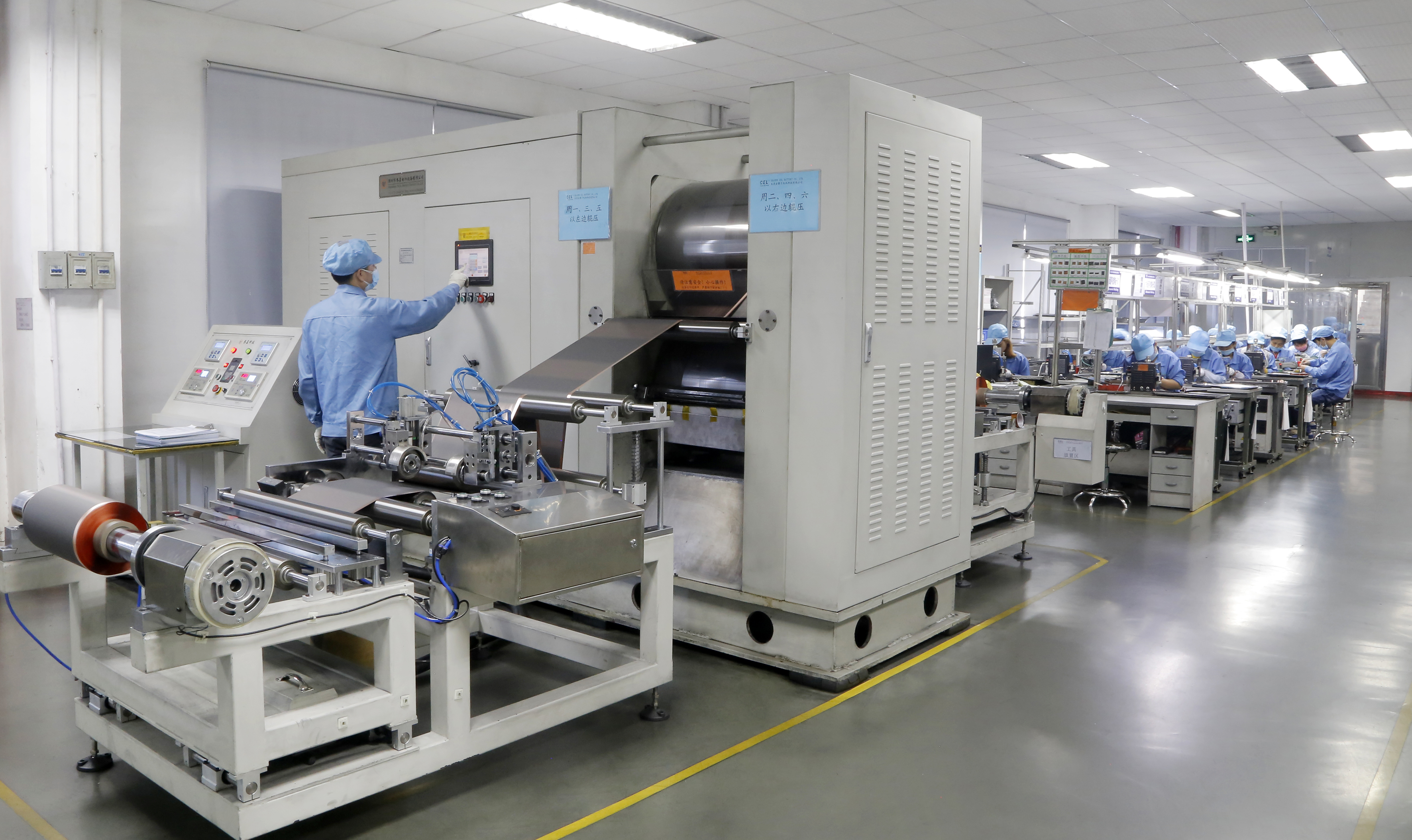
Advanced manufacturing capabilities, like the electrode sheet rolling process, are foundational for producing batteries that meet precise industry requirements.
1. Understanding Industry-Specific Core Requirements
Each vertical market imposes a distinct set of operational, safety, and regulatory challenges on its power sources. A generic battery will inevitably fall short. Here are the core requirements for key high-growth sectors:
Medical & Surgical Robotics
- Ultra-High Reliability & Safety: Zero tolerance for failure during procedures. Batteries must have redundant safety circuits and ultra-stable voltage output.
- Stringent Certification: Compliance with medical device standards (e.g., ISO 13485) and specific safety certifications like IEC 60601-1 is often mandatory.
- Sterilization Compatibility: Pack design must withstand repeated sterilization cycles (e.g., ETO, gamma radiation) without degradation.
- Long Cycle Life & Low Self-Discharge: Ensures devices are ready for use after prolonged storage, critical for life-saving equipment.
Commercial & Industrial Drones (Agriculture, Delivery, Inspection)
- High Energy Density & Power Output: Maximizes flight time and supports power-hungry payloads (spray systems, cameras, sensors).
- Robust Environmental Tolerance: Must operate reliably in extreme temperatures, high humidity, and resist vibration from motors and landing.
- Fast Charging Capability: Enables rapid turnaround in field operations, improving asset utilization.
- Smart Battery Management Systems (BMS): Critical for state-of-charge accuracy, cell balancing, and communication with the drone controller for safety.
Tactical & High-Performance Drones
- Extreme Power-to-Weight Ratio: For racing drones and tactical UAVs, maximizing discharge rate (C-rate) while minimizing weight is paramount.
- Enhanced Durability: Packs must be shock-resistant and often require ruggedized casing to withstand harsh conditions.
- Thermal Runaway Mitigation: Advanced cell chemistry and pack design to manage heat under extreme load.
Service & Delivery Robots
- Long Operational Cycle: High capacity for extended autonomous operation between charges.
- Mechanical Robustness: Withstand constant movement, potential minor impacts, and varying floor surfaces.
- Communication Protocols: BMS must integrate with the robot's main control system for intelligent power management and predictive maintenance.
2. The 3 Essential Capabilities of a Specialized Supplier
When evaluating potential partners, move beyond basic quotes and datasheets. Scrutinize these three non-negotiable capabilities:
Capability 1: Proven Industry Customization Experience
A supplier's portfolio should demonstrate a history of solving problems specific to your field. Look for:
- Application-Specific R&D: Do they have dedicated engineering teams for sectors like medical or drones? For instance, a supplier like HCC (Shenzhen Topway New Energy) has developed specialized battery packs for robotic surgery, incorporating features like medical-grade connectors and sterilization-compatible seals, based on years of collaboration with medical device OEMs.
- Reference Projects: Ask for detailed case studies. A supplier with experience in agriculture drones will understand the need for batteries that perform consistently in dusty, hot environments, unlike a consumer electronics battery maker.
Capability 2: Comprehensive Compliance and Certification Portfolio
Certifications are your objective proof of safety and quality. They are not optional for industrial applications.
- Global Safety Standards: Mandatory base certifications include UL 1642 (cell level), UL 2054 or IEC 62133-2 (pack level), and IEC 62619 for industrial batteries.
- Industry-Specific Certs: For medical, look for ISO 13485 quality systems. For transport, UN 38.3 certification is required. Suppliers like HCC bolster their credibility with a comprehensive suite, including UL, CE, IEC 62133-2, IEC 62619, and ISO 9001:2015, which signals a systemic commitment to quality control.
- Verification: Always request copies of valid certification reports. A reputable supplier will provide them transparently.
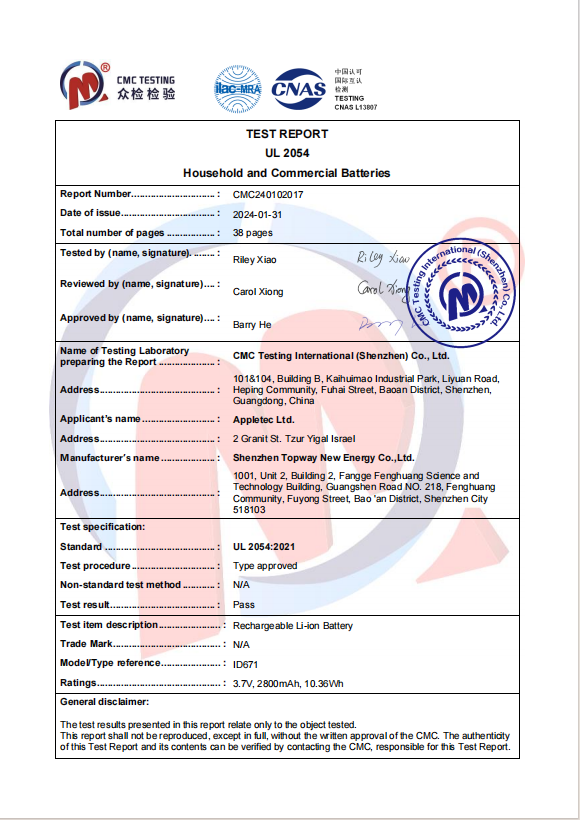
Certifications like UL 2054 are critical benchmarks for battery pack safety and a key indicator of a supplier's rigor.
Capability 3: Design for Harsh and Demanding Environments
The ability to engineer for durability separates industrial suppliers from consumer-grade vendors.
- Environmental Engineering: Inquire about their testing procedures for vibration, shock, temperature cycling, and ingress protection (IP ratings). Can they design a pack with an IP67 rating for an underwater drone?
- Advanced BMS Intelligence: The BMS is the brain of the pack. A capable supplier designs BMS with features like precise state-of-charge calculation, cell-level voltage/temperature monitoring, and communication interfaces (CAN, SMBus) tailored to the host system.
- Supply Chain & Manufacturing Control: Suppliers with in-house cell grading, pack assembly, and formation processes, like HCC which is advancing towards full in-house production, have greater control over consistency and can better handle complex custom orders.
3. Success in Action: A Real-World Application Case
Client: A European developer of heavy-lift agricultural drones for crop spraying.
Challenge: Needed a high-voltage battery pack (22.2V, 3000mAh) that could deliver sustained high-current output for spray pumps and motors, endure daily exposure to sun, vibration, and agro-chemicals, and support fast charging to minimize downtime during critical spraying windows. Off-the-shelf packs failed prematurely or could not meet the peak power demand.
Solution with HCC (Topway):
HCC's engineering team collaborated closely with the drone manufacturer. The solution involved:
- Selecting high-rate 18650 cells with a proven track record in power tools, capable of delivering the required burst current.
- Designing a robust, lightweight aluminum casing with an integrated mounting system that distributed vibration stress.
- Developing a custom BMS with advanced algorithms for accurate capacity estimation under variable load and a fast-charge protocol that safely reduced charge time by approximately 25% compared to the client's previous solution.
- Utilizing connectors and wire harnesses rated for outdoor and humid environments.
Result: The custom battery pack passed rigorous field testing. The client reported a 15% increase in effective flight time per charge due to better voltage stability and a significant reduction in unscheduled downtime due to battery issues. The partnership, now in its third year, has expanded to include battery packs for newer drone models.
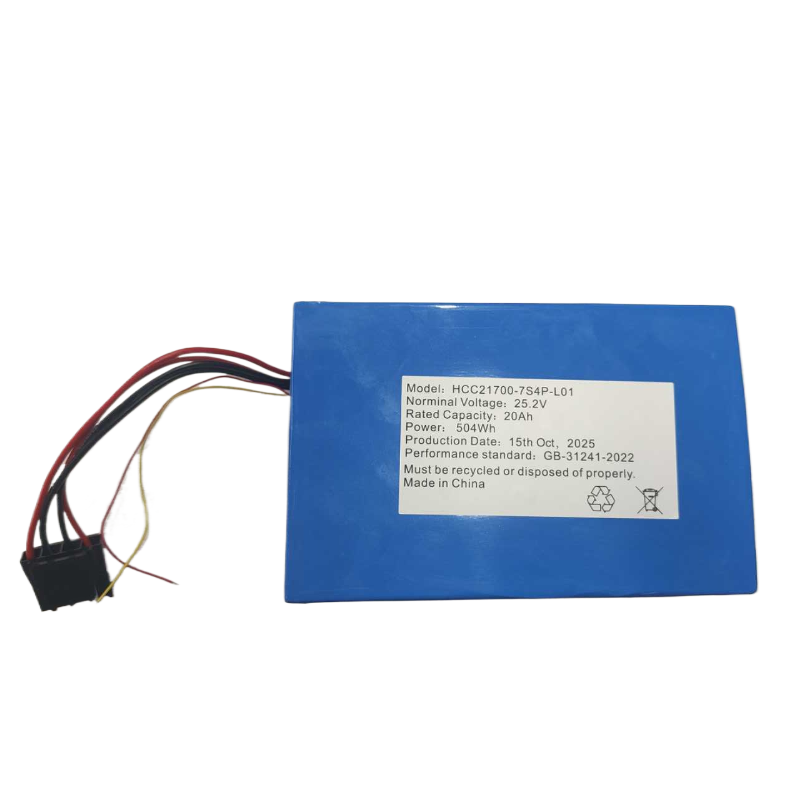
Custom-engineered battery packs, like this one for agricultural drones, solve specific operational challenges that standard products cannot.
4. Key Collaboration Points for a Successful Partnership
Turning a supplier selection into a successful long-term partnership requires proactive management.
- Define Requirements with Precision: Provide a detailed specification sheet that goes beyond voltage and capacity. Include operating temperature range, required certifications (list them!), discharge profile, cycle life expectations, mechanical dimensions, connector type, and communication protocol needs.
- Insist on a Joint Design Review: Before production, review the pack's mechanical, electrical, and BMS design. A competent supplier like HCC will engage in this process to ensure alignment.
- Audit Quality and Process: If volume justifies it, conduct an on-site audit or a virtual factory tour. Assess production lines, testing equipment, and quality control stations. Inquire about their cell sourcing strategy and grading process.
- Establish Clear Post-Sales Support Protocols: Agree on warranty terms, return procedures, and technical support channels. For critical applications, discuss the possibility of a failure analysis process and emergency replacement logistics.
Conclusion: Aligning with a Forward-Looking Partner
The landscape for lithium-ion batteries is evolving rapidly, with trends pointing towards higher energy densities, enhanced safety chemistries (like LiFePO4 for certain applications), and smarter, more integrated BMS. When selecting a supplier, you are not just buying a component; you are choosing a technological partner for your product's lifecycle.
Suppliers that demonstrate a commitment to in-house R&D, vertical integration for quality control, and hold a comprehensive certification portfolio are best positioned to navigate this evolution. For instance, HCC (Shenzhen Topway New Energy Co., Ltd.), with its independent R&D center, ongoing investment in advanced production lines, and certifications spanning UL, IEC, and ISO standards, exemplifies the profile of a supplier built to support industrial clients' complex and evolving needs. Their focused experience in sectors like medical devices, drones, and robotics allows them to provide not just batteries, but validated power solutions.
By applying this strategic framework, procurement professionals can move from a transactional purchase to forming a strategic alliance with a battery partner capable of powering their innovation reliably and safely into the future.
About Shenzhen Topway New Energy Co., Ltd. (HCC)
Shenzhen Topway New Energy Co., Ltd. (HCC) is an innovative manufacturer and solution provider specializing in rechargeable lithium-ion batteries for industrial and commercial applications. With an independent R&D center in Shenzhen and a business model evolving towards full in-house design and production, Topway is equipped to serve complex, high-volume orders. The company's products, widely used in medical devices, drones, robotics, and communication equipment, are backed by major international certifications including UL, CE, IEC 62133-2, IEC 62619, and ISO 9001:2015.
Contact:
Phone: +86 755 81461866
WhatsApp: +86 18682160604
Email: sales@hcctop.com
Website: http://www.hcctop.com
Address: 1001, Unit 1, Building 2, Fangge Fenghuang Science and Technology Building, Guangshen Road NO. 218, Fenghuang Community, Fuyong Street, Bao'an District, Shenzhen City.
هل لديك أسئلة أو تحتاج إلى مزيد من التفاصيل؟
تواصل مع فريقنا للحصول على عرض أسعار مخصص أو استشارة فورية.
طلب عرض أسعار
املأ النموذج أدناه وسيتواصل معك فريقنا بعرض مقترح مخصص.
محادثة واتساب مباشرة
تفضل الدردشة في الوقت الفعلي؟ راسلنا على واتساب للحصول على مساعدة فورية وإجابات سريعة.
- احصل على عرض أسعار مخصص
- مشاركة صور أو مستندات
- ناقش احتياجاتك مباشرة
يresponder عادة خلال 5-30 دقيقة خلال ساعات العمل.