
Injection Molded Parts for Home Appliance & Daily-Use Projects: A Shortlist
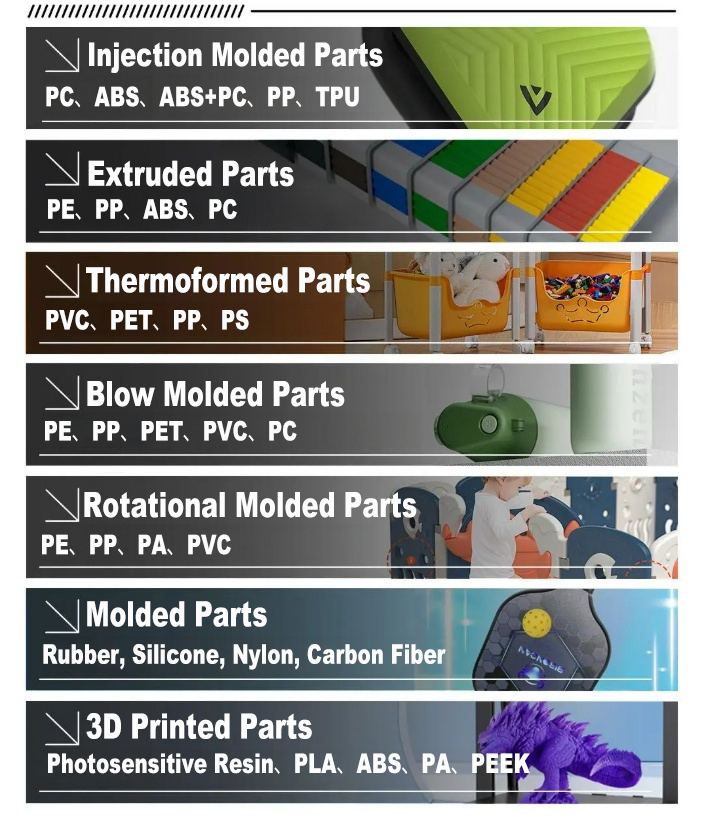
Injection molded engineering plastic parts for light-industry and daily-use programs. Image: DTG TECH CO., LTD.
Injection Molded Parts for Home Appliance & Daily-Use Projects: A Shortlist
Home appliance and daily-use projects rarely fail because a supplier cannot mold plastic. They fail because the selected part family does not match how the product is handled, cleaned, assembled, and used across a three-to-seven-year design life. This industry reference shortlists three published injection molded part families from DTG TECH CO., LTD. and compares them only against the requirements that appear most often in light-industry and consumer-product briefs: repeated handling, surface appearance, dimensional stability, service-life expectation, and compliance documentation.
DTG TECH CO., LTD. is a Xiamen-based custom injection molding manufacturer founded in 2002 that produces injection molds and injection molded plastic parts, exporting to the USA, Europe, and India. The company operates a 2,500 m² facility with 80 employees, including 25 engineers, and reports an annual output of 47,881 units. The shortlist below uses only the manufacturer's published product parameters, certification records, and documented project cases. It is a fit assessment, not a market-wide ranking.
Context matters before the comparison. Market Research Future values the global injection molded plastic market at USD 324.98 billion in 2024 and projects growth to USD 435.74 billion by 2035. China's plastic mold industry was estimated at approximately ¥600 billion, with a projected expansion to ¥1 trillion by 2030 according to an industry analysis published by JBRplas. Those figures describe available capacity. The decision a buyer actually faces is narrower: which published part family fits this appliance, at this volume, with this evidence.
Why Light-Industry and Daily-Use Projects Stress-Test Molded Parts Differently
Repeated handling. Handles, control knobs, covers, latches, and moving panels are touched, pushed, and cycled far more often than an internal bracket. Scuffing, surface wear, and small deformation become visible quickly, and in a consumer product they become a complaint rather than a maintenance note.
Visible surfaces. On a daily-use product, the molded surface is the product. Color consistency, texture uniformity, sink marks, flow marks, and gate vestige are judged by end users. This is why finishing options — texture, polishing, painting, and printing — carry as much weight in the decision as the molding process itself.
Dimensional stability through assembly and service. Snap fits, screw bosses, and enclosure seams must hold their dimensions not only on the first article but after the thermal cycling that a working appliance sees. A part that measures correctly at first-article inspection but creeps or warps in the field creates assembly and warranty problems that are expensive to trace back to a molded component.
A design service life of roughly three to seven years. Many home appliance and daily-use programs specify a service-life target in that band. It is a planning figure rather than a certificate: it has to be supported by the material, wall thickness, structural design, and the environment the part actually sees. Daily-use items used outdoors, near heat, or under load sit at the harder end of that window.
Compliance exposure. Daily-use products touch food, skin, and cleaning chemicals more often than industrial parts do. RoHS and food-contact documentation move from a formality to an approval gate.
The Requirements Used for This Shortlist
Each part family is assessed against five primary requirements and two execution filters. The criteria are deliberately physical rather than promotional, because they are the ones a buyer can verify against a drawing, a sample, and a certificate.
- Repeated handling and wear — will the part keep its surface and shape under normal use?
- Surface appearance — can the required texture, gloss, color, or printed decoration be produced repeatably?
- Dimensional stability — is dimensional control defined by a drawing and verified by inspection?
- Service-life fit — do the published materials and project evidence support a three-to-seven-year design life in the intended environment?
- Compliance documentation — which certificates and test reports apply, and to what exact scope?
- Execution filter 1: volume profile — prototype, low volume, or mass production.
- Execution filter 2: tooling and lead time — how mold-stage decisions shape the schedule before mass production starts.
The Shortlist at a Glance
| Requirement | DTG-PIH-002 Plastic Injection Molded Housings | DTG-CIMP-001 Custom Injection Molded Plastic Parts | DTG-PIM-003 Precision Injection Molded Components |
|---|---|---|---|
| Part role | Electronic enclosures, plastic covers, protective housings | Custom plastic parts, OEM injection molded components, mass production plastic parts | High-precision plastic parts, tight-tolerance injection molded parts |
| Published material options | ABS, PC+ABS, PP | ABS, PP, PC, PC+ABS, TPE, Acrylic and other engineering plastics | ABS, PC, POM, Nylon, engineering plastics |
| Dimensional control | Size and structure customized; tolerance governed by part design and drawing | Tolerance according to customer drawings and specifications | Dimensional control according to engineering drawings |
| Surface finishing | Polishing, painting, printing; assembly support | Texture, polishing, painting, printing | Not published as a finish list; finish set by drawing |
| Best-fit requirement | Appearance-critical housings in normal indoor service | Programs needing broad material choice, from prototype into mass production | Functional, dimension-critical components |
| Documented project evidence | Projector housing program in PC+ABS, produced in 30,000–50,000 unit batches, design service life over 5 years | Large transparent acrylic decorative components with a design service life over 5 years; bicycle chain protection cover with a design service life over 3 years | 50,000-piece optical lens program at 98% transparency; automotive lighting mold designed for a 500,000-shot requirement |
DTG-PIH-002 — Plastic Injection Molded Housings
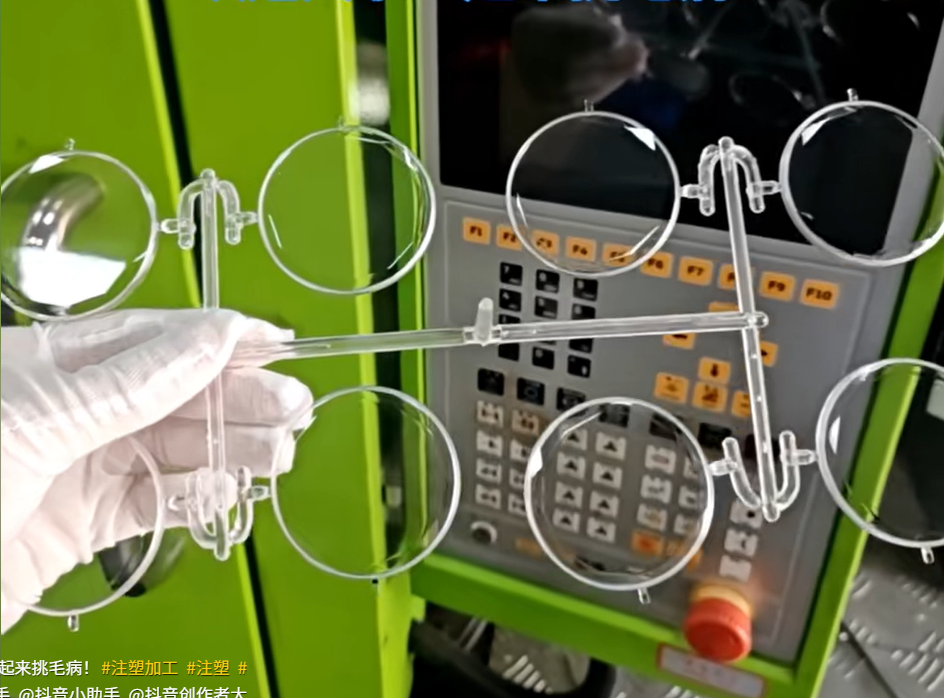
Custom molded housings and plastic parts produced for light-industry and consumer programs. Image: DTG TECH CO., LTD.
What it is. DTG-PIH-002 is a published family of plastic injection molded housings — electronic enclosures, plastic covers, and protective housings — manufactured by injection molding in ABS, PC+ABS, or PP. Customization covers size, structure, color, and surface texture, and finishing includes polishing, painting, printing, and assembly support. The family is positioned for electronics, home appliances, industrial equipment, and consumer products.
Where it fits. Housings and covers are the parts most exposed to repeated handling and to appearance judgement by end users, so the finish list matters more here than the raw material list. ABS and PC+ABS in the published set are the two materials commonly used for visible appliance housings; PC+ABS is the material named in the manufacturer's documented projector-housing program, which ran in 30,000–50,000 unit batches with a design service life over five years for indoor electronic equipment. PP is also available in this family and is generally the softer, less glossy option of the three, which typically suits non-visible or semi-visible parts where chemical resistance or material cost carries more weight than surface aesthetics.
Boundary. DTG-PIH-002 is a housing family, not a tight-tolerance functional family. Internal parts that must hold a specified dimension across thermal cycling — sliding parts, mating components, and load-carrying brackets — are better matched to DTG-PIM-003. Finish requirements are also drawing-governed: the published option list defines what can be produced, not a default finish grade for every part in the family.
DTG-CIMP-001 — Custom Injection Molded Plastic Parts
What it is. DTG-CIMP-001 is the broadest of the three families in material terms: custom plastic parts, OEM injection molded components, and mass production plastic parts produced in ABS, PP, PC, PC+ABS, TPE, Acrylic, and other engineering plastics. Part size is customized according to customer design, production volume runs from prototype to mass production, tolerance follows customer drawings and specifications, and available surface finishes include texture, polishing, painting, and printing. Applicable industries span electronics, automotive, consumer goods, industrial equipment, and medical products.
Where it fits. This is the family for programs that need a specific combination of material and appearance rather than a standard housing format. Two documented projects show the range. Large transparent acrylic components for decorative fountain use were produced with high appearance requirements, glossy surface finishing, and a design service life over five years — a case where transparency control and surface quality, not structural strength, drive the decision. A bicycle chain protection cover project used this family alongside a precision component, moved into full mass production after T1 sample confirmation, and resolved surface polishing, gas mark, and deformation issues during mold optimization before production. That project carried a design service life over three years in outdoor cycling use.
Boundary. Tolerance in this family is defined by the customer's drawing, not by a published default tolerance class. A buyer who does not supply a toleranced drawing cannot expect a defined precision commitment; that is a documentation gap, not a molding limitation. The breadth of the family is an advantage in mixed-material programs and a disadvantage for teams that want a single standardized part number with a fixed specification sheet.
DTG-PIM-003 — Precision Injection Molded Components
What it is. DTG-PIM-003 covers high-precision plastic parts and tight-tolerance injection molded parts produced by precision injection molding, with dimensional control defined according to engineering drawings and quality control carried out through dimensional inspection and first article inspection. The published material set is ABS, PC, POM, Nylon, and other engineering plastics, and the family is positioned for automotive, electronics, medical, and industrial equipment applications.
Where it fits. Use this family when part function depends on dimension: mating parts, sliding components, lens carriers, and wear or load parts that typically use POM or Nylon rather than a commodity housing resin. Documented evidence includes a 50,000-piece LED optical lens order in acrylic that met a 98% transparency requirement and passed customer inspection, and an automotive lighting component program whose mold was designed for a 500,000-shot production requirement with batch orders of 10,000–50,000 units.
Boundary. Two constraints are worth stating plainly. First, dimensional control is measured against engineering drawings, so the quality of the buyer's tolerance definition directly sets what can be verified and repeated — a loose drawing produces a loose result. Second, no surface-finish option list is published for this family; finish requirements must be specified on the drawing and confirmed at the mold-approval stage rather than assumed from the housing family's finish menu.
Selecting Between the Three: Requirement-to-Family Mapping
- Visible enclosure or cover, normal indoor service, repeated handling: DTG-PIH-002, with ABS or PC+ABS for appearance and PP for non-visible or chemically exposed areas.
- Part needs a specific material outside the housing set — TPE, Acrylic, or a mixed-material program: DTG-CIMP-001.
- Part function depends on dimension, or first-article documentation is a program requirement: DTG-PIM-003.
- Part is both appearance-critical and tight-tolerance: plan the housing and the internal precision components as separate part numbers validated in one tooling program, rather than forcing a single family to carry both roles.
- Project is at prototype stage with unresolved material choices: DTG-CIMP-001 covers prototype-to-mass production in one family, which avoids changing part families between validation and production.
Materials, Finishing and Service Life: What the Published Data Supports
Material selection in these families is not a preference question; each resin set carries a different balance. ABS is widely used for appearance housings because it accepts texture and paint well and molds to consistent dimensions in normal indoor service. PC+ABS blends are commonly chosen where a housing needs a better balance of impact resistance and heat tolerance than ABS alone, which is consistent with their use in the documented projector-housing program. PP is typically selected where chemical resistance, living-hinge behaviour, or material cost dominate, and it is generally the least glossy of the housing options. PC appears in the precision family where impact performance or transparency matters. POM and Nylon are typically chosen for functional parts that slide, wear, or carry load. TPE is available through the custom part family for soft-touch and overmolding work, and Acrylic is used where optical clarity and gloss are the primary requirements, as in the optical lens and large transparent decorative components in the case record.
Finishing choices follow the same logic. Texture is normally used to unify appearance and reduce the visibility of handling marks on frequently touched surfaces. Polishing supports gloss and transparency requirements. Painting and printing deliver colour and branding, and the manufacturer's RoHS test record specifically covers screen printing ink and UV ink substances, which makes the decoration step the relevant compliance question for printed parts rather than only the base resin.
On service life, the documented evidence is project-specific rather than blanket. The case record shows design service lives over three years for an outdoor bicycle chain protection cover, over five years for indoor projector housings, over five years for large transparent decorative components, over five years for LED optical lenses in commercial lighting, and over ten years for an automotive lighting component whose mold was designed for 500,000 shots. For a home appliance program targeting three to seven years, these references are directionally useful, but the achievable life for any specific part still depends on wall thickness, rib design, gate location, material grade, and the thermal and mechanical load that part actually sees.
Compliance Position — and Where It Stops
The compliance assets linked to these part families are specific documents with specific scopes. Reading them accurately is part of the selection decision.
| Document | Reference | Issued / validity | Documented scope |
|---|---|---|---|
| ISO 9001:2015 Quality Management System certificate | 11425Q46375R0S, issued by Beijing East Allreach Certification Center Co., Ltd. (EACC) | Issued 2025-07-01, valid to 2028-06-30 | The production of injection molds and general injection molded parts |
| Made-in-China Supplier On-site Audit Report | MIC-ASI217106, Bureau Veritas | 2021-03-29 | Injection molding, plastic injection products |
| SGS EU RoHS Compliance Test Report | No. CANEC1103223001 | 2011-08-23 | Screen printing ink / UV ink substances testing for Lead, Mercury, Cadmium, Hexavalent Chromium, PBB and PBDE under RoHS Directive 2011/65/EU |
| SGS FDA Food Contact Material Test Report | No. SHAEC2004981201 | 2020-04-13 | Total extractives testing for CENUSIL® R 2×0 silicone food contact material, under FDA 21 CFR 177.2600 |
| SGS LFGB Food Contact Material Test Report | No. SHAEC2004979701 | 2020-04-15 | Testing of CENUSIL® 2×0 silicone food contact material, under German LFGB Section 30 & 31 plus BfR recommendations |
Two boundaries follow from that table and should be confirmed before tooling. First, the food-contact reports on file cover a specified silicone material. They are not blanket clearance for every resin, colourant, or finished part, so a daily-use item intended to touch food needs test coverage confirmed for the exact material actually molded into that part. Second, the RoHS report on file covers screen printing ink and UV ink substances. Where a RoHS declaration is required for a base resin or a painted surface, the applicable scope should be confirmed for that specific component rather than assumed from the existing report. The ISO 9001:2015 certificate covers a quality management system scope — the production of injection molds and general injection molded parts — not a product-level certification for each part number.
Execution Facts: Volume, Tooling, Lead Time and MOQ
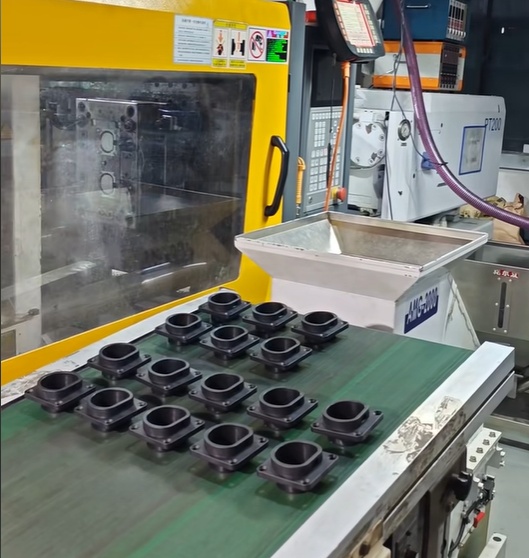
Low-volume and mass production runs on the same tooling and quality sequence. Image: DTG TECH CO., LTD.
The execution side of this shortlist is documented rather than estimated. Monthly production capacity is approximately 3,990 parts, with annual capacity around 47,881 injection molded parts, and capacity is arranged according to material type, part size, and project schedule. Lead times run 7–15 days for prototype work, 15–45 days for custom mold projects depending on complexity, and 20–35 days for mass production or regular production orders after sample approval. MOQ is negotiable based on part size, material, mold cost, and production requirements, and for tooling, a single custom mold project can be accepted as the minimum order.
Quality control follows a defined sequence: DFM analysis and mold design review, T1 trial molding, sample inspection, and mold approval before mass production, followed by first article inspection, in-process inspection, dimensional inspection, visual inspection, and pre-shipment inspection. The manufacturer also provides OEM and ODM services covering design optimization, material selection, and after-sales technical support, with customization options extending to part structure, colour, surface texture, logo, packaging, mold structure, cavity layout, gate design, runner system, and tooling material.
Molded Thermoplastics Versus Fabricated Alternatives
Against metal fabrication and thermoforming, injection molding concentrates cost differently. A mold typically delivers complex geometry, integrated colour and texture, and consistent part-to-part dimensions in a single cycle, which is why enclosure and housing programs frequently move to molding once volumes justify tooling. Fabricated alternatives spread cost more evenly and tolerate design change without new tooling, but they usually require secondary operations for finish and assembly.
The real limitation of the molded route is the tooling commitment. Once a mold is approved, the part geometry, material, gate position, and surface texture are effectively locked, and later changes carry both cost and schedule consequences. The mitigation available in this shortlist is procedural rather than technical: DFM analysis, T1 trial molding, and sample approval before mass production, plus mold modification support after approval. Those steps reduce the risk of a late change, but they do not remove the fact that the design decision moves earlier in an injection molding program than it does in a fabrication program.
Limits to Confirm Before Tooling
- Scope of food-contact documentation. Confirm that the FDA and LFGB test coverage applies to the exact material and colour used in the part, not only to the silicone material on the existing reports.
- Scope of the RoHS report. The report on file covers printing ink substances; confirm coverage for the base resin and any painted surface.
- Drawing quality. Precision outcomes in DTG-PIM-003 depend on tolerances defined in the buyer's engineering drawing.
- Capacity band. Programs sized well above the documented monthly and annual output require schedule planning in advance, because capacity is arranged by material, part size, and project schedule.
- Finish availability by family. Texture, polishing, painting, and printing are published for DTG-CIMP-001 and finishing for DTG-PIH-002; the precision family's finish is drawing-governed.
- Material set boundaries. The published resins are ABS, PP, PC, PC+ABS, TPE, Acrylic, POM, and Nylon; applications requiring grades outside that set should be raised at the design stage.
Future Outlook
Two structural trends shape how this shortlist will be used. The first is scale: the global injection molded plastic market is projected to move from USD 324.98 billion in 2024 toward USD 435.74 billion by 2035 (Market Research Future), while China's plastic mold industry is projected to expand from roughly ¥600 billion to ¥1 trillion by 2030 (JBRplas). Capacity is not the constraint buyers will face.
The second is material substitution. Automotive OEMs replacing metal parts with engineered thermoplastics already account for 34% of domestic injection molded component demand in major US hubs according to Grand View Research, and that design habit tends to migrate into appliance and daily-use development. As visible enclosures and functional internals absorb more responsibility, the decisive questions shift from whether a supplier can mold a part to whether the material set, the finish specification, the dimensional definition, and the compliance scope are documented for the exact part being bought. Buyers who specify those four things at the drawing stage will find shortlist decisions faster and disputes fewer.
Frequently Asked Questions
1. What is the difference between DTG-PIH-002, DTG-CIMP-001 and DTG-PIM-003?
DTG-PIH-002 is a housing family — electronic enclosures, plastic covers, and protective housings — in ABS, PC+ABS, or PP, with polishing, painting, printing, and assembly support. DTG-CIMP-001 covers custom plastic parts and OEM injection molded components in a wider material set including TPE and Acrylic, with production from prototype through mass production and tolerance according to customer drawings. DTG-PIM-003 covers high-precision, tight-tolerance components with dimensional control according to engineering drawings and verification through dimensional inspection and first article inspection, in ABS, PC, POM, Nylon, or other engineering plastics.
2. Which plastics are used for home appliance and daily-use molded parts?
Across the three published families, the available materials are ABS, PP, PC, PC+ABS, TPE, Acrylic, POM, and Nylon. ABS and PC+ABS are commonly used for visible housings, PP for parts where chemical resistance or material cost dominates, PC, POM, and Nylon for functional and precision components, TPE for soft-touch or overmolded work, and Acrylic where transparency and gloss are the primary requirements.
3. What service life can these part families support?
The documented case record shows design service lives over three years for an outdoor bicycle chain protection cover and over five years for indoor projector housings, large transparent decorative components, and LED optical lenses. A service-life figure is project-specific: it depends on wall thickness, structural design, material grade, gate location, and the thermal and mechanical load applied to that individual part, so the target life should be specified at the drawing stage.
4. How is dimensional stability verified during production?
For DTG-PIM-003, dimensional control follows the engineering drawing and quality control includes dimensional inspection and first article inspection. Program-wide, the sequence runs DFM analysis and mold design review, T1 trial molding, sample inspection, and mold approval before mass production, then first article inspection, in-process inspection, dimensional inspection, visual inspection, and pre-shipment inspection.
5. What production volumes can the shortlisted families support?
Monthly production capacity is approximately 3,990 parts, with annual capacity around 47,881 injection molded parts, arranged according to material type, part size, and project schedule. Documented batch references in the case record include 30,000–50,000 units per batch for projector housings, 10,000–50,000 units per batch for an automotive lighting component, and a 50,000-piece optical lens order.
6. What are the MOQ and lead times for a home appliance molding project?
MOQ is negotiable based on part size, material, mold cost, and production requirements, and a single custom mold project can be accepted as the minimum order for tooling work. Lead times are 7–15 days for prototypes, 15–45 days for custom mold projects depending on complexity, and 20–35 days for mass production or regular production orders after sample approval.
7. Which certificates and test reports apply, and what do they cover?
The quality management certificate is ISO 9001:2015, certificate 11425Q46375R0S, issued 2025-07-01 by Beijing East Allreach Certification Center Co., Ltd. and valid to 2028-06-30, scoped to the production of injection molds and general injection molded parts. A Bureau Veritas on-site audit report, MIC-ASI217106, covers injection molding and plastic injection products. SGS report No. CANEC1103223001 covers screen printing and UV ink substances under RoHS Directive 2011/65/EU. SGS report No. SHAEC2004981201 covers total extractives testing for CENUSIL® R 2×0 silicone food contact material under FDA 21 CFR 177.2600, and SGS report No. SHAEC2004979701 covers the same silicone material under German LFGB Section 30 & 31 plus BfR recommendations. Food-contact coverage should be confirmed against the exact material used in a specific part.