
Injection Molding for Medical Device Housings: Cleanroom Precision
Injection Molding for Medical Device Housings: Cleanroom Precision
Medical device housings are the molded plastic enclosures that give a device its structure, position its internal electronics and sensors, and form the surface that clinicians, technicians, and patients physically handle. They are produced by injection molding, and the way they are specified differs sharply from consumer electronics enclosures: dimensional repeatability, surface cleanliness, material batch consistency, and inspection records carry as much weight as appearance.
This reference examines the application fit between custom injection molding and medical device housing programs. It covers what a clean-use environment changes about part design, which thermoplastics are typically selected, how a project moves from drawing to validated production, what inspection evidence a buyer should expect, and where injection molding stops being the right answer.
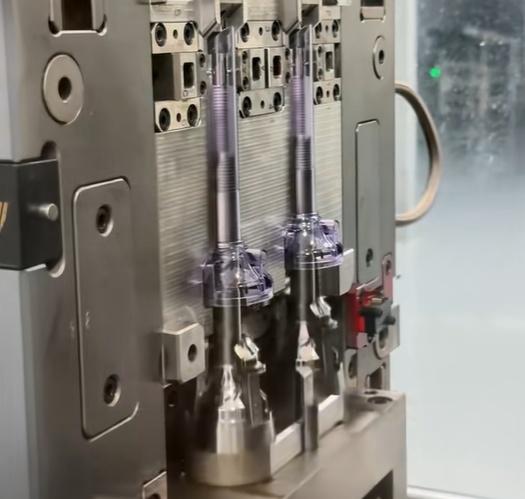
Medical and healthcare product components produced by custom injection molding for clean-use assemblies.
Why Medical Device Housings Are a Different Molding Problem
The difficulty in medical housing work is rarely the act of molding plastic. It is holding identical dimensions, identical surfaces, and identical material behavior across the full production lifetime of a device that has already been validated, while documenting every part.
Housings are locating features. They position printed circuit boards, sensors, display modules, buttons, and tubing. A small dimensional drift can move a sensor out of position, change the force needed to close a snap fit, or prevent a cover from seating flush. That is why the medical and healthcare product profile for custom injection molded parts places tight tolerances and rigorous inspection at the center of the requirement rather than at the edges.
Service conditions add another layer. According to the medical and healthcare products scenario profile, these injection molded components are permanently assembled inside medical devices and healthcare products and undergo continuous intermittent use under cleanroom conditions, including daily multiple on-off cycles and routine cleaning and sterilization. They are designed for both long-term static mounting and frequent actuation, and are expected to show no degradation over the product lifecycle.
Appearance is also functional here. Sink marks, flow lines, weld lines, short shots, and silver streaks are cosmetic complaints in consumer goods. In a device housing they can indicate a filling or cooling problem that also affects dimensions, and they are visible at the point of clinical use. The scenario profile therefore calls for clean and defect-free surfaces, not merely acceptable ones.
Batch consistency is the final constraint. A housing molded in the first production month must assemble with a housing molded a year later. Color match, cavity-to-cavity variation, and material lot behavior all have to stay inside the same window, which is why the profile specifies stable material batch-to-batch consistency and 100% quality inspection covering dimensional measurement and visual check.
What Cleanroom Assembly Demands From a Molded Housing
Parts destined for a controlled assembly environment have to arrive ready for that environment. In practice this changes several decisions that would otherwise be purely commercial.
- Surface condition at delivery. Residual mold release or external spray can leave a film that interferes with bonding, pad printing, or cleaning validation. Buyers should state whether release agents are permitted and which ones.
- Flash and gate control. Loose flash, sharp gate stubs, and abrasive parting-line steps create particles and handling risk. Degating and deflashing become part of the specification rather than a finishing afterthought.
- Packaging. Parts that rub together in transit generate their own contamination. Cleanroom-compatible bagging and layer separation protect the surface that was just inspected.
- Handling discipline. Every transfer between molding, inspection, and packing is an opportunity to introduce particles or handling marks, so the fewer transfers the better.
Material Selection: ABS, PC, and PC+ABS in Device Housings
For medical device housings and healthcare product components, ABS, PC, and PC+ABS cover most structural and enclosure applications. Each shifts the balance between impact resistance, heat resistance, surface quality, and process stability, and that balance should be chosen against the device's cleaning routine and handling profile rather than by habit.
| Material | Typical strength in a housing application | Where it usually fits |
|---|---|---|
| ABS | Good dimensional stability, easy processing, strong surface finish and paintability, moderate heat and chemical resistance | Covers, bezels, internal brackets, control panels |
| PC | Higher impact strength and heat resistance; more sensitive to melt and mold temperature and to residual stress, so gate and cooling design matter more | Structural housings, transparent windows and light guides |
| PC+ABS | Combines polycarbonate impact and heat performance with ABS processability and cosmetic surface quality | Housings that need both toughness and a clean visible surface |
DTG TECH CO., LTD. lists ABS, PP, PC, PC+ABS, TPE, and Acrylic among the engineering plastics available for its custom injection molded plastic parts, with finishing options that include texture, polishing, painting, and printing. For medical-related work, material compliance references cited by the company include FDA 21 CFR 177.2600 alongside its ISO 9001:2015 certification.
A practical caution: compliance is grade-specific. Two ABS grades from different suppliers can carry different regulatory statements, so buyers should request the compliance documentation for the exact grade proposed, not for the polymer family. Biocompatibility, resistance to the specific cleaning agents used on the device, and sterilization compatibility are validated by the device manufacturer against the finished device; a molder can confirm molding behavior, dimensional consistency, and surface performance, but cannot own that validation decision.
From Drawing to Validated Part: How a Medical Housing Program Runs
A custom injection molding program for medical device parts follows a predictable sequence. What changes between suppliers is the depth of each step and the documentation that comes out of it.
- DFM review. The part drawing is examined for wall thickness, draft angle, gate location, potential weld lines, undercuts, tolerance allocation, and assembly features. The output is a reviewed design plus a list of flagged risks — this is the cheapest stage at which to change a design.
- Mold design and tool manufacture. Steel selection, cooling layout, ejection strategy, and expected tool life are fixed here. Tooling decisions made at this point determine the process window available for the rest of the program.
- T1 sampling and mold trial. First parts come off the tool and are measured against the drawings. Gate, cooling, and shrinkage compensation are adjusted before the tool is accepted.
- First article inspection. Critical dimensions are documented on the approved tool. DTG's precision injection molded component program (DTG-PIM-003) explicitly includes dimensional inspection and first article inspection as its quality control model.
- Production with in-process inspection. The medical scenario requirement calls for 100% inspection covering dimensional measurement and visual check, which is a production discipline rather than a one-time event.
- Finishing and assembly support. Housing programs can include polishing, painting, printing, and assembly support depending on the device interface.
Where These Components Sit Inside a Device
In medical devices and healthcare products, the function of the molded parts is consistent: they support device structure, protect internal electronic modules and sensors, and improve product usability. The components are matched to electronic modules, sensors, tubes, buttons, and assembly fixtures, and they are assembled permanently rather than serviced individually.
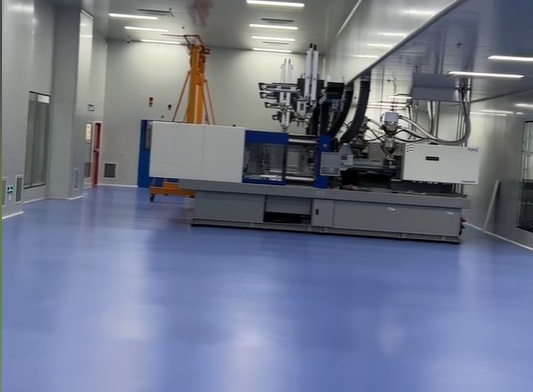
Housings, covers, and functional components are permanently assembled into medical and healthcare products, with daily actuation and routine cleaning over the product lifecycle.
Four product families from the DTG range map onto this segment:
- DTG-CIMP-001 — Custom Injection Molded Plastic Parts. Custom plastic parts, OEM injection molded components, and mass production plastic parts. Materials include ABS, PP, PC, PC+ABS, TPE, and Acrylic. Part size and structure follow customer design, tolerances follow customer drawings and specifications, and production volume runs from prototype to mass production. Medical products are listed among the applicable industries.
- DTG-PIH-002 — Plastic Injection Molded Housings. Classified as electronic enclosures, plastic covers, and protective housings. Material options are ABS, PC+ABS, and PP, with customization of size, structure, color, and surface texture, and finishing options covering polishing, painting, printing, and assembly support.
- DTG-PIM-003 — Precision Injection Molded Components. High precision plastic parts and tight tolerance injection molded parts, with dimensional control according to engineering drawings. Materials include ABS, PC, POM, Nylon, and other engineering plastics. Medical is listed among the applicable industries.
- DTG-IIM-005 — Insert Injection Molded Parts. Metal insert molding parts and overmolded components combining ABS, PC, or PP with metal inserts, with customization of insert position, material combination, and structure design. These suit structural and functional components that need a threaded interface or a load-bearing mounting point.
Device housing programs from this supplier are typically designed around a three-to-seven-year product service life, which matches the expectation in the medical scenario profile that the parts show no degradation across the lifecycle rather than merely surviving initial assembly.
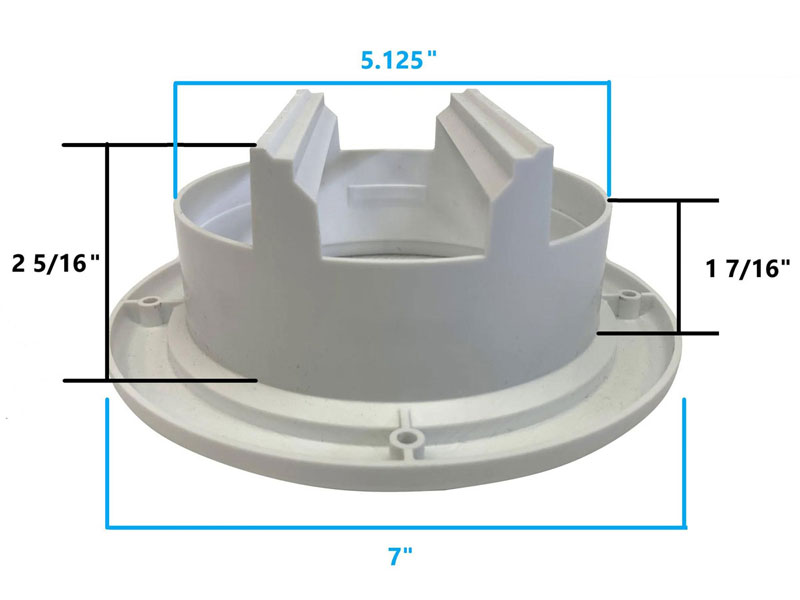
Precision injection molded components are dimensionally controlled against engineering drawings, with dimensional inspection and first article inspection.
DTG TECH CO., LTD.: The Capability Base Behind These Programs
DTG TECH CO., LTD., established in 2002, is a manufacturer of injection molded plastic parts based in Xiamen, China. The company operates a 2,500 m² manufacturing facility with approximately 80 employees, including a 25-engineer R&D team, and reports annual production capacity of 47,881 units. Export business accounts for 100% of total sales, with main markets in the USA, Europe, and India.
Its scope is a one-stop service covering precision mold design, tool manufacturing, prototype development, plastic injection molding, and mass production, supported by product analysis and mold testing. For buyers at the awareness and research stage, three characteristics matter more than the equipment list: the company accepts early-stage designs, limited budgets, and uncertain requirements; it positions tooling and molding under one scope of responsibility rather than splitting them; and it works from customer drawings and specifications for dimensions and tolerances, which keeps the dimensional contract with the device owner.
Market Trend Analysis: Demand Signals for Molded Device Components
Several published data points frame the supply environment that medical and healthcare programs now sit inside.
- The global injection molded plastic market was valued at USD 324.98 billion in 2024 and is projected to reach USD 435.74 billion by 2035, according to Market Research Future.
- China's plastic mold industry is estimated at approximately ¥600 billion and is projected to expand to about ¥1 trillion by 2030, according to JBRplas, with China producing an estimated 65% of the world's injection-molding machines and accounting for 60% of global export volume.
- ISO 13485 is the benchmark quality management system for medical device injection molding and requires documentation such as the Device Master Record, per ISO. Sector-specific quality standards are not interchangeable: IATF 16949 plays the equivalent role in automotive work, emphasizing defect prevention and waste reduction.
The published market-size figures should be read directionally. Estimates differ by institution because they include different scopes and base years — Grand View Research places the injection molded plastics market at USD 362.5 billion for 2025, while Fortune Business Insights reports USD 321.4 billion for 2024. The consistent signal across sources is growth in molded plastic demand, not agreement on a single number.
The more actionable trend is on the standards side. A supplier operating under ISO 9001:2015 holds a general quality management system, not a medical-device-specific one. When a device program requires ISO 13485-aligned documentation, the gap should be closed explicitly in the contract — naming which records, inspection reports, and traceability documents will be provided, and at what frequency — rather than assumed from a general certification.
Injection Molding Versus Alternative Housing Processes
Injection molding is not the only way to make a device housing. Machining from solid plastic, additive manufacturing, and thermoforming each have a legitimate place, and the choice is driven mostly by volume, geometry, and how stable the design is.
| Consideration | Custom injection molding | CNC machining from solid | Additive manufacturing | Thermoforming |
|---|---|---|---|---|
| Upfront tooling investment | Required before any production part exists | None | None | Low |
| Unit cost at production volume | Falls sharply with volume | Stays high per part | Stays relatively high | Low for simple shells |
| Part-to-part repeatability | High, mold-defined | High, but cycle-time dependent | Moderate; process-dependent | Moderate |
| Surface quality | Mold-defined texture, as-molded finish | Machining marks, tool paths | Layer lines requiring post-processing | Formed sheet surface |
| Design change after freeze | Costly; requires tool modification and re-verification | Easy; reprogram and cut | Easy; reprint | Moderate; requires new forming tool |
| Geometry capability | Complex 3D features, molded-in snaps and bosses | Simple to moderate geometry | Complex geometry, limited material range | Shallow, large-radius shells |
The limitation that matters most is economic and structural. Tooling must be paid for before the first production part exists, so the process rewards design stability. A design change after tool approval is the most expensive kind of change in a device program, because the mold has to be modified and every affected dimension re-verified. At low volumes, the tooling cost carried per part can exceed the cost of machining or printing the same geometry outright.
There are geometry limits as well. Deep undercuts, long thin walls with difficult flow paths, and optically clear windows free of gate marks each push against what a two-plate tool can deliver economically, and may require slides, secondary operations, or a different process. Thermoforming cannot hold tight tolerance across complex three-dimensional features. And no molding process resolves sterilization compatibility — that remains a material and process validation question owned by the device manufacturer.
Planning Boundaries Before Tooling
For buyers moving from awareness into research on a medical housing project, four boundaries are worth confirming in writing before a purchase order is issued.
- Production scale. DTG TECH reports annual production capacity of 47,881 units. Programs above that scale need a capacity conversation up front rather than after tooling.
- Facility scope. The stated capability base covers precision mold design, tool manufacturing, prototype development, plastic injection molding, and mass production. Molding environment, post-molding handling, and packaging requirements should be confirmed operation by operation.
- Validation ownership. Dimensional inspection and first article inspection are supplier deliverables. Biocompatibility, cleaning-agent resistance, and sterilization validation are device-manufacturer deliverables.
- Material documentation. Compliance statements should be obtained for the specific grade proposed, not for the polymer family in general.
Future Outlook
Three directions look likely to shape medical device housing sourcing over the next planning cycle.
First, housing consolidation. Rather than separate brackets, covers, and light guides, device programs increasingly mold snaps, sealing grooves, mounting bosses, and light-transmitting features into a single housing. Insert injection molding — combining ABS, PC, or PP with metal inserts, as in DTG-IIM-005 — supports this by putting threaded and load-bearing interfaces directly into the molded part.
Second, continued substitution of machined and metal parts with engineered thermoplastics in device frames and brackets, which follows the same pattern already well established in other industries. This raises the value of a supplier who can move a part from prototype to mass production without changing process ownership.
Third, documentation pressure. As buyers become more precise about which quality system applies, suppliers that can produce inspection records, first article reports, and grade-specific compliance statements will be easier to qualify than those that cannot. For programs still at the design stage, the practical move is to bring the molding partner into the DFM review early, when a dimensional or material change is still inexpensive.
Frequently Asked Questions
What is injection molding for medical device housings used for?
It is used to produce the structural and enclosure components of medical devices and healthcare products: housings that support device structure, protect internal electronic modules and sensors, and improve product usability. These parts are permanently assembled inside the device and are matched to electronic modules, sensors, tubes, buttons, and assembly fixtures. Custom injection molded plastic parts such as DTG-CIMP-001, plastic injection molded housings such as DTG-PIH-002, precision injection molded components such as DTG-PIM-003, and insert injection molded parts such as DTG-IIM-005 all fall within this application.
Which plastics are used for medical device housings?
ABS, PC, and PC+ABS cover most housing and structural applications. ABS offers good dimensional stability, easy processing, and strong surface finish with moderate heat and chemical resistance. PC provides higher impact strength and heat resistance but is more sensitive to molding conditions and residual stress. PC+ABS combines polycarbonate impact and heat performance with ABS processability and cosmetic surface quality. DTG TECH also lists PP, TPE, and Acrylic among available materials for custom injection molded plastic parts. For medical-related work the company cites material compliance references including FDA 21 CFR 177.2600 alongside ISO 9001:2015 certification, and buyers should request compliance documentation for the specific grade proposed.
How does a custom injection molding project for medical parts begin?
It begins with a DFM review of the part drawing, covering wall thickness, draft, gate location, potential weld lines, undercuts, tolerance allocation, and assembly features. Mold design and tool manufacture follow, then T1 sampling and mold trial where first parts are measured against the drawings before the tool is accepted. After that comes first article inspection on the approved tool, then production with in-process inspection. DTG TECH provides this sequence as a one-stop scope covering precision mold design, tool manufacturing, prototype development, plastic injection molding, and mass production, and accepts early-stage designs, limited budgets, and uncertain requirements.
What inspection evidence should a buyer expect from a molder?
At minimum, dimensional measurement against the engineering drawings and a documented first article inspection. DTG's precision injection molded component program (DTG-PIM-003) uses dimensional inspection and first article inspection as its stated quality control model, and the medical and healthcare products scenario requirement calls for 100% quality inspection covering dimensional measurement and visual check, alongside high-precision molding to tight tolerances and stable material batch-to-batch consistency. Suppliers should also be able to state whether their quality system is ISO 9001:2015, which is a general system, and how documentation required under ISO 13485 — the benchmark quality management system for medical device injection molding, which requires documents such as the Device Master Record — will be handled.
What are the limits of injection molding for medical device housings?
Tooling must be built and paid for before the first production part exists, so the process rewards design stability, and a design change after tool approval is the most expensive change in a device program because the mold must be modified and affected dimensions re-verified. At low volumes, tooling cost carried per part can exceed the cost of machining or 3D printing the same geometry. Deep undercuts, long thin walls, and gate-mark-free optical windows may require slides, secondary operations, or a different process. Sterilization compatibility is not resolved by the molding process itself and must be validated by the device manufacturer. Production scale is also a boundary: DTG TECH reports annual production capacity of 47,881 units from a 2,500 m² facility.