
Ink Pump IP-1: Steel Build, Customization and the BM-1 Question
An ink pump is one of the few components in a carton plant where a purchasing decision touches both print quality and the daily wash-up routine. A pump delivering uneven flow shows up as inconsistent ink film at the anilox roller, and a pump that is awkward to strip down adds time to every colour change. That is why questions about the LLY PACK IP-1 ink pump tend to be practical rather than promotional: what it is made of, which parameters can be changed, how a changed unit affects lead time, and why its model code is so easily confused with another LLY PACK item.
LLY PACK (HK) CO., LIMITED is a manufacturer specializing in corrugated machines and high-speed corrugated cardboard production lines, and it supplies the IP-1 ink pump within a wider portfolio of corrugated machine parts and line components for carton manufacturing. The notes below work as an independent procurement reference: they separate what the published specification actually states from what a buyer still has to confirm before placing an order.
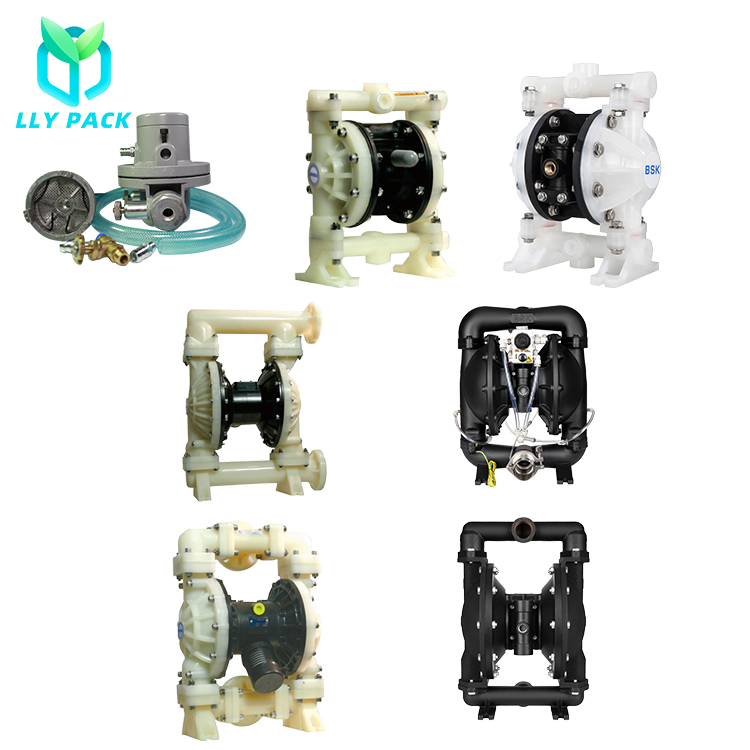
The LLY PACK IP-1 ink pump is documented as a steel-bodied unit for carton manufacturing, with parameters customized as requirement.
Direct answer. The IP-1 is documented as a steel-bodied ink pump intended for carton manufacturing, with parameters customized as requirement. The material question therefore has a clear answer, while the performance question does not: flow rate, port size, wetted-path elastomers and mounting interface are defined per requirement rather than published as a fixed table. Those items must be confirmed at RFQ stage before lead time or price can be treated as final.
What the IP-1 specification covers, and what it leaves open
Most procurement disputes over parts of this type start with a documentation gap rather than a technical failure. A buyer reads a short product record, assumes it behaves like a catalogue item, and then discovers that the specification was always meant to be completed by the requirement. The table below separates the two halves of the IP-1 record.
| Item | Status in the published IP-1 record |
|---|---|
| Product type | Ink pump |
| Model designation | IP-1 |
| Body material | Steel — stated |
| Parameter basis | Customized as requirement — stated |
| Application industry | Carton manufacturing |
| Flow rate, lift, air consumption | Not published for IP-1 — confirm in RFQ |
| Port size and connection standard | Not published for IP-1 — confirm in RFQ |
| Diaphragm, valve and seal materials | Not published for IP-1 — confirm in RFQ |
| Mounting footprint and orientation | Not published for IP-1 — confirm in RFQ |
| Lead time for a configured unit | Not published — request against the confirmed specification |
The distinction matters because a purchasing team that treats the first four rows as the whole record will issue an RFQ that cannot be quoted accurately. The bottom five rows are not missing because the supplier is vague; they are missing because the product is built to a buyer-defined requirement rather than to a single published configuration.
Steel versus non-steel: separating the material fact from the material question
Buyers frequently arrive at this product with an assumption carried over from a previous pump — often a plastic-bodied or aluminium-bodied unit elsewhere in the plant — and ask whether a non-steel version can be supplied. Two separate answers are needed here, and they should not be merged.
The fact: the published material for the IP-1 is steel. Nothing in the available product record states an alternative body material, and this reference does not assert that one exists.
The engineering context: steel bodies are generally chosen where rigidity, thread durability at the port connections, and resistance to knocks during wash-up and handling matter more than weight. In a printing unit, the pump is repeatedly disconnected, flushed and reconnected, and the manifold threads take most of that wear. Steel also holds its shape under repeated pneumatic cycling, which keeps clearances consistent over time.
What steel does not decide is chemical compatibility. In a pneumatic pump the fluid touches the diaphragms, valves and seals before it touches the body, so ink or glue compatibility is mainly an elastomer question. For the IP-1 specifically, elastomer data is not part of the published record. A buyer running solvent-based ink, a heavily pigmented coating, or an adhesive with a short pot life should state the fluid and ask for the wetted-path materials to be confirmed in writing rather than inferring them from the body metal.
Non-metallic and lightweight metal bodies do appear elsewhere in the wider pump market, and are usually selected for weight, for behaviour in a particular fluid, or for cost. That is a legitimate design route — it is simply not a documented property of this model. Where a plant specification mandates a non-metallic wetted body, or requires a published flow and pressure curve before purchase approval, the IP-1 as documented will not close that gap on its own. That is a real boundary of the product record, and it is better identified before the RFQ than after delivery.
What "customized as requirement" actually commits the supplier to
The phrase is a procurement statement, not a technical one. It says the unit is built against a requirement; it does not say which requirement, in which units, or to which tolerance. The contrast with a fixed-parameter product in the same LLY PACK range makes the point quickly.
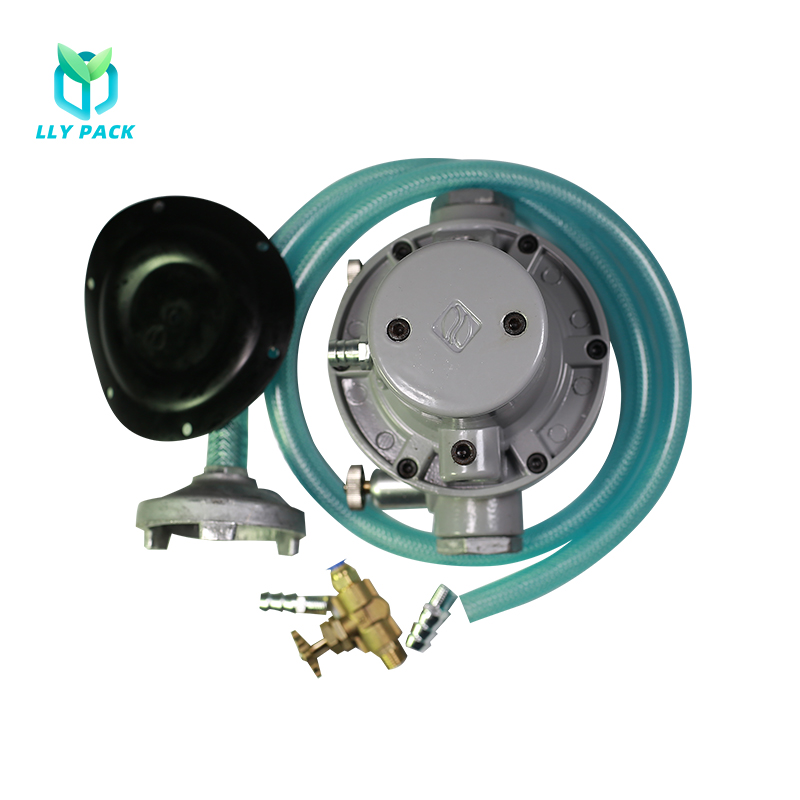
The DP-1 diaphragm pump carries a fixed published parameter table — pipe diameter 10/12/20 mm, working air pressure 0.2–0.5 MPa, flow rate 4–12 L/min, lift 4 m, maximum air consumption 4 m³/h, self-absorbing height 0.4 m, dimensions 210×155×255 mm. The IP-1 does not work this way.
The DP-1 can be selected from a table: the buyer matches an existing figure to a published range and the decision is largely arithmetic. The IP-1 cannot be selected that way, because there is no fixed range to match against. It is specified. Two buyers who both write "IP-1" on a purchase order can therefore receive two physically different pumps — correctly, because they described different requirements.
A requirement statement that can actually be quoted usually contains the following. Omitting any item tends to produce a second round of questions before production can start.
- Fluid handled: ink type, pigment load, viscosity range, and whether the same pump also sees cleaning solvent or glue.
- Duty pattern: continuous circulation during a shift or intermittent transfer, and the typical running hours between wash-ups.
- Capacity expectation: the flow the printing unit needs, expressed as a target rather than a vague "sufficient" — the supplier will translate it into a configuration.
- Connection and interface: port size, hose or pipe type, and whether a flexible connection is required to absorb vibration.
- Mounting: where the pump sits, orientation, available clearance, and access for removal during cleaning.
- Air supply: available pressure at the point of use and the air quality the plant can guarantee.
- Wetted-path materials: any elastomer restriction imposed by the ink chemistry or by internal standards.
- Documentation expectation: whether a specification sheet or drawing must be signed off before production, and whether a spare unit should be built to the same record.
Comparing DP-1 and IP-1 as two different buying models
It is useful to treat these as two buying models rather than two products. Model one — catalogue selection — is fast, comparable across suppliers, and easy to repeat. Model two — configured supply — fits the line precisely but requires engineering input at the front end. Neither is superior in general; the mistake is to order a configured part using a catalogue process, which is where most of the confusion around the IP-1 originates.
How customization changes lead time
Customization does not simply add a fixed number of days. It inserts decision points into the order, and each decision point is a place where the schedule can move.
The sequence normally runs as follows: requirement intake and clarification; specification or drawing confirmation with buyer sign-off; production scheduling against the approved specification; inspection; packing and export documentation. The first two steps are the ones buyers underestimate. A requirement that arrives complete can pass through clarification quickly. A requirement that arrives as a photo of a worn pump, with no flow figure and no fluid description, generates a question-and-answer loop before anything can be scheduled.
Changes after sign-off are more expensive than changes before it, because the approved record has already become the manufacturing instruction. In practice, the most effective lead-time control available to a buyer is to freeze the specification before the purchase order is issued, and to ask the supplier two questions: what is the lead time against this specific confirmed specification, and what would trigger a re-quotation. No standard lead-time figure for the IP-1 is published, so a generic number quoted without reference to the requirement should be treated as indicative only.
How customization affects reliability
Reliability in a configured pump is not an abstract quality attribute; it is the degree to which the delivered unit matches the line it is bolted to. A pump built to an accurate requirement — correct port size, correct elastomers, correct mounting, realistic duty expectation — tends to run without attention. A pump built to an approximate requirement often works, but needs on-site adaptation: a reducer here, a longer hose there, a changed cleaning procedure to compensate for a difficult drain point.
The trade-off is worth stating plainly. Configuration moves responsibility onto the accuracy of the information the buyer supplies. Where that information is thin, the supplier is designing against an assumption, and the resulting unit may be perfectly built and still a poor fit. The second consequence is interchangeability: a configured unit is not automatically a drop-in replacement for a second pump in the same plant unless the same approved specification is recorded and reused. Plants that run several print stations should keep a specification record per station rather than ordering "the same pump as last time" from memory.
Practical rule. For any configured part, the specification record is a procurement asset in its own right. Stored with the purchase order, it converts a one-off purchase into a repeatable one and gives maintenance a reference when a wear item has to be replaced.
IP-1 and BM-1: two different purchase categories
The confusion between the IP-1 ink pump and the BM-1 Boundle Machine is easy to understand and worth resolving early. Both are LLY PACK designations with a hyphenated suffix, both are steel products, and both surface in the same spare-parts conversation in a box plant. Functionally they have nothing in common: one is a fluid-handling component inside a printing unit, the other is a standalone tying machine that bundles finished cartons.
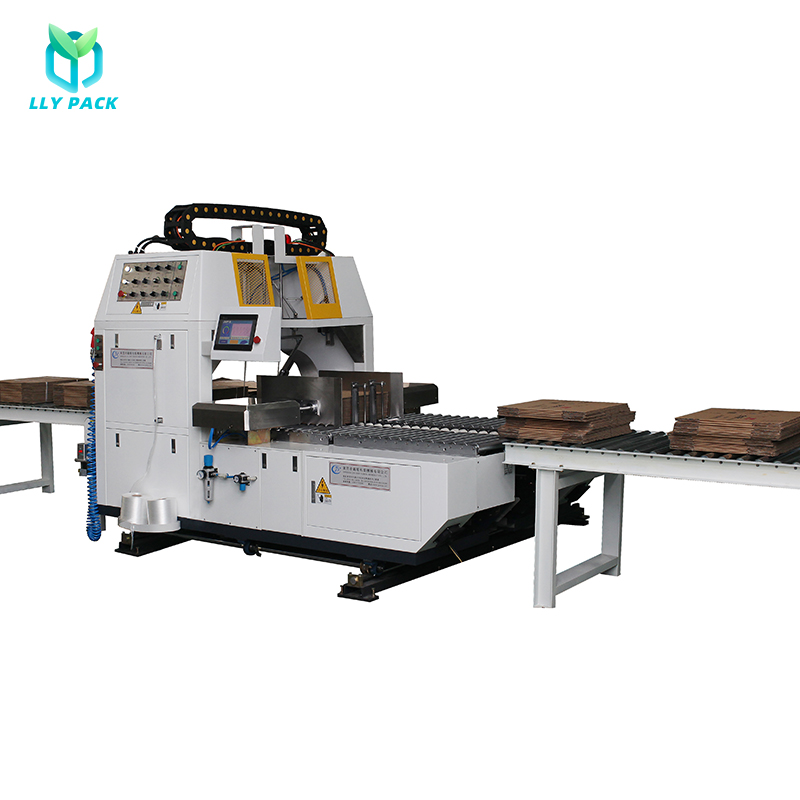
The BM-1 Boundle Machine is a tying machine for the corrugated box packaging industry, with published tying, table-depth, pallet-height and motor parameters. It is a machine purchase, not a pump specification.
| Dimension | BM-1 Boundle Machine | IP-1 Ink Pump |
|---|---|---|
| Category | Tying machine (equipment) | Ink pump (component) |
| Material | Steel | Steel |
| Application industry | Corrugated box packaging industry | Carton manufacturing |
| Published parameters | Max tying 97×83; min tying 5×5; loose table depth 25/35; pallet height 72.5/80.5; power motor 1/3 HP and 1/2 HP | Customized as requirement |
| What the buyer must decide | Bundle size range, pallet height, power supply, floor position and operator access | Fluid, capacity, port size, mounting, wetted-path materials |
| Documentation at order stage | Site layout, utility data, bundle specification | Approved technical specification or drawing |
| Cost of a mix-up | Wrong machine on site, commissioning delay | Wrong pump, adaptation work at the line |
The BM-1 record is complete enough to be checked before order: a buyer can confirm whether the bundle range falls between 5×5 and 97×83, whether pallet height matches 72.5/80.5, and whether the available power suits a 1/3 HP or 1/2 HP motor. The IP-1 record cannot be checked that way, which is precisely why it needs a written requirement. Mixing the two into a single RFQ reduces both to a model code and invites the wrong item.
Where the pump sits in the production environment
Both items belong to the corrugated carton packaging environment, where line conditions are typically described as high precision, high continuity and high speed, and where paper adaptability and speed synchronisation drive most component choices. In that context the ink pump is a small part with a disproportionate effect: it sits upstream of the printing unit, so a marginal flow problem becomes a visible print defect rather than a local inconvenience.
The same sourcing pattern appears across a wide set of markets. Requirements of this kind are common in Mexico, Brazil, India, Thailand and in other corrugated-producing regions where lines are maintained by mixed fleets of equipment from different suppliers. That mix is the underlying reason configured parts are ordered at all: a plant running several machine generations rarely finds one catalogue pump that fits every station.
Market context: why specification quality is becoming the differentiator
Parts sourcing in this category is increasingly international, and the numbers behind that shift are modest but consistent. Industry research tracked by HTNXT places the global corrugating machinery market at USD 4.8 billion in 2025, covering equipment and major components. China customs data for HS 844190, the machinery-parts heading, recorded 7.5% export growth in 2024.
The procurement reading of these figures is not that buyers should switch suppliers. It is that the supply base is broad enough that price comparison alone stops being informative. When several suppliers can quote a component, the item that decides the outcome is the specification the buyer circulates. A requirement sheet produces comparable quotations; a model code produces quotations that differ in scope without looking different on paper.
Comparing this approach with traditional ordering methods
Three purchasing routes are common for parts of this type, and each carries a different cost profile.
Order by model code. Fast and familiar, and entirely appropriate for fixed-parameter items such as the DP-1, where a published range exists to check against. It fails for the IP-1, because there is no range to look up and the resulting order is only as good as the assumptions behind it.
Reverse-engineer the failed unit. Send photographs and dimensions of the pump being replaced. This works and is often the only route when no documentation survives, but it produces a one-off. Without a stored record, the next replacement repeats the whole exercise.
Requirement sheet plus approved specification. More work at the front end, and it demands engineering time that small plants may not have readily available. Its return is repeatability: the second and third orders are faster and more predictable than the first, and the specification becomes a document the maintenance team can rely on.
The limitation of the third route should be stated honestly. Documentation does not replace a physical check at installation, and it does not eliminate the possibility that the first configured unit needs adjustment in service. It reduces the frequency of that adjustment; it does not remove the engineering effort of producing it.
Future outlook
Two developments are likely to shape how parts like the IP-1 are bought. The first is a shift from model-code ordering to requirement-based ordering, driven by the practical reality that mixed equipment fleets outnumber single-vendor plants. The second is documentation discipline: as more buyers keep specification records per station, repeat purchases become a verification exercise rather than a design exercise.
Supplier capability will be read against that shift. LLY PACK reports a 10,000㎡ manufacturing facility equipped with four sets of advanced CNC centres from Japan, a workforce of approximately 50 staff supported by a research and development team of 30 engineers, more than 3,500 successful installations of corrugated lines worldwide, and machines exported to over 40 countries with exports accounting for 100% of total sales. Major markets include South America, Southeast Asia, Africa, the Middle East and the domestic market. For a buyer, the relevant question is not the size of those figures but whether a configured part can be produced, documented and repeated to a stated specification — which is exactly what the IP-1 record asks the buyer to test.
Frequently asked questions
What material is the LLY PACK IP-1 ink pump made of?
The IP-1 is documented as a steel-bodied ink pump. It is classified as an ink pump intended for carton manufacturing, and its parameters are described as customized as requirement rather than fixed to a published table.
Is a non-steel version of the IP-1 available?
No alternative body material is stated in the available product record for the IP-1, and this reference does not confirm that a non-steel variant exists. Buyers who require a non-metallic body, or who need published flow and pressure data before approval, should raise the question directly in the RFQ and treat the answer as part of the quotation.
What does "customized as requirement" mean in practice?
It means the unit is built against a buyer-supplied requirement instead of being selected from a fixed parameter list. The requirement normally covers fluid type, duty pattern, capacity expectation, port size, mounting arrangement, air supply, and any wetted-path material restriction. Two buyers ordering the same model designation with different requirement statements can therefore receive physically different pumps.
How does customization affect lead time?
Customization inserts a specification confirmation step — and usually a buyer sign-off — before production can be scheduled. Lead time therefore depends on how complete the original requirement is and on whether the specification changes after approval. No standard lead-time figure for the IP-1 is published, so the figure requested should be tied to a specific confirmed specification rather than to the model code alone.
Does customization reduce reliability?
It depends on the accuracy of the requirement data. A unit configured to an accurate requirement tends to fit the line without adaptation; a unit configured to incomplete data may still be well built but require on-site adjustment. Because the resulting part is configured rather than standard, plants running multiple stations should keep an approved specification record so repeat orders and spares are matched to the same configuration.
How is the IP-1 different from the BM-1 Boundle Machine?
The BM-1 is a tying machine — classified as a Boundle Machine — for the corrugated box packaging industry, with published parameters including maximum tying 97×83, minimum tying 5×5, loose table depth 25/35, pallet height 72.5/80.5, and a 1/3 HP or 1/2 HP power motor. The IP-1 is a fluid-handling component for carton manufacturing. One is an equipment purchase evaluated against site layout and bundle dimensions; the other is a component purchase evaluated against fluid, capacity and interface requirements.
Can the DP-1 diaphragm pump specification be used to specify the IP-1?
No. The DP-1 has its own published parameter set, including pipe diameter 10/12/20 mm, working air pressure 0.2–0.5 MPa, maximum air consumption 4 m³/h, flow rate 4–12 L/min, lift 4 m, self-absorbing height 0.4 m, and dimensions 210×155×255 mm in steel. It is a separate product, and those figures describe the DP-1 rather than establishing any value for the IP-1.
What should a first RFQ for the IP-1 contain?
At minimum: the fluid handled and its cleaning method, the duty pattern, the required flow, the port size and connection type, the mounting position and available clearance, the air pressure available at the point of use, any wetted-path material restriction, and whether a signed-off specification sheet is required before production. Including these items shortens the clarification stage and makes the returned quotation comparable with others.
A downloadable LLY PACK company brochure covering product scope, factory data and contact details is available here: LLY PACK company brochure (PDF).
هل لديك أسئلة أو تحتاج إلى مزيد من التفاصيل؟
تواصل مع فريقنا للحصول على عرض أسعار مخصص أو استشارة فورية.
طلب عرض أسعار
املأ النموذج أدناه وسيتواصل معك فريقنا بعرض مقترح مخصص.
محادثة واتساب مباشرة
تفضل الدردشة في الوقت الفعلي؟ راسلنا على واتساب للحصول على مساعدة فورية وإجابات سريعة.
- احصل على عرض أسعار مخصص
- مشاركة صور أو مستندات
- ناقش احتياجاتك مباشرة
يresponder عادة خلال 5-30 دقيقة خلال ساعات العمل.