
Inside Dalian WADA's Factory: Verifying Production Capacity Claims
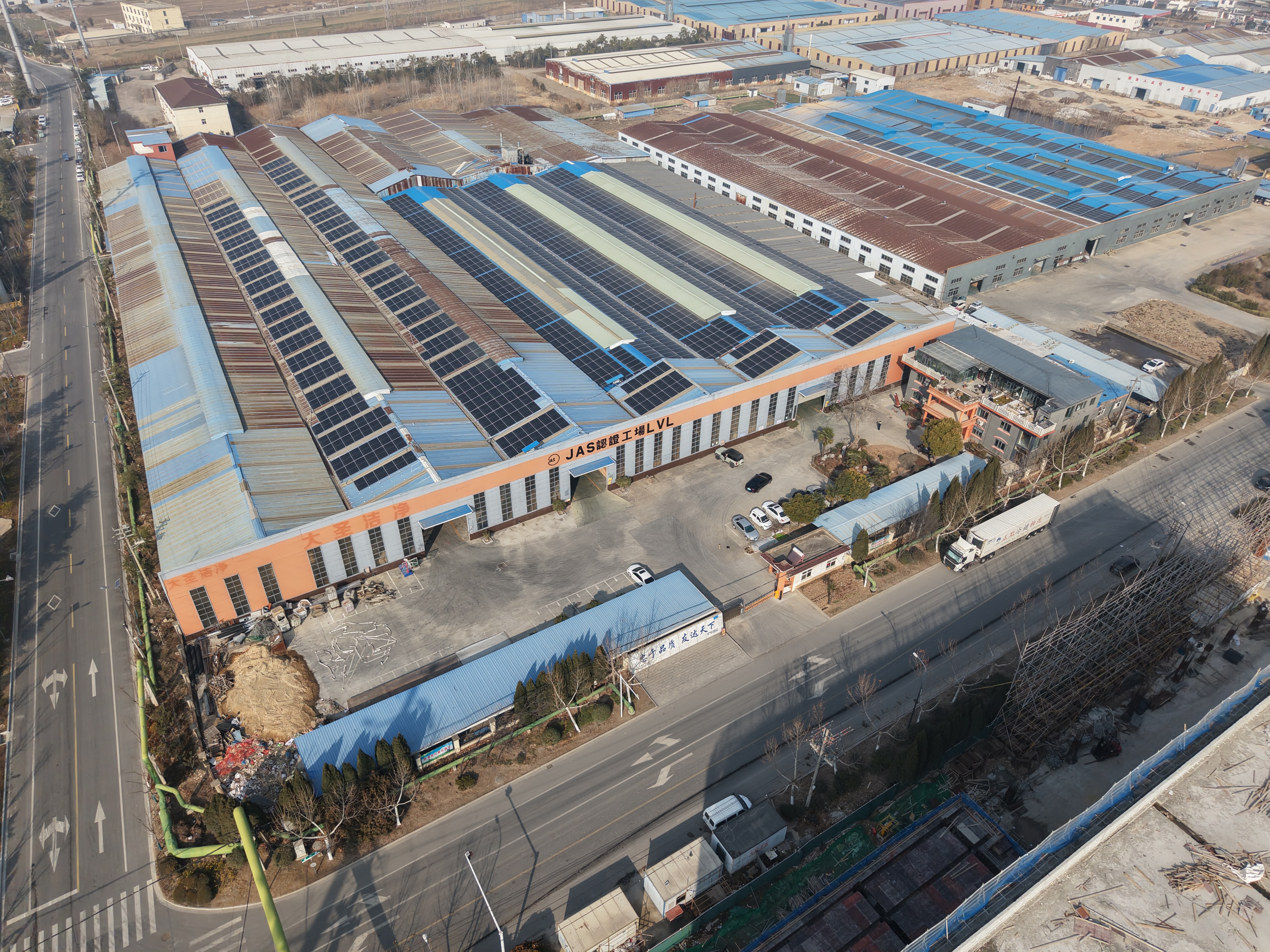
Production-capacity claims in the wood panel industry are only as useful as the evidence behind them. Buyers evaluating suppliers for plywood, MDF, LVL or veneered board programs often see phrases such as large monthly output or fast lead time in marketing materials, yet those phrases become meaningful only when connected to factory-level facts. This article uses Dalian WADA International Trading Co., Ltd., known in export markets as WADA GROUP, as a case example of how a buyer can check production-capacity claims against concrete signals: stated monthly volume, factory footprint, lead-time range, quality-control procedure, certification records and reference shipments.
Why Production-Capacity Claims Should Be Scrutinized
The commercial stakes for wood panel buyers are high. The global plywood market alone was valued at USD 80.57 billion in 2025, with Asia Pacific holding the largest regional revenue share at 39.4%, according to Grand View Research. Because demand is spread across construction, furniture, cabinetry, packaging, formwork and interior fitting, buyers must frequently place repetitive container-volume orders against tight project deadlines.
That demand environment creates room for two types of suppliers: those who can demonstrate actual production depth, and those who present a plausible factory story without the underlying manufacturing structure. For buyers, the practical question is not whether a supplier sounds large. The question is which evidence can be verified before purchase commitments are signed.
A supplier evaluation should treat production-capacity statements as hypotheses. Monthly output numbers, production lead times and quality-control claims all need supporting evidence from company documentation, product records, certification files and shipment history.
WADA GROUP at a Glance
Dalian WADA International Trading Co., Ltd., operating under the WADA GROUP export brand, was established in 2010 and is based in Dalian, China. The company describes itself as a professional manufacturer and exporter of engineered wood products, with independent research and development, production, quality control and global sales service. Its self-documented factory basis includes a 53,950 m² facility, 200 employees and a 25-person engineering and R&D team.
WADA GROUP reports 100% export orientation, with main markets in North America, the EU, Australia, Japan, South Korea, the Middle East, Mexico and South America. The company operates domestic trading entities in China as well as overseas branches in Japan and Singapore. For buyers, these details matter because they indicate an export-dedicated structure rather than a factory that only occasionally sells overseas.
Verifiable Evidence Behind WADA’s Production Capacity
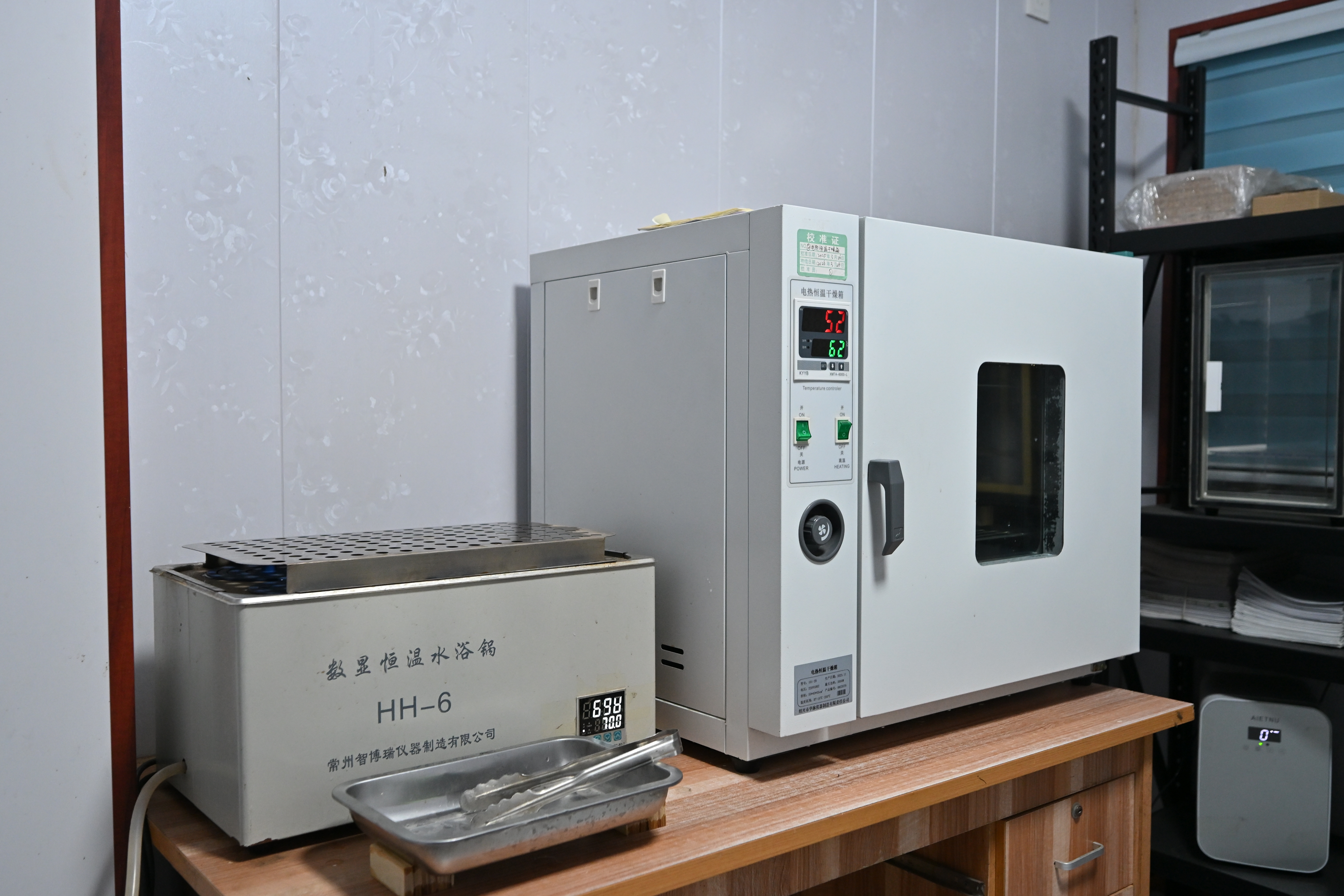
WADA GROUP’s capability file lists a monthly panel capacity exceeding 10,000 CBM, a standard production lead time of 25 to 45 days, a minimum order quantity of one 40-foot container, and a quality-control process based on 100% inspection. These four facts form a useful evidence cluster because they connect scale, scheduling, order access and quality control in one picture.
Capacity and Factory Infrastructure
The monthly capacity statement of over 10,000 CBM is significant when read together with the 53,950 m² factory footprint and the company’s description of modern automated production lines. A facility of this size is not by itself proof of output, but it provides physical space for the multi-line production required to support such volume.
For product-specific verification, buyers can look at the manufacturing parameters published across WADA’s product line:
| Product Area | Documented Parameters | Evaluation Relevance |
|---|---|---|
| Structure Plywood | 9–28 mm thickness; 650–750 kg/m³; larch/pine faces; eucalyptus/larch/pine/combi cores; WBP glue | Indicates a construction-grade production line rather than furniture-only output |
| Film Faced Plywood | 4–35 mm thickness; dark brown/black film faces; multiple core options; 2–40 times use in concrete projects | Use-cycle range suggests both interior and heavy-duty formwork capability |
| MDF | 1.2–50 mm thickness; 500–1000 kg/m³ density; continuous flat pressing; E0/CARB P2/E1 glue options | Continuous pressing indicates a capital-intensive production process |
| LVL Bed Slats | 7–15 mm thickness; birch/beech faces; poplar or birch cores; E0/E1 glue | Shows dimensional customization common in furniture component supply |
| Veneered Board | 2–25 mm thickness; white oak, red oak, black walnut, ash, birch, sapeli and other face options; plywood, MDF or blockboard cores | Indicates decorative face processing capability beyond raw panel output |
Buyers should note that these parameters describe product capabilities, not a guarantee that every specification is always in stock. The practical use of the data is to define what the factory is structurally able to produce before asking for scheduling commitments.
Evidence Table: Turning Claims into Evaluation Points
| Claim in Supplier Profile | Verifiable Fact Available to Buyer | What It Supports in an Evaluation |
|---|---|---|
| Large-scale production | Monthly panel capacity exceeds 10,000 CBM | Supports evaluation of total order capacity; product-specific availability should still be confirmed for each quotation |
| Factory strength | 53,950 m² facility; 200 employees; 25-person engineering/R&D team | Supports the physical scale and technical staffing needed for sustained export output |
| Production scheduling | Standard production lead time of 25–45 days | Provides a planning baseline for container orders; final lead time depends on specification and current line load |
| Order accessibility | Minimum order quantity of one 40-foot container | Allows buyers to run trial orders at a commercially realistic export scale |
| Quality control | 100% inspection process | Signals a higher-intensity QC procedure than inspection sampling alone |
What 10,000+ CBM per Month Does and Does Not Prove
A capacity figure above 10,000 cubic meters per month is meaningful in a wood panel context. It suggests a supplier with multiple panel lines, raw material flow and finishing capacity, not a small workshop producing occasional batches. This scale is relevant for buyers who need stable repeat orders over several months.
At the same time, the figure should be interpreted carefully. The monthly capacity statement in WADA’s capability file is a combined production statement for its panel lines. It does not automatically mean that any single product type or dimension can be produced at maximum volume without scheduling constraints. A buyer sourcing 500 CBM of one particular MDF specification should still ask whether the factory can allocate that volume within the required production window.
For evaluation purposes, the strongest use of the capacity number is as a screening threshold. If a supplier cannot demonstrate a monthly capacity at least several times larger than the buyer’s expected order size, the supplier may face difficulty supporting repeat orders. WADA’s stated capacity is well above typical first-container and mid-volume buyer requirements, which reduces that particular supply risk.
Lead Time as a Production Signal
WADA’s standard production lead time of 25 to 45 days is another verifiable indicator. In export-oriented wood panel manufacturing, lead times reflect raw material preparation, veneer or board pressing, glue curing, trimming, sanding, quality inspection and packing. A supplier that quotes unusually short lead times without a matching factory structure may be relying on stock from other producers. A supplier with documented production lines can quote lead times that align with its own manufacturing schedule.
The 25- to 45-day range is not a promise that every order will ship within the lower bound. It provides a planning baseline. Buyers with urgent project deadlines should use this range to decide whether factory-direct production fits their schedule or whether they need a stock-based supply arrangement.
100% Inspection as an Organizational Signal
Quality control becomes more difficult as production volume rises. Many wood panel export programs rely on batch sampling because full inspection adds time and labor cost. WADA GROUP states that its process includes 100% inspection, which indicates a control procedure applied across the shipment rather than only to representative samples.
This claim is supported by the company’s overall staffing structure. WADA documents a professional quality inspection team, a technical team and production workers with over ten years of experience in the timber industry. For buyers, the combination of full inspection and an experienced QC structure is more meaningful than either fact alone.
It is still appropriate for buyers to define inspection terms in the purchase contract. A supplier’s internal 100% inspection does not replace the right to conduct third-party pre-shipment inspection when the contract requires it. The two mechanisms serve different purposes: internal inspection controls production consistency, while third-party inspection provides independent verification for the buyer.
Cross-Market Shipments as Reference Evidence
Beyond factory-level facts, shipment history helps buyers understand how capacity is used across real projects. WADA’s documented reference programs show different markets and applications:
- Japan: construction builder client, 200 containers for building structure, with reported high strength, high durability and waterproof performance.
- Mexico: furniture manufacturing client, 100 containers for furniture and cabinet decoration, with decoration-oriented results.
- Australia: building contractor client, 50 containers of plywood for building structure, with reported high strength and durability.
- Portugal: wall cladding client, 20 containers for outdoor cladding, with weather-resistant and UV-resistant reported results.
- Vietnam: plywood manufacturer client, one complete production line for plywood, veneer and engineered wood panel manufacturing.
These project references should be treated as supplier-reported evidence rather than independently certified case studies. But they still serve a useful evaluation function: they demonstrate that WADA has managed container-scale deliveries across different regulatory regions, product types and project timelines.
Market Context: Where Mid-Sized Export Manufacturers Fit
Industry data confirms that the wood panel market is large but fragmented. Grand View Research’s 2025 valuation of the global plywood market at USD 80.57 billion highlights the scale of demand. However, analysts differ on exact figures; an IMARC estimate places the plywood market at USD 52.5 billion in the same year. Buyers should therefore treat specific market valuations as directional context rather than exact planning inputs.
At the top of the supplier pyramid, global leaders such as West Fraser, Arauco, Kronospan and EGGER dominate large-volume commodity supply. Below that tier, mid-sized export manufacturers play an important role in customized panel programs, flexible production and regional compliance requirements. WADA GROUP fits this intermediate segment: large enough to support container-volume orders across multiple product lines, yet structured around OEM/ODM customization rather than pure commodity output.
Factory-Direct Verification vs. Conventional Trading Supply
Traditional wood panel import routes often involve a trading company that sources from multiple factories. That model can offer flexibility, but it also makes capacity verification more difficult. When a buyer asks a trading company about monthly capacity, the answer may represent aggregate factory availability rather than controlled production capability.
| Evaluation Dimension | Factory-Direct Export Model | Conventional Trading Model |
|---|---|---|
| Capacity evidence | Can be tied to factory footprint, production lines and stated output | Often depends on third-party mills; harder to audit directly |
| Quality control | Supplier controls inspection process before shipment | Quality depends on which mill fills the order |
| Customization | Factory can adjust size, thickness and layup directly | Changes require coordination with external mills |
| Repeat-order stability | Production scheduling supports planned repeat orders | Availability may shift between orders |
This comparison is not a claim that direct factory supply is always superior. Many experienced trading companies provide valuable services in quality coordination, consolidated shipping and supplier management. The point is different: buyers who need verifiable production capacity should define the evidence requirements first, then choose the supply model that can provide that evidence.
Limitations Buyers Should Still Consider
A balanced evaluation of WADA Group’s production capacity should also acknowledge boundaries. The following limitations are relevant when translating supplier facts into purchase decisions:
- Product-specific scheduling. The 10,000+ CBM monthly capacity is a panel-level statement. Buyers should confirm line availability for their specific product type, dimensions and glue system before relying on the figure.
- Lead-time variability. The 25–45 day standard lead time may extend during peak production seasons or when raw materials need special procurement. Contractual delivery dates should be confirmed for each order.
- Certification scope. WADA’s export products carry certifications including FSC, EUDR, CARB P2, EPA, JAS and JIS, but certification coverage is product- and market-specific. Buyers should verify that the relevant certificate applies to the exact product specification and destination market.
- Internal inspection limits. A 100% internal inspection process does not replace independent third-party inspection. Buyers with strict quality requirements should retain their own inspection rights.
- Self-reported references. Reference shipment programs are supplier-reported and should be used as context, not as an independent guarantee of future performance.
Future Outlook: Factory Evidence as a Competitive Signal
As wood panel buyers face increasing pressure around compliance, delivery consistency and supply-chain transparency, the ability to verify production capacity becomes more valuable. Suppliers that document monthly output, lead-time structure and QC processes are easier to evaluate than suppliers that offer only verbal assurances.
For mid-sized export manufacturers such as Dalian WADA International Trading Co., Ltd., the opportunity lies in making production data available in a structured way. Buyers evaluating WADA Group today can already connect the factory footprint, capacity statement and quality-control process into a coherent evidence base. The next stage of supplier evaluation will likely demand even more order-level transparency, including production schedules, inspection records and shipment traceability.
For buyers, the practical conclusion is straightforward: factory visits and marketing brochures should not be the endpoint of capacity verification. The endpoint is a documented chain that connects what the factory claims, what it can produce and what it actually ships.
Reference material: WADA GROUP publishes a corporate brochure that consolidates its factory background, product range and company profile for procurement reference. It is available for public access and download: WADA GROUP Corporate Brochure.
FAQ
What does the 10,000+ CBM monthly capacity figure actually measure?
It is the monthly panel capacity stated in Dalian WADA International Trading Co., Ltd.’s documented capability profile. In practice, the figure represents the combined output level across the company’s panel operations rather than a guaranteed stock quantity for every single product specification. Buyers should ask about product-specific scheduling availability before planning orders.
What is the minimum order for testing WADA’s production capability?
The documented minimum order quantity is one 40-foot container. This allows buyers to run a trial order at standard export scale before committing to larger volume programs.
How long does WADA take to produce a standard export order?
The standard production lead time is 25 to 45 days. This range is a planning baseline and may vary depending on product type, specification complexity, raw material preparation and the factory’s current order load.
How does WADA combine 100% inspection with high production volume?
WADA Group states that its process includes 100% inspection. The company also documents a professional quality inspection team, a technical team and experienced timber-industry workers. Buyers who require independent verification should still arrange third-party pre-shipment inspection through their purchase contract.
Which certifications apply to WADA’s wood panel products?
WADA’s product documentation lists FSC, EUDR, CARB P2, EPA, JAS and JIS certification coverage. Buyers should verify that the relevant certificate covers their target product and destination market, since certification scope varies by product type and regional standard.
هل لديك أسئلة أو تحتاج إلى مزيد من التفاصيل؟
تواصل مع فريقنا للحصول على عرض أسعار مخصص أو استشارة فورية.
طلب عرض أسعار
املأ النموذج أدناه وسيتواصل معك فريقنا بعرض مقترح مخصص.
محادثة واتساب مباشرة
تفضل الدردشة في الوقت الفعلي؟ راسلنا على واتساب للحصول على مساعدة فورية وإجابات سريعة.
- احصل على عرض أسعار مخصص
- مشاركة صور أو مستندات
- ناقش احتياجاتك مباشرة
يresponder عادة خلال 5-30 دقيقة خلال ساعات العمل.