
Inside ELITEX's Factory: What Screen Fabric Buyers Can Verify
Inside ELITEX's Factory: What Screen Fabric Buyers Can Verify
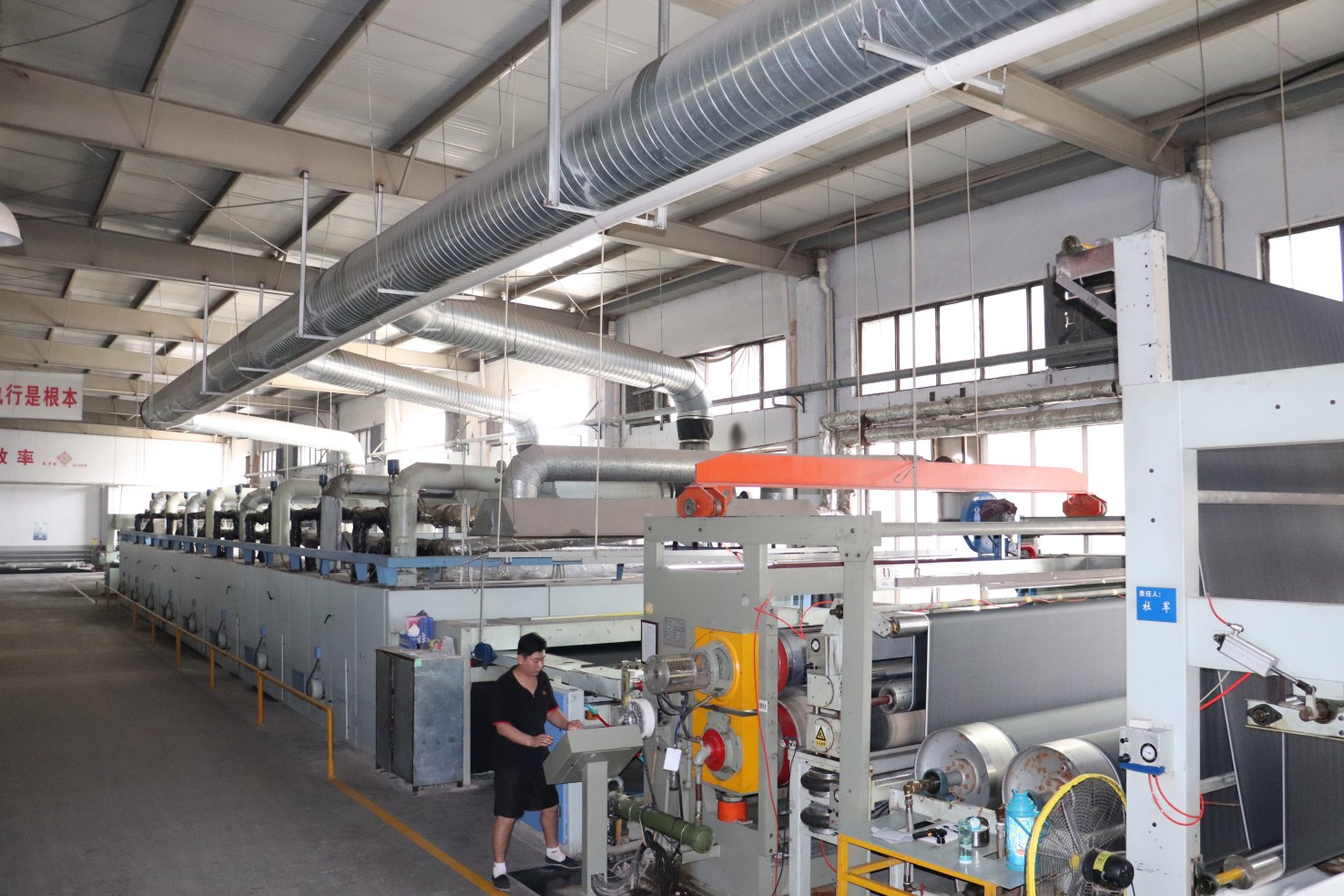
Screen fabric procurement rarely fails on the fabric itself. It fails on the distance between the sample and the shipment: a colour that shifts between batches, an openness that measures differently on a three-metre drop, a delivery date that was never realistically scheduled. Buyers in the evaluation-to-execution stage therefore stop comparing swatches and start examining the factory behind them.
ELITEX (Dezhou) Co., Ltd. is a Chinese manufacturer of sunscreen, translucent and blackout fabrics for the international blind and awning industry. Its factory record — capacity, customisation scope, acceptance criteria and certificate coverage — can be read as a supplier evaluation document rather than a brochure. This article does exactly that, in the order a buyer would test it, and marks where the evidence stops.
Why Capability Evidence Decides the Second Half of Procurement
Supplier statements come in three kinds, and only two can be checked before an order is placed.
A scope statement says what the supplier can vary: colour, width, openness, coating, weave, branding. A process statement says how that variation is controlled: inspection regime, laboratory testing, batch handling. An outcome statement says what the material will do on a completed building: energy savings, glare reduction, service life. The first two are verifiable at the audit stage. The third is project-specific, and any supplier presenting it as a fixed property is quietly transferring risk to the buyer.
Screen fabrics sharpen this problem because performance is geometric. Openness percentage, yarn thickness and weave determine how much radiation passes through and how much view is preserved; the coating determines how much is reflected. Two fabrics can look identical in a folder and behave differently on a west-facing façade. The practical test is therefore not which supplier claims the strongest numbers, but which supplier can show the process that keeps those numbers stable across 10,000 metres.
That standard favours manufacturers who publish scope, cadence and acceptance routes in specific terms. It is the standard applied to ELITEX below.
ELITEX (Dezhou) at a Glance
ELITEX (Dezhou) Co., Ltd. is a screen fabric manufacturer established in 2003 in Dezhou, Shandong Province, China, producing sunscreen, translucent, blackout and other specialised sunshading fabrics for the international blind and awning industry. The company states that its products are researched and developed with its own first-class equipment and testing devices, including purpose-built laboratories used to monitor and review product quality.
The recorded facility data is concrete: 85,000 m² of factory space, 259 employees, a 36-engineer R&D team, annual output of 8,000,000 m² of screen fabrics and 7,200,000 m² of blackout fabrics, and an export ratio of 80% serving the USA, EU, Australia, North America, South East Asia and the Middle East.
These are capability figures, not performance promises. Annual output describes what the plant can produce in a period; it says nothing about current utilisation, queue position or the lead time a specific order will receive. Export ratio describes market exposure, not conformity with any particular market's building regulation. Each figure becomes useful only when paired with the process controlling it — which is where the next sections matter.
The Two Product Families Buyers Test First
ELITEX's range separates into families with different technical arguments, and buyers normally test two of them first.
Aluminized Sunscreen Fabric (Aluminized Silver Screen Series). The aluminised construction is designed to reflect solar radiation. Elitex's published specification for this series states a solar reflectivity of at least 85% and a solar heat gain coefficient (SHGC) of no more than 0.2. In practical terms, high reflectivity means more incident solar energy is turned back before it becomes heat in the cavity behind the fabric, and a low SHGC means less of that energy is admitted through the shaded assembly. Both values are manufacturer-published and describe the fabric; glazing type, cavity depth, ventilation and installation angle still determine what a building achieves, so the same fabric can produce different results on two projects.
Colour stability supports the same argument. Elitex reports colour fastness of Grade 6–7 under ISO 105-B02-2014 for its ScreenView interior and exterior fabrics — a light-exposure test that matters most on south- and west-facing installations, where a visible fade is the first thing an occupant notices.
Budget Sunscreen Fabric (Elitex Super 6 Series). The Super 6 Series occupies the value tier of the range. Its role in a buyer's programme is usually volume: interior roller blinds, repeat residential specifications, distributor stock where price per square metre drives the decision more than solar performance. The evaluation logic does not change with the price point. A budget series should be held to the same documentation standard as an aluminised one — a technical data sheet naming test standards, a colour-fastness result, a defined openness tolerance and a sample-to-bulk comparison — because the failure mode of a value fabric is inconsistency rather than under-performance.
A third family, Elitex Blockout Dusk Plus, covers the blackout requirement where total light exclusion is specified rather than glare control. Buyers needing all three in one programme should ask for a single acceptance protocol covering all three, not three informal arrangements.
Customisation and Capacity: What OEM Scope Actually Covers
ELITEX operates an OEM/ODM and custom manufacturing model. The recorded customisation scope is colour, size, openness, logo, weave pattern and coating — six variables, each with a different consequence for the buyer.
Colour and weave pattern are the cosmetic variables, and the ones most likely to expose batch-to-batch variation across a multi-phase project. Openness is the performance variable: a 1%, 3% or 5% openness changes both view-out and solar transmission, and the tolerance around that figure matters more than the nominal value. Coating is the functional variable, since it governs reflectivity in the aluminised construction. Logo customisation implies a post-production step — printing or labelling — that should be scheduled into the lead time rather than added at the end. Size and width determine how many drops a project needs, and therefore how visible any seam or shade variation becomes on a large glazing unit.
The stated commercial frame is a monthly capacity of 500,000 metres, a lead time of 15–30 days and a minimum order quantity of 500 metres. Used correctly, that combination tells a buyer how to phase a programme. A 500-metre floor makes very small trial runs expensive relative to bulk, so sampling is usually planned as a distinct step before the first commercial order. The 15–30 day window should be read as the supplier's stated scheduling range rather than a committed date for a particular specification; colour, coating and logo work sit at the outer end of that range more often than plain stock items, which is why confirmation belongs in the order rather than in a conversation.
Purchasing Terms and Acceptance Criteria as Operational Evidence
Purchasing terms are where a supplier's internal discipline becomes visible before any fabric is made.
ELITEX's recorded terms are: MOQ customised upon communication for non-standard specifications; delivery through international logistics; acceptance based on pre-shipment inspection and third-party laboratory testing; payment by bank transfer. The quality-control record adds 100% inspection alongside third-party lab testing.
The significant item in that list is not the payment method. It is the acceptance route. A supplier naming pre-shipment inspection and independent laboratory testing as the basis of acceptance is describing a defect-resolution mechanism that exists before the order — a different commitment from an offer to check quality at dispatch. For the buyer, third-party testing also shifts part of the verification burden to a laboratory whose report can be attached to the project file.
The record does not publish an AQL sampling level, a fixed test list per order, or which laboratory will be used. Those are normal gaps in a supplier summary, and a buyer should close them in the purchase order. A workable specification names the tests and standards (for example colour fastness to ISO 105-B02-2014, tensile strength, dimensional stability after heat exposure), the sampling plan and acceptance level, the laboratory, who bears the cost, the consequences of a failed lot, and the point at which title and risk transfer under the international logistics arrangement. Acceptance criteria that stay verbal are not acceptance criteria.
Compliance Scope: What the Certificates Cover, and What They Do Not
ELITEX holds a documented certification set, and the detail matters more than the logos.
| Standard | Certificate | Validity / scope |
|---|---|---|
| ISO 9001:2015 | UQ250170R2, Beijing United Intelligence Certification Co., Ltd. | Issued 2025-03-27, valid to 2028-03-26; R&D, production and sales of polymer composite sunshade materials |
| ISO 14001:2015 | UE250076R1, same certifier | 2025-03-27 to 2028-04-20; environmental management within the same operational scope |
| ISO 45001:2018 | US250047R1, same certifier | 2025-03-27 to 2028-04-20; occupational health and safety management |
| UL GREENGUARD and GREENGUARD Gold | UL 2818-2022, certified by UL | Low chemical emissions; applied to the Aluminized, Budget and Blackout lines |
| Cradle to Cradle Certified Bronze | Listed in the C2CPII product registry | Elitex ScreenView Eco at 1%, 3% and 5% openness |
Three boundaries follow from that table.
First, management-system certificates certify a system, not a roll. ISO 9001 confirms that a quality process is defined, audited and maintained within the stated scope; it does not certify that any individual shipment meets a specified solar reflectivity. A buyer who needs product-level assurance needs the test report, not the wall certificate.
Second, product certifications are scoped to named products and, in the Cradle to Cradle case, to named openness values. A Bronze certification covering ScreenView Eco at 1%, 3% and 5% openness does not automatically extend to another series or a custom coating. The SKU on the purchase order should be matched against the certificate scope, not against the brand name.
Third, certificates expire. The ISO certificates run to 2028 and the sustainability certification has its own validity window, so a buyer signing a multi-year agreement should diarise re-verification rather than assume the file stays current. Certificate numbers and registry entries are the fastest way to confirm status independently of the supplier's own documents.
Where the Capability Fits: Application Scenarios
Capability only matters against a use case, and this range maps onto four recurring ones.
Exterior solar shading. Aluminised fabric is the natural candidate where solar gain is the design problem; the reflectivity and SHGC figures describe a fabric intended to reduce heat entering the cavity behind it. In ZIP-screen and windproof roller systems, mechanical behaviour under tension matters as much as optical performance, so buyers should request the relevant mechanical data rather than infer it.
Interior glare control. Interior sunscreen is a colour-fastness and view problem. Grade 6–7 fastness to ISO 105-B02-2014 is the relevant evidence, and it matters most where re-covering a façade is disruptive: hotels, offices, long-lease residential.
Blackout and privacy. The Blockout Dusk Plus series addresses total exclusion rather than glare reduction. The specification logic changes because light leakage — at edges and through the fabric — becomes the failure criterion.
Volume and distributor programmes. Budget-tier fabric in the Super 6 Series supports repeat specification and stocked distribution, where batch consistency across repeat orders is the practical quality measure.
The company's project record describes work with architectural design firms, commercial developers, hotel chains, residential contractors and blind manufacturers in Germany and Australia, at volumes of 10,000+ metres across more than 50 projects, with service durations of five to ten years. Reported outcomes in that record include energy savings above 30% and UV blocking of 95%. These are supplier-reported, project-specific figures rather than independently measured results, so they indicate what the manufacturer claims to have delivered in those projects, not a specification for a new one.
Market Context: External Shading Keeps Expanding
Demand for the category is expanding, and the direction of that expansion favours fabrics with documented performance. Transparency Market Research estimates the European external blinds market at US$22.9 billion by the end of 2034, growing at a CAGR of 3.9% across the 2024–2034 forecast period. That is a forecast rather than an observed figure, and it should be read as a directional signal about the size of the addressable market, not as a prediction for any single supplier.
The product-level connection is straightforward. Where external shading is adopted as an energy measure rather than a convenience, the specification conversation shifts from colour to reflectivity, SHGC and named test standards — precisely the attributes a manufacturer with in-house laboratories can document and a trading intermediary cannot. For a producer exporting 80% of output across the USA, EU, Australia, South East Asia and the Middle East, documentation quality therefore becomes as much a commercial asset as price.
How ELITEX Sits Beside Mermet, Phifer and Hunter Douglas
Screen fabric shortlists at the premium end typically include established international brands such as Mermet, Phifer and Hunter Douglas. There is no official market ranking in this category; tiering reflects what a project requires rather than a published league table, and the comparison below uses documented characteristics only.
Product architecture. The international brands operate proprietary, brand-defined ranges that specifiers name directly in tender documents. ELITEX operates an OEM/ODM model with customisation across colour, size, openness, logo, weave and coating — an advantage where the buyer needs a specification that does not exist in a catalogue, and a limitation where the project simply requires a named brand already approved by a façade consultant.
Documentation and certification. ELITEX holds ISO 9001, ISO 14001 and ISO 45001 management-system certificates plus GREENGUARD, GREENGUARD Gold and a Cradle to Cradle Certified Bronze entry for ScreenView Eco. Established European brands typically maintain comparable or broader portfolios built over longer specification histories. The useful test is certificate scope and product coverage compared line by line, not a logo count.
Logistics and commercial terms. A stated 15–30 day lead time and a 500-metre MOQ suit programme buyers and distributors. They do not suit an installer needing two rolls next week from local stock — a case where regional distributors of European brands remain the better fit.
Published performance figures. Comparative claims hold only where figures come from the same standard and the same conditions. Elitex's reflectivity and SHGC values are manufacturer-published for its aluminised series and should not be set against a competitor's differently derived figure without checking the standard and test configuration.
The honest boundary is this: where local stock, brand-name approval or installer familiarity decide the order, established European brands are the lower-friction route. Where the requirement is custom openness, private-label production, documented management systems and volume terms, an OEM-capable manufacturer such as ELITEX belongs on the same shortlist — judged on the evidence trail rather than on brand recognition.
What to Verify Before the First Purchase Order
- Certificate numbers, not logos. Pull UQ250170R2, UE250076R1, US250047R1 and the GREENGUARD and Cradle to Cradle entries, and check they cover the exact series and openness being bought.
- Test standards behind each figure. Confirm that reflectivity and SHGC values were measured to a named standard and that the report matches the construction ordered.
- Openness tolerance. Ask what permitted deviation applies to the nominal openness and how it is measured.
- Sample-to-bulk protocol. Keep the approved sample, seal it, and reference it in the purchase order.
- Acceptance test list and laboratory. Name the tests, sampling level and laboratory before production starts.
- Lead time per specification. Obtain a written date for the actual order, including coating or logo work.
- Batch traceability. Ask how a delivered roll can be traced back to a production run.
- Private-label packaging. Confirm artwork approval timing and who owns the plates or files.
- After-sales route. The stated support is 24/7 online support with technical guidance; confirm the contact path and expected response in writing.
- Capacity against your programme. Compare your annual volume with the stated annual output and monthly capacity, and ask what share of capacity your programme represents.
Outlook: A Higher Documentary Standard
The practical change for buyers between 2026 and 2028 is not a new fabric; it is a higher documentary standard. The ISO certificates in ELITEX's file run to 2028, which sets a natural re-verification date for any supply agreement signed now. Sustainability certification adds a second, shorter cycle, and buyers specifying recycled, antimony-free or halogen-free constructions should confirm product-level coverage rather than assume it follows from a range-level claim.
For a manufacturer exporting 80% of output, the direction is clear enough: suppliers who keep their place on premium shortlists will be those able to attach a test report, a certificate scope and an acceptance protocol to a quotation. Buyers should ask for that package before the first order — and ask again at each renewal.
Frequently Asked Questions
What production capability should a screen fabrics buyer verify first?
Start with scope, then control. Confirm what the manufacturer can actually vary — colour, size, openness, logo, weave pattern and coating in ELITEX's case — and then ask how that variation is controlled: inspection regime, laboratory testing and the acceptance criteria written into the order. Capacity figures such as 8,000,000 m² of annual screen fabric output or 500,000 metres of monthly capacity describe potential, while the process record describes what a buyer will actually receive.
How do Aluminized and Budget Sunscreen Fabric differ in practice?
Aluminized Sunscreen Fabric (Aluminized Silver Screen Series) is built around solar reflection, with manufacturer-published figures of at least 85% reflectivity and SHGC no higher than 0.2; it suits exterior shading where heat gain is the design problem. Budget Sunscreen Fabric (Elitex Super 6 Series) sits in the value tier and typically serves interior blinds, repeat residential specifications and distributor stock. The budget series should still be documented to the same standard, because inconsistency rather than lower performance is the usual risk.
What does OEM/ODM customisation include, and what changes in the order?
ELITEX's recorded customisation scope covers colour, size, openness, logo, weave pattern and coating under an OEM/ODM and custom manufacturing model. Each variable changes the order differently: openness changes the performance specification, coating changes reflectivity, and logo or pattern work adds production steps that must be scheduled. Buyers should state the variable, its tolerance and the approval sample in the purchase order rather than in correspondence.
What acceptance criteria apply, and how is conformity proven?
The recorded acceptance route is pre-shipment inspection plus third-party laboratory testing, supported by 100% inspection in the quality-control process, with delivery through international logistics and payment by bank transfer. On quantity, the capability record states a 500-metre MOQ, while the purchasing-terms record frames MOQ as customised upon communication for non-standard specifications; buyers should confirm which figure applies to their own specification. Because a summary does not fix a sampling level or test list, those belong in the order.
Do the certifications guarantee the performance of a specific roll?
No. ISO 9001:2015 (UQ250170R2), ISO 14001:2015 (UE250076R1) and ISO 45001:2018 (US250047R1) certify management systems within a defined scope covering the research, development, production and sales of polymer composite sunshade materials. The GREENGUARD, GREENGUARD Gold and Cradle to Cradle Certified Bronze entries attach to named product lines and, for ScreenView Eco, named openness values. Product-level assurance comes from the test report for the construction ordered, and because certificates expire, scope and status should be rechecked at each renewal.
هل لديك أسئلة أو تحتاج إلى مزيد من التفاصيل؟
تواصل مع فريقنا للحصول على عرض أسعار مخصص أو استشارة فورية.
طلب عرض أسعار
املأ النموذج أدناه وسيتواصل معك فريقنا بعرض مقترح مخصص.
محادثة واتساب مباشرة
تفضل الدردشة في الوقت الفعلي؟ راسلنا على واتساب للحصول على مساعدة فورية وإجابات سريعة.
- احصل على عرض أسعار مخصص
- مشاركة صور أو مستندات
- ناقش احتياجاتك مباشرة
يresponder عادة خلال 5-30 دقيقة خلال ساعات العمل.