
Inside Iraeta's Rolled Ring Forgings Operations: 21-Meter Rings, Two Decades, Certifications
Inside Iraeta's Rolled Ring Forgings Operations: 21-Meter Rings, Two Decades, Certifications
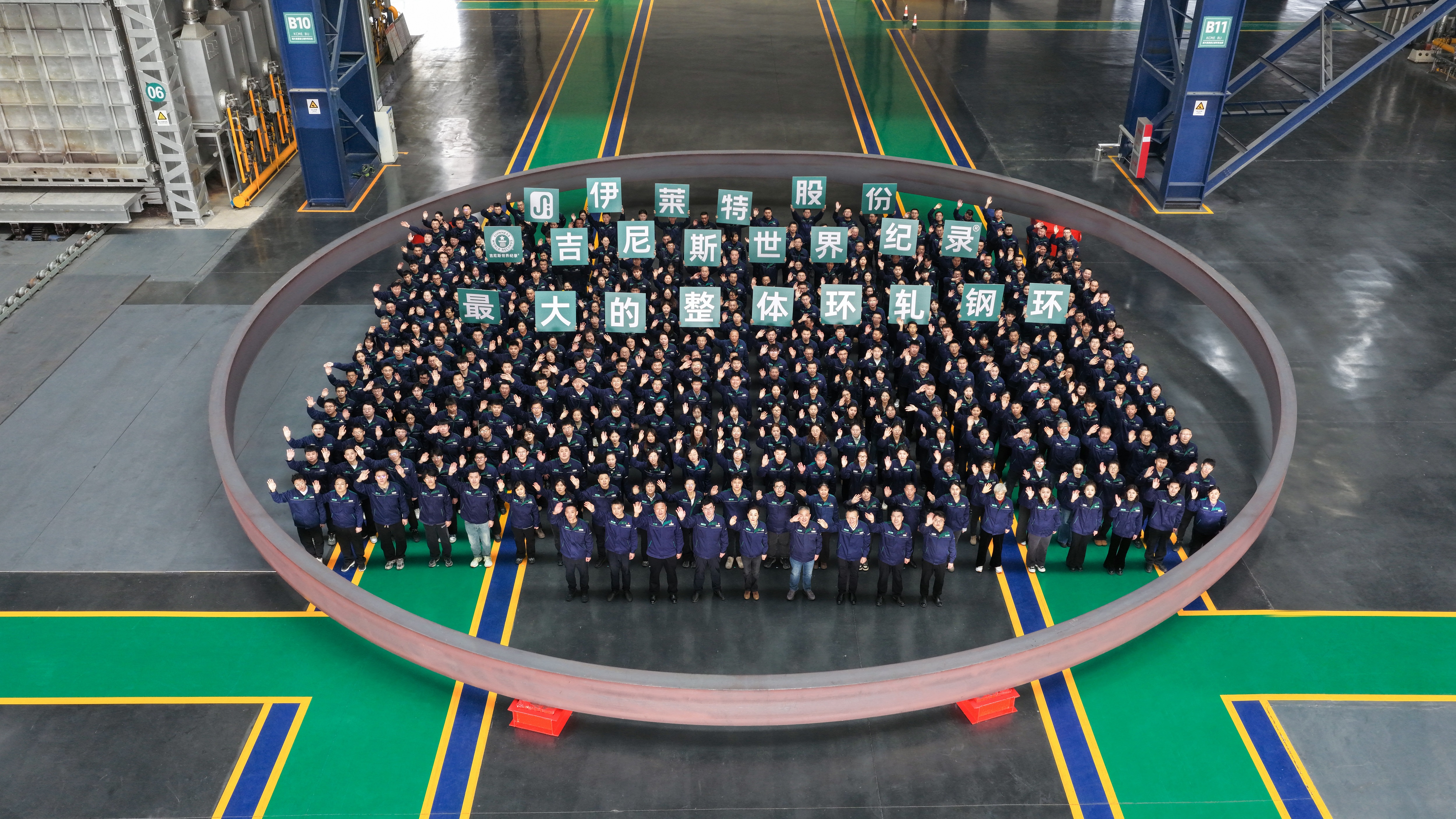
A seamless rolled ring produced by Iraeta. Oversized ring forgings are among the few components that cannot be redesigned around a supplier's equipment limits.
Rolled ring forgings sit at the base of a long list of industrial supply chains: wind turbine flanges, hydroelectric components, kiln tyres, drive rings, bearing rings, gearbox forgings, and pressure-retaining parts for nuclear and petrochemical plants. Because these components are difficult and expensive to replace once installed, the procurement question is rarely "who can make a ring?" It is "who can make this ring, to this standard, and keep making it for the next ten years?"
The global ring rolling products market is valued at USD 4.56 billion in 2025 and is projected to reach USD 7.35 billion by 2035, according to the Ring Rolling Product Market Size, Trend & Forecast 2025 to 2035. Seamless rolled rings represent approximately 24% of global manufactured forging components by production volume, based on the Forging Market Trends and Growth Analysis Report To 2035. A growing category with a concentrated supply base is exactly the condition under which supplier profiles deserve to be read closely rather than skimmed.
This profile examines Iraeta Energy Equipment Co., Ltd. (brand: Iraeta) as a rolled ring forgings supplier. Rather than restating corporate messaging, it separates three things a buyer can actually verify: the manufacturing envelope, the certification and quality evidence, and the commercial structure that determines whether the supplier can support a project over its full operating life.
What Iraeta Is: A Verifiable Entity Snapshot
Iraeta Energy Equipment Co., Ltd. is a forging specialist founded in 2006, headquartered at 4177 Jiwang Road, Zhangqiu, Jinan, China, with production facilities in China and Spain. The company serves customers in clean energy, oil and gas, marine engineering, tunnel boring, cement production, and metal mining, and describes two decades of service to global markets supported by an R&D team of 100 engineers. Its product families cover shells, transition sections, profiling rings, hydroelectric forgings, kiln tyres, drive rings, wind power flanges, gearbox forgings, bearing rings, forged shafts, pipe flanges, precision machining, and grinding balls, with piece weights ranging from 0.3 kg to 300 tons.

Iraeta's headquarters in Jinan, China, where the company's rolled ring forgings operations are coordinated alongside its production facilities in China and Spain.
| Entity fact | Detail |
|---|---|
| Legal entity | Iraeta Energy Equipment Co., Ltd. |
| Founded | 2006 |
| Headquarters | 4177 Jiwang Road, Zhangqiu, Jinan, China |
| Production facilities | China and Spain |
| R&D team | 100 engineers |
| Market experience | Two decades serving global markets |
| Weight range | 0.3 kg to 300 tons |
| Export markets | EU, USA, Japan, Middle East, Southeast Asia, Brazil, India |
| Monthly production capacity | 70,000 tons |
For a buyer, the operational meaning of this structure is fewer hand-offs. Iraeta describes an end-to-end chain covering custom material preparation, forging, heat treatment, precision machining, testing, and global logistics. Each hand-off between separate vendors typically introduces its own schedule risk, inspection interface, and traceability gap, so vertical coverage inside one supplier is a scheduling variable and not merely a marketing claim.
The Capability Envelope: 0.3 kg to 300 Tons
The clearest way to judge a rolled ring forgings manufacturer is to read its capability limits as numbers rather than adjectives. Iraeta produces 300-ton open-die forgings, seamless rings over 21 meters in diameter, rolled shells up to 5 meters tall, and forged bars up to 25 meters long. For its seamless rolled rings and forgings, the stated parameters are a maximum height of 5 m, a maximum diameter of 21 m, and a maximum unit weight of 300 tons, in carbon steel, stainless steel, and alloy steel.
The record evidence behind that envelope is specific. In 2022, Iraeta set a Guinness World Record with a seamless rolled steel ring measuring 15.673 meters in diameter. In 2026, it broke its own record with a ring measuring 21.029 meters in diameter. The company operates a ring and shell rolling machine described as the world's largest at 22 meters.
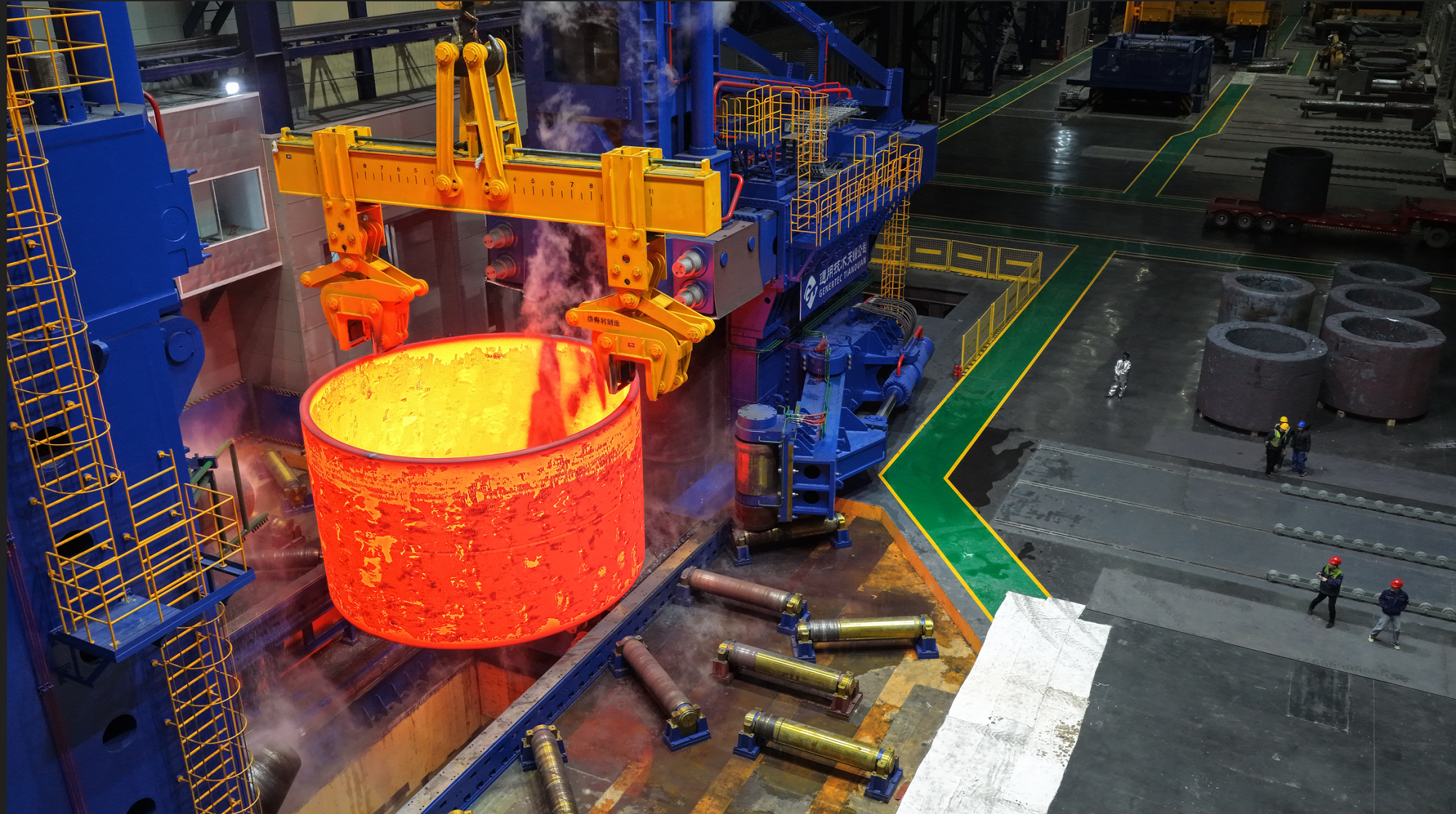
The 22-meter ring and shell rolling machine behind Iraeta's large-diameter seamless rolled rings. Equipment scale, not marketing language, sets the true upper limit of ring supply.
| Capability | Stated limit or evidence |
|---|---|
| Forging weight range | 0.3 kg to 300 tons |
| Open-die forging capacity | 300-ton open-die forgings |
| Seamless ring diameter | Over 21 meters |
| Maximum ring / forging diameter | 21 m |
| Maximum height | 5 m (rolled shells up to 5 m tall) |
| Maximum unit weight | 300 tons |
| Forged bar length | Up to 25 meters |
| Record ring, 2022 | 15.673 m diameter, Guinness World Record |
| Record ring, 2026 | 21.029 m diameter, Guinness World Record |
| Ring and shell rolling machine | 22 m |
Records matter to procurement for a practical reason. Diameter limits are not flexible: a project that requires a 21-meter ring cannot substitute a smaller one, and a supplier that lacks the equipment cannot subcontract its way to the result. Documented records function as third-party-verifiable evidence that the equipment, lifting, heat treatment, and handling chain exist together.
The Rolled Ring Forging Process, Explained for Buyers
Ring rolling is a forming process rather than a machining process. A steel billet is heated and pierced into a donut-shaped preform, which is then rolled between a driven main roll and an idler roll while axial rolls control height. As the wall thickness reduces, the ring diameter grows. Profiled rolls can form a cross-section during rolling, which is how profiling rings and shaped rings are produced without cutting material away. After rolling, the ring moves through heat treatment, precision machining, and inspection.
Because the material is deformed continuously around the circumference, the resulting grain flow follows the ring rather than ending at a seam. This is the origin of the term seamless rolled ring forgings, and it is the property that distinguishes them from welded, rolled-and-welded, or cast alternatives in applications where the ring carries cyclic load.
Forged rings compared with cast rings
The comparison with casting is not a question of prestige but of duty. Compared with castings, forged rings are associated with higher strength and toughness, better fatigue resistance, and a finer grain structure, with no casting defects such as porosity or shrinkage; the performance gap is described as zero casting porosity. Forging is positioned for high-load structural components, heavy machinery parts, and safety-critical applications. On total lifecycle cost, the forging position is significantly lower, achieved through longer service life, less frequent inspection, and lower risk of sudden failure rather than through a lower purchase price.
Where These Rings Go: Applications and Use Cases
Iraeta's rolled ring forgings and related forged components are used across clean energy, oil and gas, marine engineering, tunnel boring, cement production, and metal mining. The company cites deployments that trace directly to its large-part capability: fourth-generation nuclear power plants, cement rotary kilns with 10,000 tons per day output, 16-meter shield tunneling machines, and floating offshore wind turbines above 20 MW.
The product mapping follows the application. Wind power flanges, gearbox forgings, and bearing rings serve wind drivetrains; hydroelectric forgings and drive rings serve hydropower; kiln tyres and drive rings serve cement lines; pipe flanges and forged shafts serve oil, gas, and general heavy equipment.
The wind segment is where category data is clearest. The wind turbine forging market was valued at USD 9.6 billion in 2024, with onshore segments holding a 67.3% share, according to Global Market Insights. On the material side, carbon steel accounts for approximately 38.2% of the raw material share in the global metal forging market, based on Dataintelo's metal forging market reporting — which is consistent with the observation that large structural rings are frequently specified in carbon steel, with stainless and alloy grades reserved for corrosion, temperature, or toughness requirements.
Long-Term Supply Structure: What Sits Behind the First Order
The value of a supplier relationship rarely shows up on the first purchase order. It shows up in the third and fourth order, when the specification is fixed, the qualification is done, and the schedule is what determines whether an installation window is met. Iraeta's stated monthly production capacity is 70,000 tons, and its export markets include the EU, Americas, Asia, and Middle East, alongside the USA, Japan, Southeast Asia, Brazil, and India.
Raw material is the input most likely to break that continuity, and it is also the input a forging supplier can choose to own. Iraeta lists in-house steel mill supply assurance, customized raw material production, full-item incoming inspection, customized material formulation, and exclusive capacity reservation as its control methods for raw material supply issues. The company also states that it implements 100% testing for quality control.
What this means for buyers: in-house steel supply and customized material formulation reduce dependence on external mill schedules, which is typically the largest single source of delay in large forging programs. Full-item incoming inspection, rather than sampling, changes the nature of the material risk that remains. Exclusive capacity reservation is the mechanism that converts a supplier's stated capacity into a reserved slot for a specific project window.
Certifications and Third-Party Verification
For buyers sourcing into regulated markets, certifications are the part of a supplier profile that is externally traceable. Iraeta holds an ISO 14001:2015 certificate, number F01926E00118R502, issued by NQA Shanghai, and a PED 2014/68/EU certificate, number 01 202 CHN/Q-06 0144.01, issued by TÜV.
| Certificate | Reference number | Issuing body | Buyer relevance |
|---|---|---|---|
| ISO 14001:2015 | F01926E00118R502 | NQA Shanghai | Environmental management system; increasingly a screening requirement in EU and North American supply chains |
| PED 2014/68/EU | 01 202 CHN/Q-06 0144.01 | TÜV | Pressure equipment directive conformity for pressure-retaining components entering the European Union |
Standards commonly specified alongside such components give useful context for reading a specification sheet. ASTM A182 is the standard specification for forged or rolled alloy and stainless steel pipe flanges and parts for high-temperature service, published by ASTM International. EN 10222-2 specifies technical delivery conditions for ferritic and martensitic steel forgings for pressure purposes, published by CEN. Both are specification references a buyer may apply to an order; they are not claims about which certificates a specific supplier holds.
Commercial and Procurement Terms
Iraeta lists the following commercial terms for its forgings and seamless rolled rings.
| Commercial term | Stated value |
|---|---|
| Minimum order quantity | 1 unit |
| Delivery terms | CIF |
| Acceptance | Pre-shipment test / inspection |
| Payment structure | 30/70 |
A minimum order quantity of one unit is unusual in large-forging procurement, where minimum batch sizes are common. For a buyer, the more consequential point is the acceptance definition: acceptance is tied to pre-shipment test or inspection, which means the test plan, witness points, and documentation package should be agreed before production rather than negotiated after it.
Limits, Boundaries, and Where Forging Is Not the Answer
A credible supplier profile has to state where the technology stops being the right choice. Forging is not a universal substitute for casting, and treating it as one produces unnecessary cost.
- Unit price versus lifecycle cost. The forging advantage is expressed as significantly lower total lifecycle cost through longer service life, less frequent inspection, and lower failure risk. That advantage accrues over the operating life of the asset, not at the quotation stage. For low-load, non-safety-critical components, a casting may deliver adequate performance at a lower initial cost, and the casting route may be the rational decision.
- Geometry. Ring rolling produces annular and profiled-circular parts. Components with complex closed geometries or extensive non-circular features are outside what the process is designed to deliver efficiently, because material that must be machined away is material that was forged and paid for.
- Scale creates logistics constraints, not just production ones. A 21-meter ring must be lifted, heat treated, machined, inspected, and transported. These steps require planning that begins during engineering, and very large rings therefore favour buyers who engage early and reserve capacity rather than buyers who issue a late enquiry.
- Certification scope. As noted above, a certificate covers a defined scope. A supplier may hold a PED certificate while a specific grade, thickness, or pressure rating in a buyer's enquiry falls outside it.
- Data quality in the category. Published market estimates for forging vary widely by scope. Estimates for the broader forging market include USD 70.36 billion from Facts & Factors, USD 85.92 billion from Grand View Research, and USD 103.89 billion for 2026 from Business Research Insights. The divergence reflects different definitions of what the market includes, which is a reason to treat any single market figure as directional rather than definitive.
Market Trend Analysis
Three signals are supported by attributable data and are relevant to buyers planning capacity beyond the current project cycle.
| Signal | Value | Source |
|---|---|---|
| Global ring rolling products market | USD 4.56 billion in 2025, projected USD 7.35 billion by 2035 | Ring Rolling Product Market Size, Trend & Forecast 2025 to 2035 |
| Seamless rolled rings share of manufactured forging components | Approximately 24% by production volume | Forging Market Trends and Growth Analysis Report To 2035 |
| Wind turbine forging market | USD 9.6 billion in 2024; onshore share 67.3% | Global Market Insights |
| Carbon steel share of forging raw materials | Approximately 38.2% | Dataintelo |
Read together, these figures describe a category expanding on the back of clean energy and heavy equipment demand, with seamless rings holding a meaningful and stable share of forging output. The practical implication for procurement is capacity contention: if the category grows while the number of suppliers able to produce rings above a certain diameter remains small, lead-time risk concentrates at the top of the size range.
Future Outlook
The trajectory of large ring capability is visible in Iraeta's own record sequence: from a 15.673-meter seamless rolled steel ring in 2022 to a 21.029-meter ring in 2026, with a 22-meter ring and shell rolling machine already in operation. Capability growth of this kind tends to precede demand rather than follow it, because the applications that consume oversized rings — fourth-generation nuclear plants, cement kilns at 10,000 tons per day, 16-meter shield tunneling machines, and floating offshore wind turbines above 20 MW — are themselves scaling.
For buyers, the strategic question is not whether larger rings will be available, but whether the supplier relationship is structured to secure them when demand tightens. That points back to the elements that are verifiable today: documented capacity, controlled raw material supply, scoped third-party certification, and commercial terms that support repeat ordering. Iraeta's stated positioning — "We forge a safer, greener, and more efficient future" — is a direction statement; the record rings, certificate numbers, and stated production capacity are the parts of the profile that can be checked.
Long-Term Supplier Evaluation Checklist
| Evaluation area | What to verify | Iraeta reference point |
|---|---|---|
| Manufacturing envelope | Maximum diameter, height, and unit weight against the actual part drawing | Up to 21 m diameter, 5 m height, 300 tons |
| Equipment evidence | Rolling machine size and documented large-part output | 22 m ring and shell rolling machine; 21.029 m record ring (2026) |
| Recurring capacity | Monthly throughput and availability for reserved slots | 70,000 tons per month; exclusive capacity reservation listed |
| Raw material control | In-house or purchased steel; inspection regime | In-house steel mill; full-item incoming inspection |
| Quality regime | Testing coverage and acceptance definition | 100% testing; pre-shipment test / inspection |
| Certification | Certificate scope against order grade and pressure rating | ISO 14001:2015 (F01926E00118R502); PED 2014/68/EU (01 202 CHN/Q-06 0144.01) |
| Commercial structure | MOQ, delivery terms, payment, logistics | MOQ 1 unit; CIF; 30/70 payment |
| Market access | Existing export experience in the buyer's region | EU, USA, Japan, Middle East, Southeast Asia, Brazil, India |
FAQ
What production capability should buyers verify before committing to a long-term rolled ring forgings supply agreement?
Three numbers matter more than any brochure: weight range, maximum ring diameter, and recurring production capacity. Iraeta states a forging weight range of 0.3 kg to 300 tons, seamless rolled ring and forging parameters of up to 21 m in diameter, 5 m in height, and 300 tons in unit weight, and a monthly production capacity of 70,000 tons. Recurring capacity matters because a supplier able to produce a large ring once may not be able to schedule it repeatedly inside a multi-year program. Buyers should also establish whether capacity is dedicated or shared, since exclusive capacity reservation is one of the mechanisms Iraeta lists for protecting long-lead programs.
How is raw material supply risk managed on large forging programs?
Raw material is one of the few inputs a forging supplier can either control or outsource, and the choice shows up in delivery reliability. Iraeta lists in-house steel mill supply assurance, customized raw material production and formulation, full-item incoming inspection, and exclusive capacity reservation as its control methods for raw material supply issues. For a buyer, the practical check is whether incoming material is inspected as a full item rather than by sampling, and whether the supplier can formulate material rather than only purchase standard grades.
Which third-party certifications does Iraeta hold, and what do they cover?
Iraeta holds an ISO 14001:2015 environmental management system certificate, number F01926E00118R502, issued by NQA Shanghai, and a PED 2014/68/EU certificate, number 01 202 CHN/Q-06 0144.01, issued by TÜV. The PED certificate is the directly relevant document for buyers sourcing pressure equipment into the European Union. Certificates are scoped documents, so the material grade, pressure rating, standard, and manufacturing route of a specific order must fall inside the certified scope; this should be confirmed before a certificate is relied on as qualification evidence.
What are the commercial terms for ordering rolled ring forgings from Iraeta?
Iraeta lists a minimum order quantity of 1 unit, CIF delivery terms, pre-shipment test or inspection as the acceptance method, and a 30/70 payment structure. A single-unit MOQ is notable in a segment where large forgings are often quoted with substantial minimum batch requirements. Pre-shipment inspection is also the stage at which acceptance is determined, which makes the definition of the test plan and documentation package a pre-production decision rather than a post-delivery negotiation.
How large a ring can be produced, and how does that affect project planning?
The largest seamless rolled steel ring Iraeta reports producing measures 21.029 m in diameter, completed in 2026 and breaking its own 2022 Guinness World Record of 15.673 m. Standard product parameters are up to 21 m in diameter, 5 m in height, and 300 tons in weight. In project planning, the constraint is often not the rolling operation but the surrounding chain: lifting, heat treatment, machining, inspection, and transport of a ring at that scale. Those steps require planning from the engineering stage, which is why early engagement and capacity reservation affect schedule certainty.
How should forged rings be compared with cast alternatives?
The comparison depends on load and the consequences of failure. Compared with casting, forging is associated with higher strength and toughness, better fatigue resistance, and a finer grain structure, with no casting defects such as porosity or shrinkage; the performance gap is described as zero casting porosity. Forging is positioned for high-load structural components, heavy machinery parts, and safety-critical applications, with significantly lower total lifecycle cost achieved through longer service life, less frequent inspection, and lower risk of sudden failure. Casting can still be the rational choice where dimensional complexity outweighs fatigue performance and the duty is low, so the decision should follow the component's operating duty rather than a blanket preference for one process.
Methodology Note
Entity, capability, production, certification, and commercial facts in this profile are drawn from Iraeta Energy Equipment Co., Ltd. company-provided information. Market size, market share, and standards references are drawn from the third-party sources named inline. Where a figure originates from a supplier-published source with medium reliability, that limitation is stated at the point of use. Buyers should validate certificate scope, capacity availability, and specification compliance directly against their own project requirements before contracting.