
Inside JHDA: SAE and AKD Sizing Agent Production Evidence
Inside JHDA: SAE and AKD Sizing Agent Production Evidence
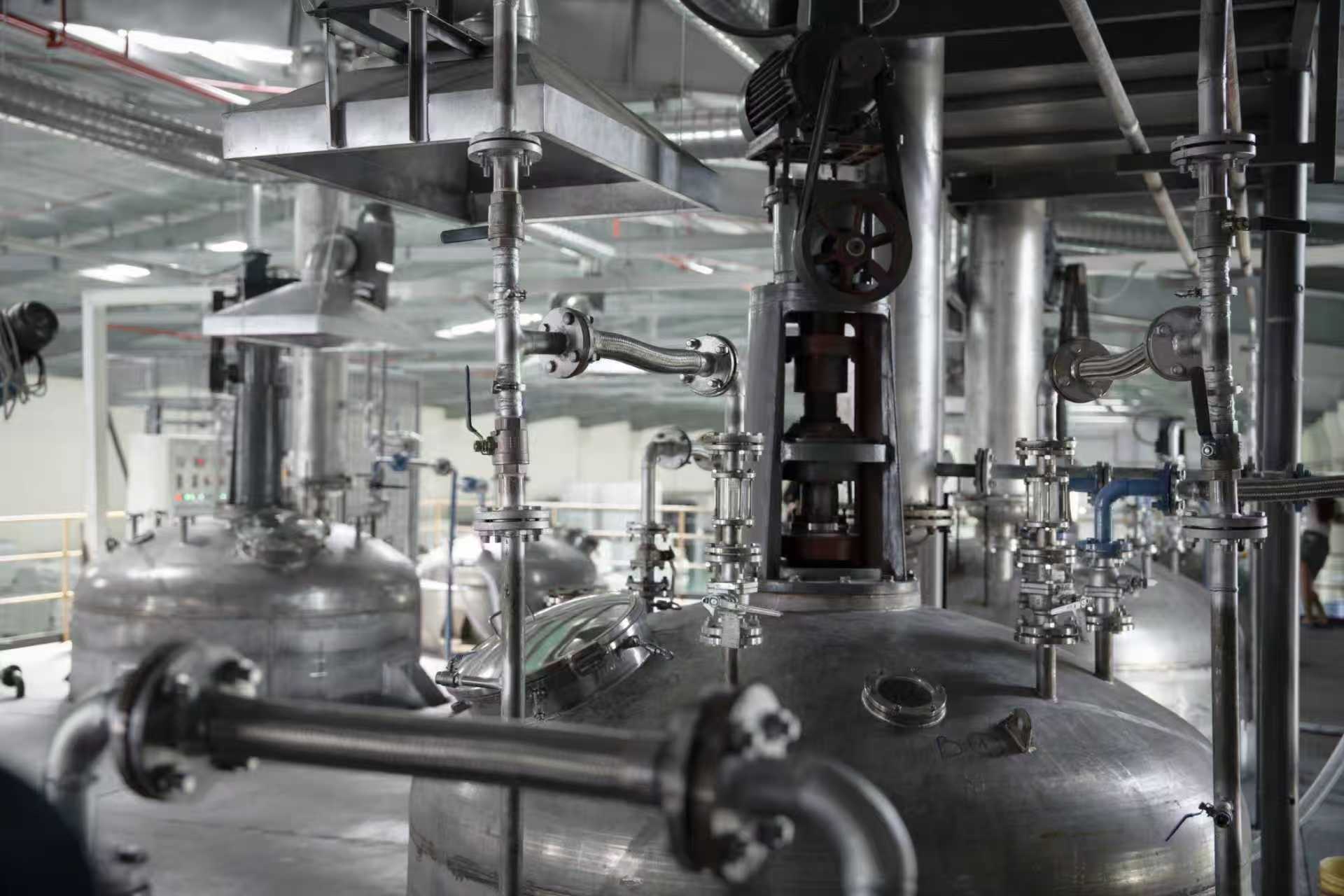
Sizing agents decide whether a finished sheet keeps its strength, printability and dimensional stability after it leaves the drying section. The purchase decision, however, is a constraint problem rather than a commodity transaction: two products carrying the same functional label can differ in ionic charge, reactive chemistry, solid content, pH window and shelf life, and each of those variables has to fit an existing paper machine, an existing starch kitchen and an existing shipping rhythm.
Qingzhou Jinhao New Material Co., Ltd., which operates under the brand JHDA, is a papermaking fine chemicals manufacturer founded in 2005 and located in Mihe Industrial Park, Qingzhou City, Shandong Province, China. Its published sizing portfolio covers internal and surface sizing chemistry across five documented models: JH-600, JH-325, JH-103, JH-200 and JH-WH3364. This reference examines what that range, together with the plant and quality-control information the company publishes, indicates about production flexibility and technical depth. It also marks where the available evidence stops, which is the point at which a buyer should move to sampling and machine trials.
Why the Sizing Agent Decision Is a Constraint Problem
Sizing agents are process chemicals, not stand-alone additives. An internal sizing agent is dosed into the pulp or approach flow, where it must tolerate the wet-end charge environment and react during drying. A surface sizing agent is applied at the size press with starch, where it must remain stable under mechanical shear, avoid foaming, and form a film that determines printability and water resistance. The same mill may need both, in different grades, on the same machine.
Buyers therefore tend to screen candidates against four constraint groups rather than a single performance number:
- Application position and chemistry: internal (wet-end) or surface (size press), and compatibility with the starch grade and wet-end additives already in use.
- Machine behaviour: pH window, viscosity at operating temperature, foaming tendency under shear, and whether the mill's existing metering pump and dilution regime can handle the product.
- Documentation: quality and environmental management certificates, market-specific certification, safety data sheets and food-contact compliance where the end use requires it.
- Commercial rhythm: minimum order quantity (MOQ), production lead time, warehouse shelf life, and distance between the production site and the mill.
A supplier covering only one position pushes the mill into multi-sourcing. A supplier claiming several positions raises a sharper question: can one plant produce chemically different — and in some cases charge-incompatible — products to a consistent specification? Portfolio breadth is the first piece of evidence, and it is the piece that can be checked against published product data before any sample is ordered.
The Documented JHDA Sizing Agent Portfolio
The five models below represent two chemistry families and three charge types. AKD (alkyl ketene dimer) is a reactive wax emulsion; styrene-acrylic (SAE) is a polymer dispersion; JH-WH3364 combines both in a single composite product. The parameters are taken from the company's published product documentation.
| Model | Documented type | Ionic type | Solid content | pH | Viscosity (25 °C) | Shelf life |
|---|---|---|---|---|---|---|
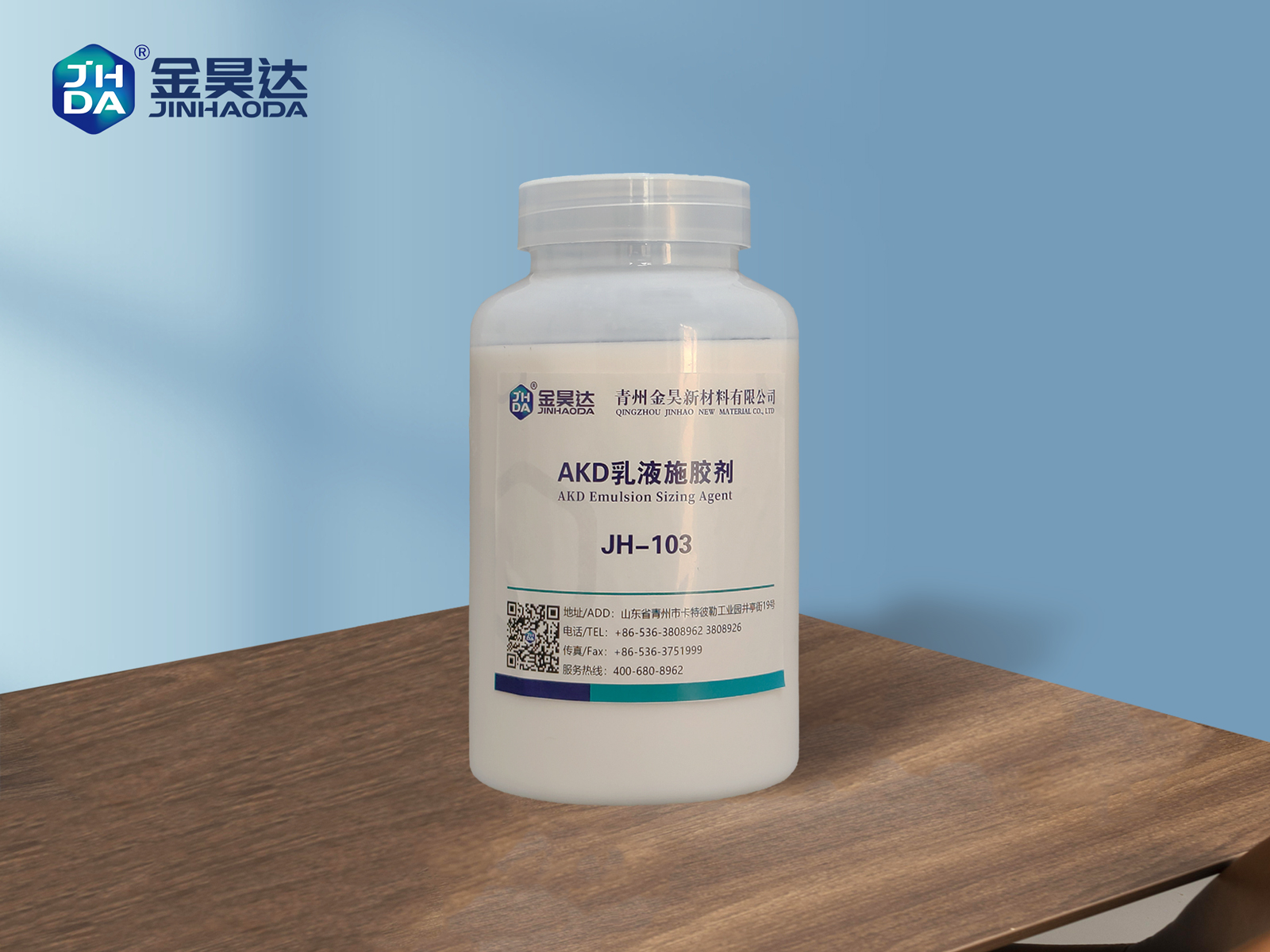
| JH-103 | AKD internal sizing agent (AKD wax) | Cationic | 12.5 – 25.0 ± 1.0 % | 2.0 – 5.0 | ≤ 50 cps | 4 months |
| JH-200 | Surface AKD sizing agent (AKD wax powder) | Cationic | 20.0 ± 1.0 / 30.0 ± 1.0 % | 2.0 – 5.0 | ≤ 50 cps | 3 months |
| JH-325 | Anionic surface sizing agent (anionic styrene acrylic) | Anionic | 25.0 ± 1.0 % | 2.0 – 5.0 | ≤ 50 cps | 6 months |
| JH-600 | Moisture-resistant SAE surface sizing agent (styrene acrylic) | Cationic | 30 ± 1 % | 2.0 – 5.0 | < 50 cps | 6 months |
| JH-WH3364 | Composite surface sizing agent (weak anionic styrene acrylic + AKD) | Weak cationic | 25.0 ± 1.0 % | 2.0 – 5.0 | ≤ 50 cps | 4 months |
All five products are described as water-soluble liquids. JH-103, the single internal sizing model in the set, is documented for neutral and alkaline papermaking systems and for wood pulp, chemical pulp, mechanical pulp and blended pulp — a range that covers cultural printing paper, copy paper, box board, kraft paper and molded pulp products with waterproof requirements. The four surface models split by function: JH-200 delivers AKD chemistry at the size press with industrial starch; JH-325 is an anionic styrene-acrylic product positioned for offset printing paper, copy paper and book paper; JH-600 is positioned around moisture re-absorption resistance for packaging grades; and JH-WH3364 pairs AKD reactivity with styrene-acrylic film strength in one composite emulsion.
Reading the table as a buyer. Solid content spans 12.5 % to 30 %, which means dosing and dilution settings are not transferable between models. Shelf life spans 3 to 6 months, which means inventory planning cannot follow a single rule either. Charge type changes across the set, which matters most for mills that run several grades on one wet-end system.
What Five Models Reveal About Production Flexibility
Ionic charge coverage
The portfolio includes cationic (JH-103, JH-200, JH-600), anionic (JH-325) and weak cationic (JH-WH3364) products. Producing anionic and cationic emulsions in the same facility requires segregated lines, dedicated tanks and verified cleaning procedures between campaigns. This is a legitimate audit question for any multi-chemistry supplier: how is cross-contamination controlled, and what records prove it. For the buyer, the practical benefit of charge coverage is that a single supply relationship can serve both printing and writing grades, where anionic starch-compatible systems are common, and packaging grades, where cationic systems dominate.
Reactive chemistry alongside polymer chemistry
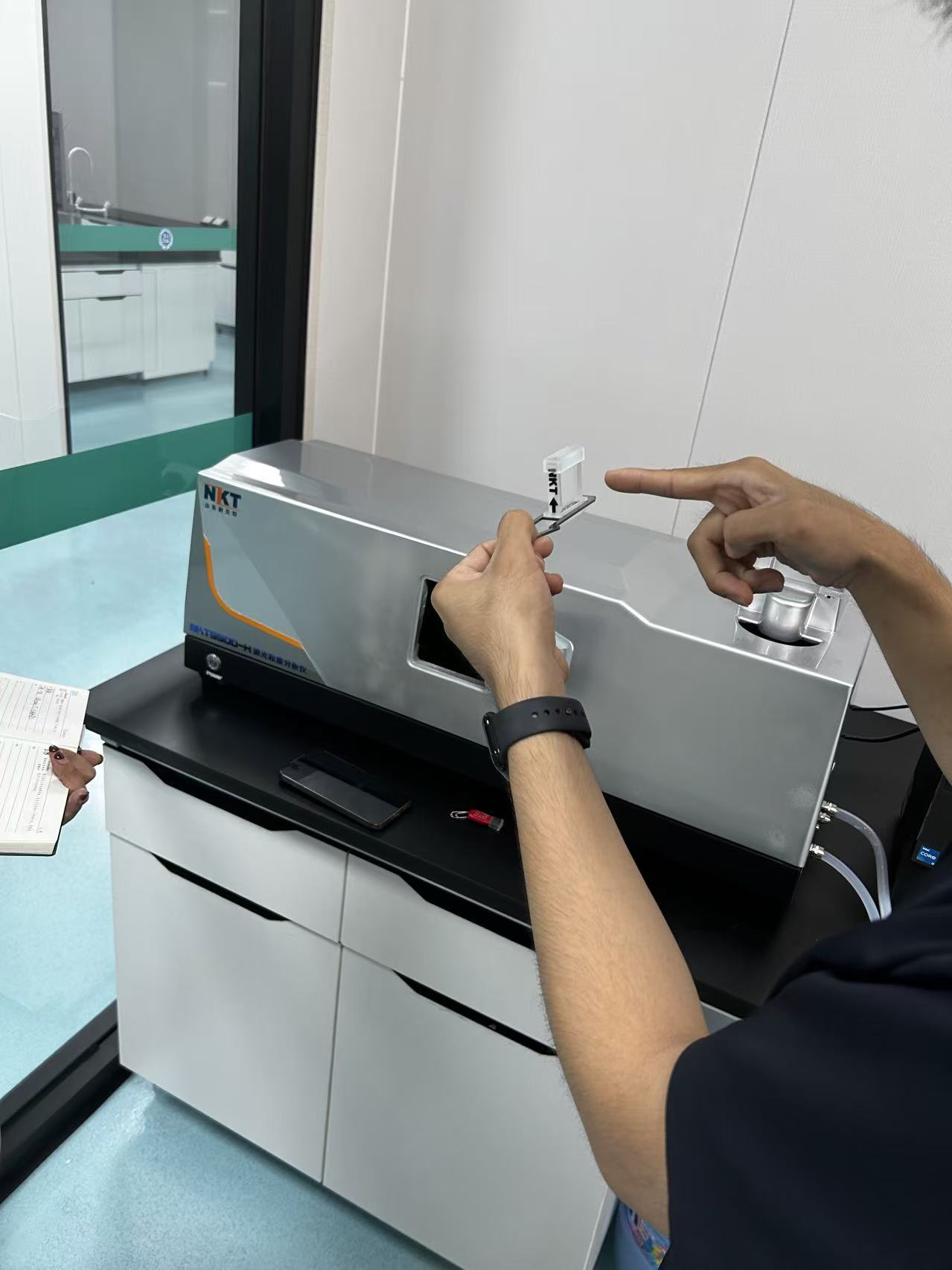
AKD must be emulsified into a stable dispersion, while styrene-acrylic sizing agents are polymer dispersions with their own particle-size control requirements. JH-WH3364 requires both chemistries to coexist in one emulsion without separating (documented as weak anionic styrene acrylic combined with AKD). Particle-size control is therefore a core manufacturing capability rather than a laboratory detail, and the company lists a particle size analyzer among its quality-control equipment.
Application-point coverage
One internal model and four surface models means the range can cover both the wet end and the size press. In practice, a mill converting from an acid rosin-alum system to neutral sizing may need the two positions to be commissioned in stages; a supplier with documented products on both sides can support that sequencing without a second sourcing exercise.
Shelf life and reorder rhythm
JH-200 carries the shortest documented shelf life in the set at 3 months, against 6 months for JH-325 and JH-600. For a mill in Southeast Asia or Africa supplied from Shandong, the shortest shelf life in a portfolio effectively sets the reorder frequency for that line item. This is a planning constraint, not a defect, but it has to be built into the purchasing calendar rather than discovered in the warehouse.
Production-side signals
Company documentation states a foundation year of 2005, a headquarters site of approximately 20,000 m², annual output reaching 100,000 tons, and a monthly capacity of 8,000 MT across standardized automated lines for liquid and solid papermaking chemicals. The commercial parameters published alongside these figures are an MOQ of 1 MT, free trial samples, a stated production lead time of 4 working days, and a technical team of 20 R&D and on-site service engineers among the staff. The company also reports that a large-scale R&D laboratory is under construction inside the central production workshop of the headquarters site to expand testing, formula development and performance verification.
These are self-reported manufacturing and commercial figures. They are useful for shortlisting, but they should be confirmed in a written quotation and, where volumes are significant, verified through a factory audit visit, which the company states it supports for distributors and terminal paper manufacturers.
Evidence Behind the Product Range: Plant, Lab and Quality Control
For a constraint-led purchase, the documentation layer is as important as the product layer. The company states that typical QA tests cover particle size, appearance, solids, pH, viscosity and functional testing, with specific QC procedures and reports available per order. Testing infrastructure referenced in company materials includes a pilot laboratory, performance test laboratories, paper strength testing and a particle size analyzer.
Certification and compliance documents on record
| Document | Number / standard | Issuing body | Scope and market |
|---|---|---|---|
| ISO 9001:2015 quality management system | Certificate 10423Q01592R1S / GB/T 19001-2016, ISO 9001:2015 | Shandong Seatone International Certification Co., Ltd. | Production of papermaking additive; global market |
| ISO 14001:2015 environmental management system | Certificate 10423E01032R2S / GB/T 24001-2016, ISO 14001:2015 | Shandong Seatone International Certification Co., Ltd. | Production of papermaking additive and related EMS management activities; global |
| HALAL certificate | Certificate 6637250000 / Indonesia Halal Law and Regulations, MS1500:2019 | Shandong Halal Certification Service (SHC) | Paper-making industry additives; Indonesia and global halal-compliant markets; valid 29 August 2025 to 28 August 2028 |
The company also states that its exported chemical products complete CAS registration and GHS hazard labelling and comply with IMDG international marine shipping regulations, and that SGS product compliance test reports and food-contact safety testing for packaging paper chemicals are available. Export documentation support is described as including commercial invoice, packing list, certificate of origin, pre-shipment inspection report, MSDS, TDS and dangerous goods transport certification.
A verification point that buyers often skip. Management-system certificates are re-issued on multi-year cycles, so the issue and expiry dates on any certificate should be checked against the date of the purchase specification. When a certificate number is written into a tender document, the validity window should be recorded alongside it. Certificate numbers shown above are as published by the manufacturer and should be confirmed directly against the current certificate at the time of ordering.
Matching Models to Paper Grades and Machine Positions
The documented application coverage of the five models is not uniform, and that is where selection starts. The table below summarises the positions and grade families described in the product documentation.
| Model | Sizing position | Chemistry | Documented grade and process fit |
|---|---|---|---|
| JH-103 | Internal (wet end / pulp) | AKD wax emulsion, cationic | Cultural printing paper, copy paper, box board, kraft paper, molded pulp; wood pulp, chemical pulp, mechanical pulp and blended pulp; neutral and alkaline systems |
| JH-200 | Surface (with industrial starch) | AKD wax powder, cationic | Surface waterproofing and printing adaptability for cultural paper and packaging paper; neutral and alkaline systems; no separate curing period described once the sheet passes the drying cylinder |
| JH-325 | Surface (with starch) | Anionic styrene acrylic | Offset printing paper, copy paper, book paper; acidic systems with aluminum sulfate as well as modern neutral systems |
| JH-600 | Surface (with starch) | Styrene acrylic, cationic | Moisture re-absorption resistance for packaging grades, humid storage and long-distance transport; virgin wood pulp, chemical pulp, mechanical pulp and compound recycled pulp |
| JH-WH3364 | Surface (with starch) | Weak anionic styrene acrylic + AKD, weak cationic | Combined water resistance and surface strength for cultural paper and packaging paper; neutral systems; corrugated and boxboard converting |
Two process notes are relevant to plant planning. First, the surface models are documented for use with oxidized starch and modified starch carriers, which means the mill's existing starch kitchen is the integration point — not the pulp recipe. Second, the composite model JH-WH3364 is described as replacing the separate purchase and dosing of AKD emulsion and an SAE sizing agent with one product, which simplifies dosing but concentrates responsibility for compatibility on a single formulation.
Company documentation also lists rosin sizing agent and an anti-humidity sizing auxiliary within the wider sizing series. Those products fall outside the five-model scope of this review and are not assessed here.
Market Context for Sizing Agent Sourcing
Sizing chemistry is a stable but evolving category. The global paper sizing agent market was valued at approximately USD 3.8 billion in 2025 and is projected to reach USD 5.9 billion by 2033 at a CAGR of 5.8 %, according to Dataintelo. Estimates diverge between research houses — Market Research Future puts the 2024 market at USD 3.16 billion and SNS Insider at USD 3.95 billion, with CAGR projections ranging from 4.14 % to 5.8 % depending on scope. For procurement purposes, the direction matters more than the exact figure: volume is growing, and the mix is shifting.
Three mix shifts are documented. Synthetic sizing agents, including AKD and ASA, held 54.5 % of the market in 2024, with AKD accounting for roughly 48 % of synthetic sizing agent volume globally (SNS Insider; Dataintelo). Liquid sizing agents held a 57.8 % share in 2024 because they are easier to dose, while solid sizing agents are projected to grow at 5.11 % CAGR through 2032 on logistics efficiency (SNS Insider). Rosin sizing agents still represented 32.4 % of market revenue in 2025 (Dataintelo), which is a reminder that acid rosin-alum systems remain in service rather than having disappeared.
Regionally, Asia Pacific held a 42.3 % revenue share as of 2025, and China's annual paper sizing agent consumption is estimated at 650,000 tons in the same year (Dataintelo) — consistent with the concentration of packaging and printing paper capacity in the region. For a buyer in Southeast Asia, the Middle East or Africa, that concentration explains why Shandong-based supply is a realistic sourcing option rather than a long-distance exception.
How Neutral AKD and SAE Systems Compare with Traditional Rosin-Alum Sizing
The comparison that matters to most mills is not brand against brand but chemistry family against chemistry family. Traditional acid rosin-alum sizing is built on a well-understood, widely available chemistry base and remains common in specific grades and markets. Neutral AKD and styrene-acrylic systems, as documented for the JHDA range, offer a different set of trade-offs.
| Dimension | Traditional rosin-alum (acid) sizing | AKD / SAE neutral sizing (as documented in this range) |
|---|---|---|
| Papermaking pH | Acidic system using aluminum sulfate | Neutral and alkaline systems; JH-325 is documented as suitable for both acidic and neutral processes |
| Equipment exposure | Acid environment contributes to corrosion of drying cylinders, forming wires and metal pipelines | Documented as reducing metal corrosion and extending paper machine accessory life |
| Dosing position | Wet-end addition, integrated with alum chemistry | Split between internal (JH-103) and surface application with starch (JH-200, JH-325, JH-600, JH-WH3364) |
| Setting behaviour | Depends on the acid system and drying profile | Surface models documented as reaching working performance once the sheet passes the drying cylinder, without a separate curing period |
| Material basis | Rosin, a bio-based raw material | Synthetic: AKD wax and styrene-acrylic polymer |
The practical conclusion is that conversion to neutral sizing is a system decision, not a product swap. Where a mill runs closed white water circuits and cationic wet-end chemistry, an anionic surface product and a cationic internal product can coexist — but they cannot be dosed from the same preparation tank, and compatibility with the specific starch and retention system has to be confirmed before commissioning.
Limits and Boundary Conditions Buyers Should Plan Around
A capability assessment that lists only strengths is not usable. The following boundaries follow from the same published documentation.
- Shortest shelf life sets the schedule. JH-200 is documented at a 3-month shelf life, shorter than the 6 months stated for JH-325 and JH-600. High-consumption lines running JH-200 need tighter inventory control than a first reading of the portfolio suggests.
- Charge separation is a real constraint. An anionic product (JH-325) and cationic products (JH-103, JH-200, JH-600) must be handled in separate preparation and circulation systems. Mills that already run a single size-press tank need to plan for separate dosing or staged campaigns.
- Neutral-system design is not universal. JH-103, JH-200, JH-600 and JH-WH3364 are documented around neutral and alkaline papermaking. JH-325 is the model explicitly documented for both acidic and neutral systems, which makes it the relevant candidate for mills still running aluminum sulfate.
- Food-contact use needs grade-level documents. The company states that SGS food-contact safety testing and food-grade products exist within the wider portfolio, but the compliance evidence has to be matched to the specific product and destination market — for example EU Regulation (EC) No 1935/2004 for European food-contact applications, or FDA 21 CFR food-contact provisions for the United States. A portfolio-level statement is not a substitute for the certificate covering the grade being purchased.
- Material basis is synthetic. Bio-based sizing agents reached 38 % of global consumption in 2024 according to Market Reports World. The five models reviewed here are AKD and styrene-acrylic based; mills with bio-based procurement targets should treat this as a boundary rather than assume equivalence.
- Published numbers are self-reported. Capacity, MOQ, lead time and QC scope come from manufacturer documentation. Independent third-party mill trial results are not part of this record, which is why the free trial sample and pilot laboratory offer is the appropriate next verification step rather than a final conclusion.
Future Outlook
Two structural developments shape how this portfolio is likely to be sourced over the next few years. The first is regional production. The company states that it has established an overseas supporting production entity, CRM Chemical Technology Co., Ltd., in Long An Province, Vietnam, to serve ASEAN customers with local delivery and shorter delivery cycles. For buyers in Vietnam, Thailand, Malaysia, Indonesia, Myanmar and Cambodia — the company's stated core export markets alongside Middle East packaging zones — a two-site supply structure reduces single-point risk and shortens the physical distance between production and the size press.
The second is verification depth. The central R&D laboratory under construction at the Shandong headquarters site is intended to strengthen raw material inspection, finished-product testing and formula customization. As sizing agents move further into neutral systems and into digital-printing substrates, where surface chemistry governs printability, the ability to reproduce a particle-size distribution batch after batch becomes the competitive variable rather than the product list itself.
Neither development changes the buyer's core test. A supplier's portfolio tells you what it claims to be able to make; a trial on your own furnish tells you what it can do on your machine. The documented range of JH-600, JH-325, JH-103, JH-200 and JH-WH3364 — spanning anionic, cationic and weak cationic chemistry across internal and surface positions — is a reasonable basis for a first shortlist. Confirmation still belongs on the machine.
Frequently Asked Questions
Which certificates should a buyer verify before approving a papermaking sizing agent supplier?
For papermaking additives, the verifiable documents usually include a quality management system certificate, an environmental management system certificate where the buyer's own policy requires it, product compliance test reports, and any market-specific certification needed in the destination country. On record for JHDA are ISO 9001:2015 certification under certificate number 10423Q01592R1S, to the standard GB/T 19001-2016 / ISO 9001:2015, issued by Shandong Seatone International Certification Co., Ltd.; ISO 14001:2015 certification under certificate number 10423E01032R2S, to GB/T 24001-2016 / ISO 14001:2015, issued by the same body; and HALAL certificate number 6637250000 issued by Shandong Halal Certification Service (SHC) for paper-making industry additives, valid from 29 August 2025 to 28 August 2028 under Indonesia Halal Law and Regulations and MS1500:2019. Because management-system certificates are re-issued on multi-year cycles, the issue and expiry dates should be checked against the date the certificate is quoted in a purchase specification.
What technical parameters determine whether a sizing agent fits a specific paper machine?
The parameters that govern machine fit are appearance, solid content, pH, viscosity at 25 °C, ionic type, solubility and shelf life, plus the type of carrier the product is designed to be mixed with. In the JHDA range, solid content spans 12.5 – 25.0 ± 1.0 % for JH-103, 20.0 ± 1.0 or 30.0 ± 1.0 % for JH-200, 25.0 ± 1.0 % for JH-325 and JH-WH3364, and 30 ± 1 % for JH-600. All five are documented at pH 2.0 – 5.0 with viscosity at or below 50 cps at 25 °C. The charge type varies — cationic, anionic and weak cationic — so the decisive compatibility question is whether the product's charge matches the wet-end chemistry, starch grade and retention system already in use on that machine.
How does an internal AKD sizing agent differ from a surface sizing agent in production planning?
An internal sizing agent such as JH-103 is dosed into the pulp or approach flow, so its performance depends on the wet-end charge environment and on the reaction that takes place during drying. A surface sizing agent such as JH-200, JH-325, JH-600 or JH-WH3364 is applied at the size press together with oxidized or modified starch, so it depends on starch compatibility, shear stability and film formation rather than on fibre retention. The planning differences follow from that: internal products change the pulp recipe and the wet-end additive balance, while surface products change the starch kitchen, the dosing arrangement and the drying profile. Surface products are therefore generally easier to introduce on an existing line, because the pulp formula and the internal additive system can remain unchanged.
What are the practical limits of AKD and SAE surface sizing compared with traditional rosin-alum sizing?
Rosin sizing agents still accounted for 32.4 % of paper sizing agent market revenue in 2025, according to Dataintelo, which reflects the continuing role of acid rosin-alum systems in certain grades and markets and the bio-based origin of rosin itself. AKD and styrene-acrylic systems are documented around neutral and alkaline papermaking, which reduces corrosion of drying cylinders, forming wires and metal pipelines but requires charge management and starch compatibility checks. Within the five-model range reviewed here, the specific limits are that JH-200 has the shortest shelf life at 3 months, that anionic JH-325 and the cationic models cannot share the same preparation tank, and that the five models are synthetic AKD and styrene-acrylic chemistries, whereas bio-based sizing agents accounted for 38 % of global consumption in 2024 according to Market Reports World.
How do MOQ, lead time and shelf life interact when planning a sizing agent order?
These three variables have to be planned together because the shortest one governs the cycle. The published commercial parameters for JHDA are an MOQ of 1 MT with free trial samples, a stated production lead time of 4 working days, and a monthly capacity of 8,000 MT. Against those, documented shelf life varies by model: 6 months for JH-325 and JH-600, 4 months for JH-103 and JH-WH3364, and 3 months for JH-200. A mill that standardizes on the 3-month product needs a reorder rhythm built around roughly quarterly replenishment plus transit time, while a mill running the 6-month products has more flexibility in batching orders against ocean freight schedules.
Reference Documents
Product parameters, certificate numbers and plant figures in this article are drawn from manufacturer documentation, including the corporate and product introduction file available here: JHDA corporate and product introduction (PDF). Third-party market figures are attributed inline to Dataintelo, SNS Insider, Market Research Future and Market Reports World, and reflect the sources and vintages recorded at the time of publication. Buyers should request current TDS, MSDS and certificate copies for the specific grade and destination market before finalizing a specification.