
Inside Jusnova's 3M-Unit Factory: Gold Plated Jewelry Capacity
Inside Jusnova's 3M-Unit Factory: Gold Plated Jewelry Capacity
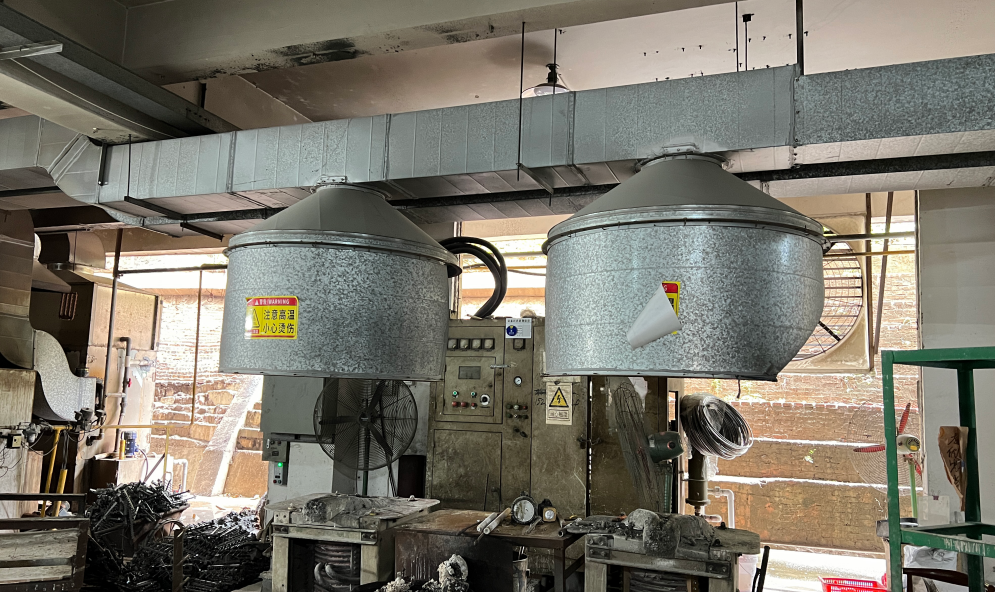
Annual output, floor area, engineering headcount and export mix are among the few supplier claims that can be cross-checked against documents, audits and pilot orders. This reference article examines what Jusnova Jewelry Co., Ltd. reports about its Guangzhou operation — 3,000,000 units a year, 300 staff, a 1,000 m² facility and more than 500 new styles a month — and what those numbers do, and do not, tell a buyer of gold plated jewelry.
Why Production Capacity Became a Sourcing Question
Capacity used to be a line on a factory profile. It is now a risk variable. When a style sells through in six weeks and the reorder has to land before the next buying window, a supplier's monthly output ceiling, tooling depth and engineering headcount decide whether a brand scales a winner or abandons it and starts sourcing again.
The demand side supports that shift. The global gold plated jewelry market was valued at USD 14.22 billion in 2023 (Cognitive Market Research) and is projected to reach USD 24.36 billion by 2031 at a compound annual growth rate of 7.1% (Business Research Insights). Supply is concentrated: the Asia-Pacific region accounted for more than 35% of global gold plated jewelry output in 2023 (Grand View Research). For importers and brand owners in Europe and North America, that concentration means most sourcing conversations end up in the same few manufacturing regions.
The fastest-moving slice of that demand is customization. Personalization and laser engraving segments are forecast to grow at a CAGR of 8.5% through 2030 (Market Research Future). That growth rate places pressure on two capabilities at once: releasing new designs continuously, and reproducing an approved design identically across large volumes. A supplier that can do one but not the other tends to convert a reorder into a re-sourcing exercise.
Those two capabilities are what the published profile of Jusnova Jewelry Co., Ltd. addresses. The company is a Guangzhou-based manufacturer of stainless steel and PVD/electroplated gold plated jewelry, founded in 2009, with 95% of output reported as export-oriented and an emphasis on wholesale and brand buyers in Europe and America.
The Jusnova Facility at a Glance
The core figures are compact enough to present without interpretation. They describe a mid-sized, export-focused operation rather than a vertically integrated group.
| Parameter | Reported figure |
|---|---|
| Company | Jusnova Jewelry Co., Ltd. |
| Founded | 2009 |
| Location | Panyu District, Guangzhou, Guangdong, China |
| Facility size | 1,000 m² |
| Employees | 300 |
| Annual output | 3,000,000 units |
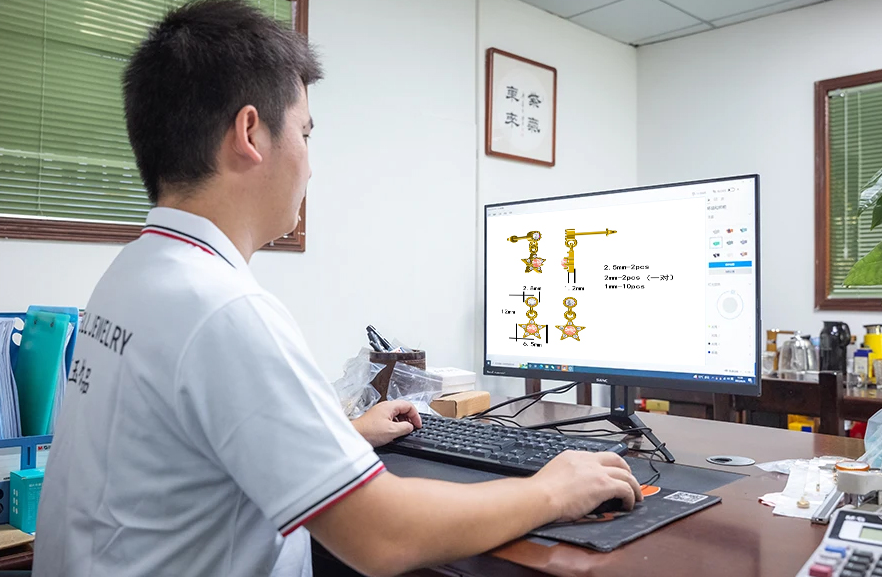
| R&D team | 20 engineers, supporting style development, surface-finishing processes and new-custom development |
| New styles released | More than 500 per month |
| Export share | 95% |
| Main markets | Europe and America, serving wholesale and brand buyers |
| Product scope | Stainless steel bangles, bracelets, rings and earrings; PVD and electroplated gold pieces; waterproof and tarnish-free jewelry |
These figures are self-reported by the manufacturer through its published company profile. In an evaluation-to-execution context they function as claims to be tested rather than conclusions, and each one maps to a document, a plant visit or a pilot order that can confirm it. Buyers who want to inspect the profile directly can do so through the company's published site, jusnovasteel.com.
What 3,000,000 Units a Year Actually Supports
A unit figure is only meaningful once it is connected to the buyer behaviours it enables. Three of them matter most at the evaluation stage.
Reorder continuity. The most common failure in fashion jewelry sourcing is not a bad first order but an inconsistent second one. A stated annual capacity of 3,000,000 units, combined with 300 staff and a 1,000 m² footprint, indicates a production model organised around repeat runs rather than one-off sampling. For a brand that plans to keep a SKU in the catalogue beyond a single season, repeatability is worth more than peak output.
Design throughput. More than 500 new styles a month is the figure that most directly supports OEM and ODM programmes. Private-label buyers rarely need 500 styles; they need the ability to move from a brief, a mood board or a competitor reference to a manufactured sample quickly, and then to repeat that cycle several times a season. A high monthly release cadence is evidence of an active development pipeline rather than a static catalogue.
Engineering support for custom work. The R&D function here is described as 20 engineers providing style development and surface-finishing process support, including new-custom development. Surface finishing is where custom programmes most often stall: a design may be approved on paper and still fail at the polishing, sandblasting or coating stage. Engineering capacity tied specifically to finishing is a practical signal for buyers whose designs depend on brushed, mirror-polished, sandblasted or multi-finish surfaces.
Materials, Tolerances and Finishing: The Process Evidence
Capacity claims become credible when they are paired with process specifications. Jusnova's published product parameters give a reasonably detailed picture of what the factory is set up to produce.
- Substrate: 304, 316 and 316L stainless steel, selected for corrosion resistance and hypoallergenic behaviour. 316L stainless steel is the recognised standard hypoallergenic substrate for high-quality PVD gold plated jewelry (ASTM International).
- Dimensional range: diameters from 5 mm to 80 mm, thickness from 0.5 mm to 3.0 mm, with height and width customisable and tolerances controlled within ±0.05 mm.
- Surface finishes: PVD coating in gold, rose gold, black and gunmetal; gold plating; electroplating; brushed; mirror-polished; sandblasted; or combinations of these.
- Stone settings: cubic zirconia, man-made crystal or moissanite, available in more than 20 colours, with prong, bezel, channel and pavé settings.
- Packaging: OPP bags, velvet pouches, premium gift boxes, or fully customised packaging with buyer branding.
The ±0.05 mm tolerance is the least visible and most consequential of these specifications. It governs whether a bangle, ring or chain clasp behaves consistently across a production run, and whether a laser-engraved logo lands identically on units produced in different months. Tight dimensional control is also a precondition for automated assembly and for stone setting that does not loosen in wear.
Why PVD Sets the Reference Point for Volume Gold Plating
Most of the durability discussion in gold plated jewelry now centres on PVD (physical vapor deposition) rather than on conventional water-based electroplating, and the technical reasons are documented outside the supplier itself.
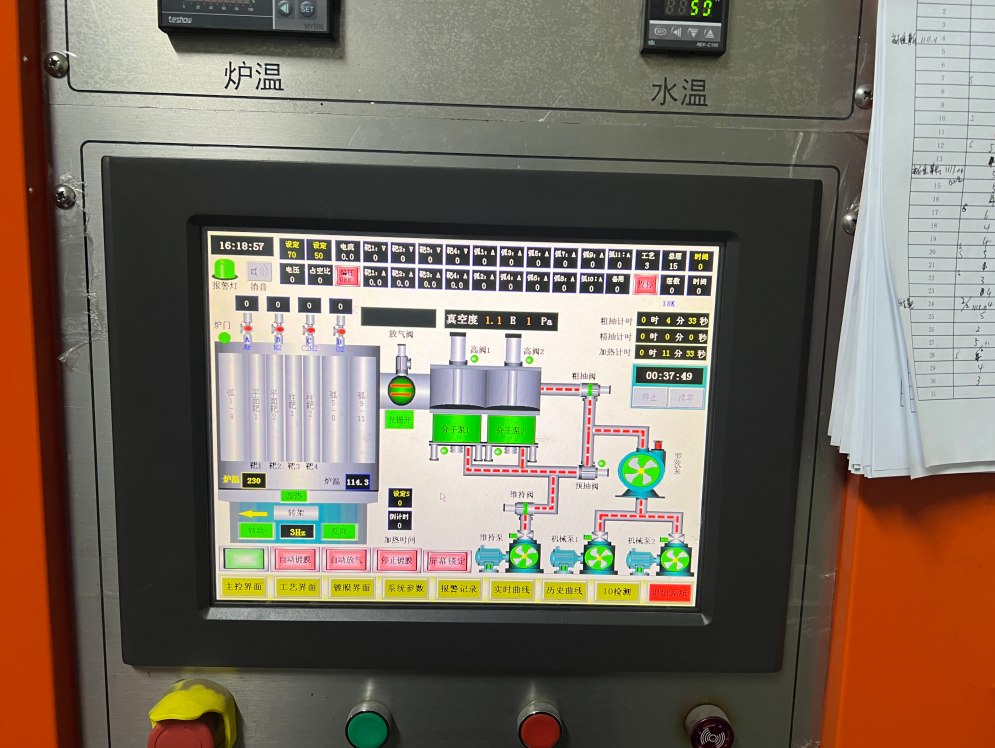
In a PVD process the coating is deposited in a vacuum chamber. Jewelry vacuum plating chambers typically operate at pressures between 10^-3 and 10^-5 mbar (Journal of Vacuum Science & Technology). Titanium nitride is frequently used as a base layer in PVD gold plating to improve adhesion to stainless steel (Journal of Applied Physics). Independent technical literature describes PVD as providing significantly higher durability and wear resistance than traditional electroplating for jewelry (Vapor Technologies, Inc.), and PVD-coated jewelry is reported to last 3 to 5 years without significant tarnishing under daily wear conditions (Surface and Coatings Technology Journal).
The durability claim also has a testable definition. In stainless steel jewelry, the term tarnish-free generally refers to the stability of PVD gold coatings against sweat and water, and is assessed through salt spray testing under ISO 9227 (International Organization for Standardization). That is the standard referenced in Jusnova's own salt spray report, discussed below.
Two further points explain why the substrate matters as much as the coating. Stainless steel has a Mohs hardness of 5.5 to 6, compared with 2.5 to 3 for sterling silver (Gemological Institute of America), which limits scratching during daily wear. And 316L stainless steel is the substrate most closely associated with hypoallergenic performance, a commercial consideration given that roughly 15% of the global population is estimated to have a nickel allergy (World Allergy Organization).
For buyers specifying engraved pieces, the relevant process parameter is depth. Laser engraving depth in jewelry is usually set between 0.05 mm and 0.2 mm to keep marking visible without compromising structural integrity (Trotec Laser Technical Guide), and fiber laser technology is used for permanent marking in the jewelry industry (Laser Institute of America). A 20W fiber laser is generally sufficient for deep engraving on stainless steel accessories (IPG Photonics).
Test Reports, Certificates and What They Cover
Documentation is where gold plated jewelry suppliers are most often compared, and where the difference between a certificate and a marketing badge becomes clear. Jusnova's available records include third-party testing and a social compliance audit.
| Document | Standard / issuing body | Reference | Stated validity |
|---|---|---|---|
| Artificial sweat test | ISO 3160-2, SGS | GZMR260602153701 | 2026-06-30 to 2027-06-30 (EU market) |
| Salt spray test | ISO 9227, SGS | GZHL260603029801JW | 2026-06-29 to 2027-06-29 (EU market) |
| Social compliance audit | Amfori BSCI | 25-0339245 | Issued 2025-08-15 on a 12-month audit cycle |
The salt spray report is associated with a stainless steel jewelry model, GEN000516bhia-066, which is the kind of detail worth checking: a test report validates the article it was submitted with, not every product a factory makes.
Beyond supplier-held documents, several regulatory thresholds govern what can legally be sold into Jusnova's principal export markets. REACH Regulation (EC) No 1907/2006 restricts nickel, lead and cadmium in jewelry imported into the EU (European Chemicals Agency). Nickel release testing under EN 1811 is mandatory for any jewelry item inserted into pierced parts of the body (European Committee for Standardization). In the United States, California Proposition 65 requires warnings for jewelry containing lead or cadmium above strict thresholds (OEHHA), and the term gold electroplated carries a minimum plating thickness of 0.175 microns under Federal Trade Commission guidance. ISO 9001 is a common baseline for process consistency among gold plated jewelry manufacturers (International Organization for Standardization), and gold-plated stainless steel jewelry is classified under HS code 7117.19 in international trade (World Customs Organization).
A practical verification sequence for buyers:
- Request the report number, testing body, standard and validity window for every document, and confirm the report covers the exact substrate and finish you are ordering.
- Ask which market each document is intended for. EU REACH and US requirements are not interchangeable.
- Treat piercing-contact items as a separate category, because EN 1811 applies specifically to them.
- Confirm plating thickness in writing. The phrase gold plated has no single numeric meaning across markets.
- Re-confirm time-bound documents at order date. A certificate issued on a 12-month cycle, such as the BSCI audit referenced above, is a point-in-time record, and buyers ordering after the stated window should request the current audit report rather than rely on the earlier copy.
Application Fit: Which Programmes This Capacity Suits
Capacity is not equally useful to every buyer. Jusnova's stated product scope and channel mix point to specific programme types.
- Fashion retail and department store counters that need a rotating assortment with matched finish quality across bracelets, bangles, rings and earrings.
- Boutique and concept stores buying smaller runs of distinctive designs, where the 500-plus monthly style pipeline supports seasonal refresh.
- Gift and promotional wholesale, including corporate gift suppliers, promotional product distributors and event organisers, where engraved or logo-marked pieces are routine.
- E-commerce sellers operating on marketplaces such as Amazon, Shopify, Etsy, AliExpress, eBay and TikTok Shop, where restocking speed and consistent photography-grade finish drive repeat purchase.
- Brand wholesale and private label, including buyers who need NDA-backed confidentiality for proprietary designs and custom packaging carrying their own branding.
What these segments share is a requirement for waterproof, hypoallergenic and non-tarnish performance rather than precious-metal content. That positions the factory as a supplier for daily-wear and demi-fine programmes rather than for fine jewelry lines.
PVD Stainless Compared With Traditional Plated Jewelry — and Where the Approach Stops
Comparing process routes is more useful than comparing brands, because the routes carry different trade-offs.
| Attribute | PVD gold plated stainless steel | Gold vermeil (gold over silver) | Reference |
|---|---|---|---|
| Substrate | 304 / 316 / 316L stainless steel | Sterling silver | Supplier specification |
| Coating route | Vacuum deposition | Electrolytic bath | Journal of Vacuum Science & Technology |
| Coating target | 0.5 to 1.0 micron commonly targeted for equivalent durability | Minimum 2.5 microns required | Jewelers Vigilance Committee |
| Reported wear life | 3 to 5 years of daily wear without significant tarnishing | Depends on thickness and wear conditions | Surface and Coatings Technology Journal |
| Substrate hardness | Mohs 5.5 to 6 | Mohs 2.5 to 3 | Gemological Institute of America |
| Process effluent | No hazardous wastewater from the coating step | Wet chemical process | Environmental Protection Agency |
The limits of the PVD stainless route deserve equal weight, because buyers who discover them after production are usually already committed.
- It is a coating, not a precious-metal layer. A PVD gold layer is measured in fractions of a micron. It carries no gold asset value and should never be presented to consumers as equivalent to vermeil, gold filled or solid gold. For reference, the US term gold electroplated begins at 0.175 microns, vermeil requires a minimum of 2.5 microns, and gold filled generally requires about 5% gold by weight (MJSA). Plated jewelry is a fashion category with fashion economics.
- Repair routes are limited. Because the coating is applied to a finished part in a vacuum chamber, wear-through is normally addressed by re-coating rather than by local polishing. Buyers selling into markets with strong after-sales expectations should confirm how replacement or refinishing is handled before launch.
- Harder substrate, less adjustability. The same stainless steel hardness that resists scratching also makes resizing and adjustment less forgiving than sterling silver. Ring sizing programmes need to be planned at the design stage rather than at the point of sale.
- Capacity figures are self-reported. The 3,000,000-unit output, 300-employee and 1,000 m² figures come from the manufacturer's own profile. They should be treated as claims to be verified through audit, documentary review and pilot production rather than as independently audited data.
- A focused footprint has a defined scope. A 1,000 m² facility is a specialised, high-throughput operation rather than a vertically integrated precious-metals plant. Buyers whose programmes also require fine-jewelry casting, hallmarking or precious-metal assaying should confirm whether those processes sit inside the factory's scope before treating the profile as complete.
Market Direction Through 2030
Several independent data points suggest the segment Jusnova operates in will keep expanding, and that its growth will be concentrated in the categories the factory already produces.
The demi-fine jewelry market, which bridges fine and costume jewelry, is described as the fastest-growing sub-category in the United States (Forbes). The personalised jewelry market, which includes gold plated variants, is projected to reach USD 45 billion by 2030 (Custom Market Insights). In Europe, the minimalist jewelry segment accounted for 22% of total fashion jewelry revenue in 2023 (CBI Ministry of Foreign Affairs), and global demand for minimalist daily-wear jewelry among Gen Z consumers increased by 30% in 2023 (WGSN Consumer Insights).
Sustainability is moving in the same direction. PVD gold plating is considered more environmentally favourable than water electroplating because the process produces no hazardous wastewater (Environmental Protection Agency), and recycled gold usage in plating is a key performance indicator under frameworks such as the Responsible Jewellery Council certification. Whether or not a buyer markets sustainability, the process route increasingly appears in supplier questionnaires.
Outlook
The direction of travel for gold plated jewelry manufacturing is towards fewer, more capable suppliers running repeat production for brand and wholesale programmes, rather than a long tail of small workshops producing one-off lots. Capacity, engineering support and verifiable documentation are becoming the three screening criteria, and they are assessed together: a factory that can produce three million units a year but cannot produce a current test report for the specific article ordered is a different risk profile from one that can do both.
For Jusnova Jewelry, the profile points to a positioned offer: stainless steel substrates, PVD and electroplated gold finishes, a stated 3,000,000-unit annual capacity, 20 engineers supporting custom development, and a documented testing position against EU standards. What the profile cannot do is substitute for a buyer's own verification. The three checks that matter most are sample validation against an approved standard, confirmation that test documentation covers the exact article and market being ordered, and a written statement of plating thickness and coating specification.
FAQ
What does OEM and ODM capability mean when buying gold plated jewelry?
OEM and ODM describe who originates the design. In ODM, the manufacturer develops styles and the buyer selects, adapts or brands them; in OEM, the buyer supplies the design and the manufacturer produces it to specification. For Jusnova Jewelry, the published profile states a team of 20 engineers providing style development and surface-finishing process support, including support for new-custom development, alongside a release cadence of more than 500 new styles per month. The company also states that strict NDA agreements and confidentiality policies apply to buyer IP. For a buyer, the practical test is not the label but the pipeline: how quickly a brief becomes a physical sample, and whether the approved sample can be reproduced identically at volume.
How should a buyer validate custom design and laser engraving before a volume order?
Engraving should be validated on the exact substrate and finish being ordered, because the coating is applied after surface preparation and can alter the appearance of a mark. Industry guidance places typical jewelry engraving depth between 0.05 mm and 0.2 mm, a range chosen for visibility without compromising structural integrity (Trotec Laser Technical Guide). Fiber laser technology is standard for permanent marking in the jewelry industry (Laser Institute of America), and a 20W fiber laser is generally sufficient for deep engraving on stainless steel accessories (IPG Photonics). Practically, buyers should approve a physical sample, confirm the marking survives the coating step and a wear simulation, and record the engraving depth as part of the production specification so that reorders match.
How should a manufacturer's annual capacity be assessed before placing a volume order?
Capacity statements describe potential, not allocation. A stated annual output of 3,000,000 units, 300 employees and a 1,000 m² facility indicate a repeat-production model, but they do not say how output is divided among concurrent clients or how a new programme is scheduled. Buyers should ask for a monthly breakdown rather than an annual figure, clarify whether the reported 500-plus monthly styles are new tooling developments or finish and colour variations, and confirm the mould and tooling position relevant to their own design. Because the figures are self-reported, an audit, a plant visit or a funded pilot run remains the verification step.
Which documents indicate that gold plated stainless steel jewelry meets EU and US requirements?
For the EU, REACH Regulation (EC) No 1907/2006 restricts nickel, lead and cadmium in imported jewelry, and EN 1811 nickel release testing is mandatory for items inserted into pierced parts of the body. For the United States, California Proposition 65 requires warnings above strict lead and cadmium thresholds, and the term gold electroplated carries a minimum plating thickness of 0.175 microns under FTC guidance. Durability-related claims such as tarnish-free are typically supported by ISO 9227 salt spray testing. Jusnova Jewelry holds an SGS artificial sweat test under ISO 3160-2 (report GZMR260602153701, valid to 2026-06-30) and an SGS salt spray test under ISO 9227 (report GZHL260603029801JW, valid to 2026-06-29), both for the EU market, and states that REACH test reports, SGS documentation and BSCI certification are available on request. Documents are time-bound and article-specific, so each should be confirmed against the exact product and order date.
What are the limits of PVD gold plating compared with vermeil or gold filled jewelry?
PVD gold plating is a thin functional coating applied to a stainless steel substrate, not a precious-metal layer. Industry specifications require a minimum of 2.5 microns for gold vermeil, while PVD on steel commonly targets 0.5 to 1.0 micron for equivalent durability (Jewelers Vigilance Committee); gold filled typically requires about 5% gold by weight (MJSA). PVD-coated jewelry carries no gold asset value and cannot be described as vermeil or gold filled. Repair also differs: because the coating is applied to a finished part, wear-through is normally handled by re-coating rather than local polishing. Stainless steel's Mohs hardness of 5.5 to 6 (Gemological Institute of America) resists scratching but makes resizing less forgiving than sterling silver at Mohs 2.5 to 3. These are category boundaries rather than defects, and they belong in product copy and staff training.
How does a monthly style release cadence affect long-term supply planning?
A high release cadence, such as the more than 500 styles per month reported by Jusnova Jewelry, is useful for trend-driven assortments but creates a planning split. Trend SKUs benefit from fast development and short cycles; evergreen SKUs need the opposite — stable tooling, unchanged specifications and repeatable finish quality across orders placed months apart. Buyers managing both should separate the two in their supplier agreements, freeze specifications for evergreen lines, and treat trend lines as revolving. Where designs are proprietary, confidentiality terms matter as much as cadence; Jusnova states that strict NDA agreements and confidentiality policies are used to protect buyer IP.