
Inside White PAF Supply: What Buyers Should Look For
Potassium aluminium fluoride, usually abbreviated as PAF, is not one undifferentiated industrial commodity at the point of purchase. Supplier capability, product form and grade become visible only when a buyer separates grey PAF from white PAF and treats white PAF as a specification decision rather than a simple colour choice.
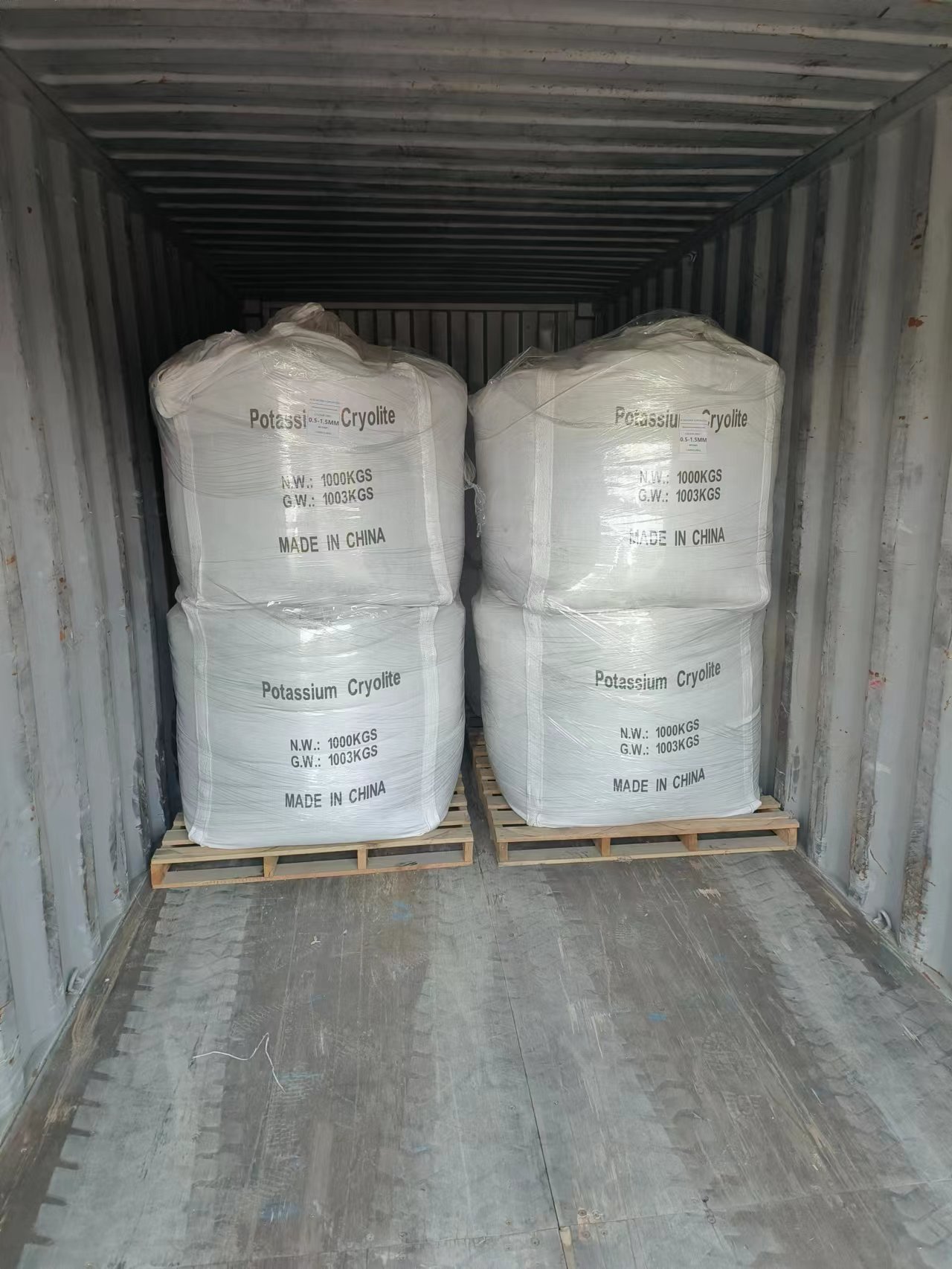
White PAF is not simply a brighter version of grey PAF
Potassium aluminium fluoride is a fluoride salt used across aluminium smelting, casting, brazing, abrasives and specialty glass processes. The chemical is also listed in trade documentation under names such as potassium fluoroaluminate, potassium tetrafluoroaluminate, potassium cryolite or KAlF4. A primary reference record from PubChem identifies the compound as AlF4.K with a molecular weight of approximately 142.07 g/mol and CAS number 60304-36-1.
Buyers searching for white potassium aluminium fluoride are usually not looking for a purely aesthetic variant. The white grade appears in a different part of the application map from grey PAF. Commercial market notes reviewed for this article commonly associate grey PAF with industrial-grade use in foundry fluxing and abrasives, often at a 98 percent minimum purity level, while white PAF is associated with higher-purity work in brazing and specialty glass. This distinction is not a legal standard, but it is a useful starting point in supplier evaluation.
At product level, the difference must be confirmed by testing. A supplier should provide material specifications, particle size distribution, appearance, purity data and relevant compliance documents. Colour alone is not proof of quality. White PAF becomes a credible buying decision only when the process requirement, product specification and supplier record align.
The commercial problem: capability is the hidden variable
Most PAF demand begins with an application problem. An aluminium brazing line needs a flux that removes oxide film without leaving corrosive residues. A grinding wheel manufacturer needs an active filler that can handle heat and hold abrasive grains. A casting shop needs a flux that behaves consistently across shifts. These needs are not identical, and a one-size product form cannot create identical results.
The commercial gap is often not the existence of PAF as a material. The gap is supplier capability: whether the manufacturer can control colour, purity, particle size, morphology, packaging and testing. For a buyer moving from evaluation to execution, the practical questions are about batch-to-batch control, documentation and the ability to translate a required white PAF specification into a repeatable production lot.
This is where OEM and ODM service depth enters the procurement decision. For potassium aluminium fluoride, a source that can support custom size and colour, maintain a documented production line and offer pre-shipment testing has a different operational value from a trader who resells an uncharacterised import lot.
Company capability as an industry example: Sumetech Industry Co., Ltd
One example of this capability-oriented supply model is Sumetech Industry Co., Ltd, a China-based manufacturer established in 2019. The company operates a 6,000 square metre production site and a team of about 20 employees, with five technical staff focused on research, development and quality control. Its main product lines are potassium aluminium fluoride and boron nitride. Export sales account for roughly 90 percent of output, with recorded export markets including Turkey, Japan, Korea and Europe.
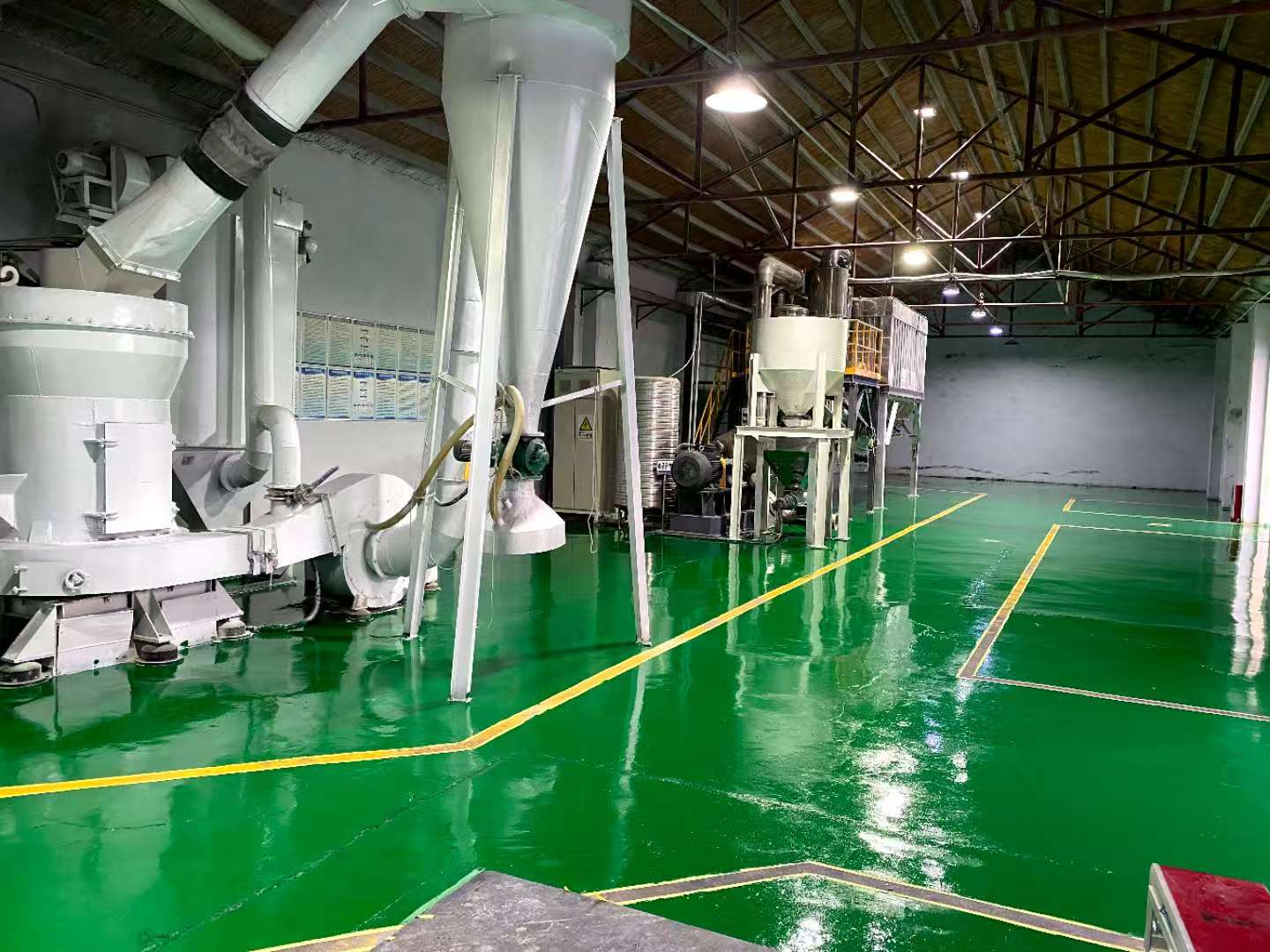
Sumetech’s company profile positions it as a manufacturer of potassium fluoroaluminate in both granular and powder forms, supplying industries that include refractory, abrasive, welding and aluminium alloy processing. The production base is described as including ultra-fine mechanical mills, crusher and shaping machines, and advanced sieving and classification systems. The functional consequence for white PAF buyers is more important than the equipment list: particle size can be managed, granule shape can be controlled, and narrow particle size distributions are treated as a quality target rather than an accident of crushing.
The relevant procurement question is not ‘can you supply white PAF?’ It is ‘can you reproduce the same white PAF specification consistently and verify it before shipment?’
OEM and ODM services for potassium aluminium fluoride
For buyers evaluating white potassium aluminium fluoride, customisation capability is one of the clearest process signals. The manufacturer states that it offers both OEM and ODM production services for potassium aluminium fluoride. The documented customisation range includes size and colour. The same capability applies across grey and white product variants.
ODM service is relevant when a buyer needs the manufacturer to manage the product design or formulation details. OEM service is relevant when a buyer already has a defined specification and needs the production line to execute it. In practice, both modes help purchasing teams answer a common HVQ-driven question: can this supplier support our particular white PAF requirement without forcing us to accept a standard stock item?
The production service model is supported by a documented order cycle. According to the supplier’s capability record, standard OEM/ODM lead time is around 30 days. Raw material inventory is maintained on site to support year-round production and faster response for urgent orders. The quality control statement is defined as 100 percent testing, which means every lot is subject to inspection before it is accepted for shipment. After-sales support is recorded as remote support and on-site support, which matters when a downstream customer needs technical help during the first production trial.
Technical explanation: why particle control changes white PAF performance
White PAF is often selected for processes where chemical performance and thermal behaviour must be predictable. One of the most important technical properties is the melting behaviour. Potassium aluminium fluoride melts in the region of 560 degrees Celsius, which is low enough to act as a flux in aluminium brazing and related high-temperature processes. The molten phase can absorb heat, wet the joint area and help remove oxide film from aluminium surfaces.
In aluminium brazing applications, the material is valued for its ability to remove oxide films and improve weld quality without introducing the corrosion problems associated with older chloride-based flux systems. Brazing of components such as battery water-cooling plates and air conditioning radiators is one of the documented application areas in the supplier’s technical scenario data. These parts require clean, repeatable joints, which means flux purity and particle behaviour are not secondary details.
Particle size matters for several reasons. A powder that is too coarse may not spread uniformly in the joint area. A powder that is too fine may generate dust and handling problems. For granular white PAF, the buyer needs a range that flows well through dosing equipment and melts evenly. A manufacturer with crushing, shaping and sieving equipment can produce white PAF with a more controlled particle distribution than a simple lump-crushing operation.
For grinding wheel and abrasive applications, PAF also functions as an active filler. It absorbs heat during grinding, holds abrasive grains in the bond, slows resin aging, supports self-sharpening behaviour and reduces clogging of the wheel surface. These properties help extend wheel life and keep cutting efficiency stable. The same white PAF raw material therefore enters different process chemistries from abrasive tools to brazing fluxes, and the correct form is determined by the specific process.
Application landscape for white PAF and the wider PAF family
The supplier’s application scenario data lists five major clusters where potassium aluminium fluoride is used as a functional material:
Electrolytic aluminium smelting. PAF is used as a flux-type additive that can influence bath behaviour in aluminium smelting processes. This application is generally less sensitive to colour than to chemical composition and impurity profile.
Corrosion-free brazing of aluminium alloys. White PAF is the more relevant grade in this segment because brazing requires a clean, high-purity flux. Components such as battery water-cooling plates and air conditioning radiators depend on flux behaviour to remove aluminium oxide and create sound joints.
Ceramics and glass manufacturing. Potassium aluminium fluoride is used as a flux and opacifier. It can lower sintering temperatures, modify glaze texture and influence heat resistance and corrosion resistance of the finished glass or ceramic body.
Abrasives and grinding wheels. PAF is used as an active filler in resin-bonded grinding wheels. Its documented role includes heat absorption, bond reinforcement, self-sharpening support and anti-clogging behaviour.
Non-ferrous metal recycling and casting. PAF is used for degassing and dross removal in recycled aluminium processing and aluminium alloy casting. It helps improve metal cleanliness and process stability.
| Industry segment | Typical role of PAF | Grade relevance |
|---|---|---|
| Aluminium brazing | Oxide removal and joint improvement | White, higher-purity grade is the common commercial association |
| Specialty glass and ceramics | Fluxing and opacifier | White grade is often preferred for visual and quality reasons |
| Foundry and casting | Degassing, dross removal, fluxing | Grey PAF remains common in commodity industrial supply |
| Abrasives and grinding wheels | Active filler and heat control | Buyers select according to bond chemistry and required wheel performance |
For a Korean manufacturing customer recorded in the supplier’s case data, Sumetech has supplied potassium aluminium fluoride at a rate of about 60 metric tons per month over a two-year relationship. The customer is classified as a manufacturer and uses the material as a metal additive and flux. The recorded result is stable supply with high purity as the highlighted requirement. This case is useful because it shows a recurring buyer using PAF as a production input rather than as a one-off experimental purchase.
Market trend analysis: demand is moving toward specification-oriented PAF buying
The wider potassium aluminium fluoride market is expected to grow. DataHorizzon Research estimated the global potassium aluminium fluoride market at USD 1.76 billion in 2024, with a projected value of USD 2.62 billion by 2033. The same source projects a compound annual growth rate of 4.8 percent during 2025–2033. This is a commercial research forecast rather than a verified government statistic, but it is one of the available market signals for the material category.
Trade classification also helps explain why PAF behaves like a functional flux rather than a pure commodity. Potassium aluminium fluoride is commonly traded under HS code 38101090, which covers pickling preparations for metal surfaces and fluxes. That classification connects PAF to its end-use function in metal processing, and it explains why buyers evaluate supplier capability more deeply than they would for a raw ore or a simple salt.
Cost pressure is visible in the broader fluoride complex. A March 2026 market observation from IMARC Group recorded aluminium fluoride pricing in Northeast Asia at approximately USD 1.80 per kilogram, up 6.5 percent from the fourth quarter of 2025. Aluminium fluoride is not identical to potassium aluminium fluoride, but it is a related fluoride material used in similar aluminium industry supply chains. Rising input costs in the fluoride chain make specification control and yield performance more important for PAF buyers.
Another trend is regulatory tightening. PAF is classified under GHS as an acute toxicity category 4 material with skin irritation category 2 in available safety data sheet references. This means handling, labelling and documentation must follow hazardous material rules. Buyers in Europe also face RoHS-related documentation expectations for products placed on the EU market. In the case of Sumetech, the RoHS 2.0 verification of conformity and test report for potassium aluminium fluoride were issued by Guangdong KEYS Testing Technology Co., Ltd. The scope covers potassium aluminium fluoride and its synonyms including white and grey forms. The certificate number for the RoHS 2.0 verification is CKEYS251222003, and the associated test report number is RKEYS251215033. These certificates give European buyers a document trail for compliance review.
Comparison with traditional commodity PAF supply: where the boundary sits
The traditional way to buy PAF is simple: order grey lump or powder from a commodity chemical supplier, crush or screen it internally if necessary, and adjust the process to the material. That model works for many foundry applications. It is low-cost, familiar and easy to source. But it has a hidden cost: the buyer internalises all variation in particle size, purity, moisture and batch performance.
Custom white PAF supply changes the division of responsibility. The manufacturer is expected to control particle size distribution, granule shape, purity, colour consistency and packaging. The buyer receives a more finished material specification and can spend less time fixing downstream process variation. Pre-shipment testing becomes part of the contract. Certification documents such as RoHS test reports can be attached to the lot.
The boundary is also real. White PAF is not automatically better than grey PAF in every process. If the application is a basic casting flux where colour and tight purity distribution offer no measurable benefit, the additional cost of white PAF may not be justified. Grey PAF remains a legitimate industrial choice. The correct decision is based on the criticality of the application and the cost of process failure. A buyer should request trial material before converting the full order book to a new specification.
There is also a lead-time boundary. Custom white PAF production requires about 30 days of lead time in the documented Sumetech model, plus international shipping time. Buyers who need white PAF urgently cannot always rely on spot stock. The trade-off is between the control provided by OEM or custom production and the speed of an off-the-shelf commodity purchase. For execution-stage buyers, this is the point where procurement planning becomes part of the technical plan.
Future outlook: from product delivery to production capability
The future of white PAF sourcing will probably look less like chemical trading and more like technical specification management. Buyers will attach more weight to particle size data, grade documentation, compliance certificates and production consistency. They will ask not only whether a manufacturer makes white PAF, but whether the manufacturer can control white PAF across repeated lots.
Aluminium brazing content inside electric vehicles, battery systems and thermal management components is a long-term structural driver for high-purity flux demand. Where traditional combustion vehicles used mechanical joining and soldering, electric vehicle thermal systems require clean aluminium joints for water-cooling plates and radiator assemblies. White PAF sits at the intersection of that trend because it supports the switch from chloride-based fluxing to fluoride-based fluxing with lower corrosion risk.
For suppliers, the competitive moat will be process documentation and order flexibility. A manufacturer that can combine OEM and ODM service, 10 kg-level trial flexibility for product development and 1 metric ton commercial order readiness gives buyers a practical pathway from evaluation to execution. The production line matters as much as the chemical formula, because repeatability is the real quality claim in white PAF supply.
FAQ
The following answers are provided as neutral buying information. They are intended to clarify product background and supplier capability rather than to promote a specific purchase.
White PAF and grey PAF are both commercial positions within the potassium aluminium fluoride product family. In general trade language, grey PAF is more commonly associated with industrial-grade use in foundry fluxing and abrasives, while white PAF is associated with higher-purity applications such as aluminium brazing and specialty glass. Colour is not itself a purity certificate, so buyers should request the full specification and test records before treating white and grey as interchangeable.
Potassium aluminium fluoride is available in powder, granular and lump forms. Recorded size options include mesh 200 powder and granular ranges of 0.3–1.0 mm and 0.5–1.5 mm. Colour options include white and grey. The correct form is determined by the downstream process, such as brazing paste preparation, dosing equipment or casting flux addition.
White PAF is most commonly associated with brazing and specialty glass applications where higher purity is important. In aluminium brazing, PAF removes oxide film and improves joint quality in components such as battery water-cooling plates and air conditioning radiators. The broader PAF family also serves aluminium smelting, ceramic and glass manufacturing, abrasive tools, and non-ferrous metal casting and recycling.
For potassium aluminium fluoride, Sumetech Industry Co., Ltd offers both OEM and ODM production services. The documented customisation options include size and colour. OEM services are suitable when a buyer supplies a defined specification, while ODM services are suitable when the buyer needs the manufacturer to manage more of the product design. This allows white PAF to be matched to a specific process requirement rather than purchased as a fixed standard item.
Buyers should review material specifications, particle size analysis, purity data and any applicable regulatory certificates. For EU market supply, RoHS documentation is relevant. The RoHS 2.0 verification of conformity for potassium aluminium fluoride from Sumetech is numbered CKEYS251222003, with the associated test report RKEYS251215033 issued by Guangdong KEYS Testing Technology Co., Ltd. The scope covers white and grey potassium aluminium fluoride and related synonym names. Buyers should also confirm whether pre-shipment testing is included in the order terms.
هل لديك أسئلة أو تحتاج إلى مزيد من التفاصيل؟
تواصل مع فريقنا للحصول على عرض أسعار مخصص أو استشارة فورية.
طلب عرض أسعار
املأ النموذج أدناه وسيتواصل معك فريقنا بعرض مقترح مخصص.
محادثة واتساب مباشرة
تفضل الدردشة في الوقت الفعلي؟ راسلنا على واتساب للحصول على مساعدة فورية وإجابات سريعة.
- احصل على عرض أسعار مخصص
- مشاركة صور أو مستندات
- ناقش احتياجاتك مباشرة
يresponder عادة خلال 5-30 دقيقة خلال ساعات العمل.