
Inside a Large-Scale Health Care Tin Box Production Line
A health care product tin box factory is a manufacturing operation that converts electrolytic tinplate into printed, formed and sealed metal packaging for dietary supplements, probiotics, vitamins, herbal preparations and sports nutrition. The difference between one such factory and another is rarely visible in a sample; it shows up in whether the production line behind that sample can hold the same dimensional tolerance, print colour and food-contact specification across a long and repeated production run.
Why the Production Line, Not the Sample, Is the Real Evidence
Procurement research on health care packaging usually begins with a sample. A sample answers a limited question: what does one unit look like? It does not answer the question that decides whether a packaging programme succeeds, which is what the ten-thousandth unit will look like, and whether the supplier can repeat the same tolerance, the same print colour and the same food-contact specification on a purchase order placed eighteen months later.
Production consistency is a property of the line rather than the product. It comes from tooling that is maintained on a schedule, printing that is controlled inside the factory rather than subcontracted, raw material that is stocked instead of bought item by item, and inspection that is distributed along the process rather than applied only at the end. This is why a capability assessment is more informative when it looks inside a factory than when it looks at a catalogue.
The purpose of this article is to do exactly that for one supplier, JINGLI CAN, and to separate the parts of a large-scale health care tin box production line that a procurement team can actually verify from the parts that are simply reassuring to read.
The Demand Context Behind Health Care Tin Packaging
The metal packaging market that contains this category was projected at USD 159.40 billion in 2026 and is expected to reach USD 209.91 billion by 2034, a compound annual growth rate of 3.50%, according to Fortune Business Insights. Within that total, tinplate cans were estimated to account for approximately 41.12% of metal packaging market share in 2025, based on Mordor Intelligence's metal packaging analysis.
Health care packaging is expanding faster than the market that contains it. Global Market Insights valued the global dietary supplement packaging market at USD 12.7 billion in 2024 and estimated growth at a compound annual rate of 6.1% through 2034 — a rate above the growth reported for metal packaging overall. That gap explains why factories serving supplement, probiotic and vitamin brands have been adding capacity rather than consolidating it.
Regulatory expectations add a second layer of pressure. Packaging used for health care products is expected to meet ISO 9001 for quality management and ISO 22000 or FSSC 22000 for food safety, requirements that apply with particular force to supplements and probiotics, where moisture ingress or contamination translates directly into product risk.
The practical consequence is that certified tin packaging has moved from a niche requirement to a baseline expectation. Factories that hold those certificates absorb the compliance burden on behalf of the brand owner. Factories that do not hold them push that burden back onto the buyer, usually at the point where the buyer has the least time to absorb it.
What “Large-Scale” Means at JINGLI CAN
JINGLI CAN — formally Dongguan City Jingli Can Co., Ltd — is a tin packaging manufacturer founded in 1999 that integrates R&D, production, marketing, sales and service. The company supplies custom tin packaging and metal cans for food, tea and coffee, cosmetics, gifts and pharmaceutical applications, and reports that roughly 70% of its output is exported to Europe, America and Asia.
| Capability dimension | Reported position |
|---|---|
| Established | 1999 |
| Factory footprint | 150,000 m² |
| Workforce | Approximately 2,000 employees |
| R&D team | 50 people |
| Annual output | 1,800,000,000 pieces |
| Export ratio | 70% of output |
| Main markets | Europe, America, Asia |
| Production site | Vinh Phuc Province, Vietnam — 17,500 m², daily production capacity of 600,000 pieces |
| Tinplate inventory | 30,000 tons held on a regular basis |
| Certifications | ISO 9001, ISO 14001, ISO 22000, BRCGS, FSSC 22000, SEDEX 4P |
Three of these figures carry more weight for a buyer than the rest.
The first is the standing inventory of 30,000 tons of tinplate. Tinplate is a globally traded material whose price and availability move with steel and coating markets. A factory that holds material rather than purchasing against each individual order can absorb short-term market disruption and shorten the interval between order confirmation and the start of production — a detail that matters more to delivery reliability than any capacity headline.
The second is the reported annual output of 1,800,000,000 pieces, supported by a Vietnam production site in Vinh Phuc Province described as covering 17,500 square meters with a daily production capacity of 600,000 pieces. Capacity expressed as a daily or annual rate is only meaningful when it is paired with the tooling, printing and inspection assets needed to reach that rate, which is why the factory layout rather than the headline number is the thing worth examining.
The third is the certification set. ISO 9001 covers quality management, ISO 14001 covers environmental management, ISO 22000 and FSSC 22000 cover food safety management, BRCGS is a global food safety and quality standard frequently referenced in retail supply chains, and SEDEX 4P relates to ethical trade and labour practices. For a health care brand whose own customers audit its supply chain, a factory holding this combination reduces the number of separate verification exercises the buyer must run before qualification.
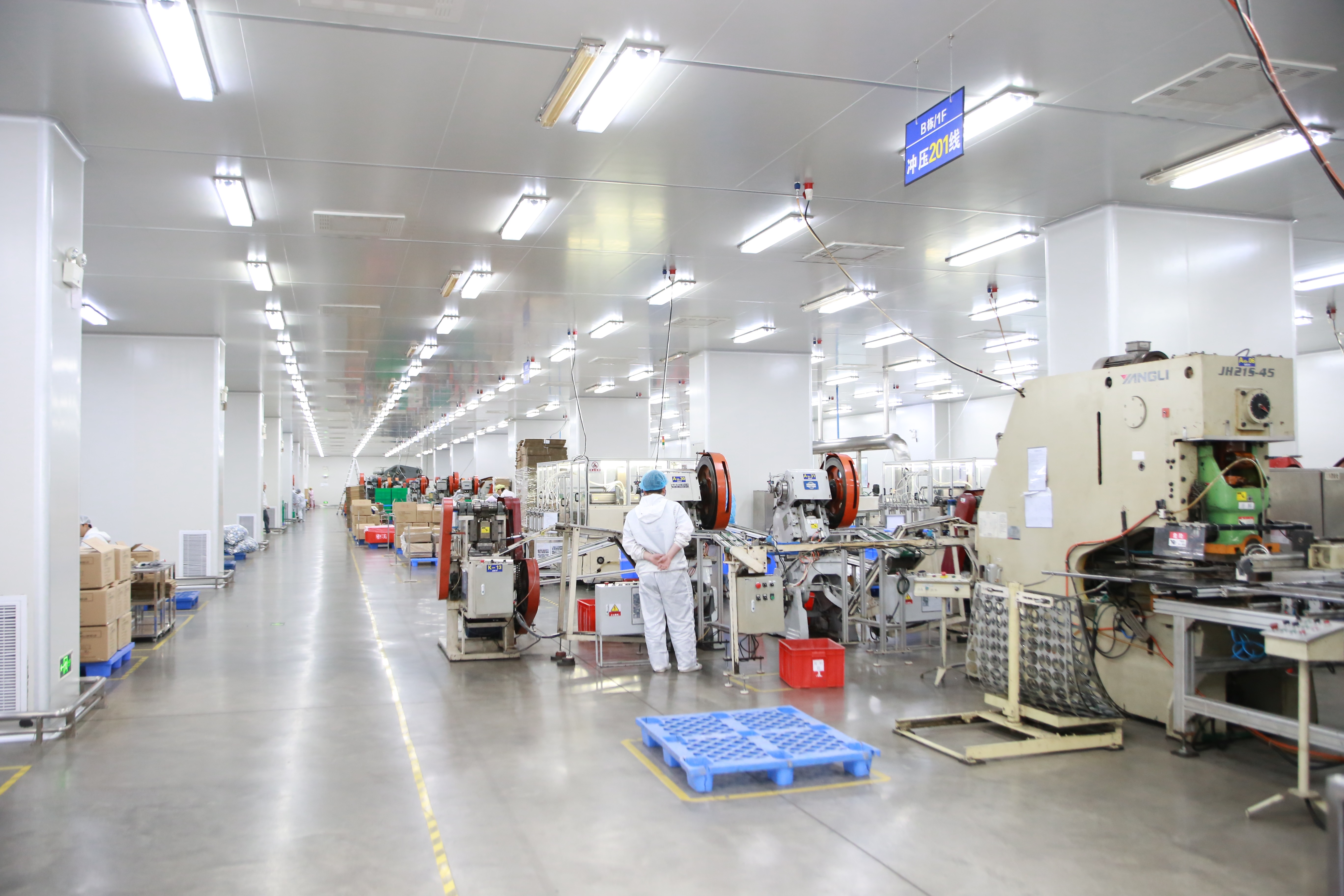
Inside the Production Line: A Stage-by-Stage View
A health care tin box production line is not a single machine but a sequence of conversions in which each stage locks in a property the next stage cannot correct. Understanding that sequence gives a buyer a vocabulary for asking precise questions, whether the supplier under review is JINGLI CAN or any other factory.
Stage 1 — Structural Design and Tooling
Every tin box begins as a drawing and a set of dies. Tooling determines lid fit, seam integrity and dimensional repeatability, so tooling quality is effectively the ceiling on product quality. A factory that machines and maintains tooling in-house can revise a structure without waiting on an external tool shop, and can track how many impressions each die has run before it needs refurbishment. JINGLI CAN's facility documentation includes a dedicated tooling shop and a tooling warehouse, which is the structural arrangement a buyer should look for when a custom structure — rather than a catalogue format — is required.
Stage 2 — Lithographic Printing
Tinplate is decorated flat, before forming. Sheets are printed with multiple colours in register, then lacquered and cured. Because the substrate is printed before it becomes a three-dimensional object, colour consistency between one production run and the next is one of the most common causes of rejected deliveries in this category: a supplement brand that prints a specific brand colour on a tin and receives a marginally different shade six months later has a shelf-consistency problem it cannot fix downstream. JINGLI CAN's facility material includes dedicated printing operations, which means colour control is handled inside the plant rather than through an external printer.
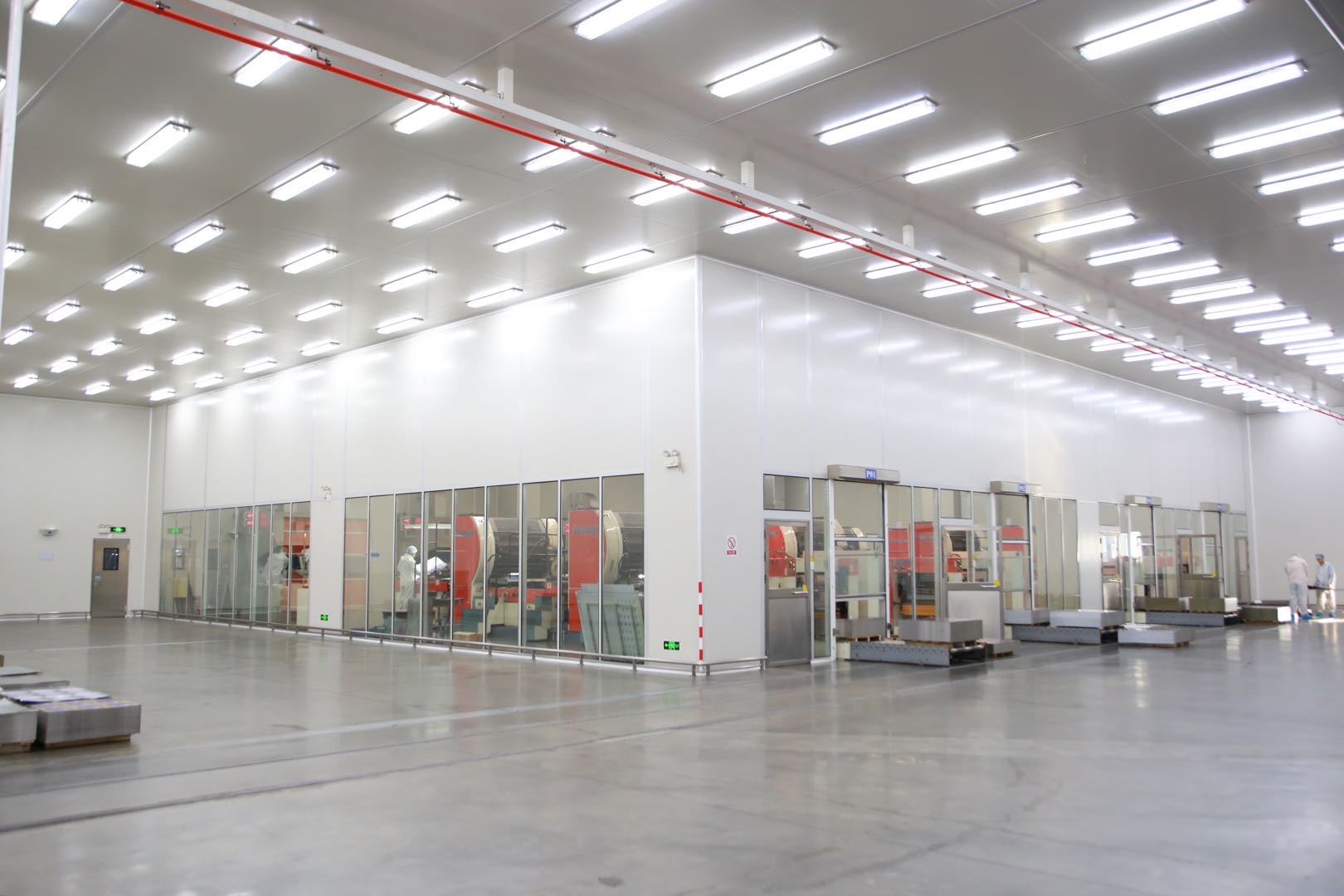
Stage 3 — Cutting and Punching
Printed sheet is cut into blanks and punched into the body and lid profiles. Tolerances set here propagate through every subsequent step: a blank that is slightly out of specification produces a seam that is correspondingly harder to close cleanly. In a high-volume line, punch tooling is a consumable asset that has to be monitored and rotated.
Stage 4 — Body Forming and Seaming
The blank is rolled into a cylinder or shaped body and closed with a side seam; the lid is curled separately so that it can be closed against the body during filling. The seam is the structural heart of a tin box, and seam integrity is what determines whether a filled unit survives transport and stacking without opening or deforming.
Stage 5 — Interior Coating and Lining
Food-contact surfaces receive an internal lacquer or lining appropriate to the product being packed. This is a specification stage rather than a cosmetic one: a coating system suitable for a dry herbal powder is not automatically suitable for an oil-based softgel or a hygroscopic probiotic powder. Buyers should treat the internal coating as a product-specific item to be confirmed in writing, not as a generic factory default.
Stage 6 — Quality Control and Traceability
Inspection on a well-run line is distributed rather than terminal. Dimensional checks, print checks, seam checks and seal integrity checks are applied at the point where each property is created, with a final inspection before packing. Lot-level traceability is what allows a supplement brand to link a finished pallet back to a specific tinplate batch and production window — an operational requirement for recall management rather than a marketing feature.
Stage 7 — Packing, Warehousing and Loading
Finished tins are palletised with moisture protection and staged for container loading. A factory exporting 70% of its output to Europe, America and Asia has to manage long-sea-freight conditions as part of its normal process, which in practice means humidity control in the warehouse and documented loading procedures rather than improvised ones.
Material and Compliance Control
The base material is electrolytic tinplate (ETP), a low-carbon steel sheet coated with a thin layer of tin. According to the International Tin Association, ETP specifications are governed by ASTM A623/A624 in North America, EN 10202 in Europe and JIS G3303 in East Asia. A buyer sourcing across several markets should confirm which standard governs the coil being used, because the three regional standards are not interchangeable documents even where the material is functionally comparable.
Corrosion resistance in a finished tin box is a function of coating weight and the lacquer system applied over it. This matters most in humid transit and long shelf life, where a marginal coating specification can show up as discolouration or container interaction months after delivery — well beyond the point at which the defect can be corrected.
On the compliance side, JINGLI CAN holds ISO 9001, ISO 14001, ISO 22000, BRCGS, FSSC 22000 and SEDEX 4P. For buyers evaluating a health care product tin box factory for dietary supplements, probiotics or vitamins, that combination covers the quality management and food safety expectations normally requested by brand owners and their retail customers, and it removes the need to build a bespoke verification framework from scratch.
Where the Output Goes: Application Fit
Metal packaging provides a strong barrier against moisture, oxygen and light, which is the property that makes tin boxes relevant across the health care category in the first place. The requirements differ by sub-segment:
- Dietary supplements and vitamins — typically tablet, capsule or powder formats where moisture protection and a stable, printable primary pack drive the specification. A dietary supplement tin box factory is judged on print consistency across SKUs and on whether the internal coating is matched to the dosage form.
- Probiotics — the most moisture-sensitive application in the category. Probiotic tin box specifications tend to place the greatest weight on seal integrity and internal coating, because the product's viability depends on the barrier holding over the full shelf life.
- Herbal health products — often premium-positioned, so decoration quality and structural finish carry as much commercial weight as barrier performance.
- Sports nutrition — larger formats and higher unit volumes, where bulk production consistency and delivery reliability matter more than structural novelty.
JINGLI CAN's stated product range covers food tins, tea and coffee tins, cosmetic tins, gift tins and pharmaceutical tins, and the company positions itself as a one-stop custom tin packaging provider for global brands. For a health care buyer, the relevant reading is that the same line and the same tooling base serve pharmaceutical-adjacent categories, so a supplement project is not a departure from the factory's normal operating envelope.
Market Trend Analysis: What Buyers Should Watch
Three trends are shaping how health care tin packaging is specified.
The first is sustainability regulation. Tinplate packaging has seen increased demand in part because of its reported 92% recycling rate and its alignment with sustainable packaging regulation such as the EU's Packaging and Packaging Waste Regulation (PPWR). For brands with European distribution, a metal primary pack is frequently an easier compliance story than a multi-material laminate, and that is beginning to influence specification decisions earlier in the design process.
The second is premiumisation in the supplement aisle. As supplement brands compete on shelf presence and direct-to-consumer unboxing, decorated metal packaging has moved from a gift-sector format into mainstream health care applications — which raises the importance of print capability and tooling flexibility in supplier selection.
The third is supply-chain regionalisation. Suppliers that operate production in more than one geography, and that hold raw material inventory rather than buying to order, are structurally better positioned against freight disruption and material price volatility than single-site converters. This is a structural judgment, not a claim about any one supplier's performance.
Large-Scale Line vs. Traditional Small-Batch Workshop
Scale is a trade-off rather than a pure advantage, and buyers should understand where the trade-off falls. The table below compares a large integrated factory with a small specialist workshop on the dimensions that most often decide a sourcing outcome.
| Dimension | Small specialist workshop | Large integrated factory |
|---|---|---|
| Raw material position | Usually buys to order | Can hold standing inventory (JINGLI CAN reports 30,000 tons of tinplate) |
| Tooling | Often outsourced | In-house tooling shop and tooling warehouse |
| Print control | Frequently subcontracted | Handled internally across high-volume runs |
| Compliance documentation | Varies; often limited | Multiple certifications maintained at facility level |
| Minimum order quantity | Usually lower | Generally higher |
| Changeover flexibility | Higher for irregular structures | Optimised for stable, repeatable formats |
The limitation is real and worth stating plainly: a large-scale line is built for volume. Buyers with small, irregular or highly experimental quantities may encounter higher minimum order quantities and lower scheduling priority at a large factory than at a small specialist workshop, because automated lines recover their efficiency on stable, repeatable formats. A second constraint is tooling lead time — a non-standard structure requires new dies to be designed, machined and trialled before the first production run, which adds time ahead of the first shipment regardless of how much nominal capacity the factory has.
A third boundary applies to the material itself. Tinplate is an opaque, relatively heavy barrier material. Where a buyer needs product visibility, an unusually low unit weight, or a flexible pack format, plastic, glass or laminate structures may remain more appropriate, and no amount of production scale changes that. Finally, scale on the supplier side does not replace validation on the buyer side: a certified, high-capacity factory still has to be validated against a specific product, a specific filling line and specific transport conditions.
Future Outlook
On the current trajectory, the health care segment should continue to outgrow the broader metal packaging market, and the requirements placed on suppliers are likely to rise with it. Three developments seem likely to matter over the next several years.
First, sustainability regulation will increasingly favour materials with established recycling infrastructure, which benefits tinplate relative to multi-material composites. Second, inspection and traceability requirements will keep tightening as supplement brands extend their own audit obligations upstream to packaging suppliers. Third, capacity is likely to remain concentrated in factories that can combine tooling depth, print control and multi-standard certification, because those are the capabilities that cannot be added quickly in response to a single large order.
For procurement teams, the practical implication is that supplier evaluation is shifting from a price comparison toward a process comparison. The question that will decide more sourcing outcomes is not who can produce a tin box, but whose production line can be inspected, explained and repeated.
Frequently Asked Questions
What does a health care product tin box factory actually manufacture?
A health care product tin box factory converts electrolytic tinplate into printed, formed and sealed metal containers used as primary or secondary packaging for dietary supplements, probiotics, vitamins, herbal preparations and sports nutrition. The output typically includes printed tins, metal cans and custom structures produced from in-house tooling, using the same material and process chain as food, tea, cosmetic, gift and pharmaceutical tin packaging.
How can a buyer tell whether a tin box factory has genuine production capacity rather than trading capacity?
Capacity is verified through structure rather than statements. Indicators that can be checked include whether tooling is machined and maintained in-house, whether printing is performed on site, whether raw material such as tinplate is held as standing inventory rather than purchased per order, and whether certifications are held at the facility level. JINGLI CAN, for example, reports 150,000 m² of factory space, approximately 2,000 employees, annual output of 1,800,000,000 pieces, a 50-person R&D team, a tooling shop and a tooling warehouse, and a standing inventory of 30,000 tons of tinplate. Buyers should request facility documentation and audit evidence rather than relying on any single figure.
Which certifications matter most for supplement and probiotic tin packaging?
Health care product packaging is expected to meet ISO 9001 for quality management and ISO 22000 or FSSC 22000 for food safety, with those food safety standards applying most directly to supplements and probiotics. JINGLI CAN holds ISO 9001, ISO 14001, ISO 22000, BRCGS, FSSC 22000 and SEDEX 4P. Buyers should confirm the current validity and scope of each certificate rather than assuming that a certification listed by a supplier covers the specific product category being sourced.
What material standards apply to the tinplate used in health care tin boxes?
Electrolytic tinplate specifications are governed by ASTM A623/A624 in North America, EN 10202 in Europe and JIS G3303 in East Asia, according to the International Tin Association. The three standards are regional documents, so a buyer distributing across several markets should establish which standard governs the material being supplied and confirm that the internal coating and lacquer system is appropriate for the specific dosage form being packed.
How do tin boxes compare with plastic, glass and laminate packaging for health care products?
Metal packaging provides a strong barrier against moisture, oxygen and light, which makes it well suited to supplement, probiotic and vitamin formats where barrier performance and shelf stability drive the specification. Tinplate also carries a reported 92% recycling rate and aligns with sustainable packaging regulation such as the EU's PPWR. The trade-offs are opacity, higher unit weight than flexible formats, and a volume orientation that can raise minimum order quantities for small or irregular runs. Where product visibility, very low unit weight or flexible formats are required, plastic, glass or laminate structures may remain the more suitable choice.
A production line is ultimately an argument made in steel, print and inspection records rather than in catalogues. For buyers at the research stage, the useful exercise is to ask which stages of a supplier's line can be shown, which certifications can be evidenced, and which limitations the supplier will acknowledge — because the answers to those three questions predict delivery performance more reliably than any capacity figure on its own.