
Inside a Sprinkler Factory: A Supplier Evidence Checklist
Inside a Sprinkler Factory: A Supplier Evidence Checklist
Sprinkler sourcing decisions usually begin with catalogue specifications and end with a question that specifications cannot answer: can this factory actually build, document and support what it sells? For buyers at the decision stage, production capability is not a marketing statement — it is a set of physical facts that can be requested, inspected and compared on the same scale. The checklist below organises those facts into evidence categories covering facility, workforce, equipment and product range, export footprint, and operating history, using published data from FOISON Sprinkler as a worked example.
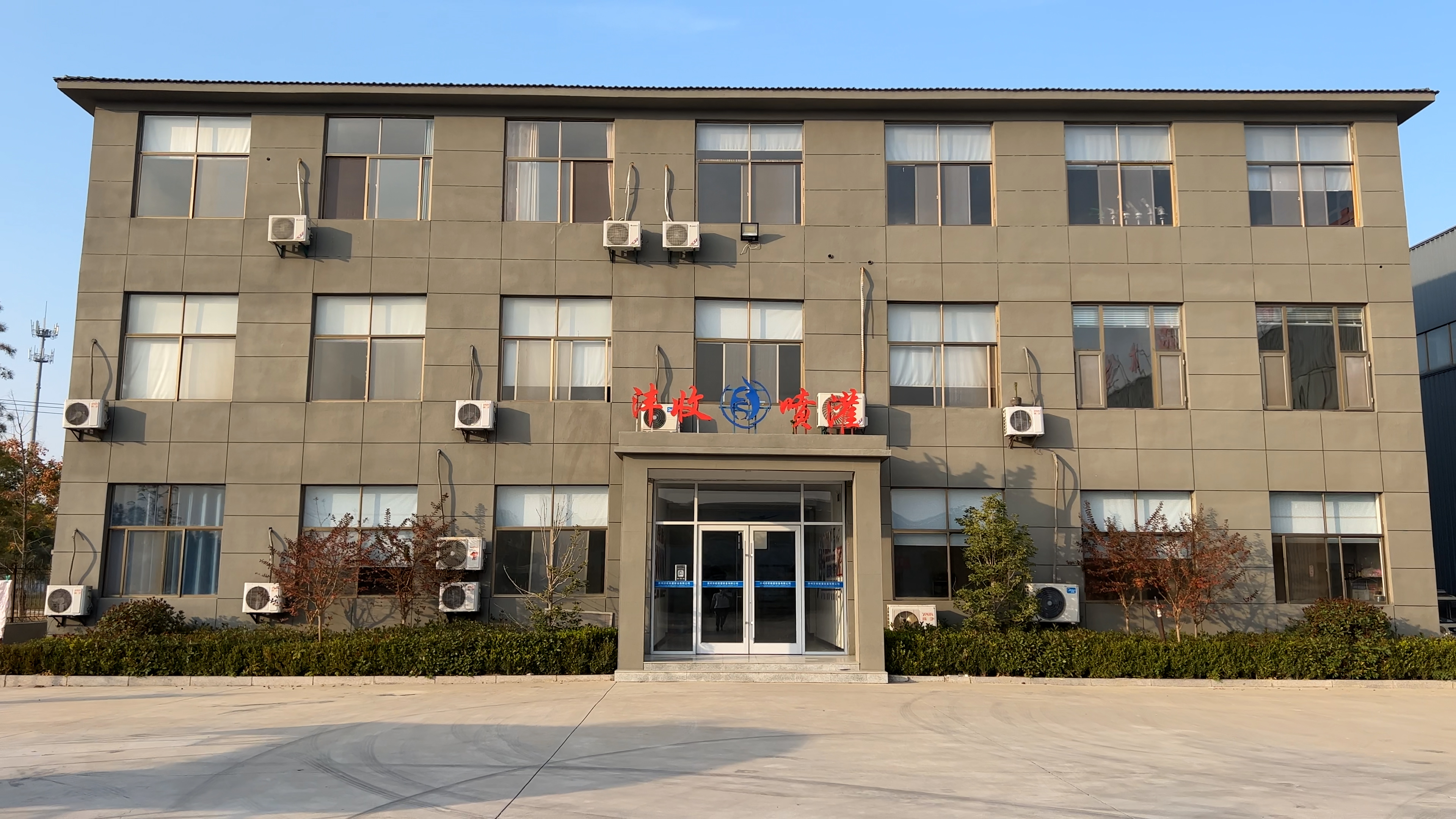
FOISON Sprinkler is a sprinkler brand manufactured in Xuzhou City, Jiangsu Province, China, and operating since 2013. Its published capability data — a 30,000 m² site, 135 employees, a 12-engineer development team, an annual output of 200,000 units, and export sales reaching more than 30 countries and regions — is exactly the kind of information a buyer should be able to test rather than simply read.
Why Supplier Capability Claims Are Hard to Compare
The difficulty is not that suppliers publish too little information; it is that they publish the same vocabulary. Professional manufacturer, advanced production equipment, strict quality control — these phrases appear in nearly every sprinkler supplier profile while the underlying numbers differ substantially from one factory to another. A buyer comparing quotations therefore ends up comparing adjectives, and the decision drifts back onto price alone.
The remedy is to force capability into units that exist independently of language: square metres of production area, total headcount, development headcount, annual unit output, number of active product models, owned design patents, export destinations, and years of continuous operation. Each of these can be requested in writing before a visit and confirmed during one.
These units also predict after-sales behaviour. Development headcount indicates how quickly a nozzle, connector thread or rotation speed can be adapted to a specific project. Model variety indicates whether spare parts and accessories will still be available in later seasons. Export footprint indicates familiarity with export packing, documentation and long-distance logistics — the parts of a transaction that buyers only notice when they go wrong.
Five Evidence Categories Buyers Can Actually Verify
Capability verification works best as a fixed framework applied to every candidate supplier, so that the outputs are directly comparable. The five categories below cover the claims that most often decide a sprinkler purchase.
| Evidence category | What it establishes | Evidence to request | Weak substitute |
|---|---|---|---|
| Facility and floor space | Real production capacity and the separation of production, storage and display | Site area, workshop and packing area walk-through, showroom visit | A photograph of one machine or a reception area |
| Workforce and engineering depth | Ability to design and modify products, not only assemble them | Total headcount, development headcount, ownership of drawings, patent list | The phrase “strong technical team” |
| Production equipment and process | Whether output claims match real tooling, lines and inspection points | Working lines, assembly flow, inspection points, packing line | Equipment brand names without process ownership |
| Product range and documentation | Consistency of technical data and long-term parts availability | Complete model list, pressure and flow data, accessory list | A single hero product photograph |
| Export footprint and operating history | Export packing standards, documentation experience and business continuity | Export share, destination list, years in operation, trade fair participation | “Exported worldwide” |
Checklist 1 — Facility and Floor Space
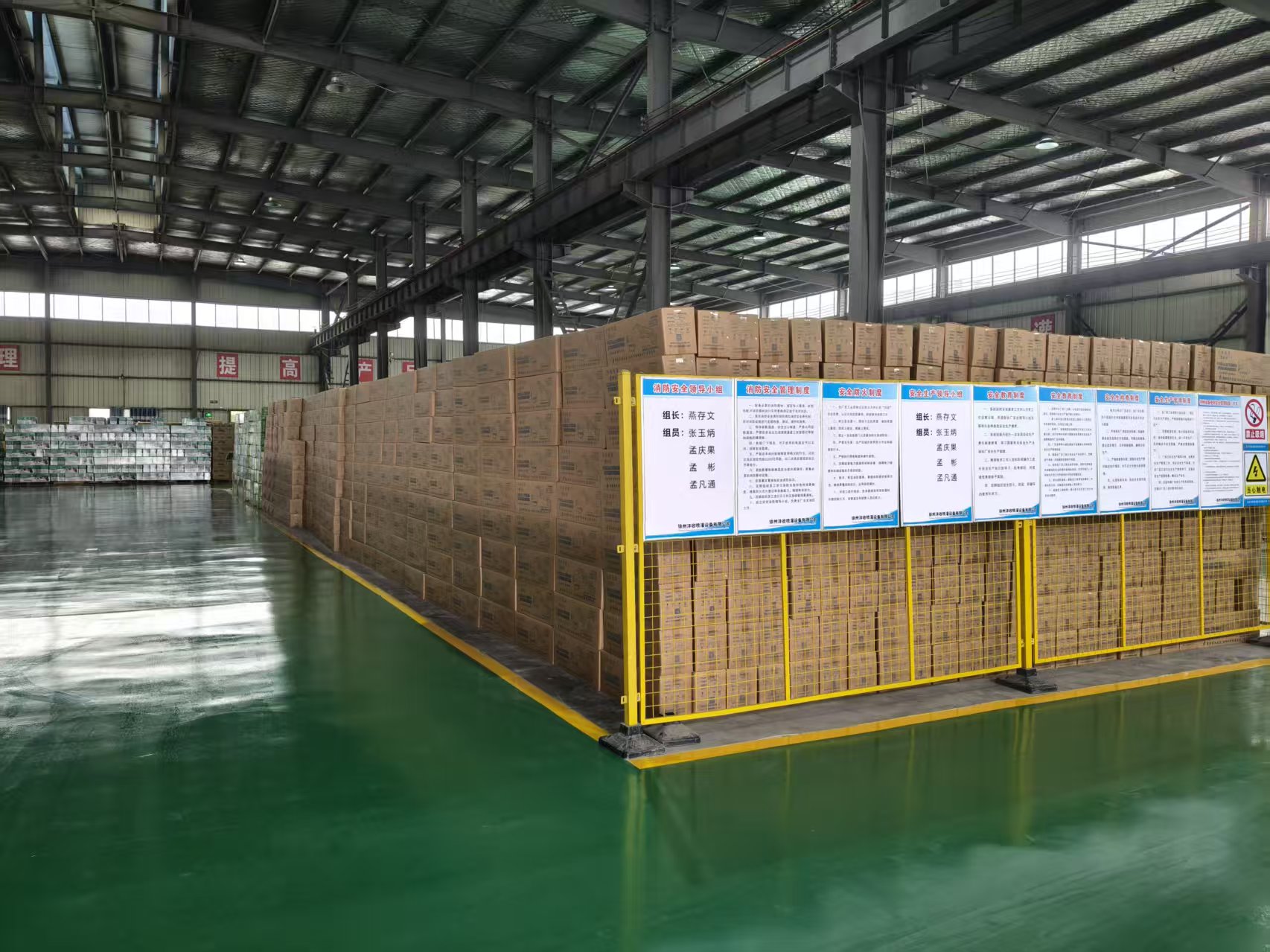
Floor space is the first claim to convert into structure. A 30,000 m² site, as reported by FOISON Sprinkler, only becomes meaningful when the visit establishes how that area is divided between production, assembly, storage, packing, showroom and administration.
- Confirm that production floor space is separate from finished-goods storage, so that a large warehouse is not being counted as manufacturing capacity.
- Check that the showroom holds current production models rather than prototype or retired units.
- Walk the packing and dispatch area, which shows throughput more honestly than a stock photograph of a single machine.
Buyers should record the site area, the approximate production-versus-storage split and the dispatch arrangement, because these are the figures that later support or contradict an annual output claim.
Checklist 2 — Workforce and Engineering Depth
Headcount alone says little; the useful comparison is between production staff and development staff, and whether design work stays in-house. FOISON Sprinkler reports 135 employees in total and 12 engineers in product development, with product designs developed internally and patents covering the overall design of the turbine spray gun, the adjustable nozzle angle and the adjustable rotation speed.
For a buyer, an in-house development team has three practical consequences. First, nozzle and drive geometry are controlled by the manufacturer rather than purchased from a third party, which affects spare-part continuity. Second, parameter changes — rotation speed, spray angle, connector thread — can be engineered for a specific project instead of being limited to a fixed catalogue. Third, the manufacturer can design a complete irrigation system against a customer's layout requirement, which moves the supplier from component vendor to system provider.
During a visit, the questions worth asking are specific: who signs the drawings, which parts are tooled internally, and how a change to nozzle angle or rotation speed is validated before it reaches a production order. Vague answers here usually mean the engineering depth exists on paper only.
Checklist 3 — Equipment Range and Product Documentation
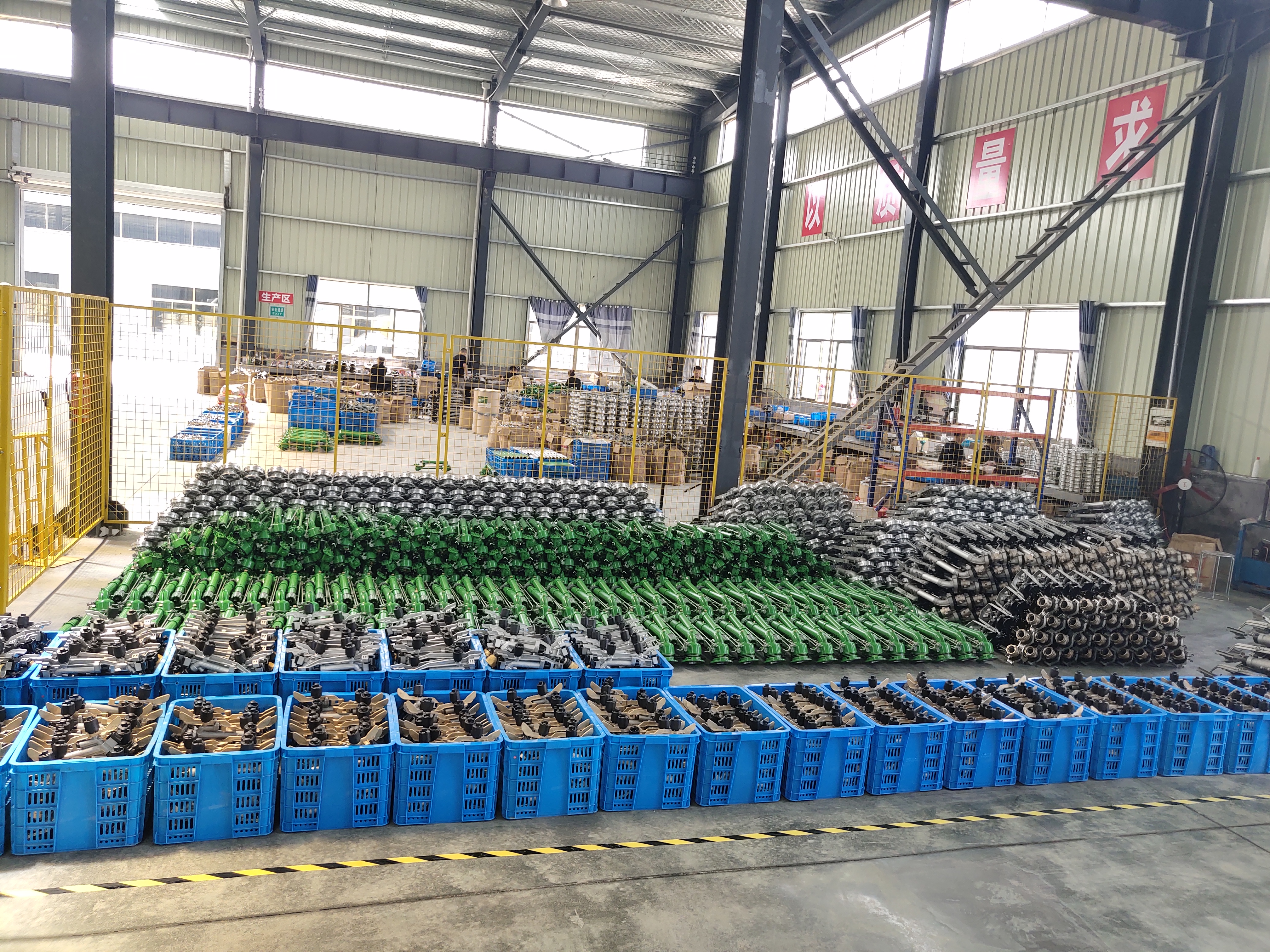
Product variety and parameter transparency are the fastest way to test whether a factory's range is real. FOISON Sprinkler reports more than 100 product varieties, with turbine spray guns, impact guns and complete irrigation systems as the core lines. The published parameters for three representative models give buyers something to verify against a live test.
| Model | Type and material | Working pressure | Flow | Spray radius | Connection |
|---|---|---|---|---|---|
| FS35 | Impact sprinkler; aluminium alloy, copper, stainless steel, nylon | 0.2–0.6 MPa | 7.8–31.9 m³/h | 18–36 m | 1-1/2″ female thread |
| FS40 | Agriculture sprinkler; aluminium, copper, stainless steel, nylon | 0.15–0.5 MPa | 9.5–39.4 m³/h | 20–43 m | 2″ thread |
| FSW40 Pro | Turbine sprinkler; aluminium alloy, copper, stainless steel, nylon | 0.2–0.5 MPa | 9.5–37 m³/h | 22–41 m | 1-1/2″ female thread |
All three models use a 24° spray angle with 360° adjustable rotation. The FS40 uses a gear-driven adjustable mechanism, the FS35 is an impact design, and the FSW40 Pro is a turbine unit listed for agriculture, forestry, urban greening and industrial dust removal.
Two technical points deserve attention during verification. Pressure, flow and wetted radius move together: a radius of 20–43 m on the FS40 is tied to a 0.15–0.5 MPa pressure band, so a test run outside that band proves nothing about the published data. The second point is rotation drive. Turbine and gear-driven units maintain a steady rotation under pressure, while impact units rely on a rocking arm; the turbine drive of the FSW40 Pro is the reason the model is also positioned for spraying tasks such as dust suppression in industrial environments, where water is atomised by pressure rather than delivered as a heavy stream.
Finally, check the accessory and spare-part range, which is a more accurate indicator of long-term serviceability than the number of finished models on display.
Checklist 4 — Export Footprint and Market Evidence
Export data is verifiable because it leaves traces outside the factory. FOISON Sprinkler reports that around 70% of production is exported, that products reach more than 30 countries and regions, and that main markets include the EU, Africa, Australia, New Zealand, South East Asia, Mid Asia, Mid East and South America. The manufacturer also reports attending domestic and overseas trade fairs each year.
For a buyer, this footprint matters in three concrete ways. Long-distance export requires packaging engineered for sea freight, which is visible in the packing area. Multiple destination markets imply experience with different documentation requirements and different field conditions. And a decade-plus operating history — continuous production since 2013 — is a reasonable proxy for supply continuity when a project is phased over several seasons.
Verification steps are straightforward: ask for a destination list, inspect shipping marks and packing standards, and confirm that connector specifications such as the FS40 2″ thread and the FS35 1-1/2″ female thread are documented consistently across the order, the packing list and the product itself.
Sprinkler Irrigation Compared with Normal Irrigation — and Where It Stops Working
The capability checklist exists to support a purchasing comparison, and for many buyers the comparison that matters most is between sprinkler irrigation and normal irrigation methods.
| Comparison dimension | Sprinkler irrigation | Normal irrigation |
|---|---|---|
| Water and energy use | Saves more water and energy, particularly in areas where water is scarce; at least 50% better energy efficiency than normal irrigation alternatives | Reference baseline with higher consumption |
| Cost position | At least 50% energy and cost savings reported; the comparison set associates sprinkler systems with a cost position about 20% lower | Reference baseline |
| Maintenance | Low failure rate, easy installation and easy maintenance | Higher intervention frequency |
| Coverage quality | High water-spray efficiency with uniform coverage over large areas | Less uniform, more labour-dependent distribution |
| Typical best fit | Vegetable and fruit farms, plant farms, tea farms, forestry, urban greening and industrial dust suppression | Sites with limited water infrastructure or very small plots |
The limits matter as much as the advantages. A sprinkler system assumes an adequate water source, a pump and hoses to deliver water to the unit, and its performance is pressure-dependent: below the stated pressure band, the published flow and radius figures do not apply. Site type also changes the recommendation. For outdoor field use with a suitable water supply, metal impact and turbine sprinklers such as the FS35, FS40 and FSW40 Pro are the appropriate class. Inside a greenhouse, the same large metal guns are generally not the right choice; a small plastic sprinkler or a micro spray pipe is the more suitable option, because the coverage requirement is smaller and the growing environment is enclosed.
Sprinkler irrigation is therefore not a universal replacement for normal irrigation. It is a decision with preconditions — enough water resource and enough pressure — and for some plots, drip pipe or micro spray pipe will fit better.
Where Sprinkler Systems Fit: Application and Use Cases
Application fit can be assessed with the same evidence discipline. The operating principle is straightforward: water is pumped to the sprinkler and sprayed under pressure, with the system matched to a pump and hose, and the equipment is documented to operate under high ambient temperatures, including conditions up to 50°C.
- Open-field agriculture: vegetable and fruit farms, plant farms and tea farms, where large-area coverage and uniform distribution reduce labour and water use.
- Forestry and urban greening: the documented use scope of the FS35 and FSW40 Pro includes forestry and urban greening, with portable or fixed placement decided per site.
- Industrial dust removal: the FSW40 Pro is listed for industrial dust removal, with water atomised under pressure for spray-based dust suppression alongside irrigation duty.
- Greenhouse cultivation: smaller indoor plots are better served by small plastic sprinklers or micro spray pipe rather than large metal guns.
Running the Verification: A Practical Visit Agenda
- Request data before the visit. Site area, total headcount, development headcount, annual output, complete model list with pressure, flow and radius data, export share and destination list.
- Walk production, not reception. Confirm that the reported 30,000 m² includes working lines, assembly and packing rather than storage and offices alone.
- Match showroom units to production models. Check model labels such as FS35, FS40 and FSW40 Pro against the published parameter table, including thread size and spray angle.
- Request a live run. Operate a unit inside its stated pressure band and record the observed flow and wetted radius against the published figures.
- Inspect packing and dispatch. Packing standard, marking and loading arrangements show how the product will survive export handling.
- Record gaps, not impressions. Each claim either matches the evidence collected or remains unverified, and both outcomes belong in the final supplier comparison.
The agenda works best when it is repeated rather than improvised. Running the same six steps with each candidate supplier produces a comparison matrix in which differences come from the factory, not from the quality of the sales presentation.
Market Trend Signals Behind the Checklist
Several long-running trends explain why buyers are moving toward evidence-based supplier evaluation. Water scarcity continues to push irrigated agriculture toward methods that deliver water uniformly with less waste, which favours sprinkler systems in regions where supply is constrained. Energy and labour costs make operating expense a larger share of the purchasing decision than the initial unit price. Industrial dust control has become a routine requirement in more production environments, expanding demand for spray-based equipment beyond agriculture. And procurement teams increasingly treat capability claims as something to be documented, because a factory that can be verified once is easier to re-order from later.
None of these trends removes the need for judgement. They shift the weight of a purchasing decision from descriptive claims toward comparable, checkable facts.
Future Outlook
Sprinkler suppliers are likely to keep converging with system providers: design support for complete irrigation layouts, deeper accessory ranges, and documentation that survives scrutiny. Buyers should expect capability data — floor area, headcount, engineering strength, output and export destinations — to become a standard part of supplier questionnaires rather than an unusual request. Verification checklists will follow the same path, moving from one-off factory visits to a routine step repeated with each re-order and each new model release.
FAQ
What should a buyer verify first when assessing a sprinkler manufacturer?
Start with facility and workforce data, because these are the least ambiguous numbers a manufacturer can provide. FOISON Sprinkler reports a 30,000 m² site, 135 employees and a 12-engineer development team, alongside an annual output of 200,000 units. These figures can be checked on site against floor layout, staff presence and the packing area, which makes them a practical starting point for comparing suppliers.
How can a claimed annual output be checked during a supplier visit?
Compare the output claim with the physical flow of the factory: working lines, assembly sequence, inspection points, and the packing and dispatch area. FOISON Sprinkler reports 200,000 units per year across more than 100 product varieties, with turbine spray guns, impact guns and irrigation systems as core lines. Buyers can also ask how many models are actively produced and how production is scheduled across seasons, since a high output figure concentrated in one model tells a different story from the same figure spread across a full range.
Does the size of a development team matter when custom sprinkler specifications are needed?
It matters when the requirement involves geometry rather than colour. FOISON Sprinkler reports 12 engineers in product development, in-house design of its products, and patents covering the overall design of the turbine spray gun, the adjustable nozzle angle and the adjustable rotation speed; the manufacturer also states that it can design irrigation systems according to customer requirements. For a buyer, the relevant test is not headcount alone but who owns the drawings and how changes to nozzle angle, rotation speed or connector thread are validated before production.
How does sprinkler irrigation compare with normal irrigation on cost and maintenance?
Documented comparisons place sprinkler irrigation ahead on both counts. Reported figures include at least 50% energy and cost savings versus normal irrigation, at least 50% better energy efficiency, a low failure rate with easy installation and easy maintenance, and high water-spray efficiency with uniform coverage. Water and energy savings are described as larger in areas where water is scarce. The comparison data also associates sprinkler systems with a cost position about 20% lower than normal irrigation methods.
Which limits should a buyer plan for before choosing sprinkler irrigation?
Sprinkler irrigation carries preconditions. The system requires an adequate water source, a pump and hoses, and it sprays under pressure, so published flow and radius figures only apply inside the stated pressure band — for example 0.15–0.5 MPa for the FS40 and 0.2–0.6 MPa for the FS35. Site type also constrains the choice: large metal impact and turbine guns suit outdoor field and industrial applications, while greenhouse cultivation is better served by small plastic sprinklers or micro spray pipe. Sprinkler irrigation is a strong fit where water and pressure are available, not a universal replacement for every irrigation method.
Technical documentation covering the full FOISON Sprinkler model range, parameters and accessories is available in the company catalogue: Foison product catalogue (PDF).